


A 2026 Guide by Sellingantiques
Dutch craftsmen brought the technique to Britain during the late seventeenth century.
Tunbridge Wells became a major hub for producing souvenir antique marquetry boxes during the Regency and Victorian periods.
Look at the primary function. Tea caddies dominated early production before giving way to workboxes and writing slopes later on.
Some wealthy tourists brought these decorative items back from the Grand Tour in Italy.
Changes in tea taxation directly altered the internal layout and size of the earlier domestic boxes.
David Roentgen made highly complex boxes with hidden compartments in eighteenth-century Germany.
Edmund Nye operated a famous workshop in Kent known for geometric micro-mosaic work.
Thomas Lund produced fitted boxes in London during the mid-nineteenth century.
The 2026 retail price guide for Antique Marquetry Boxes is drawn from a proprietary archive of over 1.1 million retail prices indexed by Sellingantiques since 2003. This guide relies exclusively on their own internal data; no external sources or auction records are used.
Analysing nearly 25 years of UK antique market history alongside current retail values, the data indicates that typical UK retail prices for Antique Marquetry Boxes range between £300 and £2,100. Entry-level prices generally fall under £300 and premium examples upwards of £2,100.
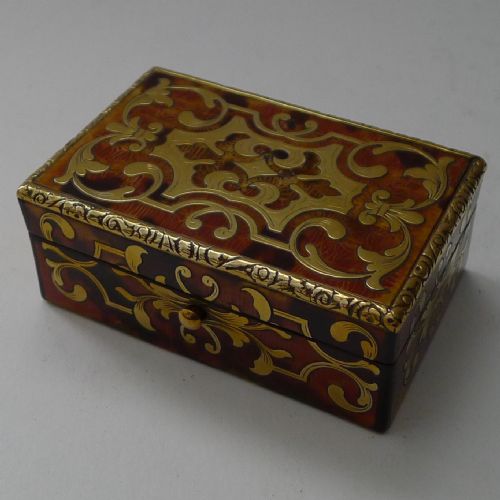
Central cartouches usually frame a specific scene, crest, or geometric starburst on the lid.
Crossbanded borders frequently frame the main decorative panels to create a sharp visual boundary.
Open the lid. You will often find a lift-out tray with fitted compartments for specific tools or trinkets.
Early makers cut individual pieces by hand using a fret saw and assembled them like a jigsaw puzzle.
Sand-shading became popular in the eighteenth century. Craftsmen dipped wood edges into hot sand to scorch a shadow effect.
Later workshops stacked multiple layers of veneer together to cut several matching designs at once.
"Craftsmen originally boiled various woods in natural dyes like logwood or indigo to create bright greens and blues."
"Some box interiors smell faintly of sandalwood or lead pencil because of the specific cedar used for the linings."
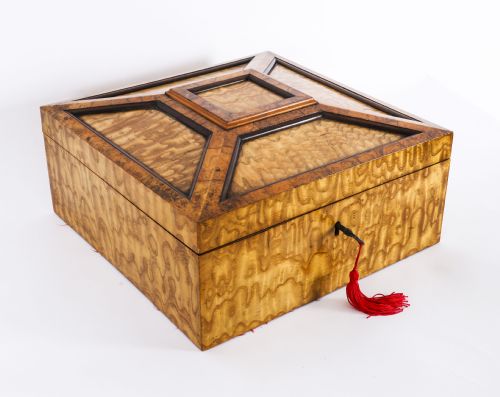
"The geometric patterns on certain pieces align neatly to create optical illusions of depth and perspective."
Based on almost 25 years of Sellingantiques UK antique market data, Antique Marquetry Boxes appeared 766 times (out of 1,100,000 antiques) which gives it a rarity score of 86/100.
This score measures scarcity within the Sellingantiques archive only and is not a survey of the entire antiques market, so these statistics may not be indicative of the general availability of Antique Marquetry Boxes elsewhere.
Professional restorers can often flatten lifted veneer. They inject warm animal hide glue under the loose section and clamp it flat while it cures.
Never attempt this with modern superglue. Modern adhesives lack the flexibility required for antique wood movement and will cause further cracking.
Missing trays are common. Owners frequently discarded the internal fittings once the box passed out of its original use, perhaps converting a sewing box into a simple storage space for letters.
Torn lining paper is normal wear rather than a sign of alteration. Many paper linings degrade naturally from centuries of handling and changing humidity.
It is a specific type of wooden decoration made in Kent. Makers glued tiny sticks of different coloured woods into a bundle and sliced it crossways to form mosaic patterns.
While related to standard marquetry, the construction method is different.
It is likely original. Craftsmen achieved that green shade using a technique called harewood. They treated sycamore with iron oxide or dyed it to create hues that sometimes survive better than other stains.
Fading is uneven across an antique. Some woods lose their pigment quickly under sunlight while others hold onto their chemical dyes much longer. The contrast you see is typical of natural ageing rather than a later repair.
Please note: This Antique Marquetry Boxes guide and its associated pricing data are provided for general informational purposes only. It does not constitute formal financial, investment, or appraisal advice and should not be relied upon as the sole basis for any commercial activity, purchasing, or sales decisions. Sellingantiques.co.uk accepts no liability for any actions taken in reliance on this information. Always consult with a qualified professional or independent appraiser.
