


A 2026 Guide by Sellingantiques
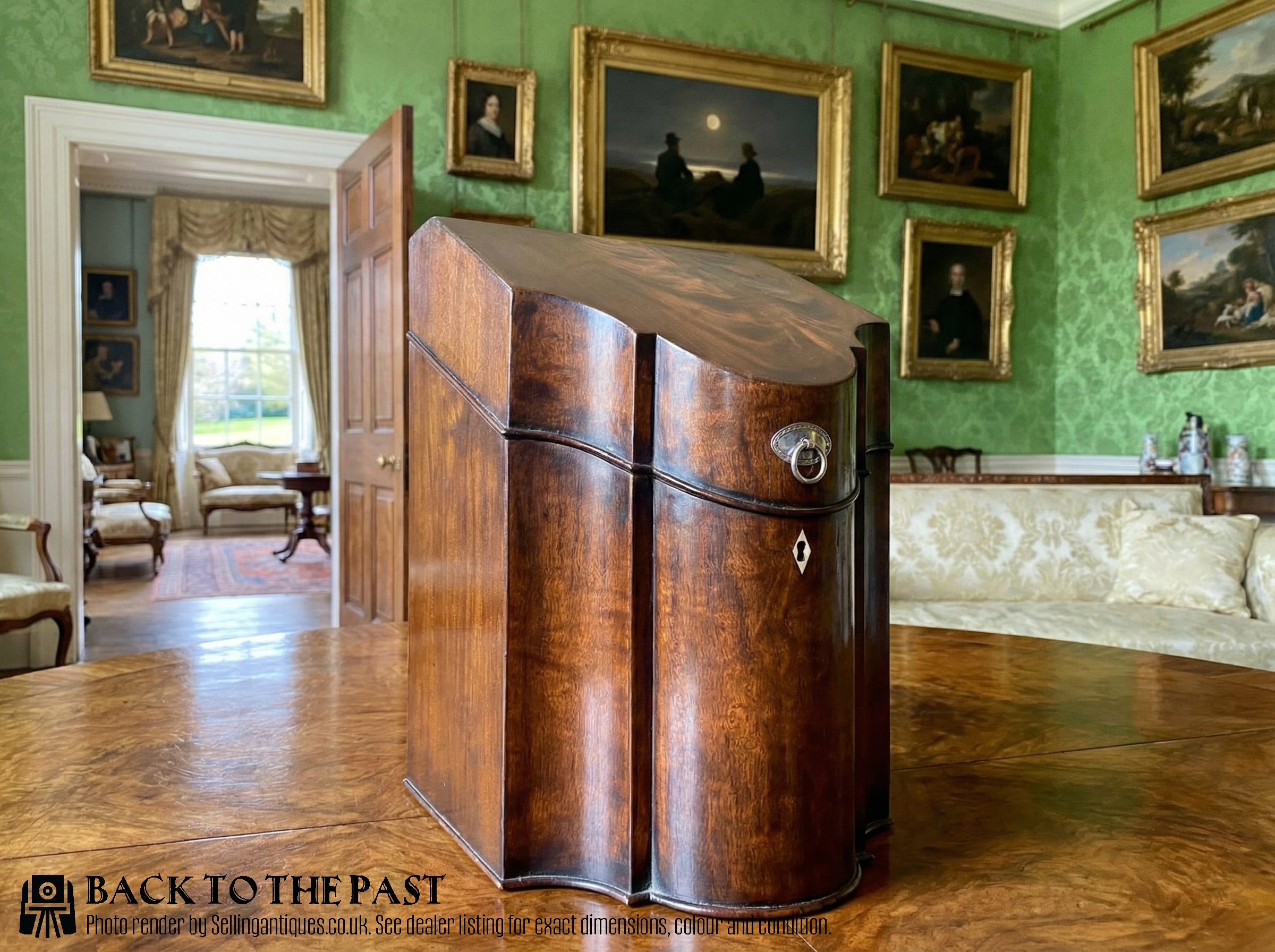
Georgian Mahogany Knife Box/ Stationery Box, Georgian
Priced at £225 from Sinclairs Antiques and Interiors
Keeping silver cutlery secure was a serious priority for eighteenth-century households.
Lockable cases stood directly on the sideboard during meals, keeping valuable silver firmly under the master's control.
Antique knife boxes began appearing in British dining rooms around the mid-eighteenth century.
They turn up mostly as pairs, originally bought to flank a central urn on a large mahogany sideboard.
Note how changes in dining habits eventually moved table silver into canteen tables, ending the era of sideboard display.
Most of these were produced by anonymous specialist box makers rather than named furniture workshops.
London cabinet makers sometimes supplied them to clients as part of a larger dining suite.
Don't attribute standard mahogany examples to famous names without firm documentary evidence like a bill of sale.
The 2026 retail price guide for Antique Knife Boxes is drawn from a proprietary archive of over 1.1 million retail prices indexed by Sellingantiques since 2003. This guide relies exclusively on their own internal data; no external sources or auction records are used.
Analysing nearly 25 years of UK antique market history alongside current retail values, the data indicates that typical UK retail prices for Antique Knife Boxes range between £200 and £2,900. Entry-level prices generally fall under £200 and premium examples upwards of £2,900.
Sloping lids are a standard feature on Georgian antique knife boxes.
Notice the serpentine front profile on later examples, replacing the earlier flat or slightly bowed fronts.
Inside sits a tiered wooden grid, pierced with shaped holes specifically cut for spoons, forks and knives.
Early forms rely on solid timber joints, giving way to complex veneering techniques by the late eighteenth century.
Applying a curved serpentine veneer required heating the wood and pressing it onto shaped wooden cauls.
Inlay work added detail. Stringing or intricate marquetry shells often decorate the underside of the sloping lids.
"Some rare examples feature intricate geometric parquetry covering every visible surface."
"The layout of the inner matrix forces a highly specific arrangement of spoons and forks, creating a stepped silver display."
"Finding matching pairs that have stayed together since the eighteenth century adds distinct historical appeal to a dining room setup."
Based on almost 25 years of Sellingantiques UK antique market data, Antique Knife Boxes appeared 541 times (out of 1,100,000 antiques) which gives it a rarity score of 90/100.
This score measures scarcity within the Sellingantiques archive only and is not a survey of the entire antiques market, so these statistics may not be indicative of the general availability of Antique Knife Boxes elsewhere.
The interior features a stepped wooden board called a matrix. This grid has tailored slots cut into it, often lined with fabric.
You drop the flatware in handle-up. The slots grip the narrow necks of spoons and the blades of knives, holding the silver handles high for display.
They turn up as single items too. Pairs were standard in grand dining rooms to create symmetry on the main sideboard.
A typical arrangement placed one box at each end. A large silver urn or a wine cistern sat between them.
Conversions are very common. When dining habits changed in the nineteenth century, people moved their silver into flat canteen boxes. The upright sideboard boxes lost their original purpose.
Many owners tore out the slotted matrices. They fitted racks for letters, inkwells and pens instead. Finding an intact original interior is getting harder.
Warped lids happen when the timber dries out unevenly over a couple of centuries. The inner pine shrinks and pulls the outer mahogany veneer out of shape.
A good restorer can correct minor warping. They apply controlled moisture and clamp the lid back flat over several weeks.
Severe distortion sometimes demands structural work. If the hinge line is broken or the lock relies on a warped alignment, expect a longer repair job.
Please note: This Antique Knife Boxes guide and its associated pricing data are provided for general informational purposes only. It does not constitute formal financial, investment, or appraisal advice and should not be relied upon as the sole basis for any commercial activity, purchasing, or sales decisions. Sellingantiques.co.uk accepts no liability for any actions taken in reliance on this information. Always consult with a qualified professional or independent appraiser.
