





Antique Apothecary Boxes
A lockable wooden case fitted with drawers, compartments and bottle recesses, made to hold a household's, a ship's or a physician's stock of medicines, scales and dispensing kit in one place.
Antique Apothecary Boxes
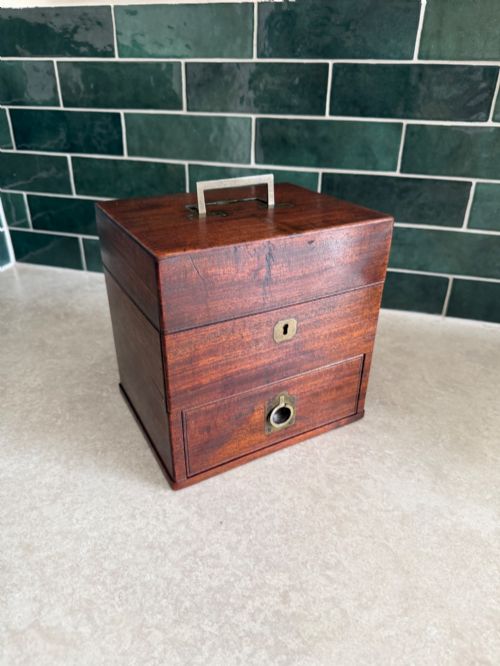
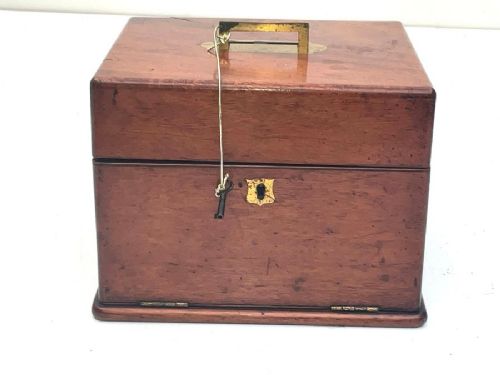
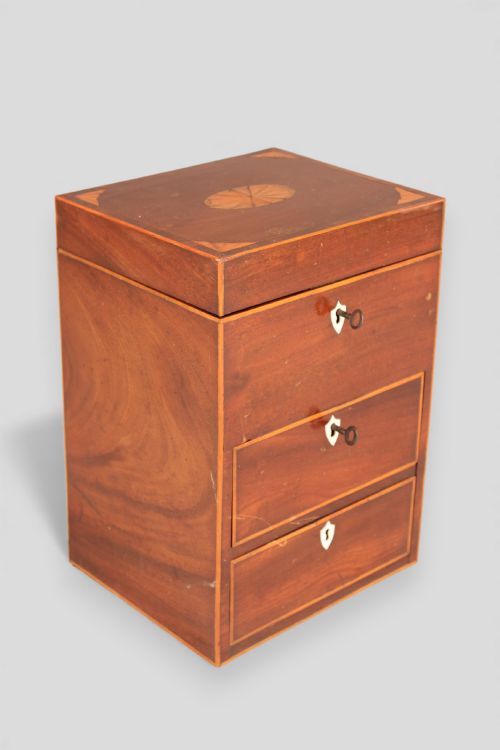
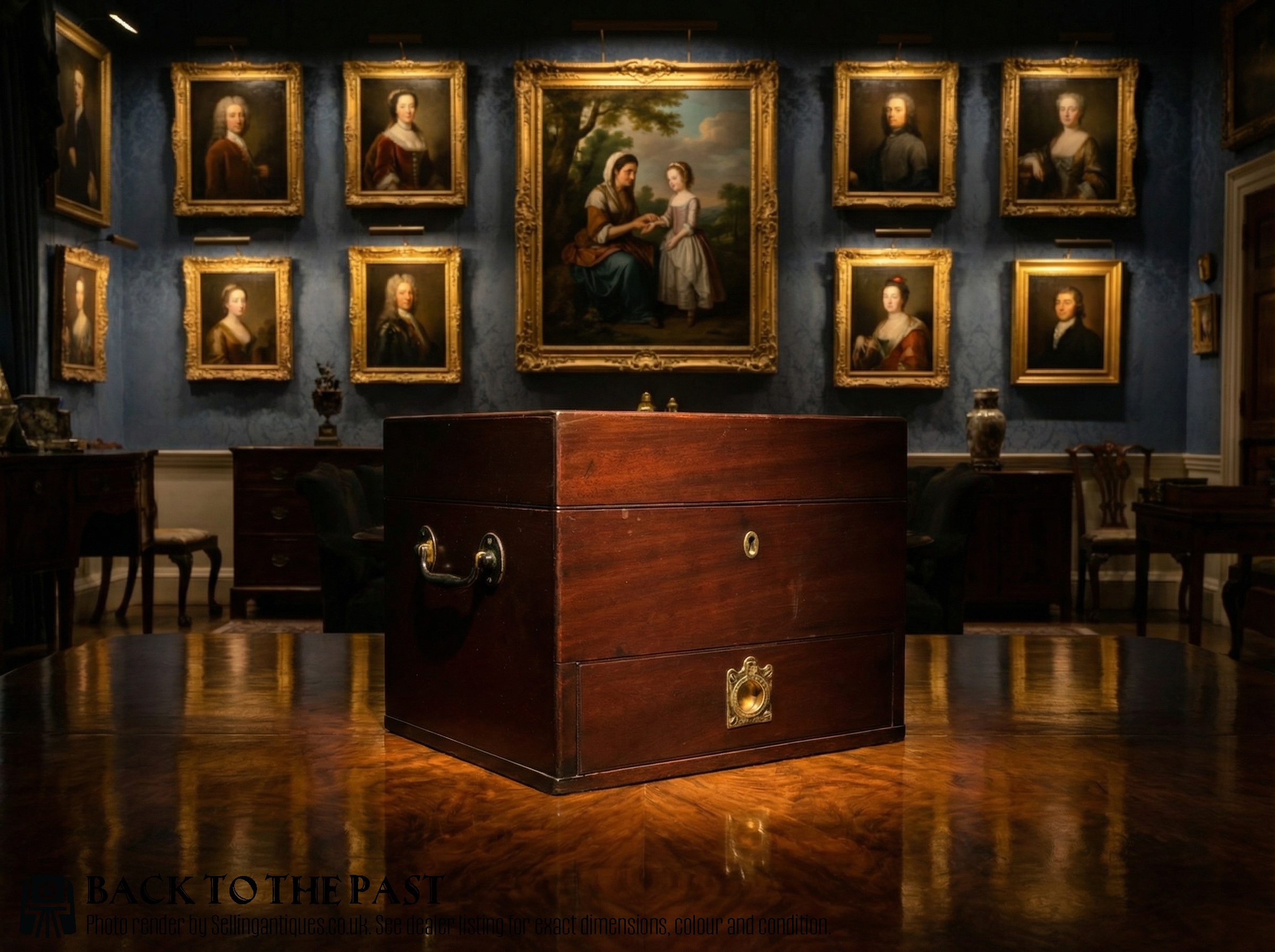
The object most listings describe is a mahogany fitted box or cabinet of the 19th century. Mahogany is named in a third of the titles on Sellingantiques, which makes it the default timber. Inside, the space is divided for bottles and small drawers, and many are offered with some or all of their glass still present.
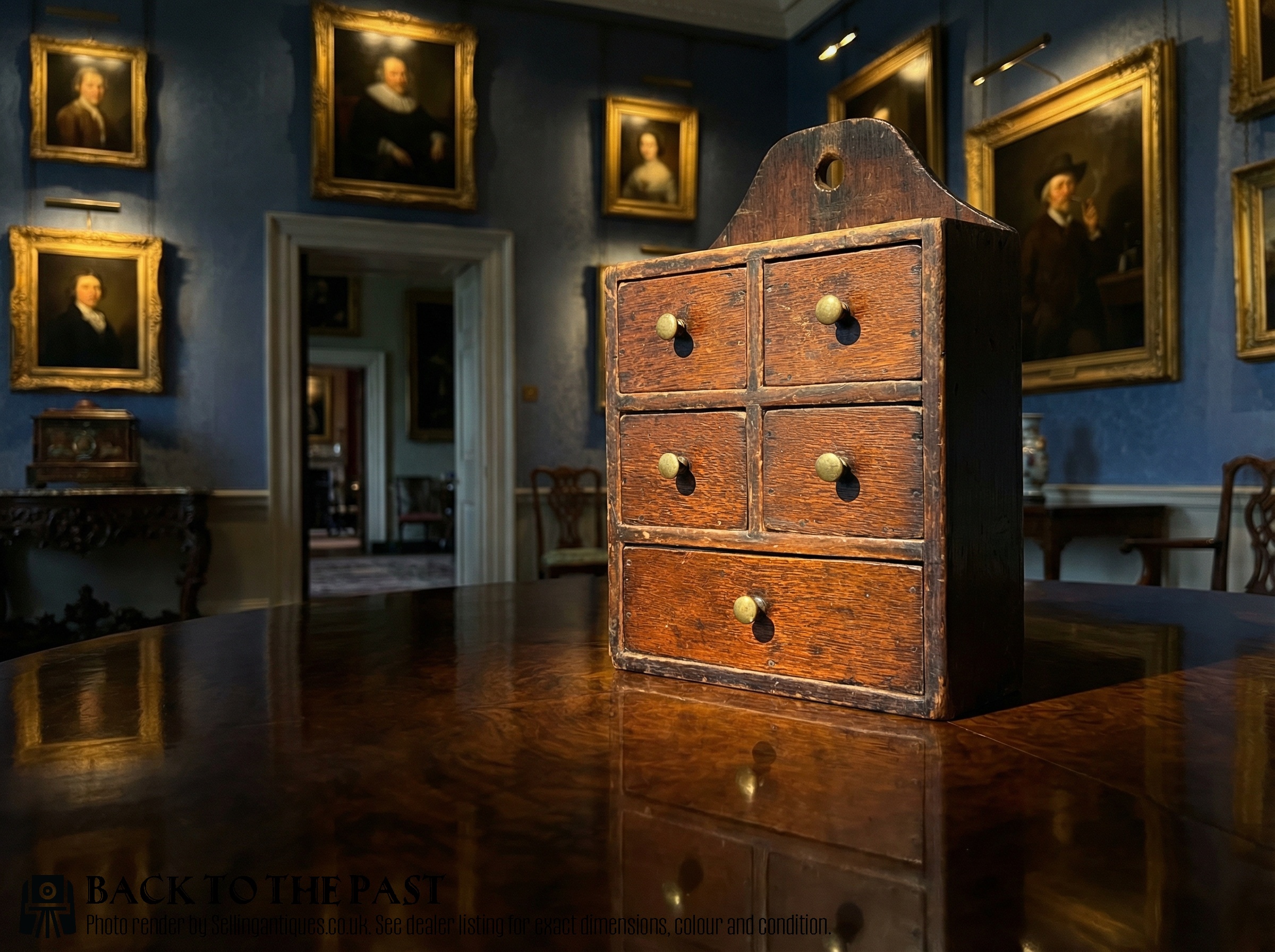
Titles use box, cabinet, chest and case for the same thing, so read the description rather than the noun. Cabinet appears in about a fifth of titles, fitted in rather fewer, usually alongside a note of bottles or contents, or of a key.
Domestic and travelling medicine chests came into use in the 18th century, when households, ships and travellers had to carry prepared drugs and weighing equipment together in one lockable case. The form ran on through the 19th century for families, physicians and military and colonial use, until commercial pharmacy made it redundant. Campaign, military and travelling examples recur throughout the archive, and Georgian or George III pieces make up something like a sixth of it.
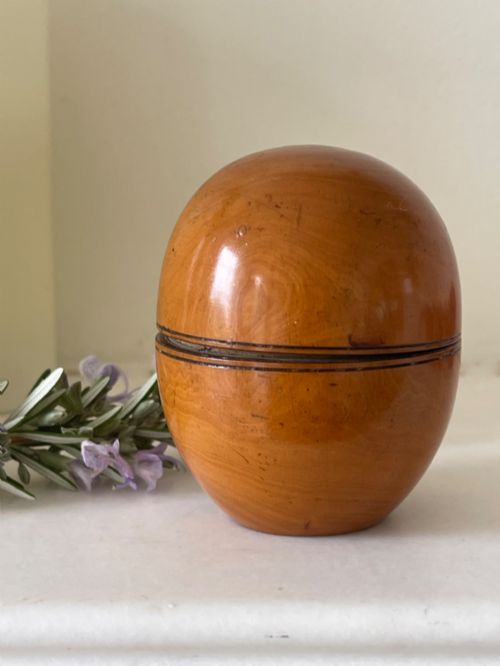
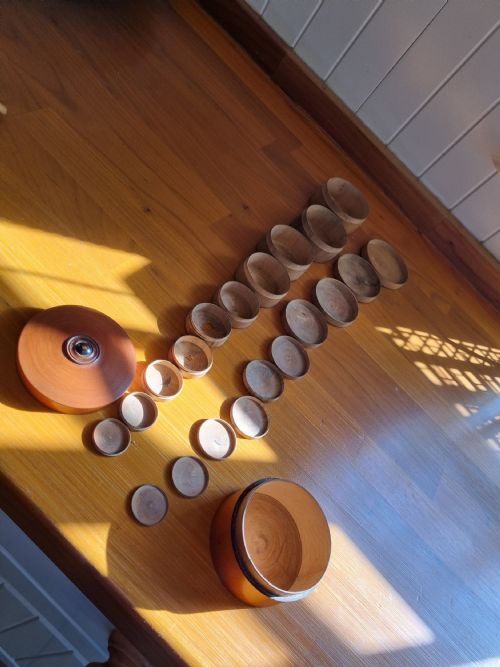
At the lighter end sit leather-covered doctor's and medicine cases, and a few turned apothecary smalls: boxwood pill rounders, a treen pill silverer, a lignum vitae medicinal case. Dates are mostly broad. Only 21 of 83 listings carry a clean year, and those years run from 1750 to 1890, so anything pre-1800 is uncommon.
Where The Range Splits
Contents do most of the work. Boxes advertised with their original bottles, phials and scales cluster at the top, and one pair of listings sets "With Contents" against "With out Contents" for otherwise similar objects. How far the interior is fitted out matters just as much: "fully fitted" recurs in the upper half, while a plain unqualified apothecary box sits lower.
Timber and mounts sort the rest. Mahogany is the middle and upper ground, and rosewood with brass binding turns up at the top. Boxwood and turned treen sit at the very bottom of the range, sold as smalls rather than as cases.
Purpose reads through in the price. Campaign, military, travelling and physician's examples account for most of the top, and scale plays into that: large campaign boxes and full travelling cabinets outrank small and miniature ones, though a compact box is not automatically a cheap one.
Antique Apothecary Boxes Retail Price Guide 2026
Typical UK retail prices for apothecary boxes, calculated from the Sellingantiques database of over a million retail prices indexed since 2003. This retail price guide relies exclusively on Sellingantiques data; no external sources or auction records are used, so the figures do not describe the wider market.
About nine apothecary boxes are listed on Sellingantiques each year, and forty different dealers have listed one.
The Antique Apothecary Boxes Glossary
- Fitted
- The interior is divided for bottles and drawers rather than left open. Often written as "fully fitted", which tends to mean a more complete arrangement of recesses and trays.
- Contents
- The bottles, phials, scales and other fittings still with the box. Titles distinguish those sold with contents from those sold without.
- Campaign
- Made for travel or military use, so compact and protected at the corners. Covers military, travelling and colonial cases.
- Brass bound
- Brass strapping at the corners and edges, seen on the heavier travelling boxes and on rosewood examples at the upper end.
- Treen
- Small turned woodenware sold as apothecary smalls: pill rounders, containers, a pill silverer. Boxwood and lignum vitae are the woods that appear.
- Secret drawer
- A drawer hidden beneath the bottle tray or behind the fitted interior, sometimes lockable, and noted in titles when present.
Antique Apothecary Boxes: Frequently Asked Questions
How many come up for sale each year?
Around nine reach the market in a year on Sellingantiques, and forty different dealers have listed one, so no single dealer dominates the category.
The archive runs to 83 listings in total, which is enough to show what the standard form looks like without making any one variant common.
What wood are they usually made from?
Mahogany is named in a third of all titles, so it is the timber you will meet most. It covers everything from small boxes to full travelling cabinets.
Rosewood with brass binding appears at the upper end. Boxwood and lignum vitae turn up only on the turned smalls, and one hand-painted bentwood storage box shows the form wasn't always a cased hardwood box.
Do they still have their bottles?
Many are offered with some or all of their original glass, and titles that advertise contents cluster at the top of the range.
Others are sold empty, and at least one pair of listings makes the distinction explicit in the title. The presence of bottles, phials and scales is the single clearest divider in the category.
Are apothecary boxes marked with a maker's name?
A scan of these listings for maker and retailer names returned nothing, so no firm or chemist runs through the category as a recurring presence.
What does appear is labelling of a different kind. One box carries a gilt panel inscribed MAG: SULPH, and one rosewood example is described as named and fitted.
What does a campaign apothecary box mean?
It means made for travel or military use: compact, often brass bound at the corners, sometimes fitted with a drawer beneath the bottle tray.
Campaign, military and travelling examples recur throughout the archive and account for most of the top of the range. Sampled titles include George III travelling cabinets and a Regency fitted mahogany military box.
Why are so many just dated 19th century?
Because that is how dealers bracket them. "19th Century" is the largest group in the dated field, with 32 listings, and it is a broad bracket rather than a year.
Only 21 of the 83 listings carry a clean year, and those run from 1750 to 1890. Georgian, Victorian and Regency are style labels doing similar work, and decade tags are thin and scattered.