66,970  PAGES BROWSED TODAY PAGES TODAY • 187 ANTIQUES UPLOADED TODAYNEW ARRIVALS
GIFTS
187 ITEMS ADDED TODAY
Sort Order
Items Per Page
Antiques dealer?
Join as a Seller
Browse Categories
Sort order
Items per page
sold SA958796
Sorry, but this item has been sold.
Regent Antiques

Regent Antiques

Sellingantiques Verified Since Sep 2016
Browse dealers 637 items
  • About Us
    We specialise in english and continental furniture, silver, porcelain and decorative items.
  • Trade Associations
    Regent Antiques is a registered member of LAPADA  CINOA
Id #SA958796
SHARE
SAVE

Antique Empire Tub Arm Desk Chair C.1850

19th century
Sold 15 March 2023 · Regent Antiques
This “Antique Empire Tub Arm Desk Chair C.1850 ” found a buyer.

It was listed by Regent Antiques. Sold pieces stay on Sellingantiques as a record of what has passed through, and the next one is rarely far away.

Description

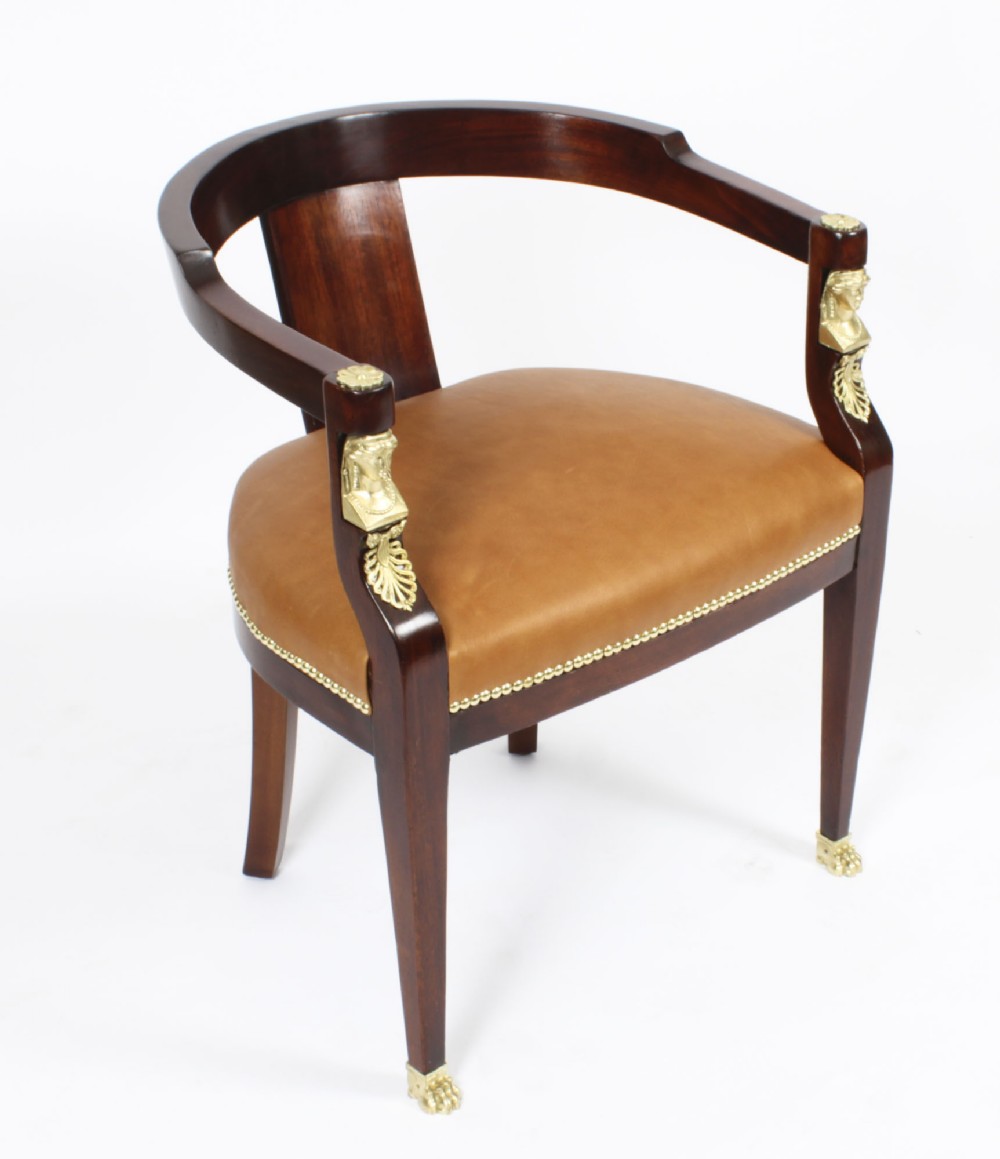
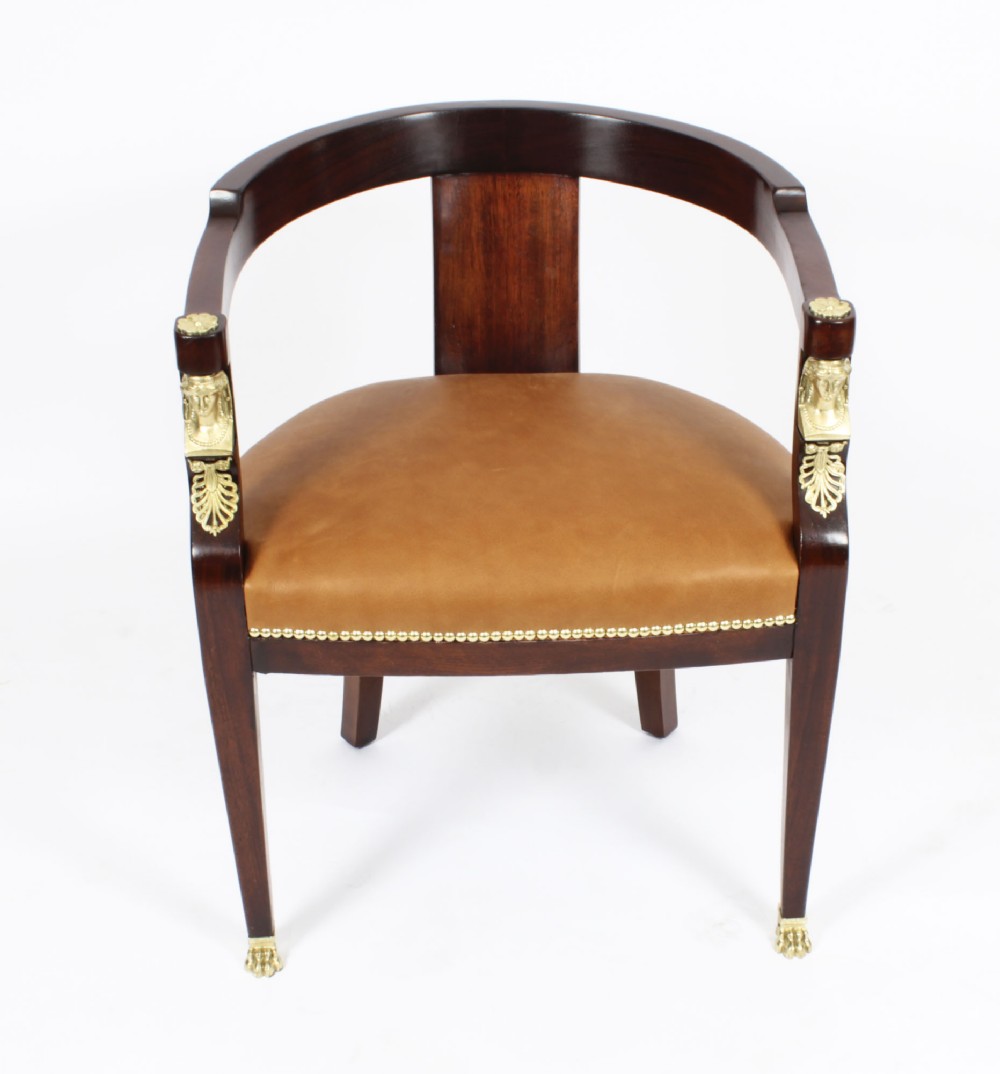
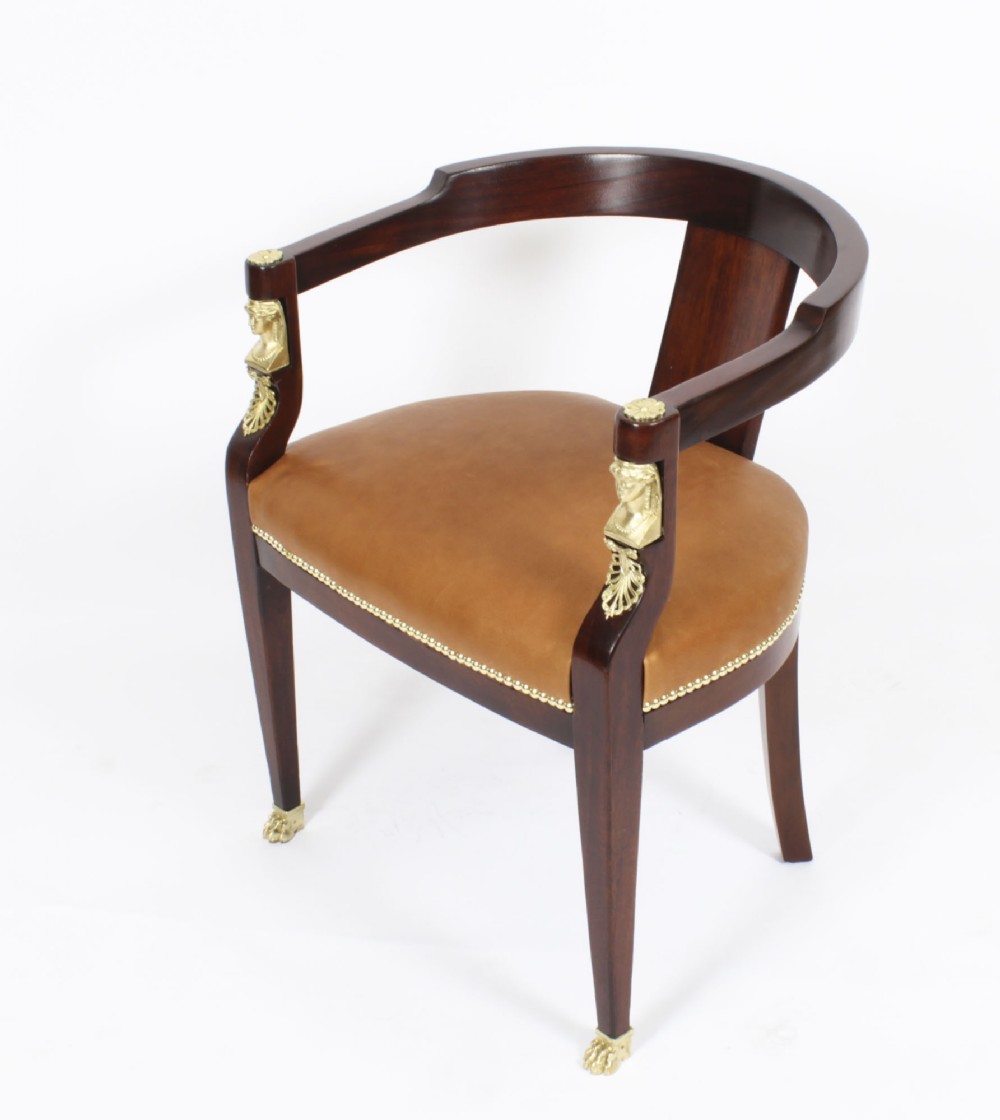
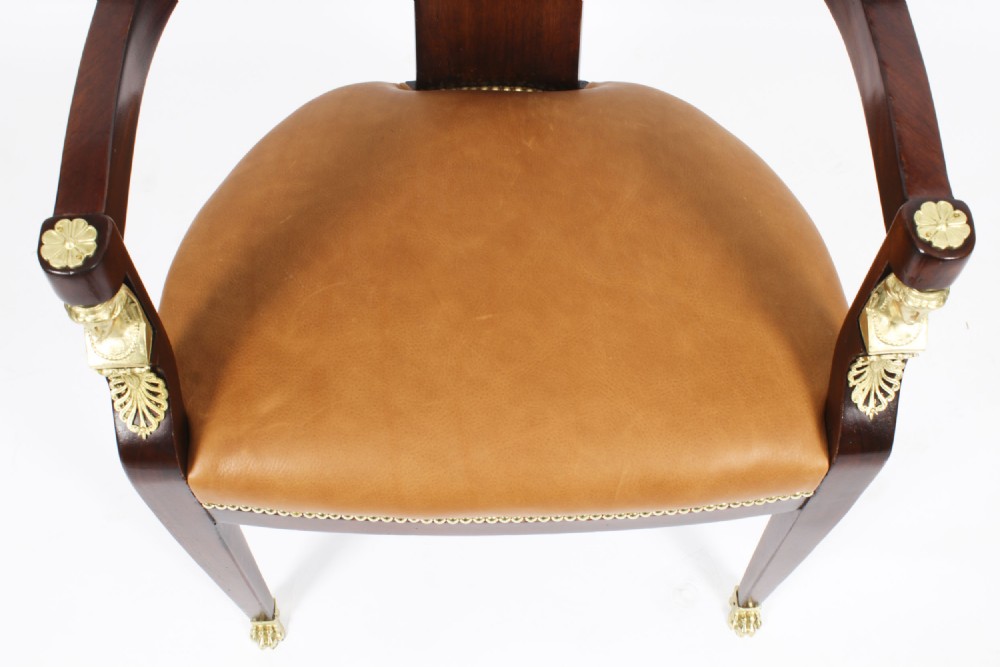
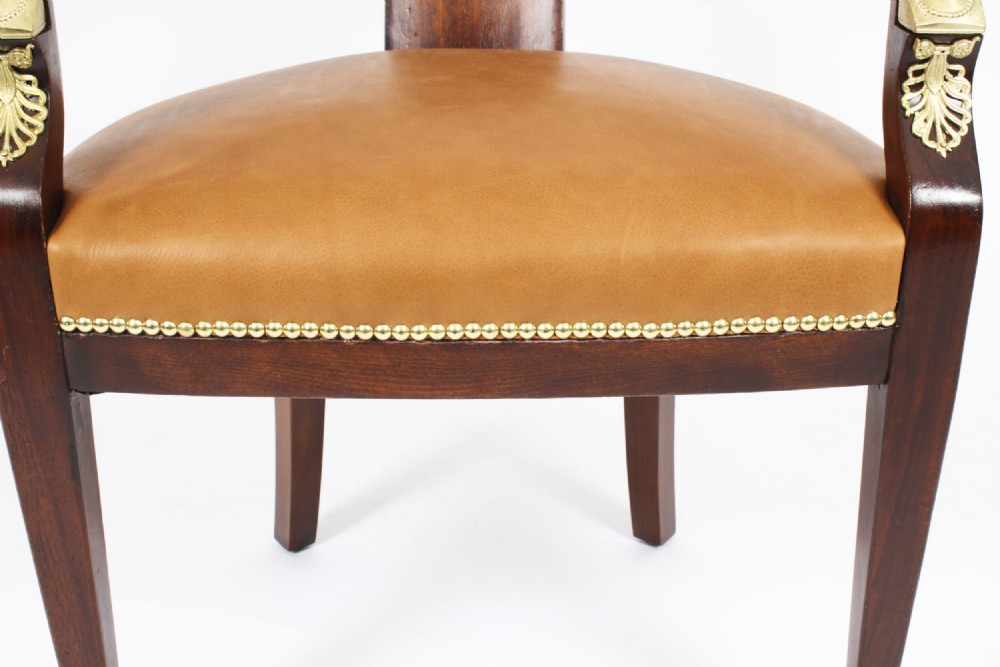
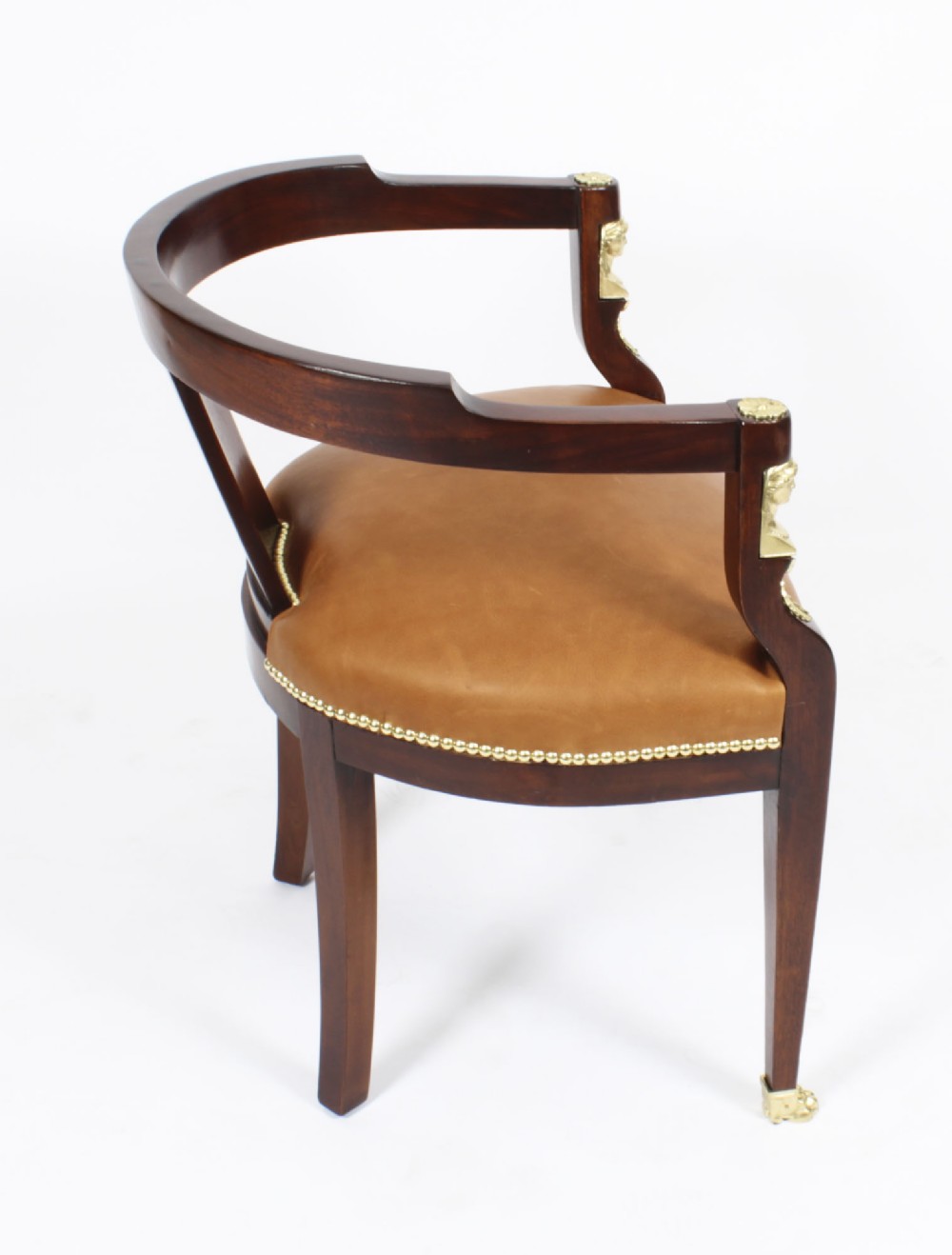
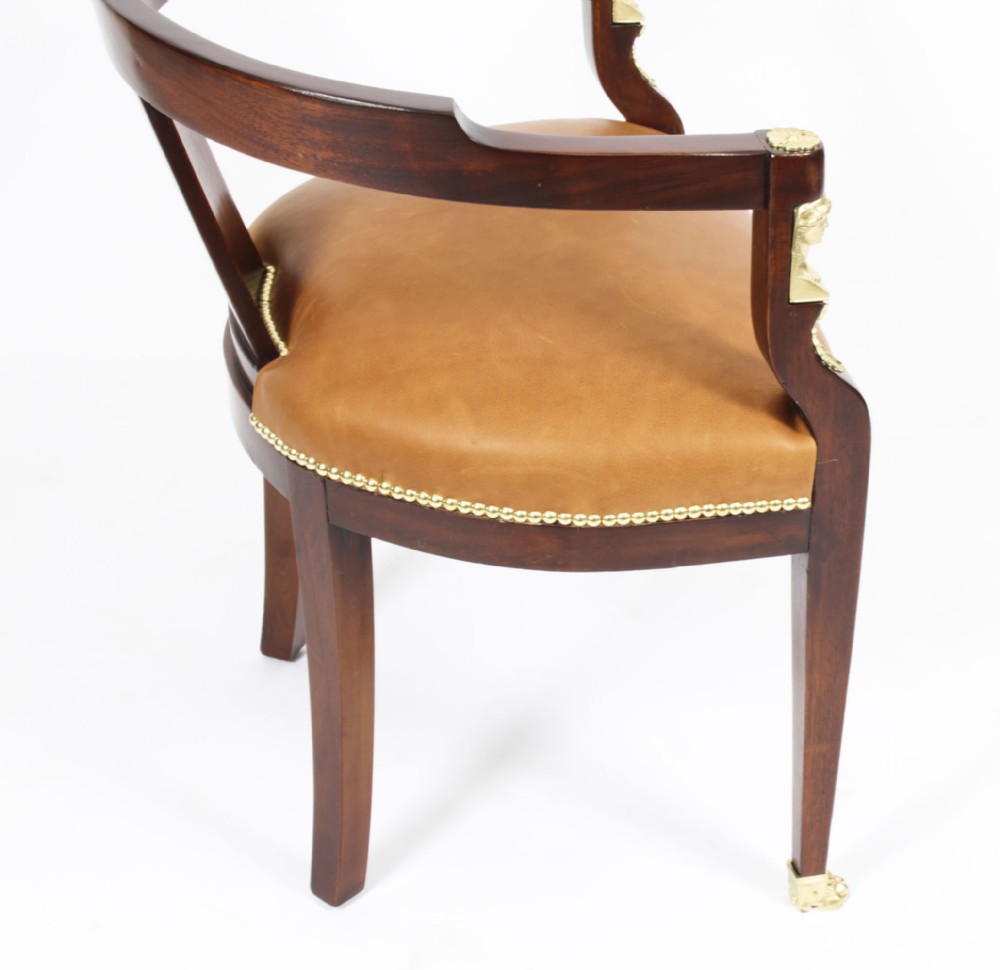
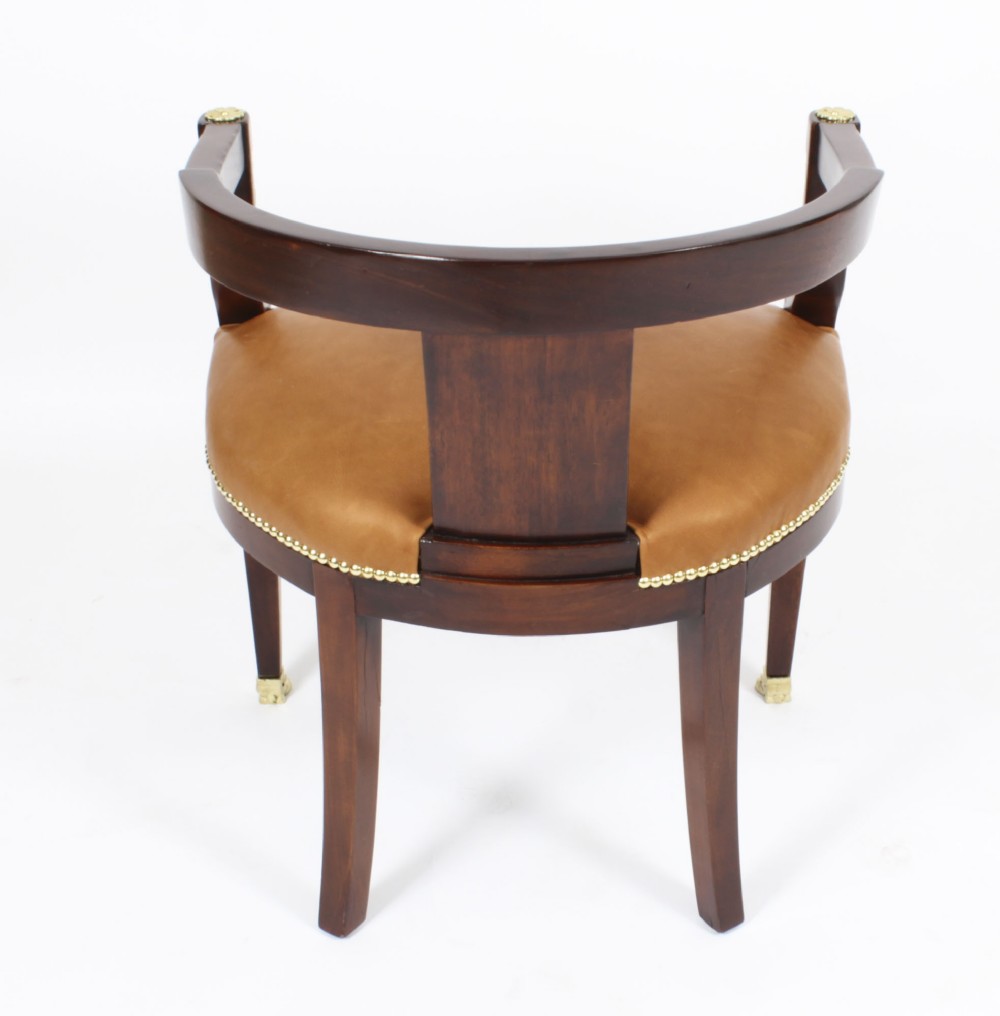
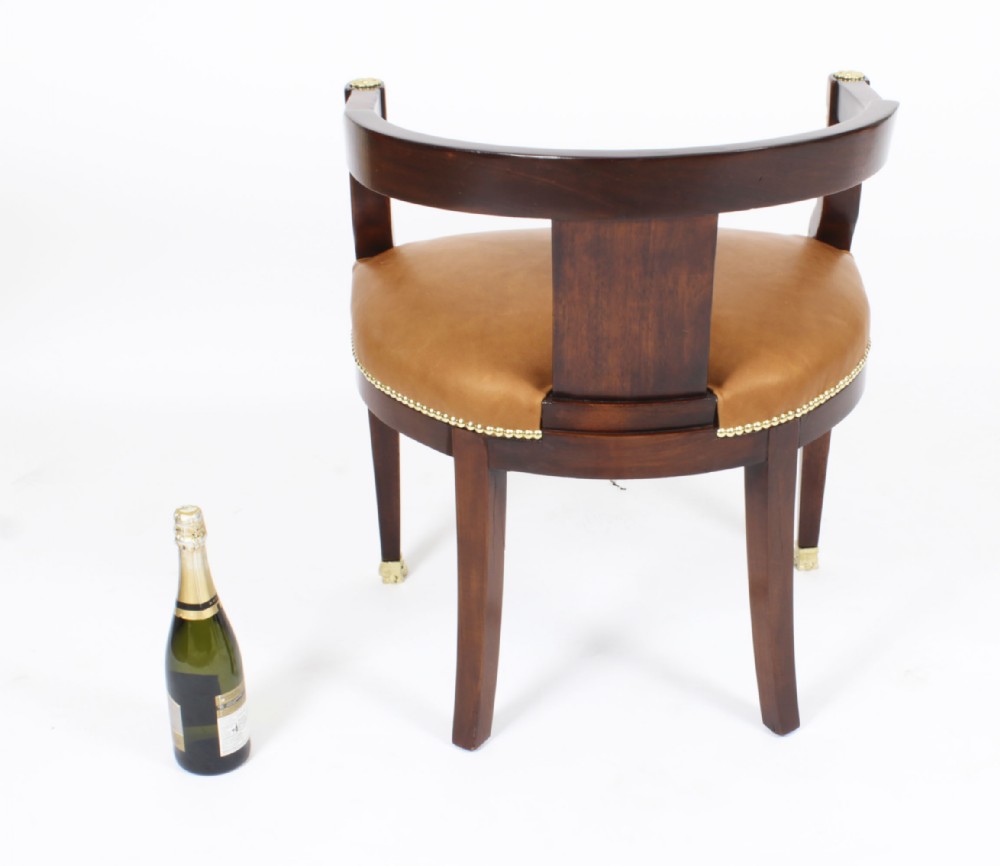
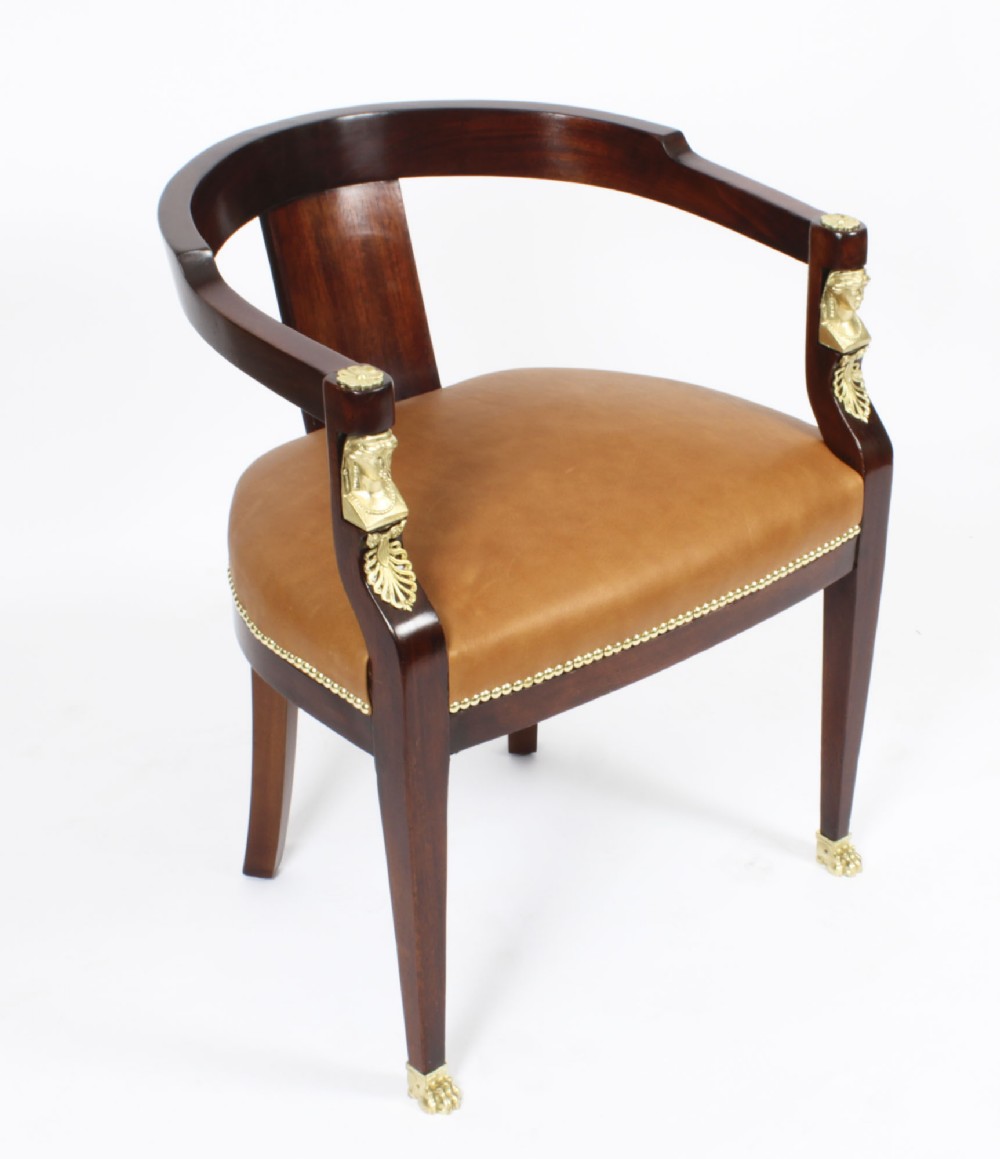
This is a beautiful antique French mahogany Empire "fauteuil du bureau", desk chair, Circa 1850 in date.

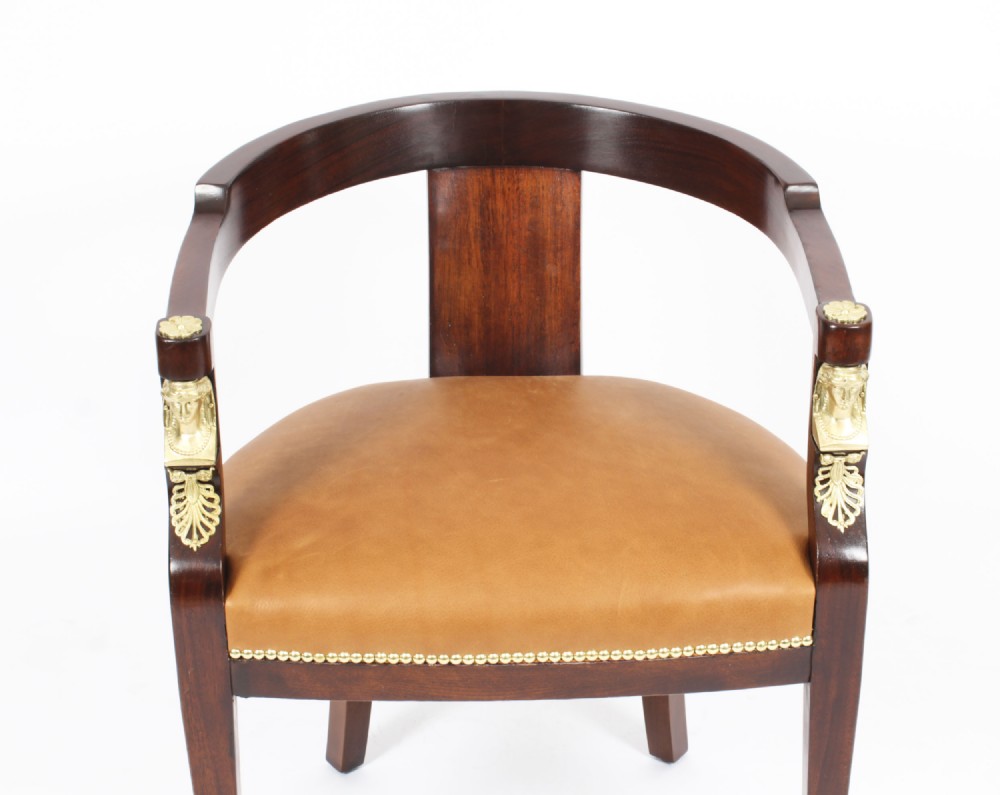
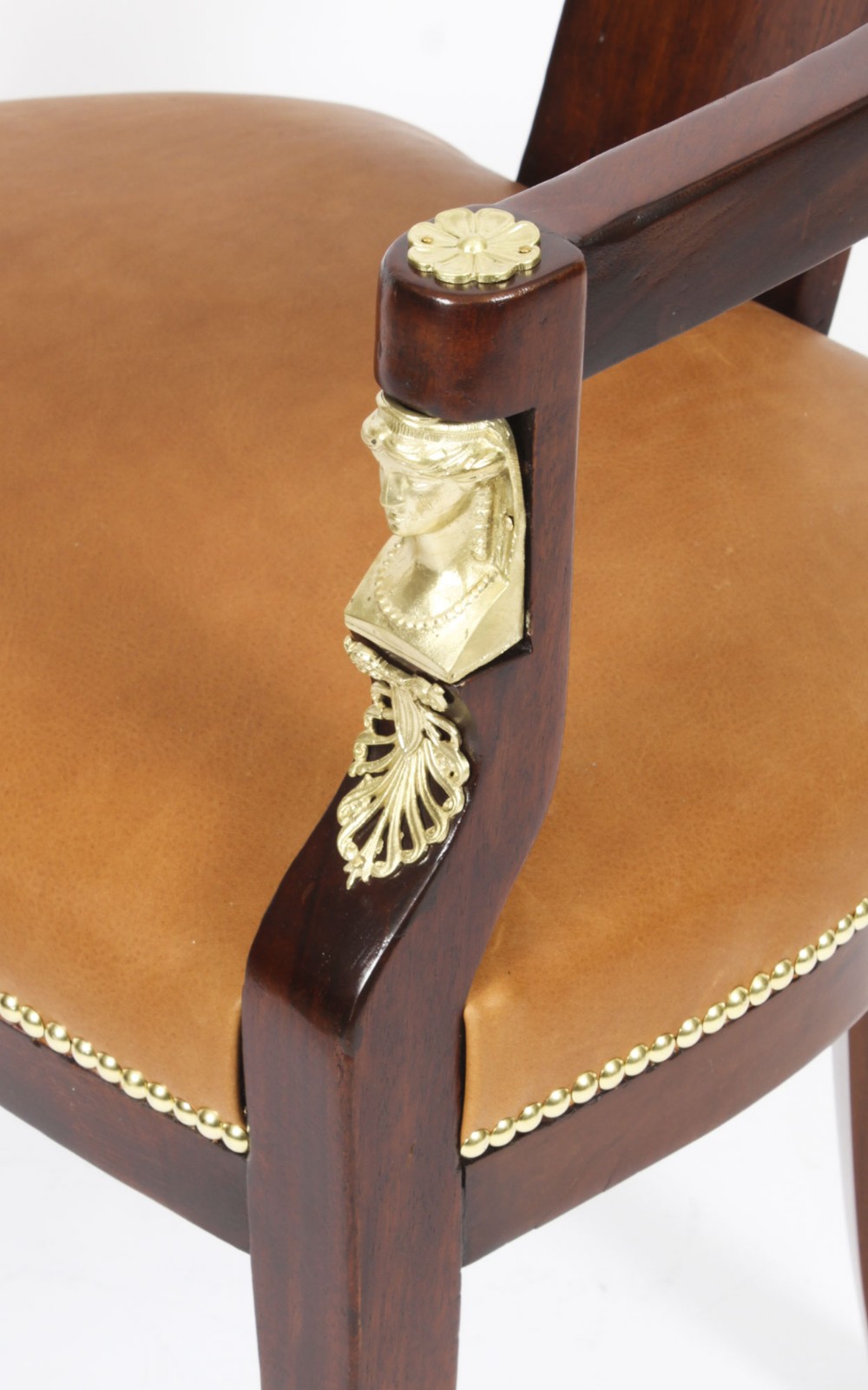
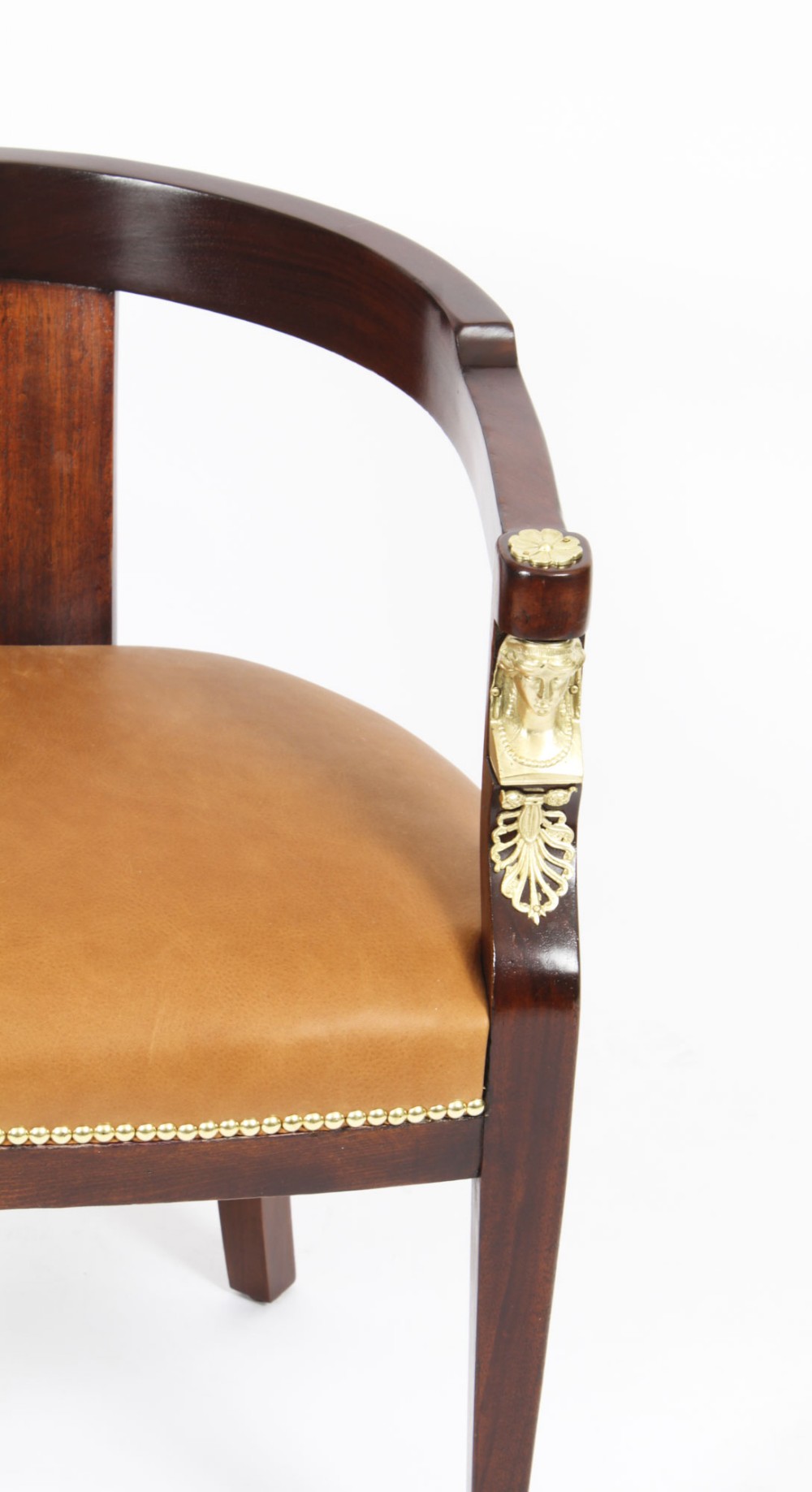
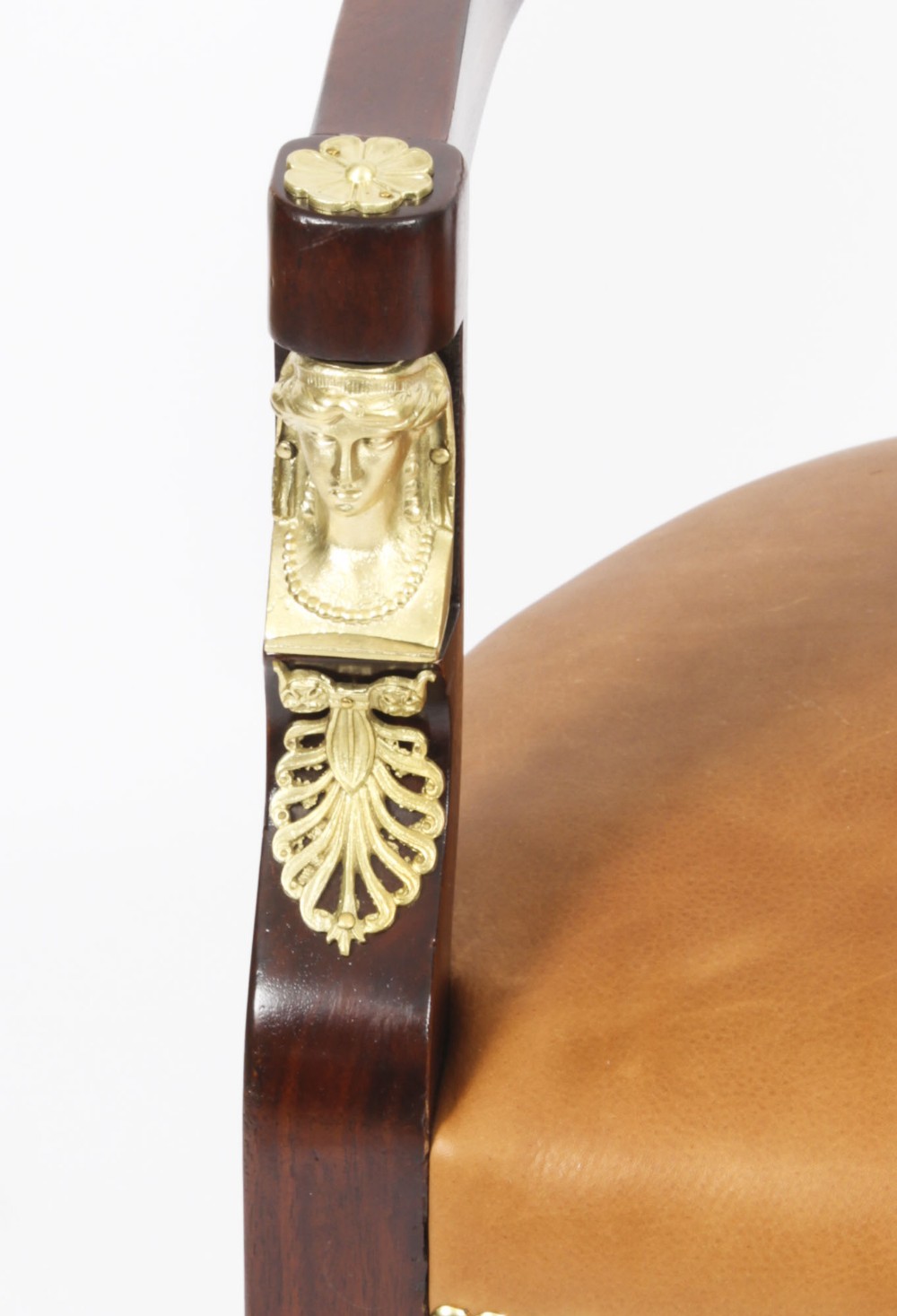
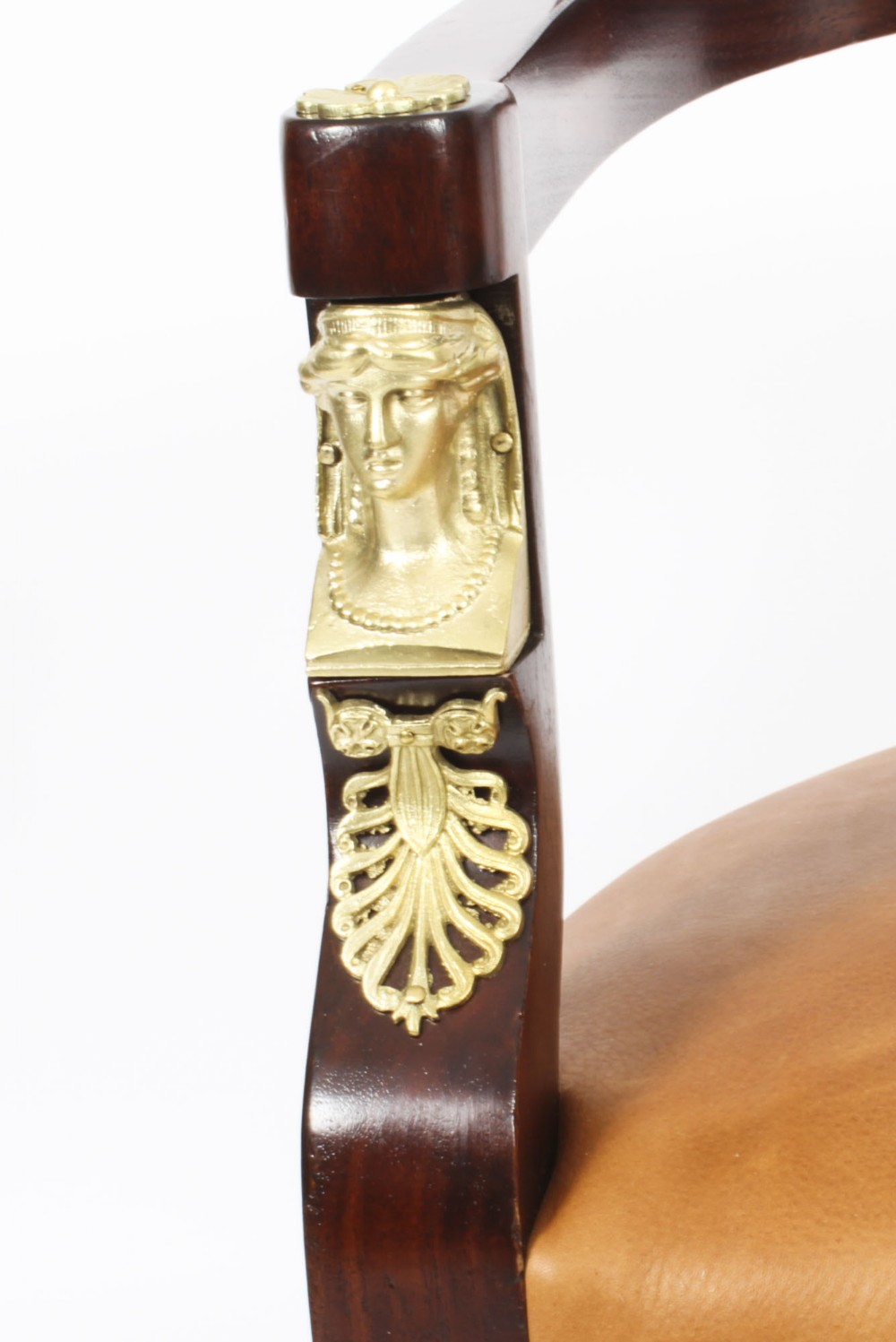
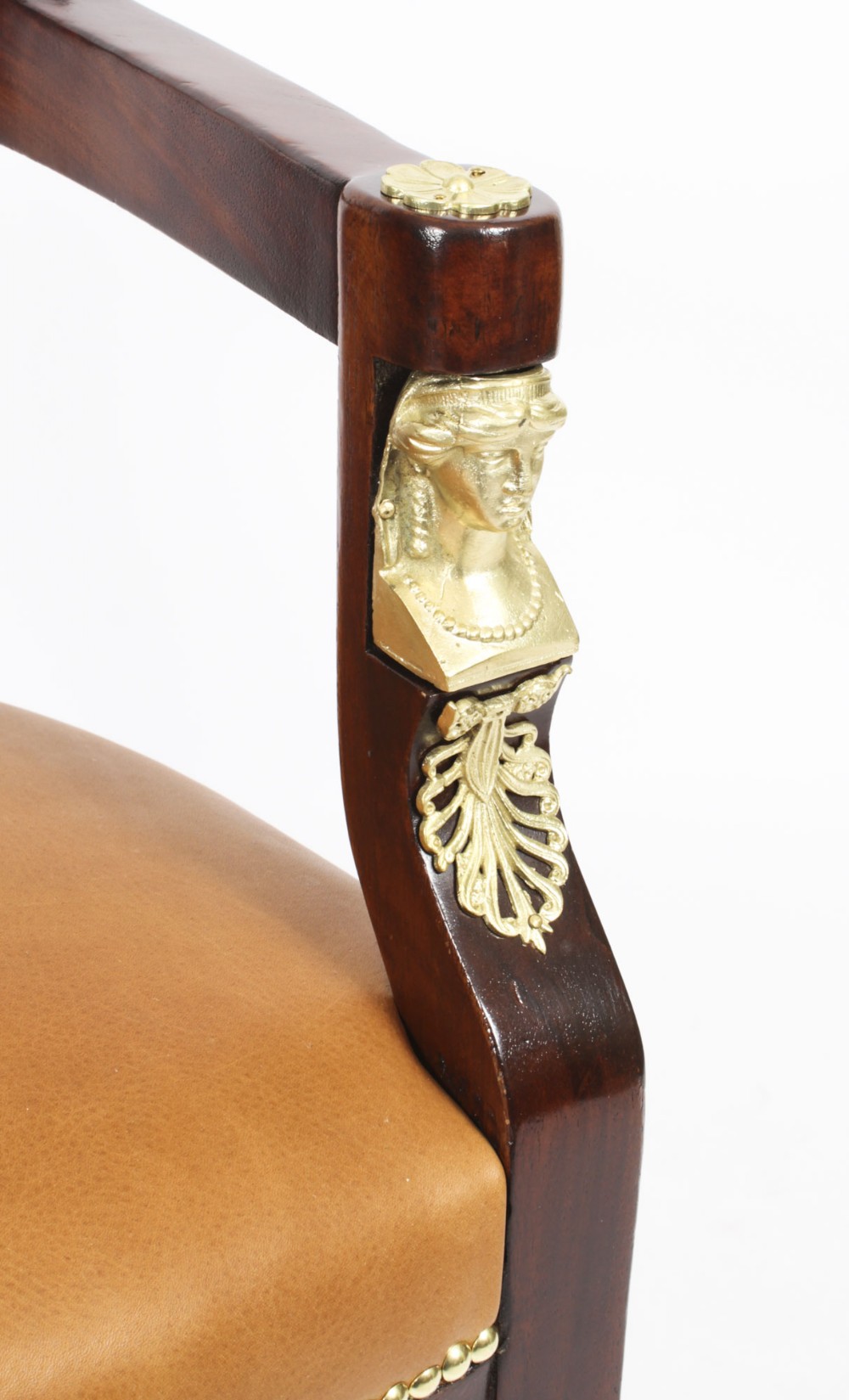
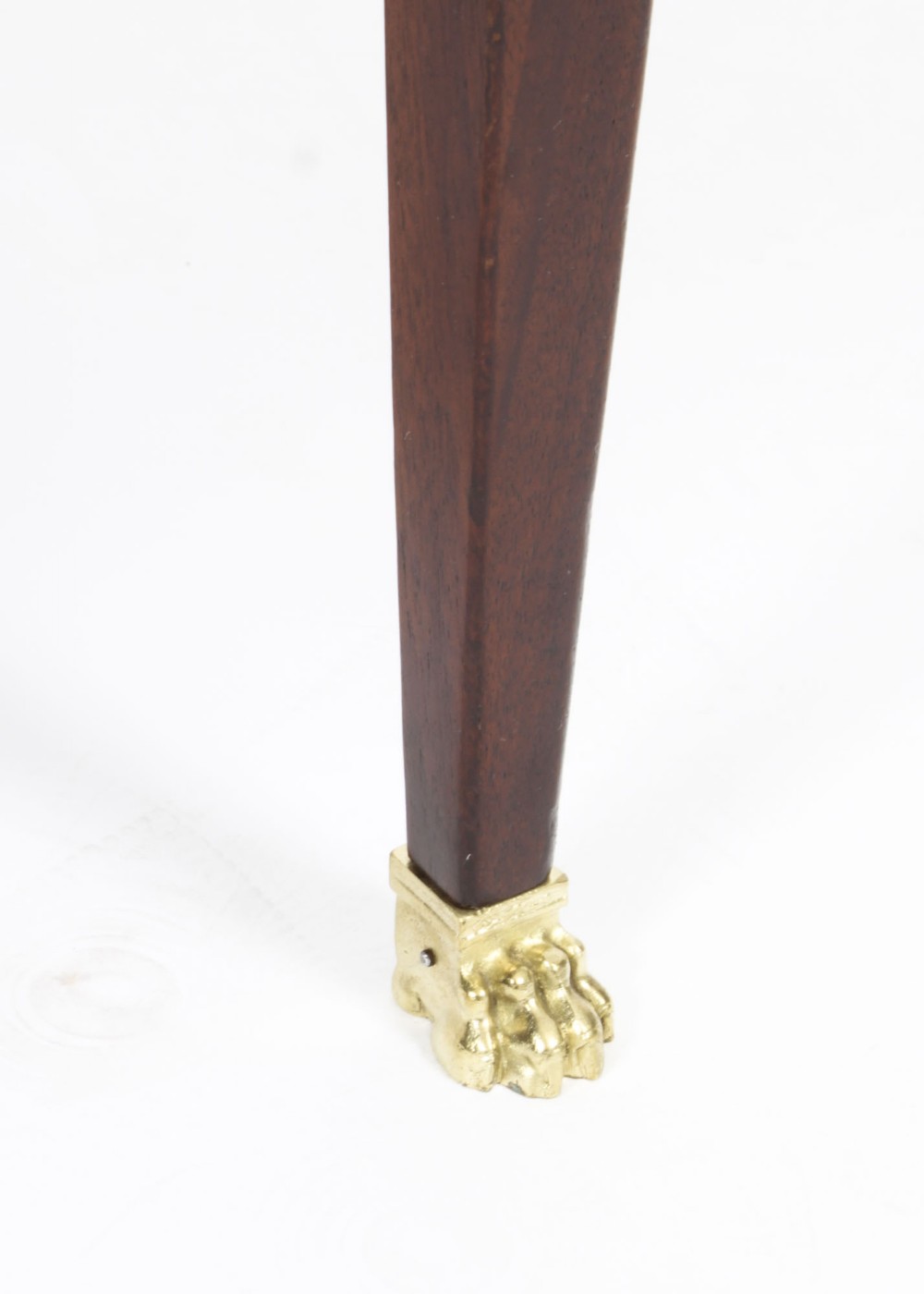
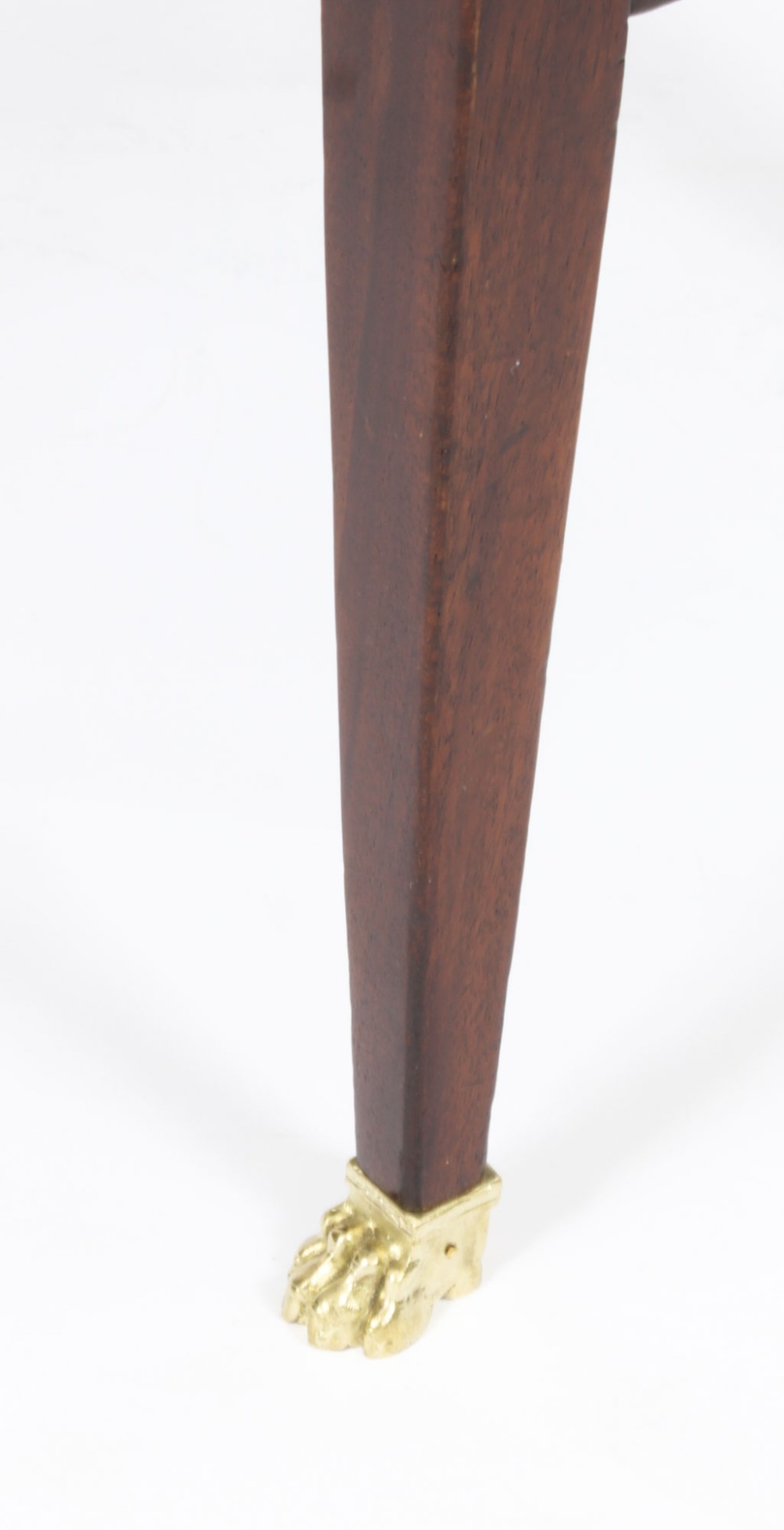
It has a curved back and an upholstered leather seat. The mahogany is beautiful in colour and has been embellished with striking ormolu anthemion plaques. It stands on panelled tapering legs heading by ormolu rosettes and terminating in decorative ormolu paw feet.

This chair would be ideal for use with a bureau plat or in the bedroom.

Condition:

In really excellent condition, please see photos for confirmation.

Dimensions in cm:

Height 74 x Width 61 x Depth 52

Dimensions in inches:

Height 2 foot, 5 inches x Width 2 foot x Depth 1 foot, 8 inches

Mahogany

is probably one of the largest ‘families’ of hardwood, having many different varieties within its own species.

Mahogany has been used for centuries in ship building, house building, furniture making etc and is the core structure of just about every 19th century vanity box, dressing case or jewellery box. It became more of a Victorian trend to dress Mahogany with these decorative veneers, such as Burr Walnut and Coromandel, so that the actual Mahogany was almost hidden from view.

Mahogany itself is a rich reddish brown wood that can range from being plain in appearance to something that is so vibrant, figured and almost three dimensional in effect.

Although Mahogany was most often used in its solid form, it also provided some beautifully figured varieties of veneer like ‘Flame’ Mahogany and ‘Fiddleback’ Mahogany (named after its preferred use in the manufacture of fine musical instruments).

Cuban Mahogany was so sought after, that by the late 1850's, this particular variety became all but extinct.

Empire style,

is an early-19th-century design movement in architecture, furniture, other decorative arts, and the visual arts followed in Europe and America until around 1830.

The style originated in and takes its name from the rule of Napoleon I in the First French Empire, where it was intended to idealize Napoleon's leadership and the French state. The style corresponds to the Biedermeier style in the German-speaking lands, Federal style in the United States and to the Regency style in Britain. The previous style was called Louis XVI style, in France.

The Empire style was based on aspects of the Roman Empire. It is the second phase of neoclassicism which is also called "Directoire", after a goverment system.

Furniture typically had symbols and ornaments borrowed from the glorious ancient Greek and Roman empires.

The furniture was made from heavy woods such as mahogany and ebony, imported from the colonies, with dark finishes often with decorative bronze mounts. Marble tops were popular as were Egyptian motifs like sphinxes, griffins, urns and eagles and the Napoleonic symbols, the eagle, the bee, the initials "I" and a large "N."

Gilded bronze (ormolu) details displayed a high level of craftsmanship.

Ormolu

(from French 'or moulu', signifying ground or pounded gold) is an 18th-century English term for applying finely ground, high-carat gold in a mercury amalgam to an object of bronze.The mercury is driven off in a kiln leaving behind a gold-coloured veneer known as 'gilt bronze'.

The manufacture of true ormolu employs a process known as mercury-gilding or fire-gilding, in which a solution of nitrate of mercury is applied to a piece of copper, brass, or bronze, followed by the application of an amalgam of gold and mercury. The item was then exposed to extreme heat until the mercury burned off and the gold remained, adhered to the metal object.

Our reference: A2914

Date of Manufacture

Regent Antiques has dated this piece to the 19th Century.

Physical Dimensions
Height
74cm (29.13")
Width
61cm (24.02")
Depth
52cm (20.47")
Reference Numbers
Sellingantiques Reference
SA958796
Dealers Internal Reference
A2914
Antique Empire Tub Arm Desk Chair c.1850
Detail view 1Detail view 2Detail view 3Detail view 4Detail view 5Detail view 6Detail view 7Detail view 8Detail view 9Detail view 10Detail view 11Detail view 12Detail view 13Detail view 14Detail view 15Detail view 16Detail view 17
SOLD6+ MONTHS AGO
1 / 18
19th Century · SA958796
Antique Empire Tub Arm Desk Chair C.1850
Sorry, but this item has been sold.
Description
This is a beautiful antique French mahogany Empire "fauteuil du bureau", desk chair, Circa 1850 in date.

It has a curved back and an upholstered leather seat. The mahogany is beautiful in colour and has been embellished with striking ormolu anthemion plaques. It stands on panelled tapering legs heading by ormolu rosettes and terminating in decorative ormolu paw feet.

This chair would be ideal for use with a bureau plat or in the bedroom.

Condition:

In really excellent condition, please see photos for confirmation.

Dimensions in cm:

Height 74 x Width 61 x Depth 52

Dimensions in inches:

Height 2 foot, 5 inches x Width 2 foot x Depth 1 foot, 8 inches

Mahogany

is probably one of the largest ‘families’ of hardwood, having many different varieties within its own species.

Mahogany has been used for centuries in ship building, house building, furniture making etc and is the core structure of just about every 19th century vanity box, dressing case or jewellery box. It became more of a Victorian trend to dress Mahogany with these decorative veneers, such as Burr Walnut and Coromandel, so that the actual Mahogany was almost hidden from view.

Mahogany itself is a rich reddish brown wood that can range from being plain in appearance to something that is so vibrant, figured and almost three dimensional in effect.

Although Mahogany was most often used in its solid form, it also provided some beautifully figured varieties of veneer like ‘Flame’ Mahogany and ‘Fiddleback’ Mahogany (named after its preferred use in the manufacture of fine musical instruments).

Cuban Mahogany was so sought after, that by the late 1850's, this particular variety became all but extinct.

Empire style,

is an early-19th-century design movement in architecture, furniture, other decorative arts, and the visual arts followed in Europe and America until around 1830.

The style originated in and takes its name from the rule of Napoleon I in the First French Empire, where it was intended to idealize Napoleon's leadership and the French state. The style corresponds to the Biedermeier style in the German-speaking lands, Federal style in the United States and to the Regency style in Britain. The previous style was called Louis XVI style, in France.

The Empire style was based on aspects of the Roman Empire. It is the second phase of neoclassicism which is also called "Directoire", after a goverment system.

Furniture typically had symbols and ornaments borrowed from the glorious ancient Greek and Roman empires.

The furniture was made from heavy woods such as mahogany and ebony, imported from the colonies, with dark finishes often with decorative bronze mounts. Marble tops were popular as were Egyptian motifs like sphinxes, griffins, urns and eagles and the Napoleonic symbols, the eagle, the bee, the initials "I" and a large "N."

Gilded bronze (ormolu) details displayed a high level of craftsmanship.

Ormolu

(from French 'or moulu', signifying ground or pounded gold) is an 18th-century English term for applying finely ground, high-carat gold in a mercury amalgam to an object of bronze.The mercury is driven off in a kiln leaving behind a gold-coloured veneer known as 'gilt bronze'.

The manufacture of true ormolu employs a process known as mercury-gilding or fire-gilding, in which a solution of nitrate of mercury is applied to a piece of copper, brass, or bronze, followed by the application of an amalgam of gold and mercury. The item was then exposed to extreme heat until the mercury burned off and the gold remained, adhered to the metal object.

Our reference: A2914
Date19th Century
Height74cm (29.13")
Width61cm (24.02")
Depth52cm (20.47")
ReferenceSA958796
Dealer's referenceA2914
Regent Antiques
Regent AntiquesSellingantiques verified since Sep 2016

We specialise in english and continental furniture, silver, porcelain and decorative items.

Member of LAPADA CINOA

SHARE
SAVE
Archive I Antique Empire Tub Arm Desk Chair c.1850
SOLD6+ MONTHS AGO

Antique Empire Tub Arm Desk Chair C.1850

Archive II Antique Empire Tub Arm Desk Chair c.1850
 View II
Archive III Antique Empire Tub Arm Desk Chair c.1850
 View III
Archive IV Antique Empire Tub Arm Desk Chair c.1850
 View IV
Archive V Antique Empire Tub Arm Desk Chair c.1850
 View V
Archive VI Antique Empire Tub Arm Desk Chair c.1850
 View VI
Archive VII Antique Empire Tub Arm Desk Chair c.1850
 View VII
Archive VIII Antique Empire Tub Arm Desk Chair c.1850
 View VIII
Archive IX Antique Empire Tub Arm Desk Chair c.1850
 View IX
Archive X Antique Empire Tub Arm Desk Chair c.1850
 View X
Archive XI Antique Empire Tub Arm Desk Chair c.1850
 View XI
Archive XII Antique Empire Tub Arm Desk Chair c.1850
 View XII
Archive XIII Antique Empire Tub Arm Desk Chair c.1850
 View XIII
Archive XIV Antique Empire Tub Arm Desk Chair c.1850
 View XIV
Archive XV Antique Empire Tub Arm Desk Chair c.1850
 View XV
Archive XVI Antique Empire Tub Arm Desk Chair c.1850
 View XVI
Archive XVII Antique Empire Tub Arm Desk Chair c.1850
 View XVII
Archive XVIII Antique Empire Tub Arm Desk Chair c.1850
 View XVIII
Enlarged Archival View
Location
Manor Warehouse
318 Green Lanes
London
N4 1BX
United Kingdom
Verified Since Sep 2016
Items For Sale 637
Items Sold 2,758
Regent Antiques
Regent Antiques
Verified Since Sep 2016
View Dealer Info
Location: Manor Warehouse, 318 Green Lanes, London, N4 1BX, United Kingdom
Verified
Sep 2016
For Sale
637
Sold
2,758
Antique Empire Tub Arm Desk Chair c.1850
Ref: SA958796
Antique Empire Tub Arm Desk Chair c.1850
Detail View 1
Detail View 2
Detail View 3
Detail View 4
Detail View 5
Detail View 6
Detail View 7
Detail View 8
Detail View 9
Detail View 10
Detail View 11
Detail View 12
Detail View 13
Detail View 14
Detail View 15
Detail View 16
Detail View 17
Archival Detail
Every single antique dealer on our platform is individually approved by our internal team. We verify their professional trade history, ethical standards, and photographic quality to ensure a secure, high-standard buying environment. Upon joining, every dealer agrees to a strict 9-point code of conduct. While issues can occasionally arise, our dealers typically resolve them swiftly and directly with the buyer. In fact, since our founding in 2002, Sellingantiques has only had to step in to help resolve an issue on roughly five occasions—a true testament to the quality of our dealers and their dedication to your happiness.
Our dealers are highly experienced in packing and shipping fragile, high-value antiques. Because you are in direct contact with the dealer, you will be able to easily go through all available shipping and insurance options together to ensure your item arrives safely.
Antiques are the ultimate green purchase. By choosing historical pieces over newly manufactured goods, you completely eliminate the carbon footprint of modern mass production while preserving exceptional, timeless craftsmanship.
Written by Sellingantiques from the dealer’s photographs and listing
  • Period19th century
  • SizeH 74 cm (29 in) x W 61 cm (24 in) x D 52 cm (20 in)
items
Add keywords to the filter
Price
£100
£250000
Era
Period
Style
Material
Origin
Stock Location
Recently Added
Online Payments
Categories