It was listed by Regent Antiques. Sold pieces stay on Sellingantiques as a record of what has passed through, and the next one is rarely far away.
Regent Antiques has dated this piece to the 19th Century.
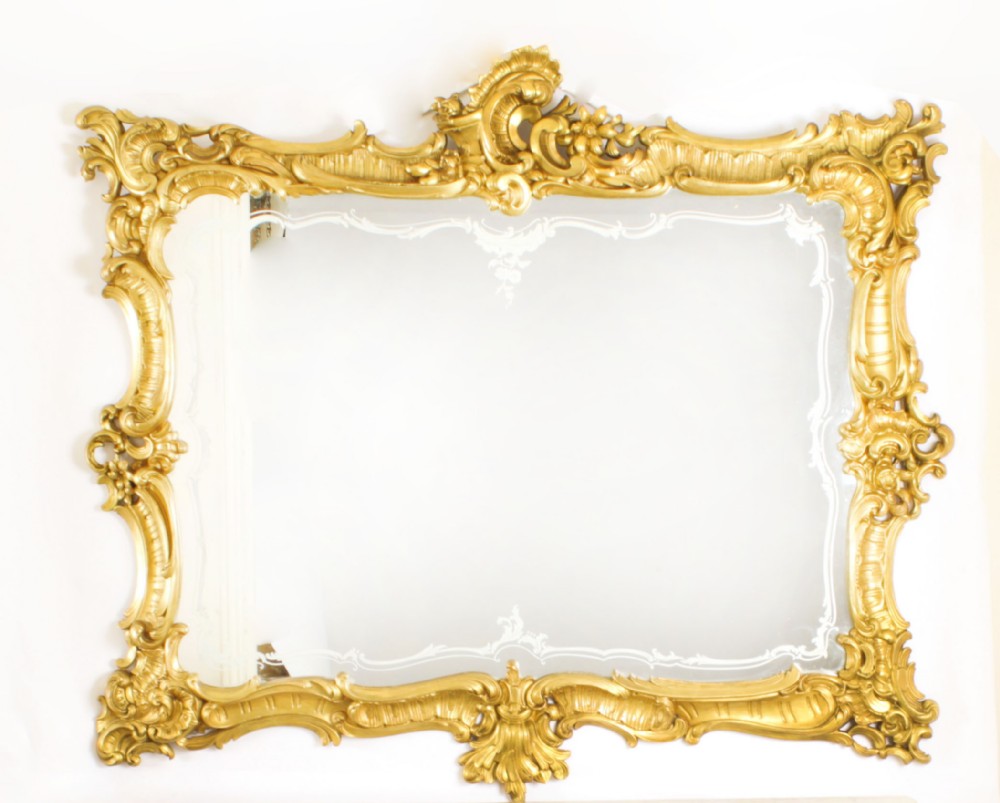
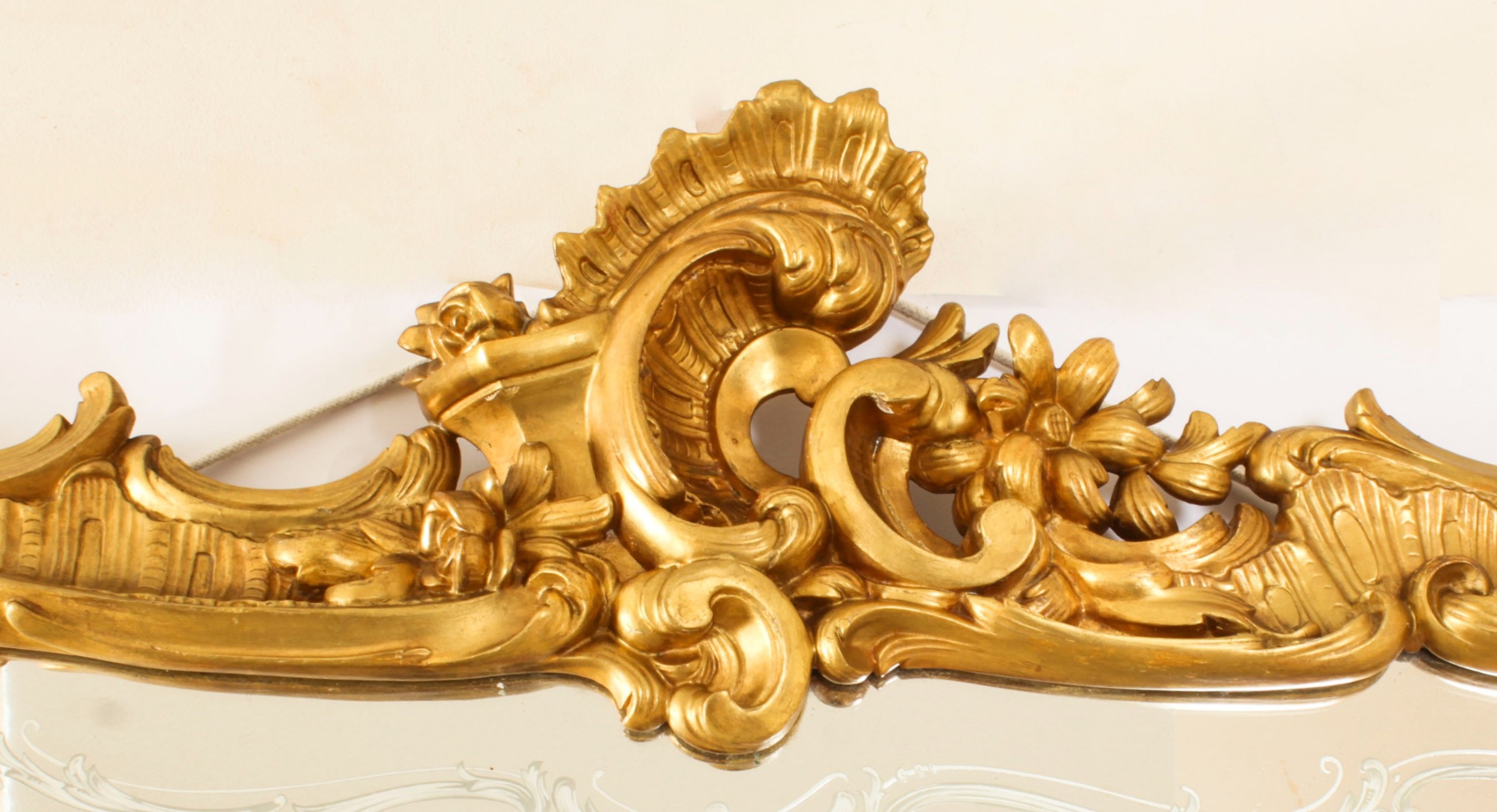
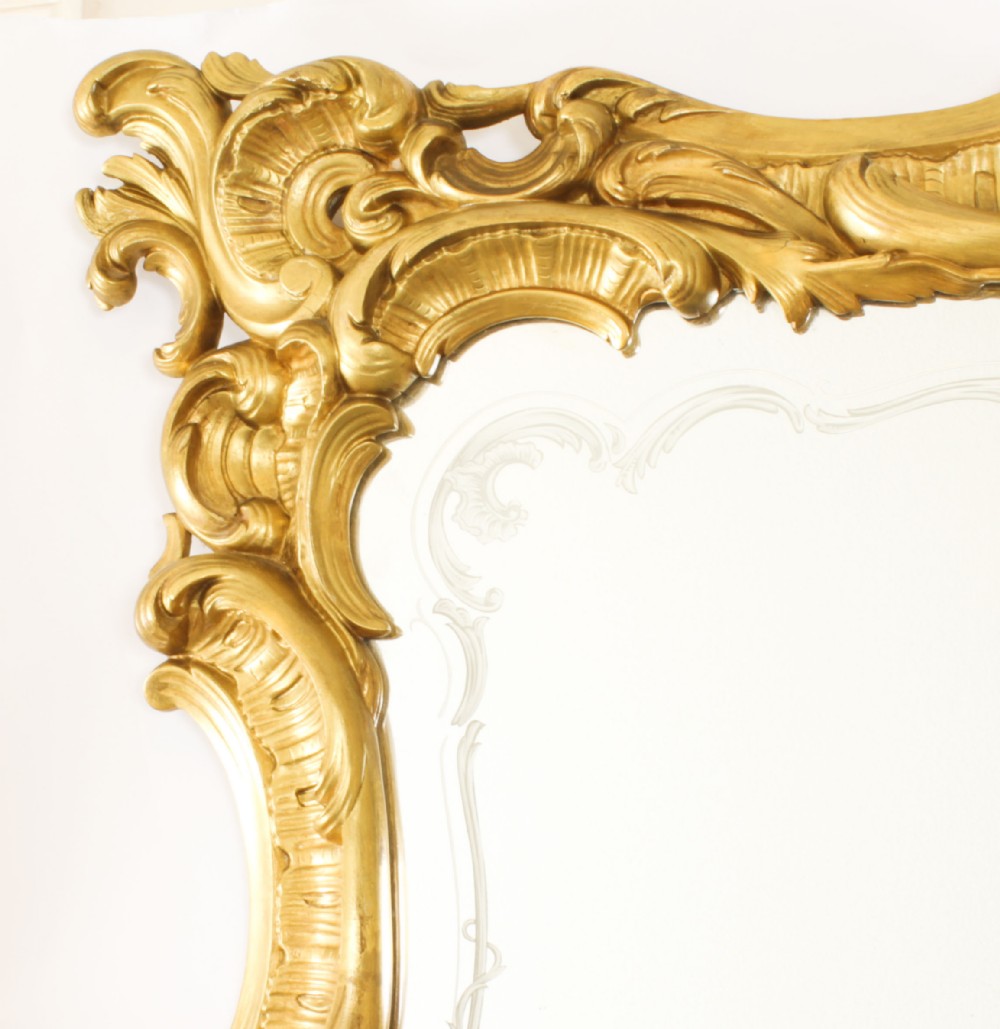
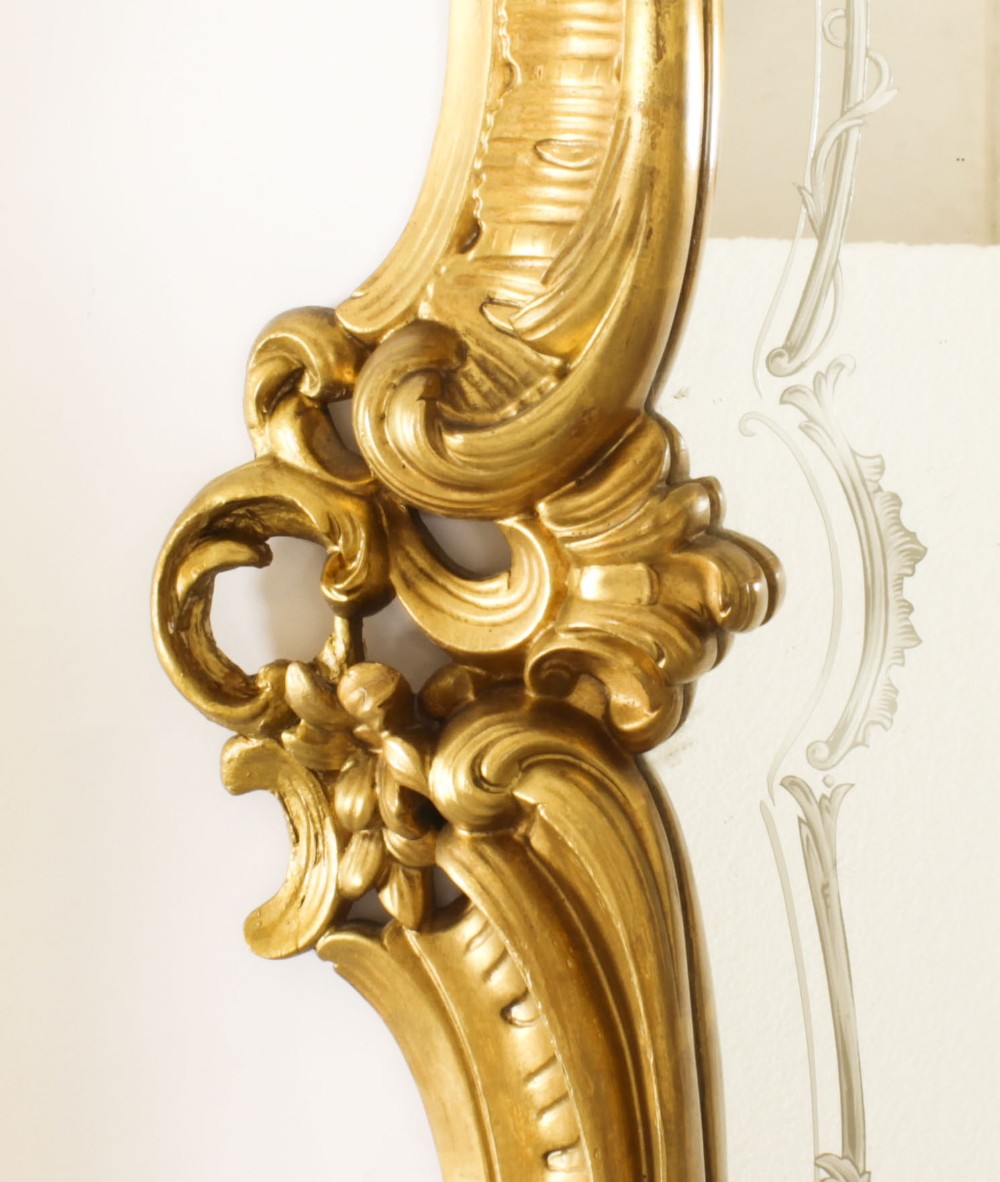
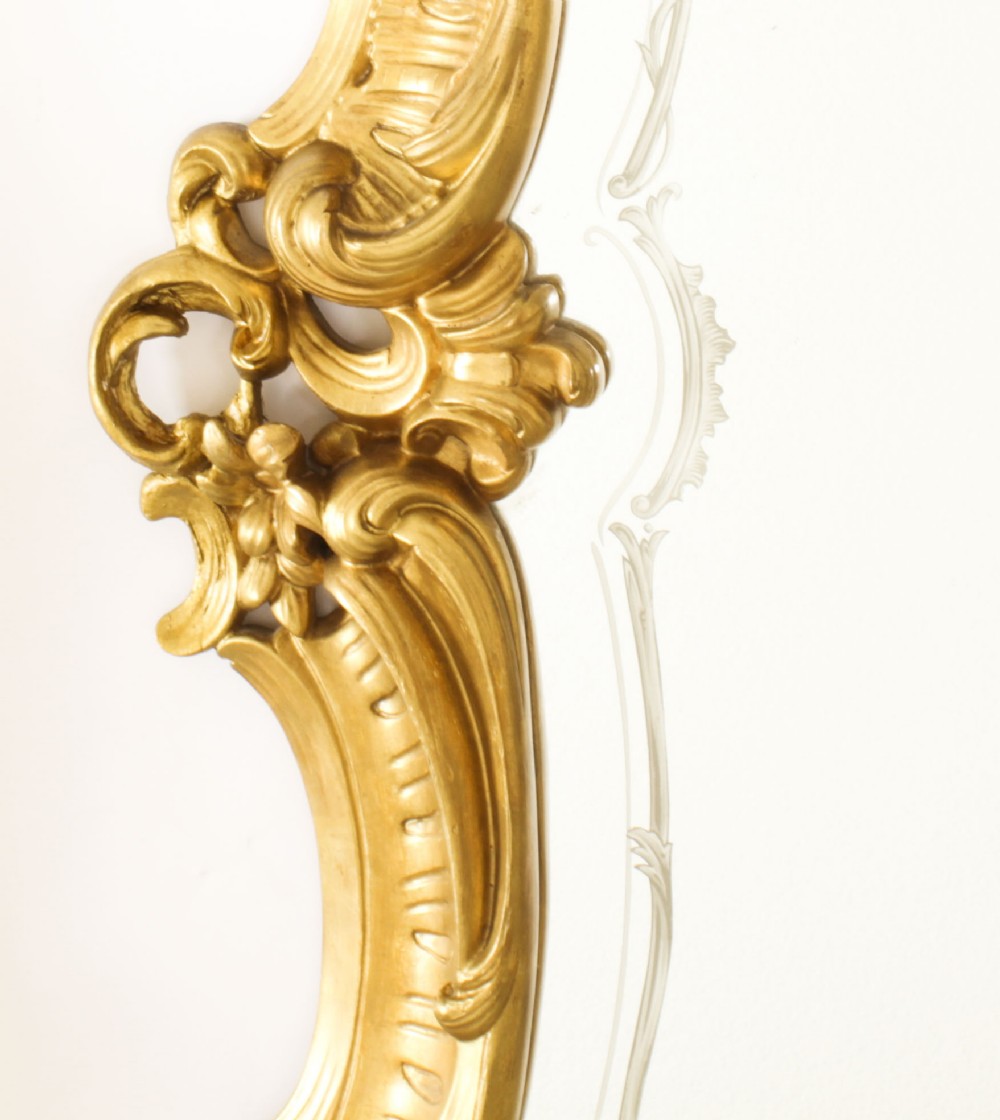
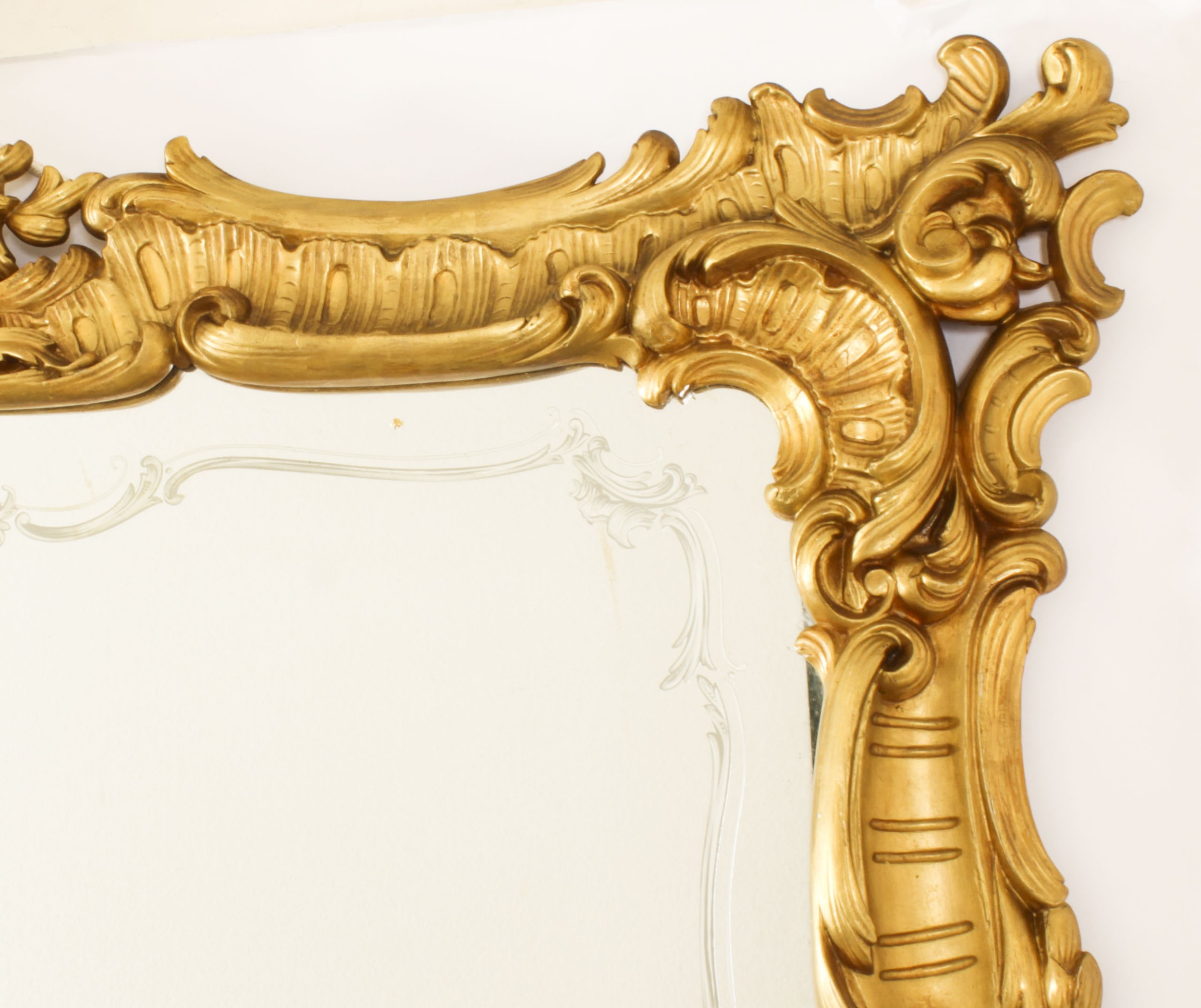
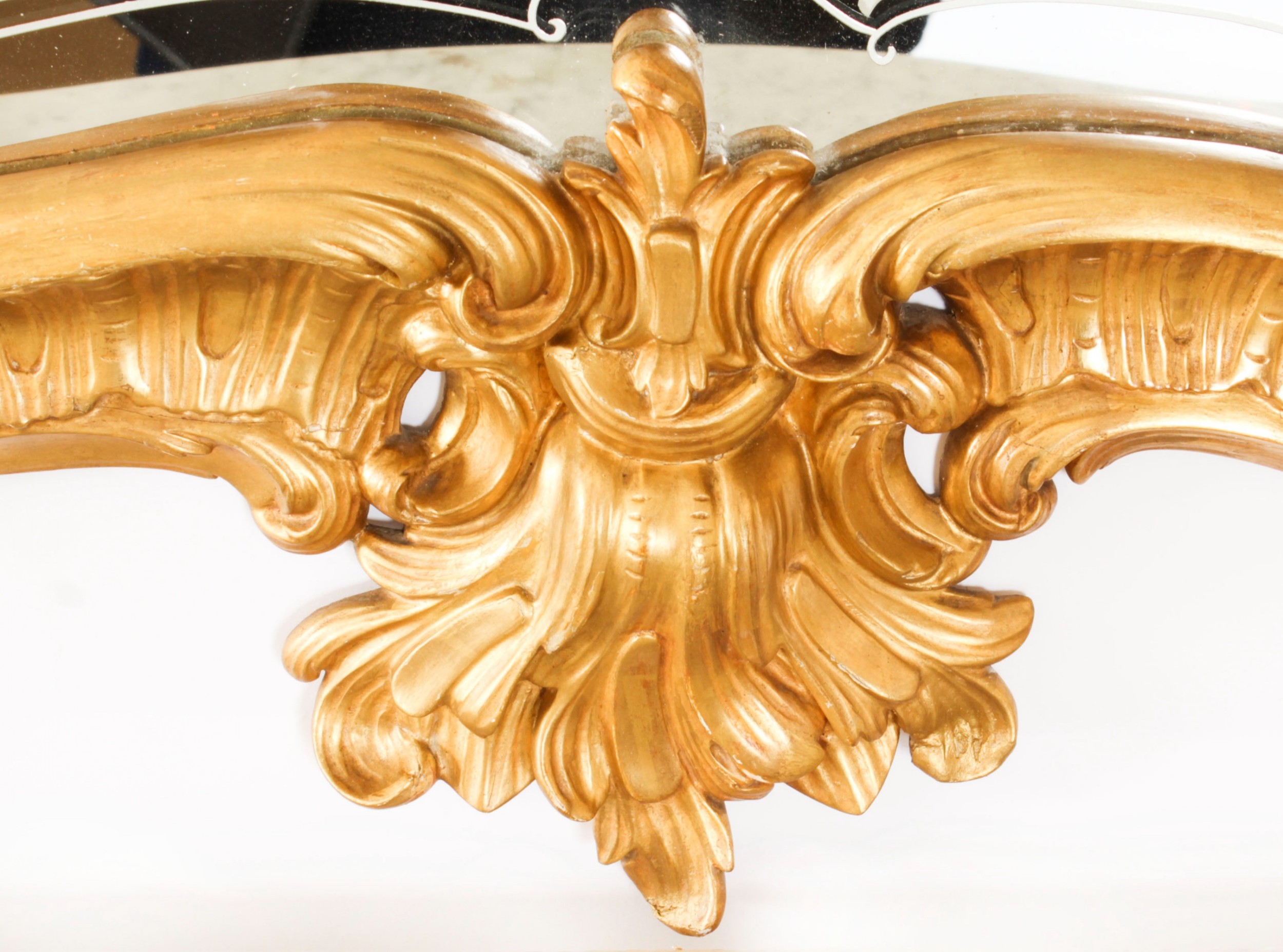
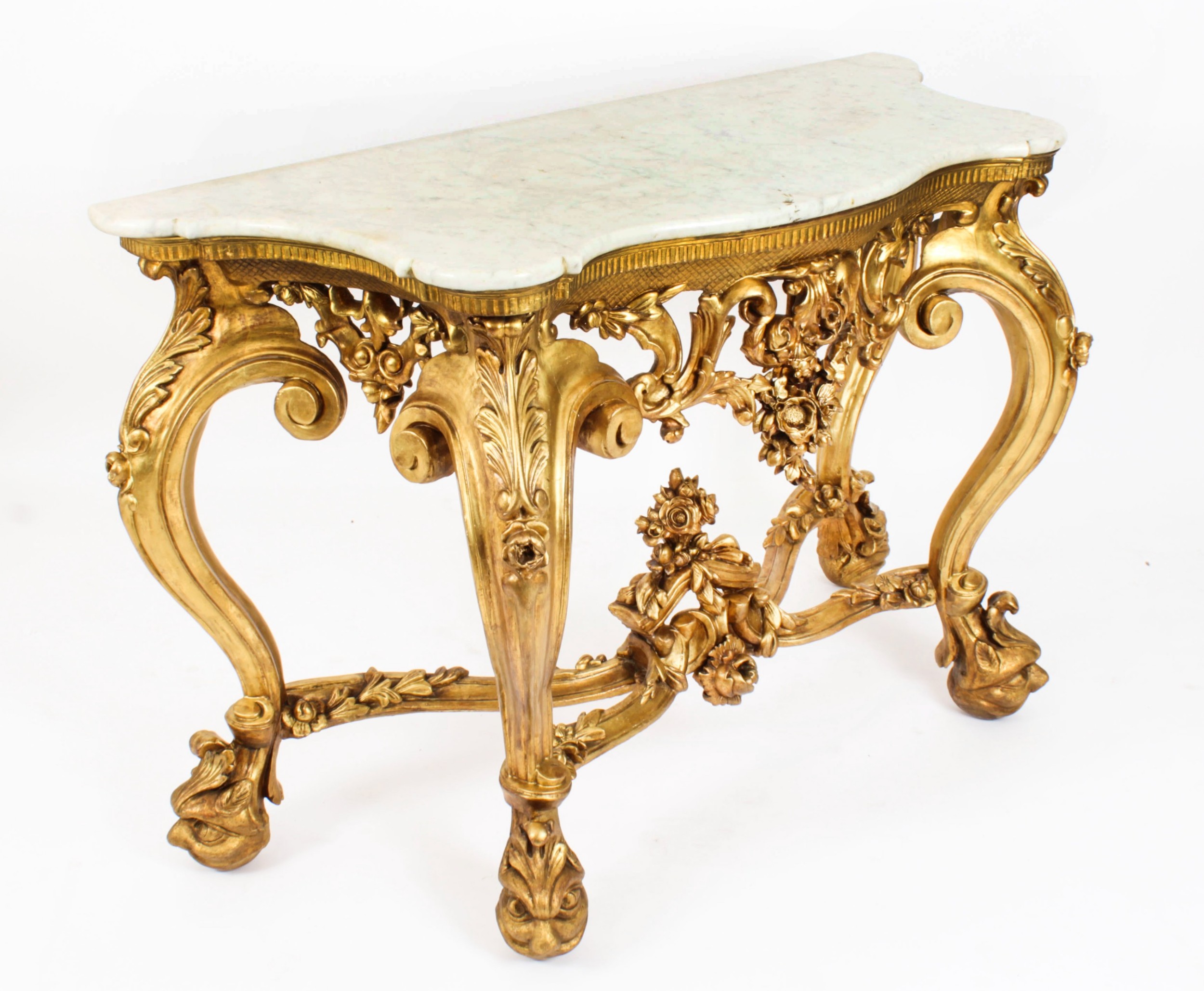
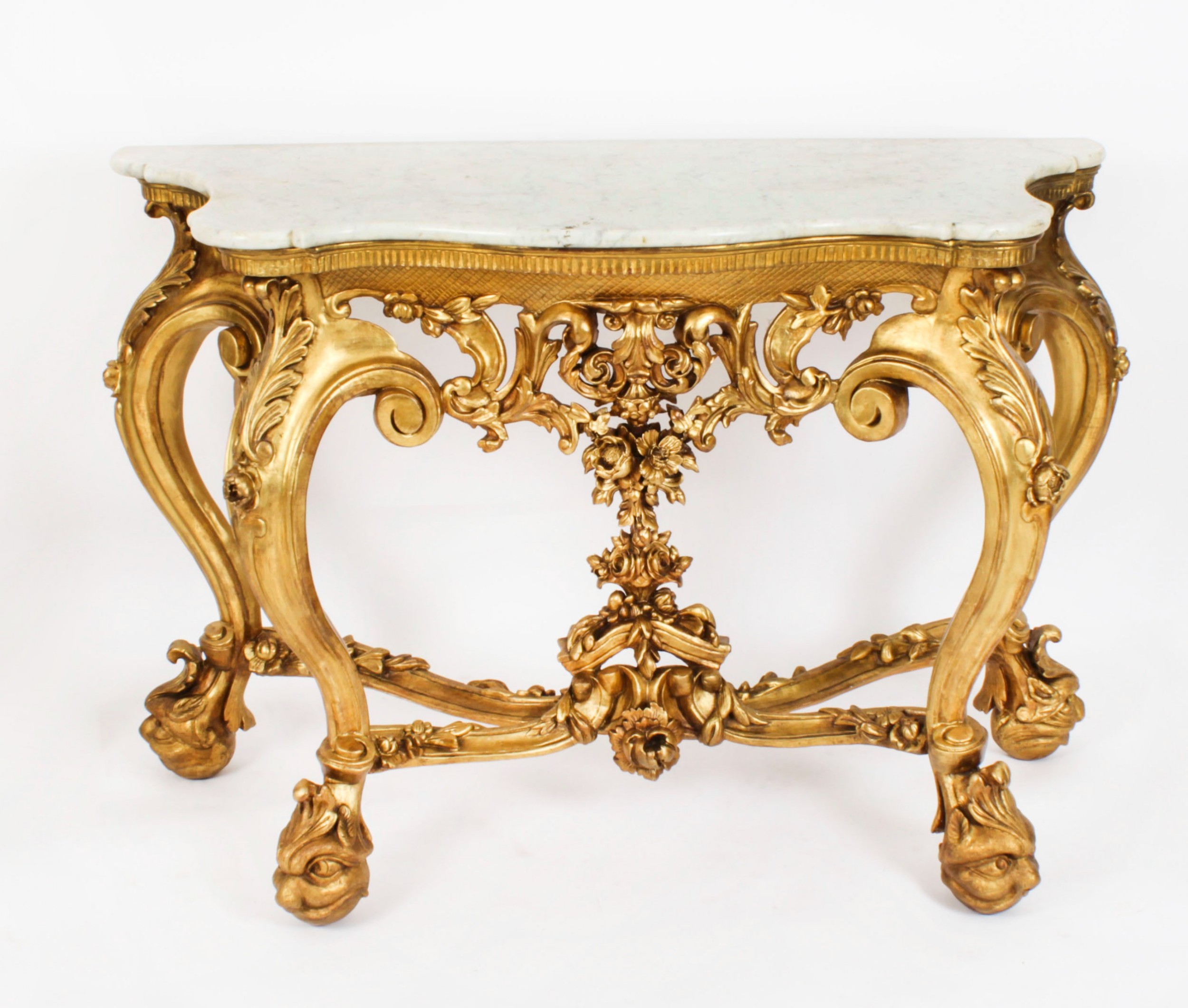
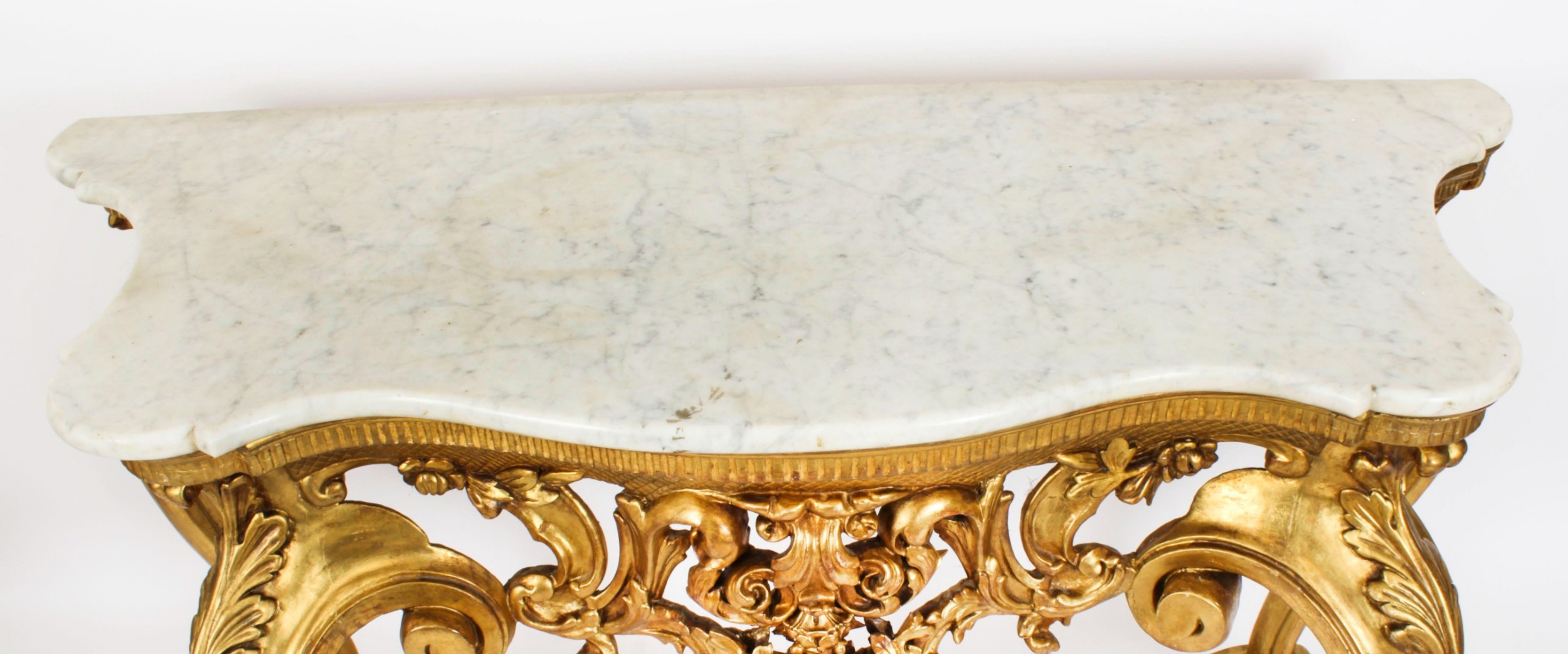
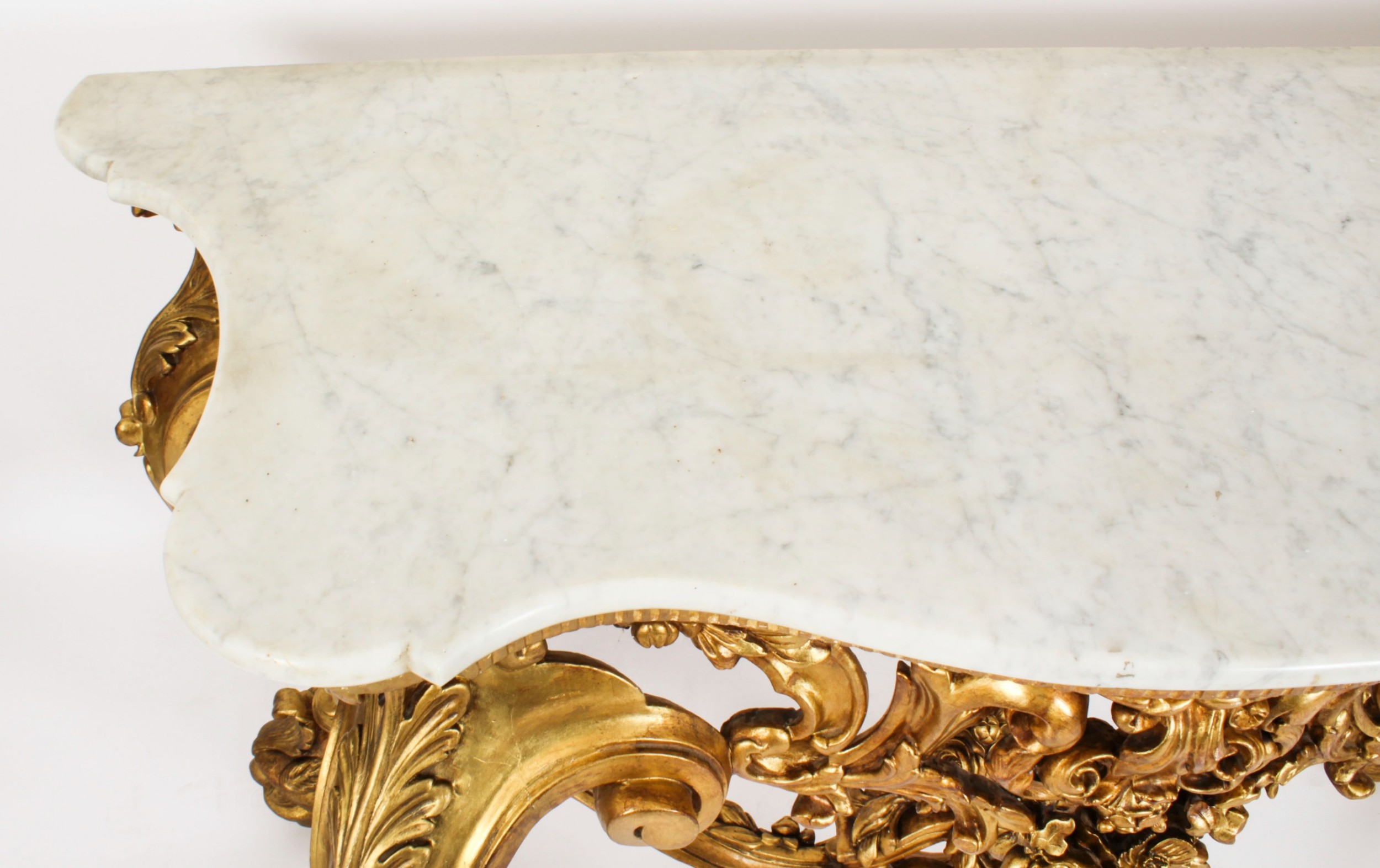
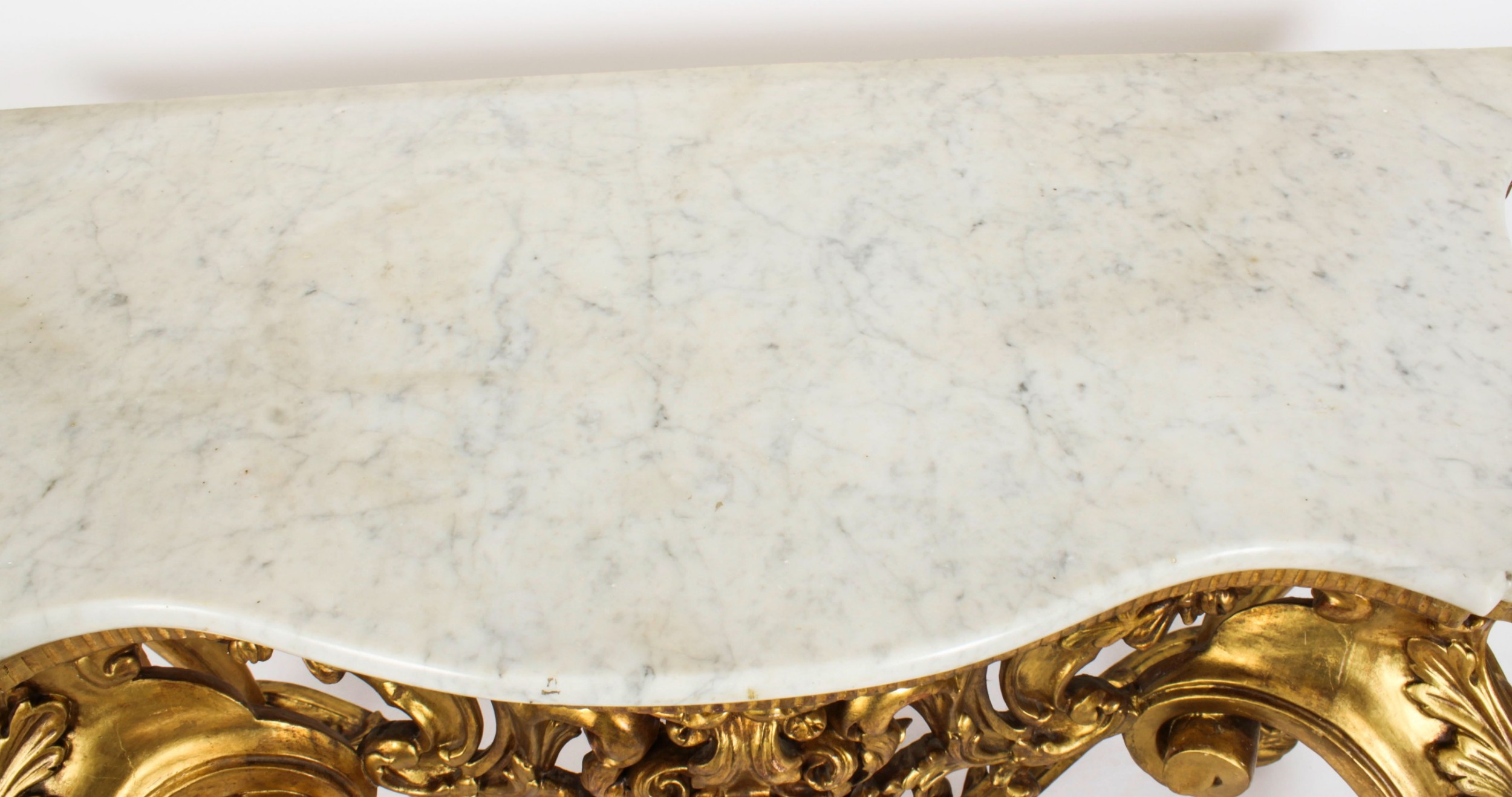
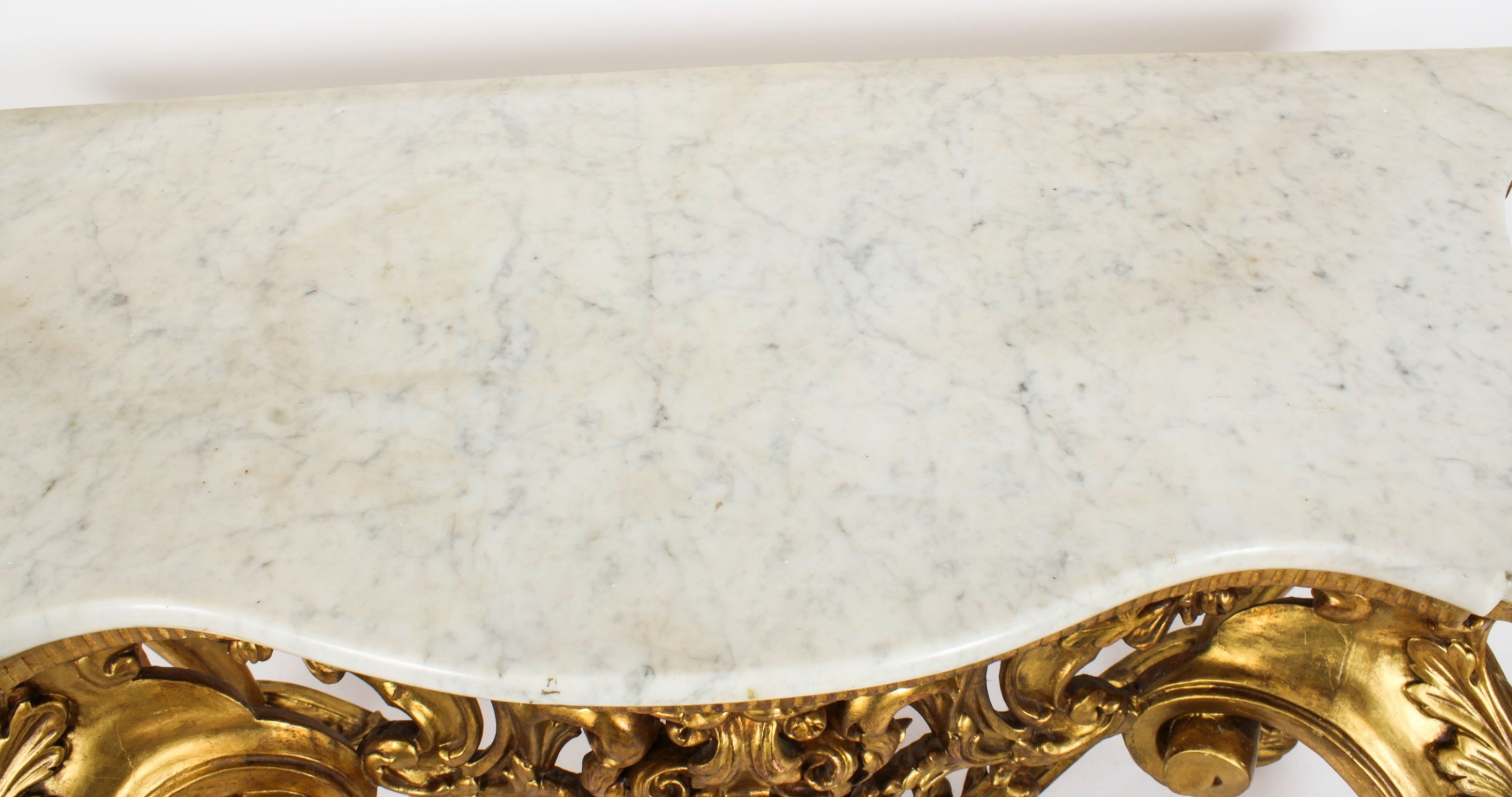
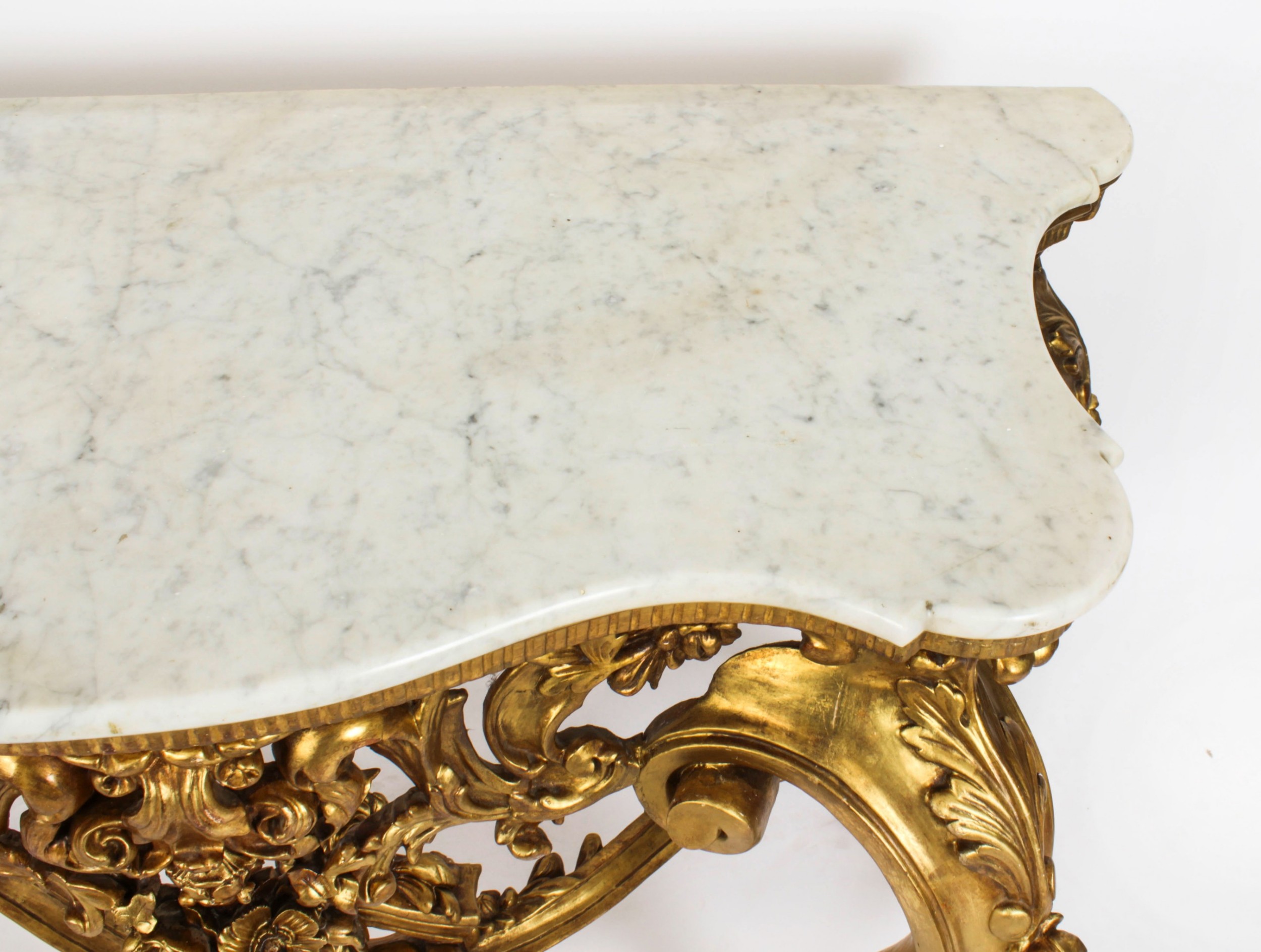
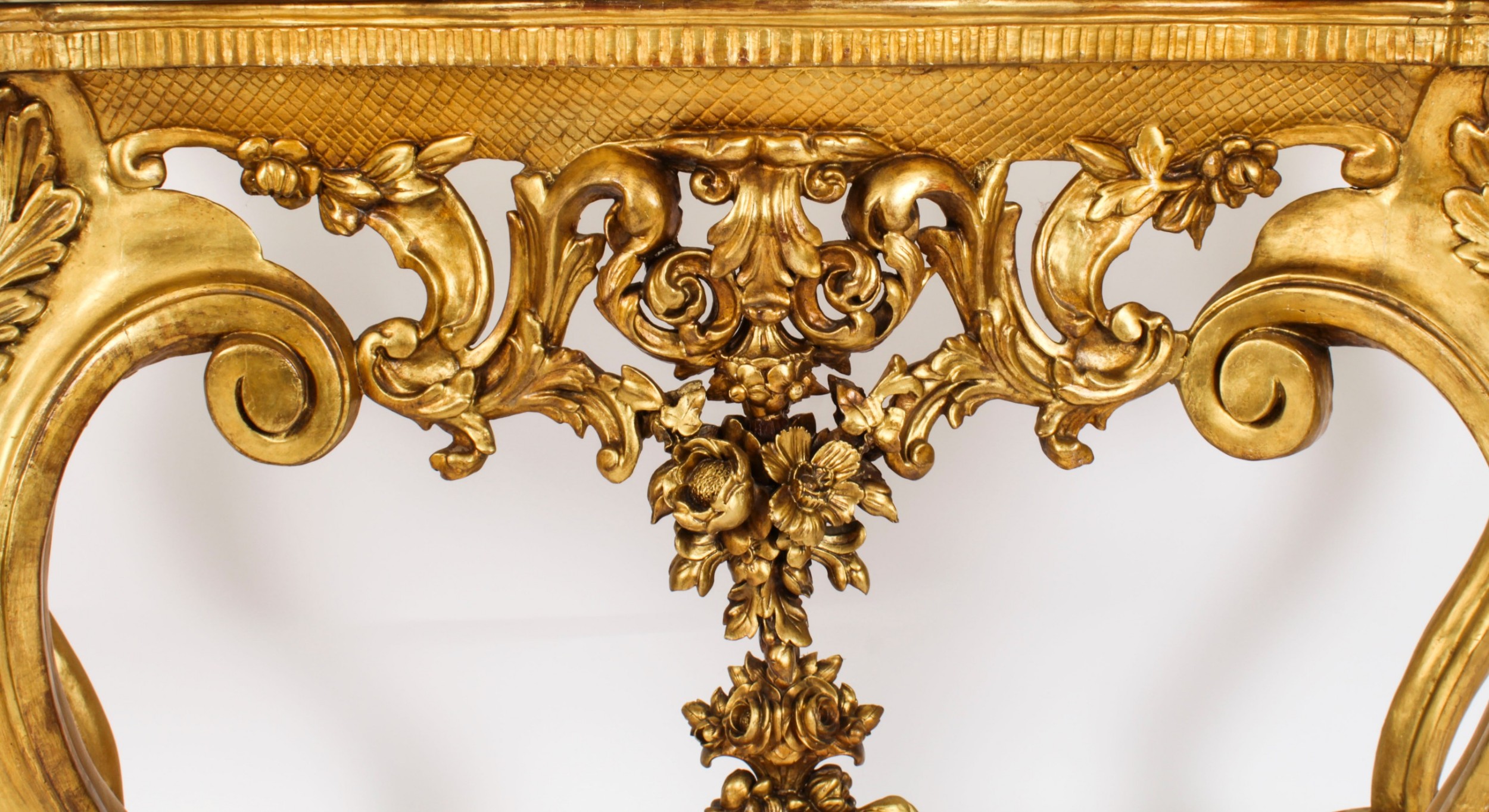
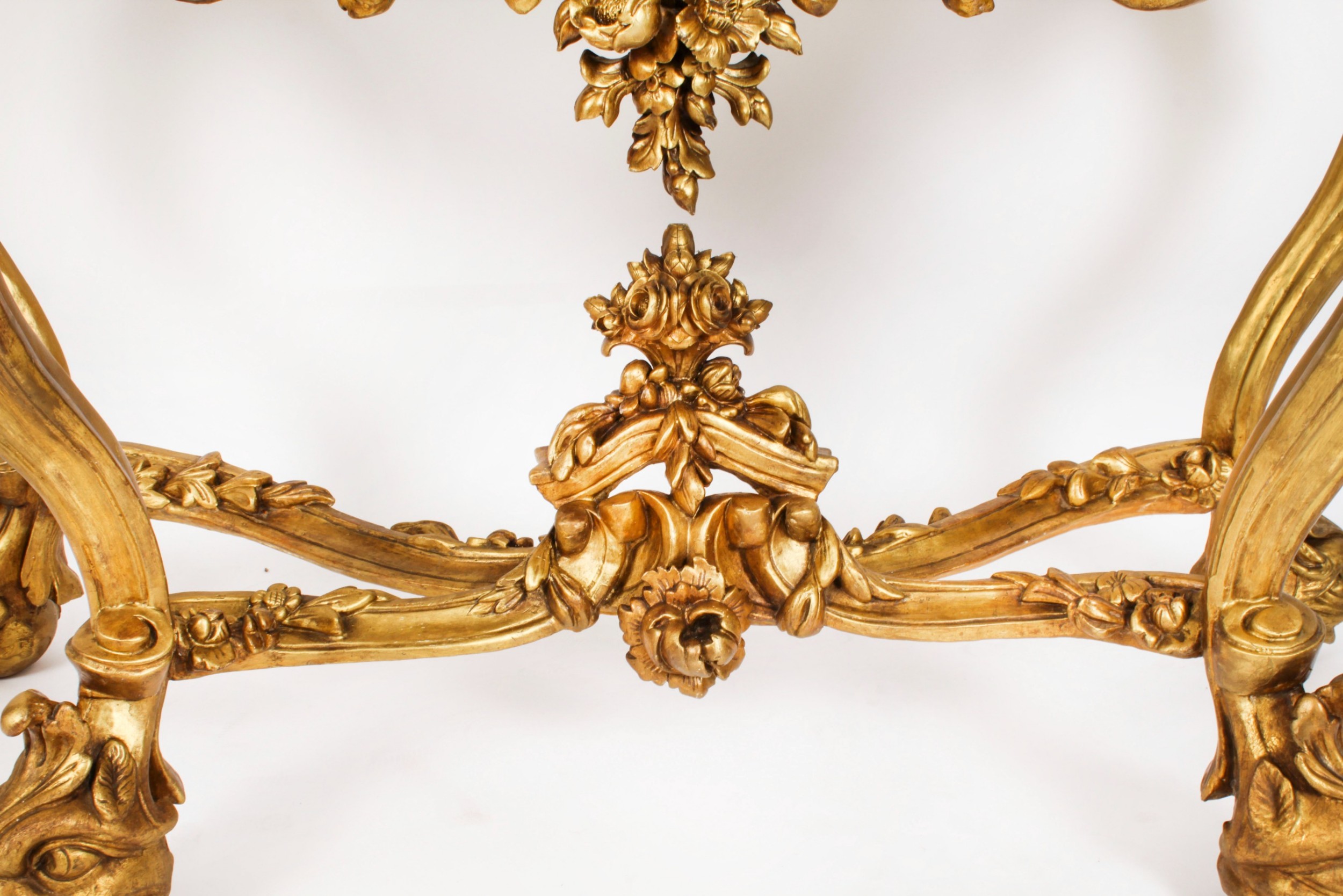
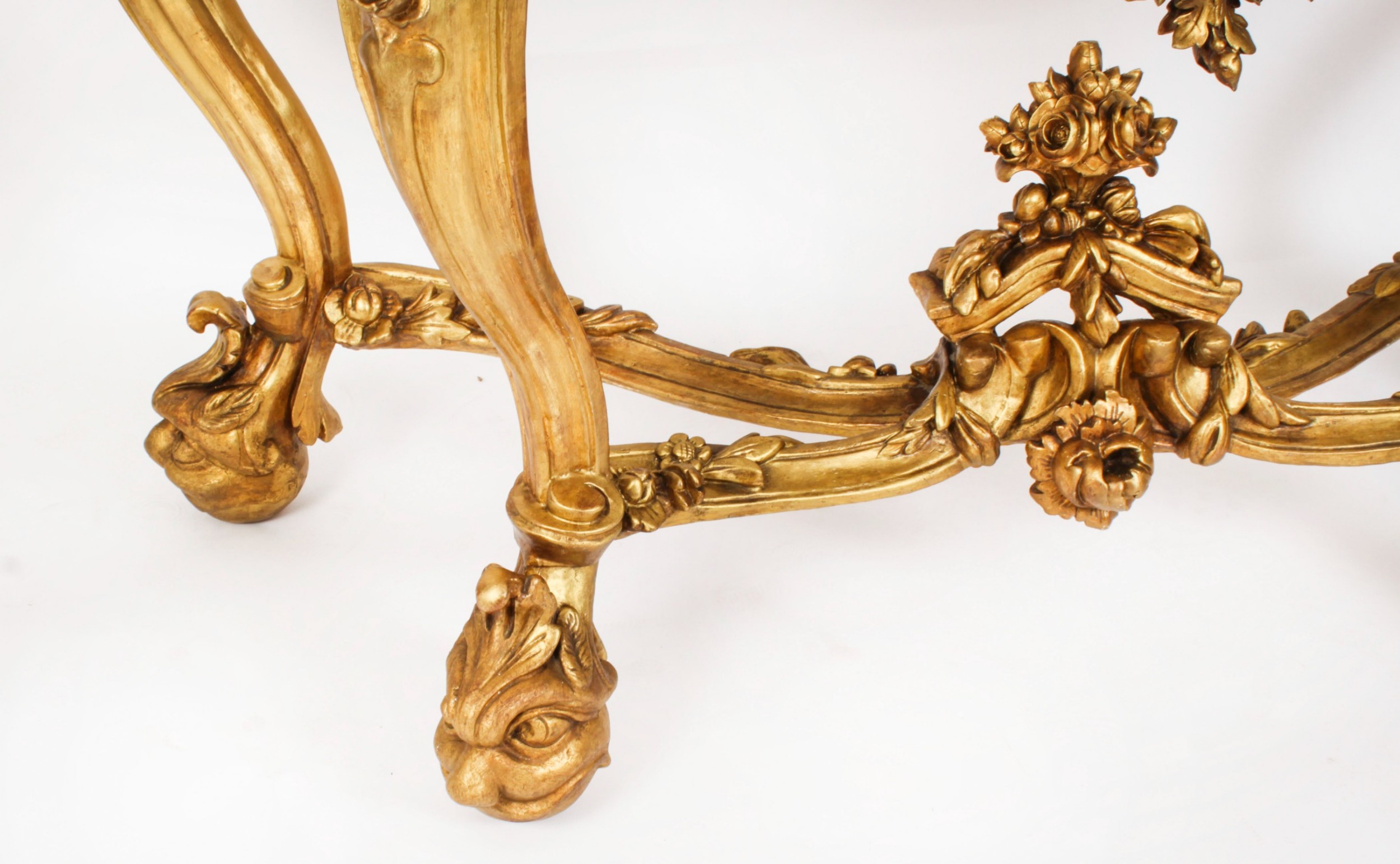
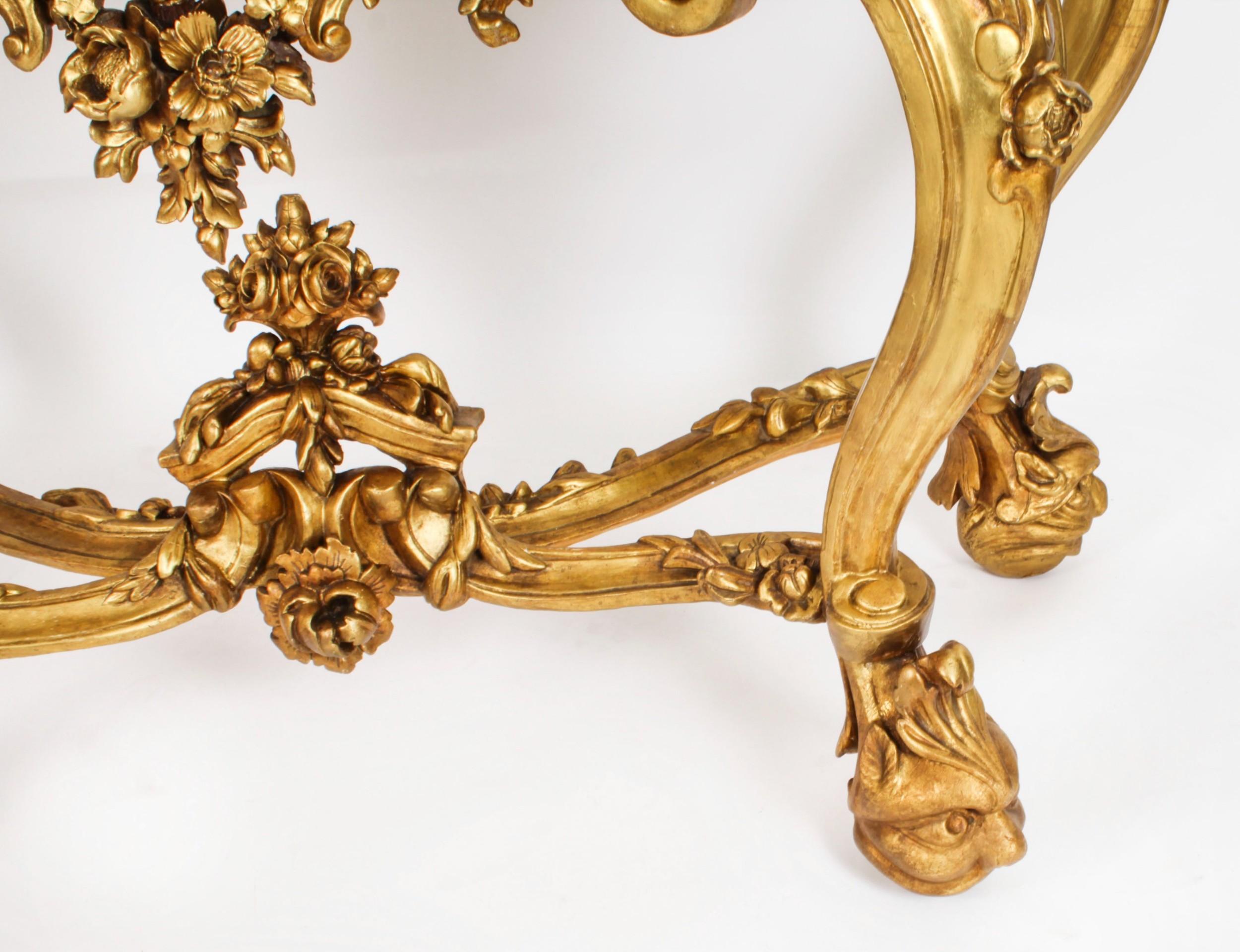
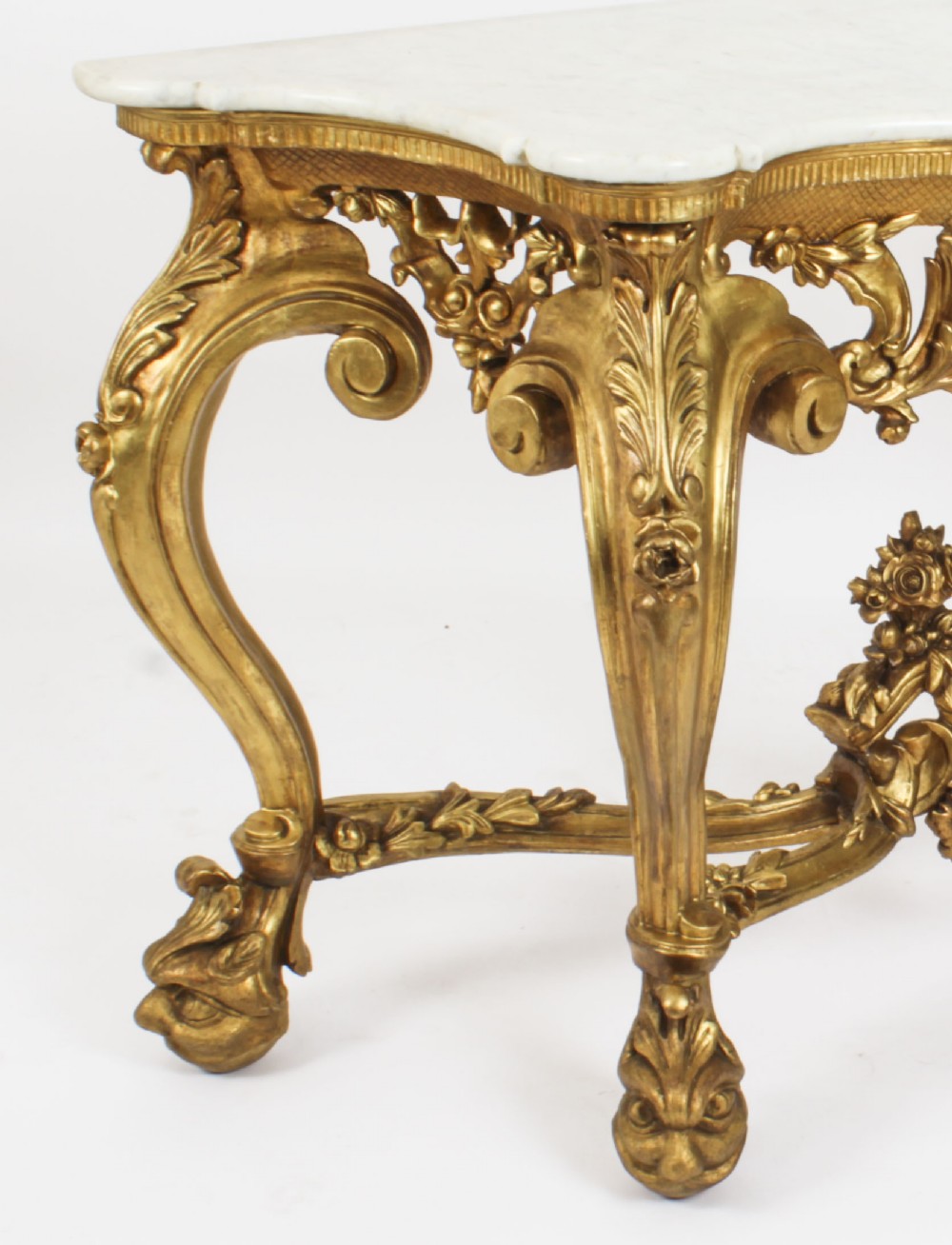
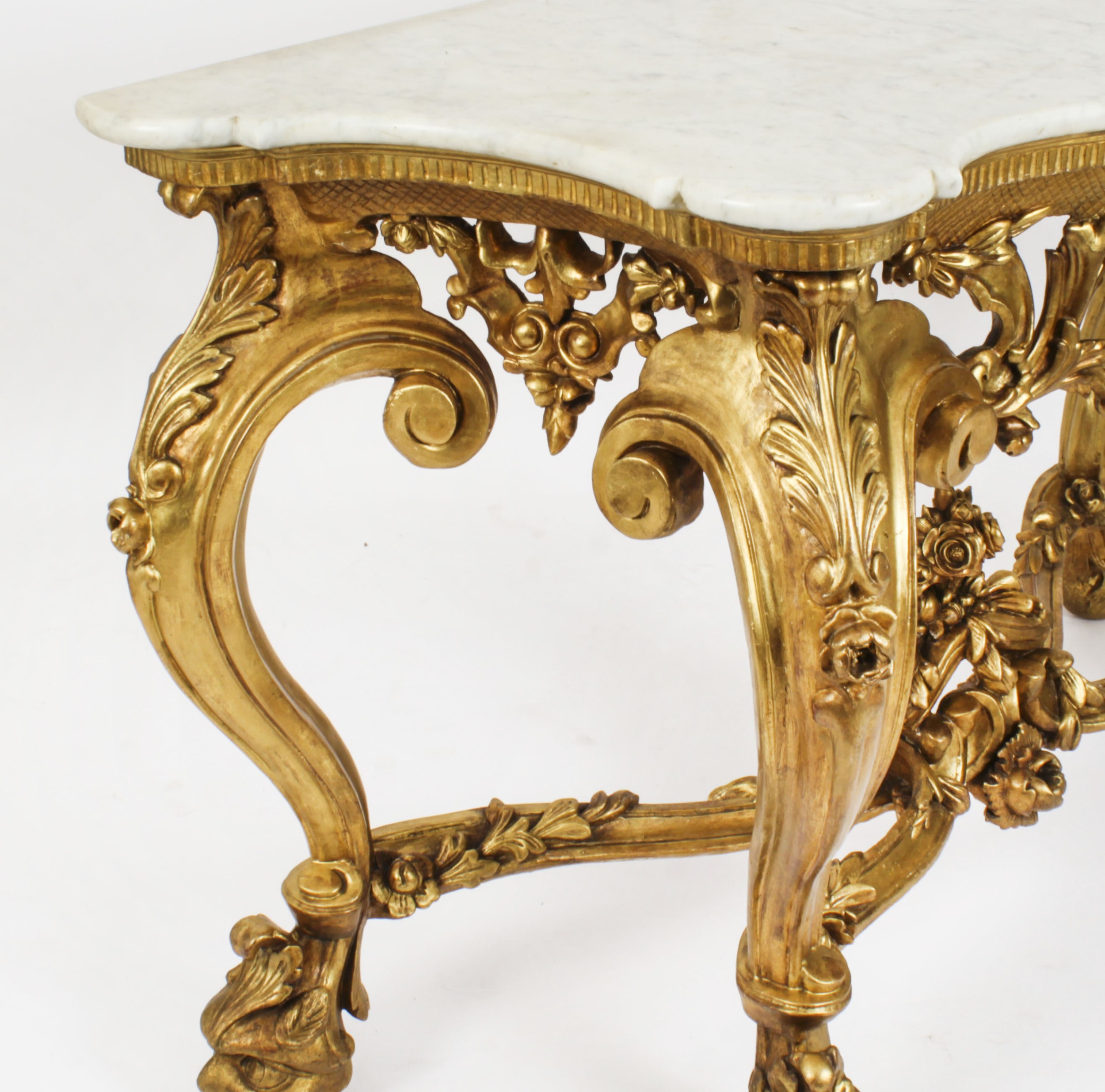
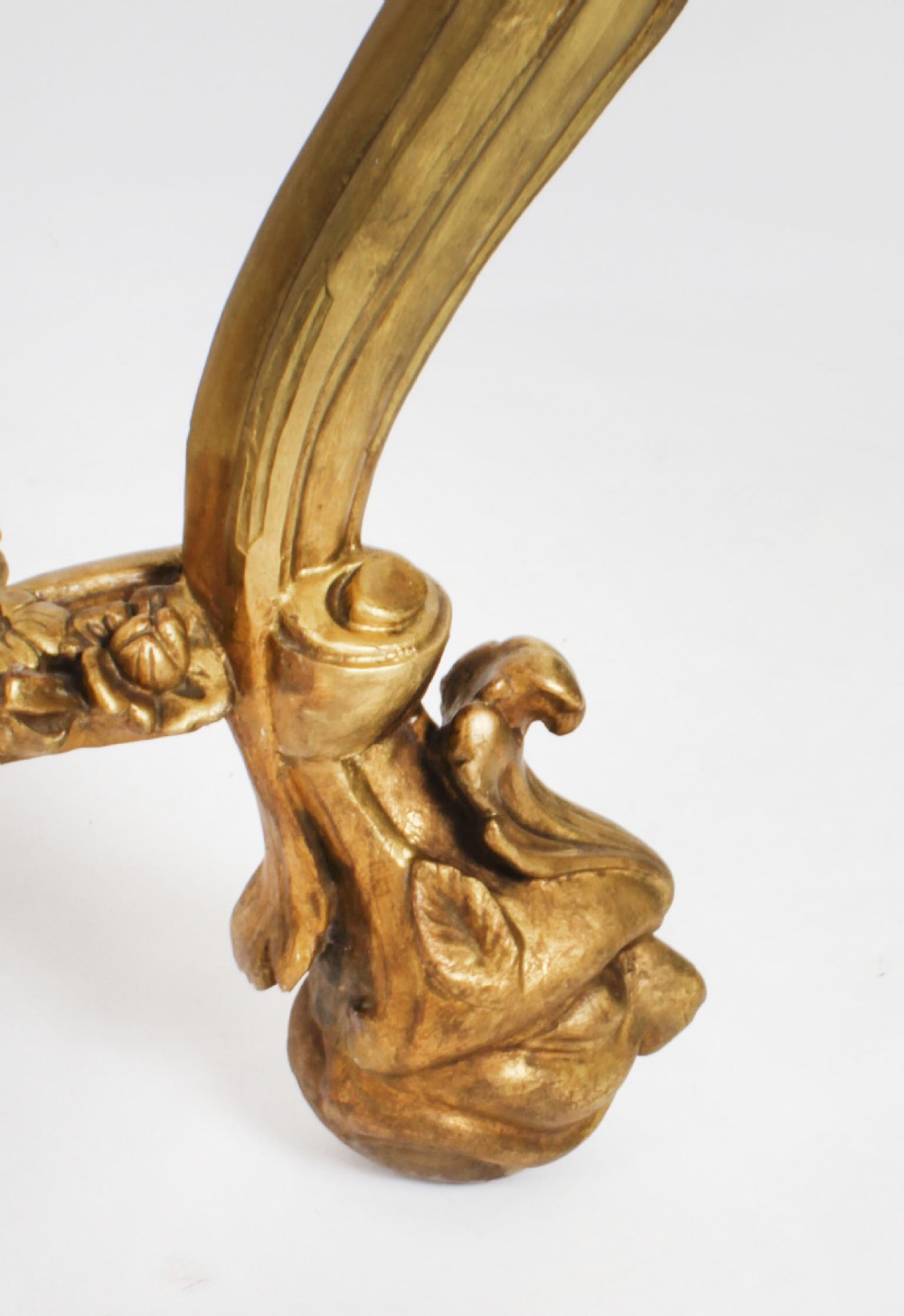
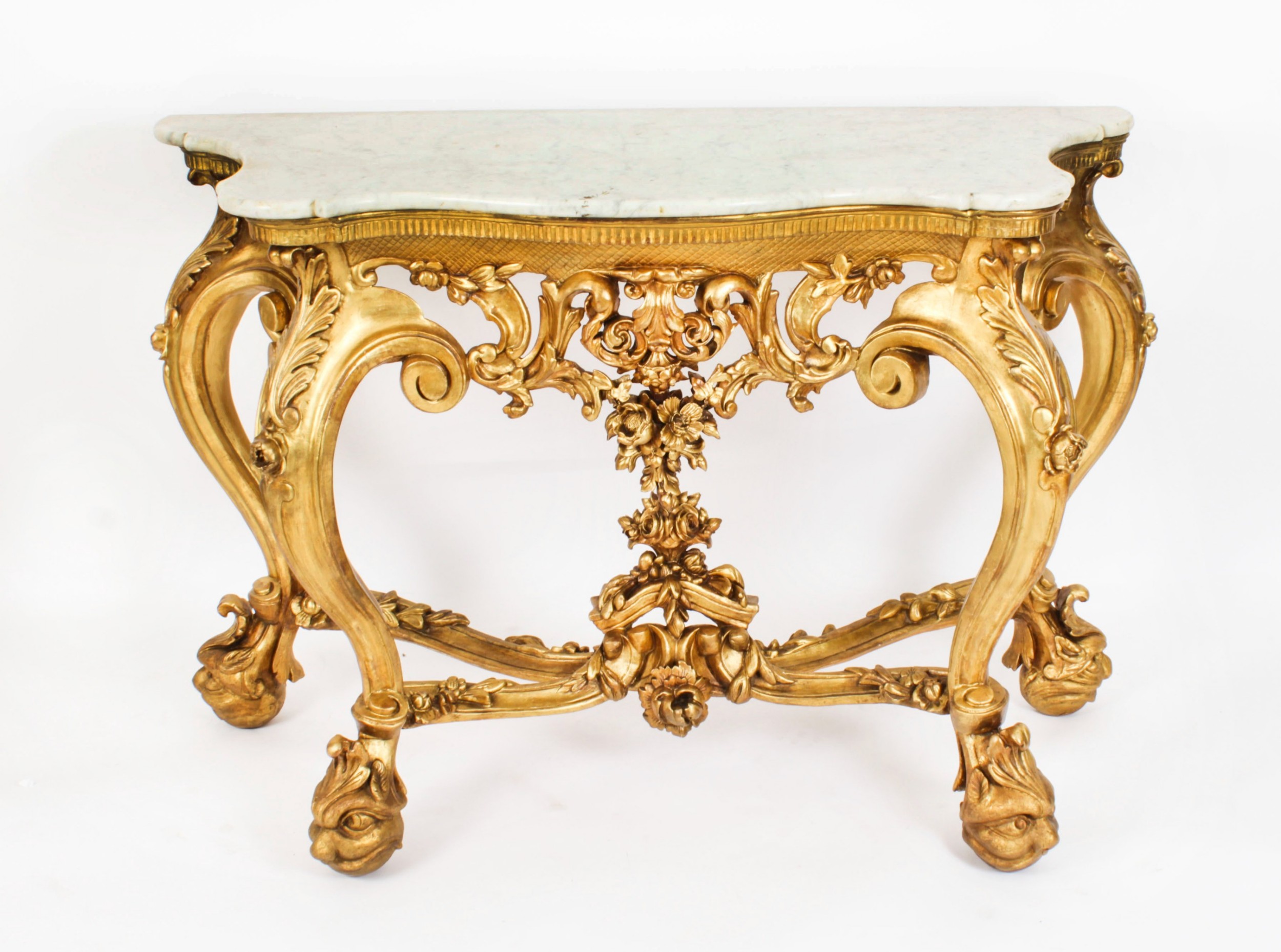
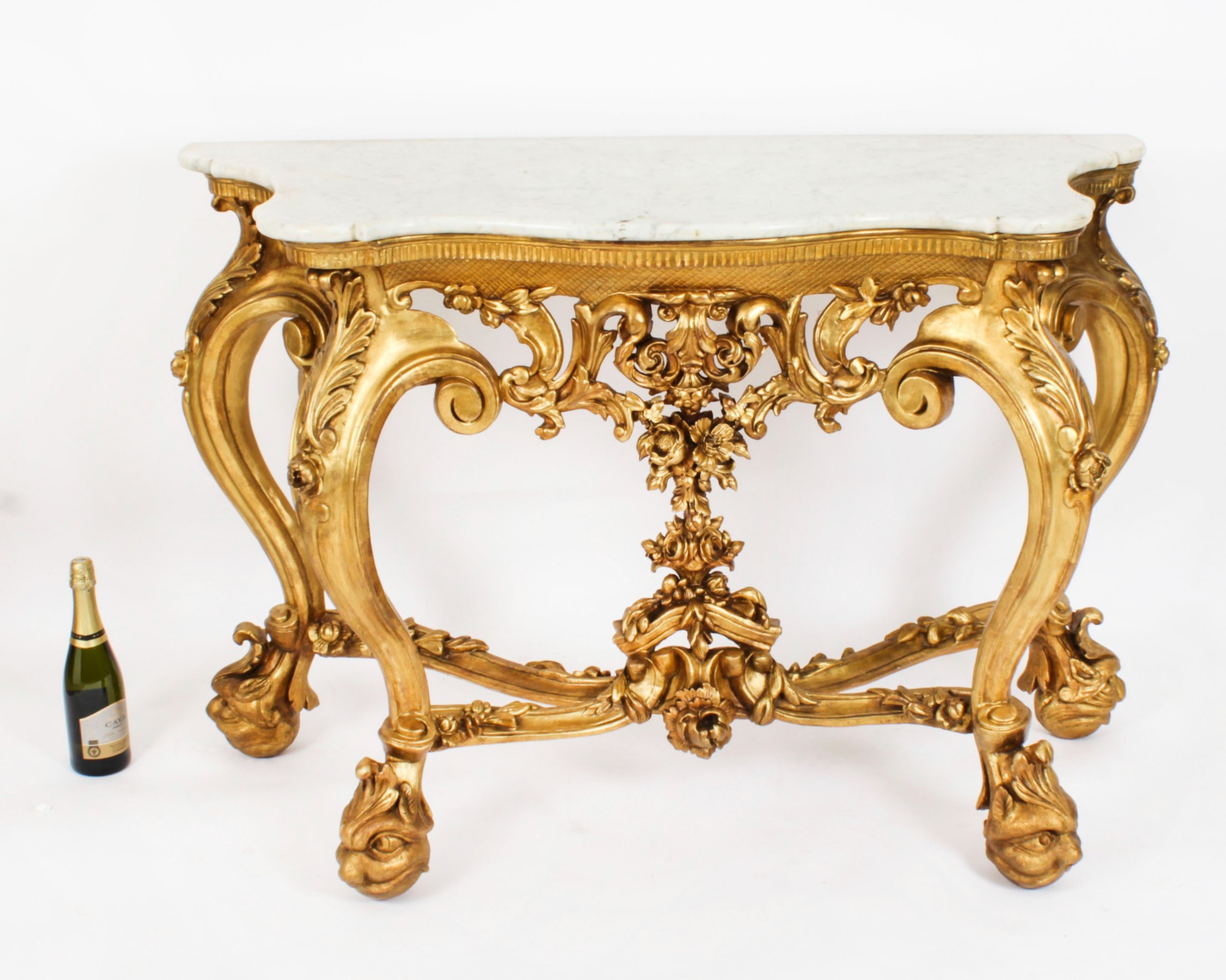
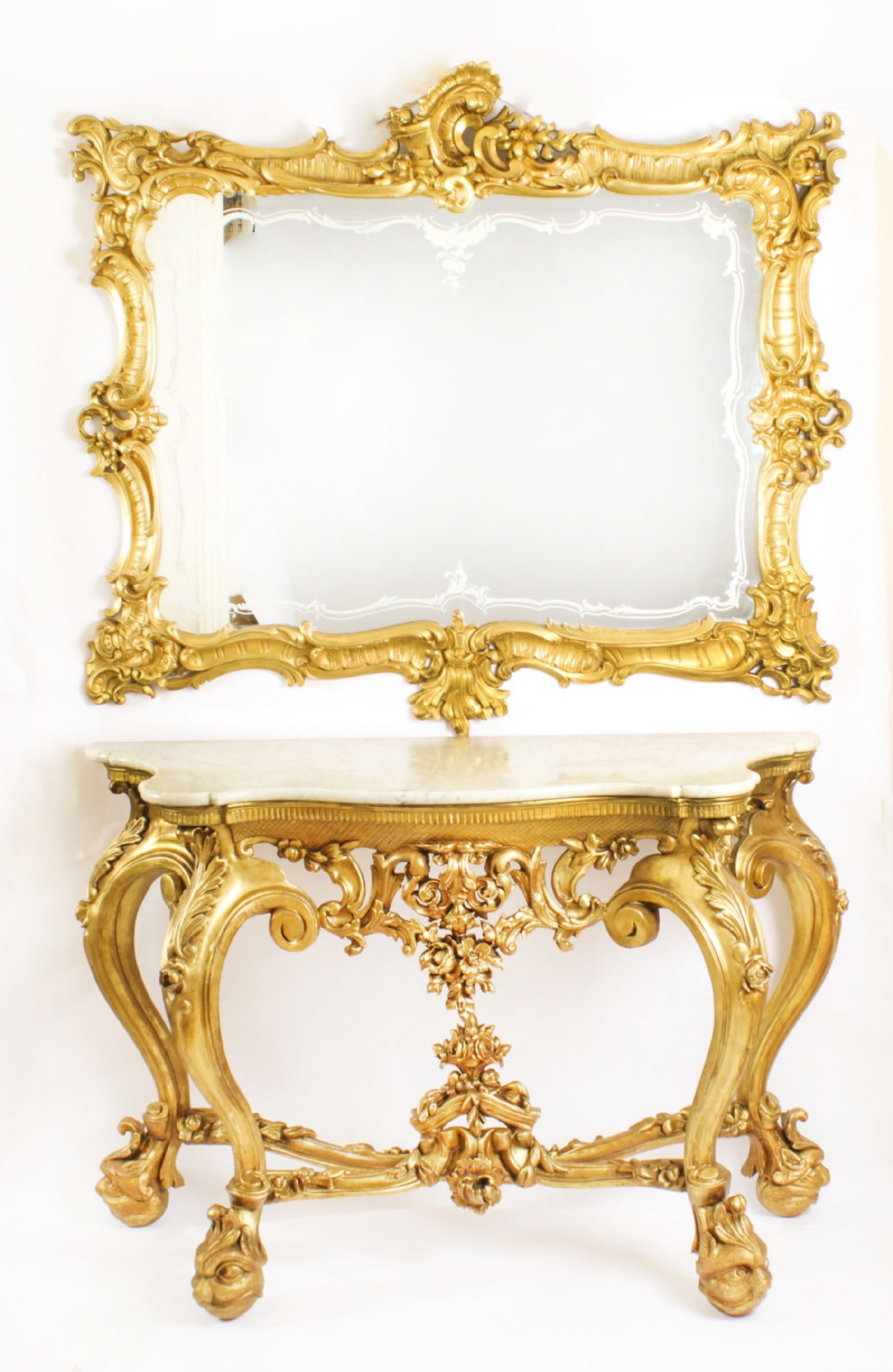
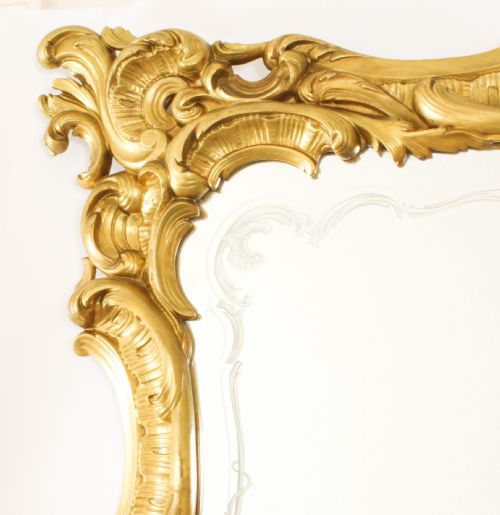
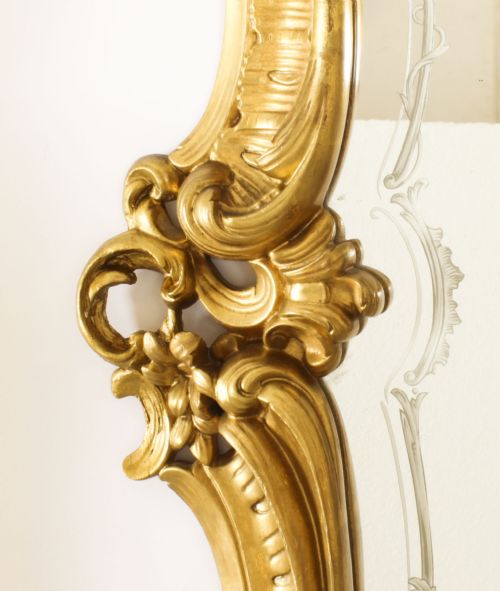
Carved from solid wood, the console table displaying its original water gilding. The table rising from a scrolling base joined by a rocaille stretcher, the legs feature carved and pierced frieze incorporating foliate and floral motifs and swags on grotesque mask feet with a centred cartouche on the carved fasces above supporting the serpentine grey marble top.
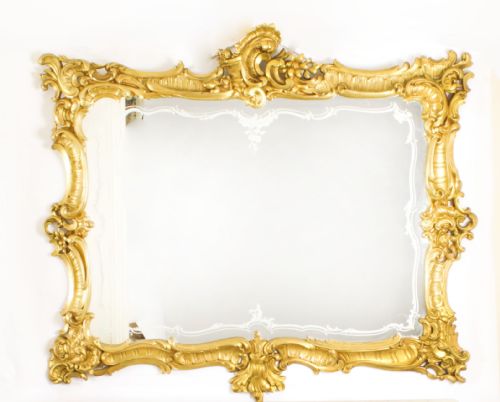
This piece is truly unique and is guaranteed to bring beauty and charm to your home for many years to come.
Condition:
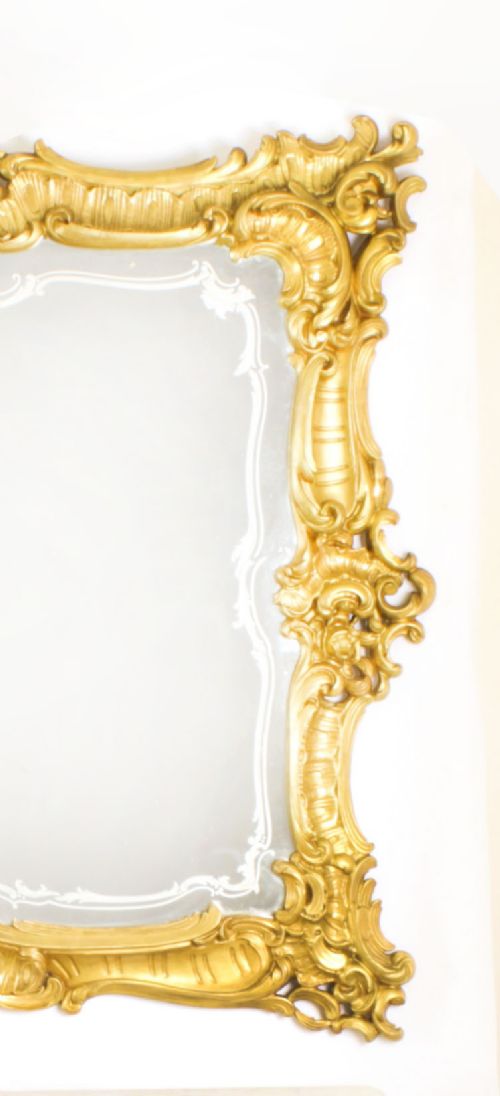
In really excellent condition having been beautifully cleaned, polished and waxed in our workshops, please see photos for confirmation.
Dimensions in cm:
Height 88 x Width 138 x Depth 55 - Console Table
Height 117 x Width 136 x Depth 4.5 - Mirror
Dimensions in inches:
Height 2 foot, 11 inches x Width 4 foot, 6 inches x Depth 1 foot, 10 inches - Console Table
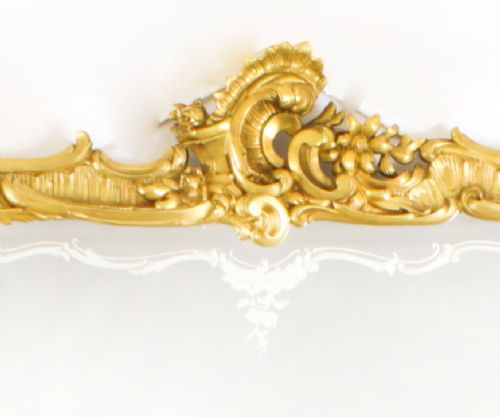
Height 3 foot, 10 inches x Width 4 foot, 5 inches x Depth 2 inches - Mirror
Rococo
Although Rococo is usually thought of as developing first in the decorative arts and interior design, its origins lie in the late Baroque architectural work of Borromini (1599–1667) mostly in Rome and Guarini (1624–1683) mostly in Northern Italy but also in Vienna, Prague, Lisbon, and Paris. Italian architects of the late Baroque/early Rococo were wooed to Catholic (Southern) Germany, Bohemia and Austria by local princes, bishops and prince-bishops. Inspired by their example, regional families of Central European builders went further, creating churches and palaces that took the local German Baroque style to the greatest heights of Rococo elaboration and sensation.
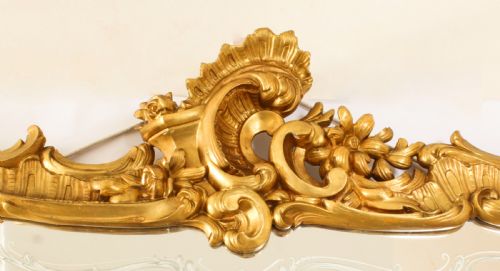
An exotic but in some ways more formal type of Rococo appeared in France where Louis XIV's succession brought a change in the court artists and general artistic fashion. By the end of the king's long reign, rich Baroque designs were giving way to lighter elements with more curves and natural patterns. These elements are obvious in the architectural designs of Nicolas Pineau. During the Régence, court life moved away from Versailles and this artistic change became well established, first in the royal palace and then throughout French high society.
An exotic but in some ways more formal type of Rococo appeared in France where Louis XIV's succession brought a change in the court artists and general artistic fashion. By the end of the king's long reign, rich Baroque designs were giving way to lighter elements with more curves and natural patterns. These elements are obvious in the architectural designs of Nicolas Pineau. During the Régence, court life moved away from Versailles and this artistic change became well established, first in the royal palace and then throughout French high society.
The delicacy and playfulness of Rococo designs is often seen as perfectly in tune with the excesses of Louis XV's reign.
The 1730s represented the height of Rococo development in France. The style had spread beyond architecture and furniture to painting and sculpture, exemplified by the works of Antoine Watteau and François Boucher. Rococo still maintained the Baroque taste for complex forms and intricate patterns, but by this point, it had begun to integrate a variety of diverse characteristics, including a taste for Oriental designs and asymmetric compositions. The Rococo style was spread by French artists and engraved publications.
In Great Britain, Rococo was always thought of as the "French taste" and was never widely adopted as an architectural style, although its influence was strongly felt in such areas
Regent Antiques has dated this piece to the 19th Century.
We specialise in english and continental furniture, silver, porcelain and decorative items.
You can view the stock and full dealer information on the Regent Antiques Profile Page
Regent Antiques is a registered member of LAPADA CINOA
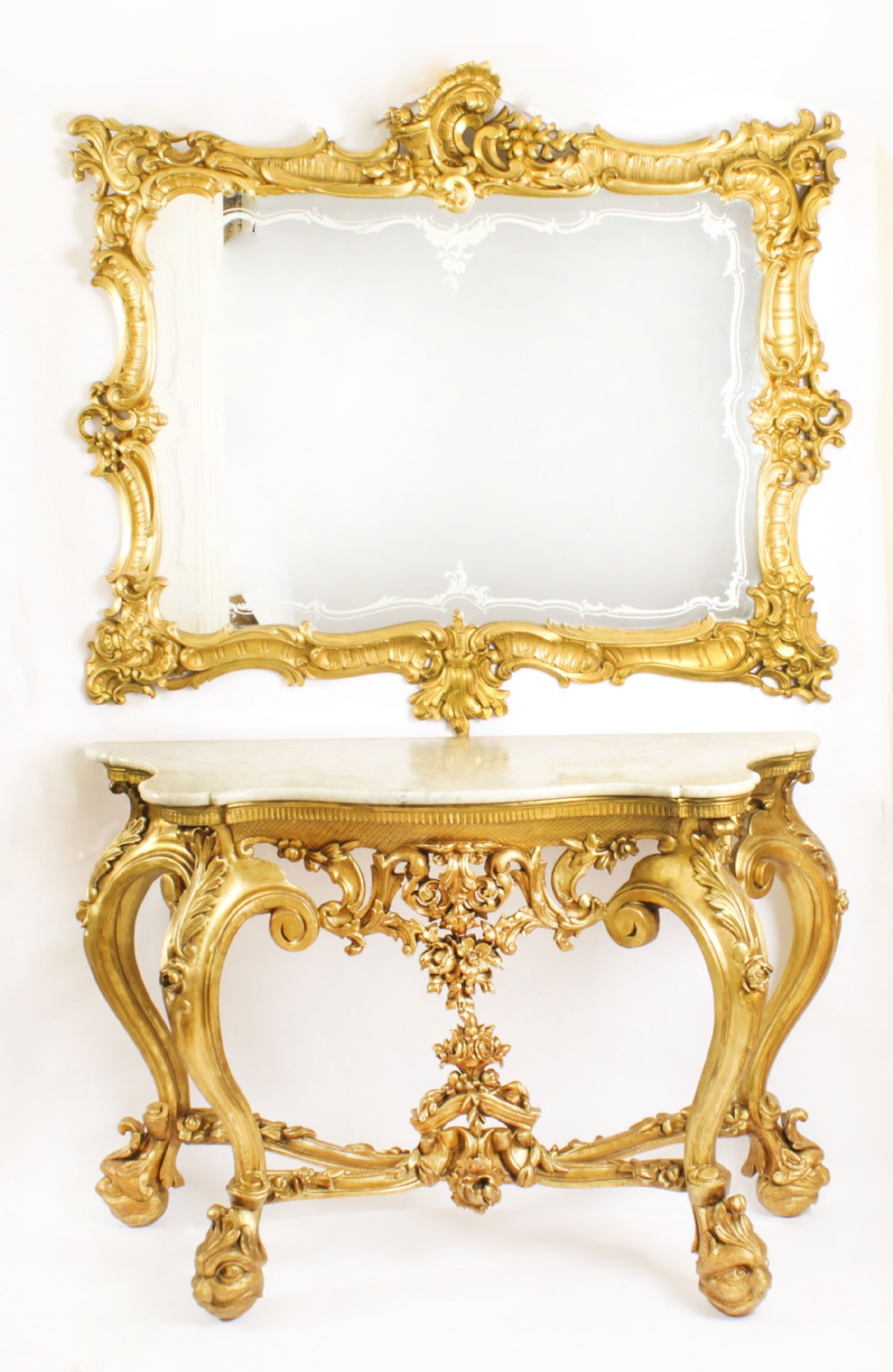
Antique Italian Rococo Revival Carved Giltwood Console & Mirror Circa 1860