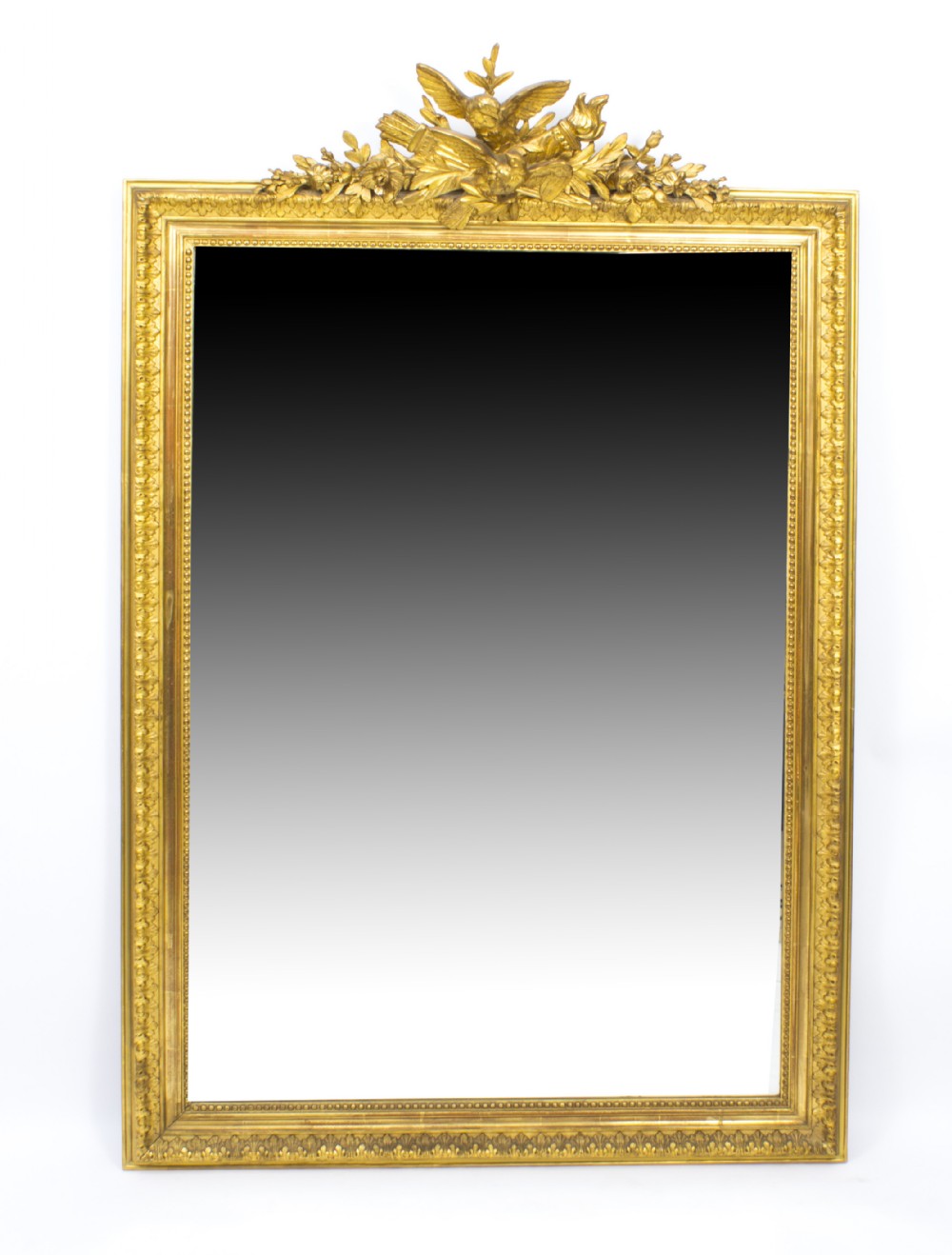
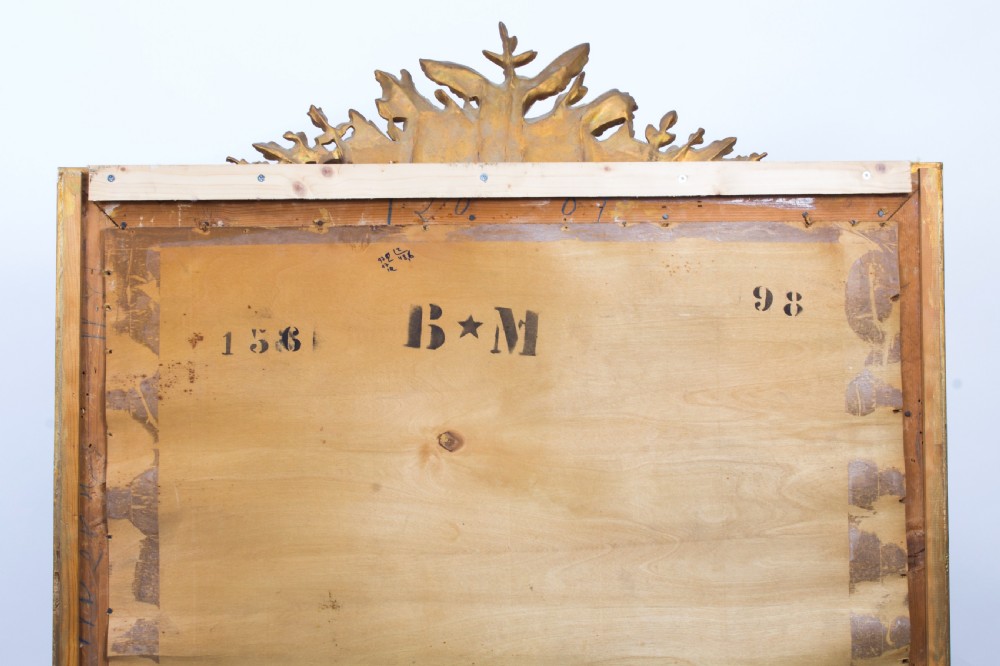
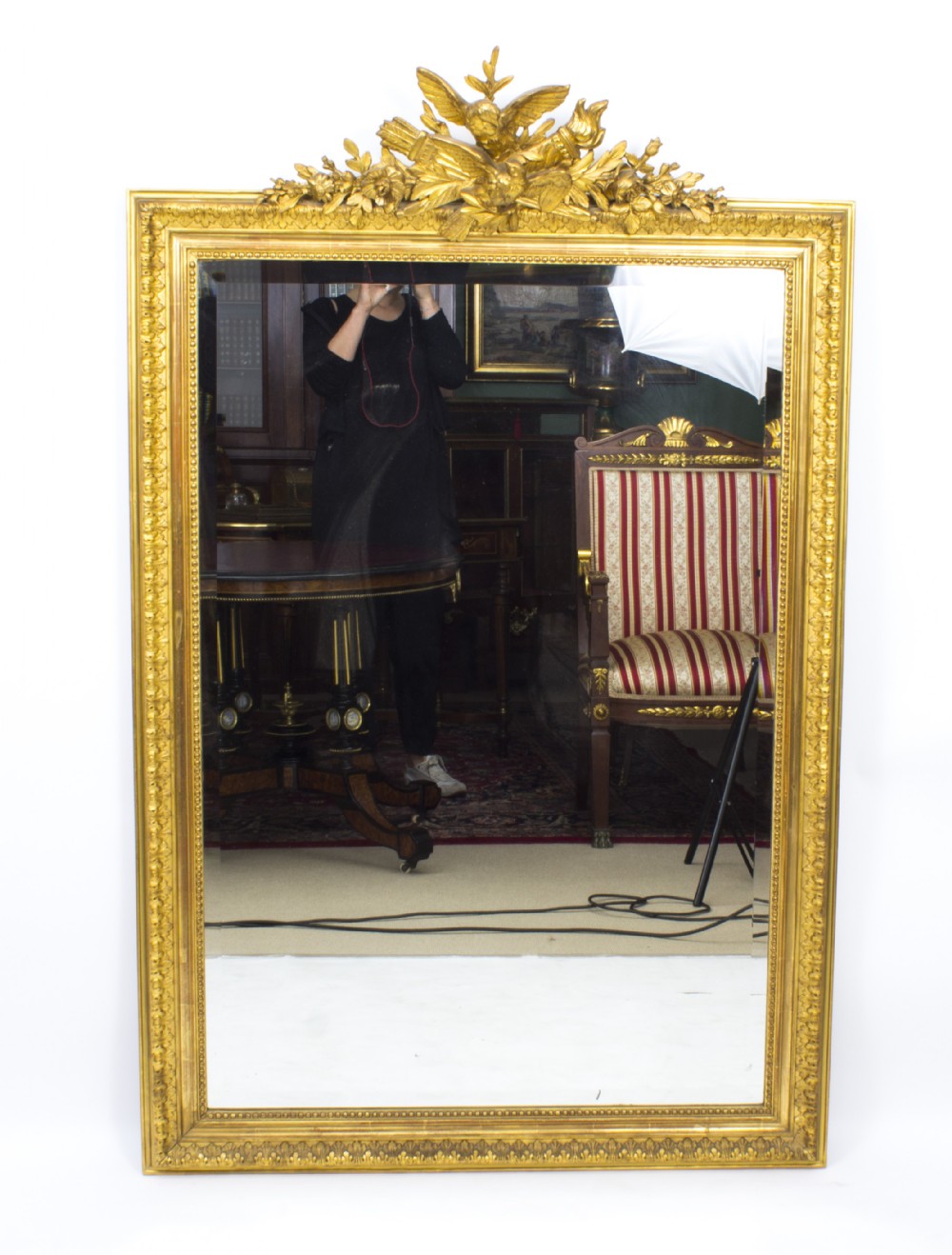
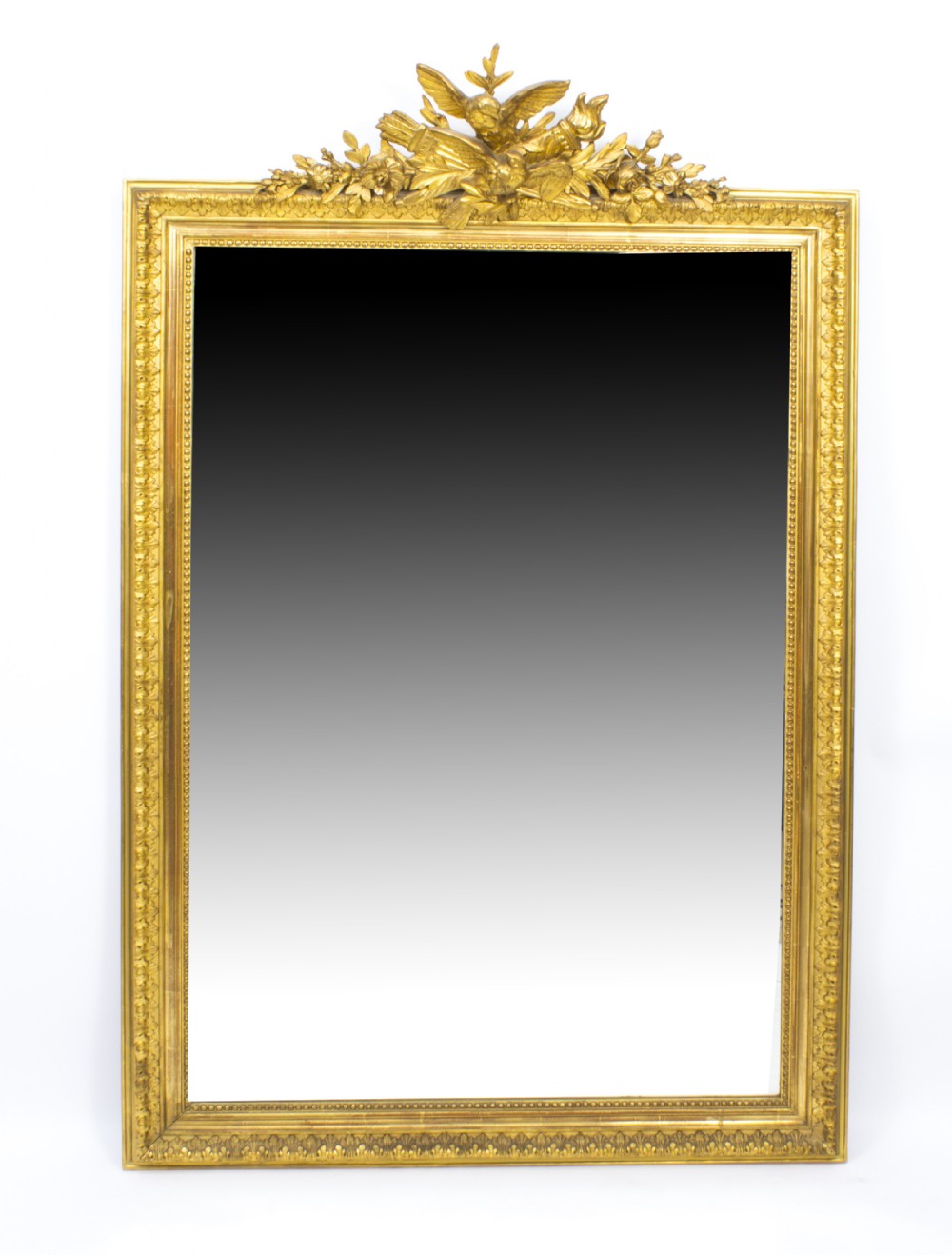
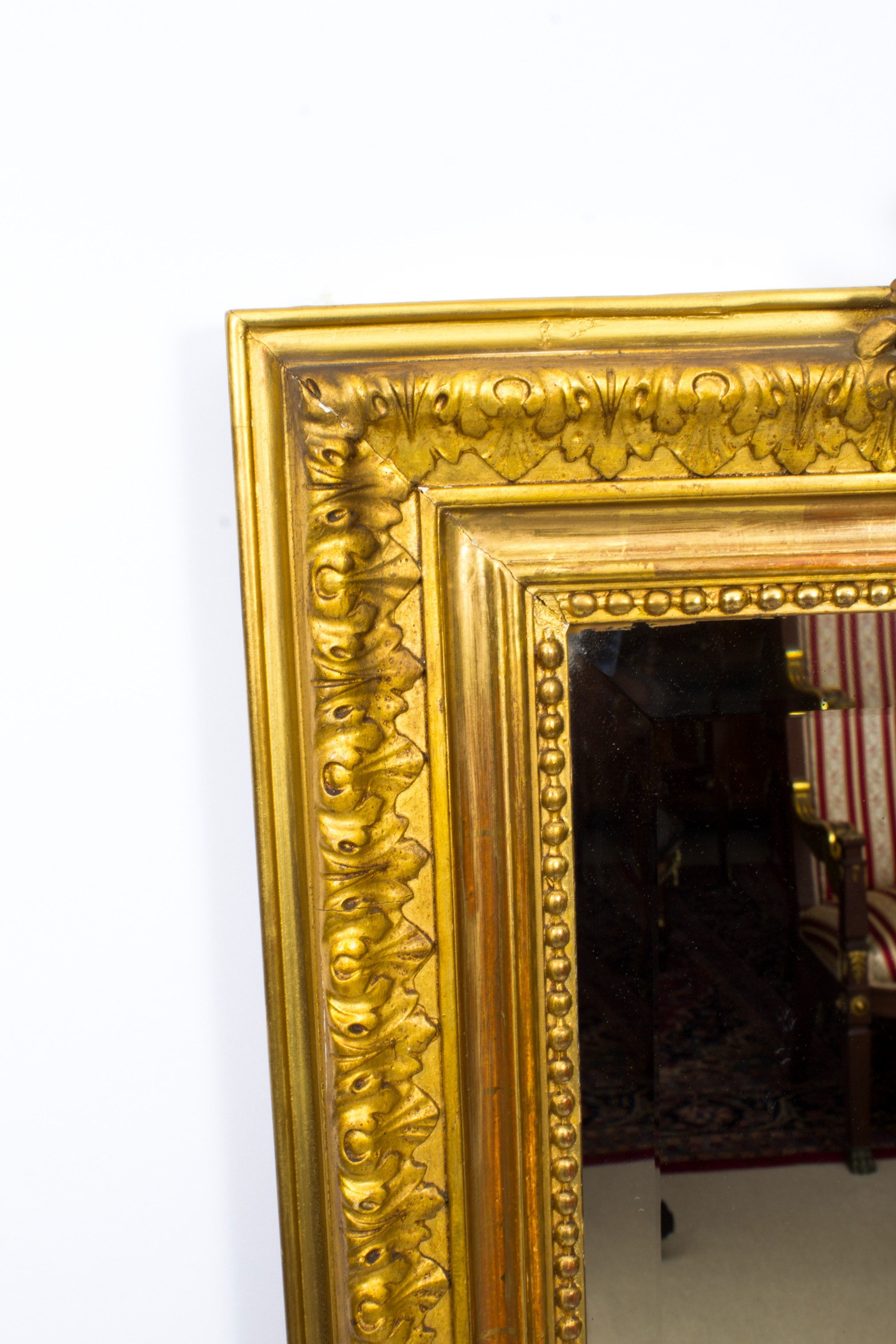
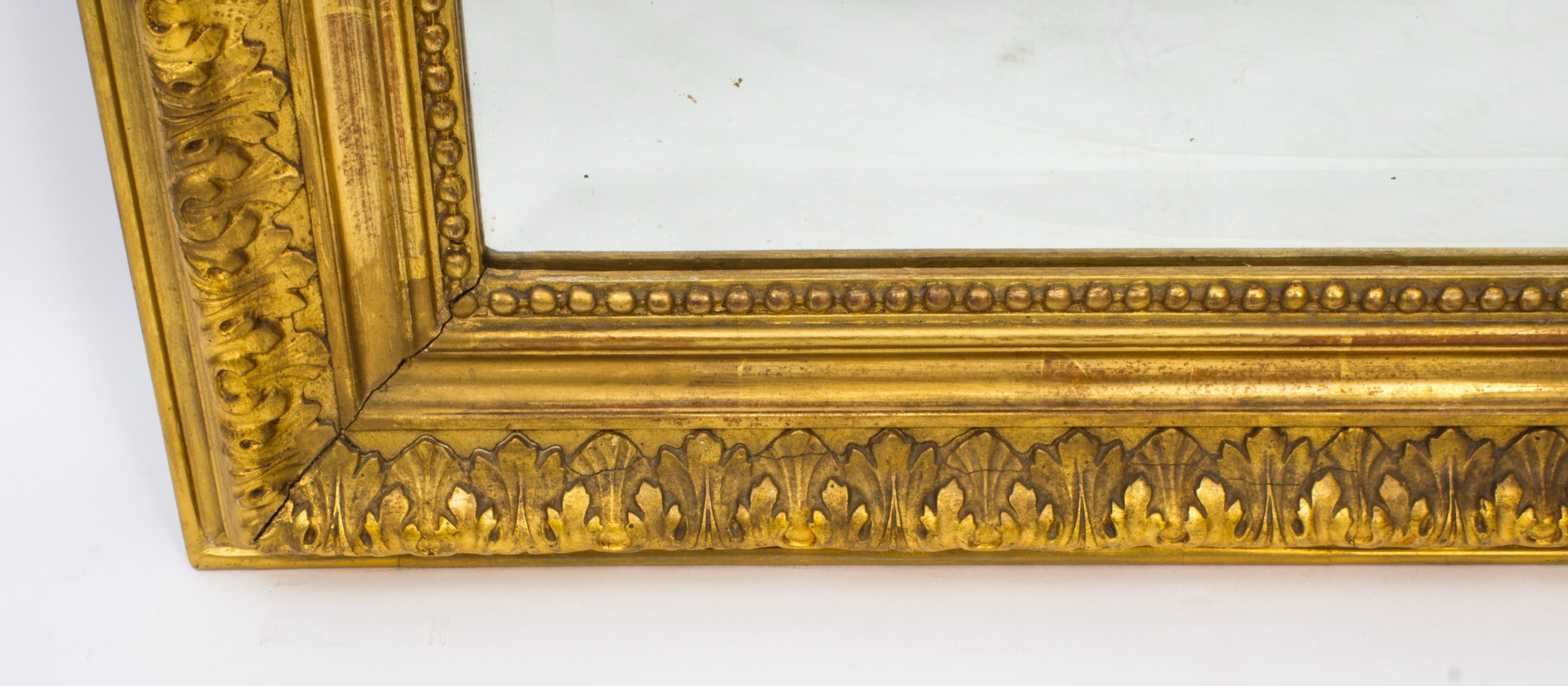
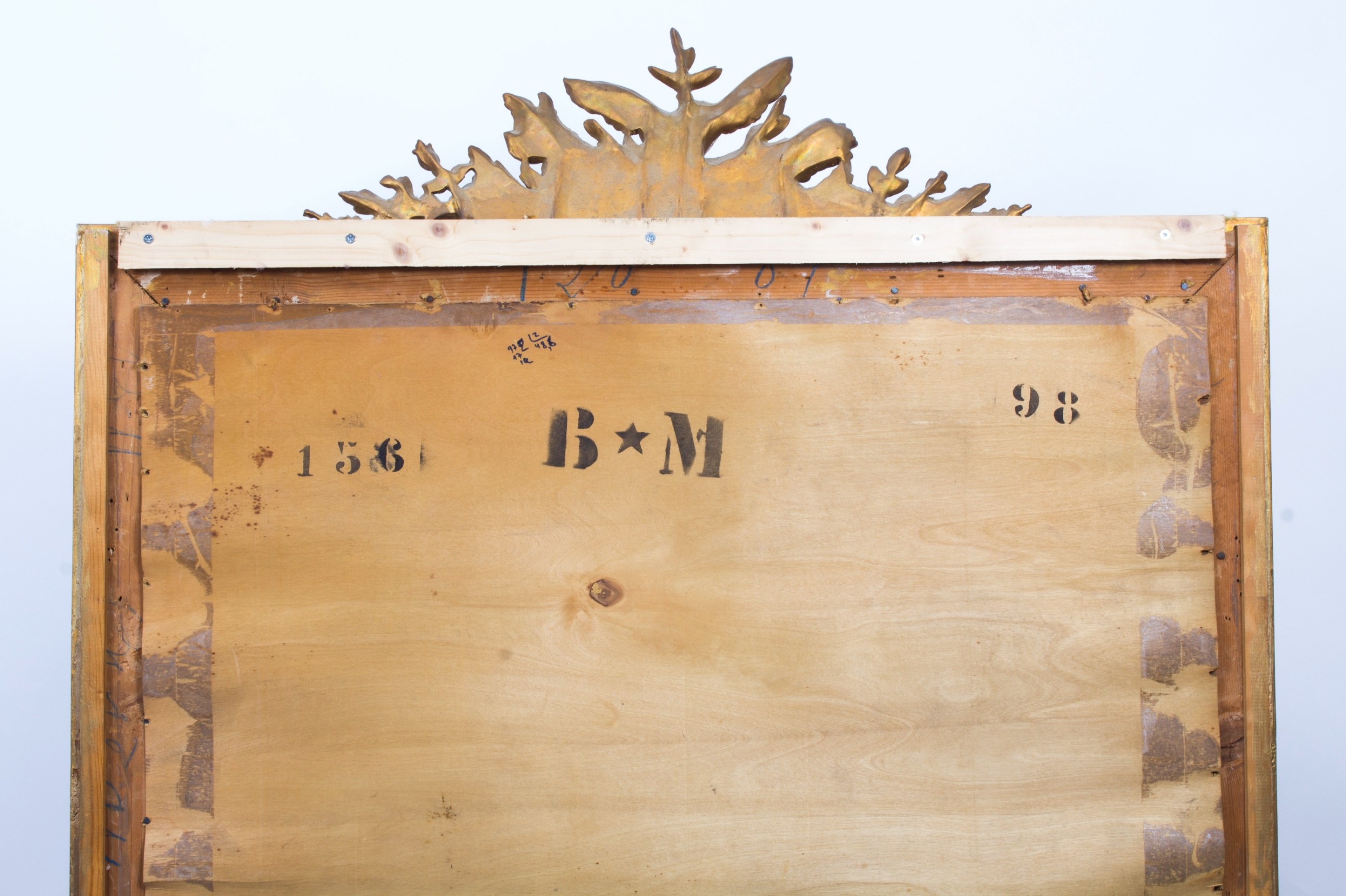
This is a beautiful large antique French carved giltwood overmantel mirror, C 1860 in date.
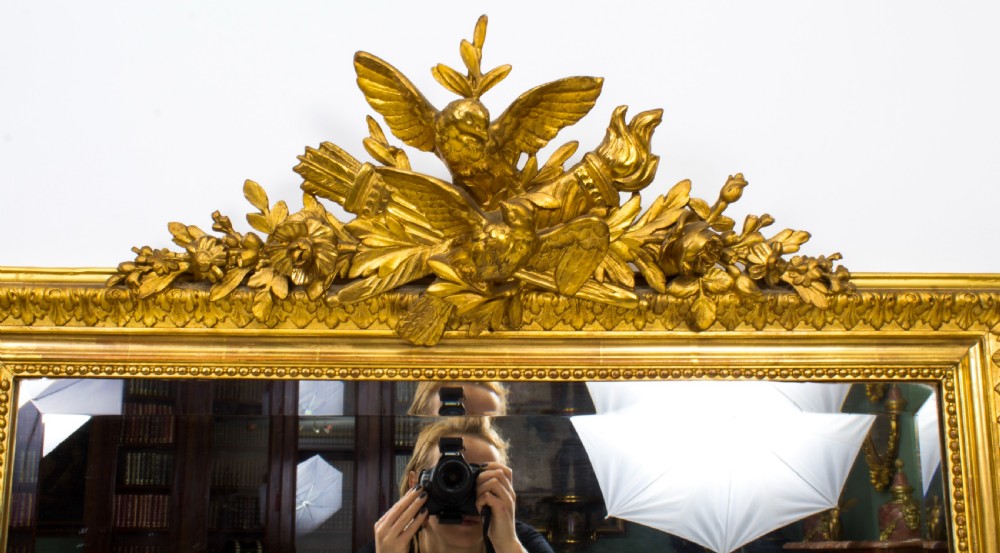
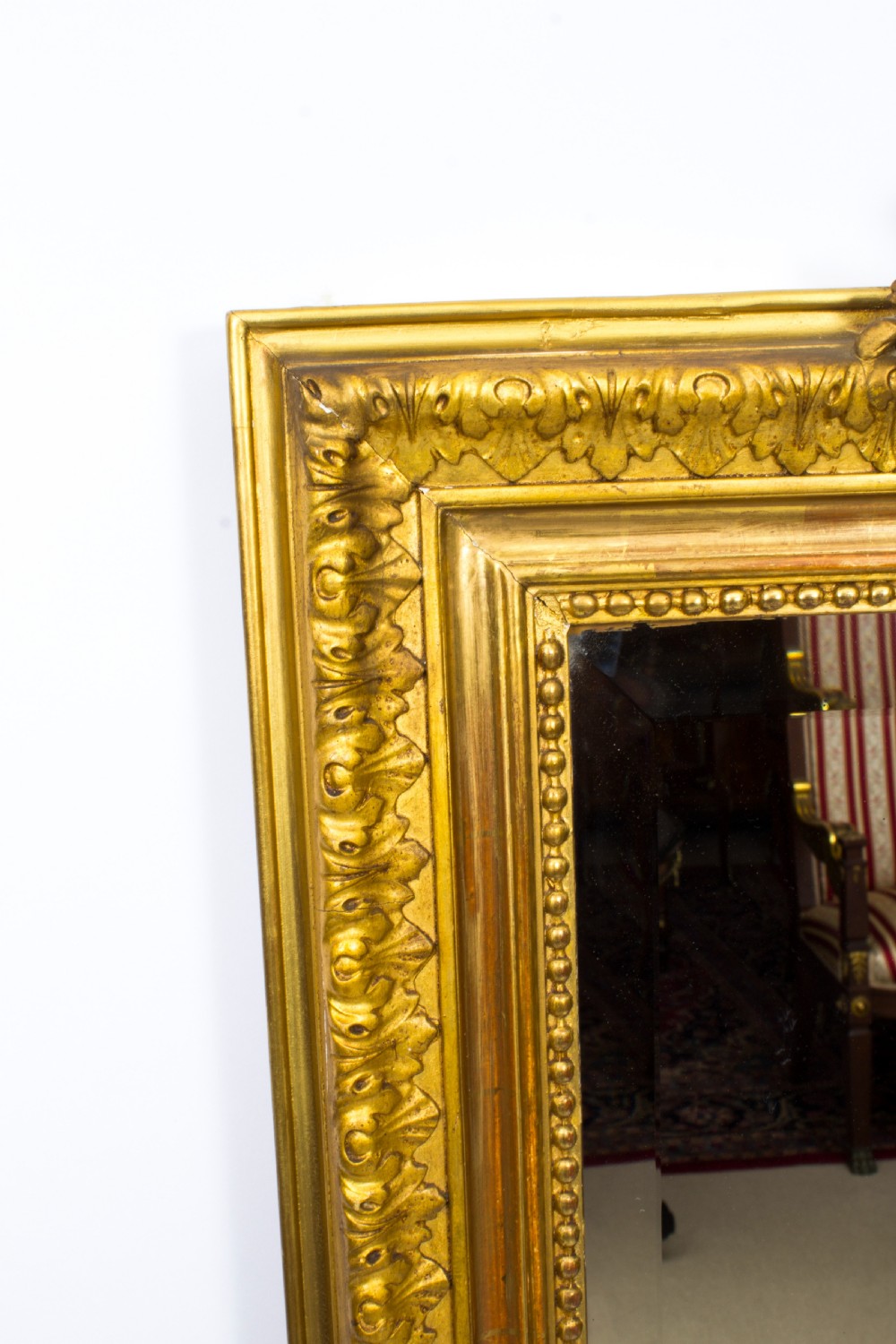
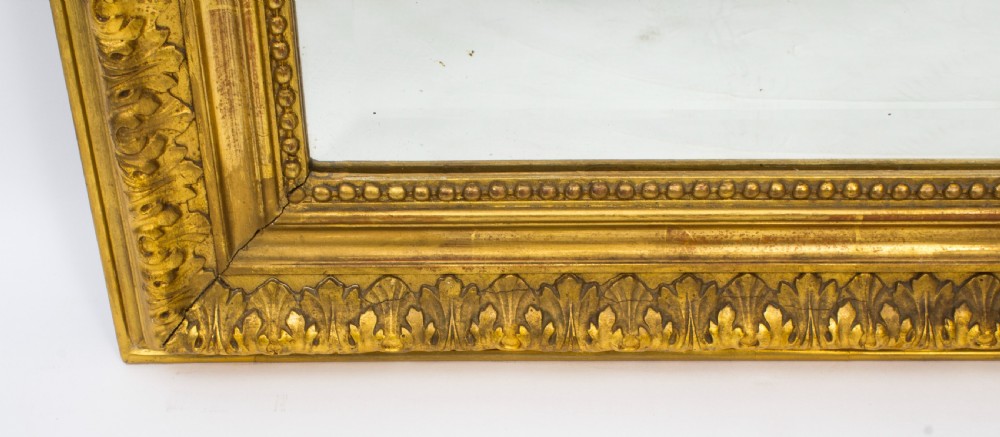
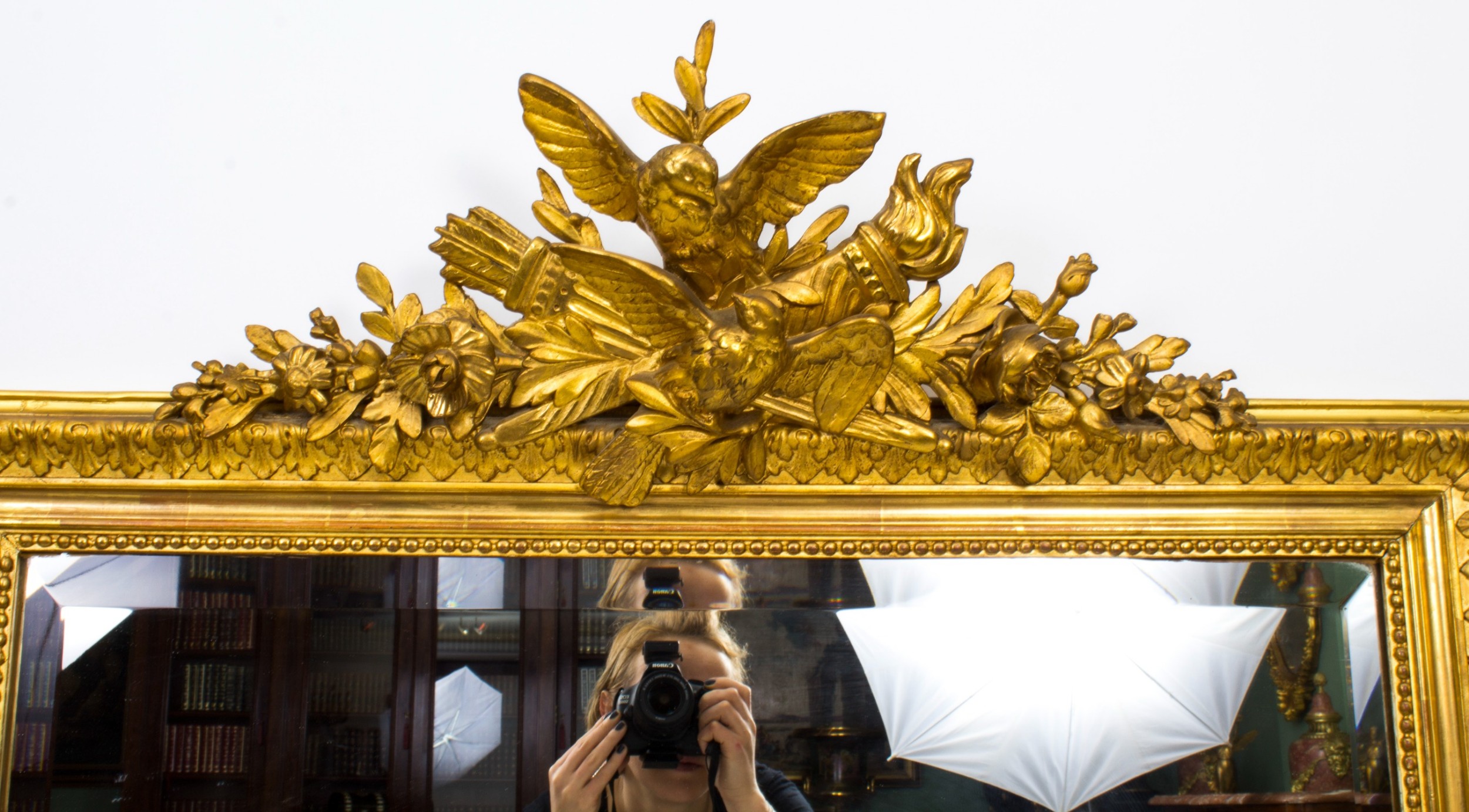
The frame is surmounted with a striking carved giltwood central finial with doves, a flaming torch, a quiver of arrows and foliate and floral decoration. The rectangular mirror is framed with beading and a carved anthemion pattern.
The quality and craftsmanship of this stunning piece are absolutely superb.
Add a touch of class to a special corner of your home with this fantastic mirror.
Condition:
In excellent condition having been beautifully cleaned in our workshops. As antique items, the mirror plate shows minor signs of use commensurate with age, these minor condition issues are mentioned for accuracy and, as seen in the accompanying photographs, the mirror display beautifully.
Dimensions in cm:
Height 157 x Width 98 x Depth 16 - Frame
Dimensions in inches:
Height 5 foot, 2 inches x Width 3 foot, 3 inches x Depth 6 inches - Frame
The purpose of gilding is to give the appearance of solid gold, a practice that began over 4,000 years ago in Egypt. Paintings from Egyptian tombs from around 2000 B.C. show workers pounding gold into thin sheets to apply to pieces of furniture and coffins. The Greeks applied gilding to statues in around 400 B.C.E., and gilding techniques have continued to be used in Europe, South America, Spain, Britain and the United States.
During the 18th century, Louis XIV of France flaunted his wealth with gilded furnishings, framed artwork and architectural detailing, marking France as a leader in the decorative arts.
There are two methods of true gilding: oil gilding and water gilding.
Oil gilding uses an oil-based product on a prepared surface, and the leaf is gently pressed onto the surface.
Water gilding uses a water-based adhesive that causes the gold leaf to adhere to the surface.
Our reference: A2157