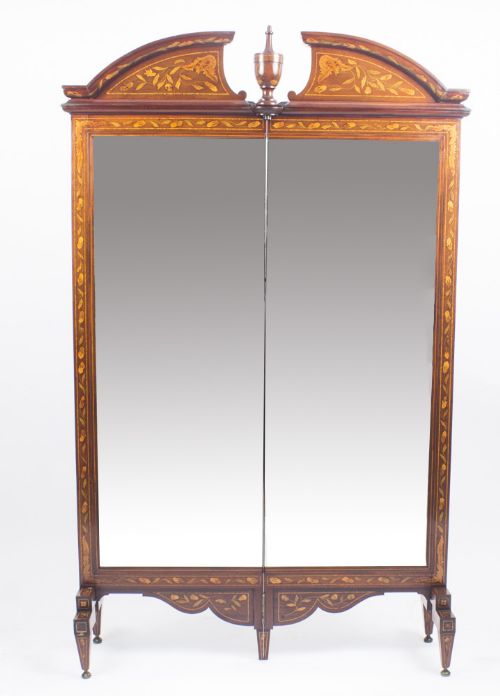
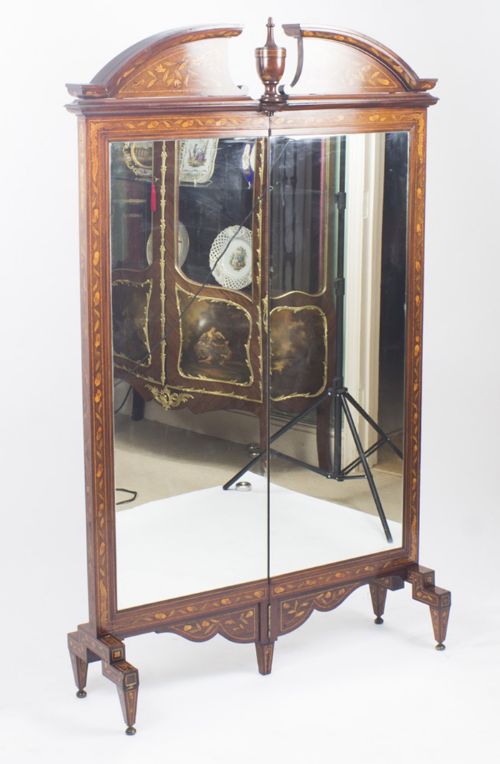
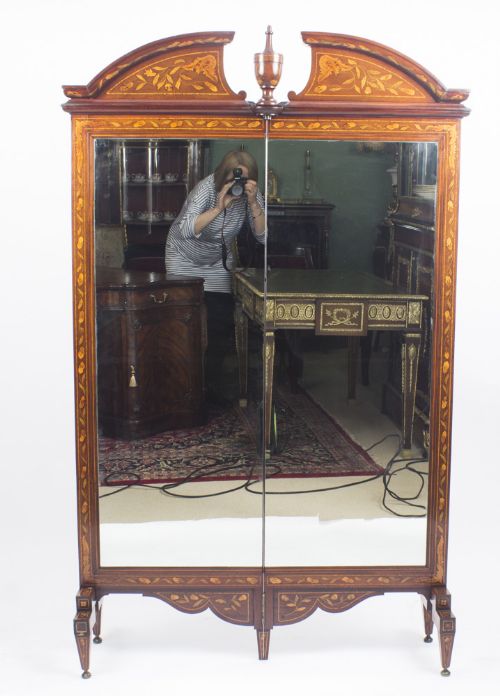
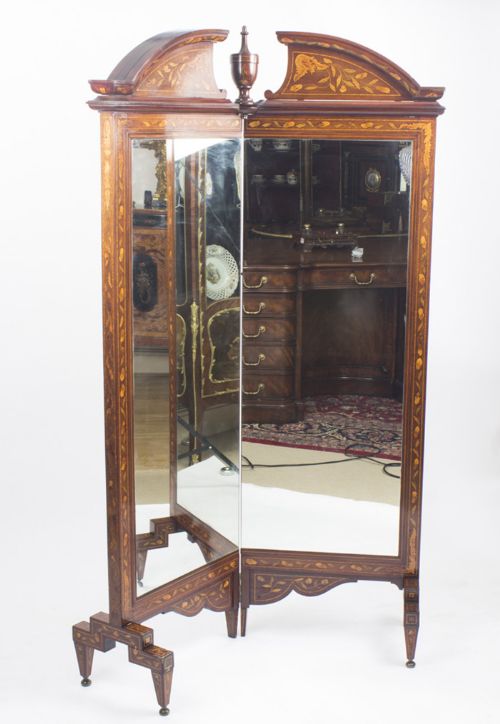
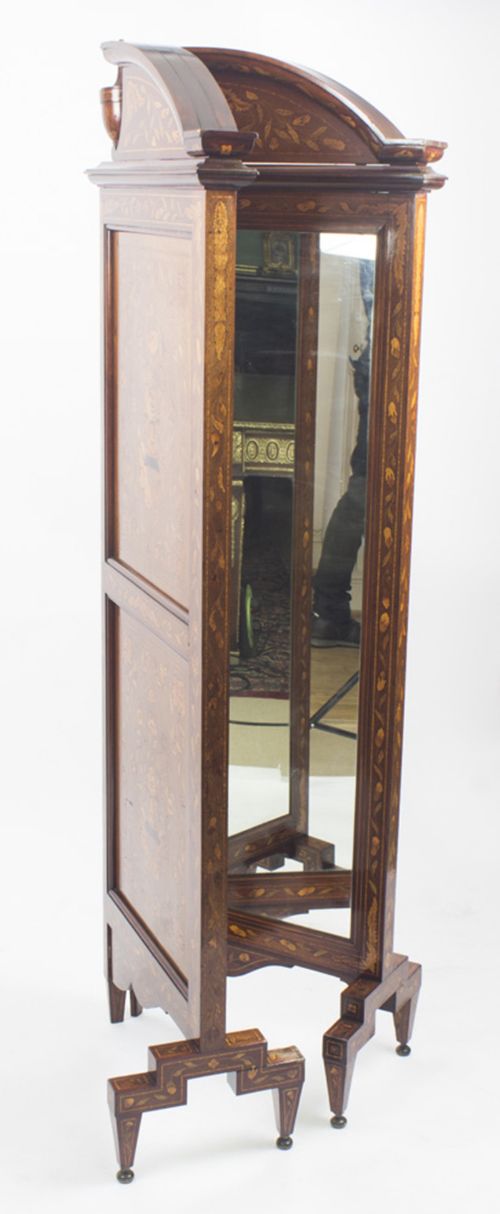
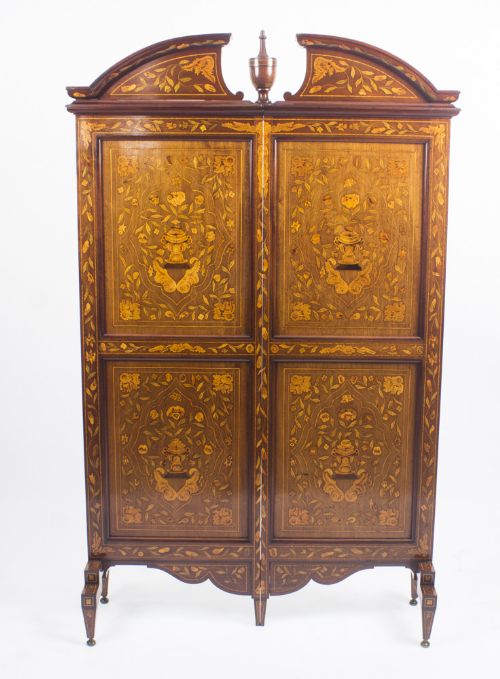
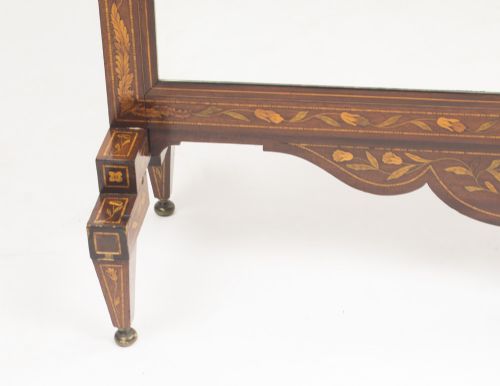
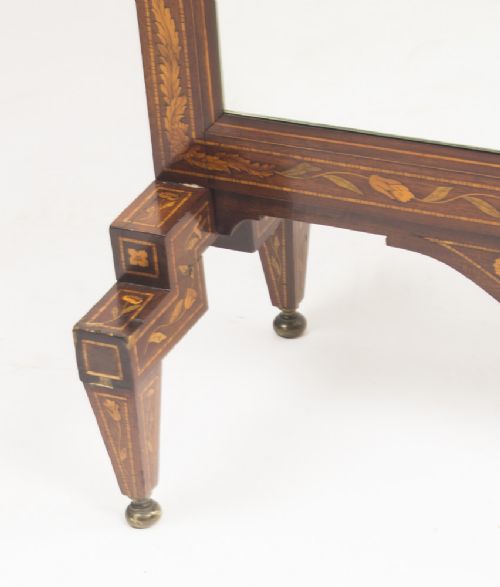
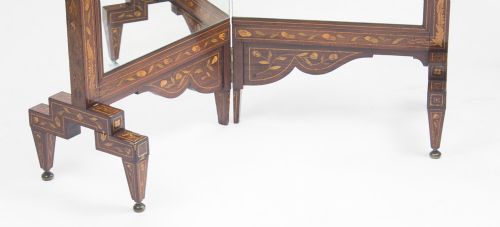
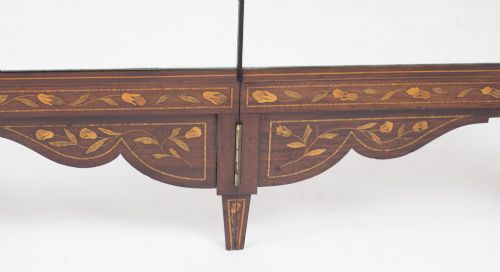
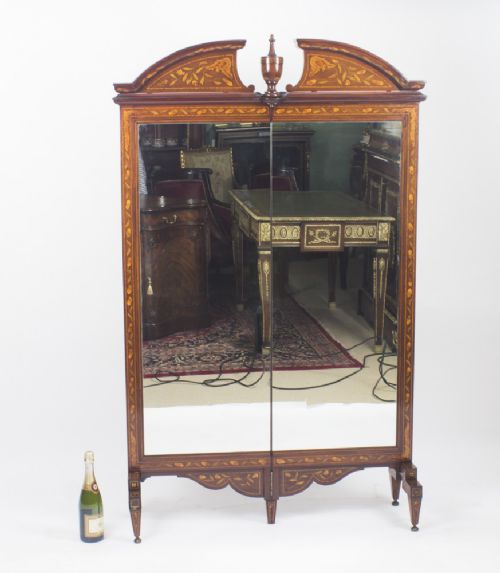
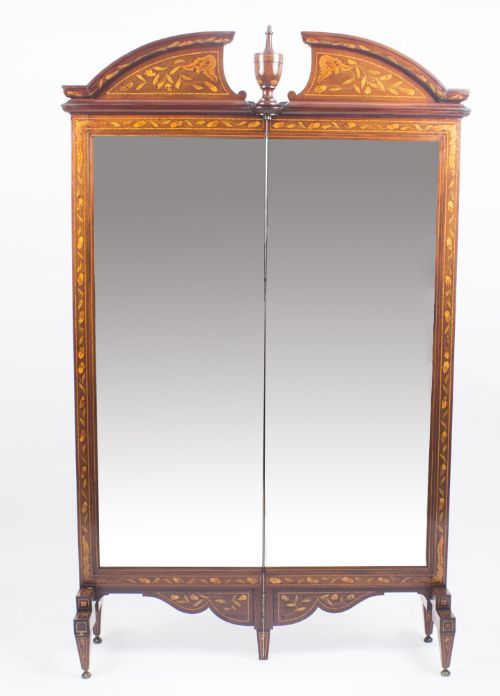
An unusual fine quality Antique Dutch walnut marquetry screen / cheval dressing mirror, C1830 in date.
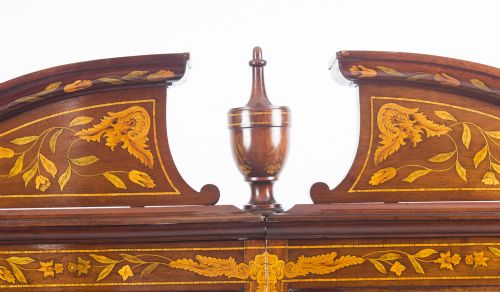
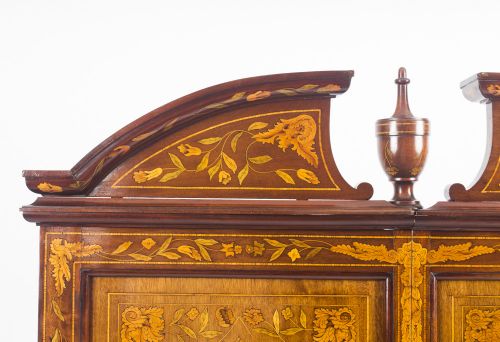
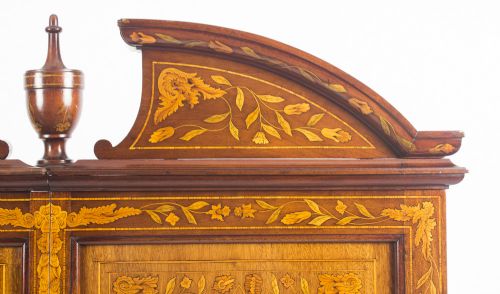
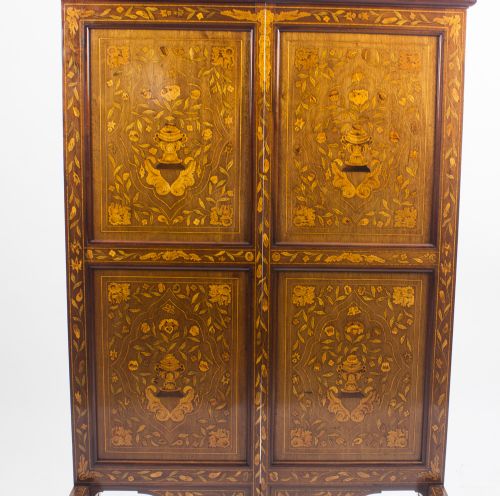
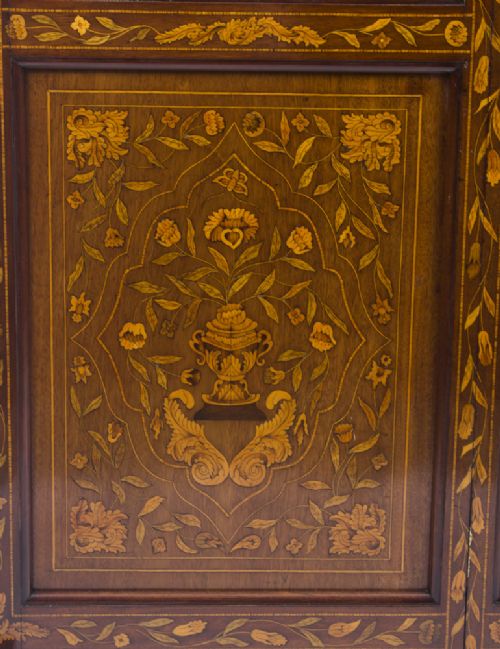
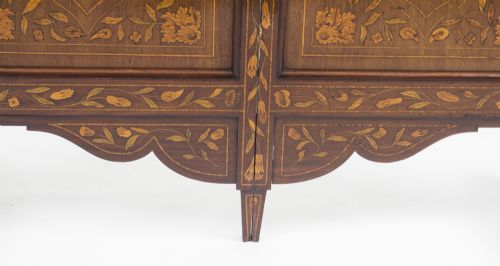
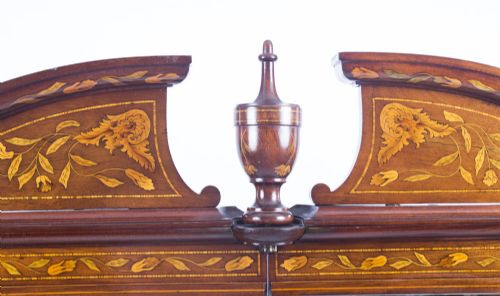
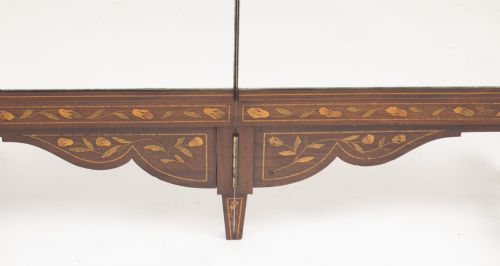
The double folding screen features a rectangular shaped mirror plate with floral marquetry frame, the reverse features marquetry panels decorated with urns, butterflies, foliate and floral ornamentation. The top is surmounted by a moulded broken arch pediment with a central urn finial.
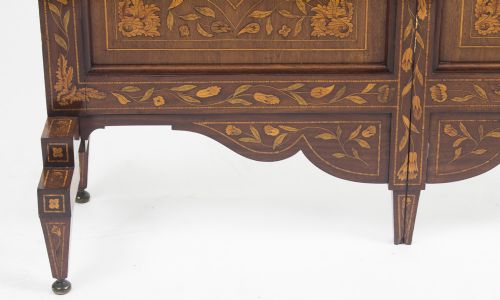
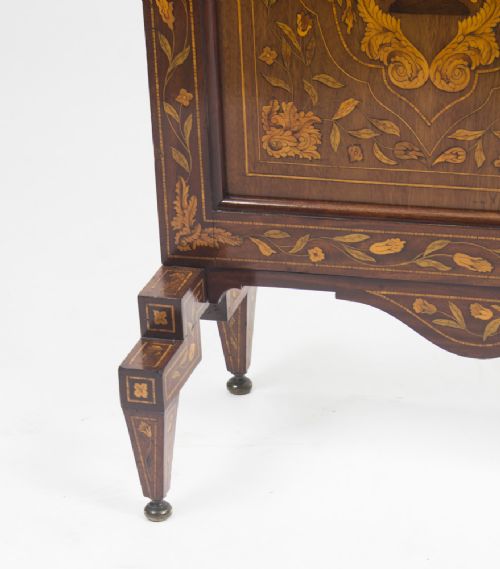
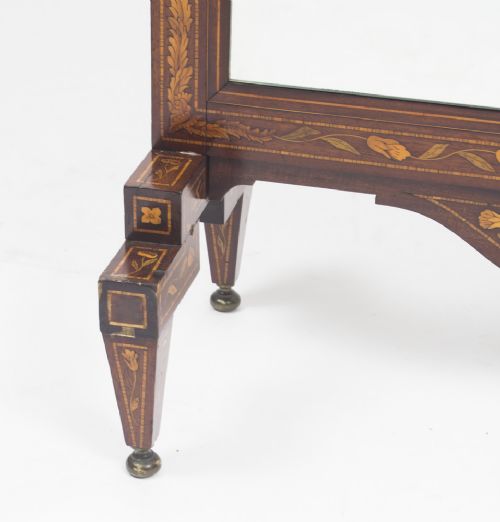
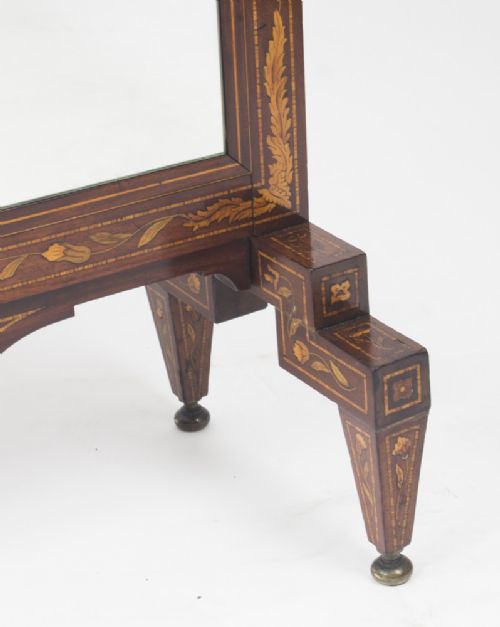
It is raised on stepped supports with tapered square legs.
Condition:
This mirror is in excellent original condition, and the frame has been cleaned and waxed in our workshops.
Dimensions in cm:
Height 170 x Width 106 x Depth 31
Dimensions in inches:
Height 66.9 x Width 41.7 x Depth 12.2
Cheval Mirror - also called horse dressing glass or psyche, a tall dressing mirror, suspended between two pillars, usually joined by horizontal bars immediately above and below the mirror and resting on two pairs of long feet.
The cheval glass was first made toward the end of the 18th century. The mirror could be tilted at any angle by means of the swivel screws supporting it, and its height could be adjusted by means of lead counterweights and a horse, or pulley, from which the name was taken.
Thomas Sheraton, in The Cabinet Dictionary (1803), included a design with a nest of drawers at one side and another with a writing surface. When wardrobes were fitted with mirrored doors, the cheval glass became unnecessary in bedrooms.
Mahogany
is probably one of the largest ‘families’ of hardwood, having many different varieties within its own species.
Mahogany has been used for centuries in ship building, house building, furniture making etc and is the core structure of just about every 19th century vanity box, dressing case or jewellery box. It became more of a Victorian trend to dress Mahogany with these decorative veneers, such as Rosewood, Kingwood, Burr Walnut and Coromandel, so that the actual Mahogany was almost hidden from view.
Mahogany itself is a rich reddish brown wood that can range from being plain in appearance to something that is so vibrant, figured and almost three dimensional in effect.
Although Mahogany was most often used in its solid form, it also provided some beautifully figured varieties of veneer like ‘Flame’ Mahogany and ‘Fiddleback’ Mahogany (named after its preferred use in the manufacture of fine musical instruments).
Cuban Mahogany was so sought after, that by the late 1850's, this particular variety became all but extinct.
Our reference: 08719