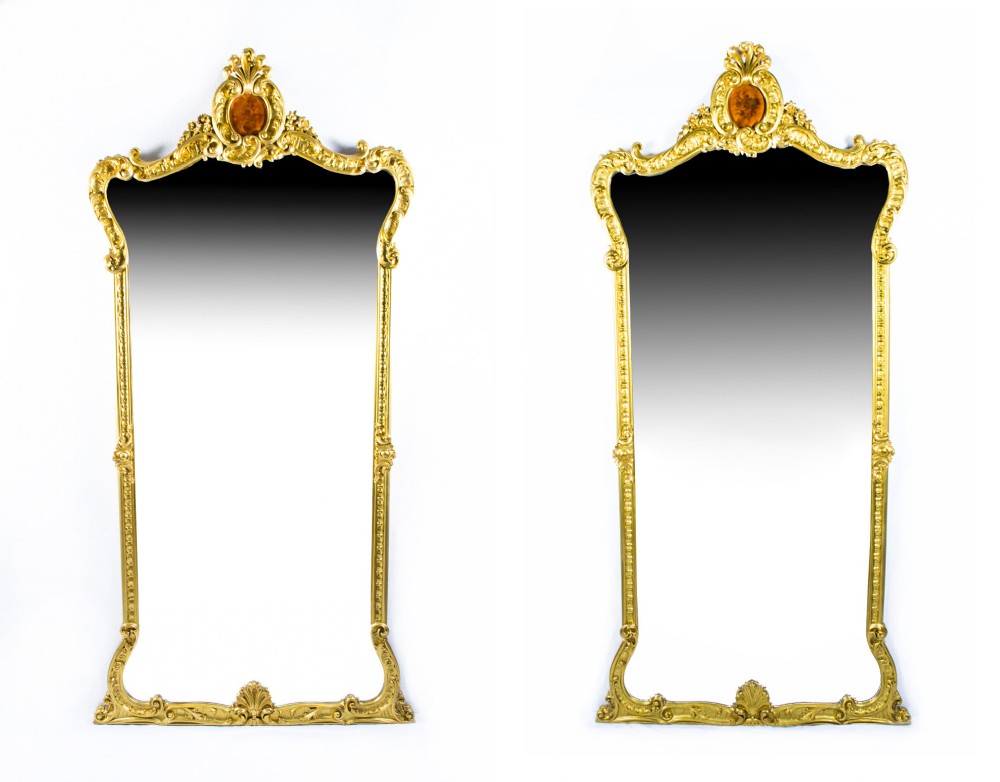
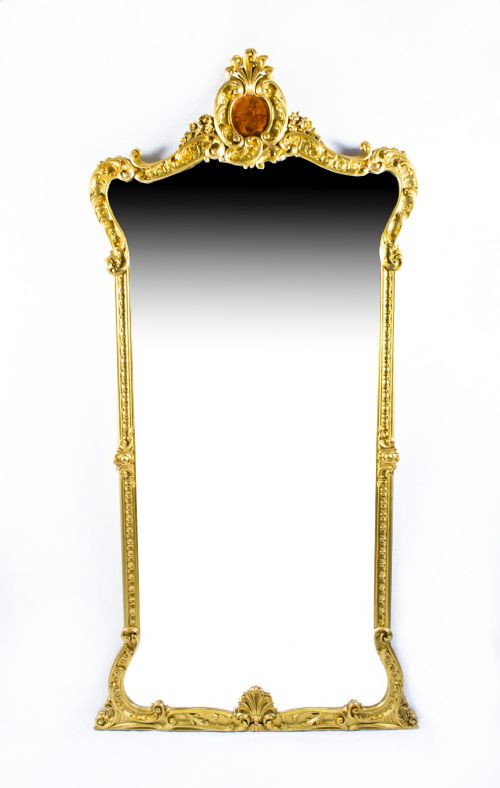
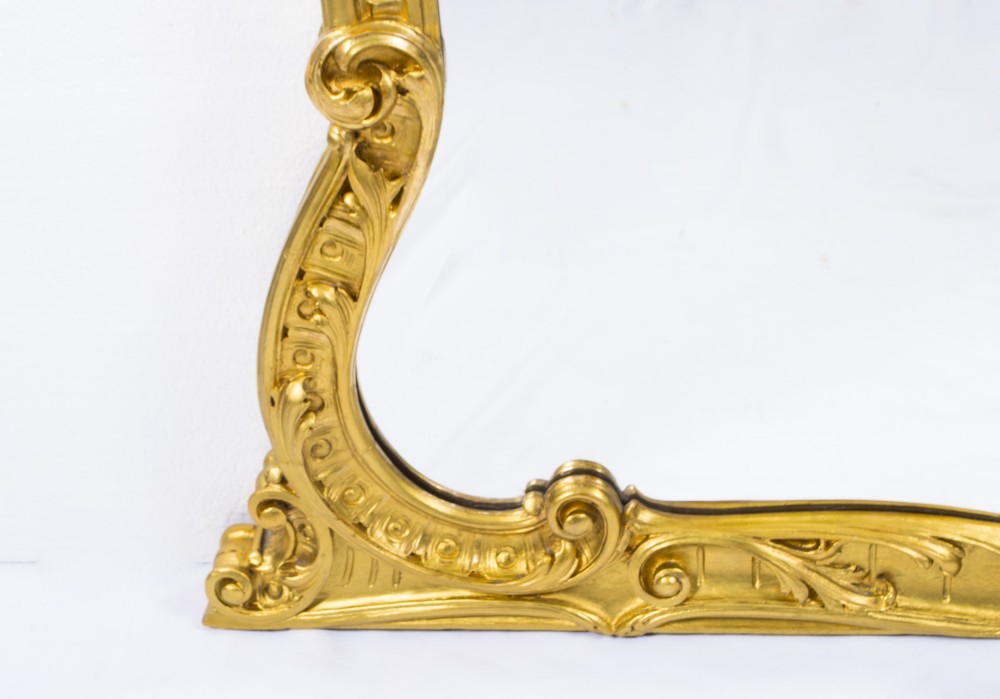
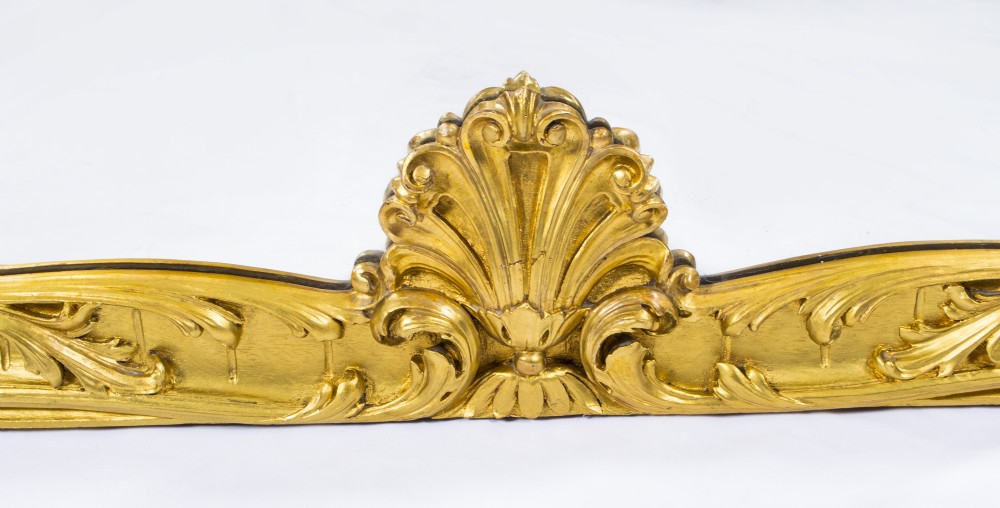
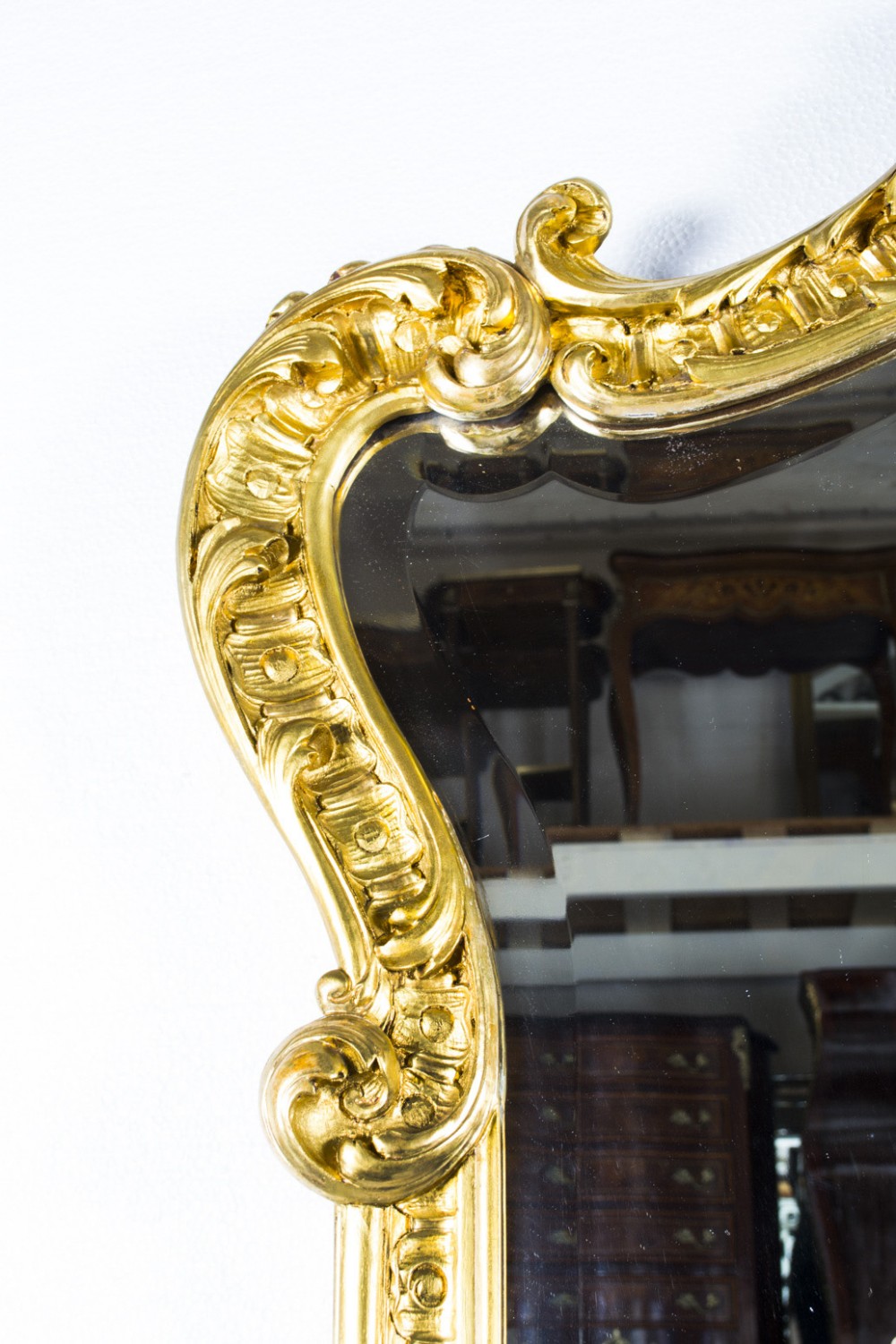
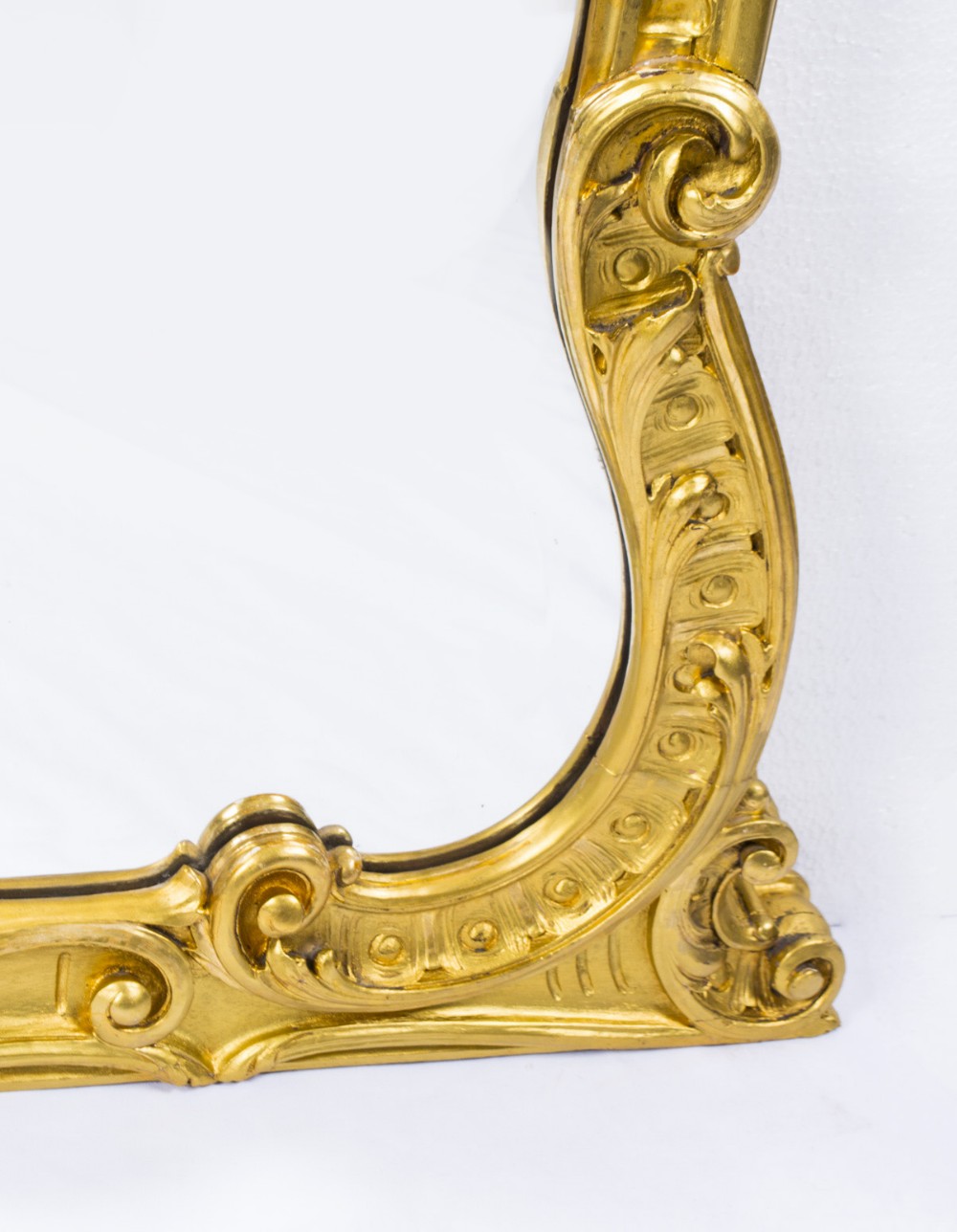
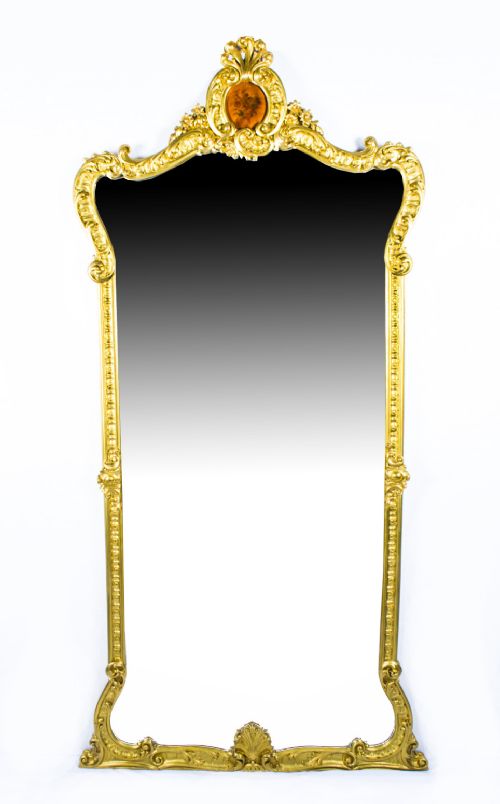
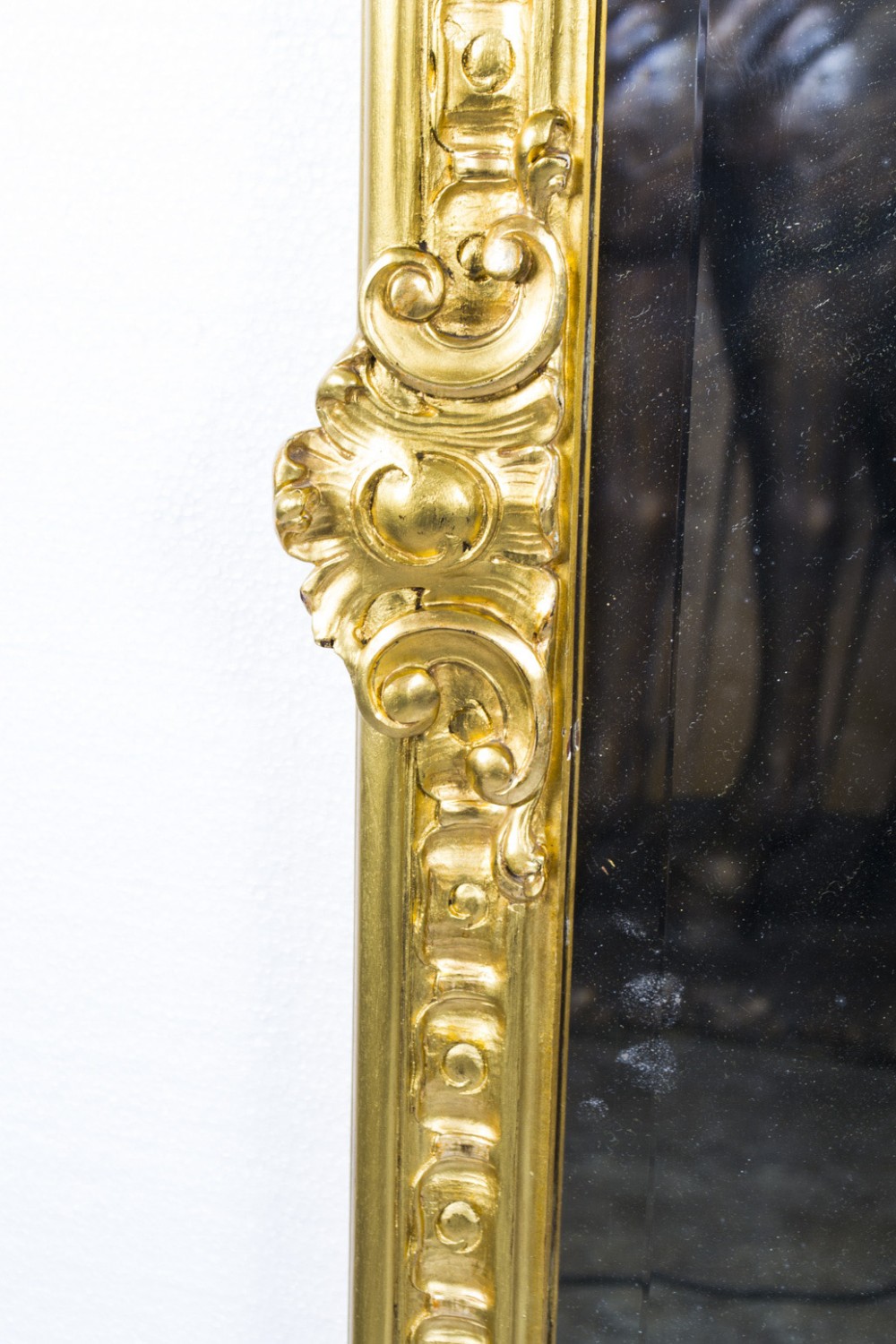
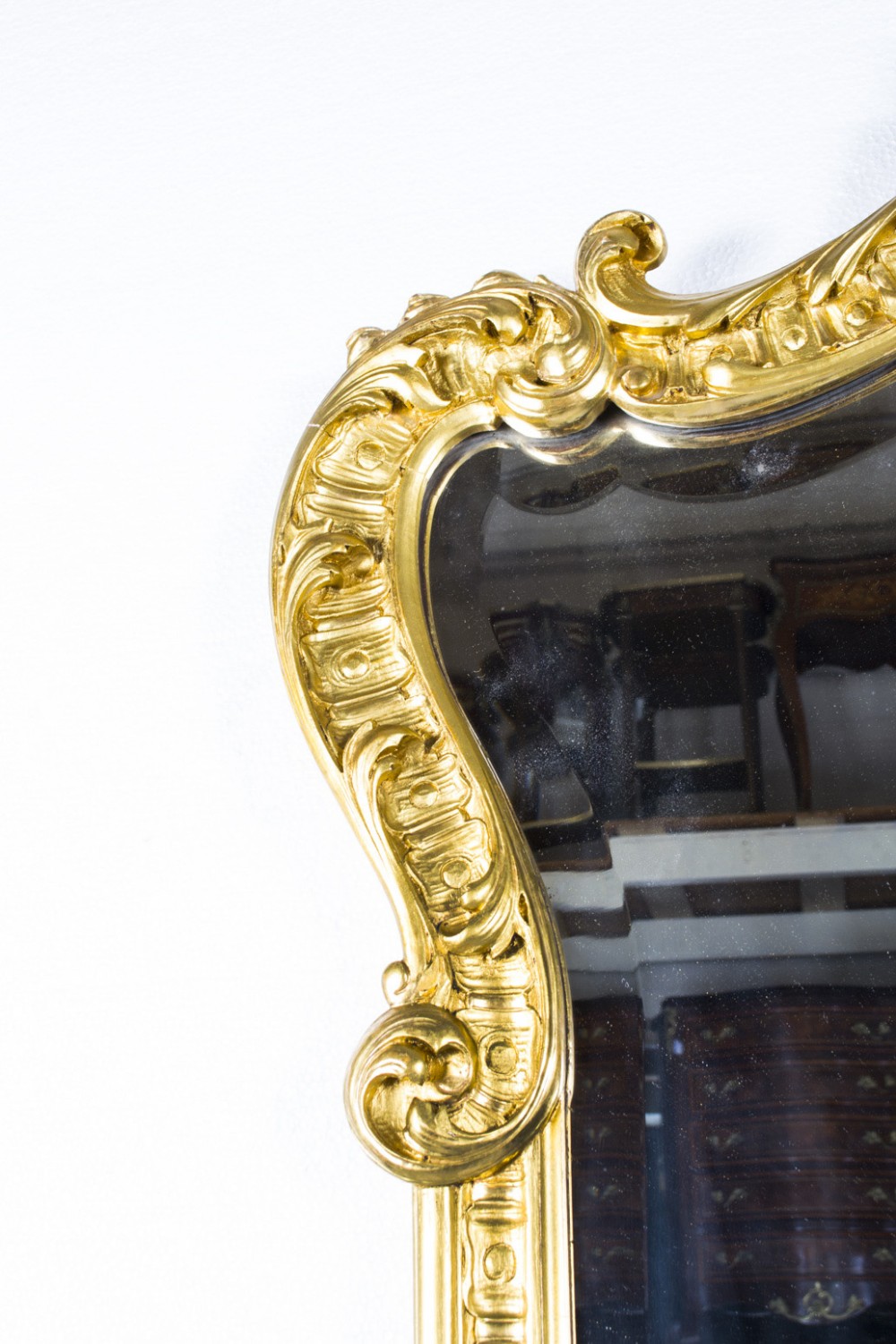
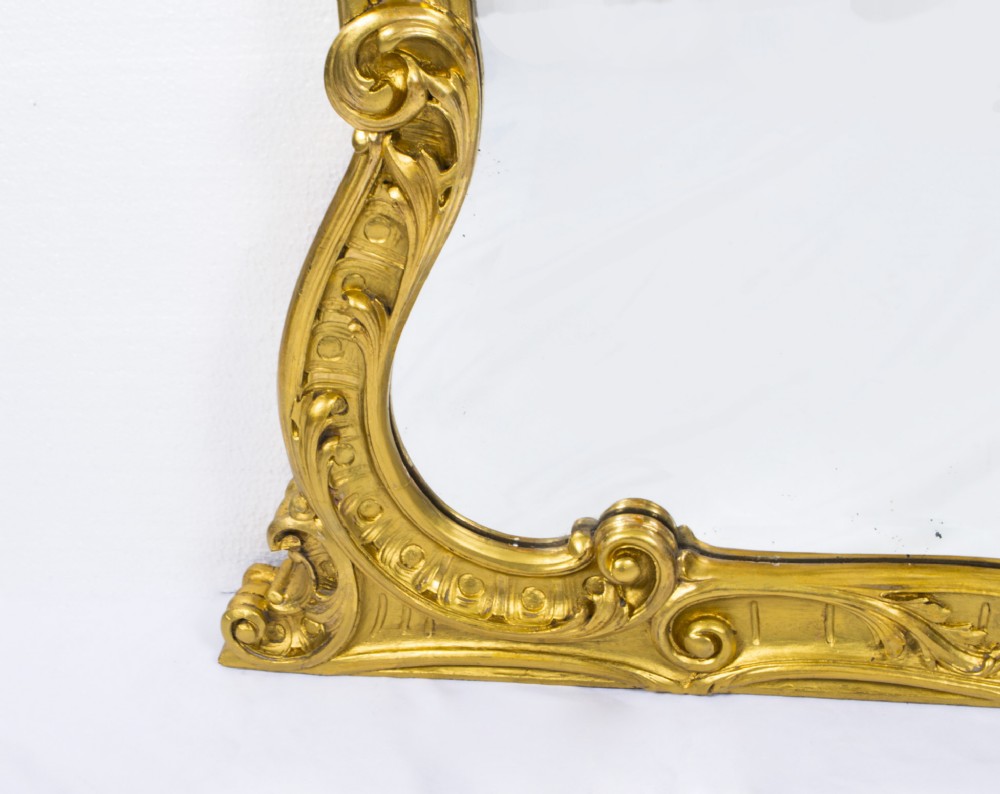
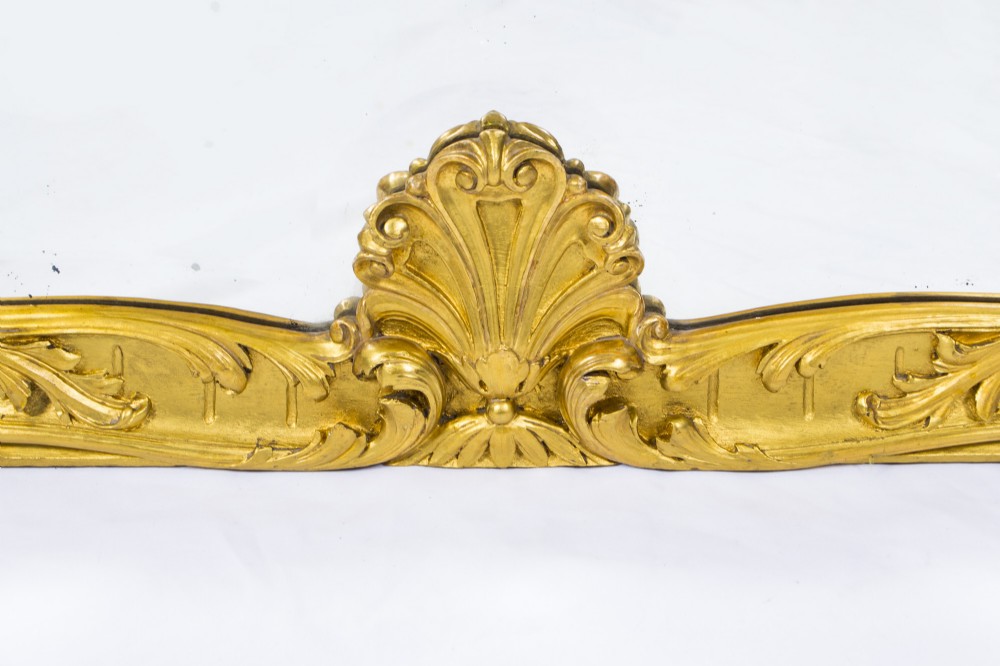
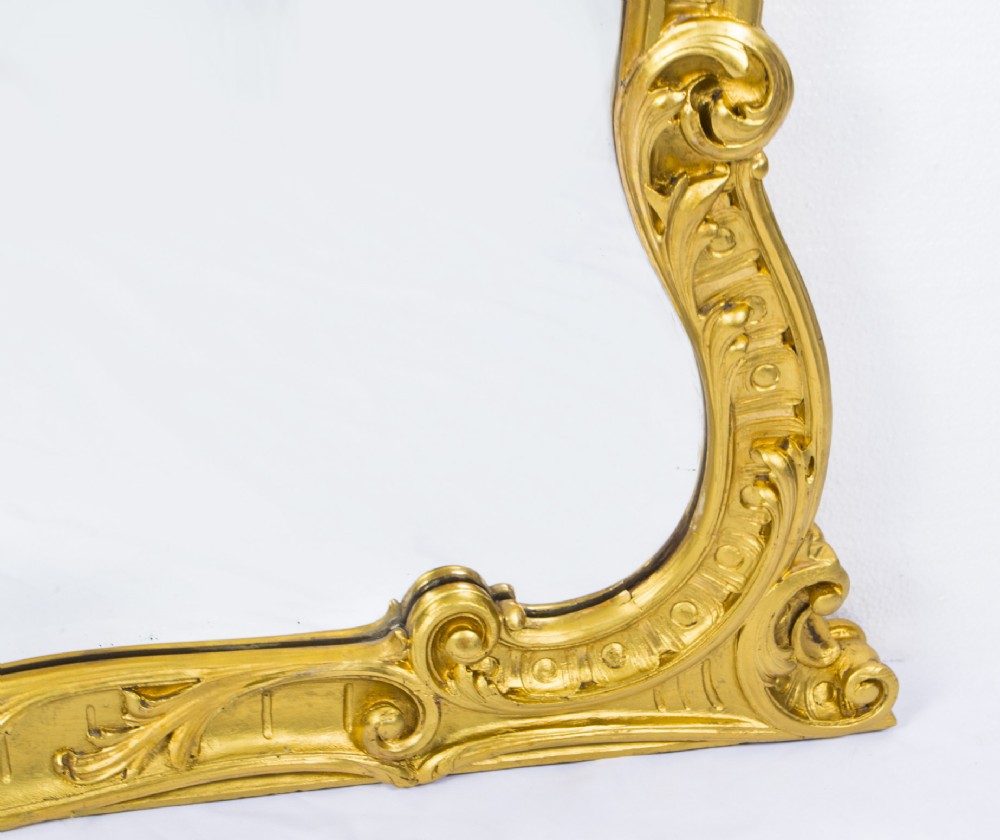
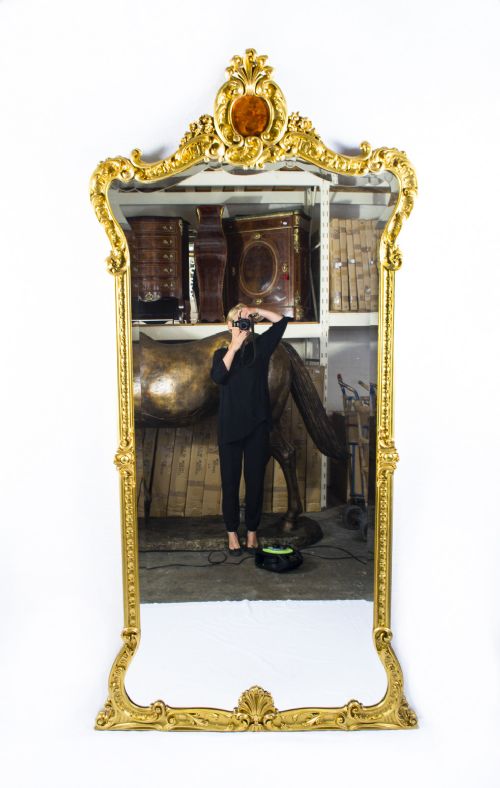
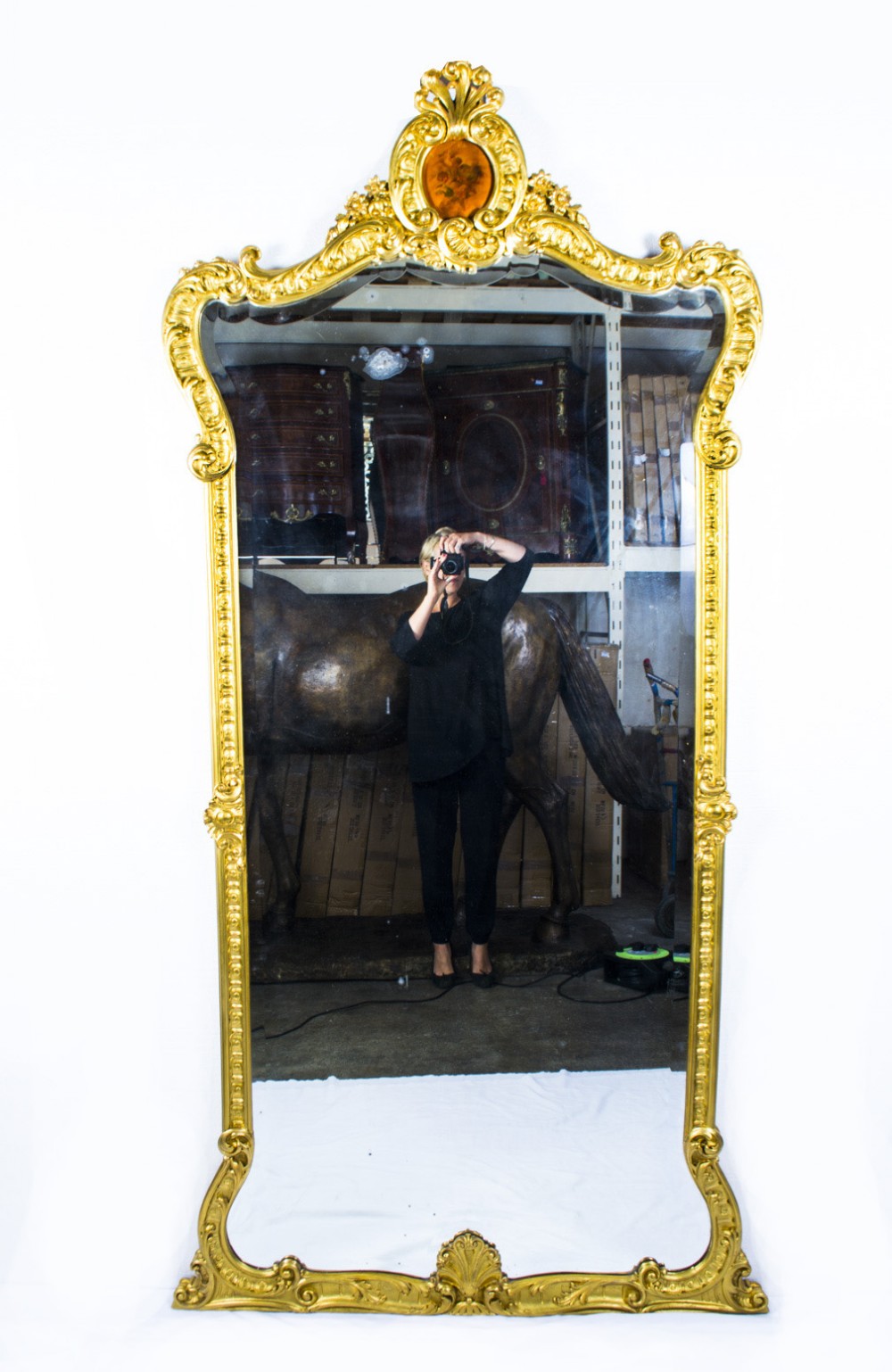
This is a monumental pair of 2.5 metre high antique Louis XV style French giltwood pier mirrors, with fabulous hand carved floral decoration, circa 1900.
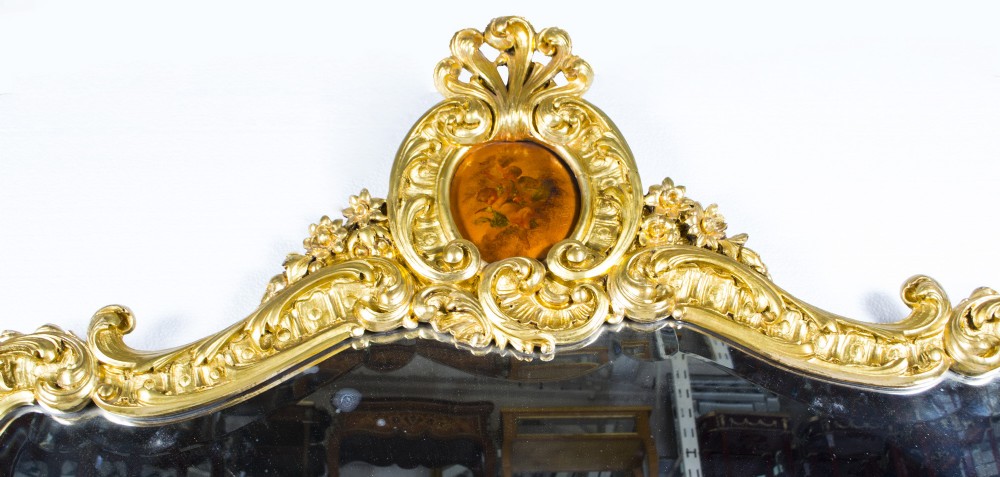
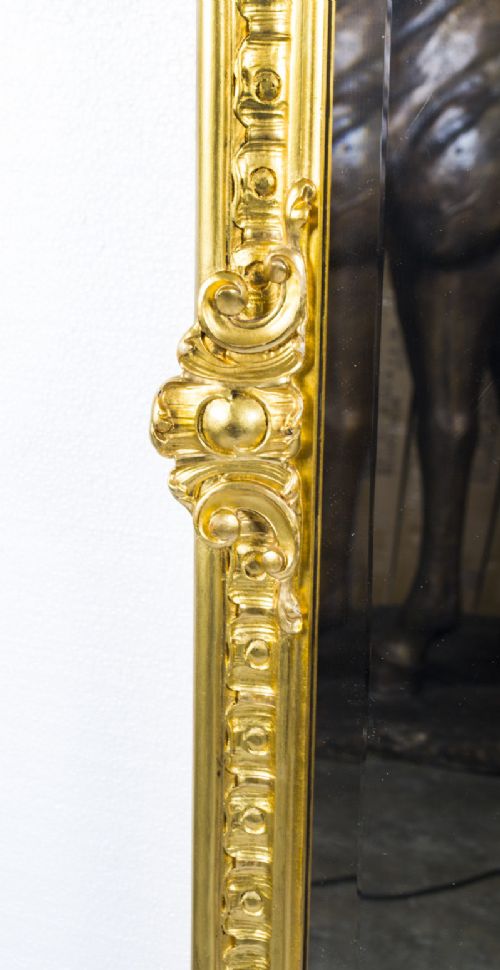
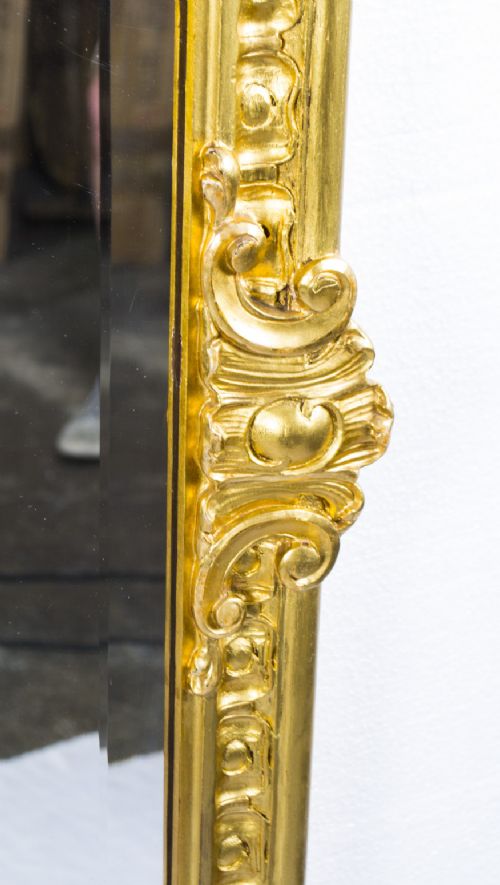
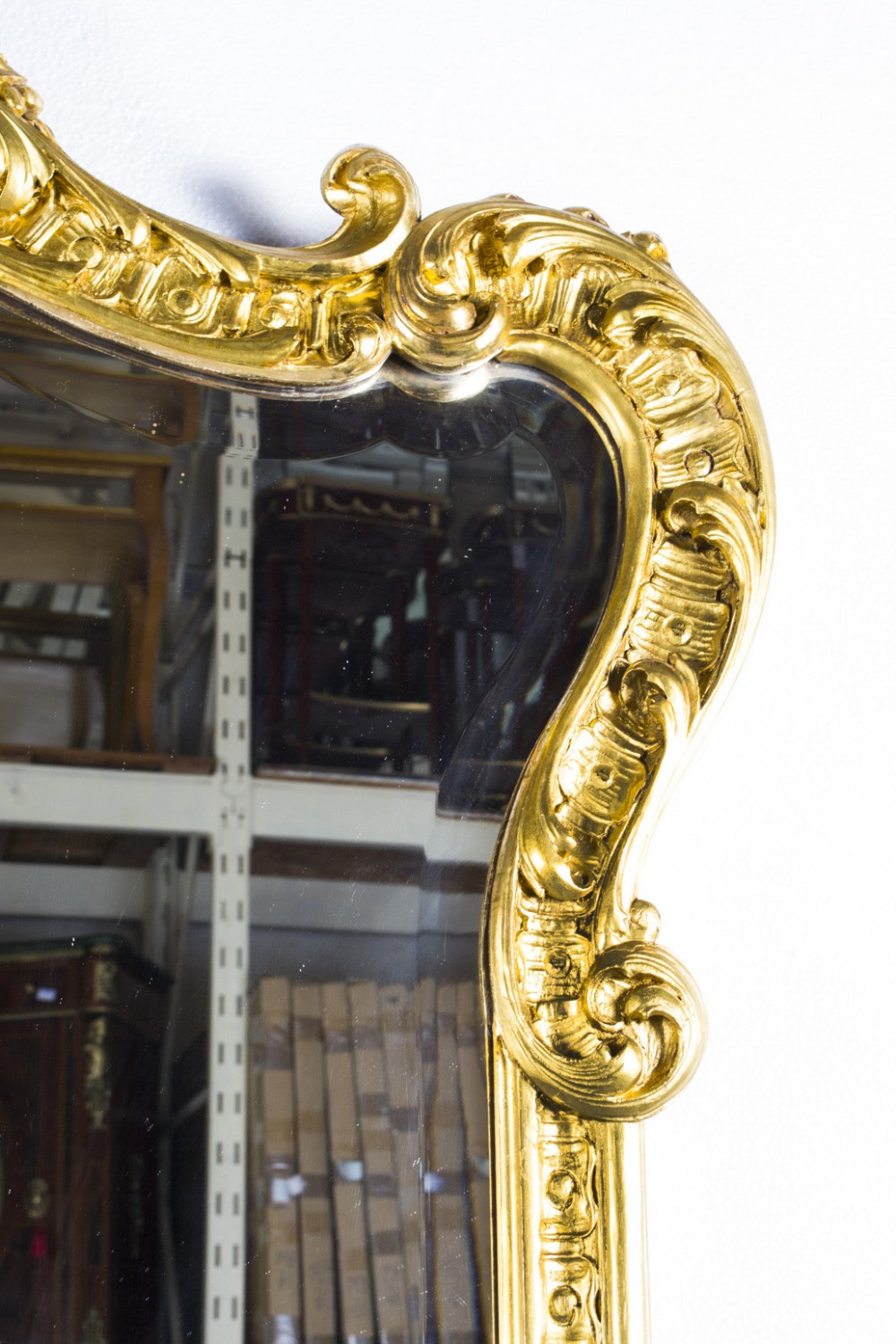
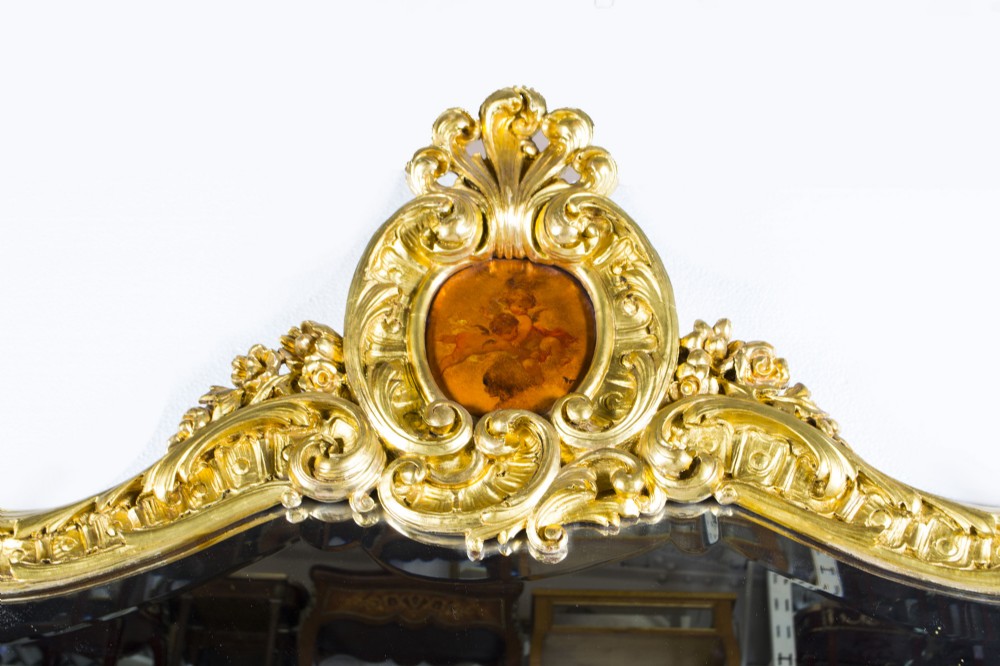
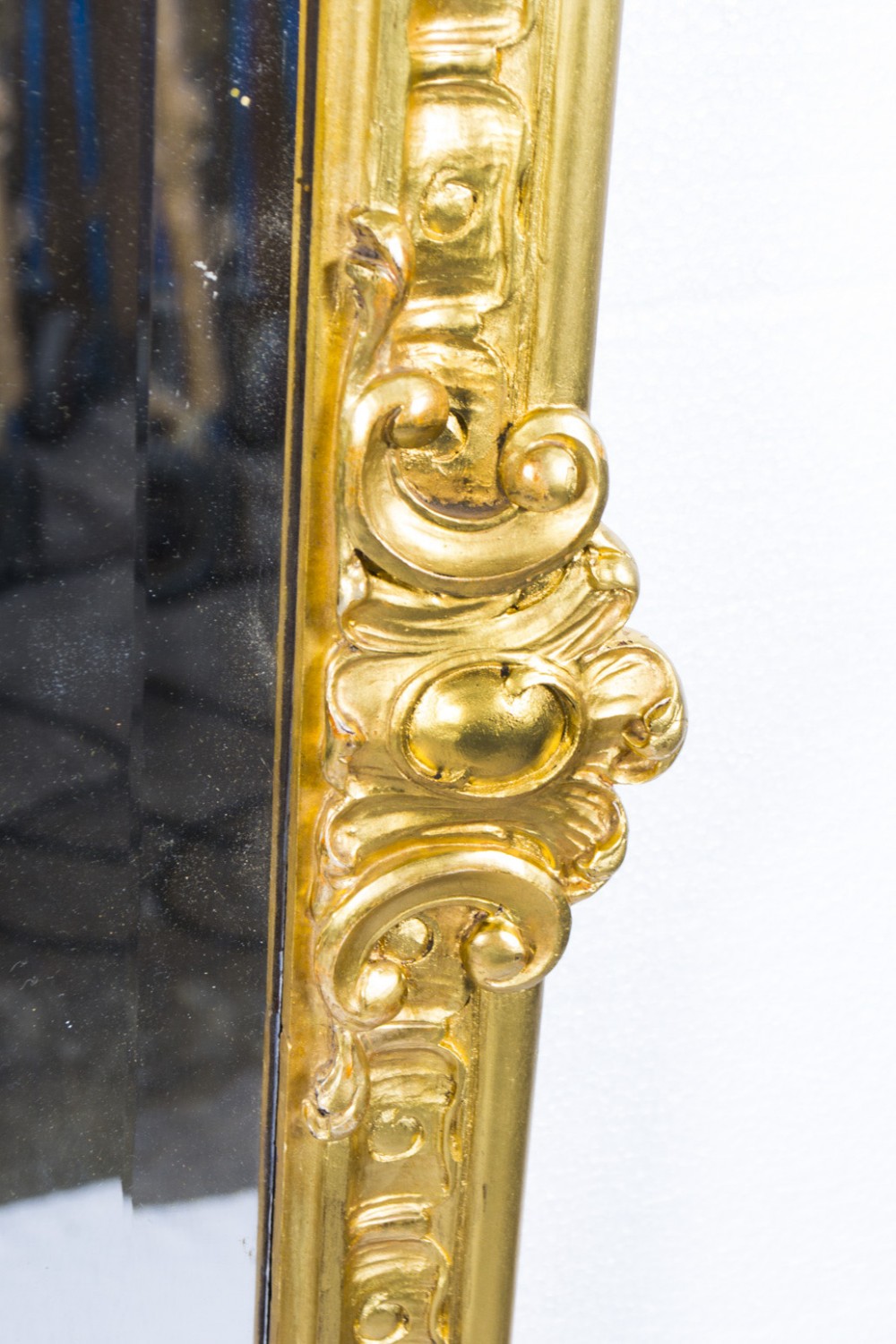
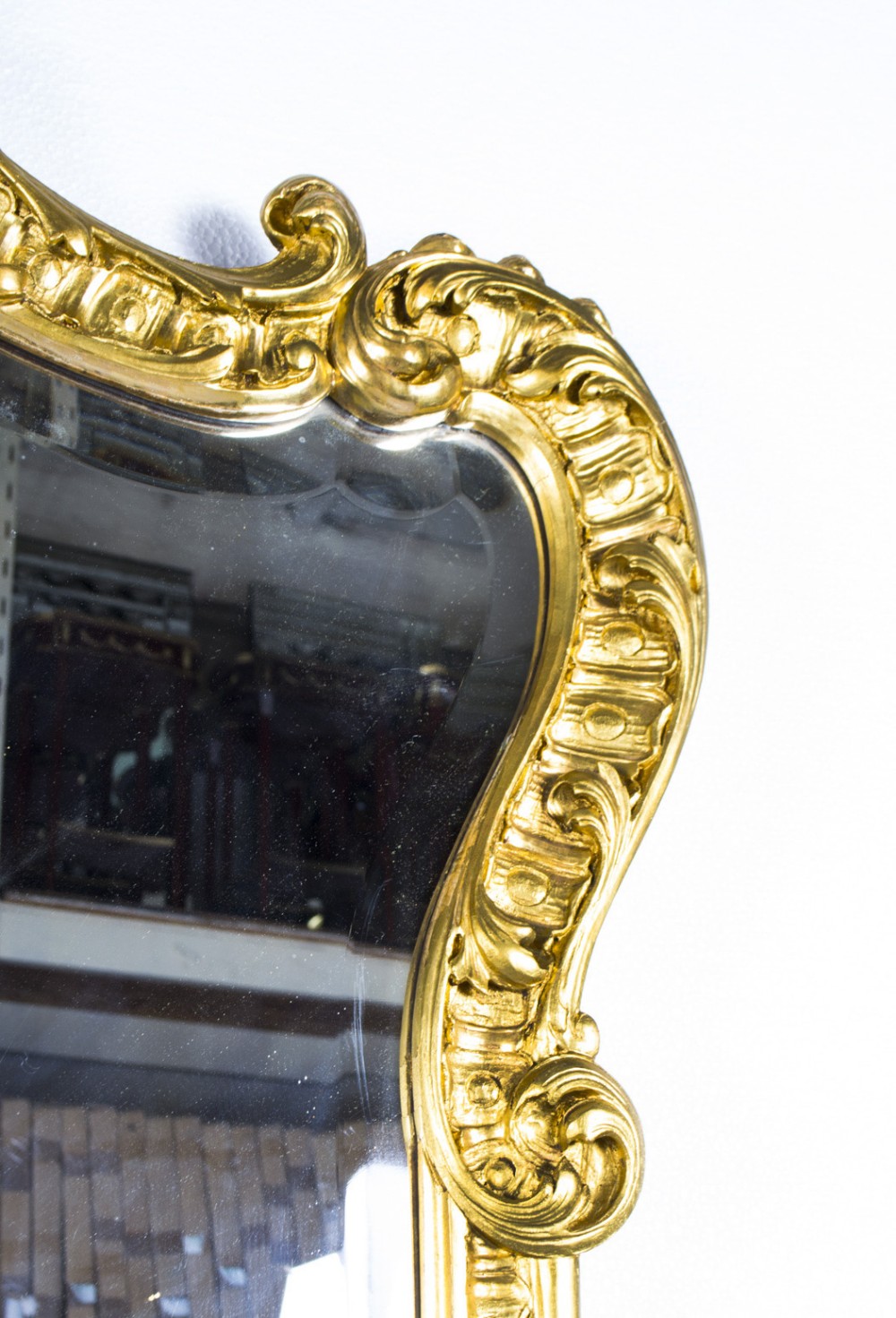
The arched mirror plates are elegantly framed by hand carved 'C' - scroll corners with beaded decoration and they are surmounted with elaborate scrolled acanthus cresting. The centre of the cresting features amber Vernis Martin framed roundels depicting putti, and they have pierced scallop shell plaques at the bottom.
The mirror plates have decorative bevelled edges that follow the contours of the frames.
Add a touch of sophistication to a your home with these fantastic quality French mirrors.
Condition:
In excellent condition having been cleaned and polished in our workshops.
As antique items, the mirror plates show signs of use commensurate with age, these minor condition issues are mentioned for accuracy and, as seen in the accompanying photographs, the mirrors display beautifully.
Dimensions in cm:
Height 246 x Width 125 x Depth 6
Dimensions in inches:
Height 96.9 x Width 49.2 x Depth 2.4
Mirrors
are commonly used for personal grooming or admiring oneself (in which case the archaic term looking-glass is sometimes still used), decoration, and architecture.
The earliest manufactured mirrors were pieces of polished stone such as obsidian, a naturally occurring volcanic glass. In classical antiquity, mirrors were made of solid metal (bronze, later silver) and were too expensive for widespread use by common people; they were also prone to corrosion. Due to the low reflectivity of polished metal, these mirrors also gave a darker image than modern ones, making them unsuitable for indoor use with the artificial lighting of the time.
The method of making mirrors out of plate glass was invented by 16th-century Venetian glassmakers on the island of Murano, who covered the back of the glass with mercury, obtaining near-perfect and undistorted reflection. For over one hundred years, Venetian mirrors installed in richly decorated frames served as luxury decorations for palaces throughout Europe, but the secret of the mercury process eventually arrived in London and Paris during the 17th century, due to industrial espionage. French workshops succeeded in large scale industrialization of the process, eventually making mirrors affordable to the masses.
Our reference: 07177