57,335  PAGES BROWSED TODAY PAGES TODAY 204  ANTIQUES UPLOADED TODAY NEW ARRIVALS
ID #SA658734
SOLD
Email
Save
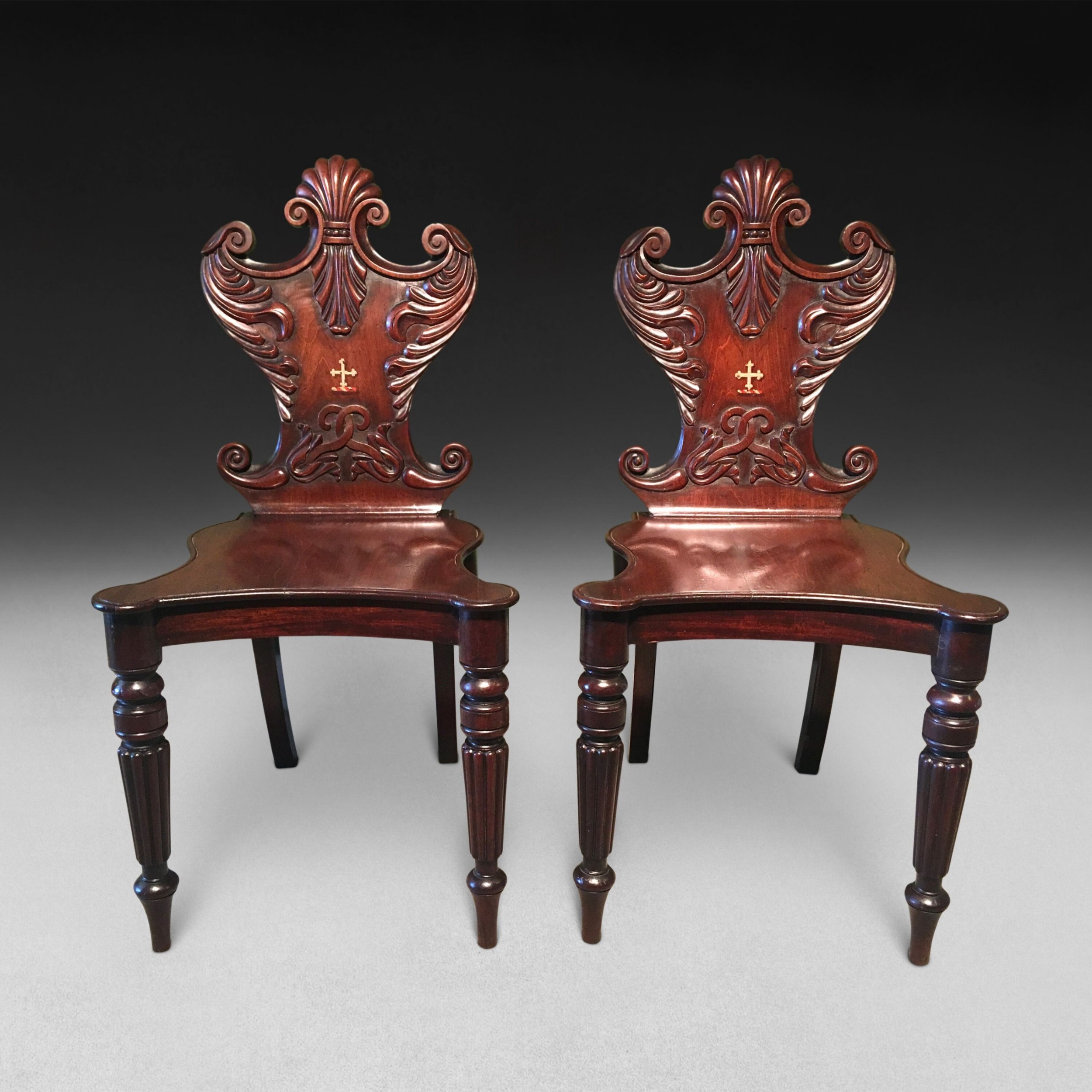
A Pair of Regency Mahogany Hall Chairs
W.R. Harvey & Co. (Antiques) Ltd
sold SA658734
Sorry, but this item has been sold.
W.R. Harvey & Co. (Antiques) Ltd

W.R. Harvey & Co. (Antiques) Ltd

Sellingantiques Verified Since Sep 2016
View Dealers Stock Page
  • About Us
    Specialists in 17th-18th and early 19th century fine english furniture, art, clocks and other objets d'art
  • Trade Associations
    W.R. Harvey & Co. (Antiques) Ltd is a registered member of LAPADA 
Id #SA658734
PDF SHARE
SAVE

A Pair of Regency Mahogany Hall Chairs

19th century
Description

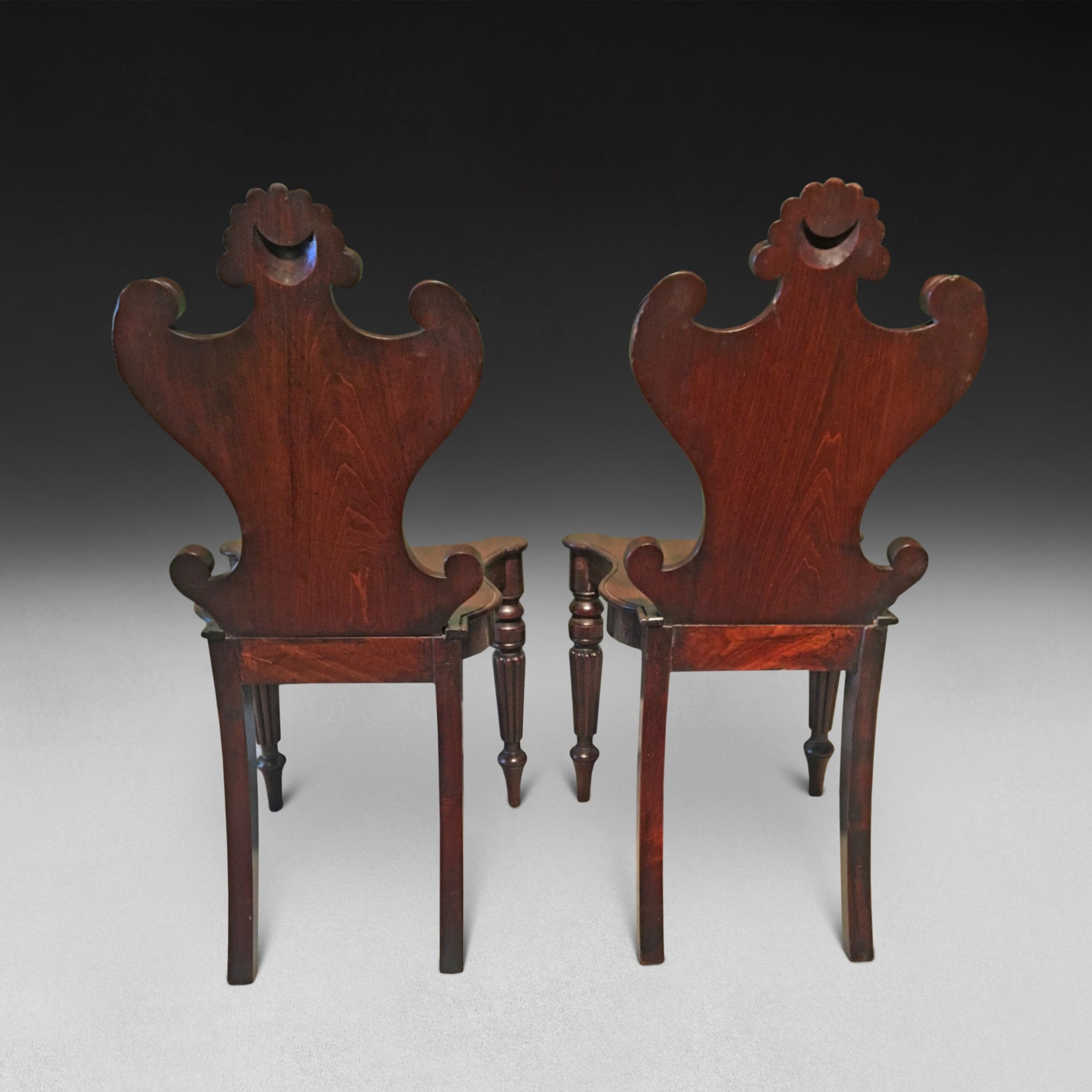
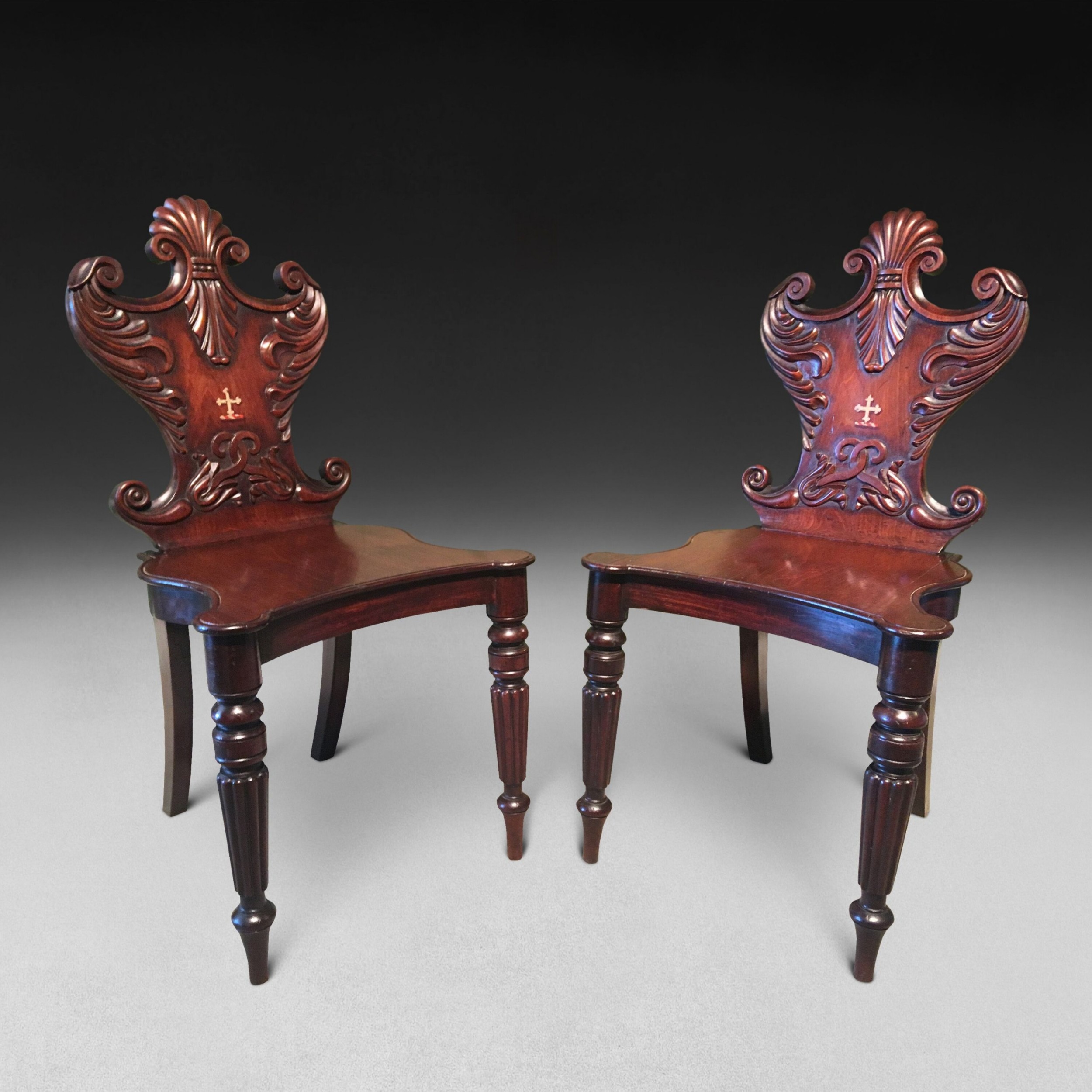
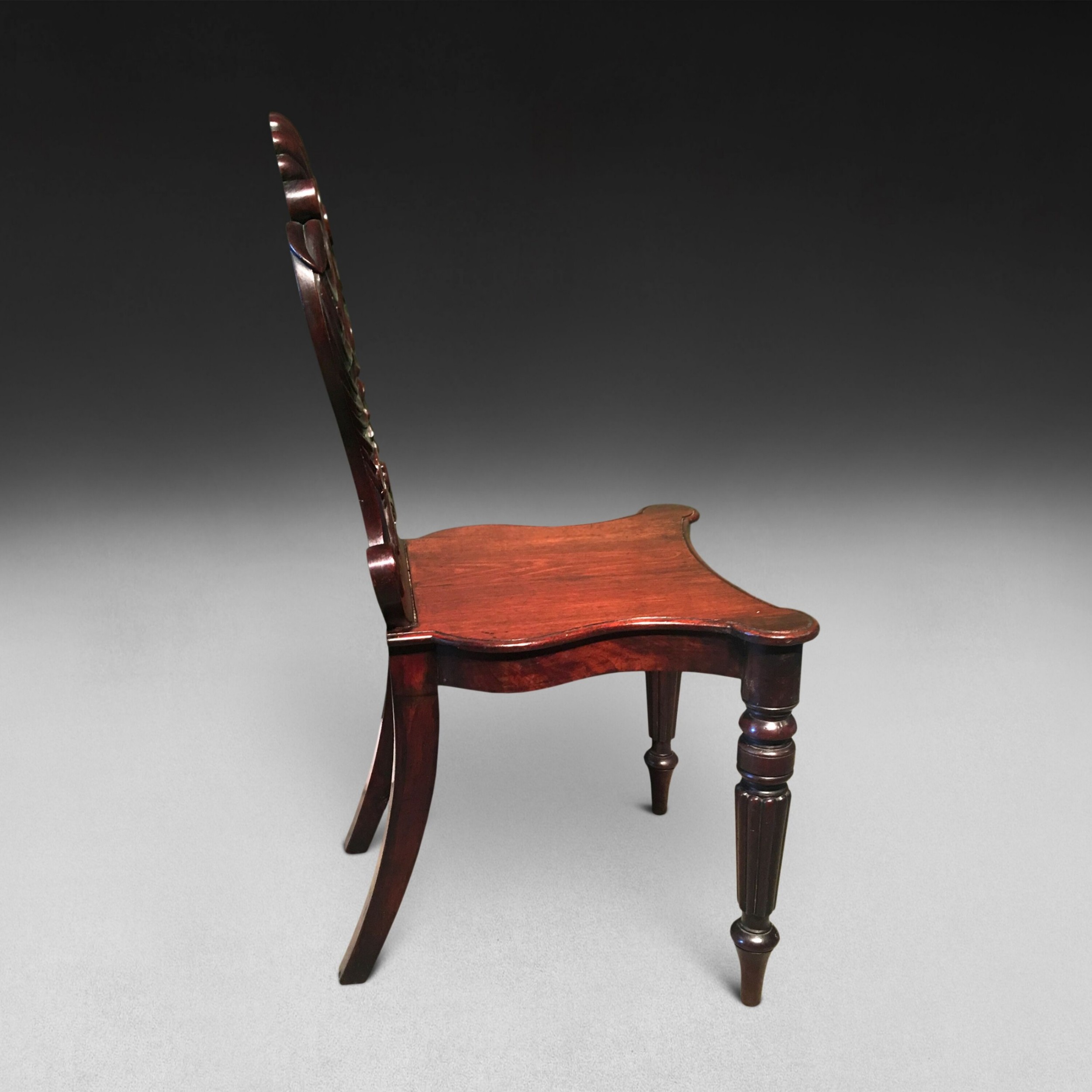
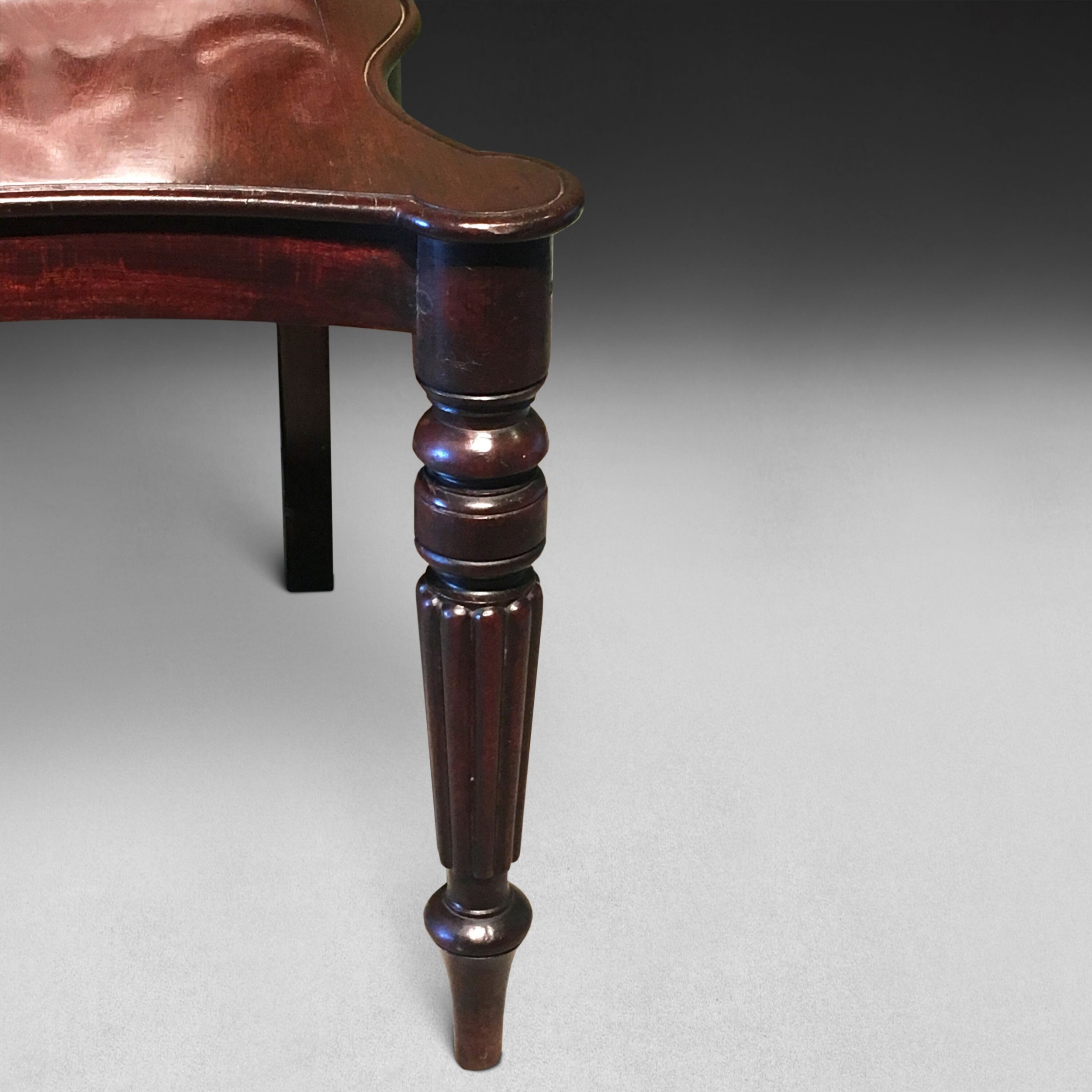
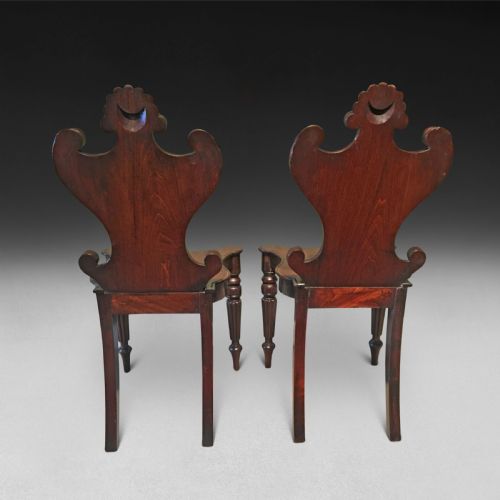
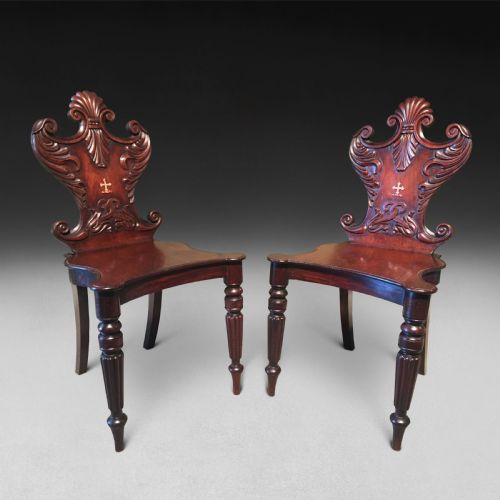
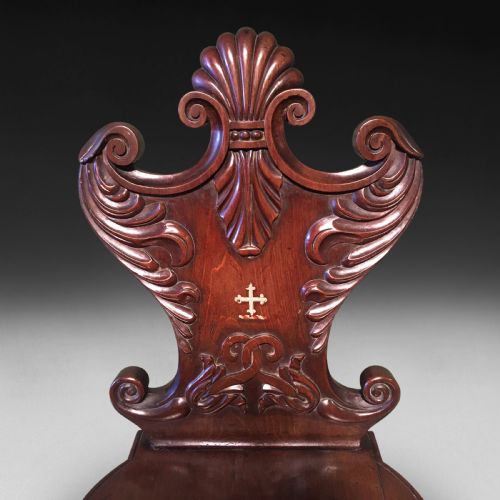
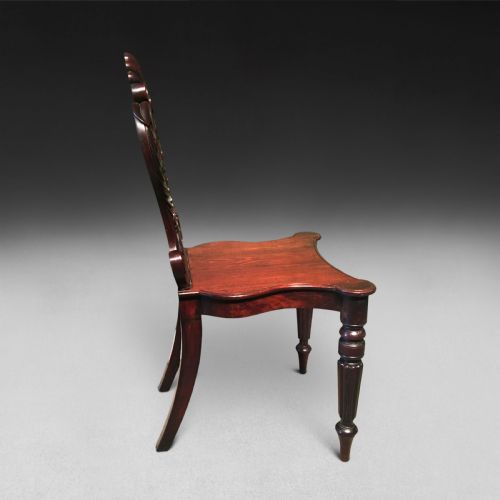
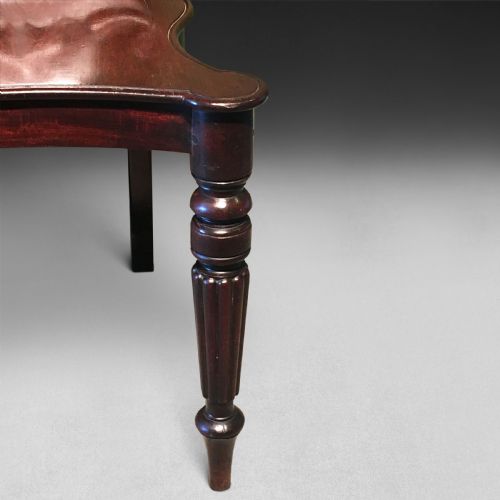
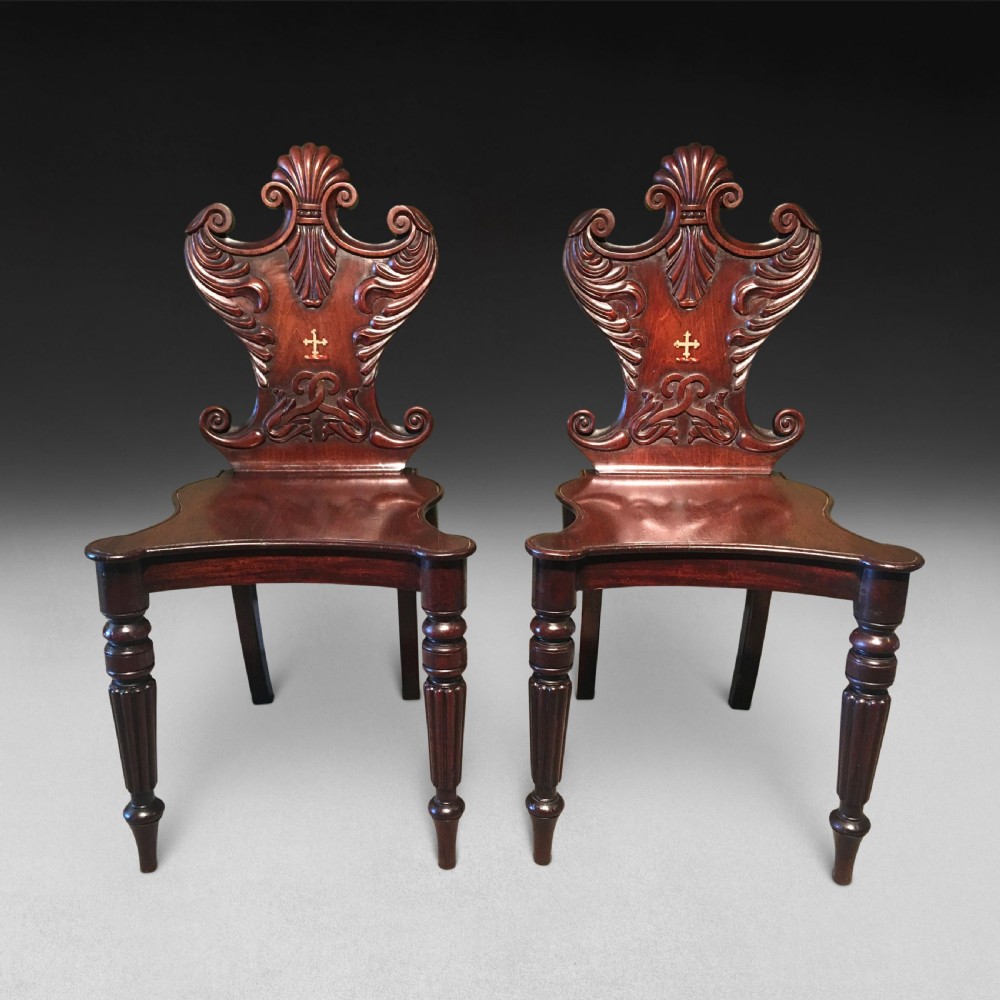
A pair of Regency mahogany hall chairs, each with carved backs, solid shaped seats and raised on turned tapered reeded front legs.

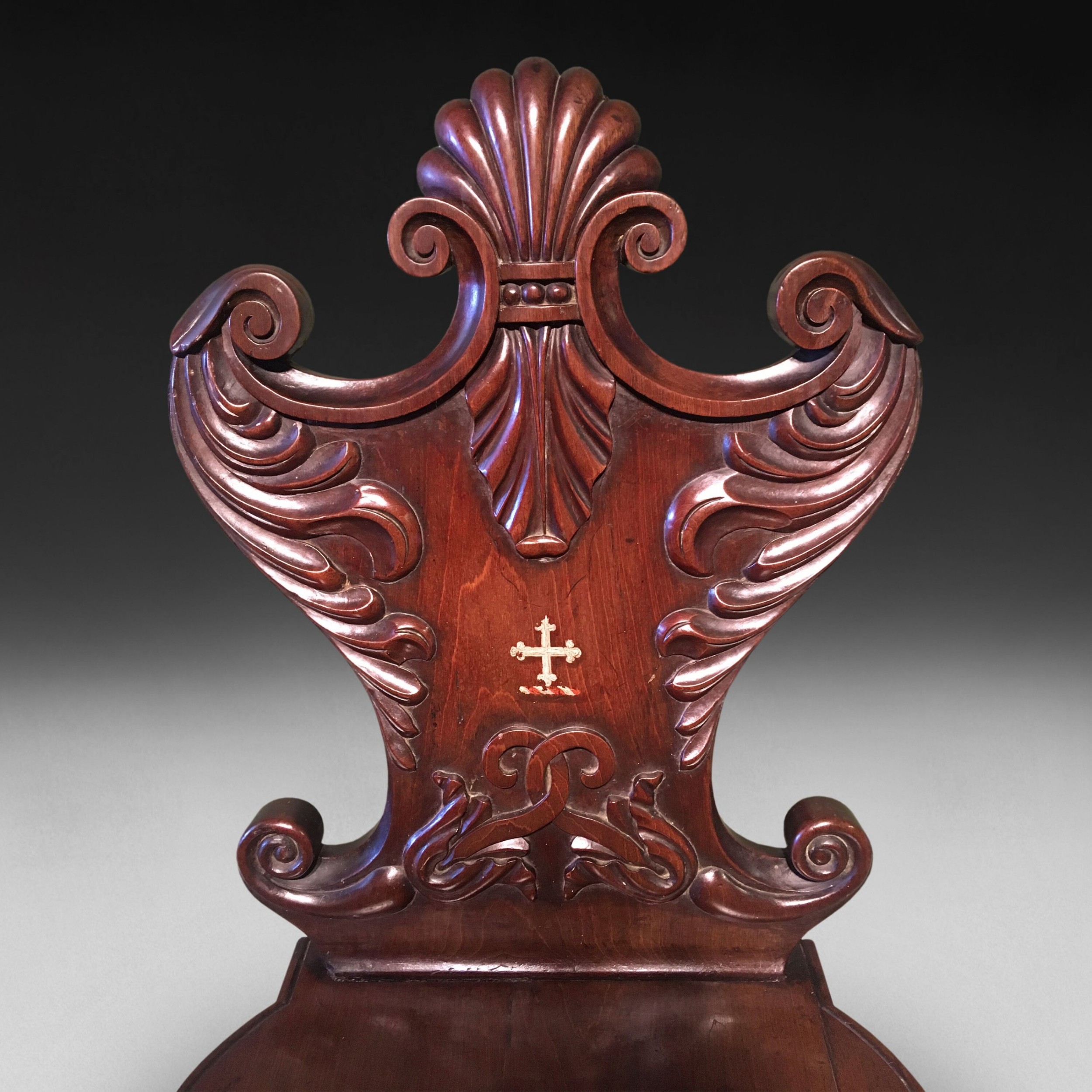
This pair of Hall Chairs are exceptional quality and have a coat of arms painted on the backs. The arms are those of a cross bottony (trefoil) above a red and white spiral striped pole. The pole, often called a barber’s pole, was a sign of a doctor or carer dating from the middle ages when the barber was oftentimes also a surgeon and ailments were treated by blood letting, the stripes representing both the blood and the bandages. These chairs were probably made for a doctor or surgeon.
The carving, reeded legs and supreme quality make an attribution to Gillows of Lancaster straightforward.

Circa. 1820

H: 33.5”,85 cms, W: 17”,43 cms, D:18”, 46 cms.

English hall chairs were inspired by the Grand Tour with the earliest examples following the shapes of the Italian ‘Sgabello’ chairs that adorned the entrances of Italian palaces in the 16th century. Designs copying these traditional forms were popular throughout the 18th century, with major English designers and chairmakers, such as William Kent, Thomas Chippendale, George Hepplewhite Robert Adam, Thomas Sheraton, Robert Gillow and others developing designs for these chairs, and as the chairs were to serve a decorative rather than practical purpose many of the designs were particularly fanciful and allowed the designer to give free rein to their creative expression.
In 1762, Chippendale suggested using hall chairs in ‘Halls, Passages or Summer-Houses. They may be made either of mahogany, or other wood and painted and have commonly wooden seats’. He added, that ‘if the carving of the chairs … was thought superfluous, the outlines may be preserved, and they will look very well’.
Initially, hall chairs were designed, in the words of Sheraton in the Cabinet Maker’s Dictionary (1803), to be ‘placed in halls, for the use of servants or strangers waiting on business’.

However, being the first and one of very few items to be seen upon entering a grand country or town house, hall chairs also had to make a clear statement on behalf of the owner, showing their power, wealth, individuality, taste and pedigree. The finest examples were immensely decorative, demonstrating sophisticated designs and exquisite craftsmanship.
With the explosion of wealth associated with the growth of global trade and the industrial revolution a new class of prominent families emerged, eager to cement their positions in society. Hall chairs, displaying the family crest, sent a clear message of a person’s status.
Today, these can be seen increasingly in both traditional and contemporary settings. Although rarely serving their original purpose, these wonderfully decorative pieces of furniture can be very versatile used as a good pair of bedside stands on which to put a book and a small lamp, while interior decorators place hall chairs anywhere in a house to make wonderful decorative accents or fill awkward spaces. Hall chairs can actually be used for occasional seating, too with a squab cushion to make them more comfortable. The rarest examples, are those retaining their original armorial device painted or carved onto the back: it helps to trace their history back to the original owners. If only these pieces could talk….. what wonderful stories they could tell.

Physical Dimensions
Height
85cm (33.46")
Width
43cm (16.93")
Depth
46cm (18.11")
Declaration

W.R. Harvey & Co. (Antiques) Ltd has dated this piece to the Regency era.

Reference Numbers
Sellingantiques Reference
SA658734
Dealers Internal Reference
10781
Dealers Notes

We offer free delivery within the UK. For deliveries Worldwide, please contact us for a quote and we will get back to you within 12 hours.

If you would like to view the item in person, our showrooms are open Monday to Saturday 9.30 - 5.30 and by appointment on Sunday.

Any questions, please contact us as soon as possible. We will endeavour to get you an answer within 24 hours - and hopefully much quicker!

Description
A pair of Regency mahogany hall chairs, each with carved backs, solid shaped seats and raised on turned tapered reeded front legs.

This pair of Hall Chairs are exceptional quality and have a coat of arms painted on the backs. The arms are those of a cross bottony (trefoil) above a red and white spiral striped pole. The pole, often called a barber’s pole, was a sign of a doctor or carer dating from the middle ages when the barber was oftentimes also a surgeon and ailments were treated by blood letting, the stripes representing both the blood and the bandages. These chairs were probably made for a doctor or surgeon.

The carving, reeded legs and supreme quality make an attribution to Gillows of Lancaster straightforward.
W.R. Harvey & Co. (Antiques) Ltd
fig 1. A pair of Regency mahogany hall chairs
fig 1. A Pair of Regency Mahogany Hall Chairs

Circa. 1820

H: 33.5”,85 cms, W: 17”,43 cms, D:18”, 46 cms.

English hall chairs were inspired by the Grand Tour with the earliest examples following the shapes of the Italian ‘Sgabello’ chairs that adorned the entrances of Italian palaces in the 16th century. Designs copying these traditional forms were popular throughout the 18th century, with major English designers and chairmakers, such as William Kent, Thomas Chippendale, George Hepplewhite Robert Adam, Thomas Sheraton, Robert Gillow and others developing designs for these chairs, and as the chairs were to serve a decorative rather than practical purpose many of the designs were particularly fanciful and allowed the designer to give free rein to their creative expression.

fig 2. A pair of Regency mahogany hall chairs
fig 2. A Pair of Regency Mahogany Hall Chairs

In 1762, Chippendale suggested using hall chairs in ‘Halls, Passages or Summer-Houses. They may be made either of mahogany, or other wood and painted and have commonly wooden seats’. He added, that ‘if the carving of the chairs … was thought superfluous, the outlines may be preserved, and they will look very well’.

fig 3. A pair of Regency mahogany hall chairs
fig 3. A Pair of Regency Mahogany Hall Chairs

Initially, hall chairs were designed, in the words of Sheraton in the Cabinet Maker’s Dictionary (1803), to be ‘placed in halls, for the use of servants or strangers waiting on business’.

However, being the first and one of very few items to be seen upon entering a grand country or town house, hall chairs also had to make a clear statement on behalf of the owner, showing their power, wealth, individuality, taste and pedigree. The finest examples were immensely decorative, demonstrating sophisticated designs and exquisite craftsmanship.

fig 4. A pair of Regency mahogany hall chairs
fig 4. A Pair of Regency Mahogany Hall Chairs

With the explosion of wealth associated with the growth of global trade and the industrial revolution a new class of prominent families emerged, eager to cement their positions in society. Hall chairs, displaying the family crest, sent a clear message of a person’s status.

fig 5. A pair of Regency mahogany hall chairs
fig 5. A Pair of Regency Mahogany Hall Chairs

Today, these can be seen increasingly in both traditional and contemporary settings. Although rarely serving their original purpose, these wonderfully decorative pieces of furniture can be very versatile used as a good pair of bedside stands on which to put a book and a small lamp, while interior decorators place hall chairs anywhere in a house to make wonderful decorative accents or fill awkward spaces. Hall chairs can actually be used for occasional seating, too with a squab cushion to make them more comfortable. The rarest examples, are those retaining their original armorial device painted or carved onto the back: it helps to trace their history back to the original owners. If only these pieces could talk….. what wonderful stories they could tell.

Height
85cm (33.46")
Width
43cm (16.93")
Depth
46cm (18.11")
Date of Manufacture

W.R. Harvey & Co. (Antiques) Ltd has dated this piece to the Regency era.

Reference Numbers
Sellingantiques Ref
SA658734
Dealers Internal Ref
10781
W.R. Harvey & Co. (Antiques) Ltd
Sellingantiques verified Since Sep 2016

Specialists in 17th-18th and early 19th century fine english furniture, art, clocks and other objets d'art

Dealer Profile

You can view the stock and full dealer information on the W.R. Harvey & Co. (Antiques) Ltd Profile Page

Trade Associations

W.R. Harvey & Co. (Antiques) Ltd is a registered member of LAPADA 
PDF SHARE
SAVE
A pair of Regency mahogany hall chairs
1 / 6
Archive I A pair of Regency mahogany hall chairs

A pair of Regency mahogany hall chairs

Archive II A pair of Regency mahogany hall chairs View II
Archive III A pair of Regency mahogany hall chairs View III
Archive IV A pair of Regency mahogany hall chairs View IV
Archive V A pair of Regency mahogany hall chairs View V
Archive VI A pair of Regency mahogany hall chairs View VI
Enlarged Archival View
Telephone 01993 706501
Location
86 Corn Street
Witney
Oxfordshire
OX28 6BU
United Kingdom
Verified Since Sep 2016
Items For Sale 112
Items Sold 543
W.R. Harvey & Co. (Antiques) Ltd
Verified Since Sep 2016
View Dealer Info
Location: 86 Corn Street, Witney, Oxfordshire, OX28 6BU, United Kingdom
Verified
Sep 2016
For Sale
112
Sold
543
A pair of Regency mahogany hall chairs
Ref: SA658734
A pair of Regency mahogany hall chairs
Detail View 1
Detail View 2
Detail View 3
Detail View 4
Detail View 5
Archival Detail
Every single antique dealer on our platform is individually approved by our internal team. We verify their professional trade history, ethical standards, and photographic quality to ensure a secure, high-standard buying environment. Upon joining, every dealer agrees to a strict 9-point code of conduct. While issues can occasionally arise, our dealers typically resolve them swiftly and directly with the buyer. In fact, since our founding in 2002, Sellingantiques has only had to step in to help resolve an issue on roughly five occasions—a true testament to the quality of our dealers and their dedication to your happiness.
Our dealers are highly experienced in packing and shipping fragile, high-value antiques. Because you are in direct contact with the dealer, you will be able to easily go through all available shipping and insurance options together to ensure your item arrives safely.
Antiques are the ultimate green purchase. By choosing historical pieces over newly manufactured goods, you completely eliminate the carbon footprint of modern mass production while preserving exceptional, timeless craftsmanship.
items
Add keywords to the filter
Price
£100
£250000
Era
Movements
Material
Origin
Stock Location
Freshness
Online Payments
Categories