

Whites Antiques has dated this piece to the Regency era.
• Early 19th Century circa 1820 Regency Era
• In very good original condition
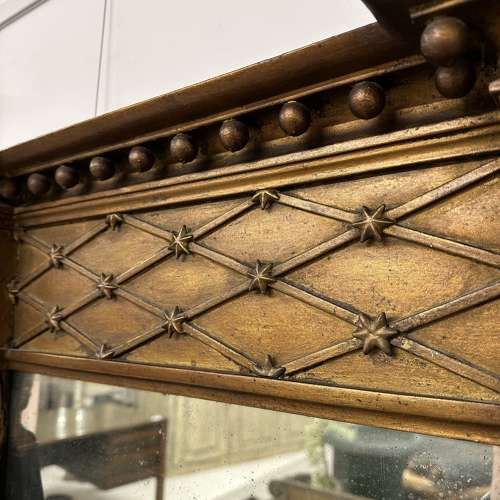
• Original decorative water gilded elements
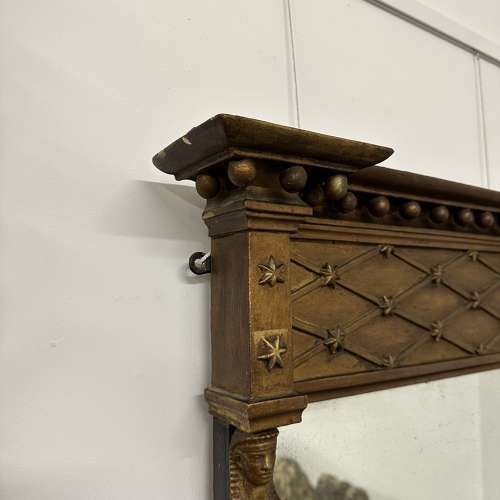
• Breakfront Pediment
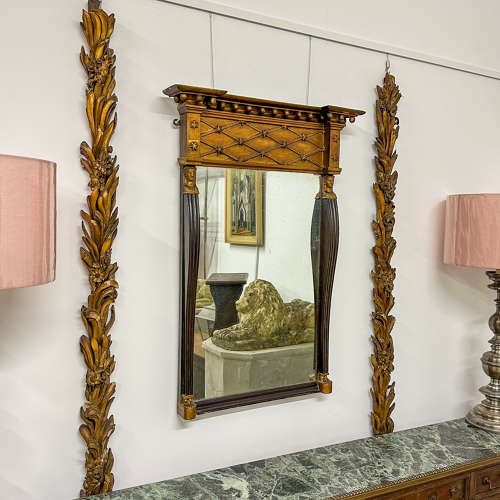
• Latticework design frieze with spheres and stars
• Original Mirror Plate
• Flanked on either side by curved and reeded columns
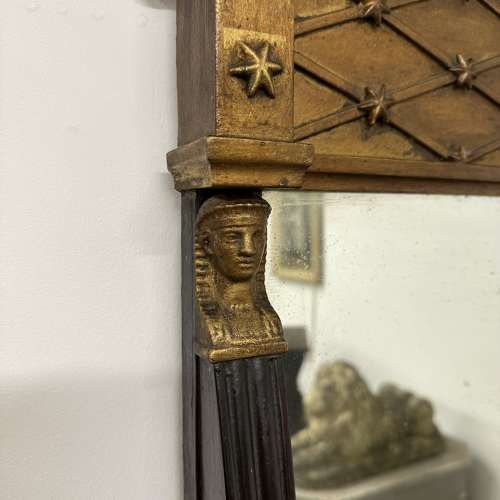
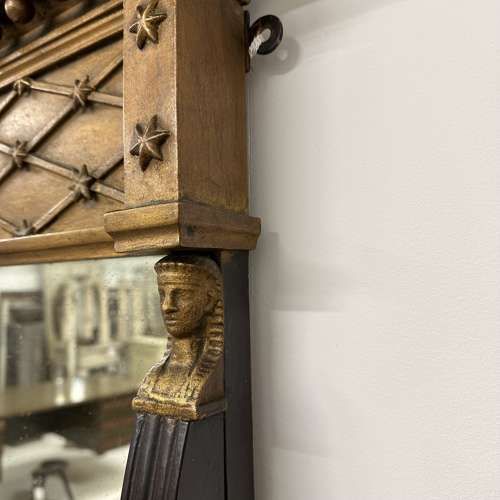
• Top of the column has Egyptian heads with period headdress
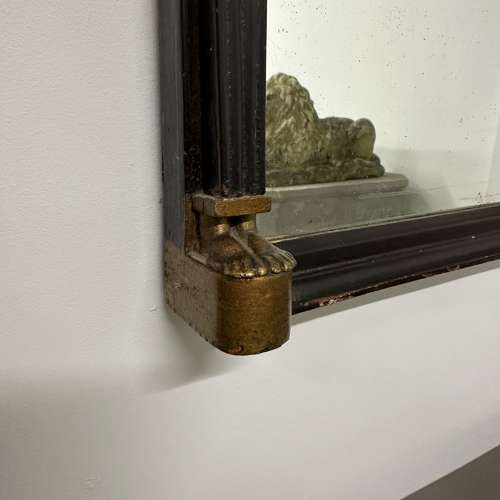
• Terminating at the base with dainty feet
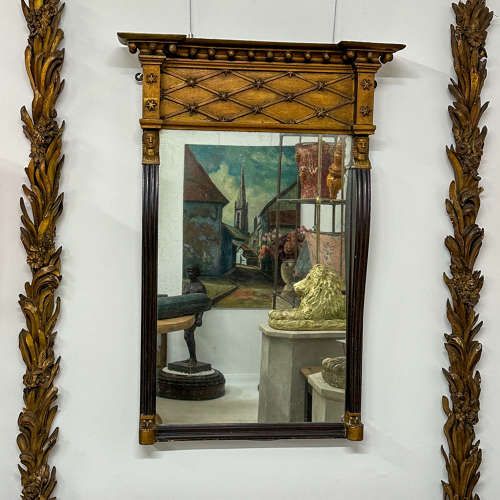
• H: 89cm (35") W: 63cm (24.8") D: 11cm (4.3")
It is rare to find such a lovely quality mirror in its original condition with decorative water gilded elements.
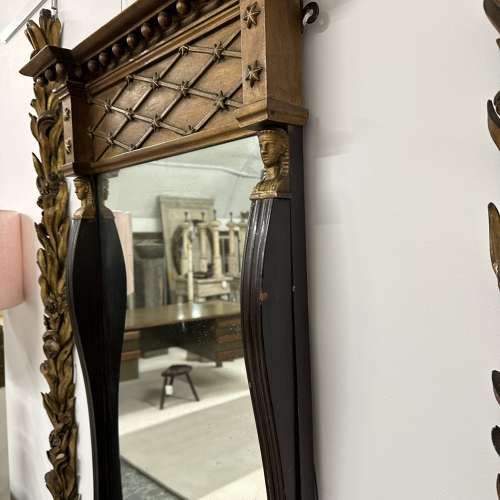
The design is classically Regency with the inverted breakfront pediment above the latticework frieze decorated with stars, above which are a row of spheres. The original mirror plate is flanked by curved and reeded columns with wonderful Egyptian heads with headdress and terminating with dainty feet to the base.
1) The Egyptian Revival Aesthetic
Egyptian Revival decorative arts is a style in Western art, primarily from the early 19th Century, in which Egyptian motifs were applied to a wide variety of decorative arts objects, furniture and household interiors inspiring everything from sofas with Sphinxes for legs, to tea sets painted with the pyramids. Egyptianizing works of art had appeared in scattered European settings from the time of the Renaissance but it was the popularity of the style that was new.
Enthusiasm for the artistic style of Ancient Egypt is generally attributed to the excitement over Napoleon's conquest of Egypt and, in Britain in particular, to Admiral Nelson's defeat of Napoleon at the Battle of the Nile in 1798.
Napoleon took a scientific expedition with him to Egypt which included over 160 scholars and scientists who conducted extensive research on Egypt’s archaeology, topography and natural history. (For further reading check out: The Description de l’Égypte: The Savants of Napoleon’s Egyptian Campaign – Biodiversity Heritage Library).
Publication of the expedition's work, La Description de l'Égypte, began in 1809 and was published in a multi-volume encyclopaedia, which became one of the first dedicated to Egypt. It contains detailed observations, maps, illustrations, and scholarly essays about ancient and modern Egypt.
The Egyptian Gallery, a private room in the Street home of connoisseur Thomas Hope was created to display Egyptian antiquities; illustrations in engravings from his meticulous line drawings were published in his book Household Furniture and Interior Decoration (1807) and went on to become a prime source for the Regency style in British furnishings.
The book inspired a generation of fashionable English homeowners to install parlour suites featuring chairs, tables and sofas in shapes that evoked the objects depicted on Egyptian tomb paintings.
Later discoveries prompted further revivals, with the discovery of Tutankhamun's tomb creating an especially large revival in the 1920s. This revival in particular had a sizable influence on the Art Deco movement.
For a complete assessment of the item's condition, we encourage you to carefully examine all the provided photos. These pictures are integral to the description and condition report of the item, providing crucial visual details about its appearance and quality.
Purchasing any item online can sometimes be a bit of concern, rest assured we are an established and successful business and have many happy clients both in the trade and as private clients. We have a beautiful showroom in West Sussex and you are always welcome to visit to view any of our delightful items.
We do not include delivery in our prices as this is dependent upon many factors such as whether it is mainland
Whites Antiques has dated this piece to the Regency era.
White's antiques collective is the perfect resource for both trade and private clients
You can view the stock and full dealer information on the Whites Antiques Profile Page
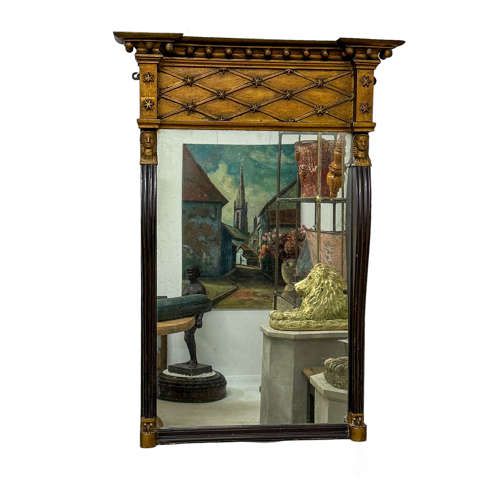
Regency Overmantle Mirror in Egyptian Revival Aesthetic Circa 1820