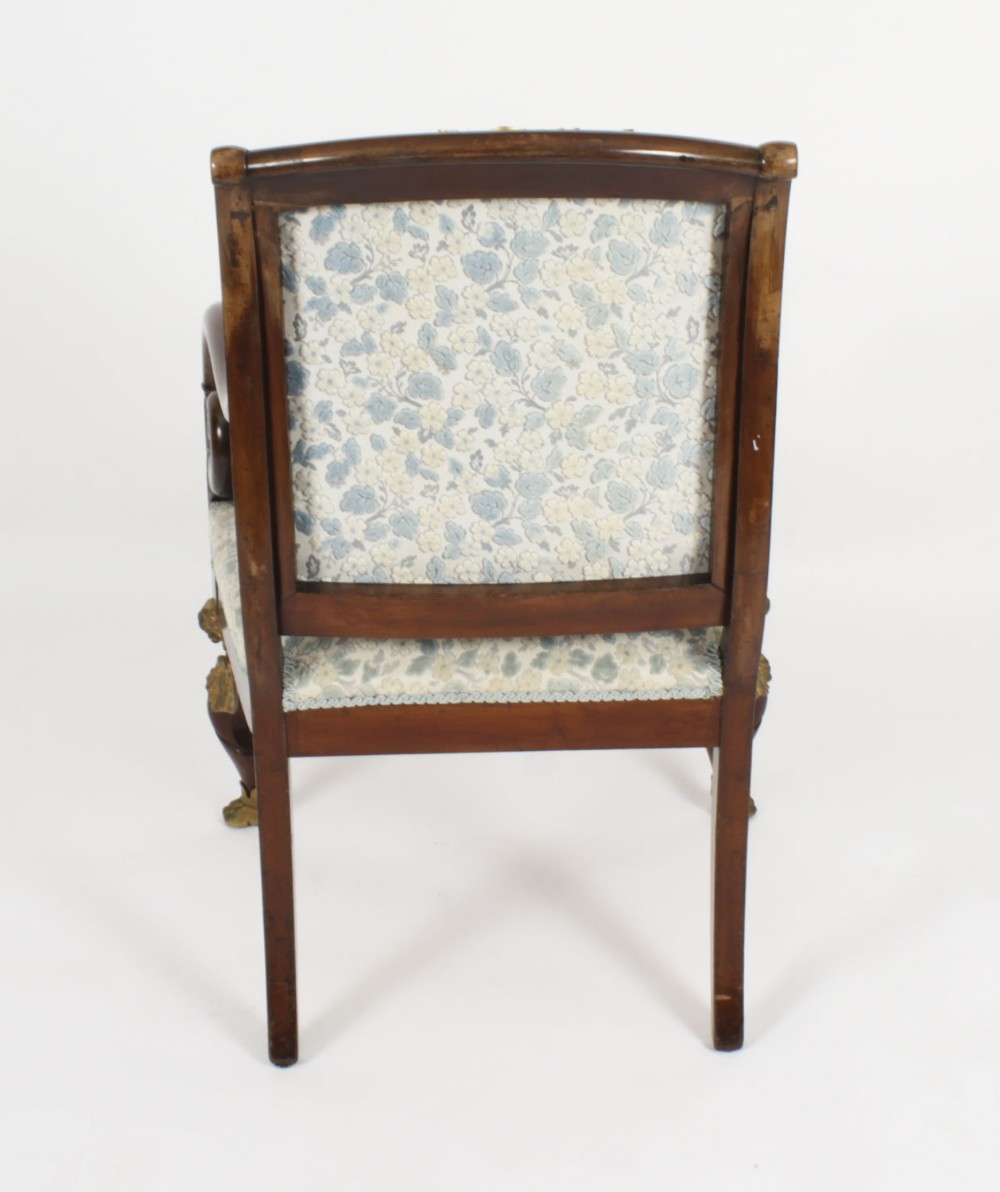
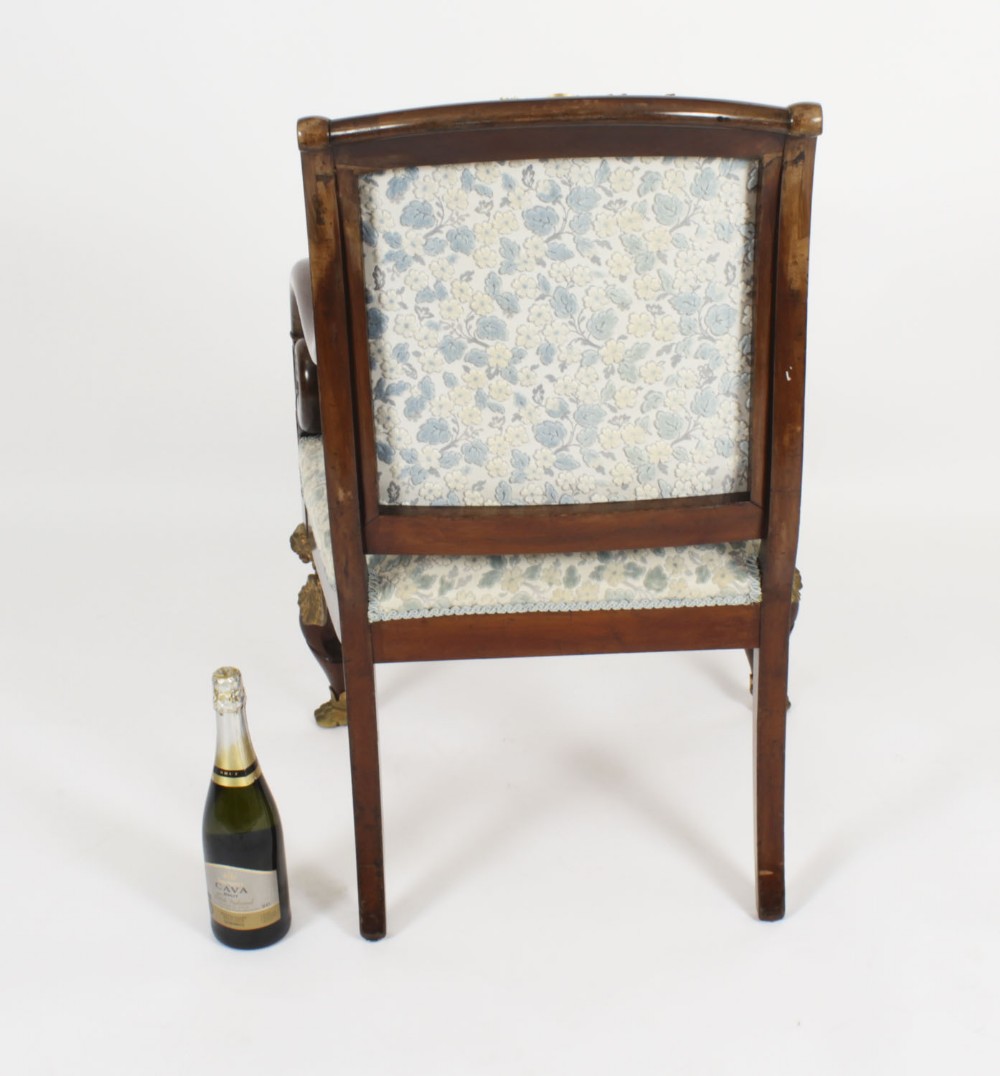
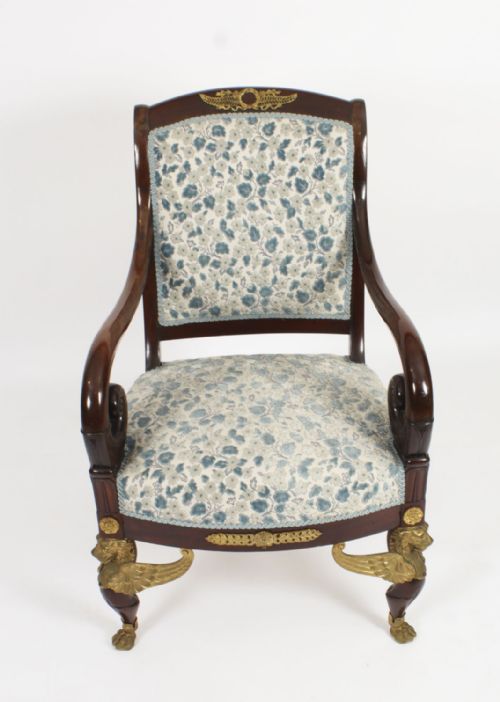
Regent Antiques has dated this piece to the 1870s.
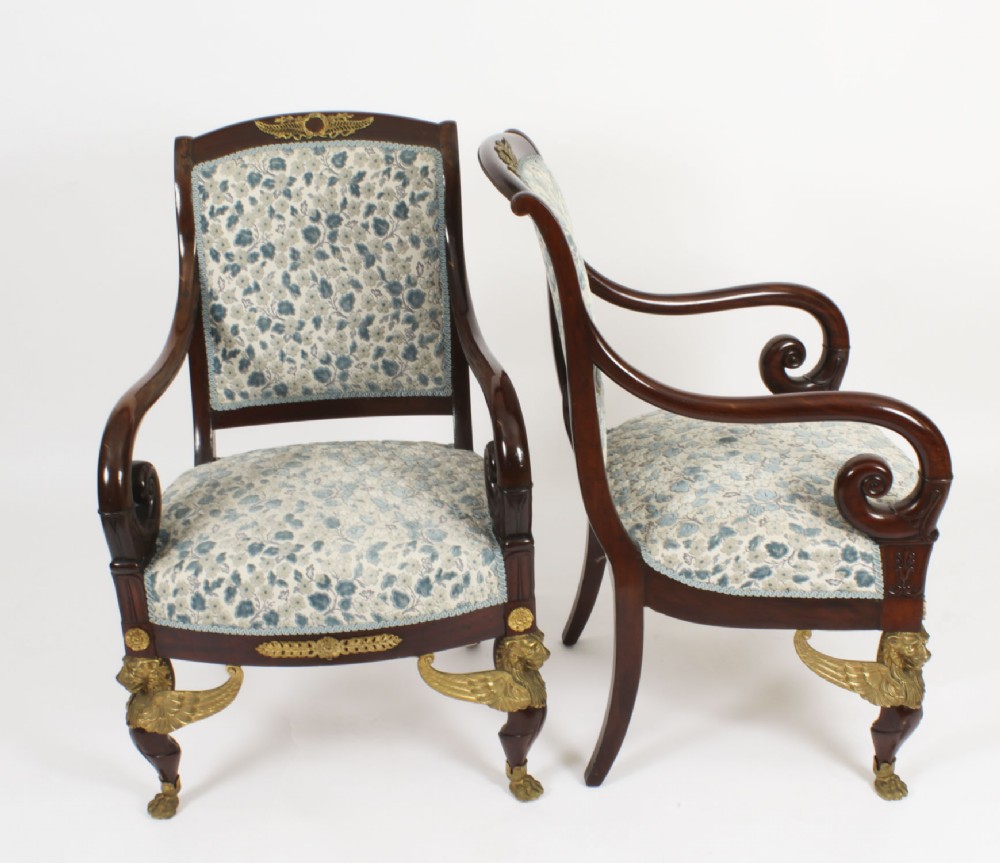
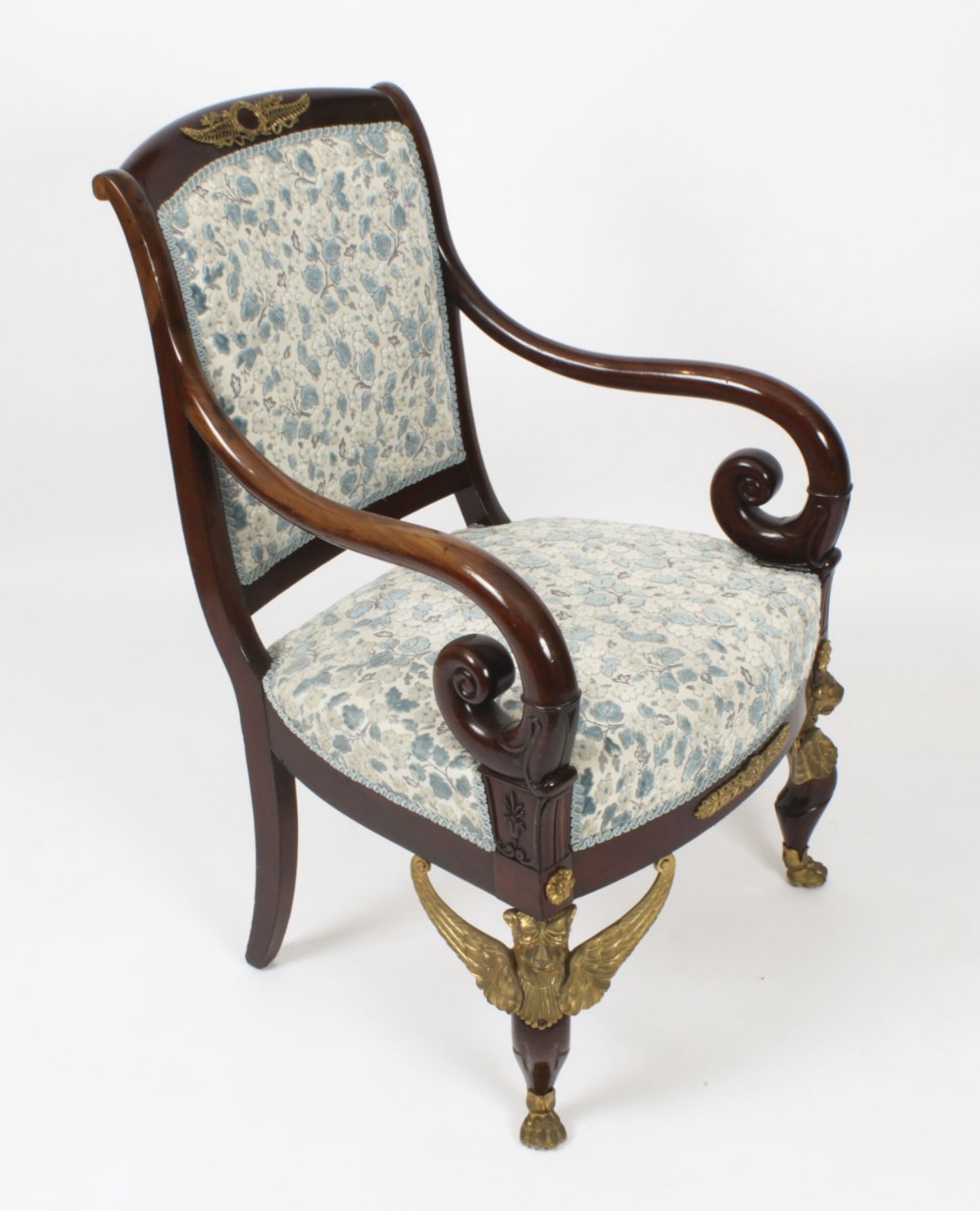
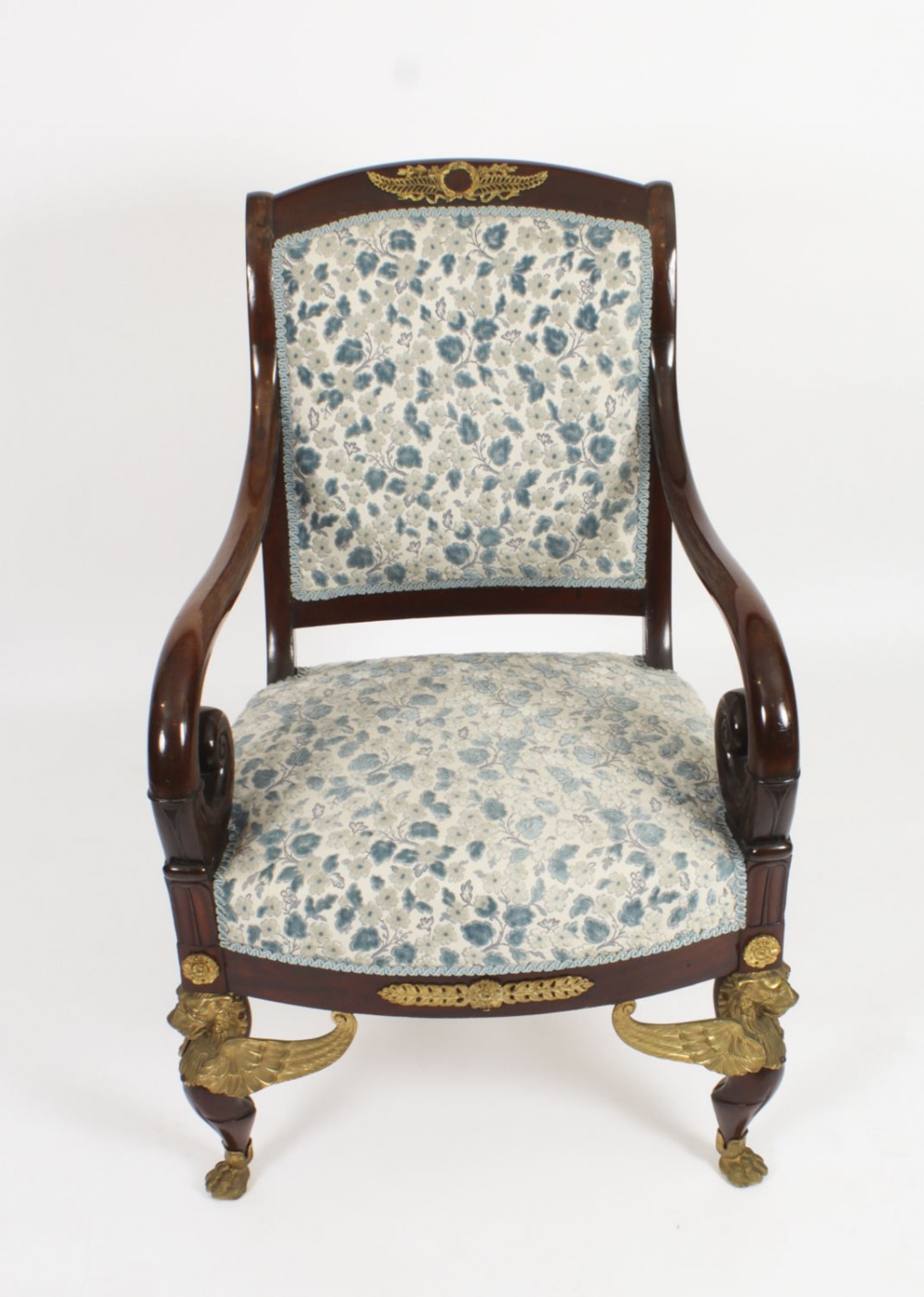
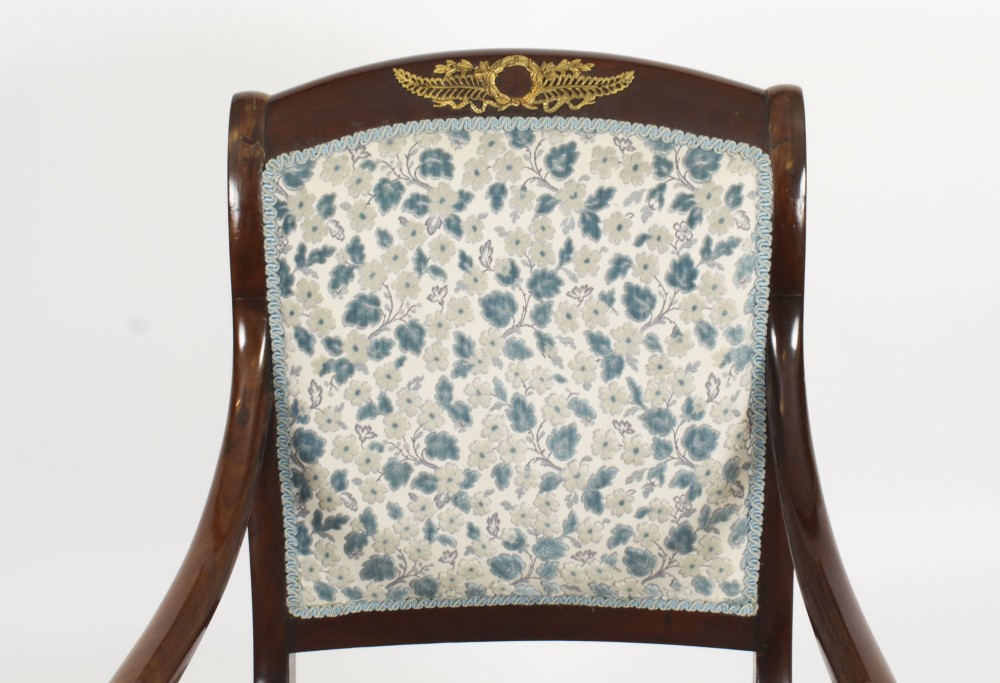
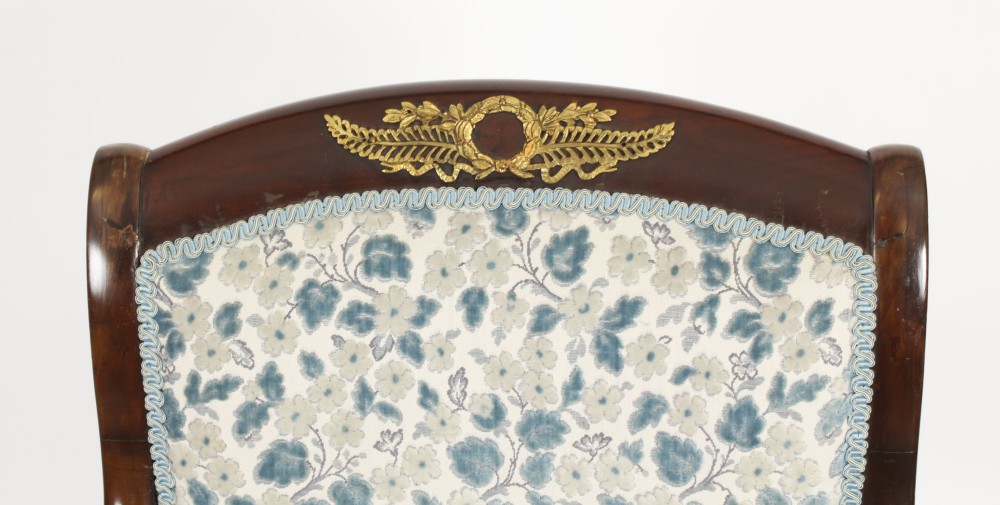
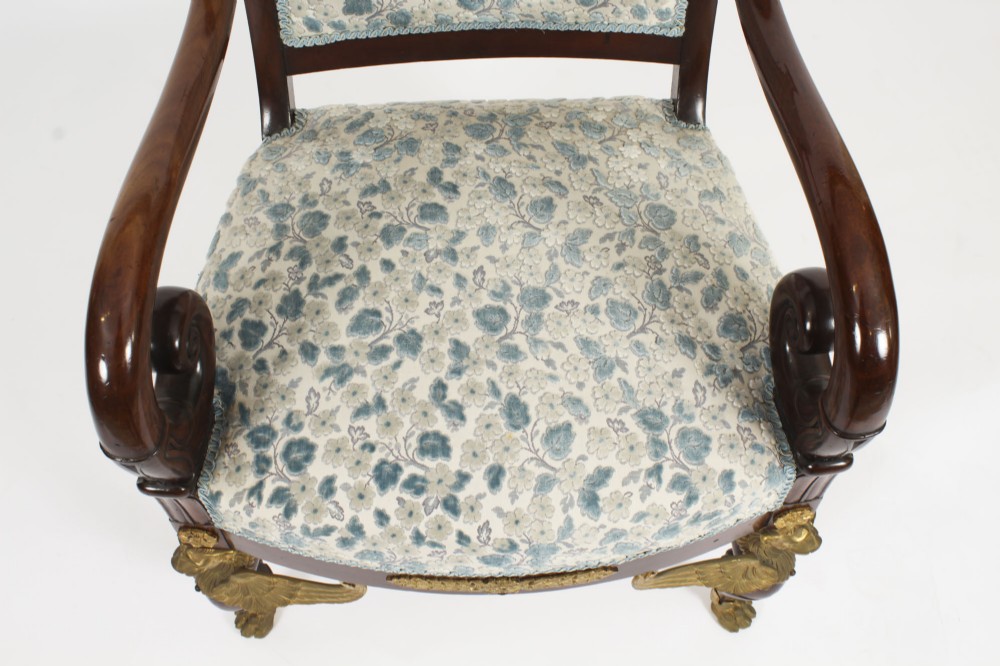
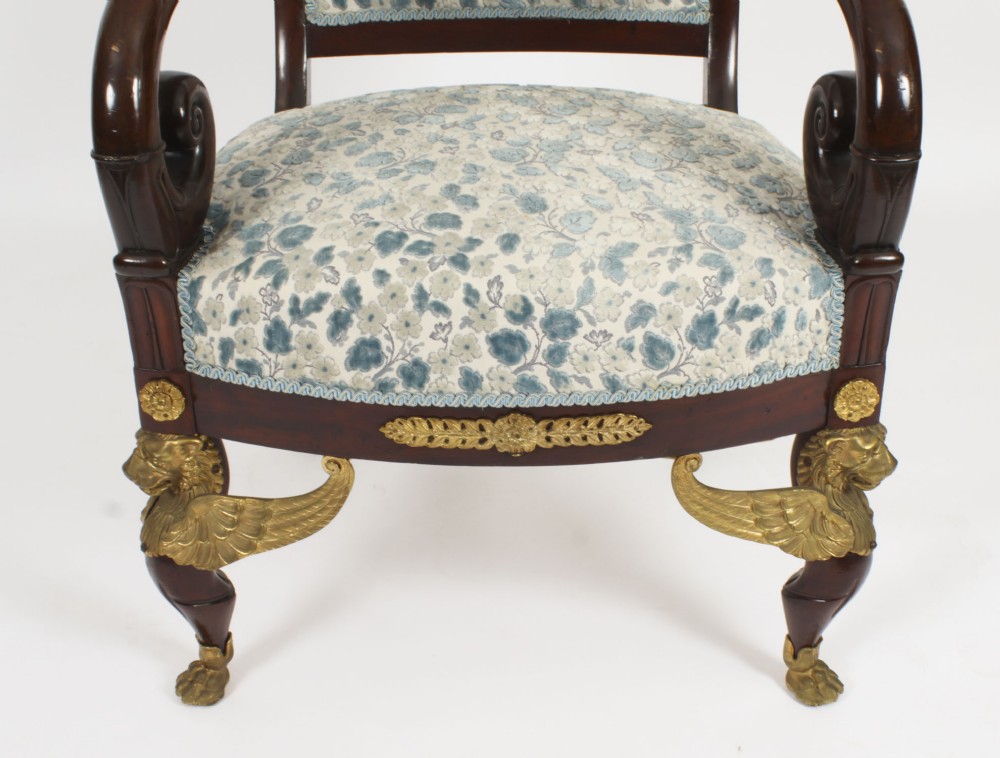
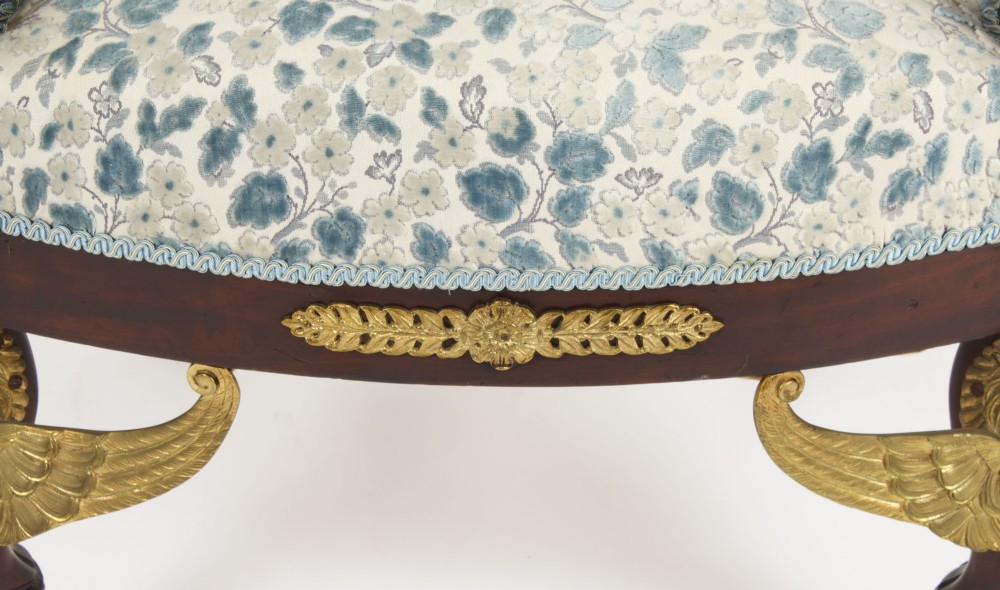
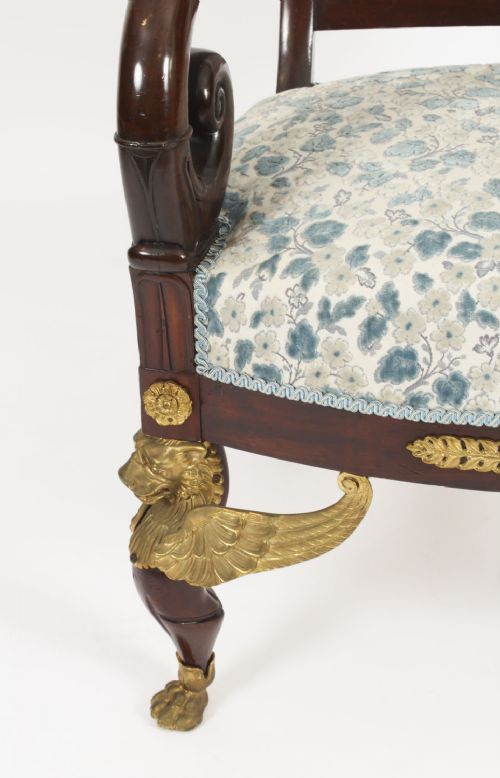
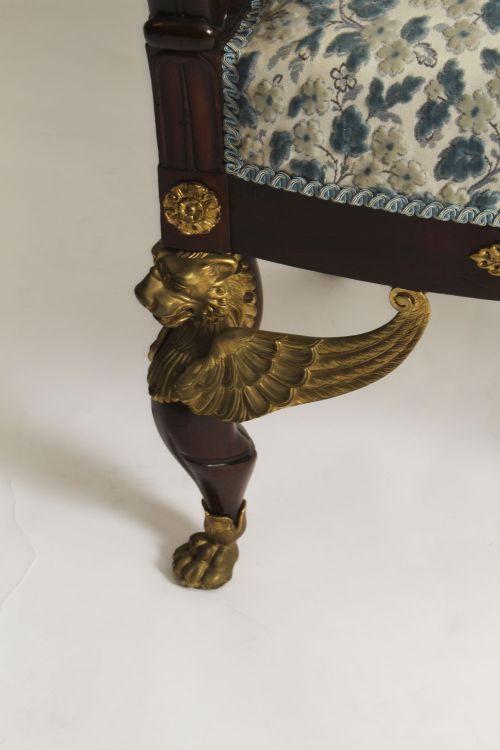
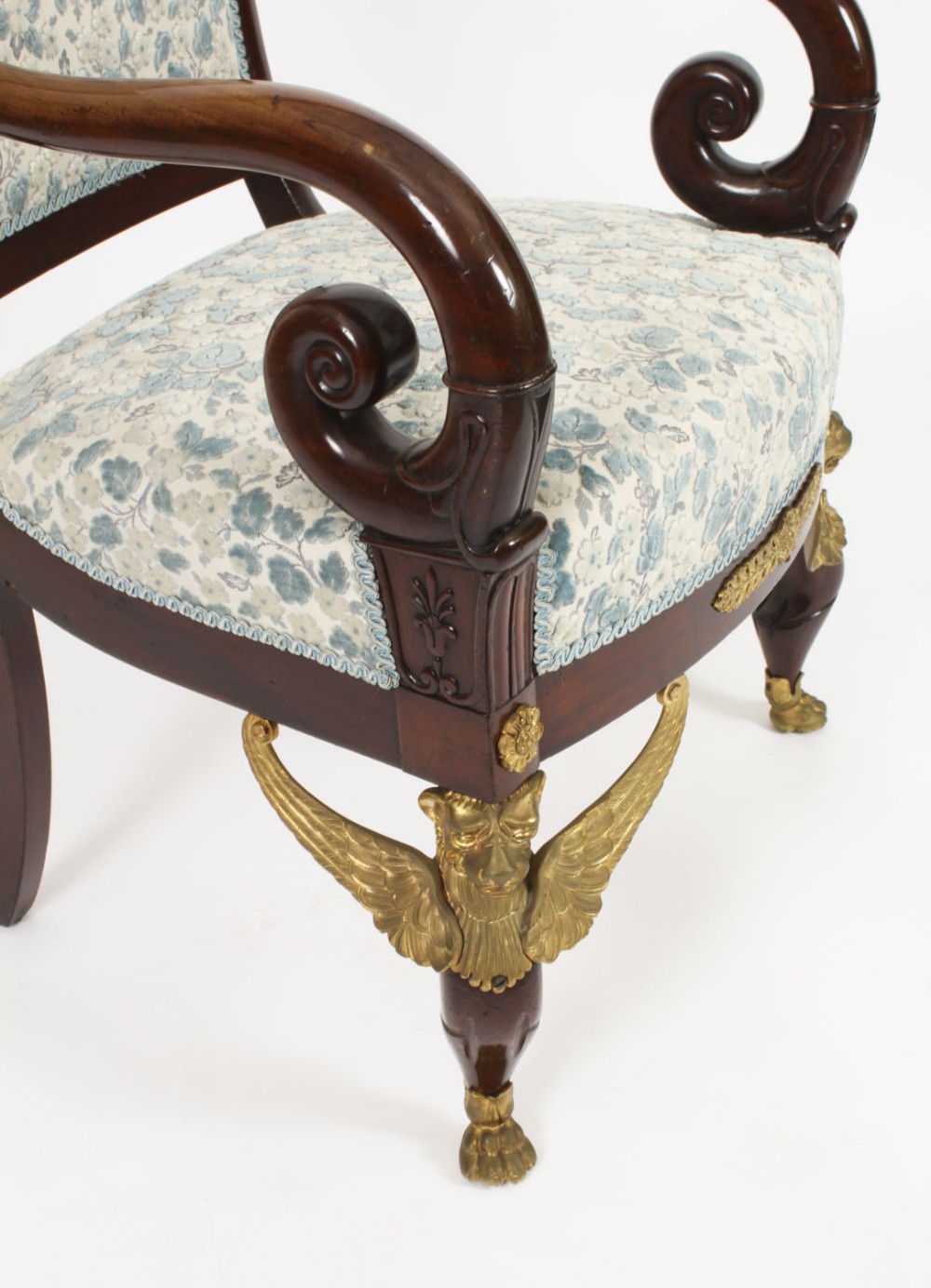
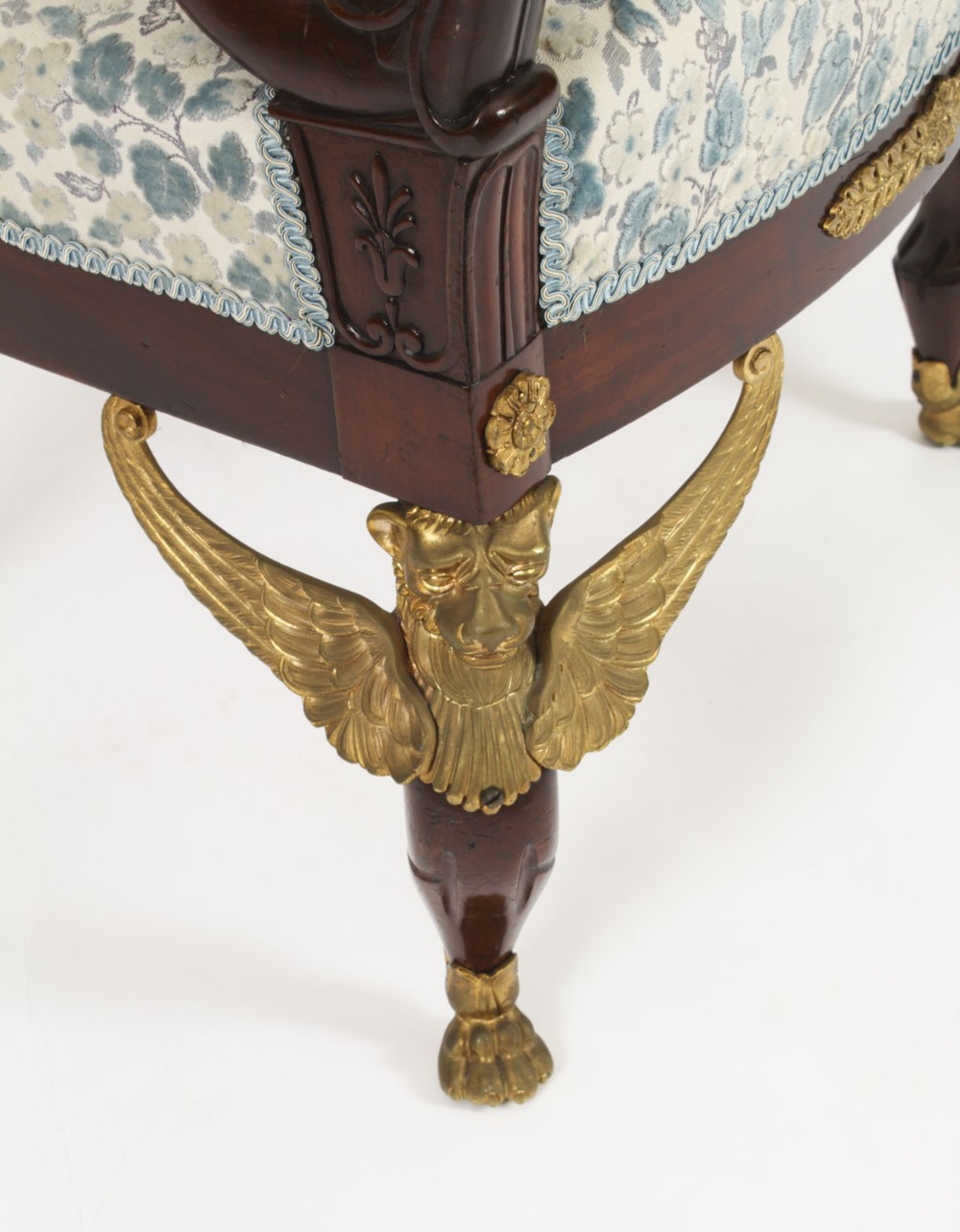
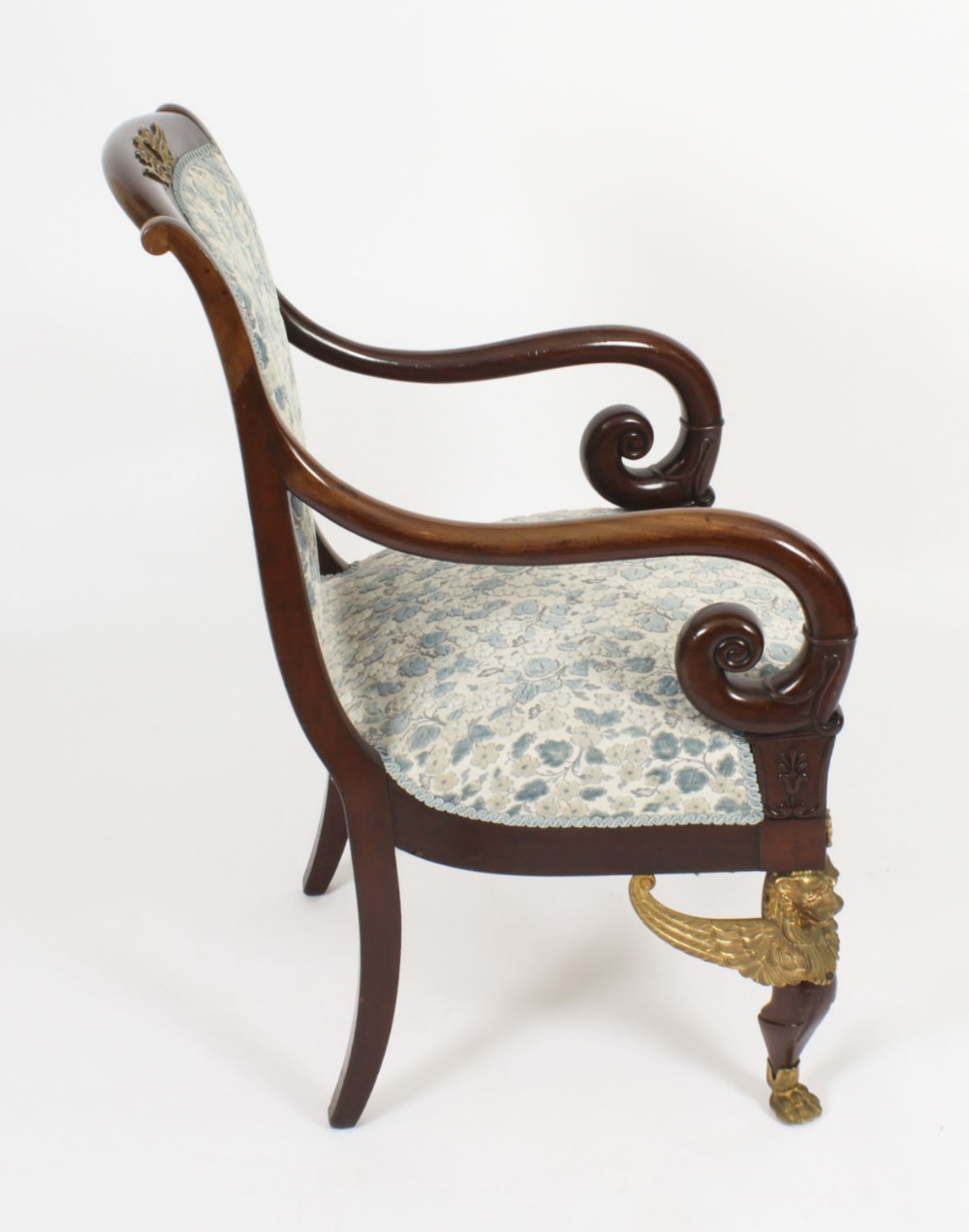
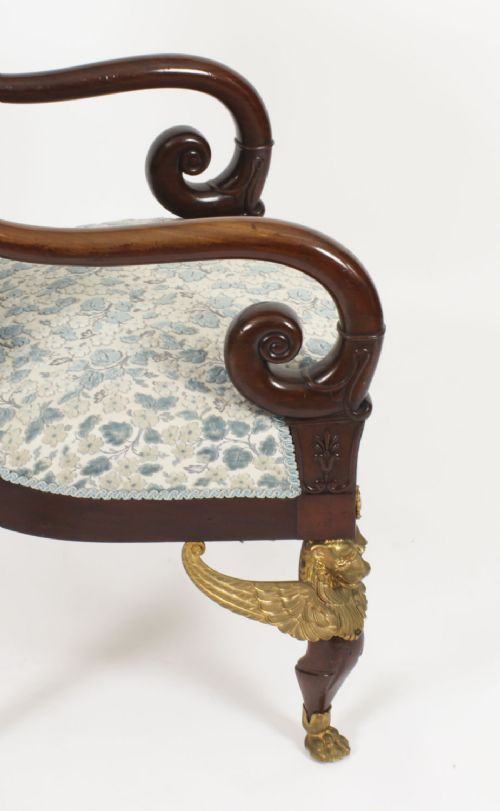
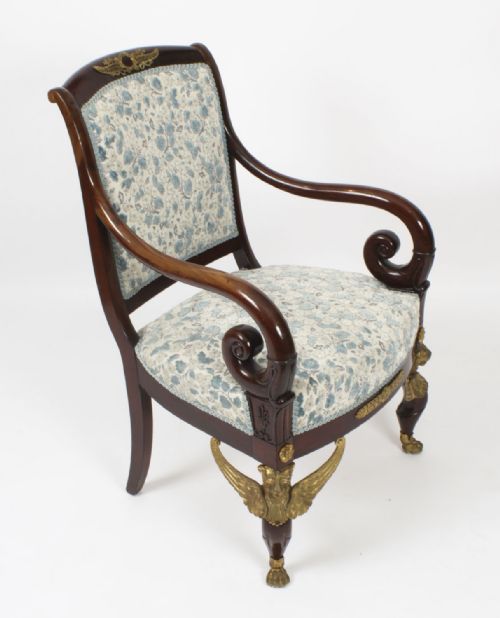
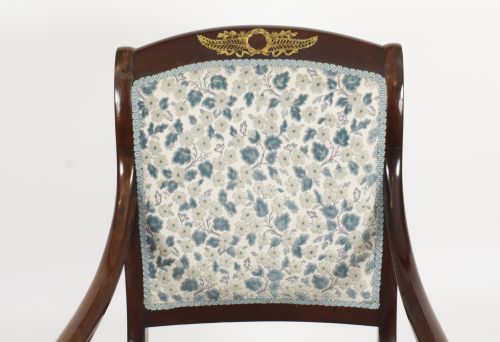
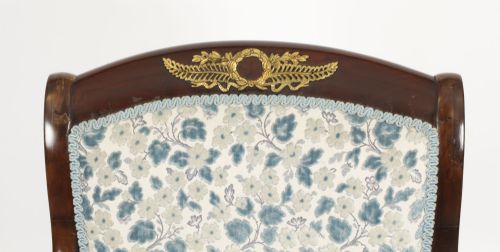
They feature scrolled square padded backs mounted with laurel and anthemion ormolu mounts above stuff-over seats flanked by scrolling carved arms above cabriole front legs headed by ormolu winged lion masks terminating in ormolu paw feet.
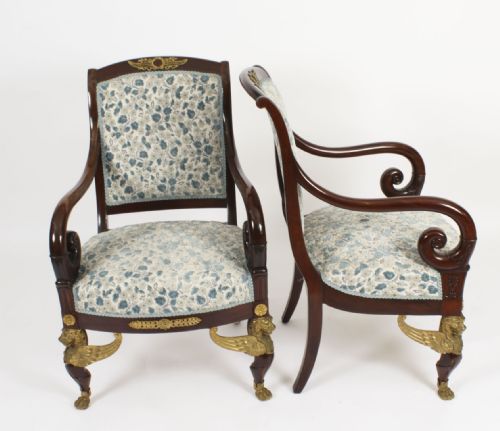
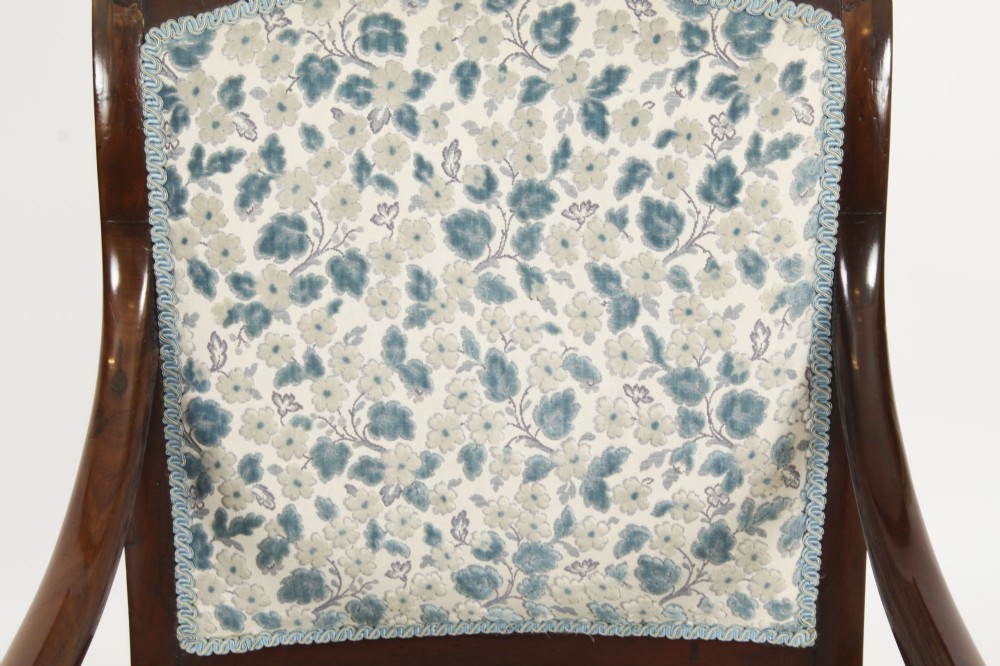
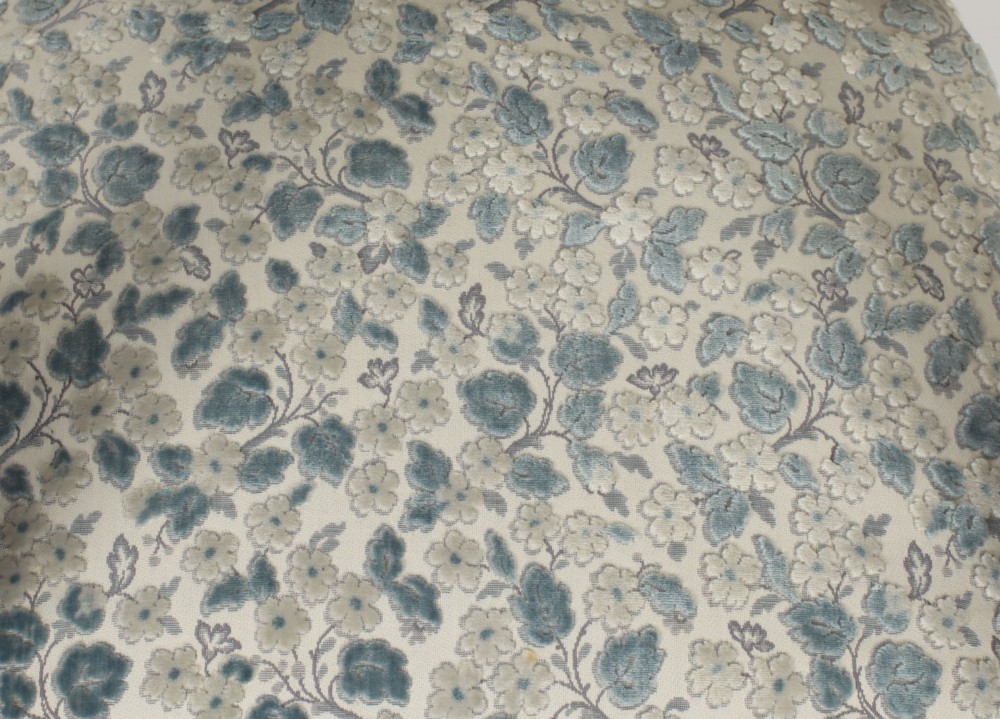
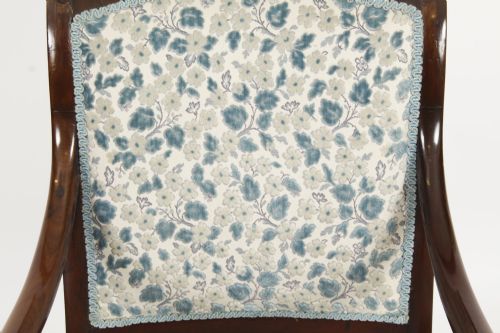
The chairs are upholstered in a fabulous flower patterned blue velvet.
Add elegance to your home with this exceptional pair of armchairs.
Condition:
Dimensions in cm:
Height 95 cm x Width 65 cm x Depth 63 cm
Height 44 cm - Seat height
Dimensions in inches:
Height 3 feet, 1 inch x Width 2 foot, 2 inches x Depth 2 feet, 1 inch
Height 1 foot, 5 inches - Seat height
Ormolu - Gilt Bronze (from French 'or moulu', signifying ground or pounded gold) is an 18th-century English term for applying finely ground, high-carat gold in a mercury amalgam to an object of bronze.The mercury is driven off in a kiln leaving behind a gold-coloured veneer known as 'gilt bronze'.
The manufacture of true ormolu employs a process known as mercury-gilding or fire-gilding, in which a solution of nitrate of mercury is applied to a piece of copper, brass, or bronze, followed by the application of an amalgam of gold and mercury. The item was then exposed to extreme heat until the mercury burned off and the gold remained, adhered to the metal object.
Empire style,
is an early-19th-century design movement in architecture, furniture, other decorative arts, and the visual arts followed in Europe and America until around 1830.
The style originated in and takes its name from the rule of Napoleon I in the First French Empire, where it was intended to idealize Napoleon's leadership and the French state. The style corresponds to the Biedermeier style in the German-speaking lands, Federal style in the United States and to the Regency style in Britain. The previous style was called Louis XVI style, in France.
The Empire style was based on aspects of the Roman Empire. It is the second phase of neoclassicism which is also called "Directoire", after a government system.
Furniture typically had symbols and ornaments borrowed from the glorious ancient Greek and Roman empires.
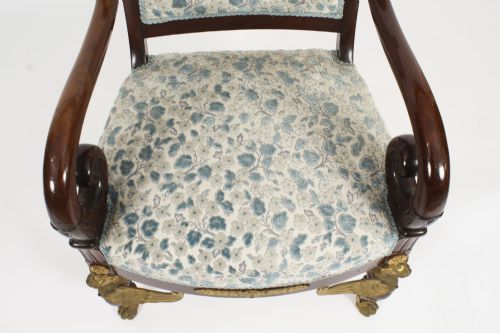
The furniture was made from heavy woods, imported from the colonies, with dark finishes often with decorative bronze mounts. Marble tops were popular as were Egyptian motifs like sphinxes, griffins, urns and eagles and the Napoleonic symbols, the eagle, the bee, the initials "I" and a large "N."
Gilded bronze (ormolu) details displayed a high level of craftsmanship.
Our reference: A3524a
Regent Antiques has dated this piece to the 1870s.
We specialise in english and continental furniture, silver, porcelain and decorative items.
You can view the stock and full dealer information on the Regent Antiques Profile Page
Regent Antiques is a registered member of LAPADA CINOA
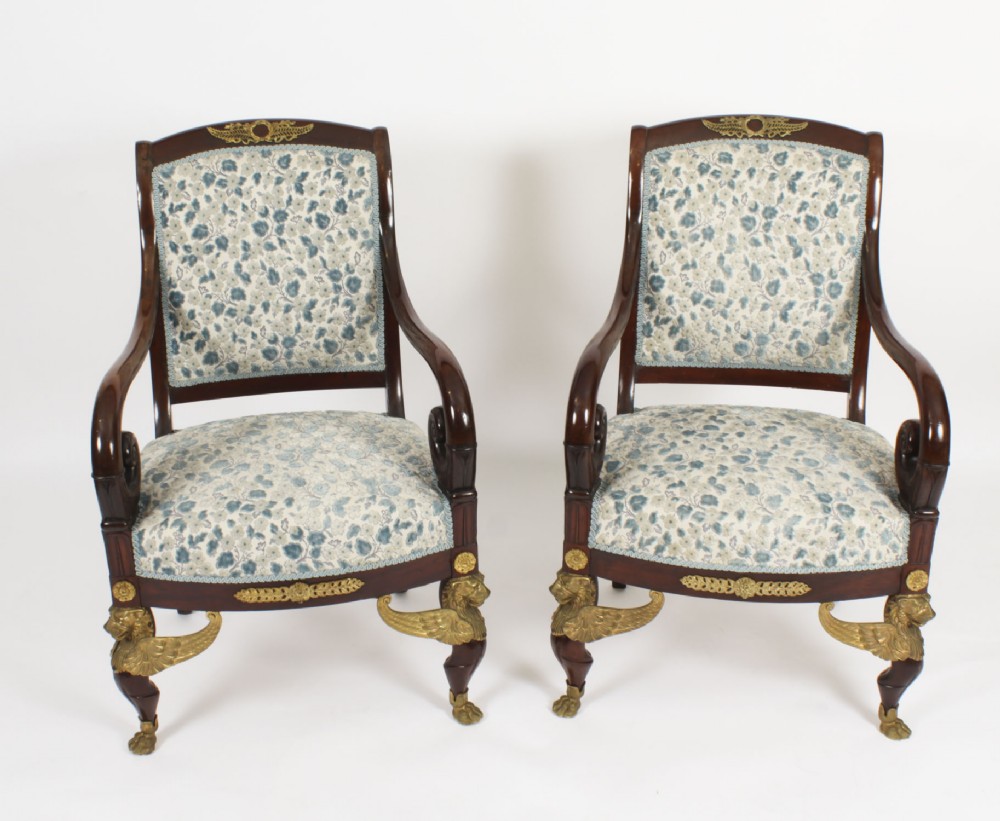
Antique Pair Ormolu Mounted Armchairs Empire Revival C1870 19th C