20,026  PAGES BROWSED TODAY PAGES TODAY • 85 ANTIQUES UPLOADED TODAYNEW ARRIVALS
GIFTS
85 ITEMS ADDED TODAY
Sort Order
Items Per Page
Browse Categories
Sort order
Relevant Links
Items per page
ID #SA1163205
SOLD
Email Phone
Save
Kanzan Denshichi Totai Cloisonné Vase, Japan, C. 1880, Meiji Period.
Sold by Philip Carrol Antiques
sold SA1163205
Sorry, but this item has been sold.
Philip Carrol Antiques

Philip Carrol Antiques

Sellingantiques Verified Since Dec 2017
Browse dealers 94 items
  • About Us
    Philip carrol antiques was established in 1983
  • Trade Associations
    Philip Carrol Antiques is a registered member of BADA 
Id #SA1163205
PDF SHARE
SAVE

Kanzan Denshichi Totai Cloisonné Vase, Japan, C. 1880, Meiji Period.

19th century
Sold 2 September 2025 · Philip Carrol Antiques
This “Kanzan Denshichi Totai Cloisonné Vase, Japan, C. 1880, Meiji Period” found a buyer.

It was listed by Philip Carrol Antiques. Sold pieces stay on Sellingantiques as a record of what has passed through, and the next one is rarely far away.

Description

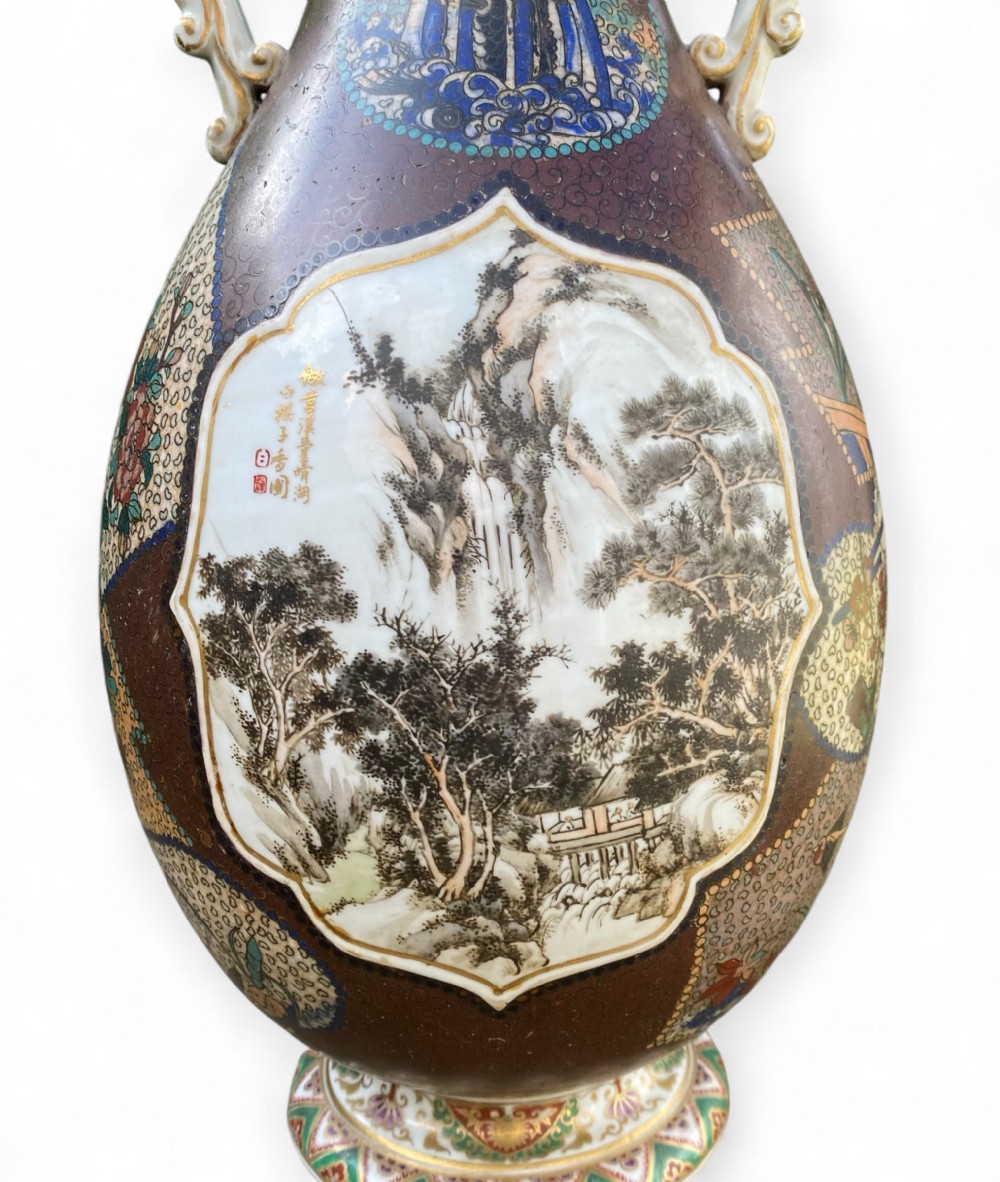
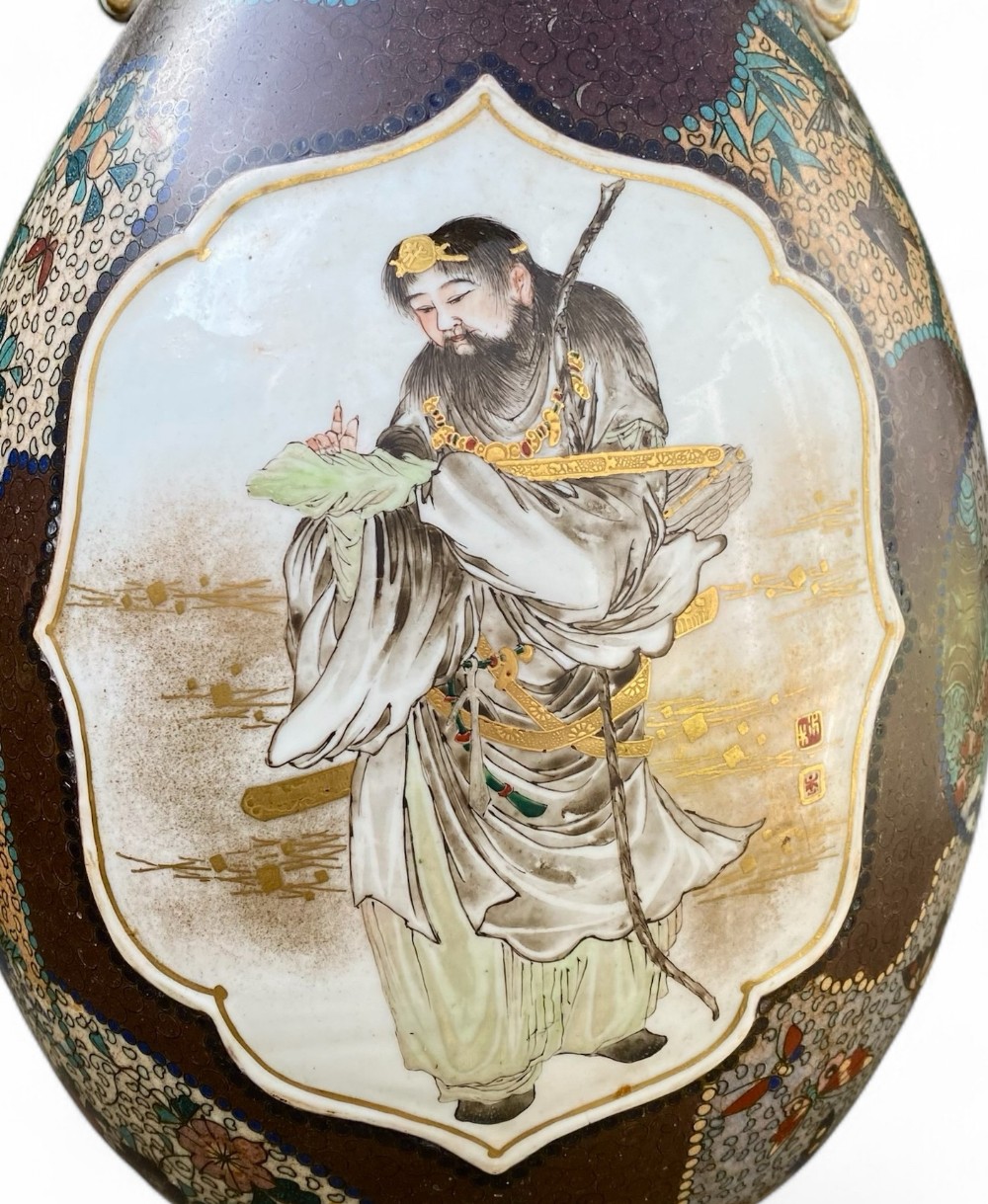
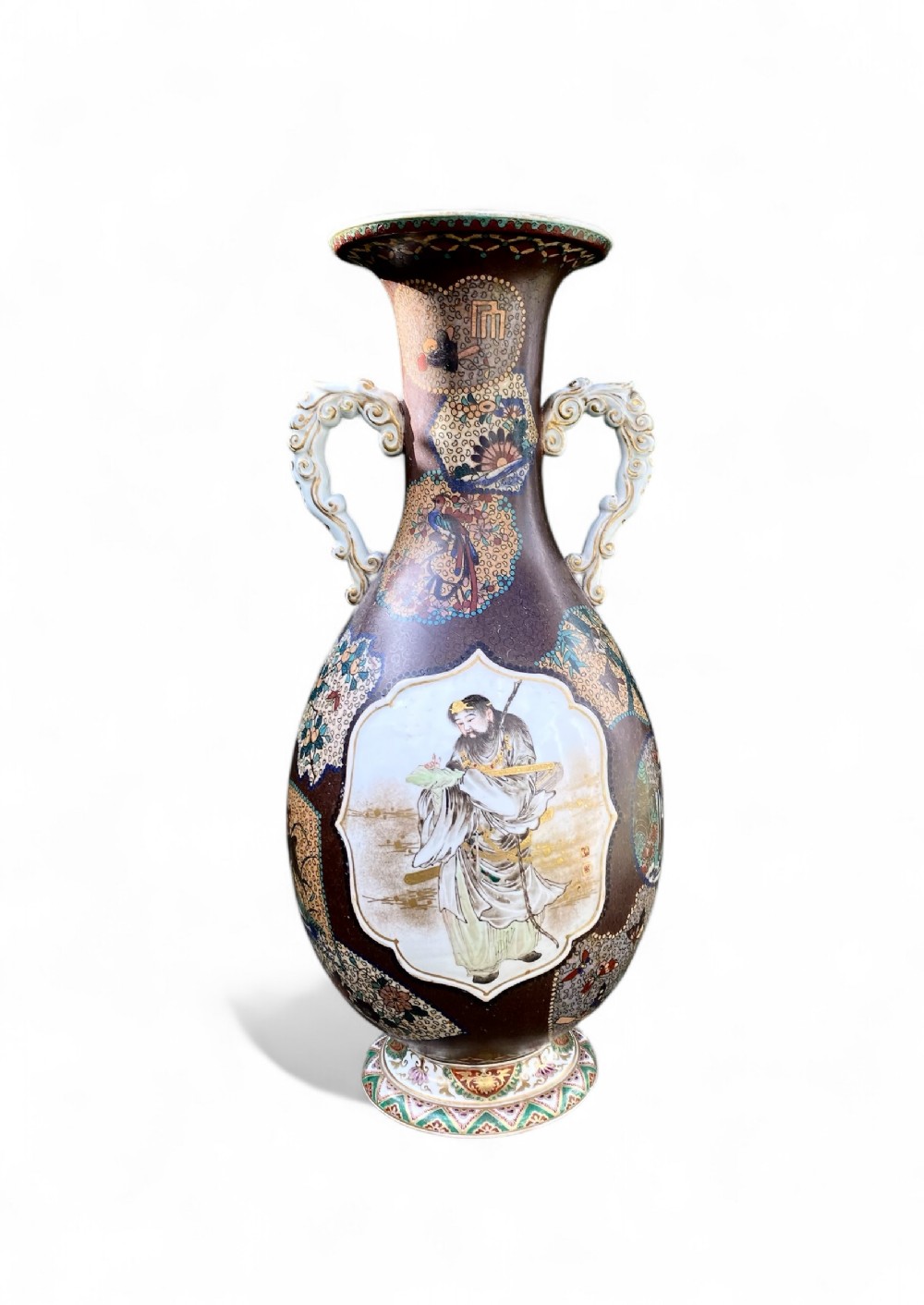
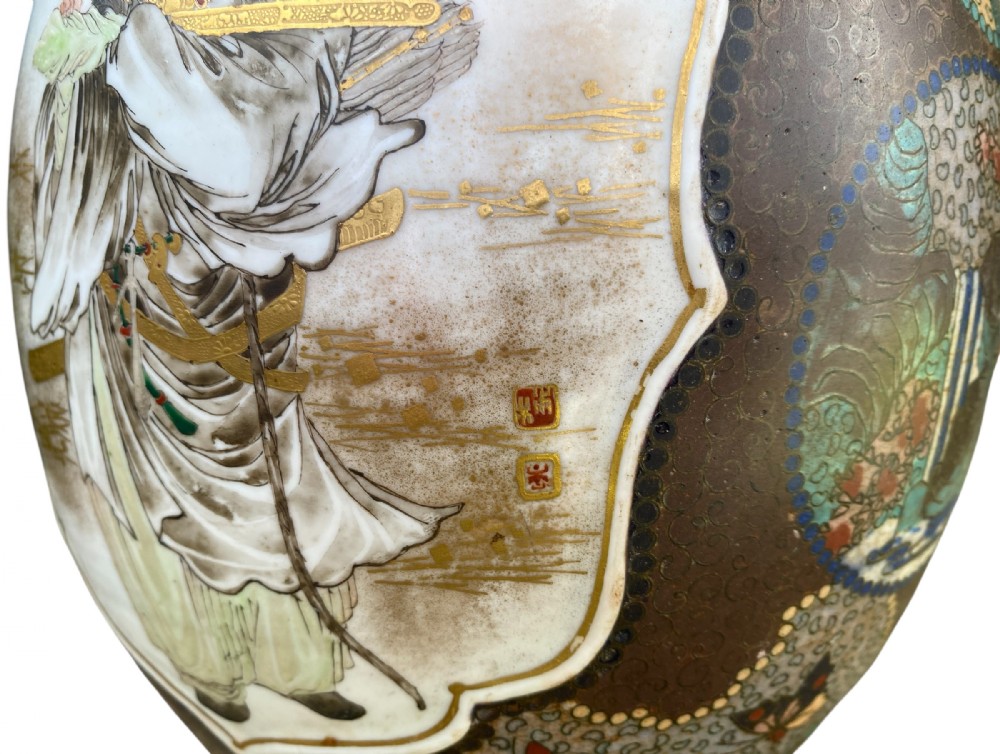
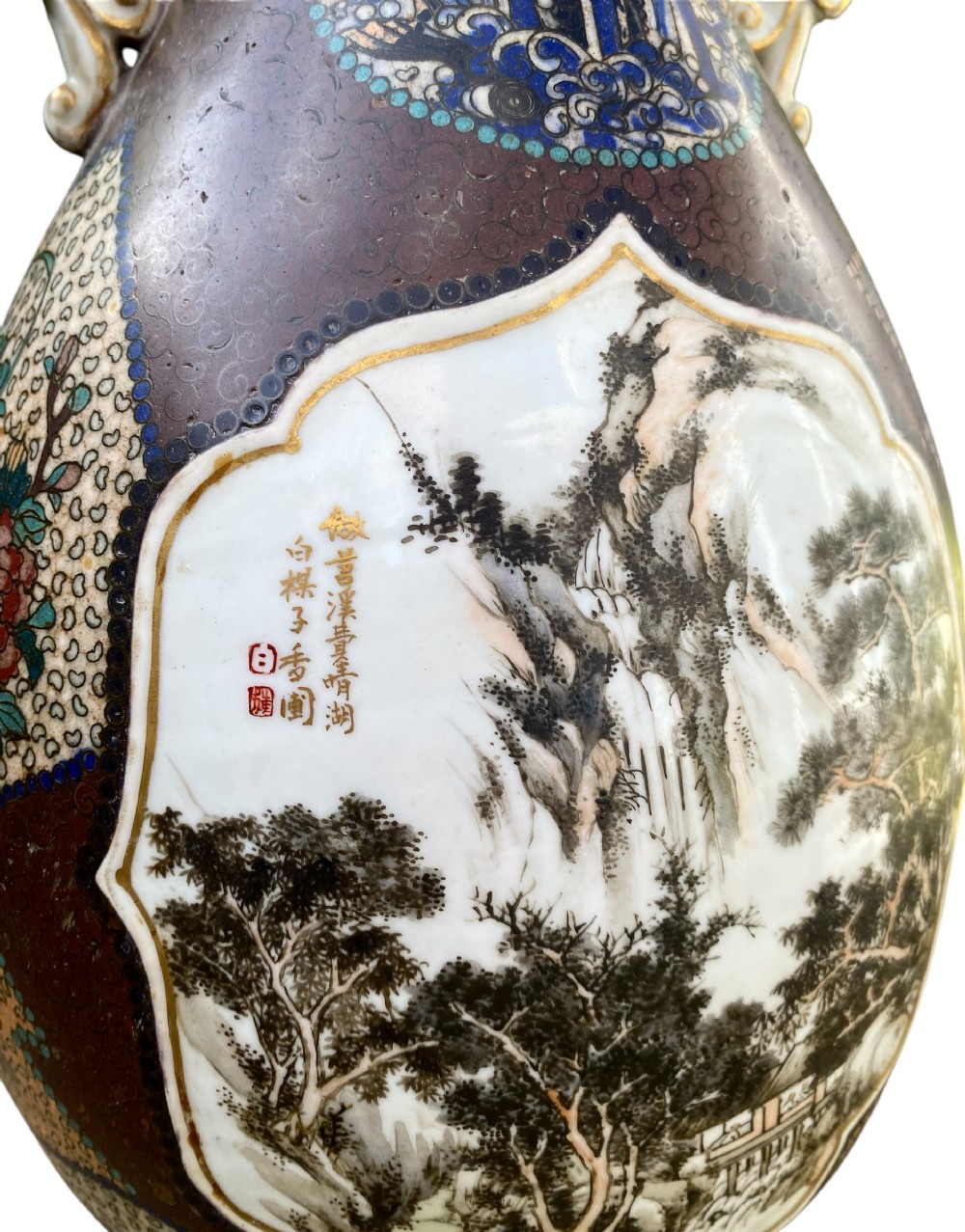
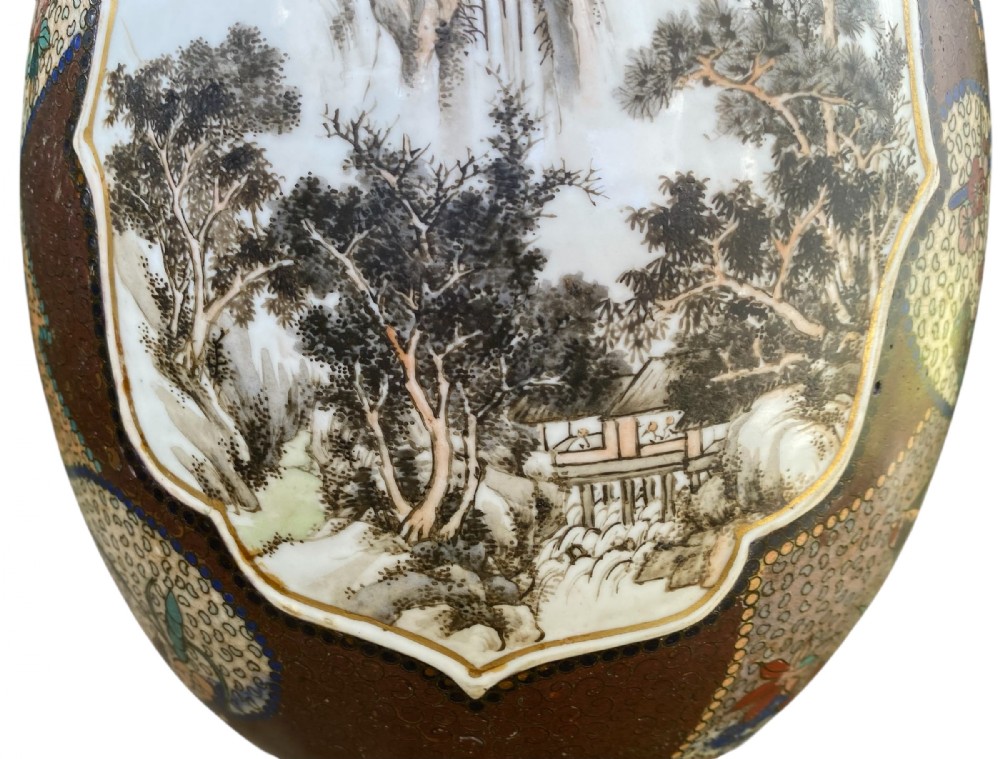
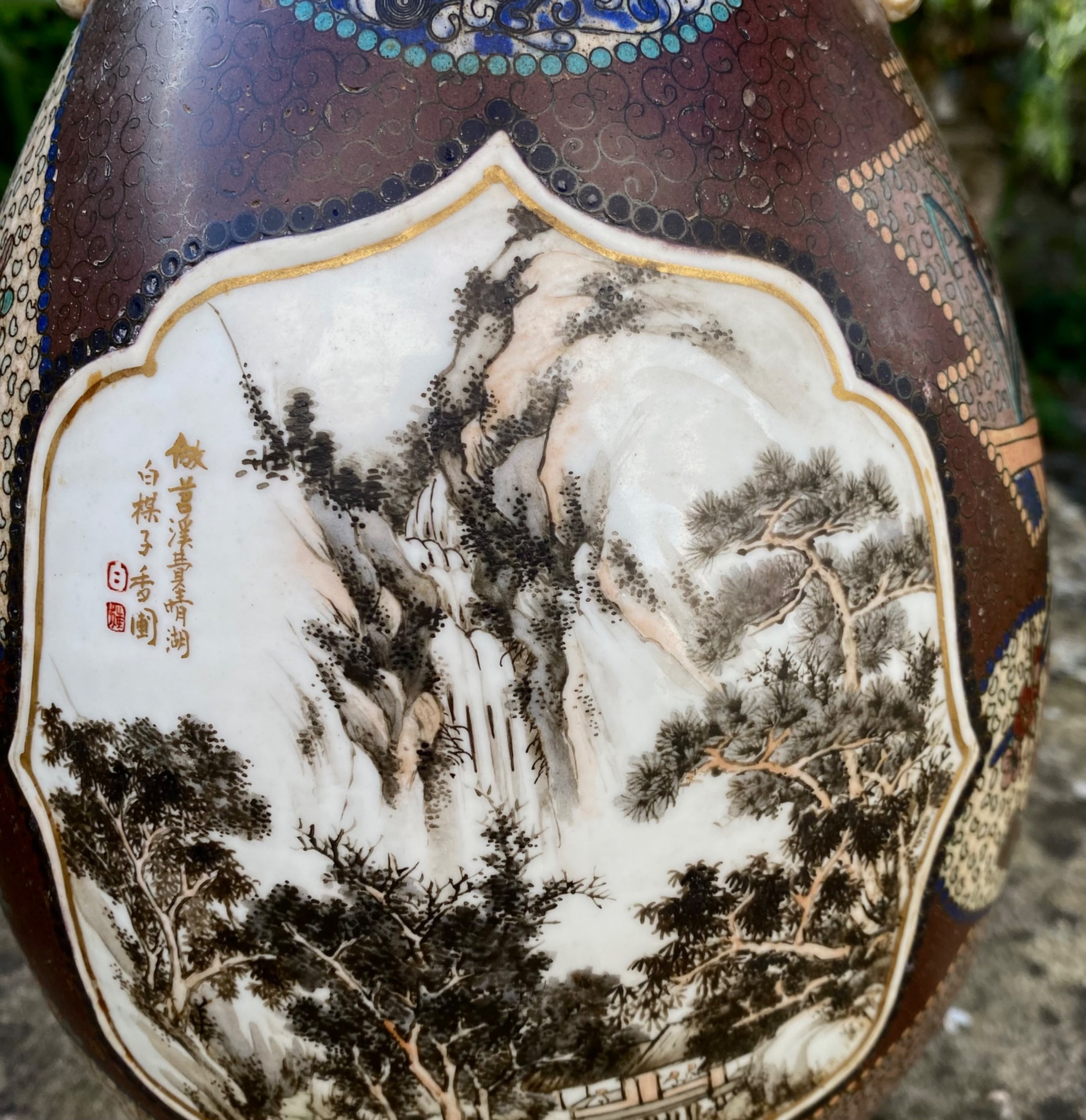
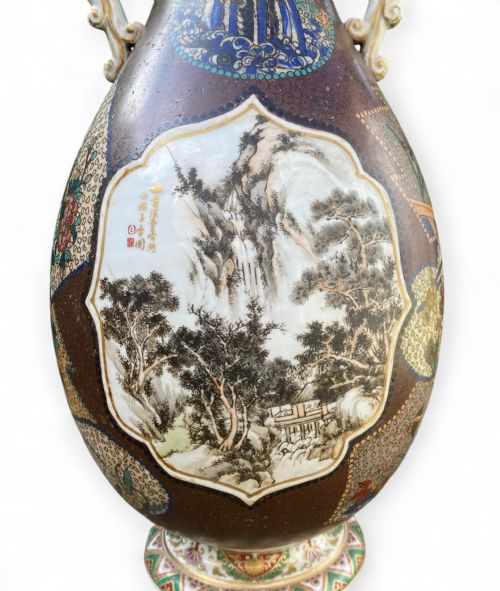
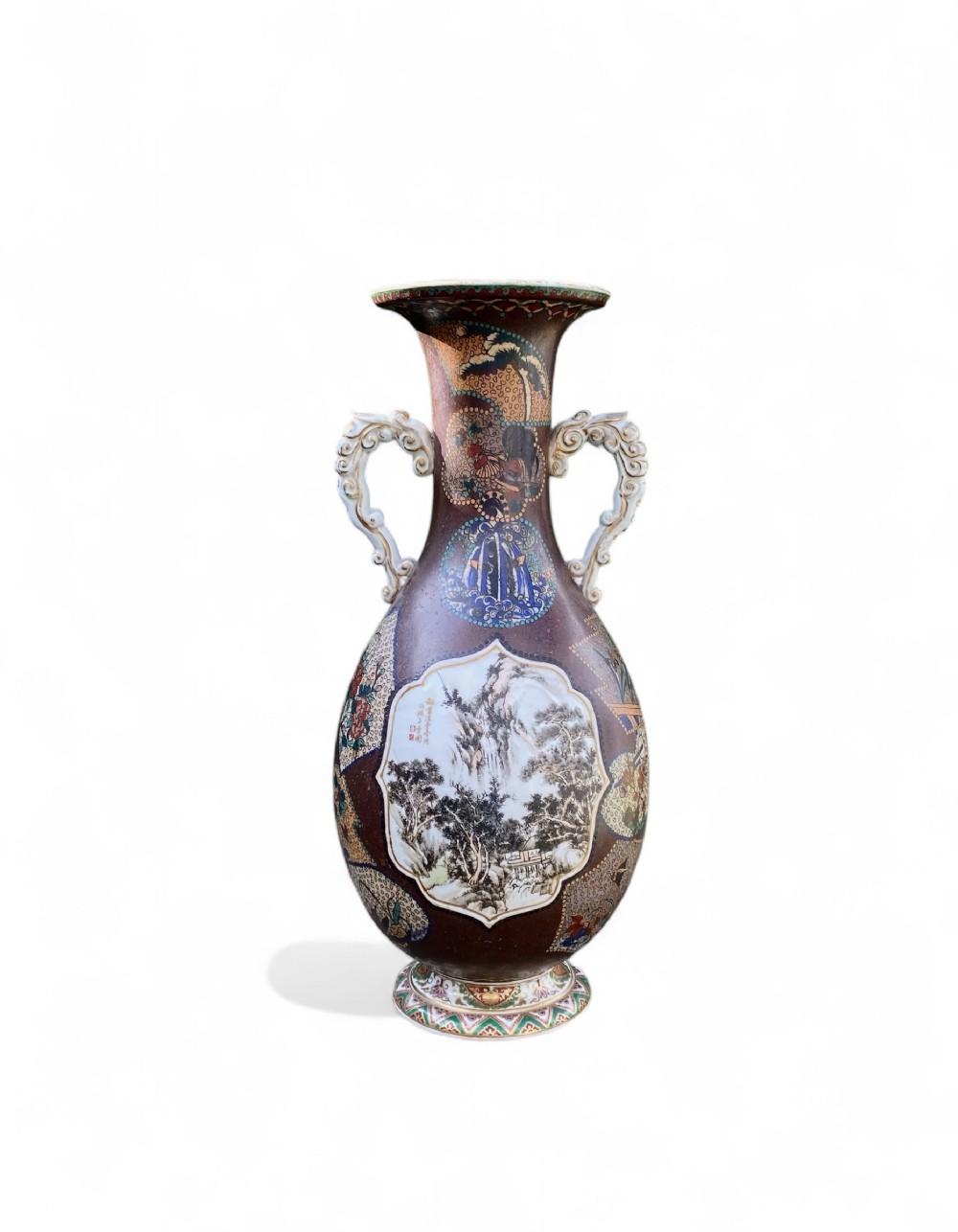
Kanzan Denshichi (1821-1890) totai porcelain vases, Japan, c. 1880, Meiji Period. The large vase, with moulded panels, finely hand painted by Nagai Koho(1839-1911), in the manner of the Chinese painter Fei Qinghu with a mountainous river landscape, within a shaped panel. The reverse painted with an image of Hachiman.
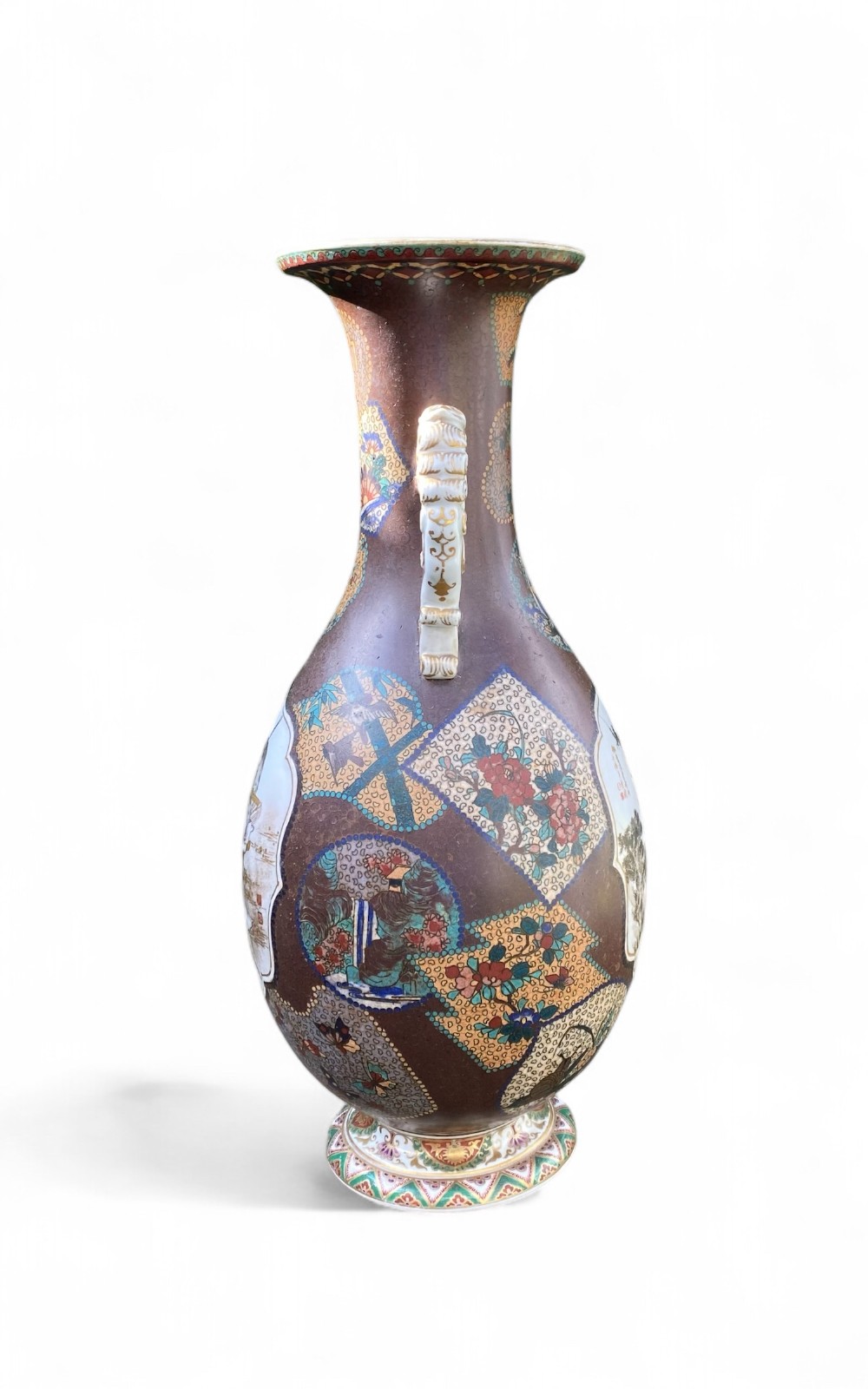
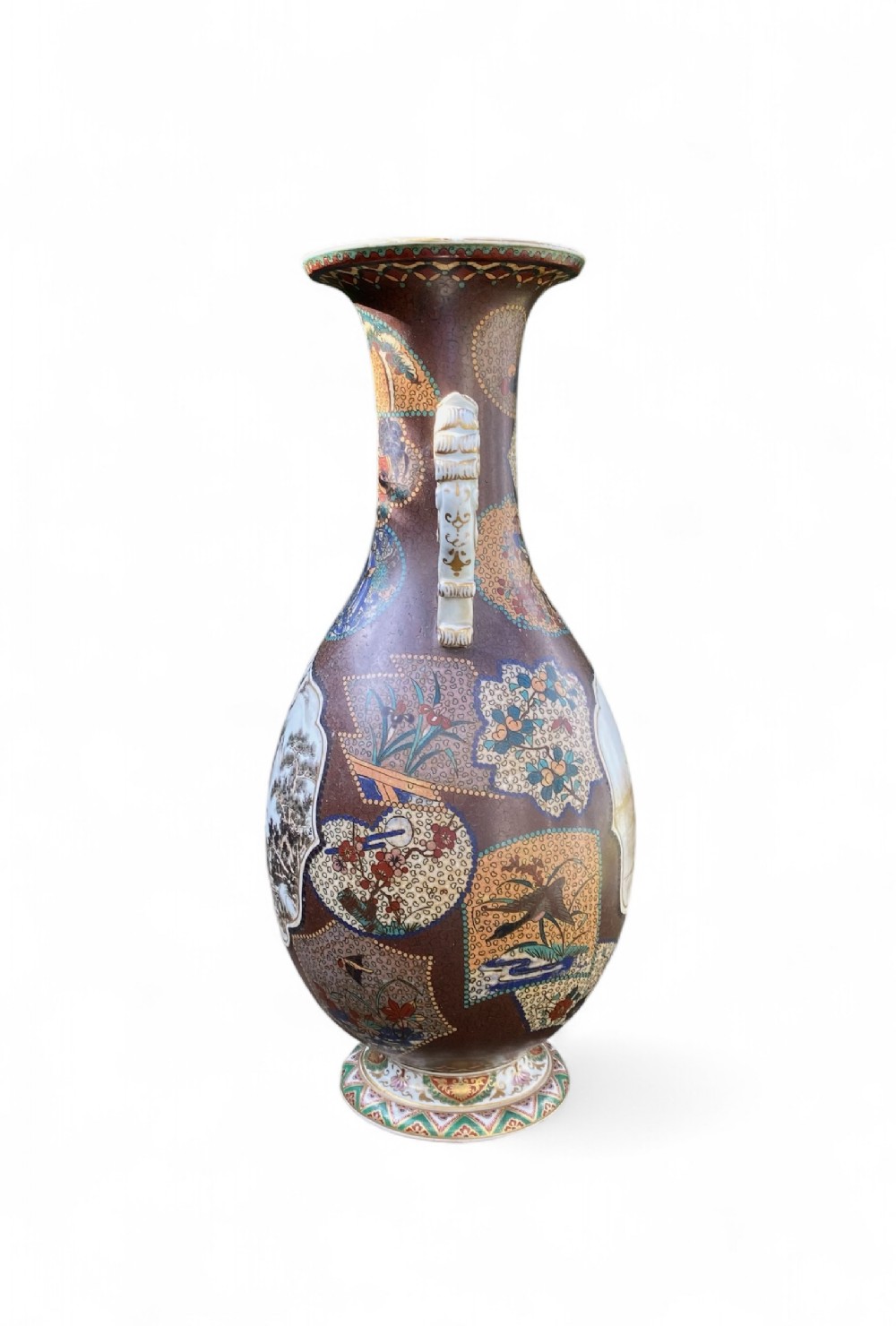
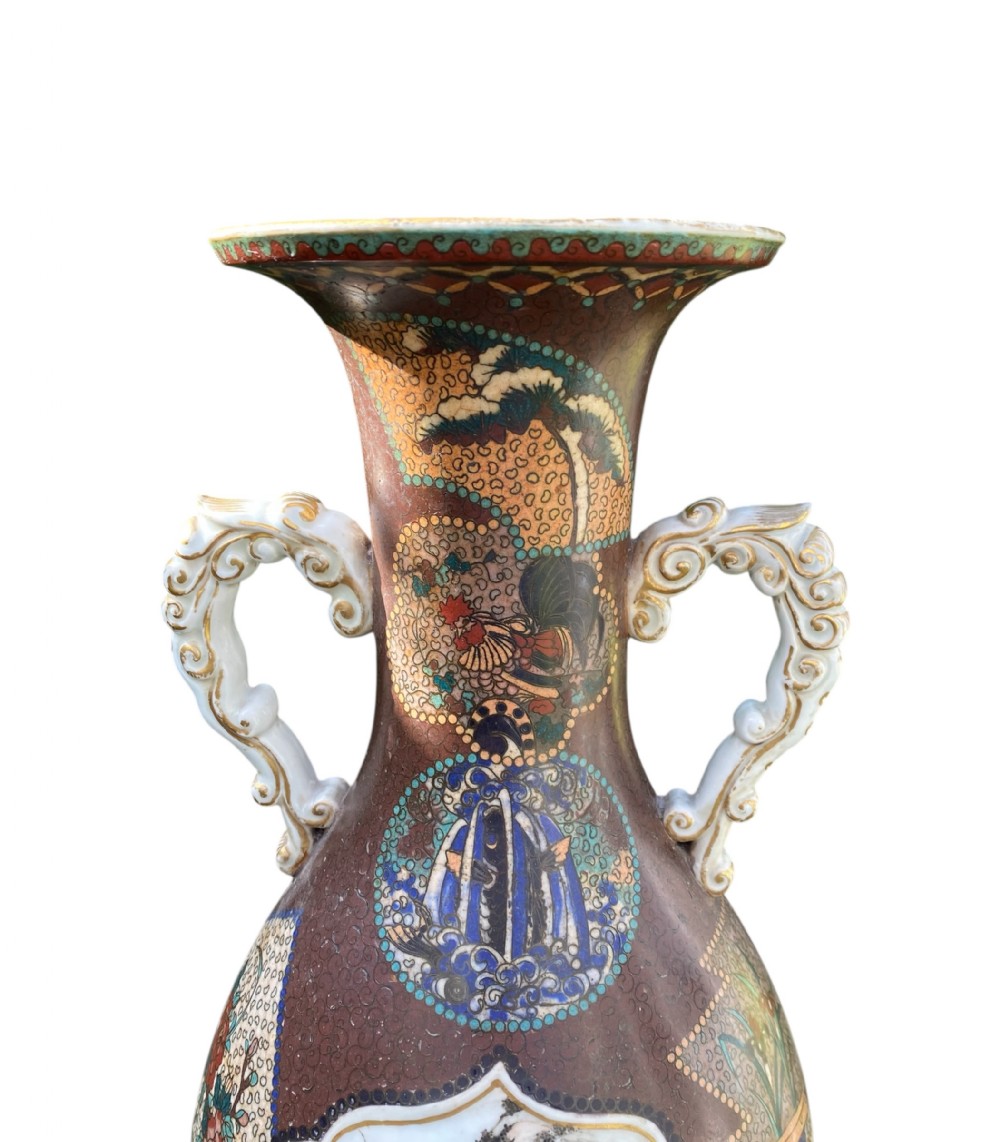
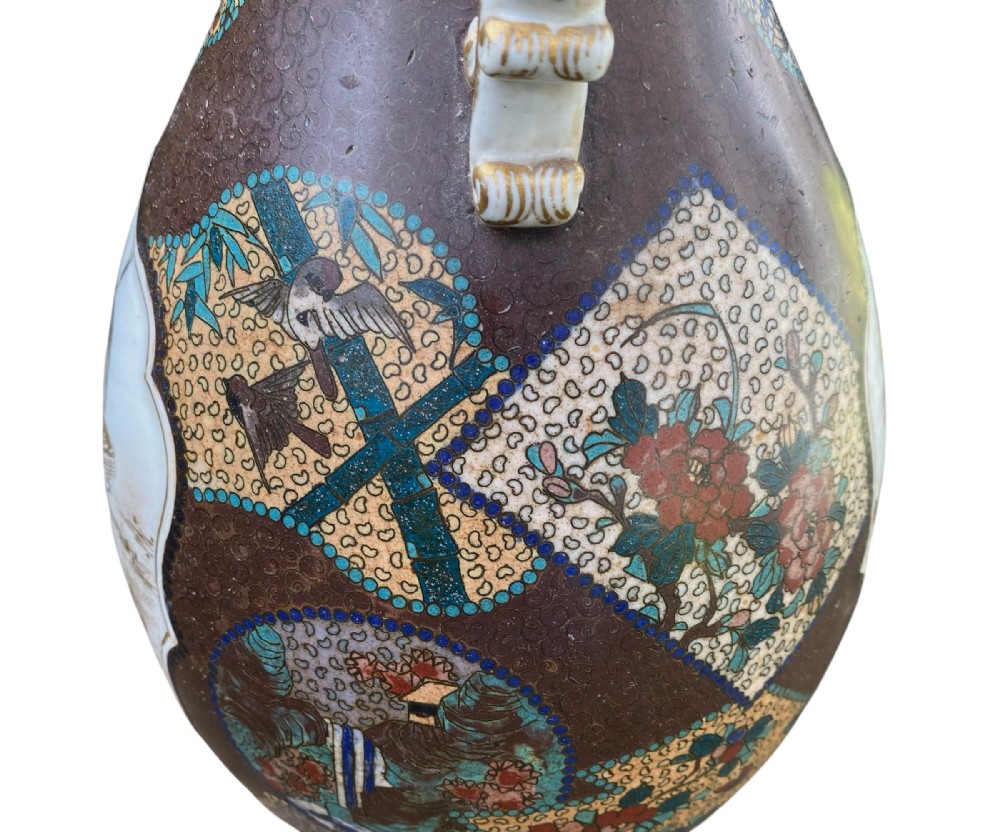
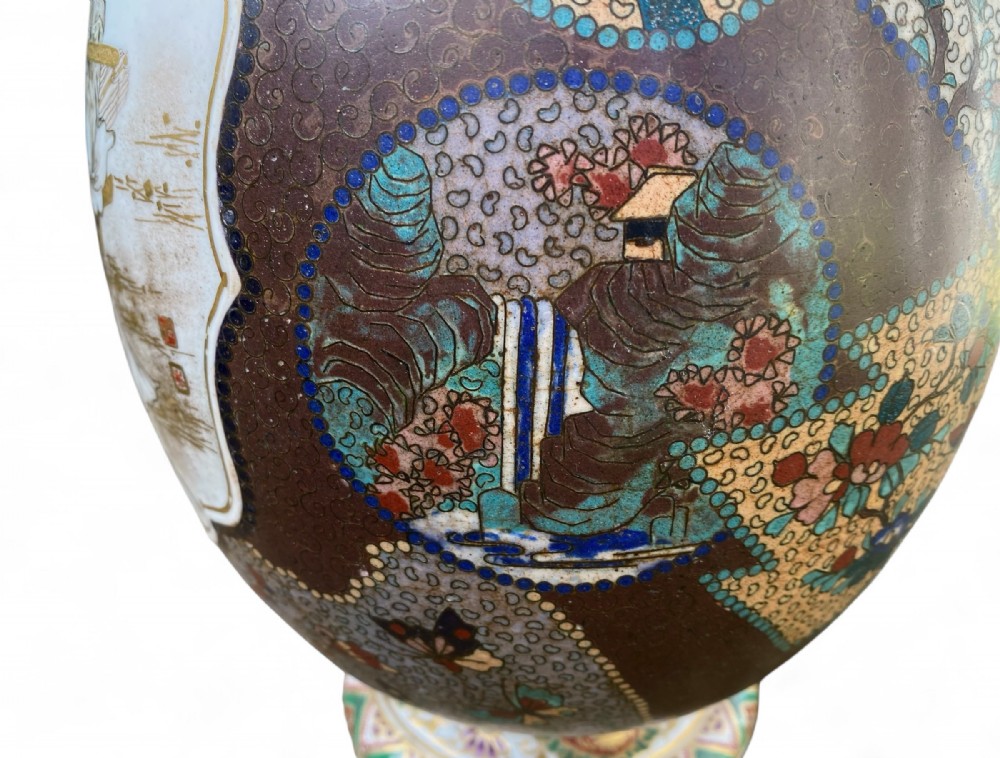
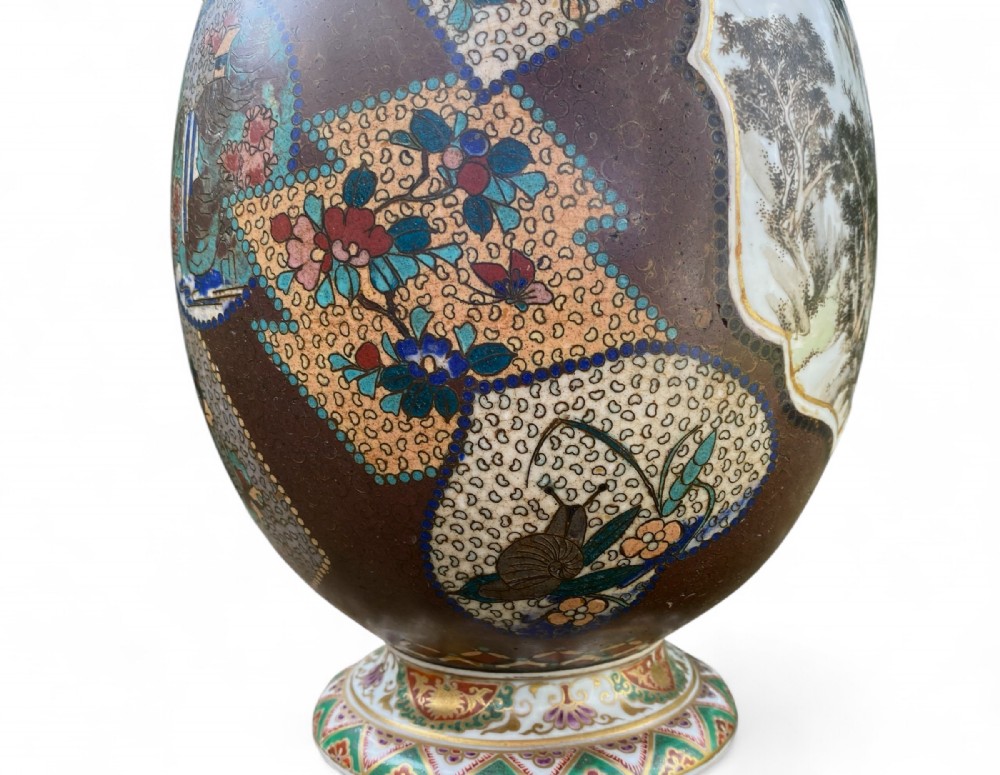
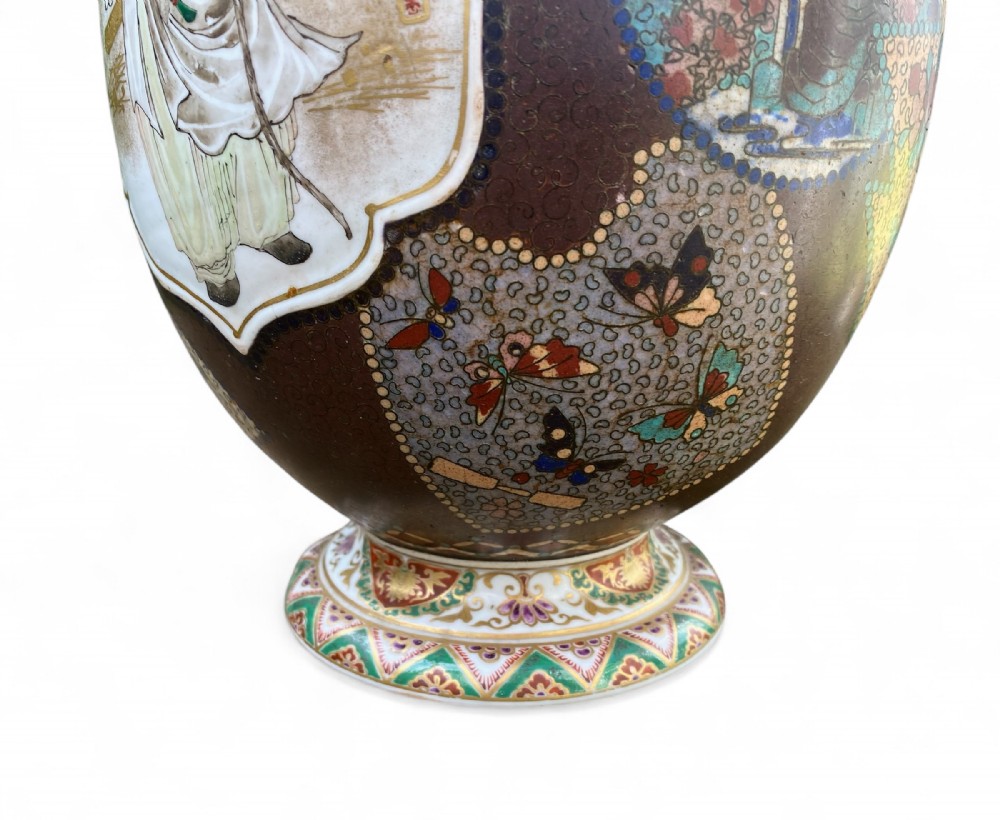
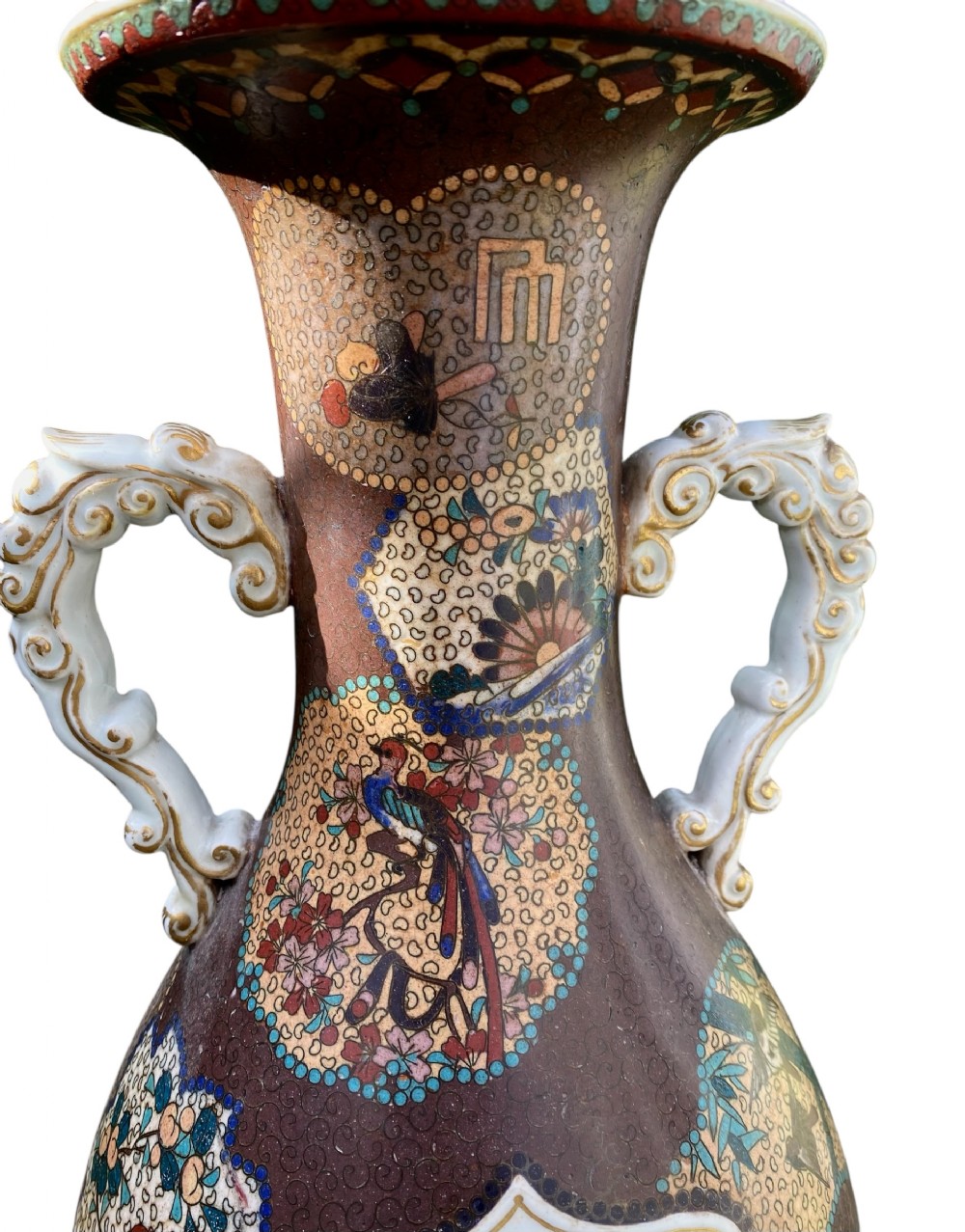
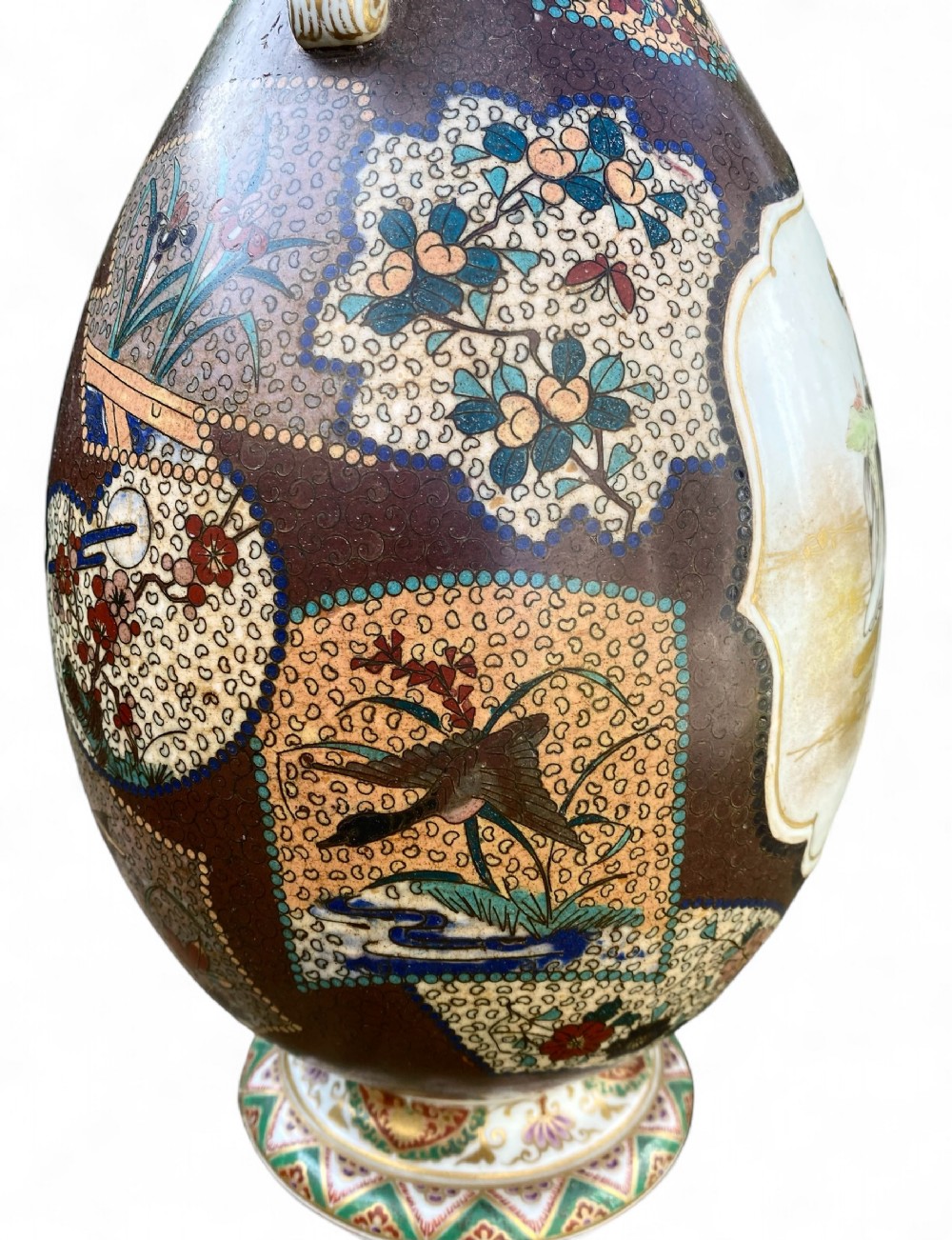
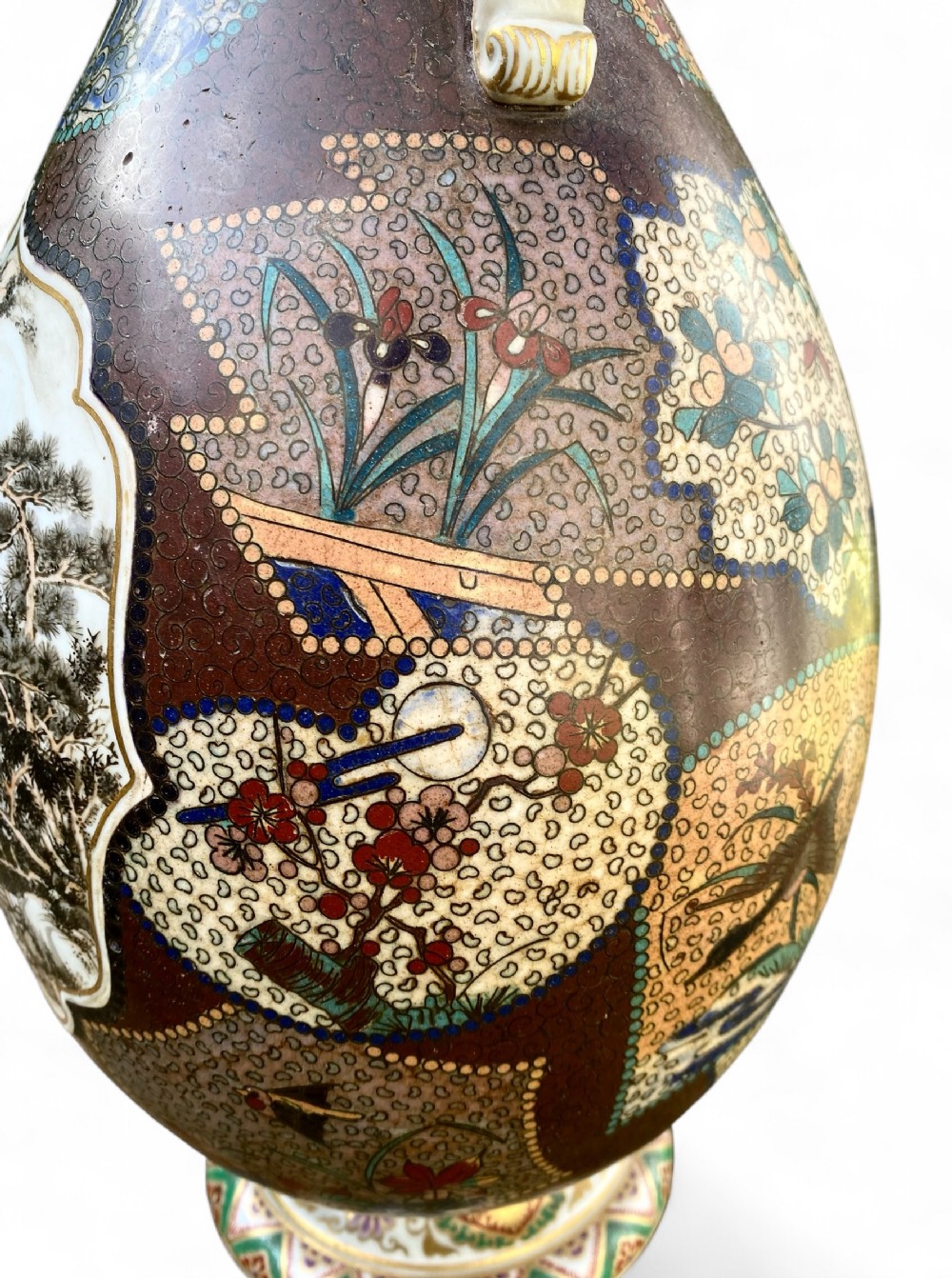
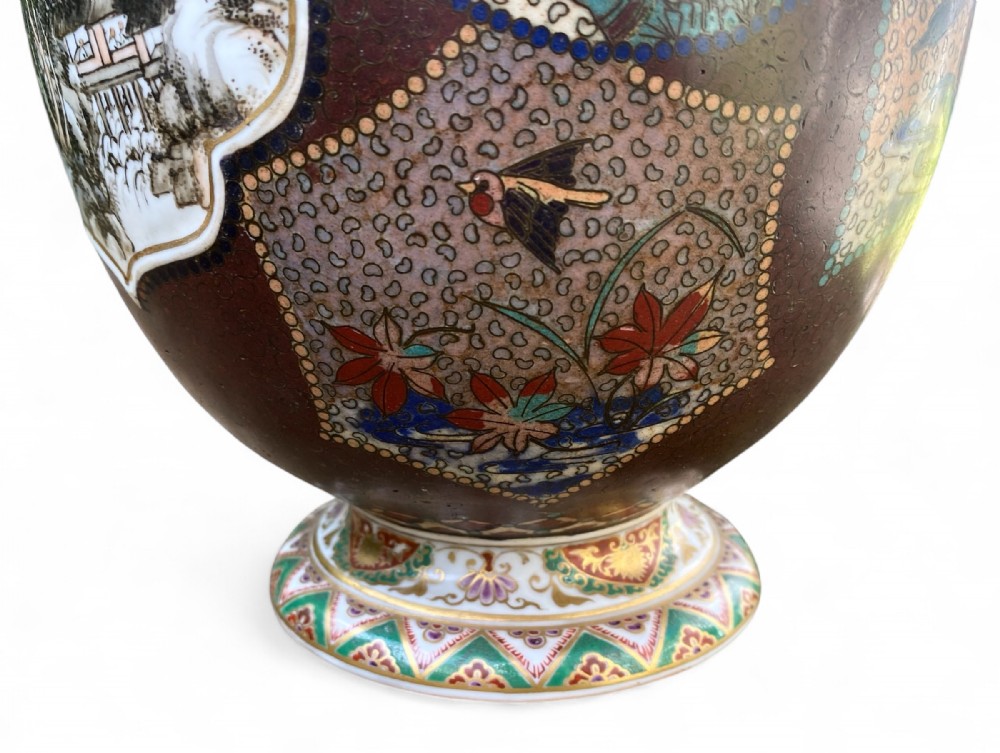
All on a cloisonné style ground, in brown enamel, and with shaped panels, containing landscapes, birds in flight, flowering plants, butterflies, and wild fowl, worked in metal wires.

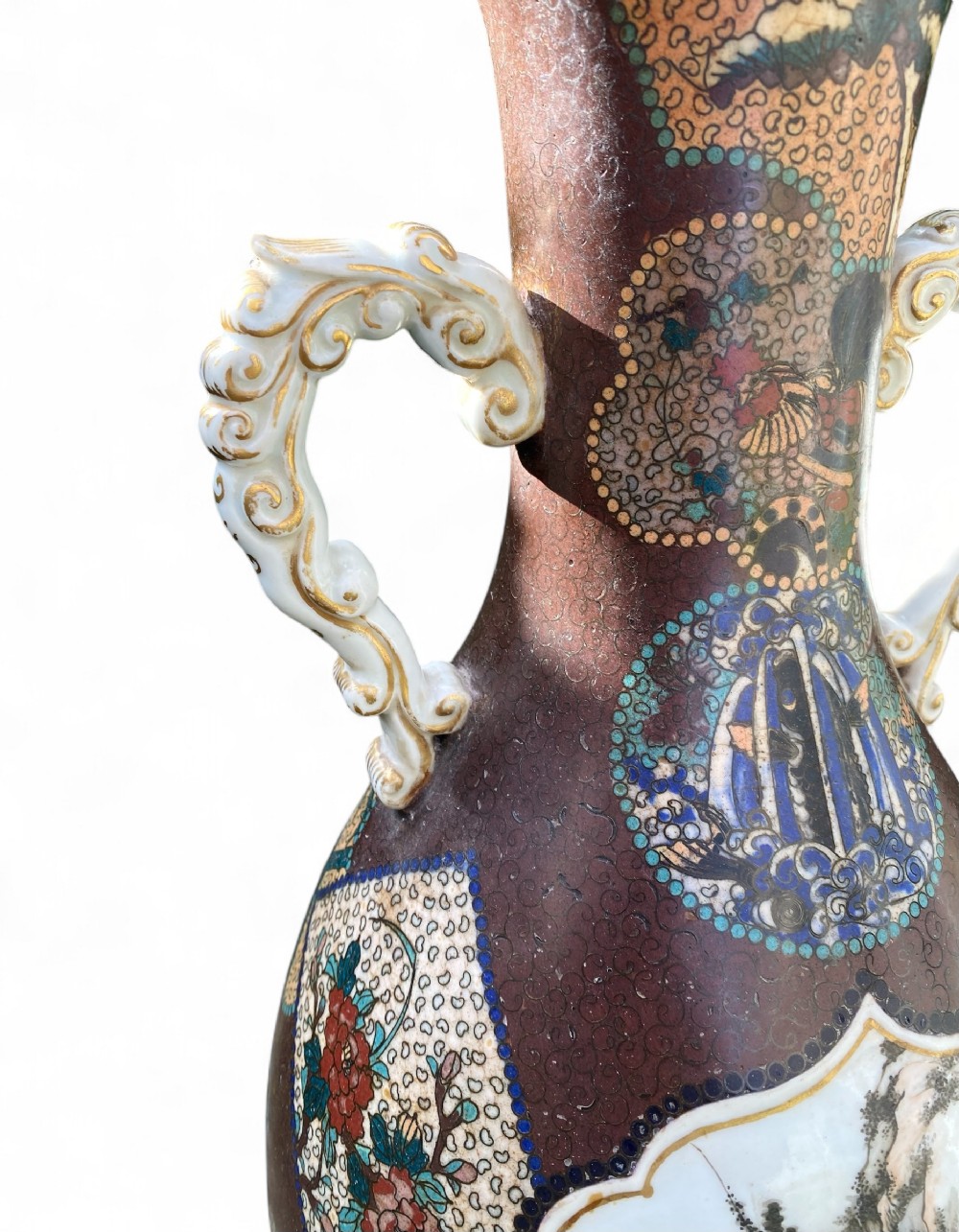
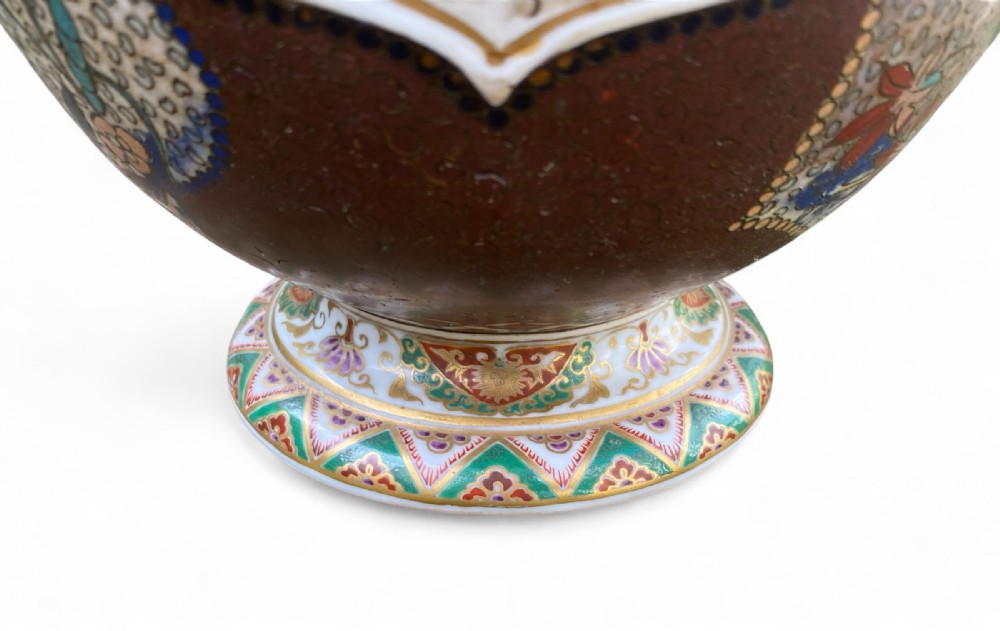
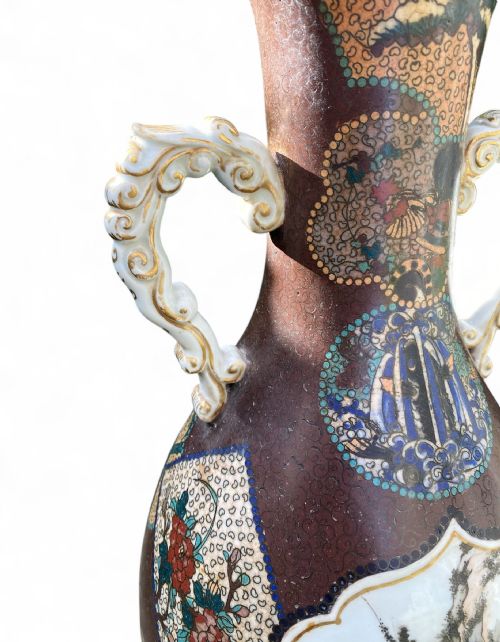
The baluster shaped vase, applied with twin scroll handles, heightened in gilt, and set upon a a circular foot, enamelled with continuous stylised floral motif.
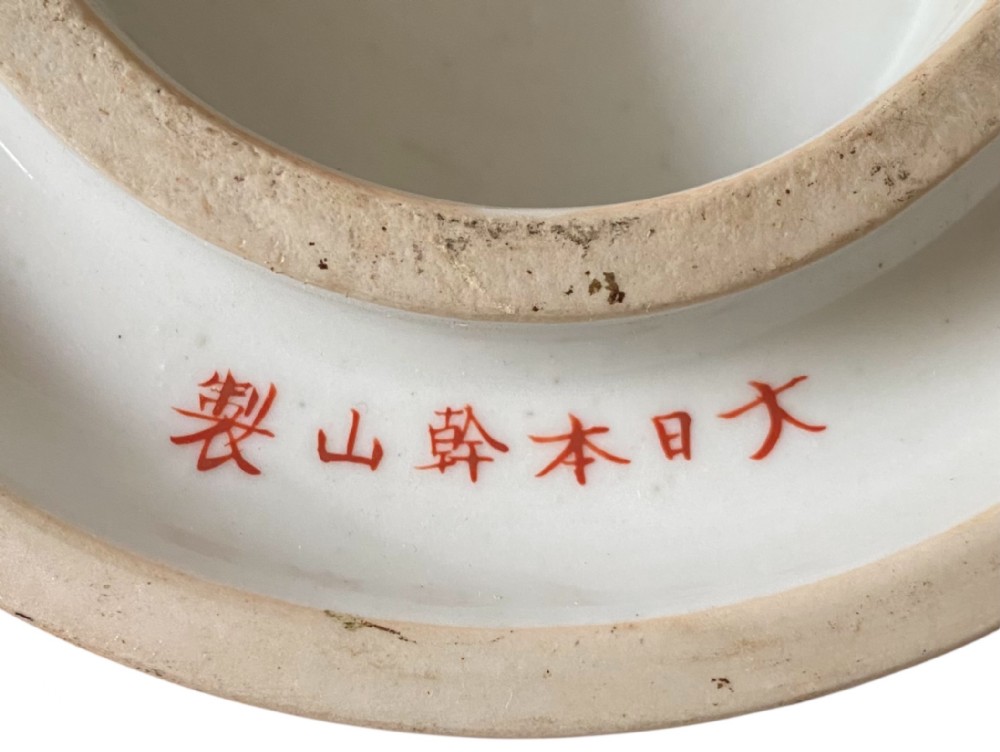
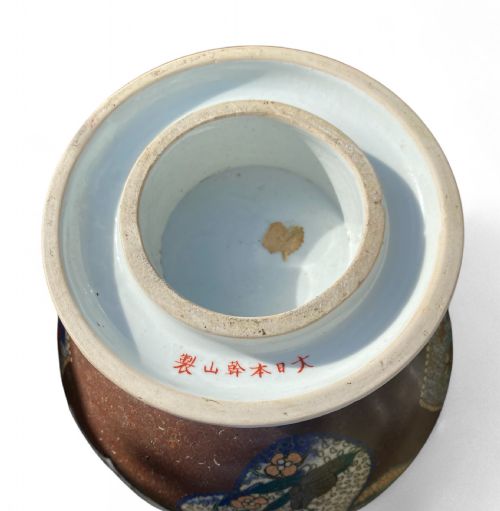
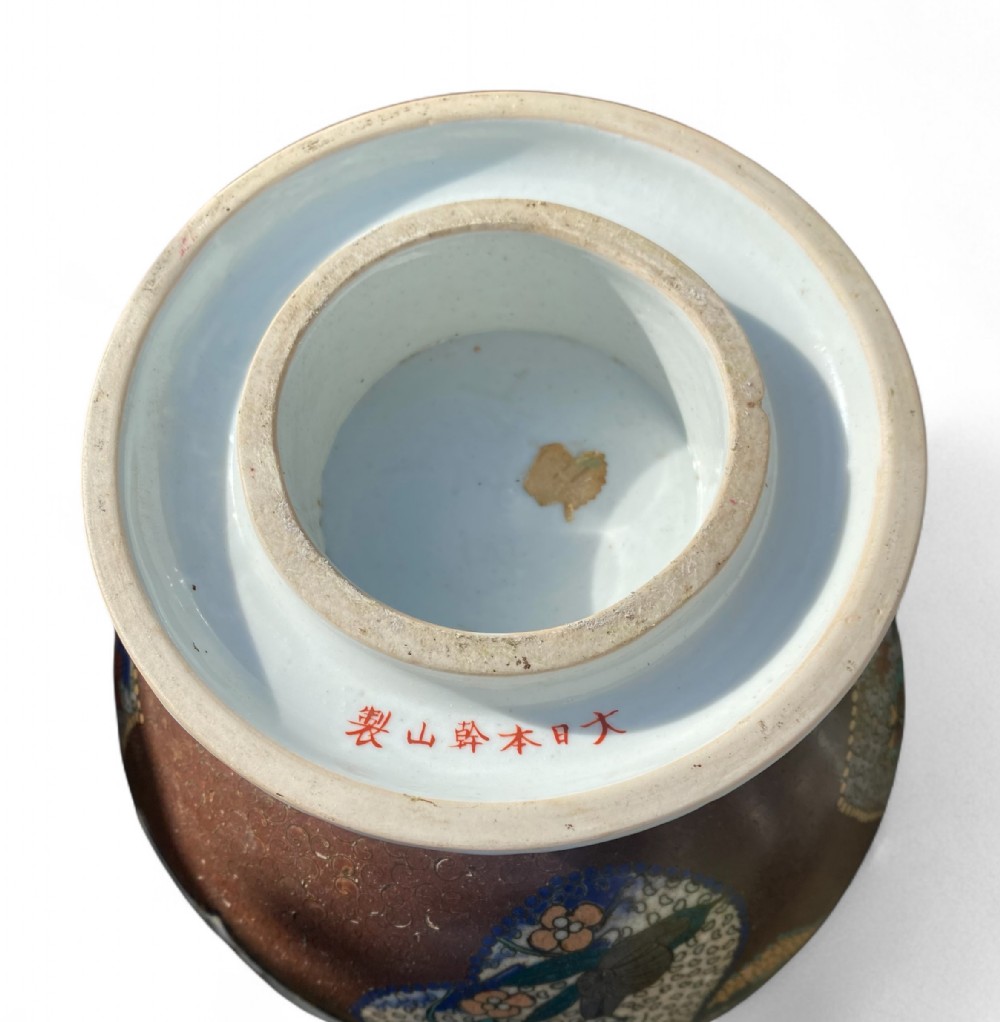
Signed ?????? “Dai Nihon Kanzan sei” (Manufactured by Kanzan, Great Japan), in iron red enamel.

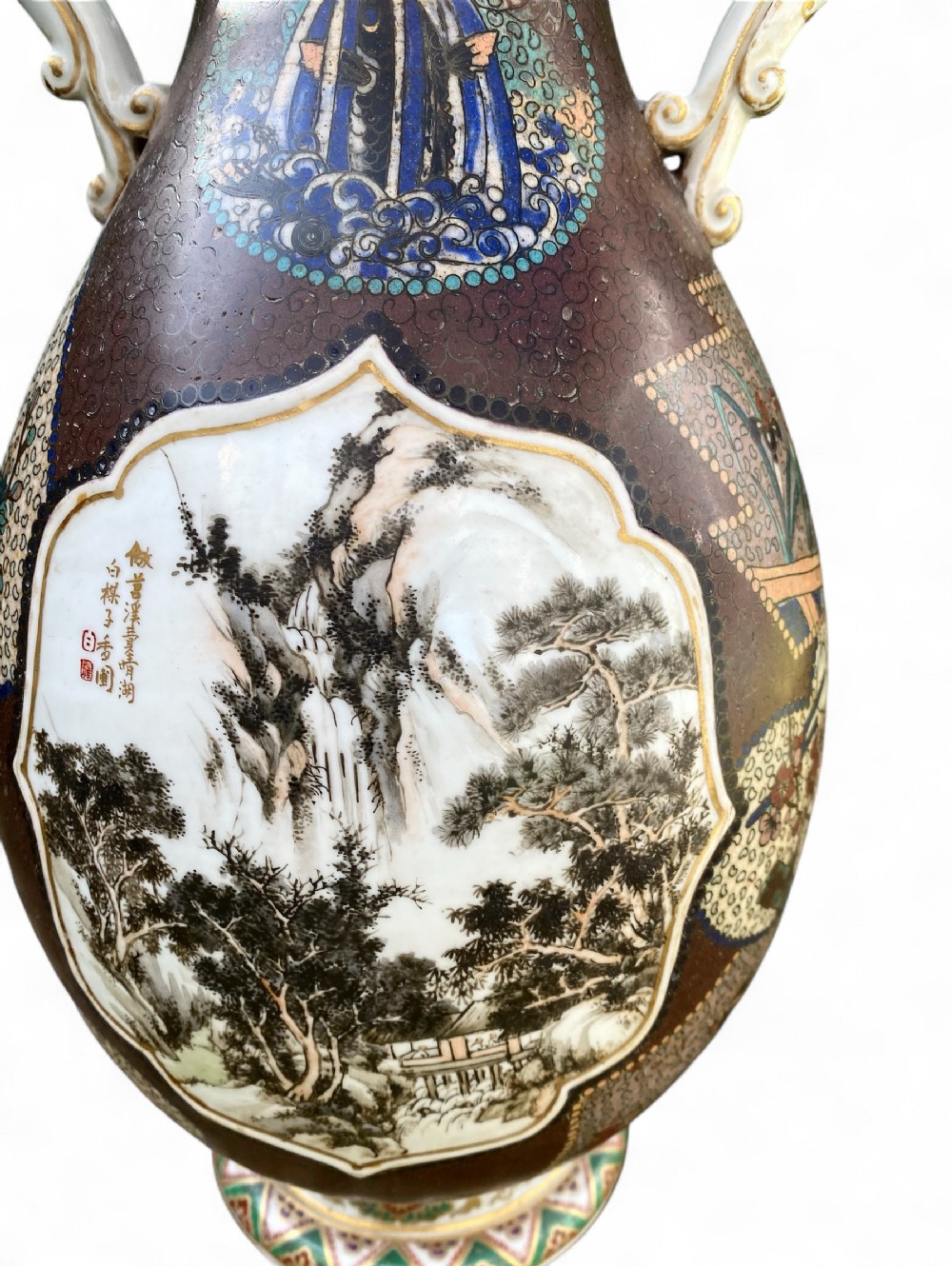
The mountainous landscape inscribed Taikei Hi Seiko ni naratte, Hakubaishi Koho”. [Painted by Koho (Nagai Koho; 1839-1911), in the manner of the Chinese painter Fei Qinghu.
Height – 46 cm, 18”.

Width – 19 cm, 7 1/2”.

Condition – Excellent. No damage. No restoration.

In 1775, Fei Qinghu, he sailed to Japan, where he mentored Japanese painters, including Yamakawa Bokko and Izuwara Mayoku. He was a major influence on the development of Nanga (Southern School painting) in late Edo-period Japan. He is recognized alongside Jiang Dalai, Yi Fujiu, and Zhang Qiugu as one of the “Four Great Masters Who Travelled to Japan.”

Date of Manufacture

Philip Carrol Antiques has dated this Meiji Period Cloisonne Vase to the 19th Century.

Physical Dimensions
Height
46cm (18.11")
Width
19cm (7.48")
Depth
29cm (11.42")
Reference Numbers
Sellingantiques Reference
SA1163205
Description
Kanzan Denshichi (1821-1890) totai porcelain vases, Japan, c. 1880, Meiji Period.
“
The large vase, with moulded panels, finely hand painted by Nagai Koho(1839-1911), in the manner of the Chinese painter Fei Qinghu with a mountainous river landscape, within a shaped panel.
Philip Carrol Antiques

The reverse painted with an image of Hachiman.

fig 1. An intricately decorated Japanese Meiji period cloisonne vase featuring complex enamel patterns, landscape panels, and ornate handles against a brown ground.
fig 1. Kanzan Denshichi Totai Cloisonné Vase, Japan, C. 1880, Meiji Period.

All on a cloisonné style ground, in brown enamel, and with shaped panels, containing landscapes, birds in flight, flowering plants, butterflies, and wild fowl, worked in metal wires.

The baluster shaped vase, applied with twin scroll handles, heightened in gilt, and set upon a a circular foot, enamelled with continuous stylised floral motif.

fig 2. An intricately decorated Japanese Meiji period cloisonne vase featuring complex enamel patterns, landscape panels, and ornate handles against a brown ground.
fig 2. Kanzan Denshichi Totai Cloisonné Vase, Japan, C. 1880, Meiji Period.

Signed ?????? “Dai Nihon Kanzan sei” (Manufactured by Kanzan, Great Japan), in iron red enamel.

The mountainous landscape inscribed Taikei Hi Seiko ni naratte, Hakubaishi Koho”. [Painted by Koho (Nagai Koho; 1839-1911), in the manner of the Chinese painter Fei Qinghu.

fig 3. An intricately decorated Japanese Meiji period cloisonne vase featuring complex enamel patterns, landscape panels, and ornate handles against a brown ground.
fig 3. Kanzan Denshichi Totai Cloisonné Vase, Japan, C. 1880, Meiji Period.

Height – 46 cm, 18”.

Width – 19 cm, 7 1/2”.

Condition – Excellent. No damage. No restoration.

In 1775, Fei Qinghu, he sailed to Japan, where he mentored Japanese painters, including Yamakawa Bokko and Izuwara Mayoku. He was a major influence on the development of Nanga (Southern School painting) in late Edo-period Japan. He is recognized alongside Jiang Dalai, Yi Fujiu, and Zhang Qiugu as one of the “Four Great Masters Who Travelled to Japan.”

Date of Manufacture

Philip Carrol Antiques has dated this Meiji Period Cloisonne Vase to the 19th Century.

Height
46cm (18.11")
Width
19cm (7.48")
Depth
29cm (11.42")
Reference Numbers
Sellingantiques Ref
SA1163205
Philip Carrol Antiques
Sellingantiques verified Since Dec 2017

Philip carrol antiques was established in 1983

Dealer Profile

You can view the stock and full dealer information on the Philip Carrol Antiques Profile Page

Trade Associations

Philip Carrol Antiques is a registered member of BADA 
PDF SHARE
SAVE
An intricately decorated Japanese Meiji period cloisonne vase featuring complex enamel patterns, landscape panels, and ornate handles against a brown ground. SOLD6+ MONTHS AGO
1 / 24
Archive I An intricately decorated Japanese Meiji period cloisonne vase featuring complex enamel patterns, landscape panels, and ornate handles against a brown ground. SOLD6+ MONTHS AGO

Kanzan Denshichi Totai Cloisonné Vase, Japan, C. 1880, Meiji Period.
Archive II An intricately decorated Japanese Meiji period cloisonne vase featuring complex enamel patterns, landscape panels, and ornate handles against a brown ground. View II
Archive III An intricately decorated Japanese Meiji period cloisonne vase featuring complex enamel patterns, landscape panels, and ornate handles against a brown ground. View III
Archive IV An intricately decorated Japanese Meiji period cloisonne vase featuring complex enamel patterns, landscape panels, and ornate handles against a brown ground. View IV
Archive V An intricately decorated Japanese Meiji period cloisonne vase featuring complex enamel patterns, landscape panels, and ornate handles against a brown ground. View V
Archive VI An intricately decorated Japanese Meiji period cloisonne vase featuring complex enamel patterns, landscape panels, and ornate handles against a brown ground. View VI
Archive VII An intricately decorated Japanese Meiji period cloisonne vase featuring complex enamel patterns, landscape panels, and ornate handles against a brown ground. View VII
Archive VIII An intricately decorated Japanese Meiji period cloisonne vase featuring complex enamel patterns, landscape panels, and ornate handles against a brown ground. View VIII
Archive IX An intricately decorated Japanese Meiji period cloisonne vase featuring complex enamel patterns, landscape panels, and ornate handles against a brown ground. View IX
Archive X An intricately decorated Japanese Meiji period cloisonne vase featuring complex enamel patterns, landscape panels, and ornate handles against a brown ground. View X
Archive XI An intricately decorated Japanese Meiji period cloisonne vase featuring complex enamel patterns, landscape panels, and ornate handles against a brown ground. View XI
Archive XII An intricately decorated Japanese Meiji period cloisonne vase featuring complex enamel patterns, landscape panels, and ornate handles against a brown ground. View XII
Archive XIII An intricately decorated Japanese Meiji period cloisonne vase featuring complex enamel patterns, landscape panels, and ornate handles against a brown ground. View XIII
Archive XIV An intricately decorated Japanese Meiji period cloisonne vase featuring complex enamel patterns, landscape panels, and ornate handles against a brown ground. View XIV
Archive XV An intricately decorated Japanese Meiji period cloisonne vase featuring complex enamel patterns, landscape panels, and ornate handles against a brown ground. View XV
Archive XVI An intricately decorated Japanese Meiji period cloisonne vase featuring complex enamel patterns, landscape panels, and ornate handles against a brown ground. View XVI
Archive XVII An intricately decorated Japanese Meiji period cloisonne vase featuring complex enamel patterns, landscape panels, and ornate handles against a brown ground. View XVII
Archive XVIII An intricately decorated Japanese Meiji period cloisonne vase featuring complex enamel patterns, landscape panels, and ornate handles against a brown ground. View XVIII
Archive XIX An intricately decorated Japanese Meiji period cloisonne vase featuring complex enamel patterns, landscape panels, and ornate handles against a brown ground. View XIX
Archive XX An intricately decorated Japanese Meiji period cloisonne vase featuring complex enamel patterns, landscape panels, and ornate handles against a brown ground. View XX
Archive XXI An intricately decorated Japanese Meiji period cloisonne vase featuring complex enamel patterns, landscape panels, and ornate handles against a brown ground. View XXI
Archive XXII An intricately decorated Japanese Meiji period cloisonne vase featuring complex enamel patterns, landscape panels, and ornate handles against a brown ground. View XXII
Archive XXIII An intricately decorated Japanese Meiji period cloisonne vase featuring complex enamel patterns, landscape panels, and ornate handles against a brown ground. View XXIII
Archive XXIV An intricately decorated Japanese Meiji period cloisonne vase featuring complex enamel patterns, landscape panels, and ornate handles against a brown ground. View XXIV
Enlarged Archival View
Telephone 07860 525 579
Location
North Yorkshire
United Kingdom
Verified Since Dec 2017
Items For Sale 94
Items Sold 1,161
Philip Carrol Antiques
Verified Since Dec 2017
View Dealer Info
Location: North Yorkshire, United Kingdom
Verified
Dec 2017
For Sale
94
Sold
1,161
An intricately decorated Japanese Meiji period cloisonne vase featuring complex enamel patterns, landscape panels, and ornate handles against a brown ground.
Kanzan Denshichi totai cloisonné vase, Japan, c. 1880, Meiji Period.
Ref: SA1163205
An intricately decorated Japanese Meiji period cloisonne vase featuring complex enamel patterns, landscape panels, and ornate handles against a brown ground.
Detail View 1
Detail View 2
Detail View 3
Detail View 4
Detail View 5
Detail View 6
Detail View 7
Detail View 8
Detail View 9
Detail View 10
Detail View 11
Detail View 12
Detail View 13
Detail View 14
Detail View 15
Detail View 16
Detail View 17
Detail View 18
Detail View 19
Detail View 20
Detail View 21
Detail View 22
Detail View 23
Archival Detail
Every single antique dealer on our platform is individually approved by our internal team. We verify their professional trade history, ethical standards, and photographic quality to ensure a secure, high-standard buying environment. Upon joining, every dealer agrees to a strict 9-point code of conduct. While issues can occasionally arise, our dealers typically resolve them swiftly and directly with the buyer. In fact, since our founding in 2002, Sellingantiques has only had to step in to help resolve an issue on roughly five occasions—a true testament to the quality of our dealers and their dedication to your happiness.
Our dealers are highly experienced in packing and shipping fragile, high-value antiques. Because you are in direct contact with the dealer, you will be able to easily go through all available shipping and insurance options together to ensure your item arrives safely.
Antiques are the ultimate green purchase. By choosing historical pieces over newly manufactured goods, you completely eliminate the carbon footprint of modern mass production while preserving exceptional, timeless craftsmanship.
Written by Sellingantiques from the dealer’s photographs and listing
  • ObjectVases
  • Period19th century
  • StyleMeiji Period Japanese
  • MaterialEnamel, Ceramic, Metal wire
  • ColourBrown
  • MotifsLandscape cartouches, Scroll handles, Floral borders, Geometric enamel patterns
  • SizeH 46 cm (18 in) x W 19 cm (7 in) x D 29 cm (11 in)

The Meiji period spans from 1868 to 1912, a time of rapid modernisation and opening to Western trade, which catalysed unprecedented technical mastery in decorative arts such as metalwork, ceramics, and cloisonne enamel.

Totai, or body-less cloisonne, involves applying enamel and wirework directly onto a ceramic or porcelain base rather than a traditional metal body, requiring immense skill to prevent cracking during high-temperature firings.

Authentic pieces typically feature intricate wirework cells known as cloisons, subtle tonal gradations in the enamel, period-appropriate motifs, and occasionally artist signatures or workshop marks on the base.

Positioning the piece as a standalone focal point on a dark wood surface or within a minimalist display allows the intricate enamelwork and detailed craftsmanship to draw the eye without visual clutter.

Enamelware should be kept out of direct sunlight to prevent colour fading, dusted gently with a soft dry cloth, and handled minimally to protect the delicate metallic wires and glaze.
items
Add keywords to the filter
Price
£100
£250000
Era
Period
Style
Material
Origin
Stock Location
Recently Added
Online Payments
Categories