



Brown Cloisonne Vases
Brown cloisonne vases bring together intricate wirework enamel and earthy tones, offering collectors remarkable depth and tactile artistry from Japanese workshops.
Brown Cloisonne Vases
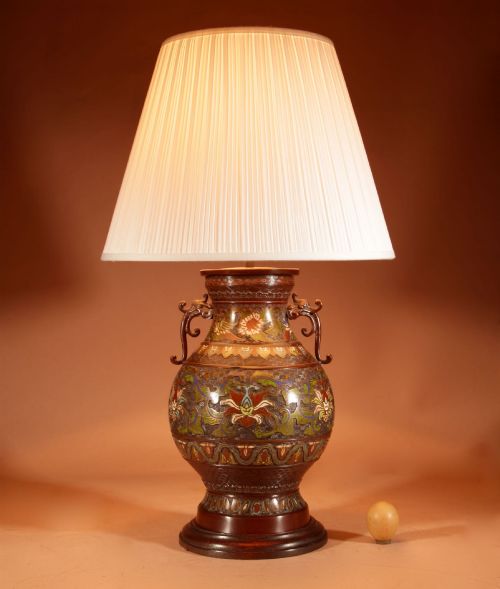
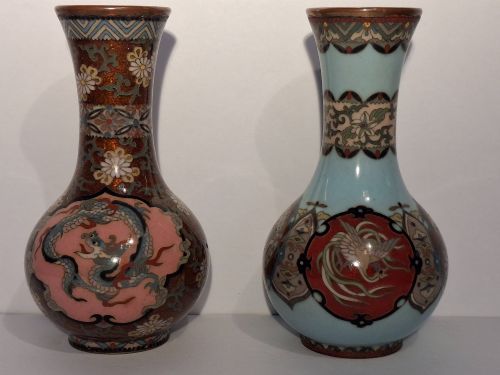
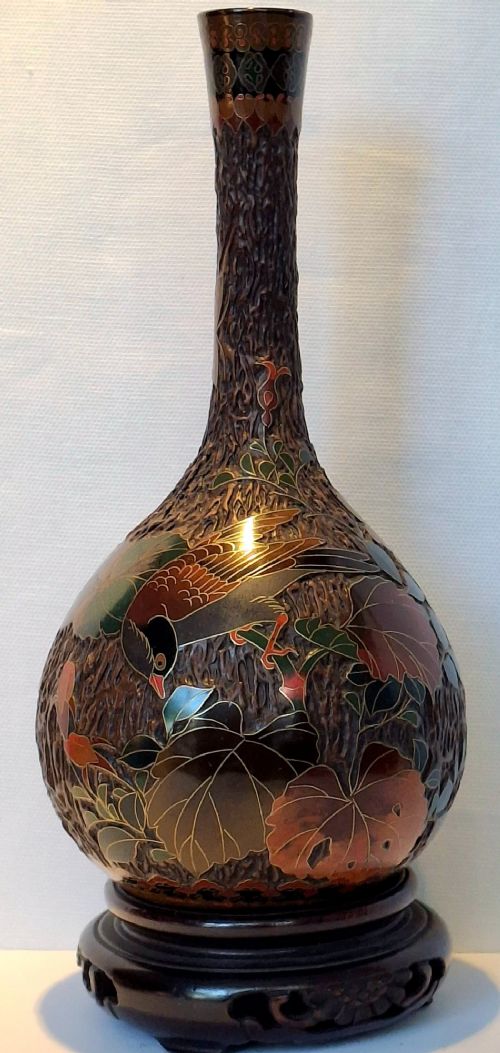
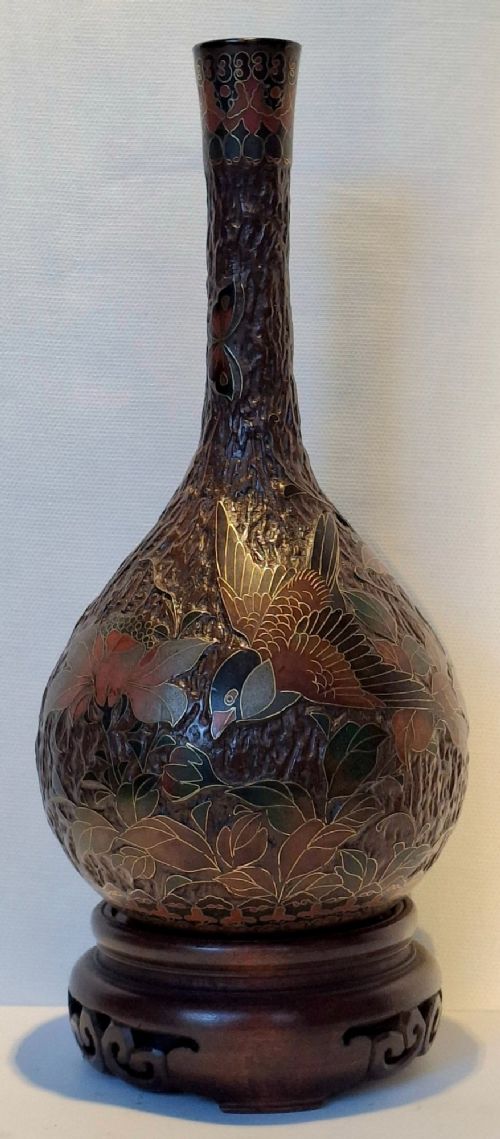
When buyers search for brown cloisonne vases, they encounter remarkable examples spanning the Meiji period to the Showa era. These decorative vessels showcase traditional Japanese metalwork techniques applied to ceramic, porcelain, and copper bases.
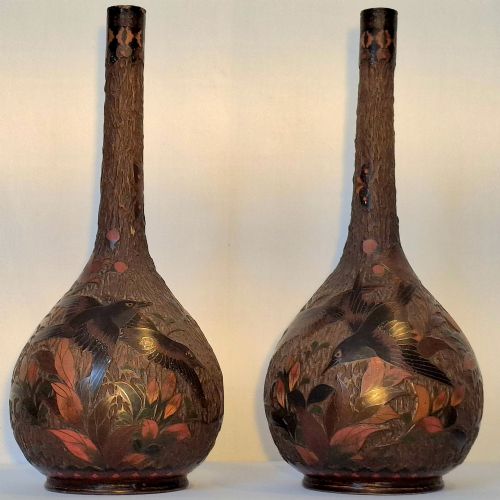
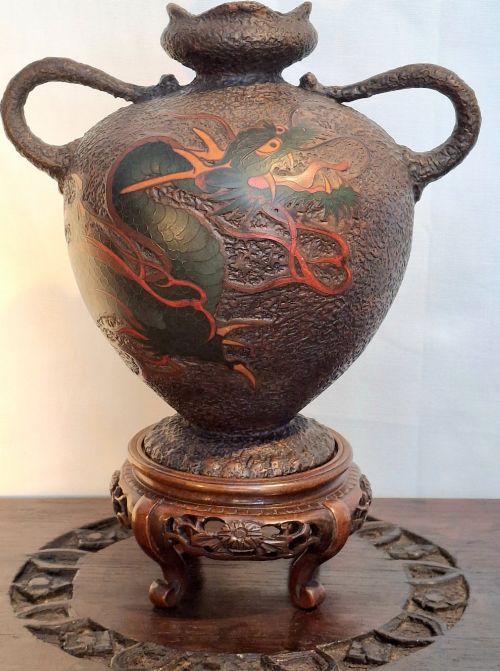
Many items date from the late nineteenth century and early twentieth century, reflecting the sophisticated artistry of Japanese makers. Buyers frequently find pairs of miniature vases alongside individual vessels decorated with birds, flowers, dragons, and butterflies.
Assessing quality
The refinement of the wirework largely distinguishes superior pieces from standard production, as highly skilled artisans achieved remarkably thin, uniform cell partitions. Precision in the placement of copper wire dictates the crispness of the final design.
Consistency in the enamel filling and smoothness across the fired surface reveal the maker's technical mastery. Superior examples display intricate detailing in complex motifs like dragons and birds without surface irregularities.
Brown Cloisonne Vases Retail Price Guide 2026
Typical asking prices for brown cloisonne vases among the pieces listed under this phrase on Sellingantiques today, from the lower quarter to the upper quarter. They describe what is for sale here now, not the wider market.
Listings feature items spanning several decades from 1890 to 1930, utilising materials such as enamel, copper, porcelain, and brass wire.
Tsukamoto Hikokichi
The Brown Cloisonne Vases Glossary
- Cloisonne
- An ancient metalworking technique where enamel is applied to compartments formed by soldered flat metal wires. This method creates detailed patterns across the surface of the vessel.
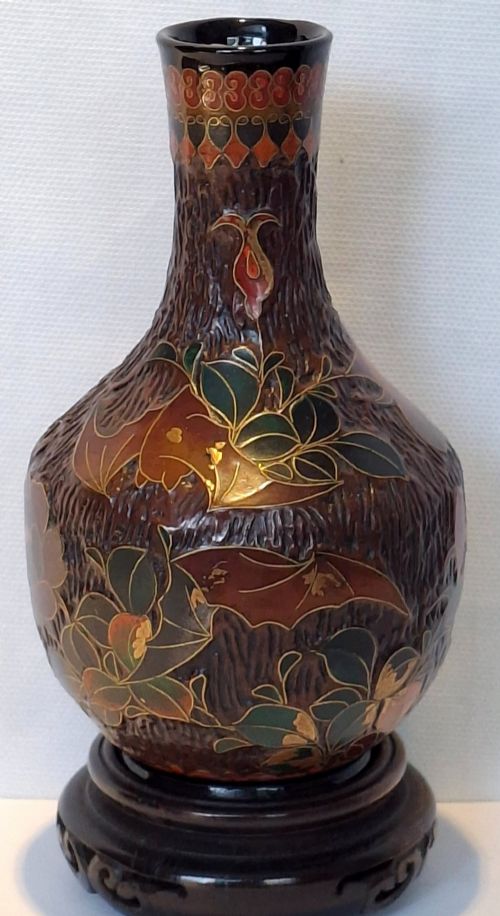
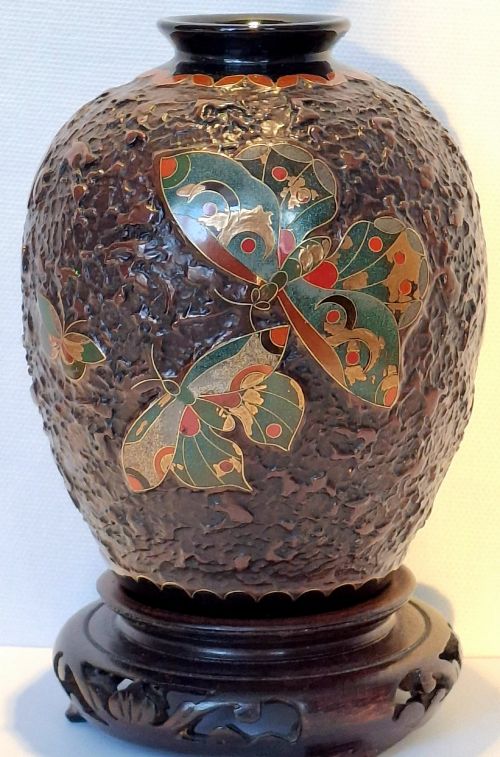
- Totai shippo
- A specific Japanese cloisonne method that produces a textured body resembling natural tree bark. This technique often lacks a metal foundation beneath the enamel layer.
- Kintsugi
- The Japanese art of repairing broken pottery with lacquer dusted or mixed with powdered gold, silver, or platinum. Some Meiji period pieces incorporate this aesthetic into their surface design.
- Meiji Period
- A Japanese historical era lasting from 1868 to 1912, characterised by rapid modernization and exceptional decorative arts production. Works from this time often bear signature marks from master workshops.
- Champleve
- An enamelling technique where troughs or cells are carved into the metal surface rather than formed by soldered wire. The cavities are then filled with enamel paste before firing.
Brown Cloisonne Vases: Frequently Asked Questions
What is totai shippo?
Totai shippo is a specialised Japanese method where the enamel is built up over a non-metal core, often creating a distinctive textured surface that mimics natural tree bark.
This technique allows the vessel to retain translucency and unique surface qualities distinct from standard metal-based cloisonne.
How do I date a vase?
Dating typically relies on stylistic markers, materials, and the presence of maker signatures associated with specific historical eras like the Meiji period.
Changes in wire thickness and enamel coloration across different decades also help determine the approximate age of the piece.
Are these pieces fragile?
While the enamel surface is fused glass and can chip upon sharp impact, the copper or ceramic foundations provide solid structural integrity.
Proper handling and placement away from edges ensure these decorative vessels remain secure in a home environment.
What motifs appear most often?
Common decorative themes include traditional Japanese imagery such as birds, flowers, dragons, and natural elements like butterflies.
Artisans rendered these subjects with fine copper wire to create distinct visual boundaries between the coloured enamels.