56,816  PAGES BROWSED TODAY PAGES TODAY • 221 ANTIQUES UPLOADED TODAYNEW ARRIVALS
GIFTS
221 ITEMS ADDED TODAY
Sort Order
Items Per Page
Browse Categories
Sort order
Relevant Links
Items per page
ID #SA1210553
FOR SALE
£1,250
Email Phone
Save
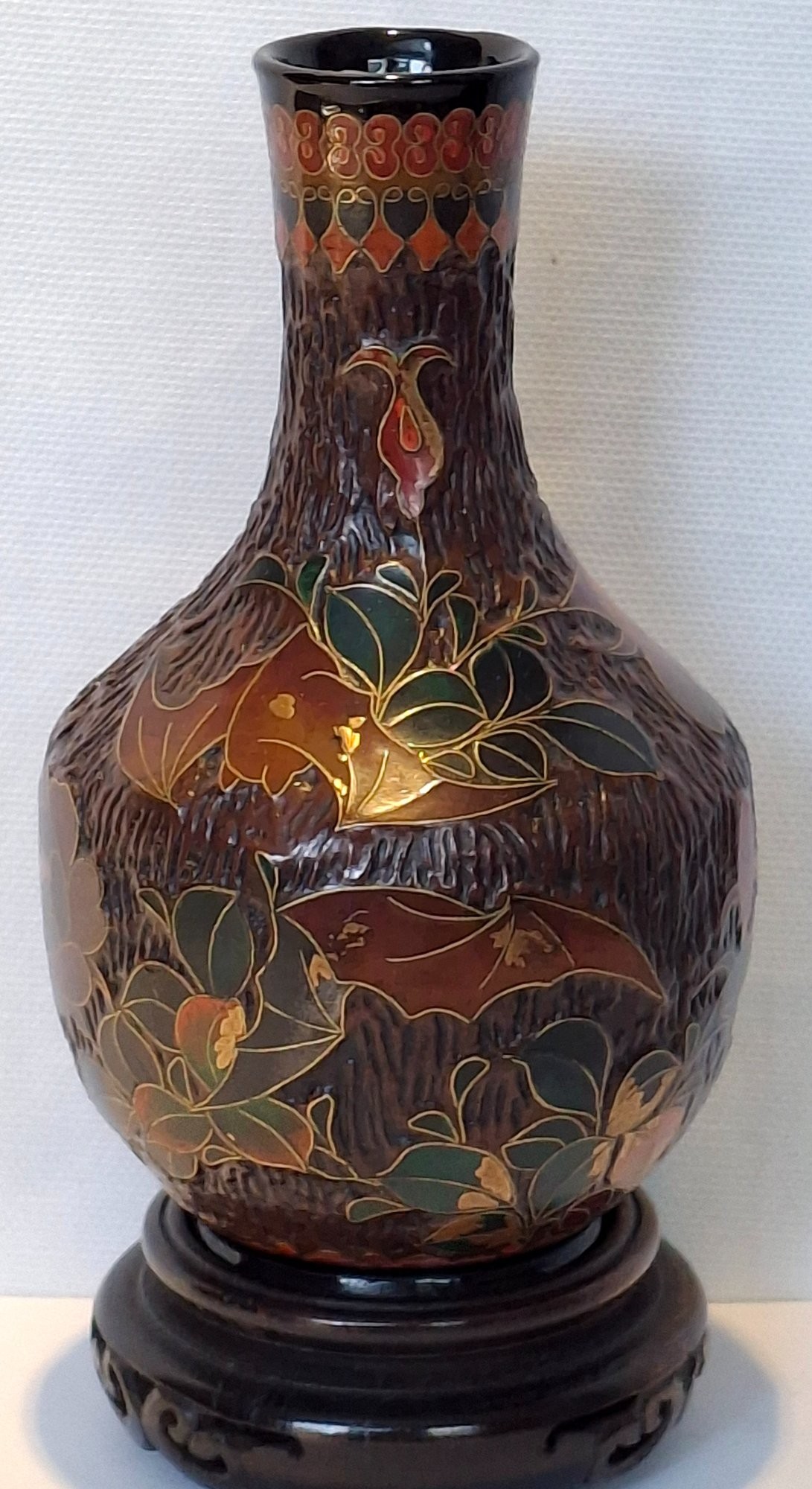
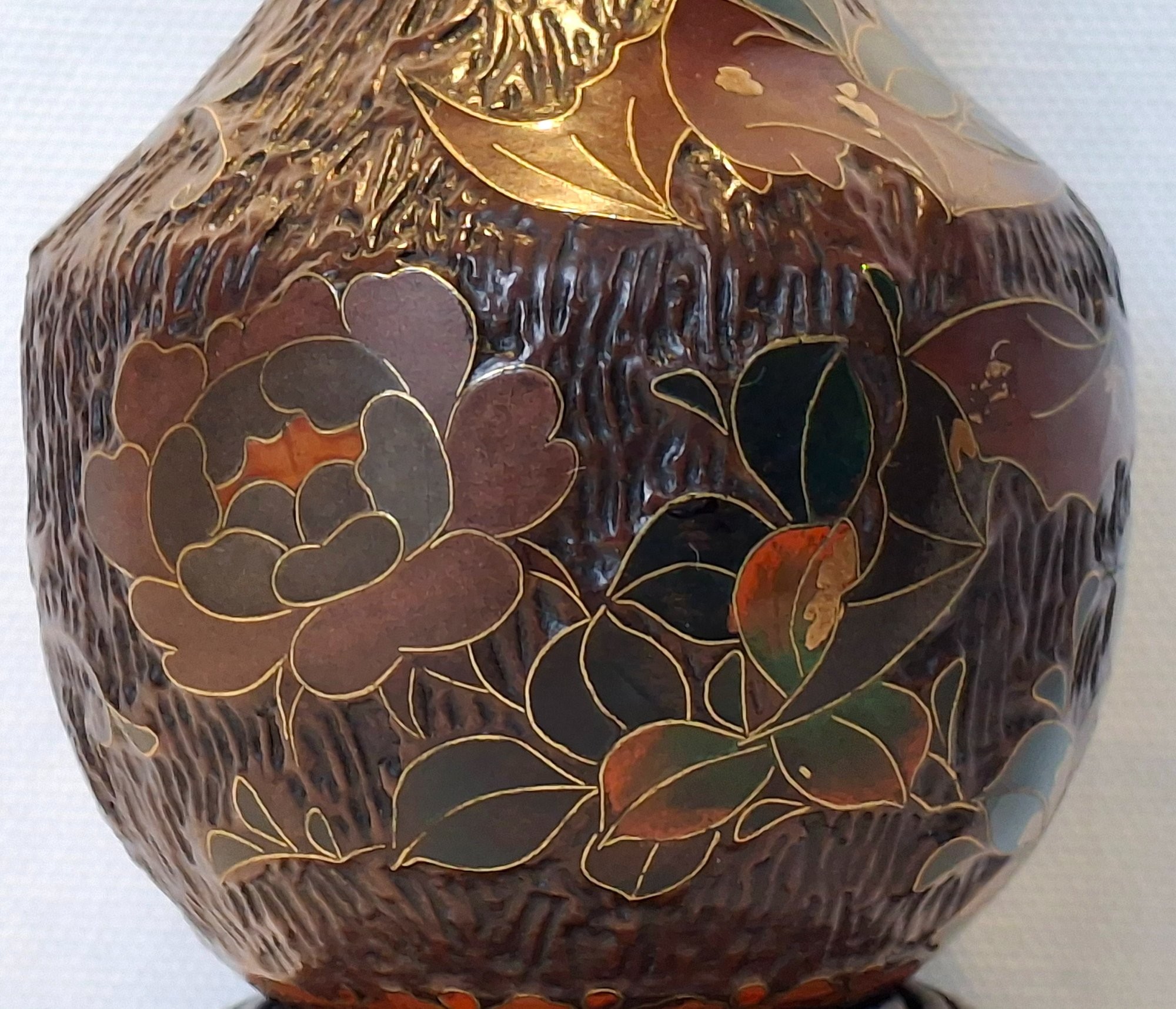
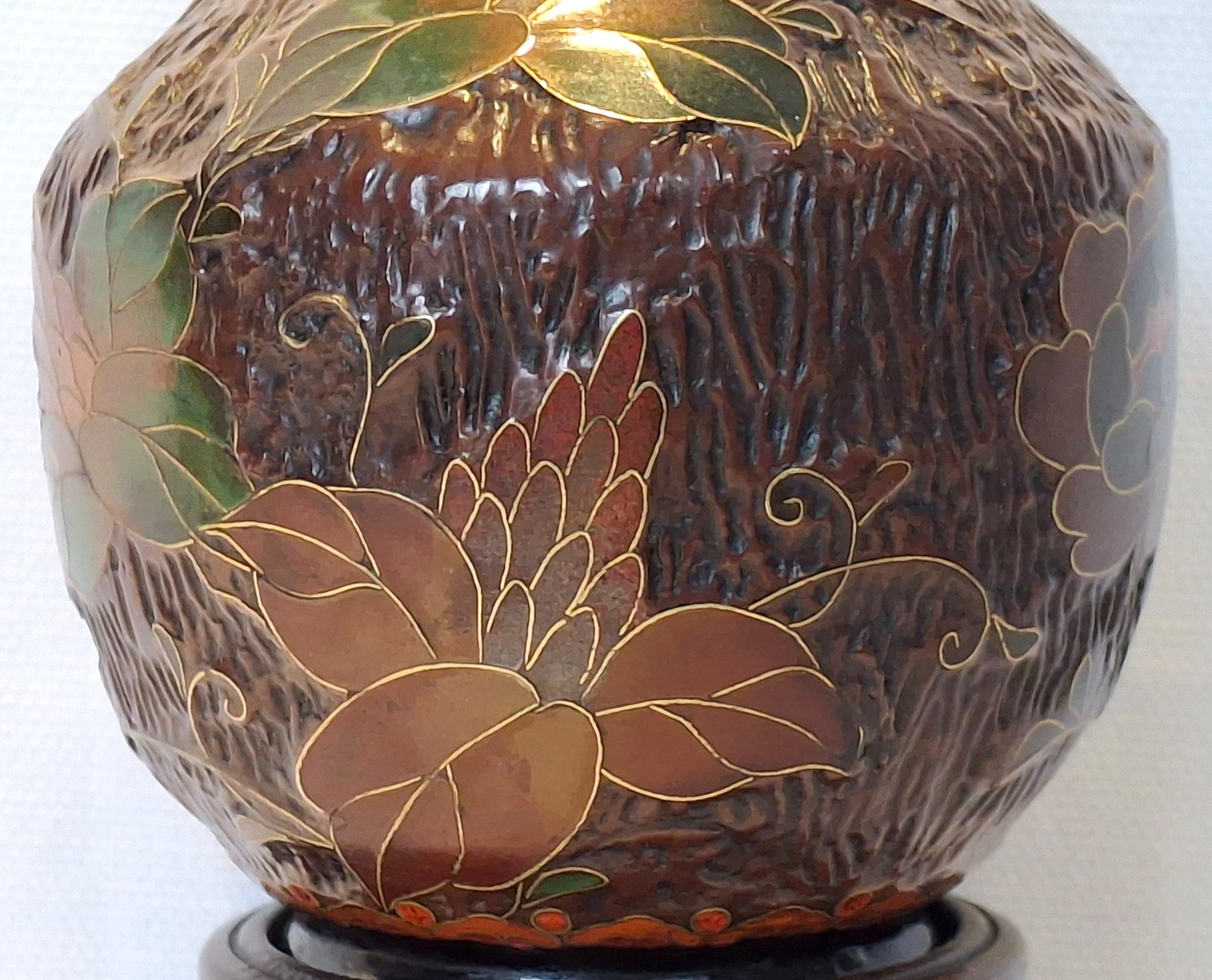
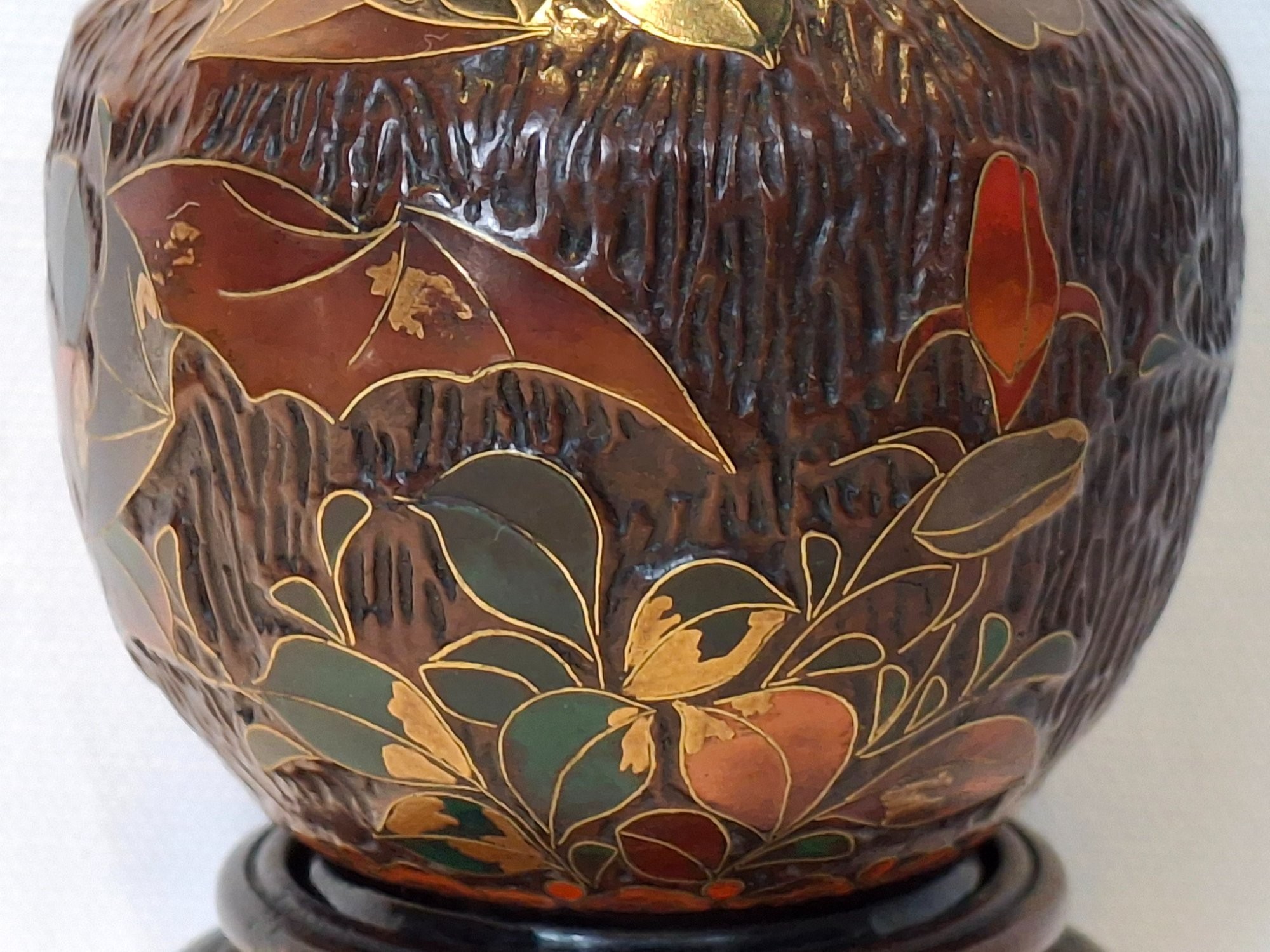
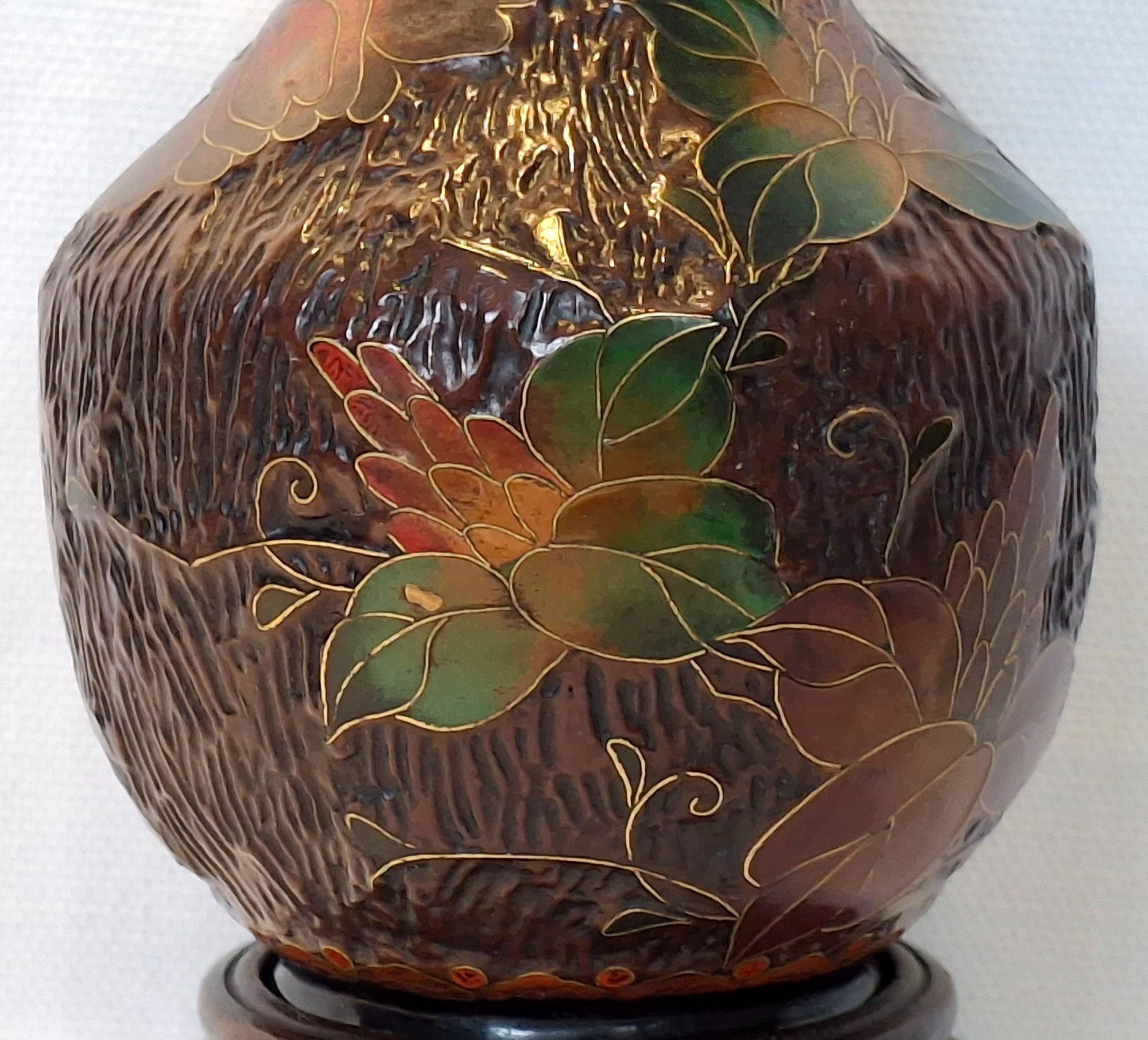
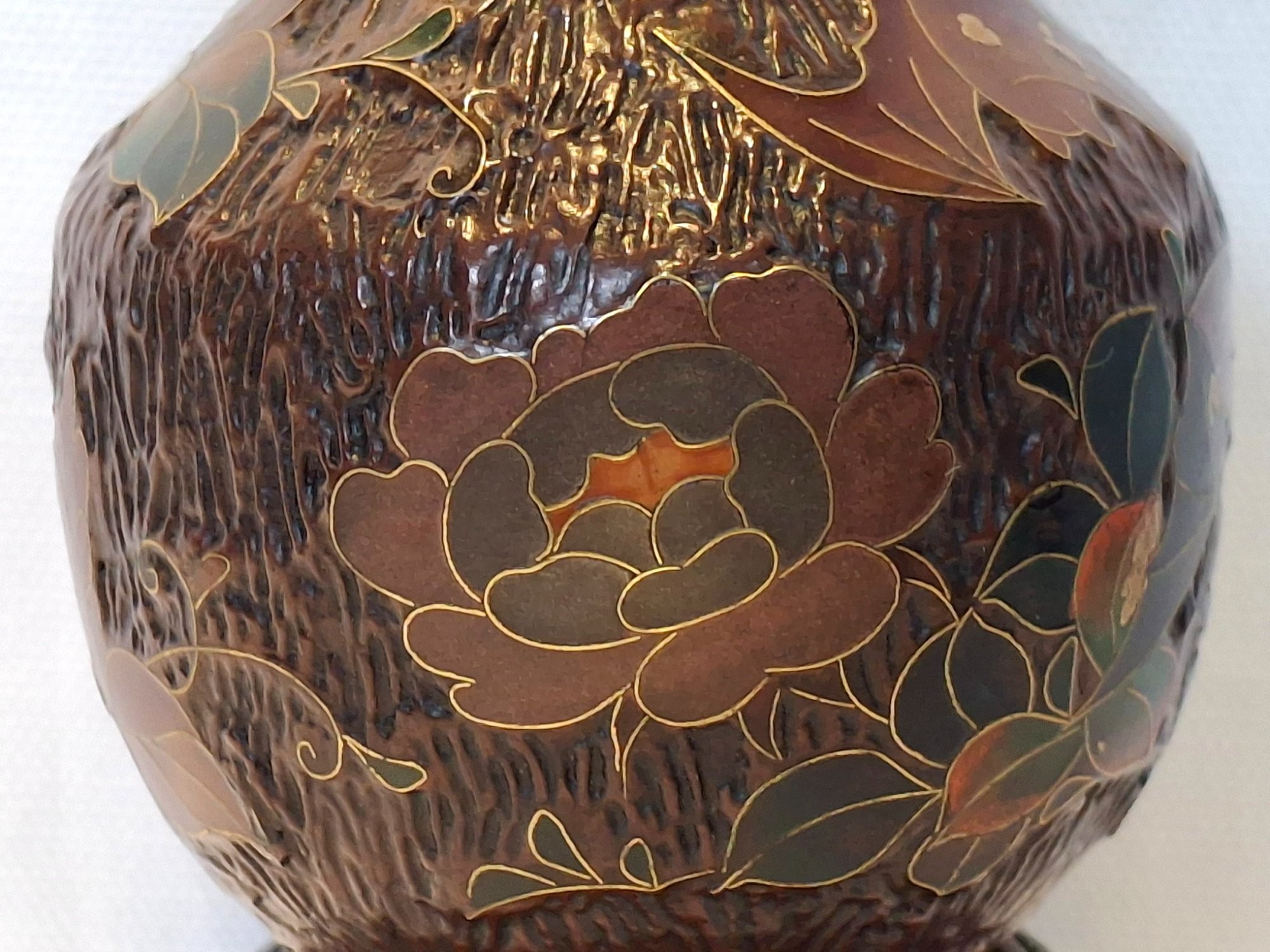
Fine Japanese Totai Shippo Vase. Cloisonne Tree Bark: Kintsugi Technique. Bat. Circa 1890.
For sale by Dragoncharger Antiques
for sale €1,463     $1,588
£1,250

Dragoncharger Antiques

Sellingantiques Verified Since Aug 2024
Browse dealers 175 items
  • About Us
    Specialising in early japanese cloisonne, edo enamel artisan period.
Id #SA1210553
PDF SHARE
SAVE

Fine Japanese Totai Shippo Vase. Cloisonne Tree Bark: Kintsugi Technique. Bat. Circa 1890.

19th century
Description

Fine Japanese Totai Shippo Vase. Cloisonne Tree Bark: Kintsugi Technique. Bat. Circa 1890.

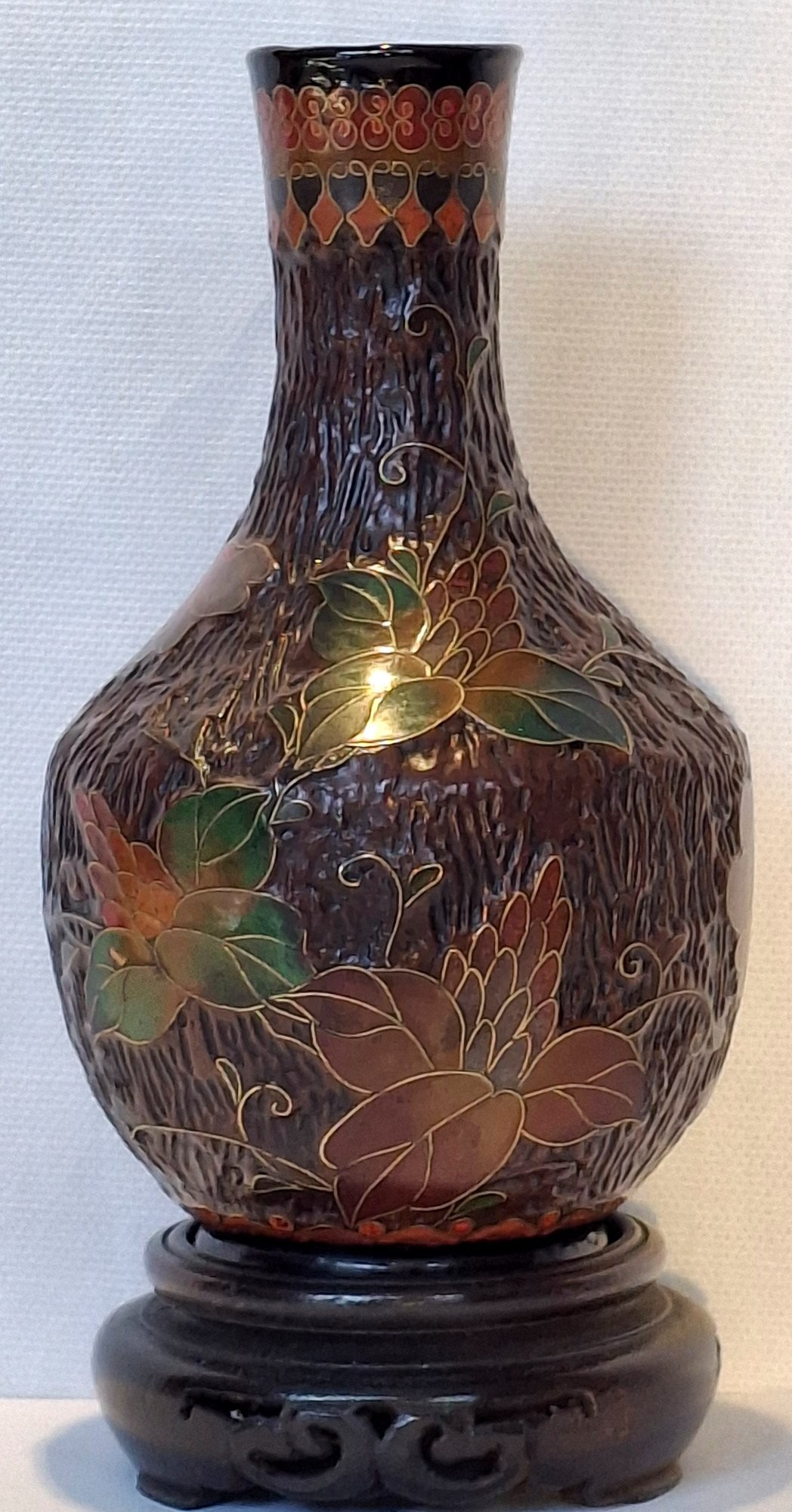
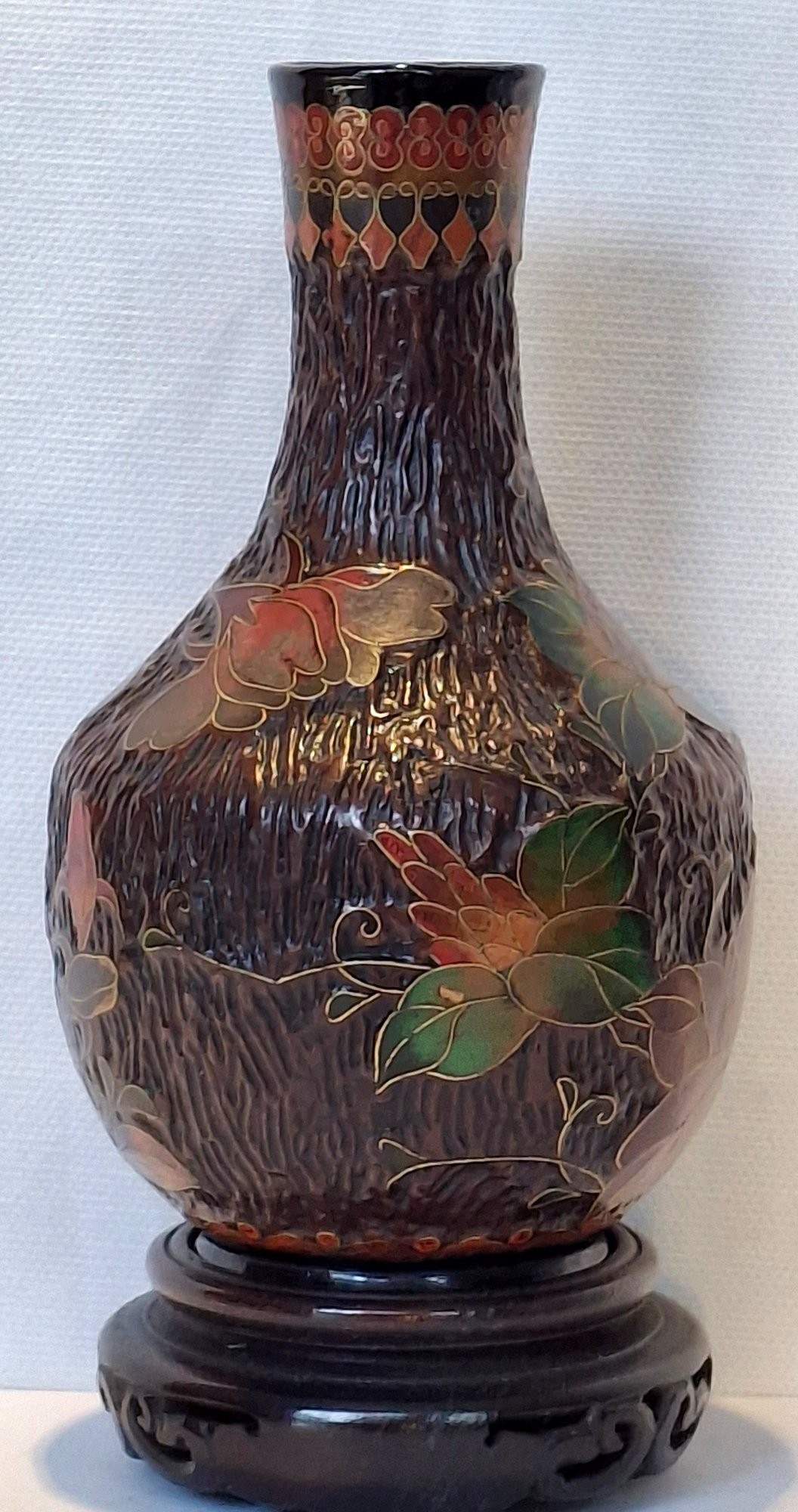
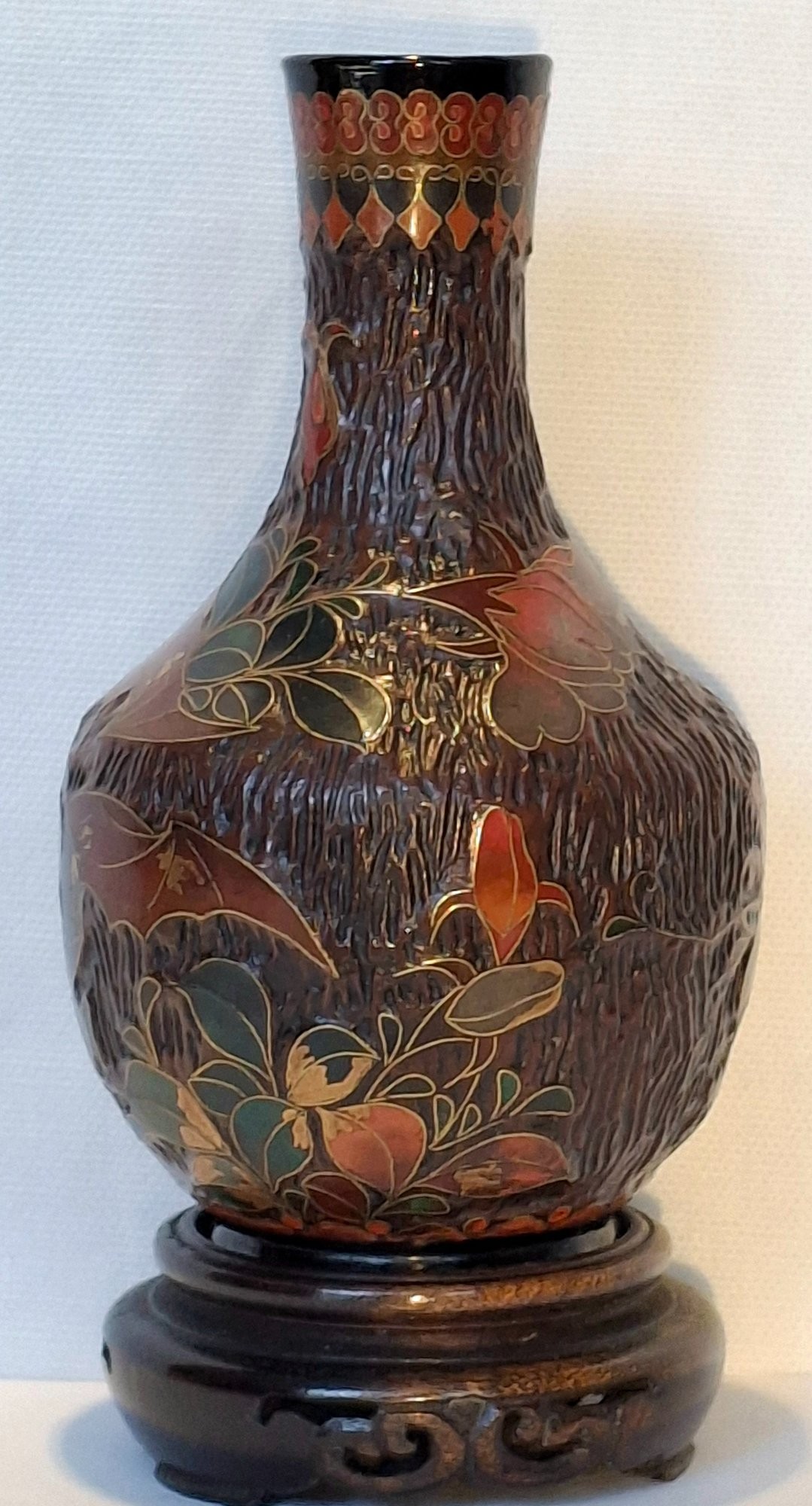
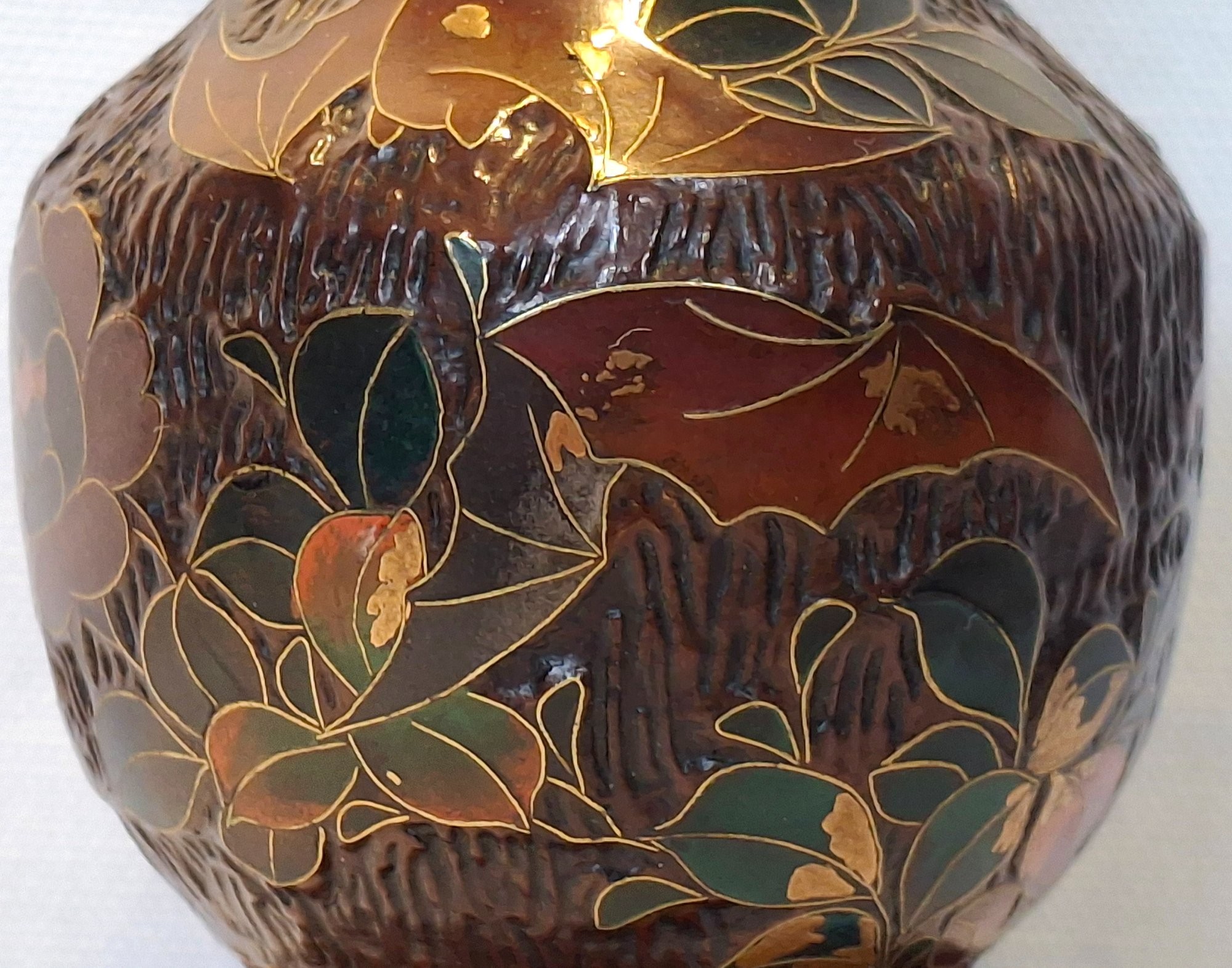
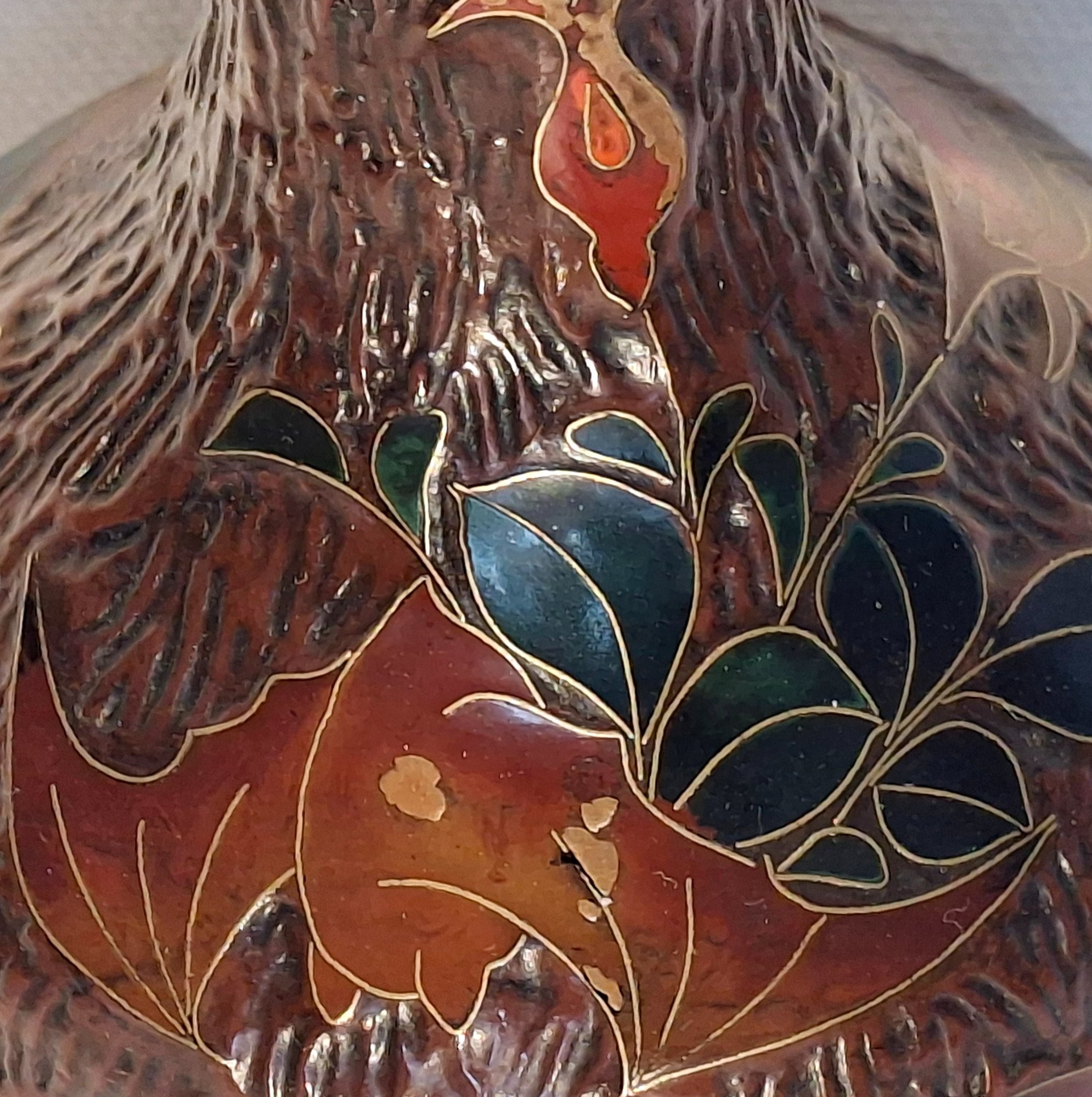
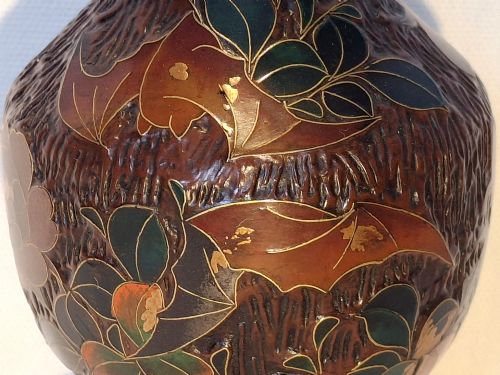
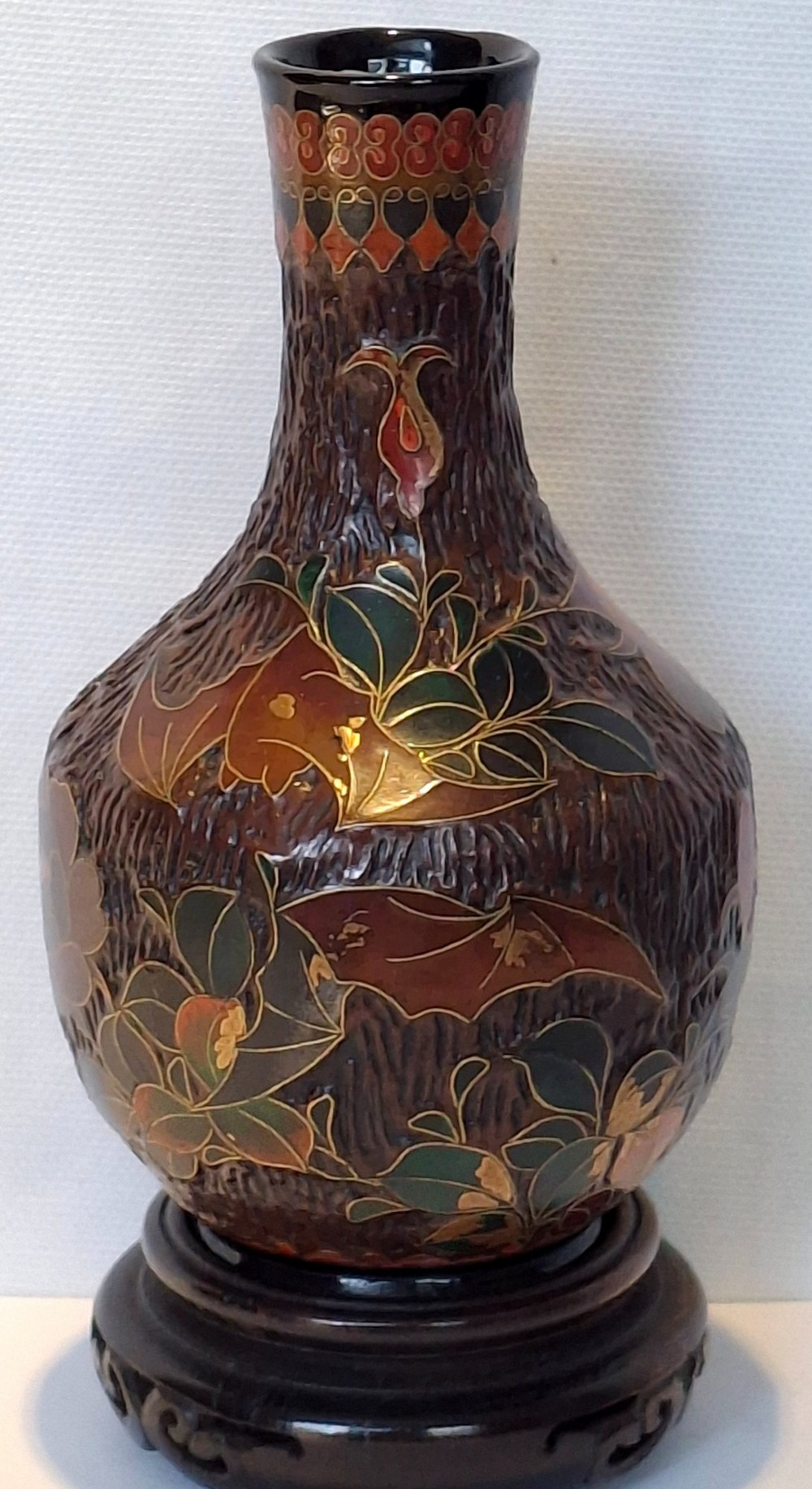
The creativity and artwork is superlative, and of the highest artisan quality. Finely rendered in the Totai Shippo technique on porcelain. Vase superbly decorated with Bats, flowers and fruiting foliage. The cloisonne and lacquer work is superlative with attention to detail, colour and precision. The brightness is significantly enhanced by the Kintsugi gold work.

An extremely difficult process with superb workmanship, rich colours and beautiful contrast. Porcelain vessel with the finest of Cloisonné work incorporating Traditional Japanese Urushi Lacquer, supplemented by the finest Kintsugi Techniques.
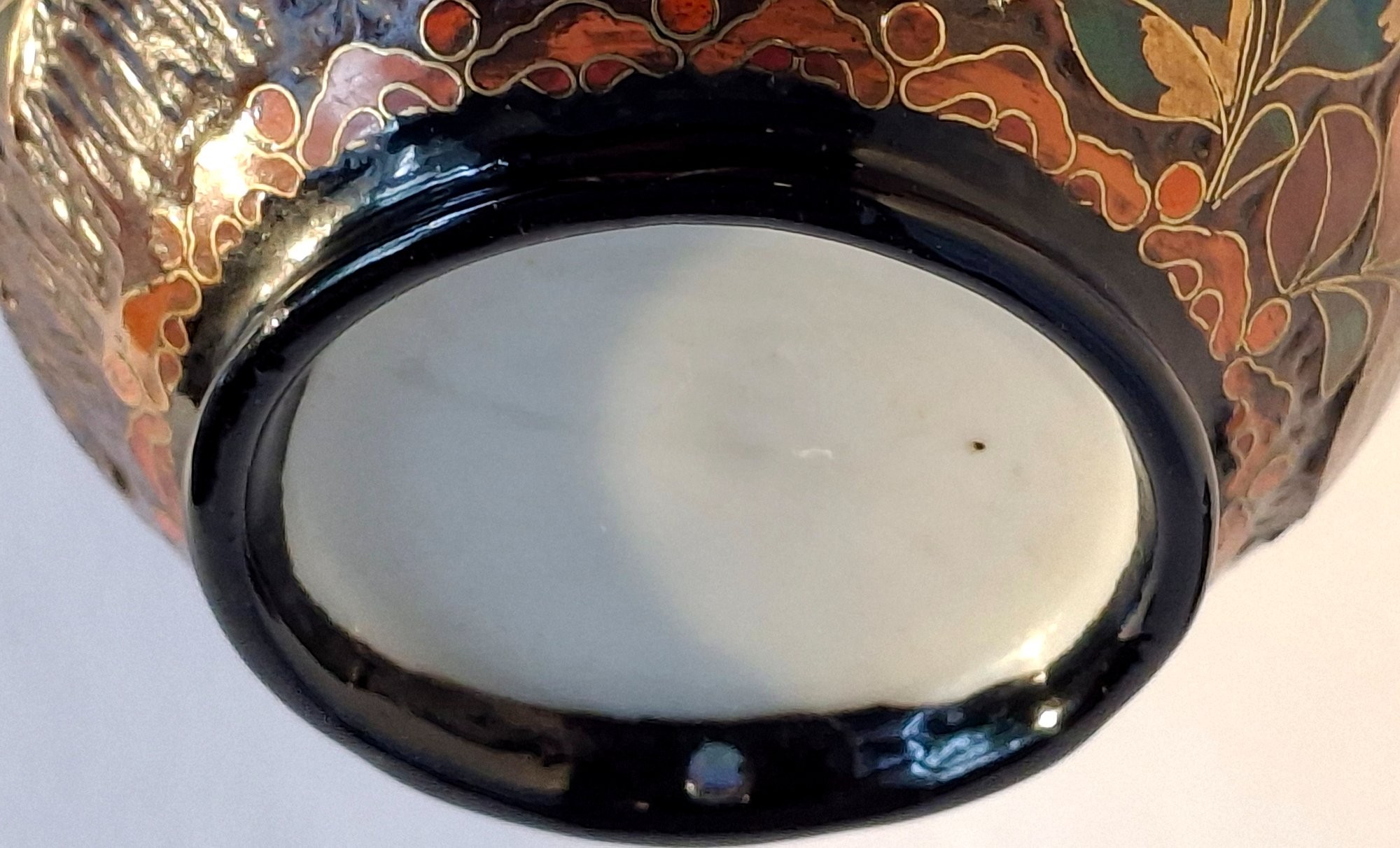
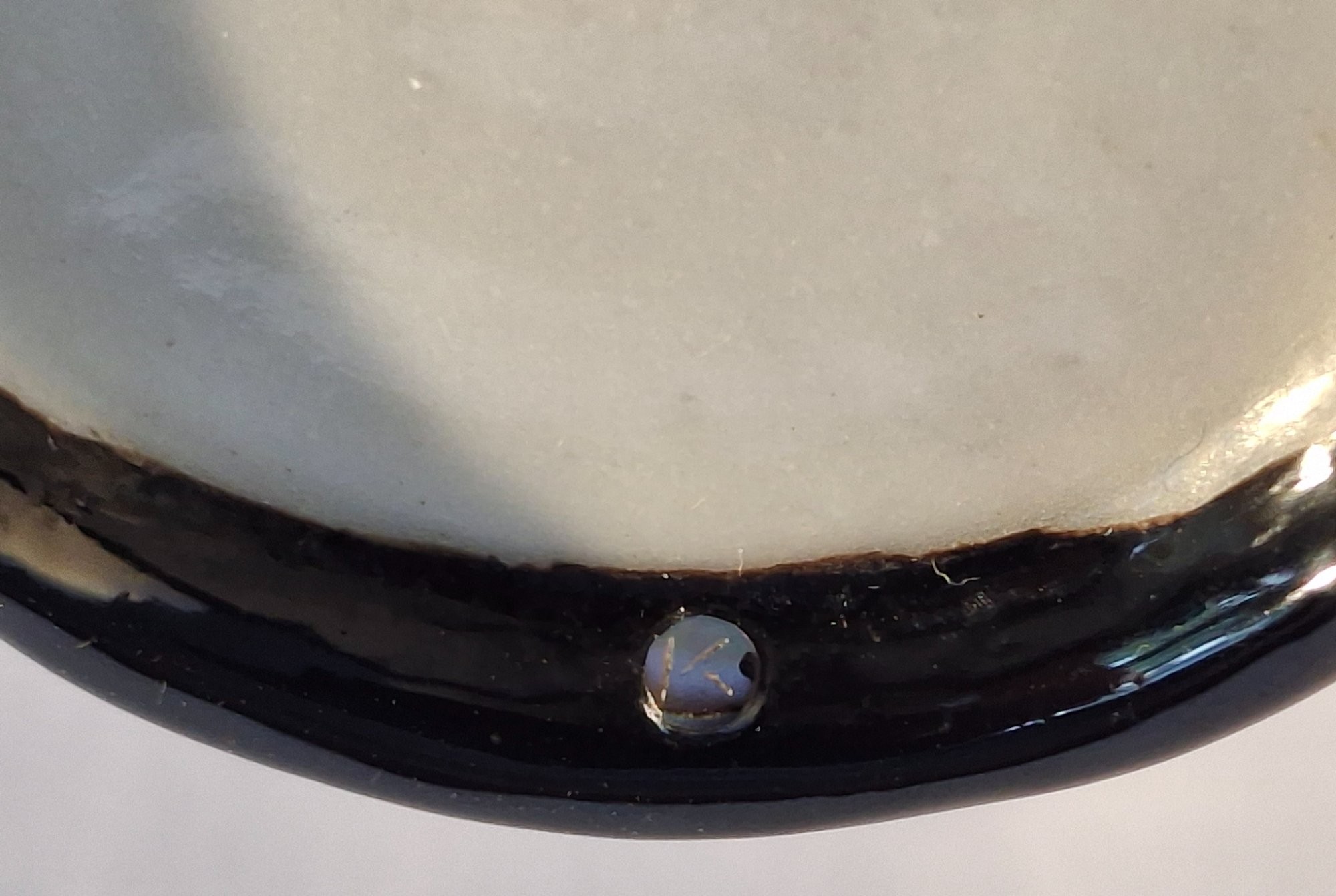
Condition: Superb. Whilst technically Kintsugi Technique is 'conservation work' the end result is better than original. Urushi lacquer work and porcelain in excellent condition. A micro-dot is affixed to the base, inscribed 'K', notably by the talented artist KintsugiWabiSabi.
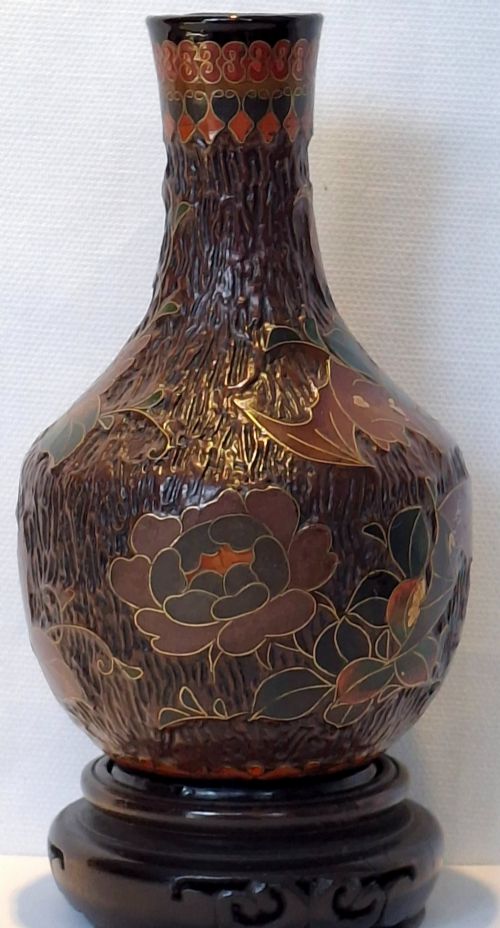
[Display stand not included].

Height = 12 cm

Diameter (widest point) = 7 cm

*Kintsugi and Wabi-sabi represent a Japanese philosophy focused on embracing flaws and finding beauty in imperfection, aging, and transience. Kintsugi ("golden joinery") is the art of repairing broken pottery with lacquer mixed with gold, highlighting repairs rather than hiding them, while Wabi-sabi appreciates the aesthetic of the weathered and imperfect.
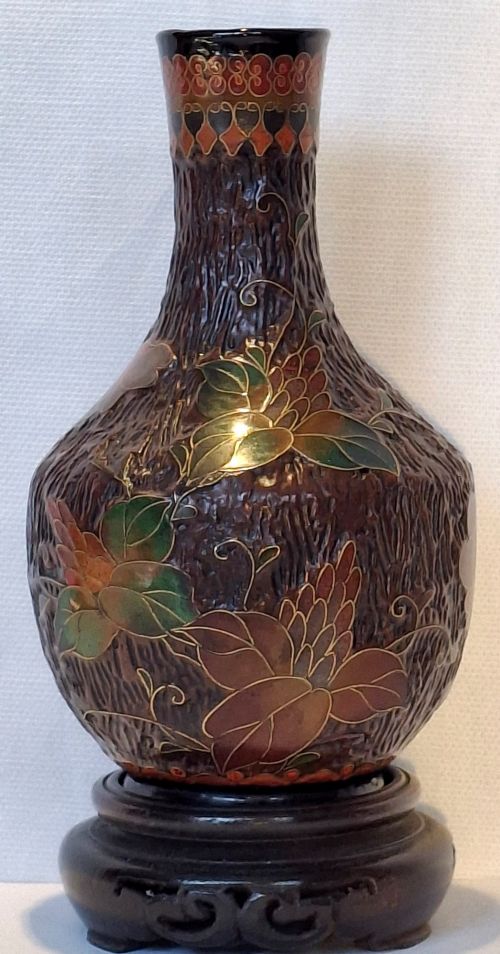
Kintsugi (Golden Joinery): A ~600-year-old technique where broken ceramics are mended with precious metals (gold, silver, platinum). It turns fractured items into unique pieces of art, celebrating their history and resilience rather than discarding them. Wabi-Sabi (Imperfection Aesthetics): A world view centered on finding beauty in natural imperfection (Wabi) and the charm of age (Sabi). It appreciates the simple, natural, and transient. Philosophy: This combination teaches that damage or imperfections are not flaws to be hidden, but part of an object's or person’s story, adding to its value and beauty.
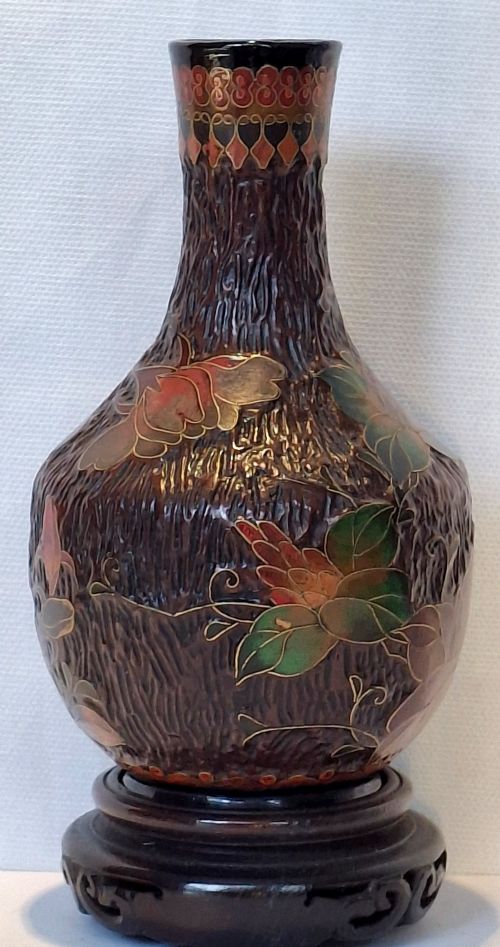
**Totai shippo, meaning "body cloisonné," is a Japanese ceramic technique where urushi lacquer cloisonne decoration is applied to a ceramic or porcelain base. This difficult technique was developed around 1868 by Sukamoto Kaisuke. Totai shippo or “Tree-bark” cloisonne is relatively fragile due to the delicate multi-layering and surfacing technique.

Date of Manufacture

Dragoncharger Antiques has dated this Japanese Totai Shippo Vase to the 1890s.

Physical Dimensions
Height
12cm (4.72")
Width
7cm (2.76")
Depth
7cm (2.76")
Reference Numbers
Sellingantiques Reference
SA1210553
Dealers Internal Reference
D:06027
Description
Fine Japanese Totai Shippo Vase. Cloisonne Tree Bark: Kintsugi Technique. Bat. Circa 1890.

The creativity and artwork is superlative, and of the highest artisan quality. Finely rendered in the Totai Shippo technique on porcelain. Vase superbly decorated with Bats, flowers and fruiting foliage. The cloisonne and lacquer work is superlative with attention to detail, colour and precision. The brightness is significantly enhanced by the Kintsugi gold work.

An extremely difficult process with superb workmanship, rich colours and beautiful contrast.

“
Porcelain vessel with the finest of Cloisonné work incorporating Traditional Japanese Urushi Lacquer, supplemented by the finest Kintsugi Techniques.
Dragoncharger Antiques
fig 1. A dark brown Meiji period Japanese Totai Shippo ceramic vase displaying a textured tree bark surface decorated with cloisonne enamel bats and floral patterns.
fig 1. Fine Japanese Totai Shippo Vase. Cloisonne Tree Bark: Kintsugi Technique. Bat. Circa 1890.

Condition: Superb. Whilst technically Kintsugi Technique is 'conservation work' the end result is better than original. Urushi lacquer work and porcelain in excellent condition. A micro-dot is affixed to the base, inscribed 'K', notably by the talented artist KintsugiWabiSabi.

fig 2. A dark brown Meiji period Japanese Totai Shippo ceramic vase displaying a textured tree bark surface decorated with cloisonne enamel bats and floral patterns.
fig 2. Fine Japanese Totai Shippo Vase. Cloisonne Tree Bark: Kintsugi Technique. Bat. Circa 1890.

[Display stand not included].

Height = 12 cm

Diameter (widest point) = 7 cm

Kintsugi and Wabi-sabi represent a Japanese philosophy focused on embracing flaws and finding beauty in imperfection, aging, and transience. Kintsugi ("golden joinery") is the art of repairing broken pottery with lacquer mixed with gold, highlighting repairs rather than hiding them, while Wabi-sabi appreciates the aesthetic of the weathered and imperfect.

fig 3. A dark brown Meiji period Japanese Totai Shippo ceramic vase displaying a textured tree bark surface decorated with cloisonne enamel bats and floral patterns.
fig 3. Fine Japanese Totai Shippo Vase. Cloisonne Tree Bark: Kintsugi Technique. Bat. Circa 1890.

Kintsugi (Golden Joinery): A ~600-year-old technique where broken ceramics are mended with precious metals (gold, silver, platinum). It turns fractured items into unique pieces of art, celebrating their history and resilience rather than discarding them. Wabi-Sabi (Imperfection Aesthetics): A world view centered on finding beauty in natural imperfection (Wabi) and the charm of age (Sabi). It appreciates the simple, natural, and transient. Philosophy: This combination teaches that damage or imperfections are not flaws to be hidden, but part of an object's or person’s story, adding to its value and beauty.

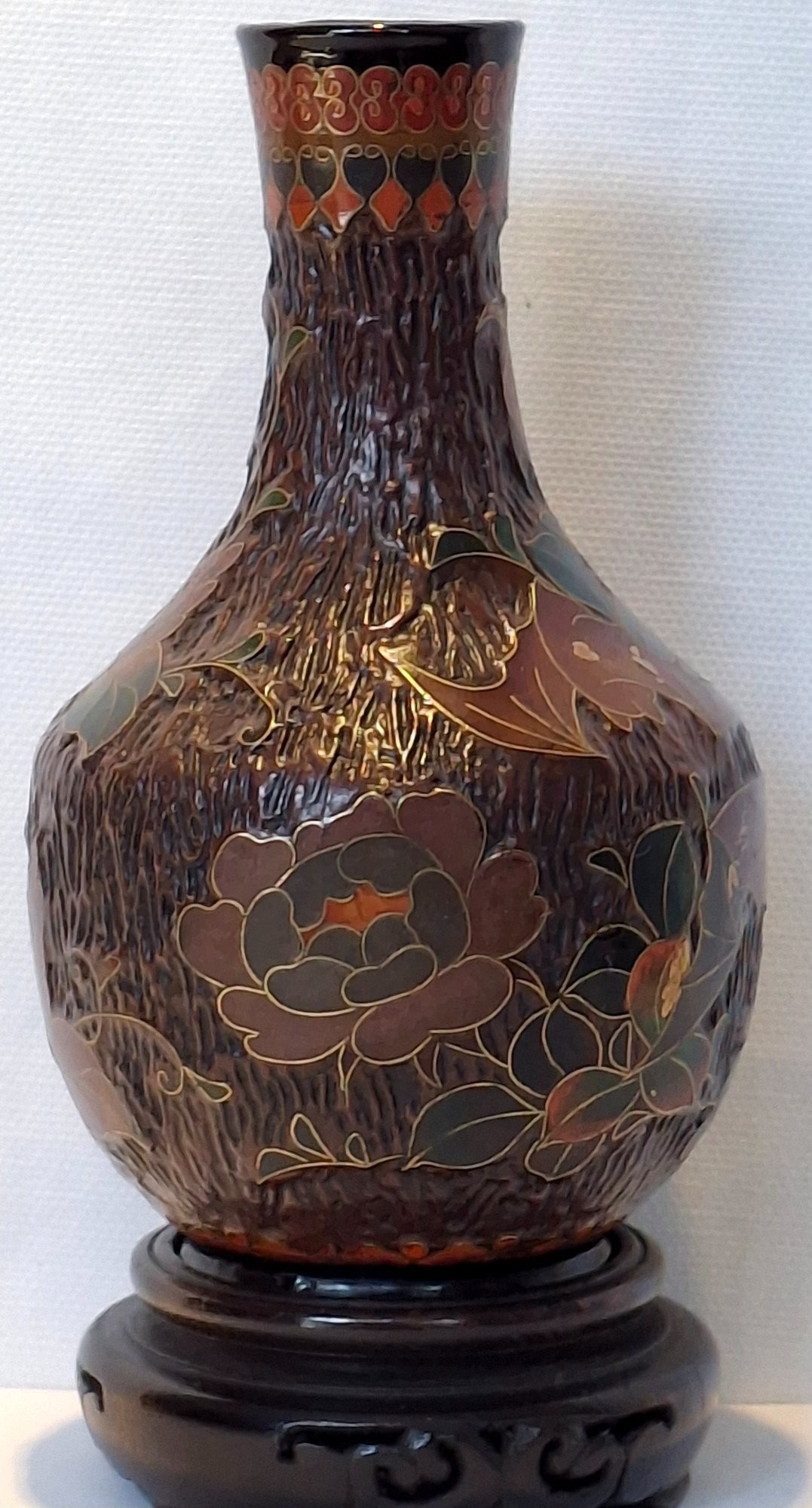
fig 4. A dark brown Meiji period Japanese Totai Shippo ceramic vase displaying a textured tree bark surface decorated with cloisonne enamel bats and floral patterns.
fig 4. Fine Japanese Totai Shippo Vase. Cloisonne Tree Bark: Kintsugi Technique. Bat. Circa 1890.

Totai shippo, meaning "body cloisonné," is a Japanese ceramic technique where urushi lacquer cloisonne decoration is applied to a ceramic or porcelain base. This difficult technique was developed around 1868 by Sukamoto Kaisuke. Totai shippo or “Tree-bark” cloisonne is relatively fragile due to the delicate multi-layering and surfacing technique.

Date of Manufacture

Dragoncharger Antiques has dated this Japanese Totai Shippo Vase to the 1890s.

Height
12cm (4.72")
Width
7cm (2.76")
Depth
7cm (2.76")
Reference Numbers
Sellingantiques Ref
SA1210553
Dealers Internal Ref
D:06027
Dragoncharger Antiques
Sellingantiques verified Since Aug 2024

Specialising in early japanese cloisonne, edo enamel artisan period.

Dealer Profile

You can view the stock and full dealer information on the Dragoncharger Antiques Profile Page
PDF SHARE
SAVE
A dark brown Meiji period Japanese Totai Shippo ceramic vase displaying a textured tree bark surface decorated with cloisonne enamel bats and floral patterns.
1 / 15
Archive I A dark brown Meiji period Japanese Totai Shippo ceramic vase displaying a textured tree bark surface decorated with cloisonne enamel bats and floral patterns.

Fine Japanese Totai Shippo Vase. Cloisonne Tree Bark: Kintsugi Technique. Bat. Circa 1890.
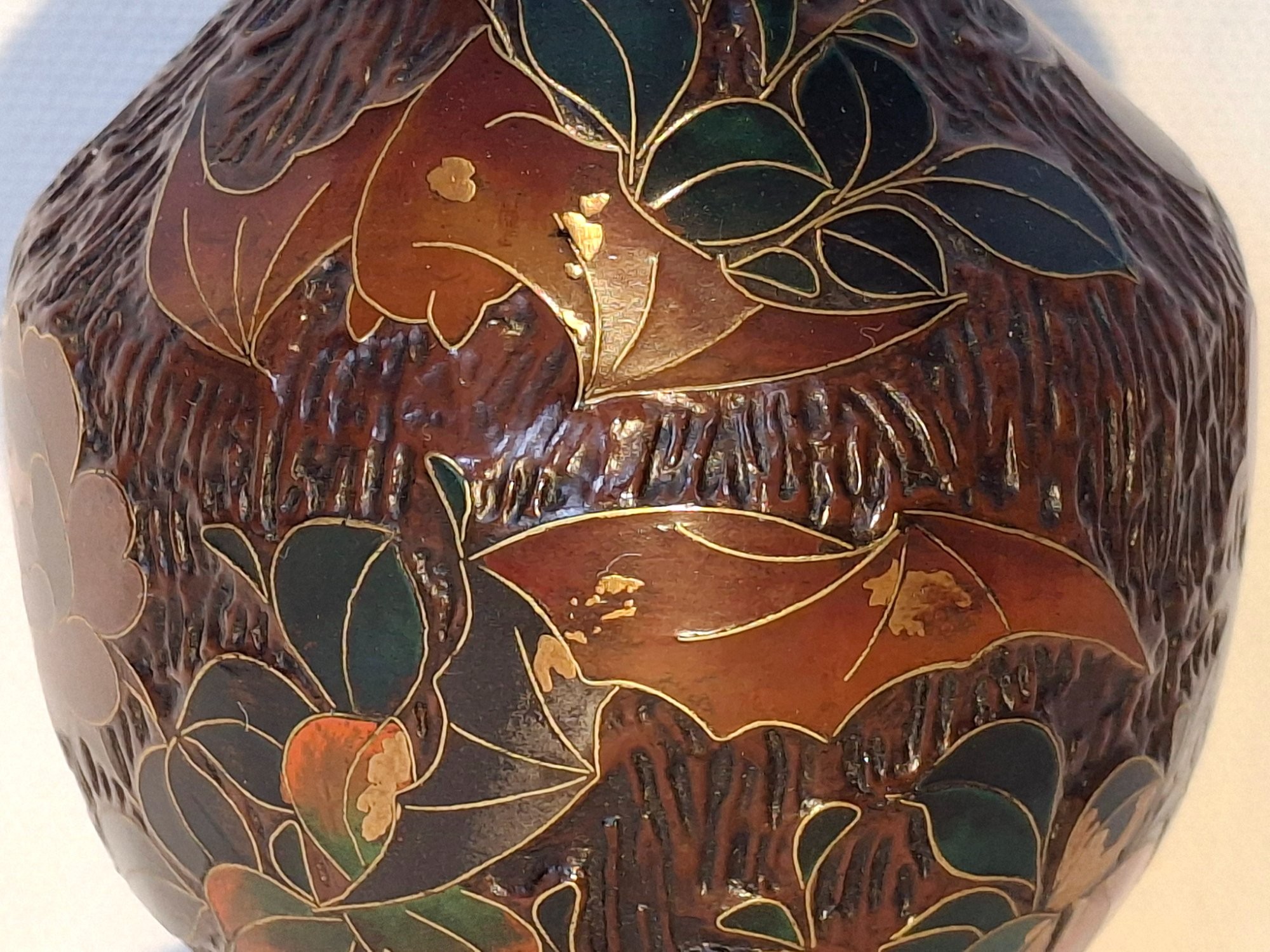
Archive II A dark brown Meiji period Japanese Totai Shippo ceramic vase displaying a textured tree bark surface decorated with cloisonne enamel bats and floral patterns. View II
Archive III A dark brown Meiji period Japanese Totai Shippo ceramic vase displaying a textured tree bark surface decorated with cloisonne enamel bats and floral patterns. View III
Archive IV A dark brown Meiji period Japanese Totai Shippo ceramic vase displaying a textured tree bark surface decorated with cloisonne enamel bats and floral patterns. View IV
Archive V A dark brown Meiji period Japanese Totai Shippo ceramic vase displaying a textured tree bark surface decorated with cloisonne enamel bats and floral patterns. View V
Archive VI A dark brown Meiji period Japanese Totai Shippo ceramic vase displaying a textured tree bark surface decorated with cloisonne enamel bats and floral patterns. View VI
Archive VII A dark brown Meiji period Japanese Totai Shippo ceramic vase displaying a textured tree bark surface decorated with cloisonne enamel bats and floral patterns. View VII
Archive VIII A dark brown Meiji period Japanese Totai Shippo ceramic vase displaying a textured tree bark surface decorated with cloisonne enamel bats and floral patterns. View VIII
Archive IX A dark brown Meiji period Japanese Totai Shippo ceramic vase displaying a textured tree bark surface decorated with cloisonne enamel bats and floral patterns. View IX
Archive X A dark brown Meiji period Japanese Totai Shippo ceramic vase displaying a textured tree bark surface decorated with cloisonne enamel bats and floral patterns. View X
Archive XI A dark brown Meiji period Japanese Totai Shippo ceramic vase displaying a textured tree bark surface decorated with cloisonne enamel bats and floral patterns. View XI
Archive XII A dark brown Meiji period Japanese Totai Shippo ceramic vase displaying a textured tree bark surface decorated with cloisonne enamel bats and floral patterns. View XII
Archive XIII A dark brown Meiji period Japanese Totai Shippo ceramic vase displaying a textured tree bark surface decorated with cloisonne enamel bats and floral patterns. View XIII
Archive XIV A dark brown Meiji period Japanese Totai Shippo ceramic vase displaying a textured tree bark surface decorated with cloisonne enamel bats and floral patterns. View XIV
Archive XV A dark brown Meiji period Japanese Totai Shippo ceramic vase displaying a textured tree bark surface decorated with cloisonne enamel bats and floral patterns. View XV
Enlarged Archival View
Telephone 07974 144321
Location
Bristol
United Kingdom
Verified Since Aug 2024
Items For Sale 175
Items Sold 20
Dragoncharger Antiques
Verified Since Aug 2024
View Dealer Info
Location: Bristol, United Kingdom
Verified
Aug 2024
For Sale
175
Sold
20
A dark brown Meiji period Japanese Totai Shippo ceramic vase displaying a textured tree bark surface decorated with cloisonne enamel bats and floral patterns.
Fine Japanese Totai Shippo Vase. Cloisonne Tree Bark: Kintsugi Technique. Bat. Circa 1890.
Ref: SA1210553
A dark brown Meiji period Japanese Totai Shippo ceramic vase displaying a textured tree bark surface decorated with cloisonne enamel bats and floral patterns.
Detail View 1
Detail View 2
Detail View 3
Detail View 4
Detail View 5
Detail View 6
Detail View 7
Detail View 8
Detail View 9
Detail View 10
Detail View 11
Detail View 12
Detail View 13
Detail View 14
Archival Detail
Every single antique dealer on our platform is individually approved by our internal team. We verify their professional trade history, ethical standards, and photographic quality to ensure a secure, high-standard buying environment. Upon joining, every dealer agrees to a strict 9-point code of conduct. While issues can occasionally arise, our dealers typically resolve them swiftly and directly with the buyer. In fact, since our founding in 2002, Sellingantiques has only had to step in to help resolve an issue on roughly five occasions—a true testament to the quality of our dealers and their dedication to your happiness.
Our dealers are highly experienced in packing and shipping fragile, high-value antiques. Because you are in direct contact with the dealer, you will be able to easily go through all available shipping and insurance options together to ensure your item arrives safely.
Antiques are the ultimate green purchase. By choosing historical pieces over newly manufactured goods, you completely eliminate the carbon footprint of modern mass production while preserving exceptional, timeless craftsmanship.
Written by Sellingantiques from the dealer’s photographs and listing
  • ObjectDecorative Vases
  • Period19th century
  • StyleMeiji Period
  • MaterialCeramic, Enamel, Brass Wire
  • ColourDark Brown
  • MotifsTree bark texture, Bat motifs, Floral foliage, Geometric collar border
  • SizeH 12 cm (5 in) x W 7 cm (3 in) x D 7 cm (3 in)

This Japanese Totai Shippo vase dates from the Meiji period around 1890. Created from porcelain with a dark brown finish, the vessel employs a cloisonné and lacquer technique that forms a textured tree-bark surface. The body displays elaborate brass wire decoration depicting bats, floral foliage, and fruiting elements, while the neck features a geometric collar border in tones of red, orange, and black. Kintsugi gold work and Urushi lacquer complete the exterior, resting on a dark turned wooden display base. A micro-dot bearing the letter ‘K’ is fixed to the base. Measuring 12 cm high, 7 cm wide, and 7 cm deep, the object suits placement in a gentleman’s library or on a mantelpiece as an ornamental display piece.

Totai Shippo is a specialised technique developed in Japan during the Meiji period where cloisonne enamel decoration is applied to a ceramic or porcelain vessel rather than a metal body, frequently featuring a textured ground simulating tree bark.

These vessels consist of a ceramic or porcelain core, brass wires soldered or glued to form design cells, and coloured vitreous enamels, finished with a textured resin or lacquer coating that replicates natural bark.

Authentic pieces display a distinct contrast between exposed textured brown grounds and raised wirework enamel sections, along with a heavy earthenware or porcelain base and characteristic Meiji motif selections.

Place the vase as a singular focal point on a mantelpiece, console, or within a dark wood bookshelf, pairing it with clean minimalist decor or rich traditional furniture to highlight its detailed surface texture.

Dust regularly using a dry, soft-bristled microfibre brush, avoiding water immersion or chemical cleaning agents which can damage the organic lacquer coatings and metal wirework.
items
Add keywords to the filter
Price
£100
£250000
Era
Period
Style
Material
Origin
Stock Location
Recently Added
Online Payments
Categories