


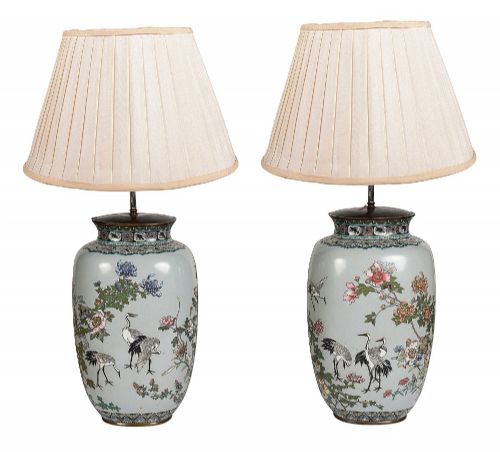
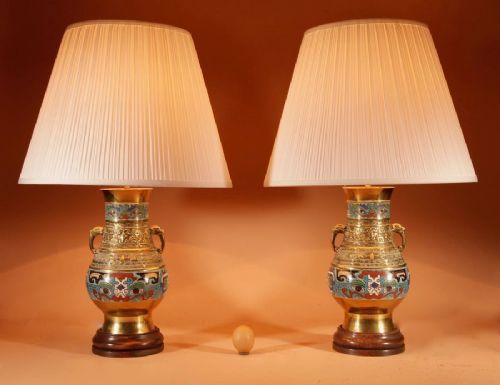


Japanese Cloisonne Pair
These japanese cloisonne pair pieces are matching works of metalwork artistry, prized for their intricate wirework and vibrant enamel panels.
Japanese Cloisonne Pair
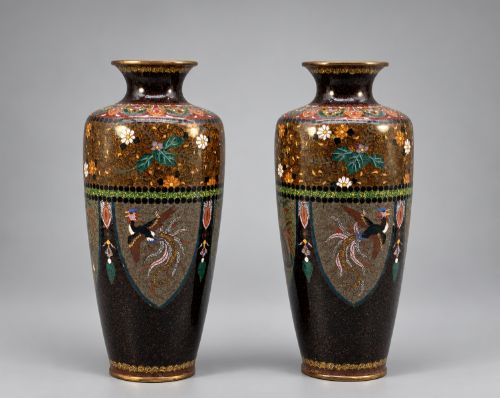
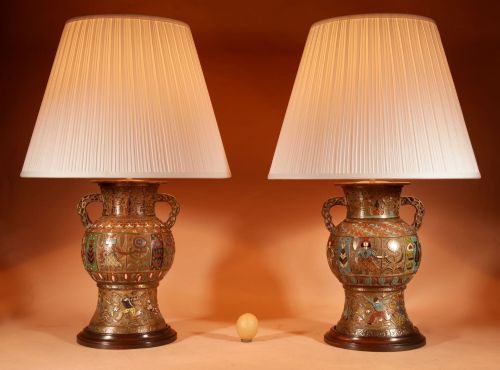
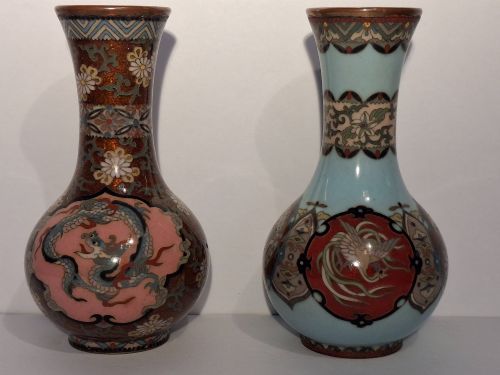
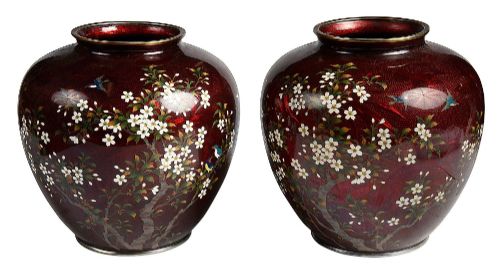
A japanese cloisonne pair consists of matching decorative vessels or plates created in tandem, most frequently taking the form of vases, lidded ginger jars, chargers, and table lamps. These matched sets span multiple decades from the late Edo period through the Meiji period and into the early twentieth century.
Buyers encounter miniatures alongside large palace vases, with Meiji period examples appearing most often. The forms incorporate motifs such as phoenixes, dragons, birds, and floral arrangements across the matched surfaces.
Materials and construction methods
Craftsmen built these pieces using a base of copper, brass, bronze, or porcelain, applying thin metal wires to form compartments known as cloisons. These wire outlines created distinct cells which were subsequently filled with coloured enamel pastes.
Makers fired the pieces multiple times to fuse the enamel before grinding and polishing the surface to a smooth finish. Silver foil and specialised techniques such as Totai Shippo were also utilised to achieve textured effects like tree bark.
Japanese Cloisonne Pair Retail Price Guide 2026
Typical asking prices for japanese cloisonne pair among the pieces listed under this phrase on Sellingantiques today, from the lower quarter to the upper quarter. They describe what is for sale here now, not the wider market.
Some adventurous pairs masquerade quietly as modern lighting until someone spots the tiny dragons winding up the lamp stem.
Assessing quality in matched sets
The precision of the wirework dictates much of the visual standard, with finer lines and complex symmetry separating superior examples from standard production. The clarity of the enamel colours and the smoothness of the final polished surface further indicate the maker's skill.
Completeness within the pair matters greatly, as does the uniformity of the design across both items. Pieces bearing signatures from known makers or utilising challenging techniques like Totai Shippo represent the higher tier of production.
Tsukamoto Hikokichi
The Japanese Cloisonne Pair Glossary
- Cloisonne Enamel
- A metalwork technique where thin wires are soldered to a base to form cells filled with enamel paste. This method creates detailed patterns defined by thin metal lines.
- Totai Shippo
- A technique involving enamel applied over a porcelain or earthenware body rather than a standard metal base. It often mimics natural textures such as tree bark.
- Champleve
- An enamelling technique where troughs or cavities are carved directly into the metal plate to hold the enamel. This method contrasts with applied wire cells.
- Meiji Period
- The era in Japanese history spanning from 1868 to 1912, noted for significant developments in decorative arts and international exports. Much of the surviving metalwork originates from this time.
- Charger
- A large decorative plate or dish intended for display on a wall or table rather than for dining. These items frequently feature elaborate pictorial motifs.
Japanese Cloisonne Pair: Frequently Asked Questions
What are japanese cloisonne pair objects?
These items are matching sets of decorative vessels or plates created using metal wire and coloured enamel. They include matched vases, jars, and chargers designed to be displayed together.
Most examples date from the nineteenth and early twentieth centuries, reflecting traditional Japanese artistic motifs and metalwork techniques.
How were these pairs used?
Matched sets served as ornamental pieces in domestic interiors, placed on mantelpieces, tables, or displayed on walls. Large chargers and palace vases were intended to create focal points in a room.
Some examples were later adapted into table lamps while retaining their original enamel bodies and decorative schemes.
How do I care for my pieces?
Maintain the enamel and metal surfaces by dusting gently with a soft, dry cloth. Avoid harsh cleaning agents or abrasive materials that could scratch the polished finish.
Keep the items away from direct sunlight and excessive moisture to protect the metal base and coloured enamel work over time.
How can I tell the period?
Dating relies on stylistic clues, the weight of the metal base, and the characteristics of the wirework. Edo period examples often show distinct colour palettes compared to later Meiji productions.
Signatures or stamps on the base can occasionally provide further context regarding the workshop or approximate era of manufacture.