




Vintage Cloisonne Vessel
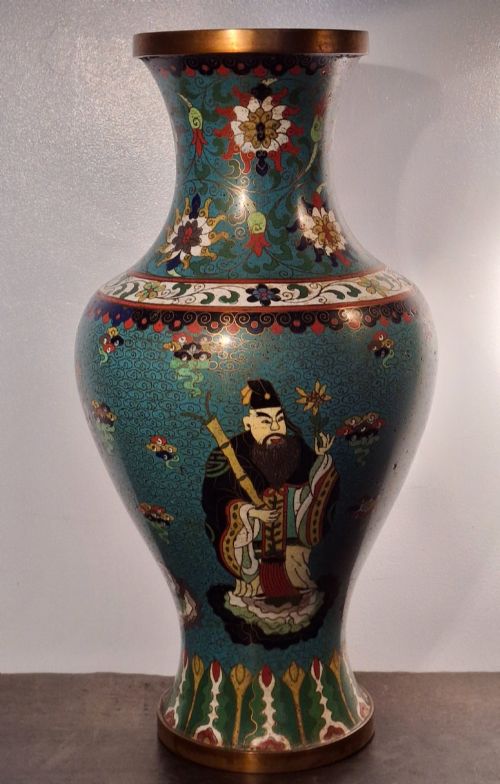
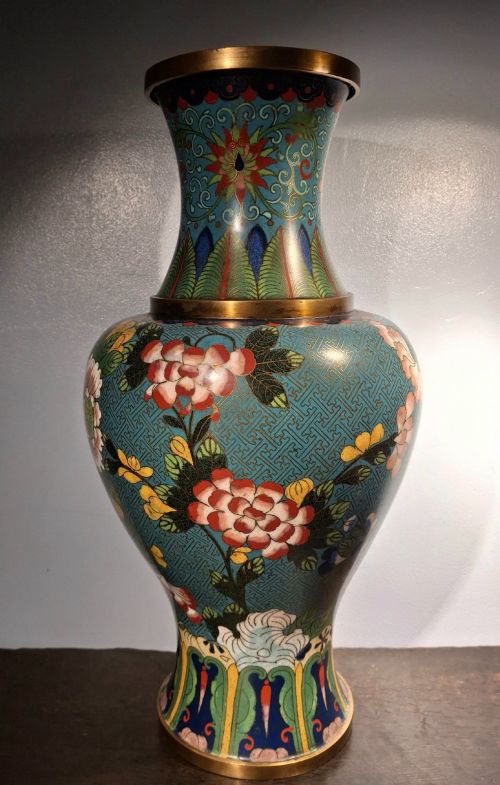
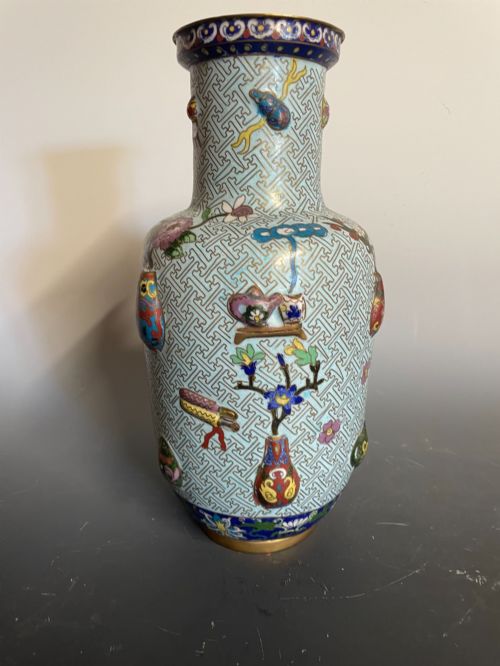
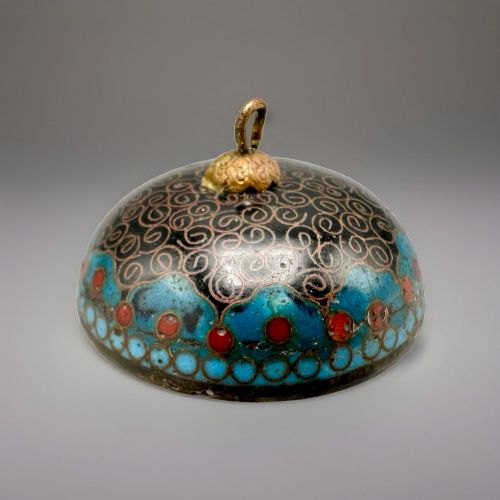
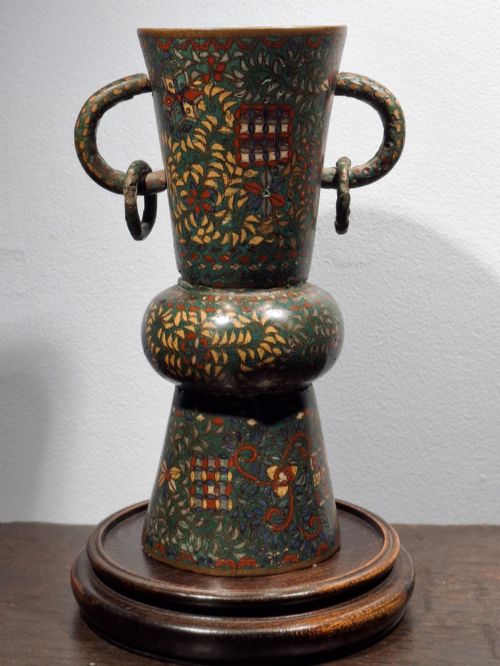
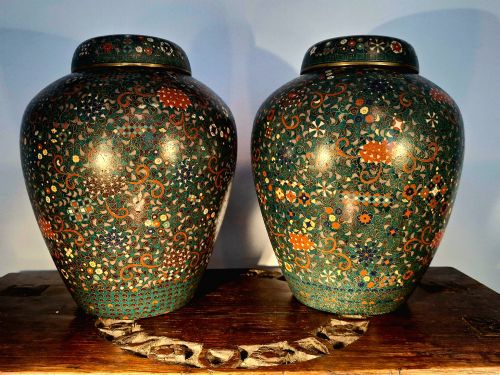
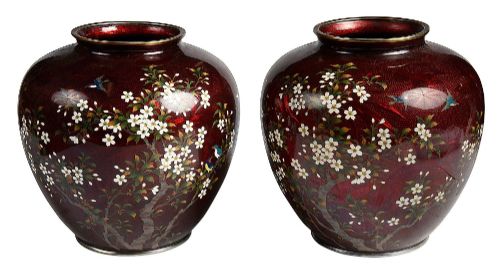
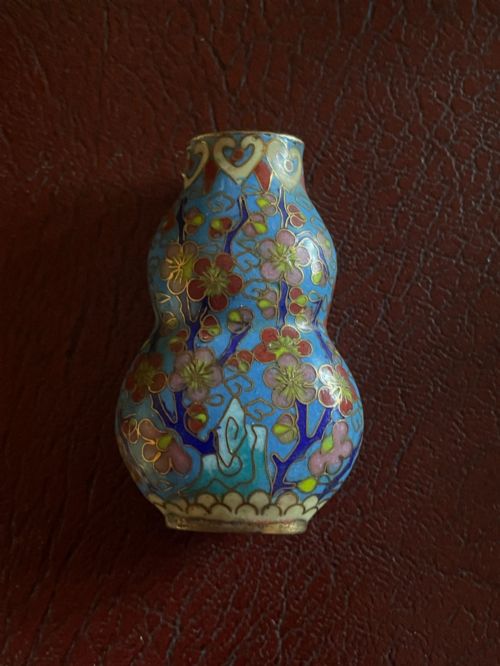
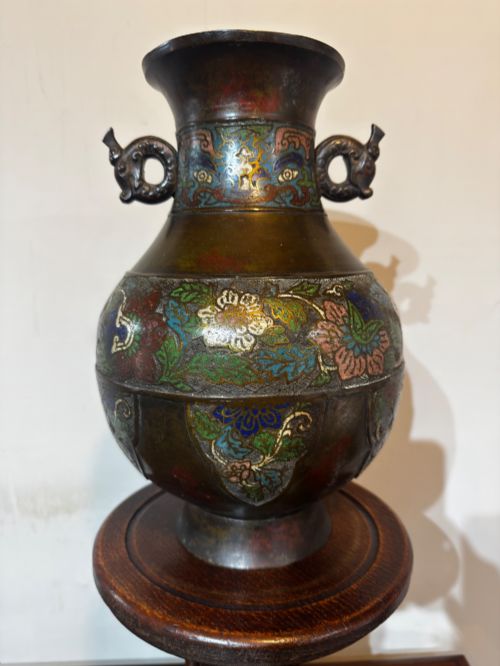
These vintage cloisonne vessel pieces bring together wirework and coloured enamel across vases, ginger jars and jardinieres from Chinese and Japanese workshops.
Vintage Cloisonne Vessel
A vintage cloisonne vessel covers decorative jars, vases, bowls, ashtrays and incense burners produced in Chinese and Japanese workshops during the nineteenth and twentieth centuries. These pieces encompass items styled during the Qing Dynasty, late Qing, Meiji Period, Taisho Period, and Showa Period, showing considerable variation in scale from miniature ritual items to large jardinieres and table lamps.
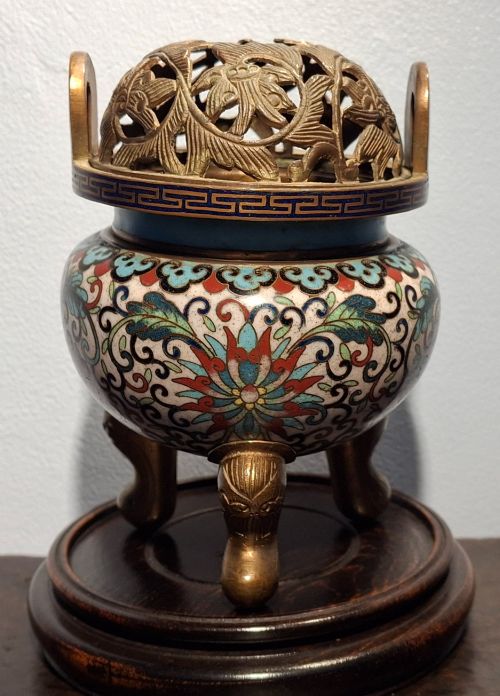
The selection on this page centres on items formed from copper, bronze, brass or gilt metal, decorated with enamels divided by fine metal wires. Buyers encounter forms ranging from ginger jars with lids to tripod censors and stem cups, reflecting export markets and domestic ritual uses across East Asia.
How they were made
Metal formers shape copper, bronze or brass to create the body of the vessel, onto which thin flat metal wires are soldered to outline the decorative motifs such as flowers, birds, scholars or dragons. These wire cells, known as cloisons, receive coloured vitreous enamels paste before the entire piece undergoes firing in a kiln.
After firing, the surface undergoes grinding and polishing until the metal wire rims and the cooled enamel sit in a smooth plane. Additional gilding or silvering is sometimes applied to exposed metal elements like rims and bases, completing the manufacture of the vessel.
Vintage Cloisonne Vessel Retail Price Guide 2026
Typical asking prices for vintage cloisonne vessel among the pieces listed under this phrase on Sellingantiques today, from the lower quarter to the upper quarter. They describe what is for sale here now, not the wider market.
Listings feature copper, bronze and brass foundations spanning the nineteenth and twentieth centuries.
What varies in quality
The precision and fineness of the wirework dictate the complexity of the design, with closely spaced cloisons demonstrating greater technical skill than broad, simple cell layouts. Uniformity in the polish of the enamel surface and the absence of pitting or deep bubbles indicate superior workshop execution.
The weight of the bronze or copper foundation and the richness of the metal alloys used for the body and wire contribute to the perceived substance of the piece. Subtlety in the colour palette and clarity in pictorial details like feathers, foliage or dragon scales separate standard production items from finer studio works.
Tamura Yukio
The Vintage Cloisonne Vessel Glossary
- Cloisonne Enamel
- A metalwork technique where fine wires form raised cells on a vessel body to hold coloured vitreous pastes before firing. The resulting surface displays intricate patterns bounded by thin metal lines.
- Champleve Enamel
- A technique where troughs or cavities are cast or carved directly into a bronze or copper body to receive enamel paste. This differs from cloisonne by omitting applied surface wires.
- Ginbari
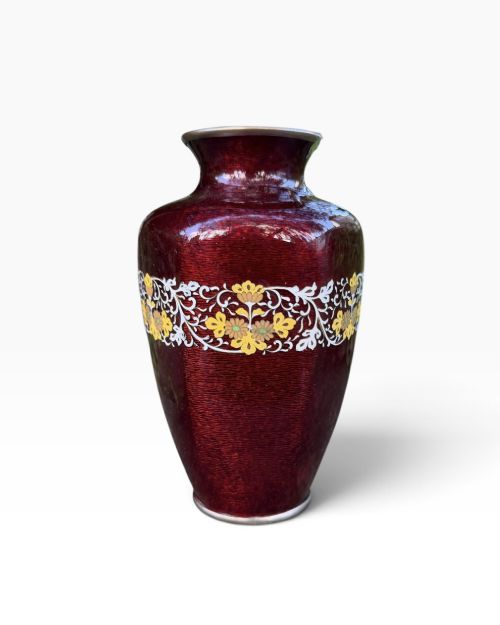
- A Japanese enamelling method featuring a textured or patterned foil applied beneath translucent enamel to create shimmering depth. This process creates a reflective ground visible through the coloured glass layer.
- Jardiniere
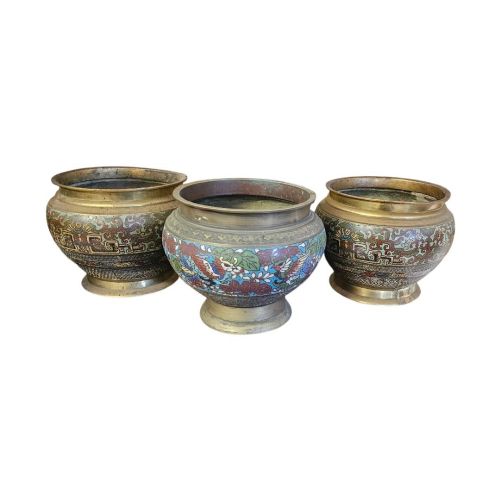
- A large decorative pot or bowl designed to hold plants or floral arrangements. These heavy vessels often feature bronze or brass foundations with dense enamel decoration.
- Censor
- A ritual vessel designed for burning incense, typically supported by three feet and fitted with a pierced cover. These objects reflect traditional ceremonial uses in East Asian settings.
Vintage Cloisonne Vessel: Frequently Asked Questions
How do I clean vintage cloisonne?
Dust gently with a soft dry cloth to protect the delicate metal wires and enamel surfaces from moisture damage.
Avoid liquid cleaners, immersion, or abrasive cloths that can tarnish exposed brass or copper elements.
Are these pieces Chinese or Japanese?
The listings include examples originating from both Chinese dynasties and Japanese historical periods like the Meiji and Showa eras.
Distinguishing between them relies on stylistic motifs, such as specific floral layouts, bird renderings, and metal alloy choices.
What is the difference between cloisonne and champleve?
Cloisonne uses soldered wire partitions on the metal surface to create bounded compartments for the coloured enamel paste.
Champleve involves carving or casting hollow channels directly into the bronze or copper body itself to hold the enamel.
Can these vessels hold water?
Most vintage pieces function primarily as decorative objects, scholar items, or dry storage jars rather than water-tight vases.
Placing fresh flowers inside is generally discouraged to prevent moisture from seeping into the metal seams.