
Antique Asian Censer
When you handle an antique asian censer, you hold centuries of ritual craftsmanship designed to diffuse fragrant woods through scholar studios and temple halls.
Antique Asian Censer
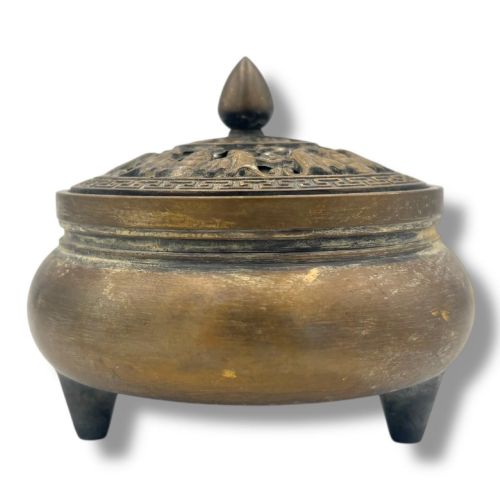
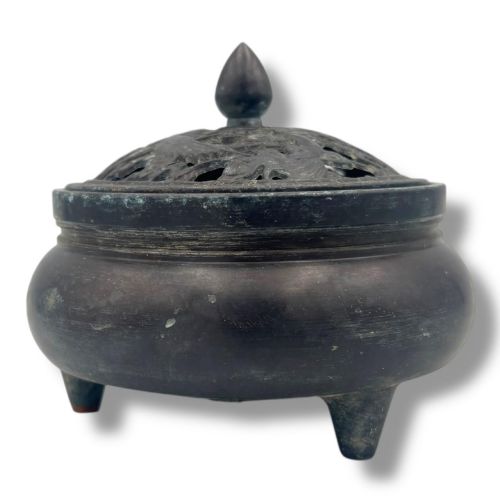
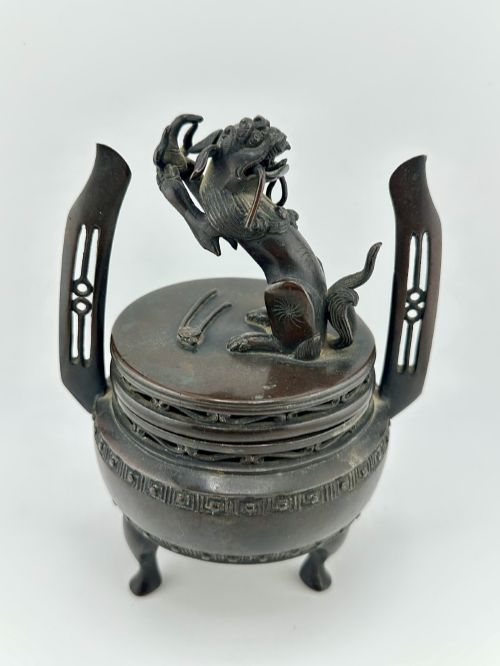
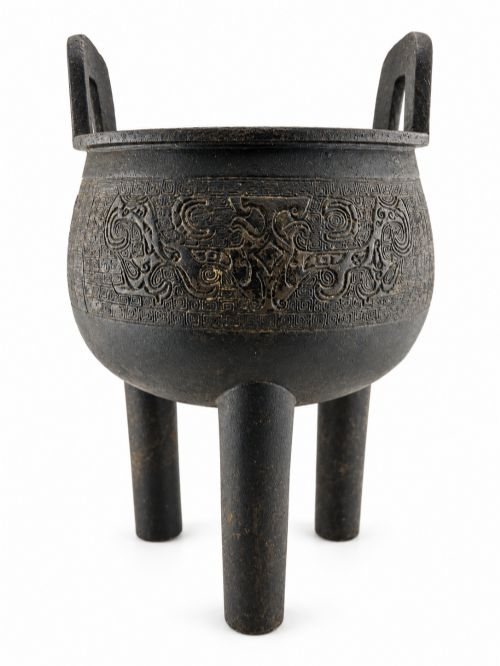
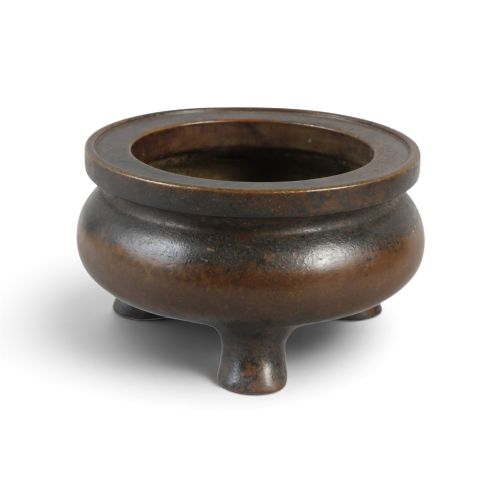
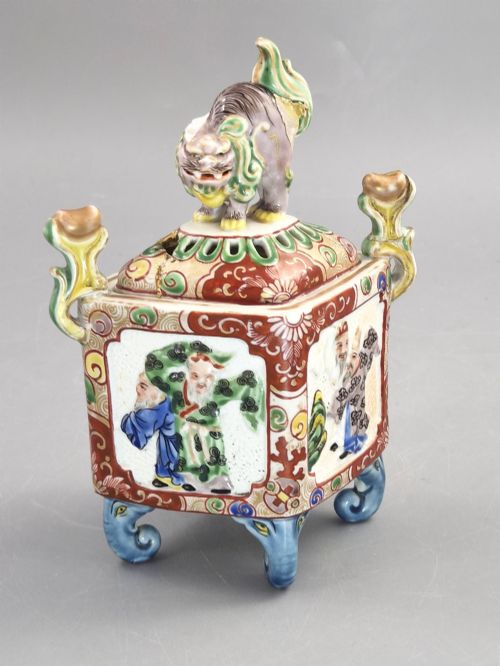
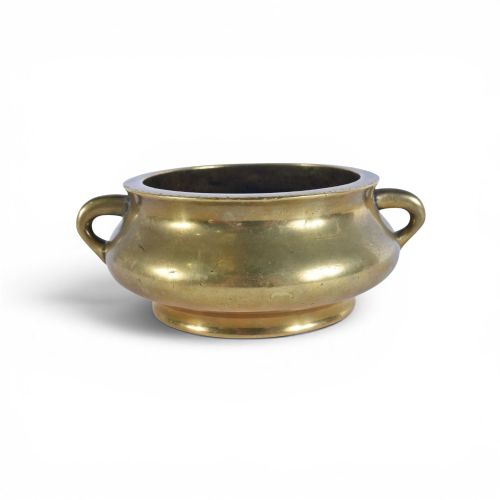
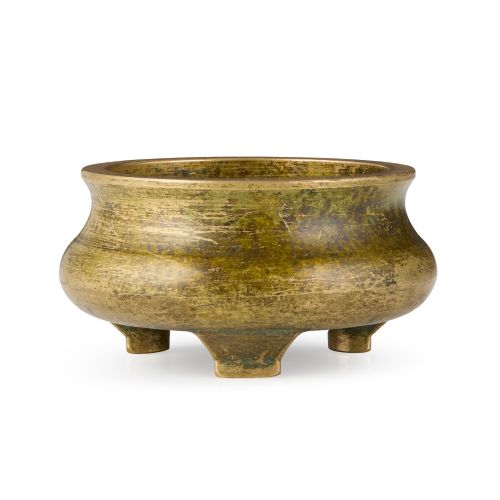
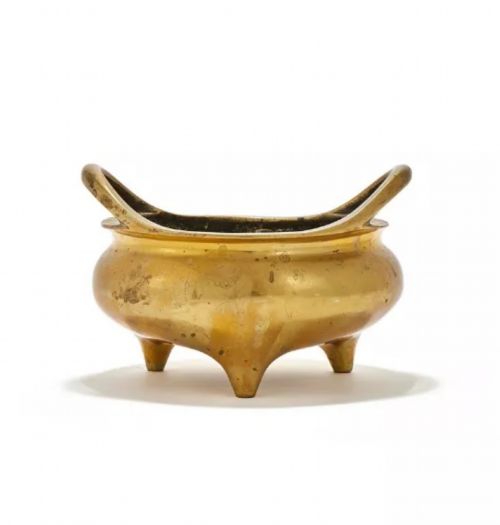
An antique asian censer serves primarily as a vessel for burning aromatic incense, taking forms such as tripod bowls, lidded urns, and rectangular vessels.
The pieces available on this page span several centuries, originating predominantly from Chinese dynasties and Japanese periods.
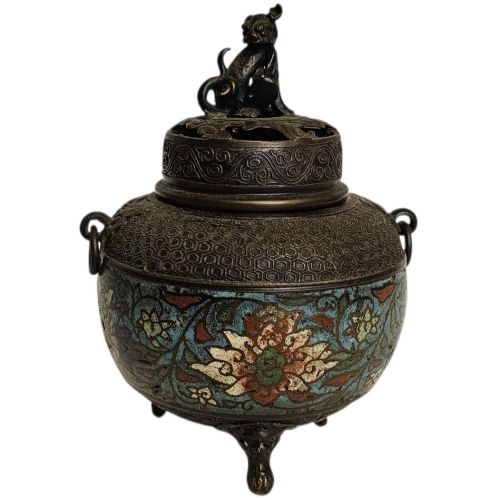
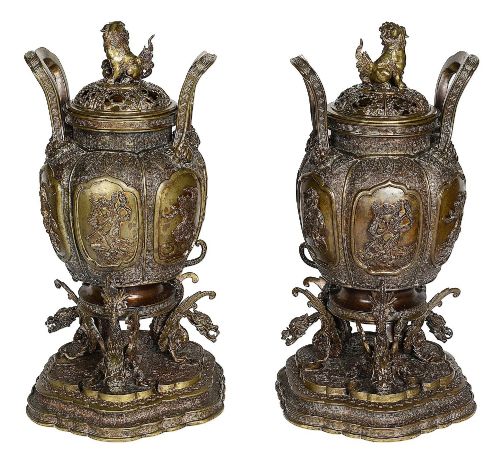
You will encounter scholar's pieces intended for quiet contemplation alongside large decorative temple vessels featuring mythical beasts and floral motifs.
How They Were Made
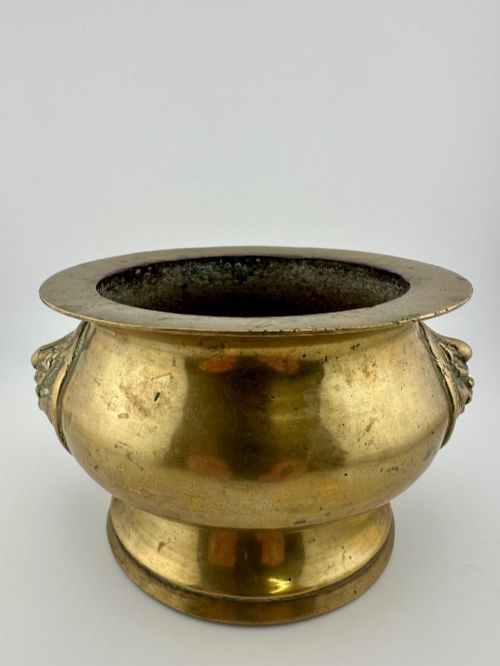
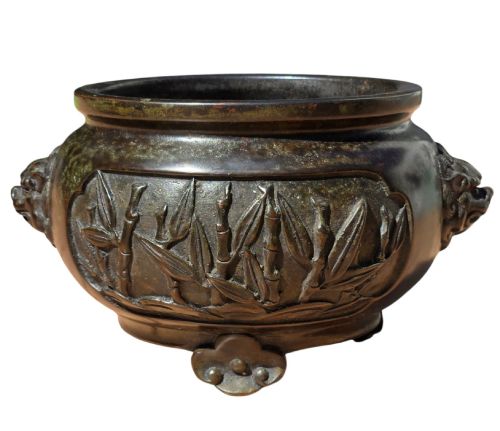
Metal vessels rely on bronze, brass, and patinated or cast metal techniques, frequently finished with applied handles shaped as lions, elephants, or dragons.
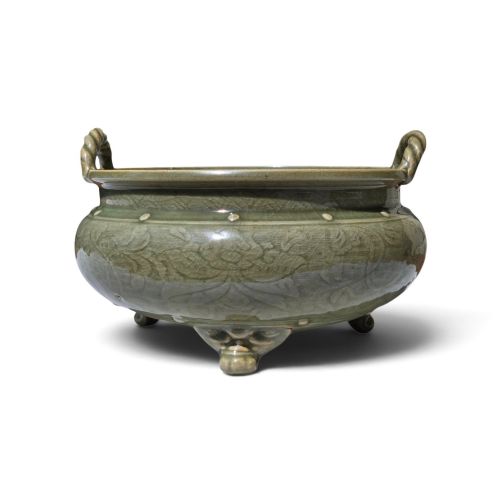
Ceramic examples utilise porcelain, earthenware, and celadon glazes, often incorporating reticulated lids and sculpted finials.
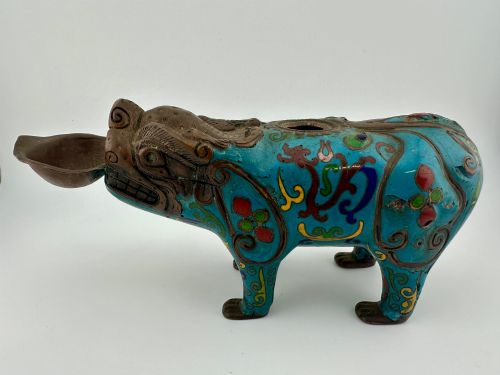
Cloisonne pieces integrate enamel wires directly onto metal surfaces to create intricate floral and geometric patterns.
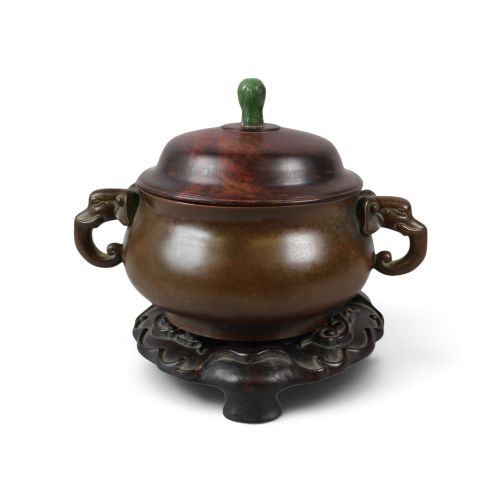
Scholar's censers frequently feature elephant-head handles, lion mask motifs, and the Three Friends of Winter relief panels.
What Varies in Quality
The density and weight of the cast metal differentiate substantial scholar pieces from lighter decorative items.
The precision of surface relief work, from Taotie masks to lotus petals, determines the artistic merit of the casting.
The clarity of reign marks and the integration of custom stands or intricate pierced lids indicate the original status of the vessel.
Wu Bangzuo·Kizan·Kotobuki do·Shizan
The Antique Asian Censer Glossary
- Censer
- A vessel used for burning incense. These containers typically feature a bowl, cover, and supporting feet.
- Koro
- The Japanese term for an incense burner. These often incorporate ceramic or bronze construction with a fitted lid.
- Cloisonne
- An enamel technique where metal wire forms compartments on a body. These cells are filled with coloured paste and fired.
- Celadon
- A type of green ceramic glaze originating in China. The finish mimics jade through thick iron-pigmented glazing.
Antique Asian Censer: Frequently Asked Questions
What is an antique asian censer used for?
These vessels were utilised historically for burning aromatic incense during meditation, scholarly study, and religious ceremonies. They allowed smoke to filter through pierced covers, scenting the surrounding air.
Today, collectors value them as decorative display objects that showcase historical metalwork and ceramic artistry.
How do I identify Chinese versus Japanese censers?
Chinese examples frequently draw on archaic bronze forms, featuring Taotie masks, tripod legs, and Xuande or Wu Bangzuo marks. They rely heavily on cast bronze and cloisonne enamel.
Japanese examples, often termed koro, frequently originate from the Meiji period and utilise Kutani or Satsuma porcelain alongside finely cast bronze.
What periods do these censers date from?
The listings span multiple centuries, ranging from the Ming and Qing dynasties in China to the Edo and Meiji periods in Japan.
Earlier examples from the sixteenth and seventeenth centuries contrast with nineteenth-century production.
How should I display an antique censer?
Many bronze censers come with custom hardwood stands that elevate the piece and protect surfaces. They work well as focal points on tables or within display cabinets.
Care should be taken to support heavy tripod legs evenly.