



Ornate Handled Vase
An ornate handled vase brings immediate architectural weight to a room, offering sculptural form and substantial presence through cast metal or decorated porcelain.
Ornate Handled Vase
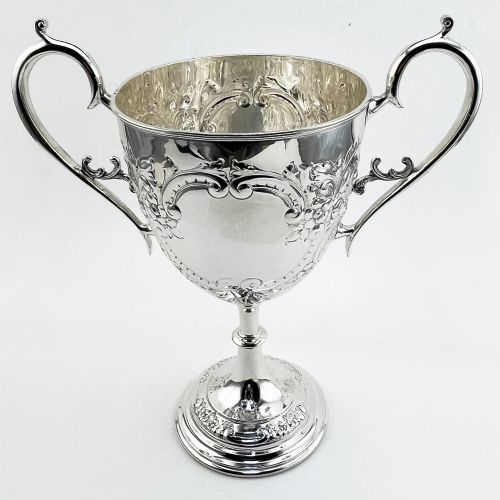
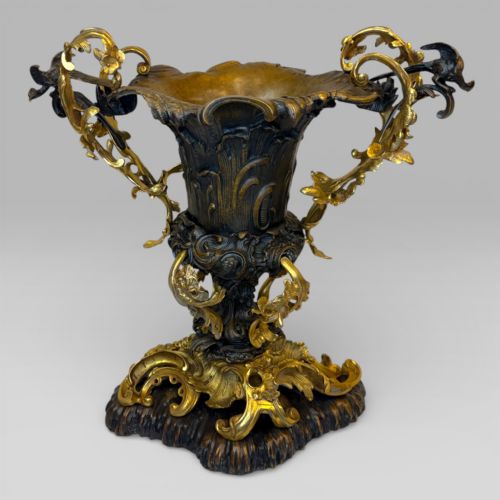
When you search for an ornate handled vase, you encounter sculptural vessels designed for display rather than utility, often taking the form of ewers, urns, and trophy vases. These pieces draw upon Victorian, Neoclassical, and Art Nouveau design vocabularies, featuring elaborate cast handles shaped as figures, dolphins, or botanical motifs.
The versions most commonly met on this page span the late nineteenth century into the early twentieth century, originating from British, French, and Irish workshops. Forms range from three-handled crystal glass bowls to monumental gilt bronze centrepiece vases and porcelain pairs.
Makers and manufacturers represented include Royal Worcester and Royal Crown Derby, alongside works associated with French makers such as Henry Dasson. Materials fluctuate between heavy bronze, brass, crystal glass, sterling silver, and porcelain enhanced with paste enamel and gold leaf.
Materials and construction methods
Construction relies heavily on metal casting, utilising bronze, brass, and gilt bronze, often highlighted with ormolu and gold leaf. These metallic elements are shaped into figural and zoomorphic handles, such as Bacchus and dolphin motifs, then attached to vessel bodies.
Ceramic and glass versions incorporate porcelain and crystal glass, decorated with paste enamel and gilt ornamentation. Silver examples demonstrate traditional silversmithing techniques, drawing on Celtic Revival styles like the Lindisfarne pattern.
Ornate Handled Vase Retail Price Guide 2026
Typical asking prices for ornate handled vase among the pieces listed under this phrase on Sellingantiques today, from the lower quarter to the upper quarter. They describe what is for sale here now, not the wider market.
Some handles take the form of playful dolphins or mythological figures pouring wine instead of water.
Assessing quality and craftsmanship
Quality separates in the crispness of the cast metalwork and the depth of the chasing on bronze and brass surfaces. Finer pieces exhibit sharply defined figural details on handles and mounts, whereas simpler examples show softer contours.
The execution of the decorative surface finish dictates the upper tier of the range, seen in the precision of paste gilt application on crystal glass and the fine hand-painting on porcelain bodies.
Royal Worcester·Royal Crown Derby·Henry Dasson
The Ornate Handled Vase Glossary
- Ewer
- A large jug or pitcher with a wide spout and elaborate handle, traditionally used for holding water but produced in these periods purely for decorative display.
- Ormolu
- Finely ground high-carat gold applied to a bronze base, creating a rich golden surface finish seen on French decorative objects.
- Trophy vase
- A large, two-handled vessel modelled on athletic prizes of antiquity, intended as a central decorative ornament on sideboards or tables.
- Paste enamel
- Coloured glass paste applied to a surface and fired to create raised, jewel-like decorative patterns.
- Celtic Revival
- A nineteenth-century artistic movement drawing inspiration from ancient insular metalwork, incorporating intricate interlace and zoomorphic motifs.
Ornate Handled Vase: Frequently Asked Questions
What is an ornate handled vase?
These pieces are decorative vessels featuring prominent handles, taking forms such as ewers, urns, trophy vases, and centrepieces rather than standard flower containers.
They were produced primarily for visual impact in nineteenth- and early twentieth-century drawing rooms and dining settings, utilising materials like bronze, porcelain, and crystal glass.
How were these vessels used?
Despite retaining the functional shapes of ewers or pitchers, these objects served purely as decorative displays on mantelpieces, sideboards, and pedestals.
Larger examples functioned as centrepiece vases or architectural ornaments to anchor the symmetry of a formal interior room.
How do I style with them?
Place them on heavy wooden furniture, marble consoles, or dedicated pedestals where their sculptural metal handles and gilded surfaces catch natural light.
Because of their substantial weight and ornate detailing, they work best as standalone focal points without needing additional floral arrangements.
How do I tell periods apart?
Victorian and nineteenth-century pieces lean towards heavy cast bronze, classical mythological figures, and ornate rococo revival curves. Later examples incorporate flowing Art Nouveau botanical lines or specific regional revivals like Celtic knotwork.