
A 2026 Guide by Sellingantiques

Victorian Etruscan Revival Paste Garnet Gilt Earrings and Brooch, Victorian
Priced at £445 from The Earring Curator
The concept of matching antique jewellery sets emerged in seventeenth-century Europe.
By the nineteenth century, changing fashions meant daytime sets became popular alongside evening ones.
Look for original fitted boxes. Cases from this period are usually lined in silk or velvet.
A demi-parure is a smaller suite. Usually just two or three matching pieces.
Castellani operated in Rome from 1814 into the 1920s. They produced famous archaeological revival sets.
Froment-Meurice worked in mid-nineteenth-century Paris, supplying Gothic revival parures to European aristocracy.
Most surviving antique jewellery sets bear no maker's mark at all. They're usually products of the regional trade.
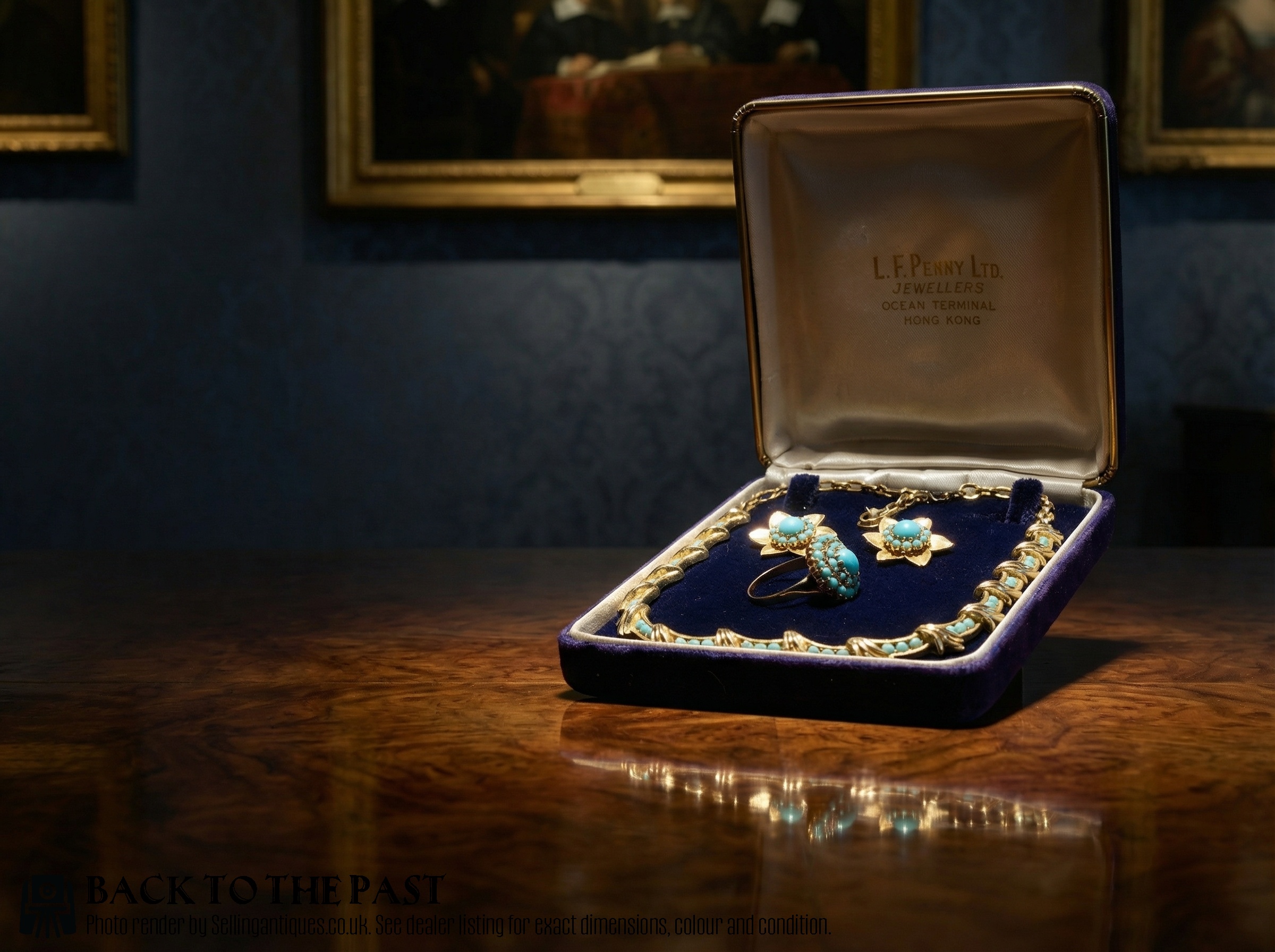
Turquoise & 14ct Gold Jewellery Set, 1950
Priced at £400 from Abersoch Antiques
The 2026 retail price guide for Antique Jewellery Sets is drawn from a proprietary archive of over 1.1 million retail prices indexed by Sellingantiques since 2003. This guide relies exclusively on their own internal data; no external sources or auction records are used.
Analysing nearly 25 years of UK antique market history alongside current retail values, the data indicates that typical UK retail prices for Antique Jewellery Sets range between £400 and £4,300. Entry-level prices generally fall under £400 and premium examples upwards of £4,300.
Uniformity in design motifs across the necklace, earrings and brooch.
Check the clasps and hinges. These fittings should match in style and construction technique.
Convertible elements are common. Necklaces sometimes break down into bracelets or hair ornaments.
Early examples rely heavily on repoussé work. Thin sheets of gold were hammered from behind to create volume without weight.
Cannetille techniques mimic lace. Wire was twisted and soldered to form delicate patterns around the gems.
Later sets feature cast elements. This allowed for thicker metal and deeper engraving on the antique pieces.
"Many pieces were built to be taken apart and reassembled in different configurations."
"Original leather-bound cases are highly collected in their own right."
"A single set could contain enough pieces to dress a lady from her hair to her wrists."
Based on almost 25 years of Sellingantiques UK antique market data, Antique Jewellery Sets appeared 3402 times (out of 1,100,000 antiques) which gives it a rarity score of 51/100.
This score measures scarcity within the Sellingantiques archive only and is not a survey of the entire antiques market, so these statistics may not be indicative of the general availability of Antique Jewellery Sets elsewhere.
Many nineteenth-century earrings are lightweight. The gold is often hollow or backed with shellac, making them comfortable for regular wear.
However, earlier pieces with long drops are more fragile. The thin gold wires can bend if they catch on clothing.
Colour variations are common in antique jewellery sets. Jewellers matched stones by eye under gaslight or candlelight, so slight differences in hue were accepted.
Over decades, some stones react differently to sunlight or skin oils. A brooch worn on heavy wool will age differently to a necklace sitting against the skin.
Check the metal settings and decorative motifs instead. If the leaves, engraved borders and clasps match, they likely started life in the same box.
Most are wooden frames covered in morocco leather or textured paper. The interiors use silk or velvet.
Empty loops usually held a suspended drop. This might have been a natural pearl or a matching gemstone.
Drops were frequently detached and lost over the years. Some sets were sold with multiple interchangeable drops so the owner could match different outfits.
You can leave the loop empty or find a period-appropriate addition to hang from it. Many dealers sell loose antique drops specifically for this purpose.
Please note: This Antique Jewellery Sets guide and its associated pricing data are provided for general informational purposes only. It does not constitute formal financial, investment, or appraisal advice and should not be relied upon as the sole basis for any commercial activity, purchasing, or sales decisions. Sellingantiques.co.uk accepts no liability for any actions taken in reliance on this information. Always consult with a qualified professional or independent appraiser.
