


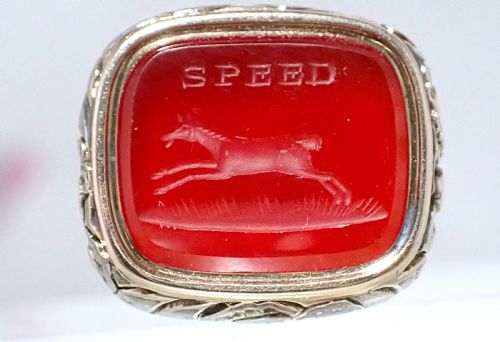


Antique Fob Seals
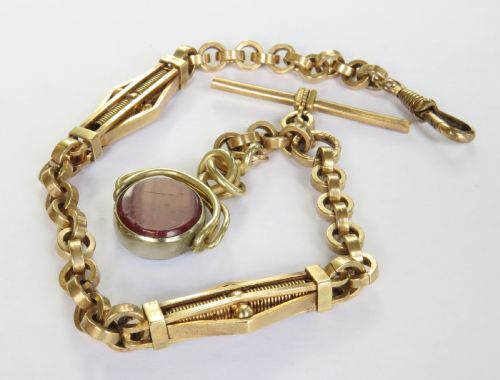
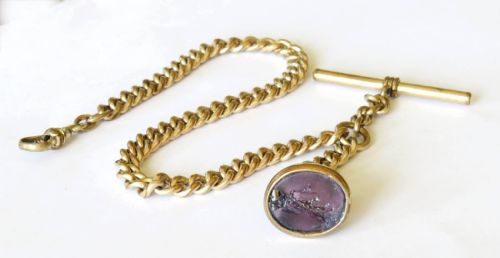
A fob seal is a small engraved hardstone in a metal mount with a loop, hung from a watch chain and pressed into wax to close a letter.
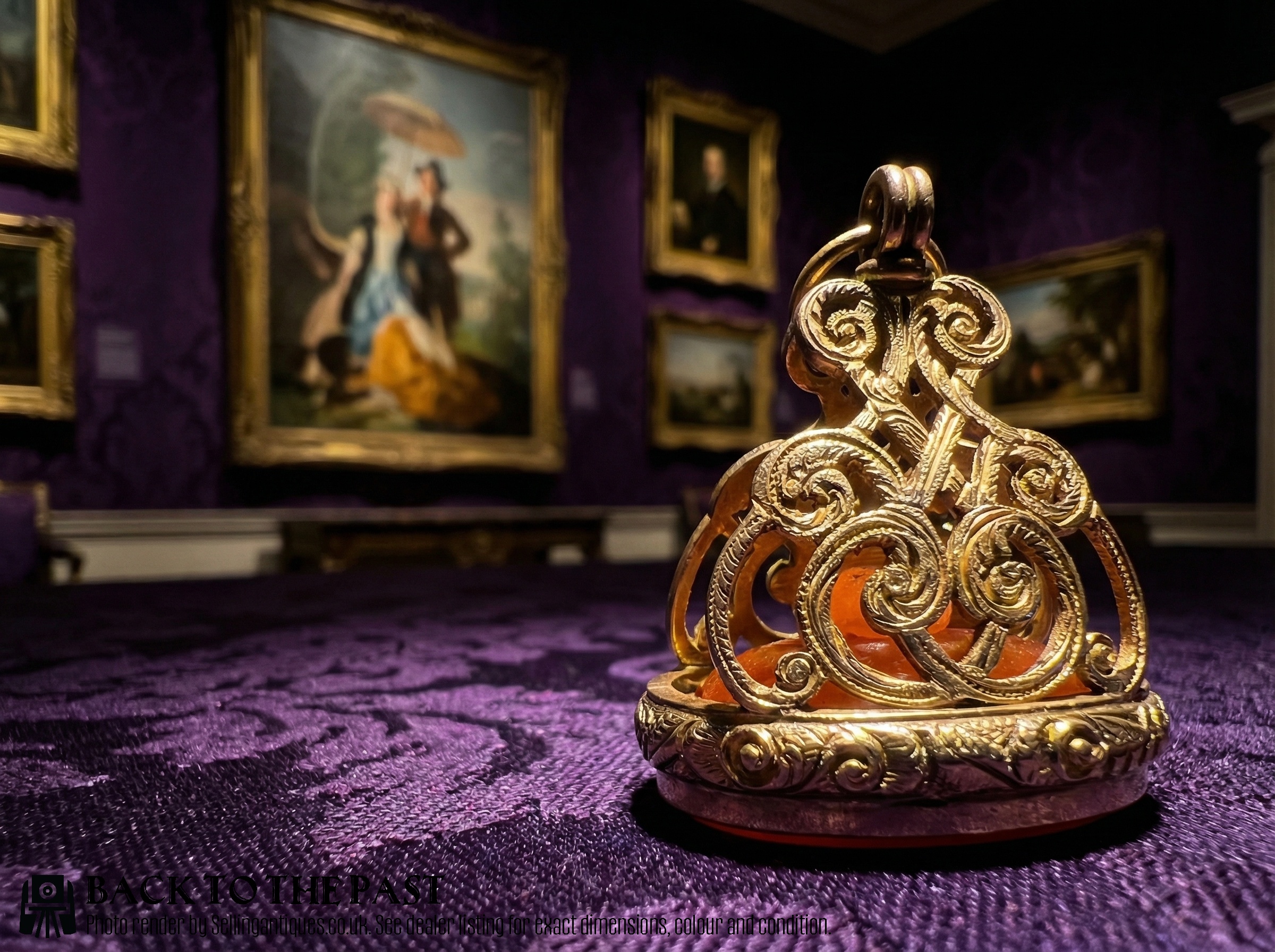
Antique Fob Seals
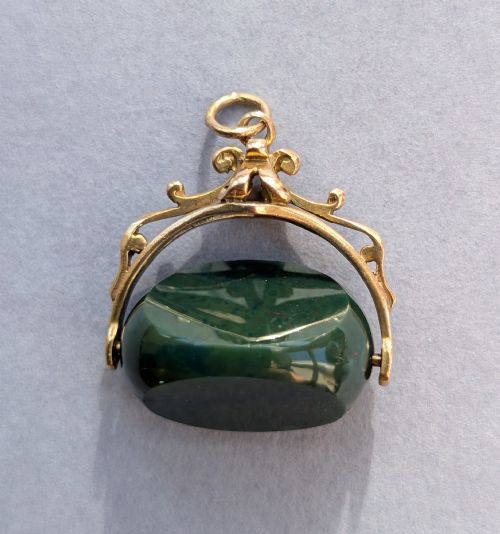
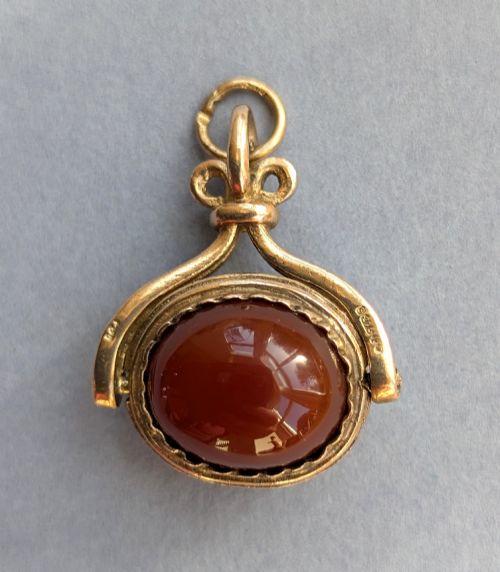
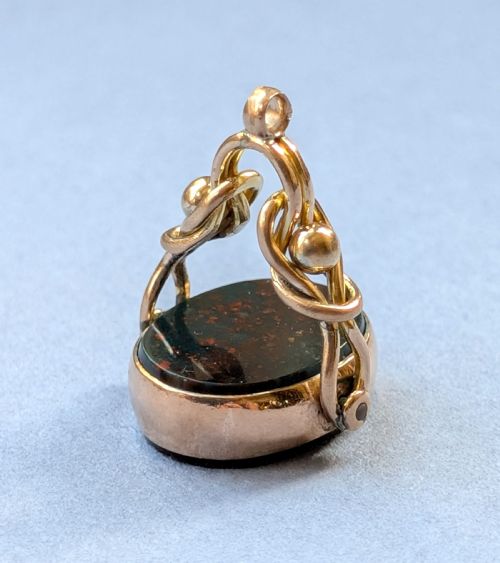
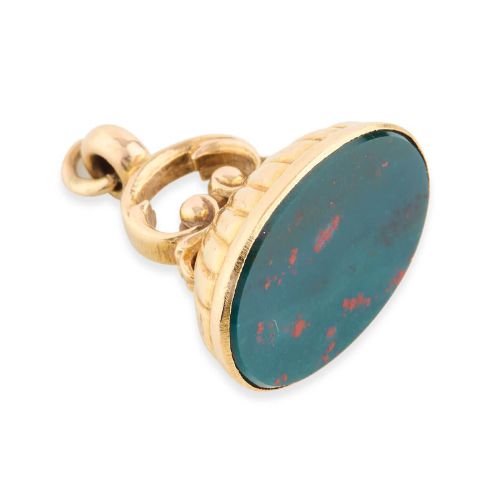
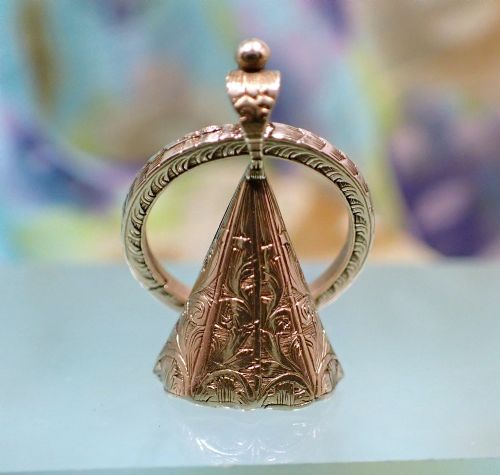
The working part is the matrix: a hardstone cut in intaglio, so the design sinks into the stone and comes out in relief in the wax. It sits in a metal frame with a loop at the top, and on many the stone swivels in its mount so the face can be turned down to the wax.
Gold dominates. Of 46 titles on Sellingantiques, 36 say gold, and 9ct is the carat most often named, with 15ct and 18ct appearing as well. Carnelian is the signature stone, named in eight titles, followed by bloodstone, then agate, sardonyx, chalcedony, citrine, amethyst and rock crystal. A smaller group runs to silver, gilt metal and steel, and one oddity is a black basalt pottery seal engraved with a bull.
Fob seals came into general use in the 18th century, when a gentleman's watch hung at the waist and the seal went with it. They stayed in production through the 19th century, by which point many were ornament as much as tool. Nearly a third of titles now sell the seal as a pendant, and five more as a charm.
Dating tends to be by period label rather than year. Victorian, Georgian and 19th Century account for most of it, with Edwardian, 1920s and 18th Century behind. Only thirteen listings carry a clean year, and those run from 1800 to 1920. Three quote a date said to be on the piece itself: 1879, 1898 and 1910.
Where The Range Splits
Metal sets the floor and the ceiling. Solid 18ct sits at the top, appearing on five of the six highest-priced single seals. Gold-cased work, where a gold shell covers a base core, sits lower, and rolled gold chains with fobs and one gilt metal described as untested sit lower still. Two listings describe gold assessed by testing rather than read from a mark.
Then the stone and what's on it. A carved hardstone intaglio carries more than paste: citrine paste in a gold case sits at the cheap end, while carnelian, bloodstone, sardonyx and rock crystal run through the middle and top. Subject matters too. Seals cut with a Greek figure, a Roman emperor, a lion, an elephant, a knight and horse, or a Shakespeare intaglio stand above those cut with plain initials or a single first name.
Size and mechanism do the rest. Titles that state heavy or large sit high, miniature and small charms low. Spinning fobs with a rotating body carrying more than one matrix turn up three times and sit in the upper part of the range, as does a folding seal. Highest of all is a charm bracelet hung with fifteen separate carnelian and bloodstone seals in 9ct to 15ct gold.
Antique Fob Seals Retail Price Guide 2026
Typical UK retail prices for fob seals, calculated from the Sellingantiques database of over a million retail prices indexed since 2003. This retail price guide relies exclusively on Sellingantiques data; no external sources or auction records are used, so the figures do not describe the wider market.
The largest fob seal grouping recorded on Sellingantiques is a charm bracelet hung with fifteen separate carnelian and bloodstone seals in 9ct to 15ct gold.
The Antique Fob Seals Glossary
- Intaglio
- A design cut down into the stone, so the wax impression comes out raised. Named in six titles.
- Matrix
- The engraved face that does the sealing, whether stone or metal.
- Gold cased
- A gold shell over a base or filled core rather than solid gold. Used in four titles.
- Carnelian
- The orange-red chalcedony most often used for these seals. Both carnelian and cornelian spellings appear.
- Bloodstone
- Dark green chalcedony flecked with red, the second commonest stone in this archive.
- Spinning fob
- A seal with a rotating body carrying more than one engraved face, so several matrices travel on one mount.
Antique Fob Seals: Frequently Asked Questions
What stones were used for fob seals?
Carnelian leads, named in eight of the 46 titles, with bloodstone next. Agate, sardonyx, chalcedony, citrine, amethyst and rock crystal fill out most of the remainder.
One listing is a citrine paste rather than a carved stone. A single black basalt pottery seal engraved with a bull is the only piece here in neither metal nor hardstone.
Are fob seals usually gold?
Gold appears in 36 of the 46 titles. 9ct is the carat most often stated, with 15ct and 18ct also named, and some are gold cased rather than solid.
The rest run to silver, gilt metal and steel, including Georgian silver seals and an 18th century steel one. Rolled gold shows up on chain-and-fob listings.
Why are so many sold as pendants?
Fourteen titles sell the seal as a pendant and five more as a charm. The loop that once hung it from a watch chain takes a modern chain just as well.
That shift shows how the category is bought now. Wearing has largely replaced sealing.
How does a swivel fob seal work?
The stone sits in a frame that pivots, so the matrix can be turned face down onto the wax without unhooking the seal from the chain.
A spinning fob goes further, with a rotating body carrying more than one engraved face. Three of those appear in the archive, along with one folding seal.
What was engraved on the seal faces?
Initials and single names are common, cut as monograms or simply as a name. Armorial engraving turns up too, including a widow's lozenge on one Georgian seal.
Figural subjects also appear: a Greek figure, a Roman emperor, a lion, an elephant, a knight and horse, a hay-making scene and a Shakespeare intaglio.
How often do fob seals come up for sale?
About five a year come to market on Sellingantiques, and eighteen different dealers have listed one at some point.
That makes it a category spread thinly across many sellers rather than one held by a few specialists.