





Antique Mourning Jewellery
Small gold and silver jewellery made to remember the dead: brooches, rings, lockets and pendants, often set with woven hair, seed pearls or black enamel.
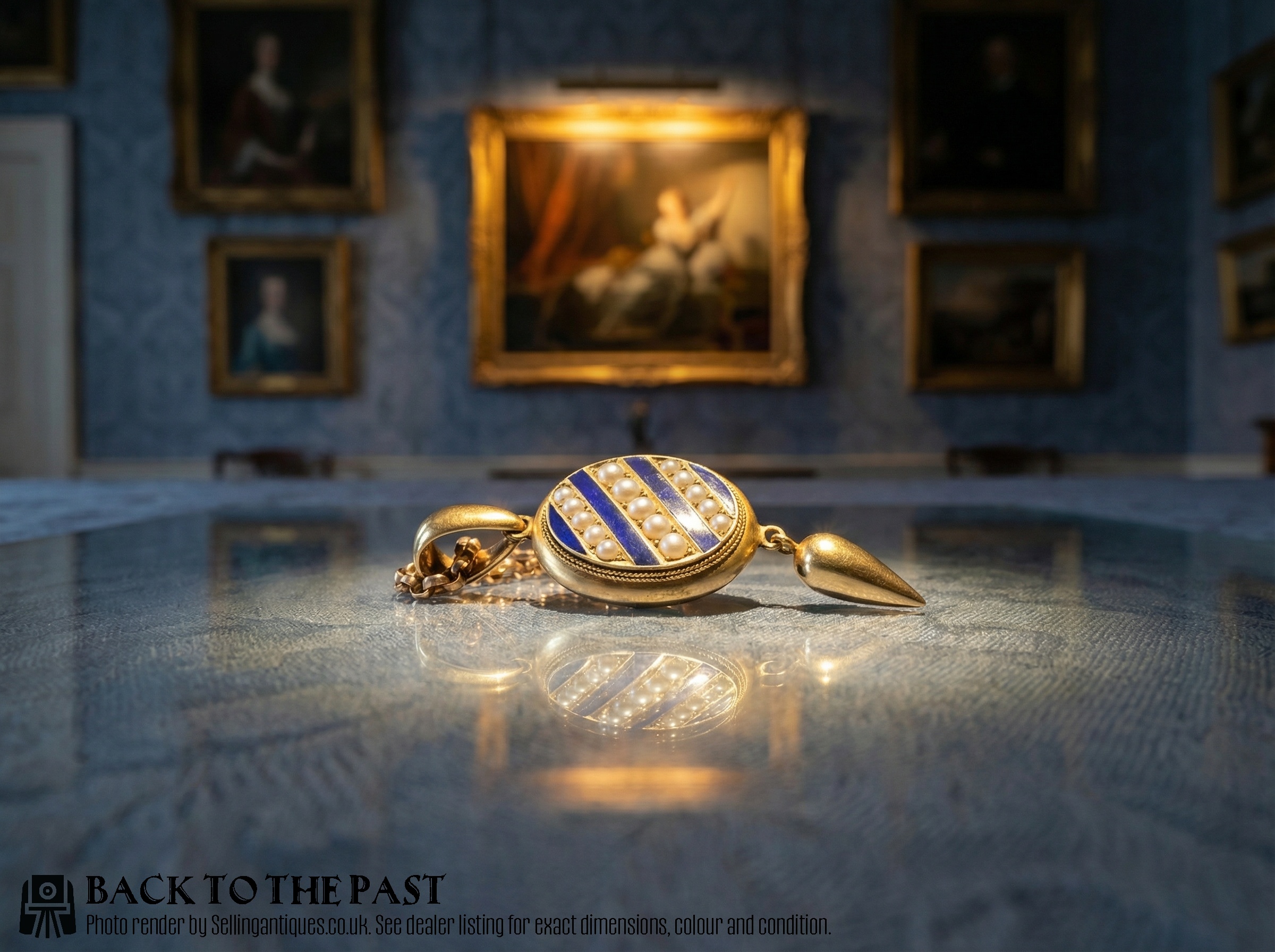
Antique Mourning Jewellery
Jewellery worn in memory of the dead has been commissioned in Britain since at least the seventeenth century, frequently left by will and paid for out of the estate. The nineteenth century expanded it hugely, when mourning dress and its black jewellery became settled social convention. What reaches the market now is mostly the Victorian end of that story.
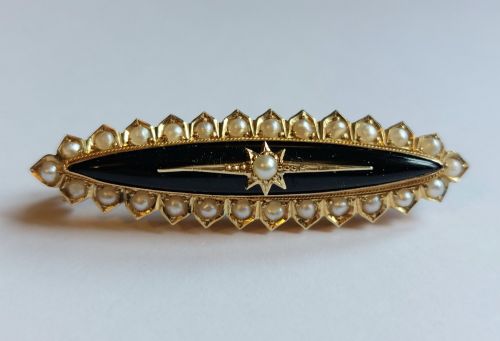
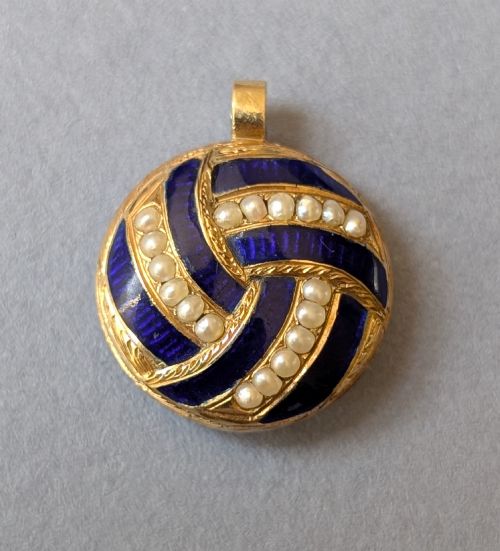
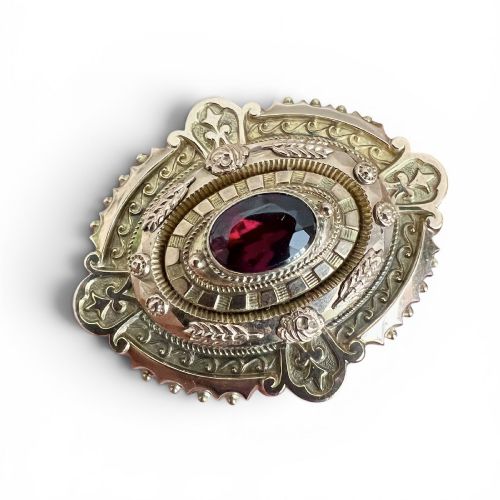
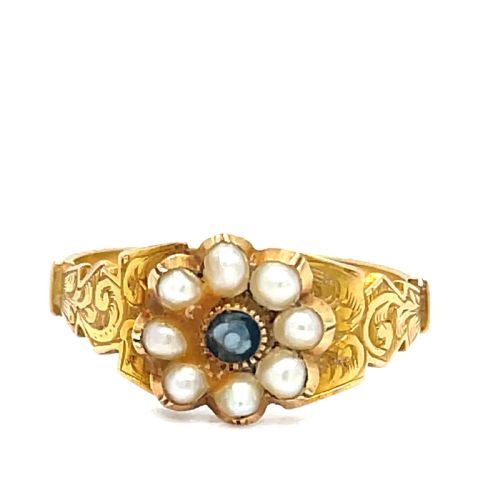
Gold runs through more than two thirds of the titles on Sellingantiques, and four shapes carry the category: brooch, ring, locket and pendant. The single form you're most likely to meet is a Victorian gold brooch, with seed pearls, black or coloured enamel, or a glazed panel of woven hair. Carats split almost evenly three ways between 9ct, 15ct and 18ct.
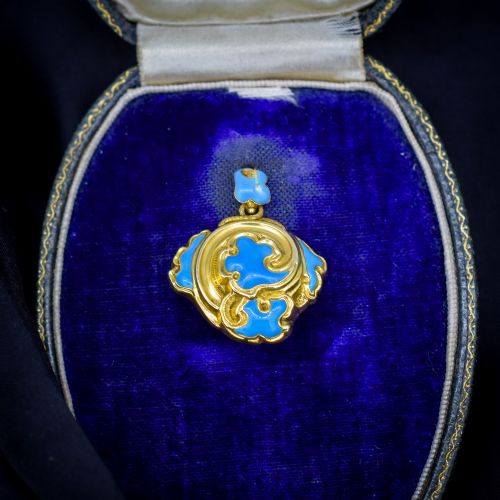
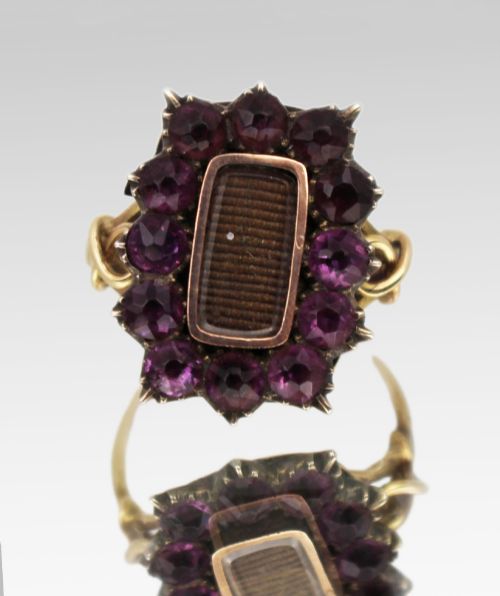
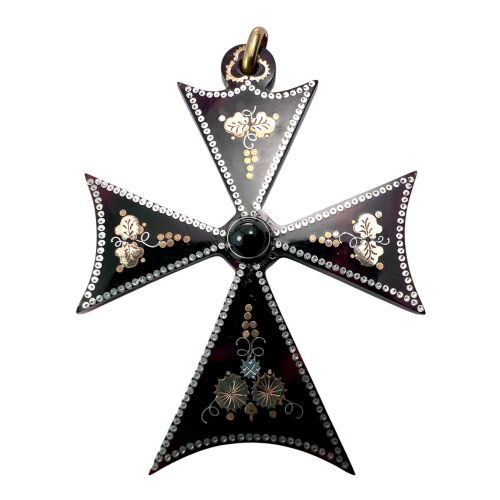
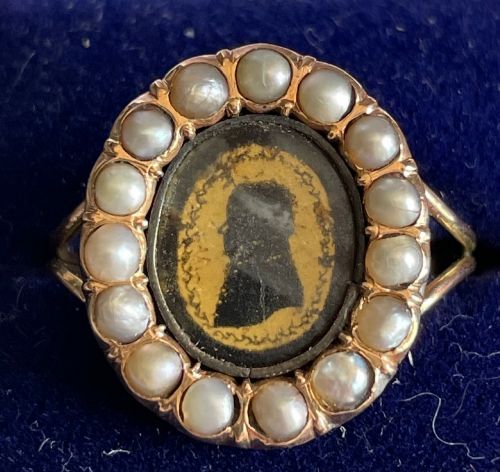
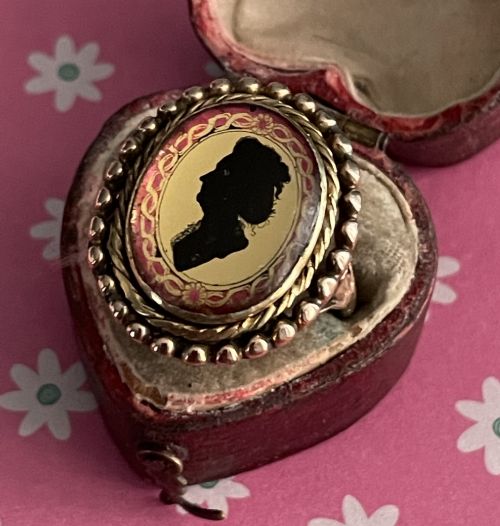
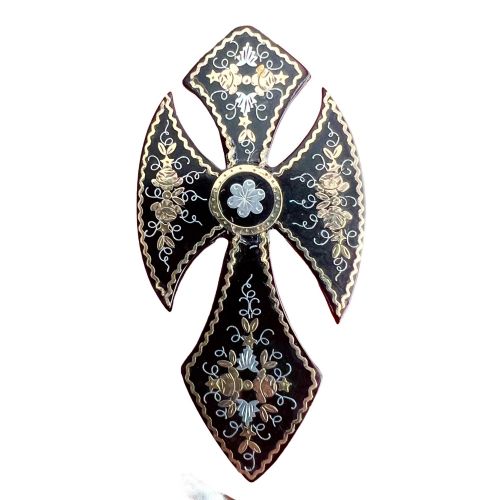
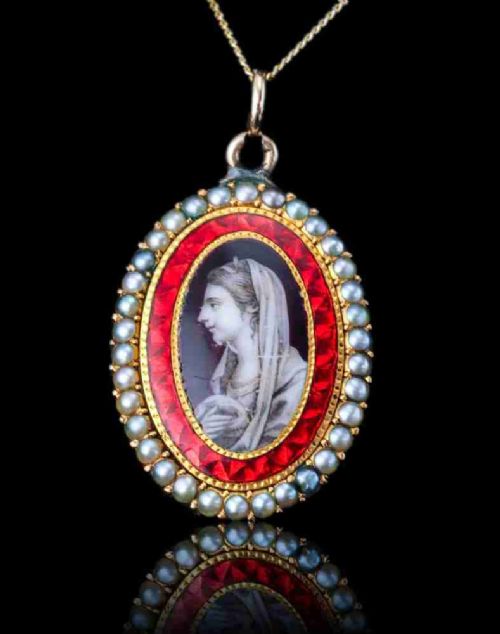
Rings make up about a quarter, running from Georgian hairwork and garnet or enamel bands through to Victorian five-stone and onyx examples. Lockets and pendants take another quarter and are rising as a share of current stock: engine-turned hair lockets, enamel and pearl hearts, photograph lockets. Around one in eight pieces is carved black work, chiefly Whitby jet and tortoiseshell piqué. Silhouette, sepia portrait and hand-painted miniature pieces are a small but persistent handful.
Dating is loose. Only fourteen of eighty-three listings carry a clean year, the rest filed under Victorian or Georgian as the dealer's shorthand. The span runs 1700 to 1910, and even decade labels are approximations. Hairwork, the feature the category is best known for, is named in a minority of titles.
What Sets Them Apart
Gold does most of the sorting. Pieces described as gold cased or rolled gold sit at the bottom of the range; 18ct and 15ct dominate the upper listings. Quantity counts as much as standard, which is why a large ornate enamel locket outruns a brooch its dealer calls tiny.
Set stones lift a piece sharply. Diamonds appear in a handful of titles, sometimes with a stated carat weight, and those sit near the top. Plain hairwork and unset jet occupy the other end, whatever their interest as objects.
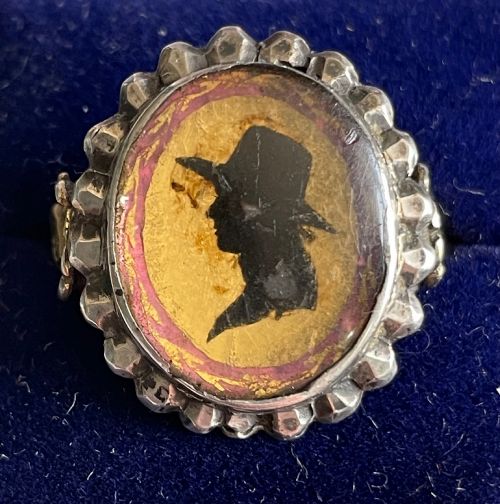
Age and hand skill push in the same direction. Georgian and earlier work commands more than Victorian, and the earliest piece recorded, a paste and enamel ring given as circa 1733, is also the highest-priced. Hand-painted miniature portraits, verre églomisé silhouettes and sepia portrait pendants all sit well above woven hair panels.
Antique Mourning Jewellery Retail Price Guide 2026
Typical UK retail prices for mourning jewellery, calculated from the Sellingantiques database of over a million retail prices indexed since 2003. This retail price guide relies exclusively on Sellingantiques data; no external sources or auction records are used, so the figures do not describe the wider market.
One-offs from the archive: a carved stag antler swivel brooch, a William IV gold vinaigrette with a hair compartment, and a jet Mizpah locket necklace.
The Antique Mourning Jewellery Glossary
- Hairwork
- Human hair woven, plaited or laid flat as a panel and set under glass or crystal. Named in a dozen titles, fewer than the category's reputation suggests.
- Seed pearl
- Very small natural pearl, used in clusters or as a border. The commonest stone term in these listings, appearing in twenty-one titles.
- Black enamel
- Opaque enamel used as the mourning colour on rings, lockets and brooch mounts. Enamel of some kind turns up in nineteen titles.
- 15ct
- A British gold standard abolished in 1932, so the mark itself narrows the date. It sits alongside 9ct and 18ct in roughly equal numbers here.
- Piqué
- Tortoiseshell inlaid with gold or silver points and strips. Appears on brooches, pendants and hoop earrings.
- Navette
- Pointed oval shape, characteristic of late Georgian mourning pendants and rings.
Antique Mourning Jewellery: Frequently Asked Questions
Does mourning jewellery always contain hair?
No. Woven or plaited hair is named in only about one in seven titles, so the feature the category is best known for is a minority of what actually appears.
Seed pearls and black enamel are both commoner. Many pieces are simply gold mounts with a glazed compartment that may hold hair or a photograph.
Which pieces turn up most often?
Brooches lead, with thirty of the eighty-three listings, followed by rings at twenty-three, lockets at nineteen and pendants at eleven.
Victorian is the label on more than half. A Victorian gold brooch with seed pearls or enamel is the piece you'll meet most.
Lockets and pendants are taking a larger share of current stock than of the archive as a whole.
What is Whitby jet?
Fossilised wood from the Yorkshire coast, carved and polished for black mourning jewellery. It accounts for part of the carved black work, alongside tortoiseshell piqué.
In this archive it appears as brooches, a locket, acorn earrings and bead necklaces. The heaviest piece recorded is a hand-carved jet bead necklace of 70 grams at 24 inches.
How reliable are the Georgian and Victorian dates?
Treat them as the dealer's shorthand rather than a dated attribution. Only fourteen listings carry a clean year, with Victorian used on thirty-two and Georgian on eighteen.
Even the decade labels are approximations. The overall span across the archive runs 1700 to 1910.
Are silhouette and portrait pieces part of this category?
Yes, they sit under the same sentimental heading. Silhouette rings appear three times, two described as Continental and one backed with verre églomisé.
Also here are a sepia portrait pendant, a hand-tinted photograph brooch, a hand-painted portrait ring and a silhouette portrait brooch. Hand-painted work sits well above plain hairwork in the range.
How often does mourning jewellery come up for sale?
Twenty-eight dealers have listed in this category on Sellingantiques, and roughly eleven pieces come to market a year.
That's a steady trickle rather than a stream. Oddities surface within it: a carved stag antler swivel brooch, a William IV gold vinaigrette with a hair compartment, a jet Mizpah locket necklace.