
Antique Watch Chains
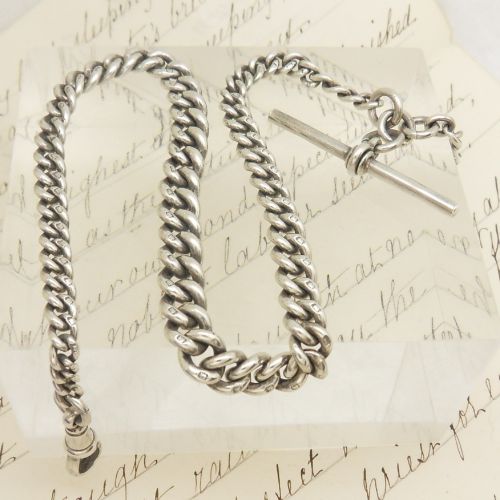
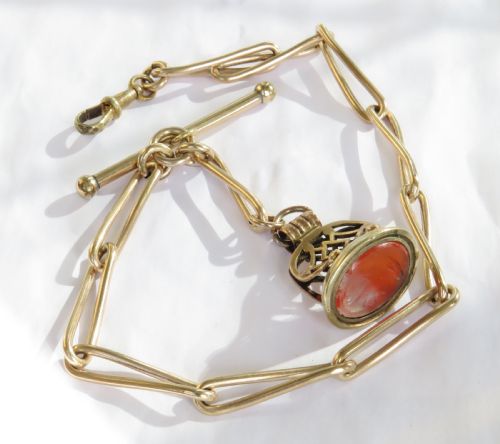
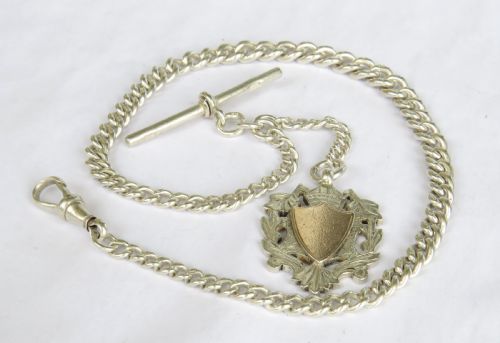
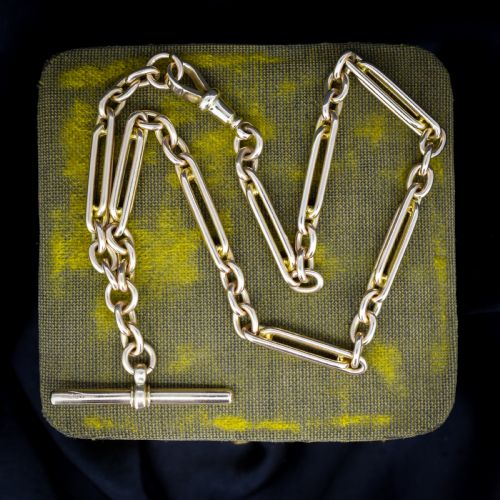
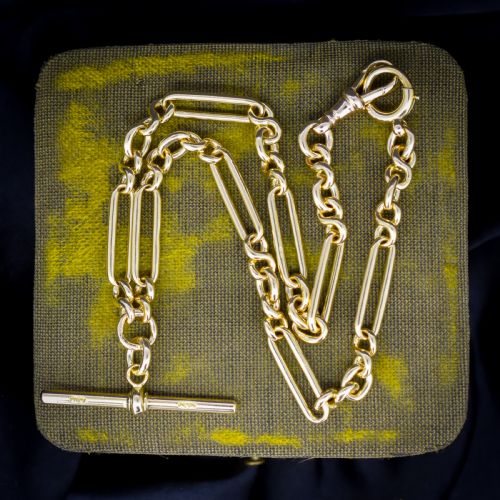
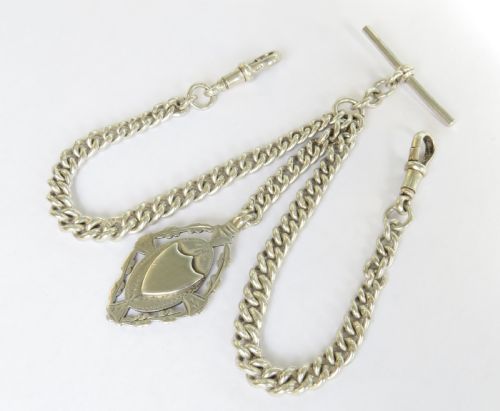
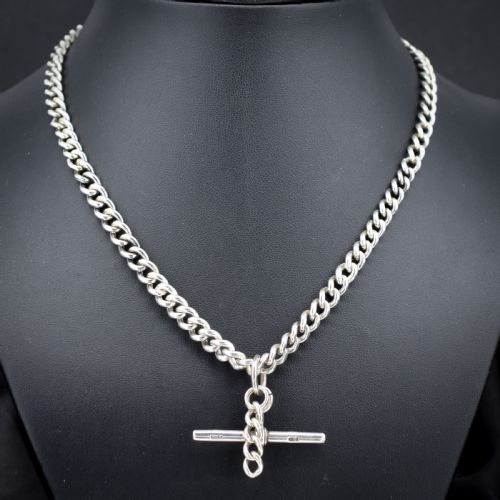
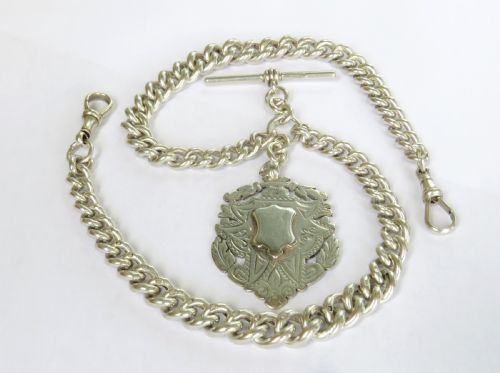
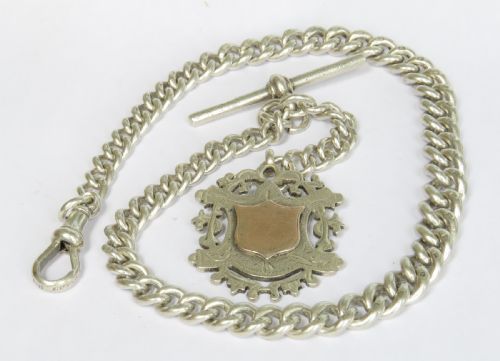
A link chain made to carry a pocket watch across a waistcoat, anchored by a T-bar at one end and clipped to the watch at the other, often with a fob hanging from it.
Antique Watch Chains
Chains to carry a pocket watch became standard menswear in the nineteenth century, and the double-ended pattern took its popular name from Prince Albert. The chain secured the watch in one waistcoat pocket while a fob, medallion or sovereign case balanced it in the other. The T-bar passed through a buttonhole between them.
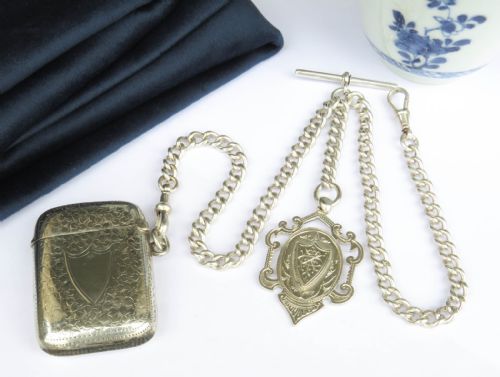
Silver dominates. It appears in the majority of titles on Sellingantiques, usually as an Albert with a fob attached, and doubles are the largest single variant. Gold runs to about a third, mostly 9ct with smaller groups in 15ct and 18ct, and those titles routinely quote length and gram weight. Rolled gold, gold-filled, gilt and plated chains form a smaller, steady strand.
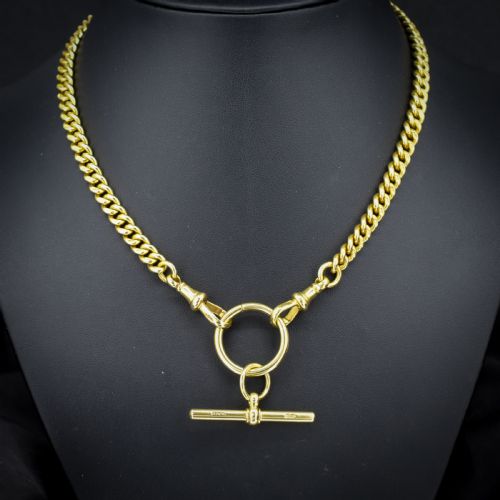
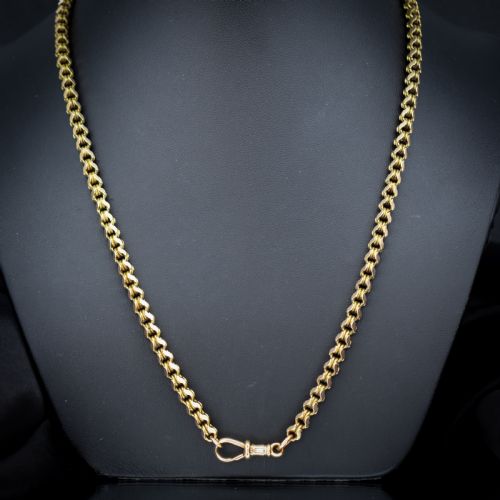
A fifth or so of titles are chains sold as necklaces, chokers or bracelets with a dog clip rather than for wear with a watch, and that group is concentrated in current stock. Longuard and muff chains turn up occasionally, running from 50 inches up to 78, against the 12 to 13 inches of the shortest Alberts.
Dating clusters hard on the turn of the century. The 1900s and 1910s are the fullest decades, with the 1890s and 1920s close behind, and the dated field runs 1860 to 1960. Alongside those years sit period labels such as Victorian and Edwardian, so a chain called Victorian and one called 1890s may be the same thing described two ways. Anything after the 1930s is scarce.
What Sets Them Apart
Metal decides most of it. Solid gold sits at the top, silver fills the middle, and gilt metal, silver plate, base and white metal sit at the foot. Within gold, weight carries the argument: titles quote grams across the range, from the high twenties up to 75g and 67.4g at the gold limit, and the word heavy or chunky appears throughout. The heaviest silver piece named in a title is a 97g Albert.
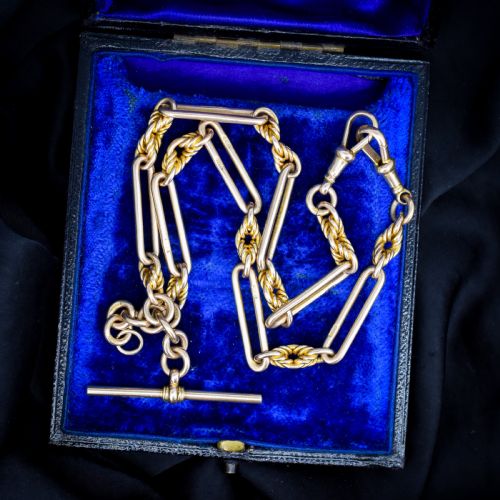
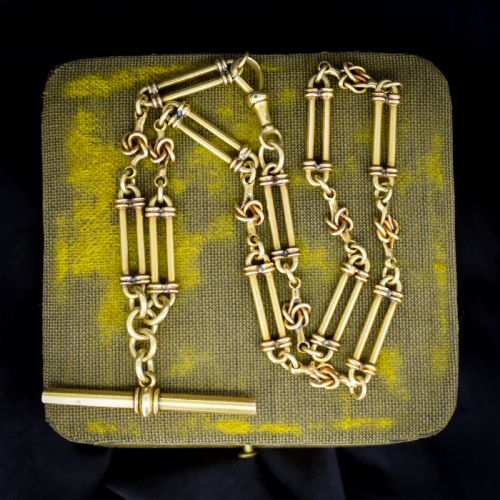
Pattern lifts a chain above plain uniform curb. Trombone links paired with love-knot spacers are the signature of the upper half, in silver as well as gold, and fancy, fetter, figaro and faceted belcher links cluster there too. Graduated links, increasing in size toward the centre, are another recurring note. Doubles run above singles, and the gold top of the range is overwhelmingly double Albert.
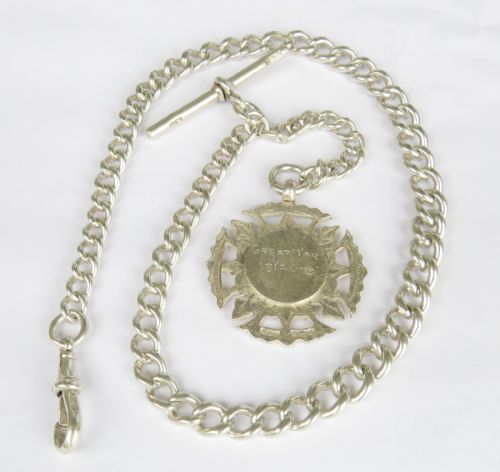
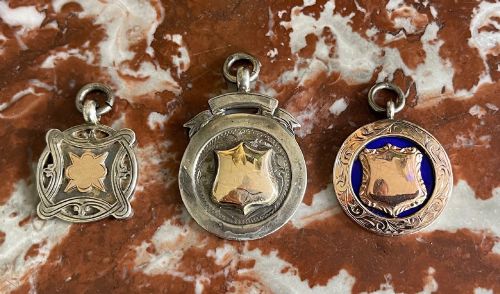
Documentation and attachment do the rest. Titles that quote an assay year, Birmingham 1891, Sheffield 1893, Chester 1904 or Chester 1921, sit at the better-documented end. Within silver, a named or novelty fob pushes a chain upward: sporting and club fobs for cricket, football, darts and tug of war, Masonic and regimental fobs, railway fobs, and attachments such as sovereign holders, vesta cases and propelling pencils.
Antique Watch Chains Retail Price Guide 2026
Typical UK retail prices for watch chains, calculated from the Sellingantiques database of over a million retail prices indexed since 2003. This retail price guide relies exclusively on Sellingantiques data; no external sources or auction records are used, so the figures do not describe the wider market.
The most expensive watch chain ever sold on Sellingantiques was a 15ct yellow gold chain of about 1870, sold in December 2025.
The Antique Watch Chains Glossary
- Albert
- A watch chain with a T-bar to pass through a buttonhole. The word appears in well over a hundred titles.
- Double Albert
- Two chains from a central T-bar, watch on one side, fob or sovereign case on the other. Doubles far outnumber singles in the archive.
- T-bar
- The crossbar that anchors the chain in the waistcoat buttonhole.
- Dog clip
- A sprung clip terminal, named for its likeness to a lead clip, and common on the chains listed as necklaces.
- Curb link
- Flattened interlocking links, the commonest patterned chain in the category.
- Albertina
- A shorter ladies' chain, usually finished with a tassel or drop fob.
Antique Watch Chains: Frequently Asked Questions
What is the difference between a single and double Albert?
A single Albert is one chain with one clip. A double runs two chains from a central T-bar, so a watch hangs on one side and a fob, sovereign case or vesta on the other.
Doubles are the larger group by some way, and the gold end of the range is dominated by them.
Are most watch chains silver or gold?
Silver appears in the majority of titles, usually as an Albert with a fob. Gold runs to about a third, most of it 9ct, with smaller groups in 15ct and 18ct.
Rolled gold and gold-filled chains form a smaller strand, along with gilt metal, plated, base and white metal at the bottom of the range.
Why are some listed as necklaces or bracelets?
Roughly a fifth of titles describe chains as necklaces, chokers or bracelets, usually with a dog clip terminal rather than a swivel. That group is concentrated in current stock.
They are the same link chains, offered for wear rather than for use with a pocket watch.
What period do these chains date from?
The dated field runs 1860 to 1960, with the turn of the century carrying the weight. The 1900s and 1910s are the fullest decades, then the 1920s and 1890s.
Anything after the 1930s is scarce. Many listings use period words such as Victorian or Edwardian instead of a year.
What kinds of fobs turn up on these chains?
Sporting and club fobs are a category within the category: cricket, football, boxing, tennis, golf, swimming, cycling, darts, dominoes, chess and rifle club all appear in titles.
Masonic, regimental and railway fobs recur, with Great Eastern and Great Western examples named. Novelties surface once in a while, including a flintlock pistol fob and a compass-and-thermometer chain.
How long are guard and muff chains?
Length across the category varies by a factor of five. The shortest Alberts in the samples run 12 to 13 inches.
Guard and muff chains sit at the other end, reaching 57, 59, 70 and 78 inches. They were worn round the neck rather than across a waistcoat.