




Antique Cameos
A cameo is a small relief carving, usually in shell or hardstone, set into a metal frame and worn as a brooch, ring or pendant.

Antique Cameos
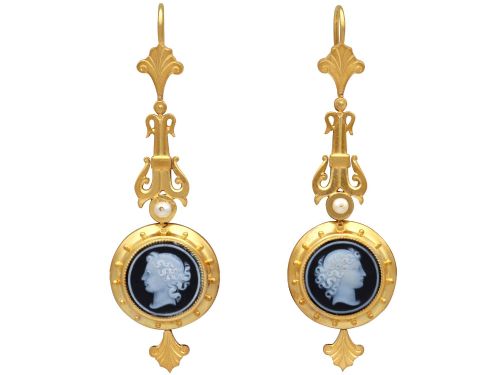
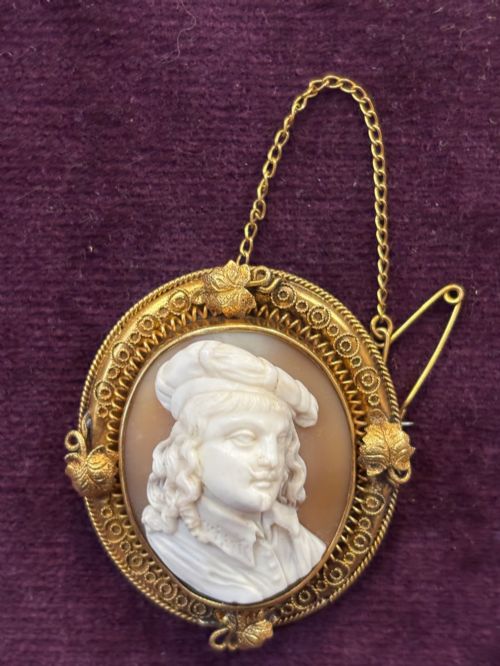
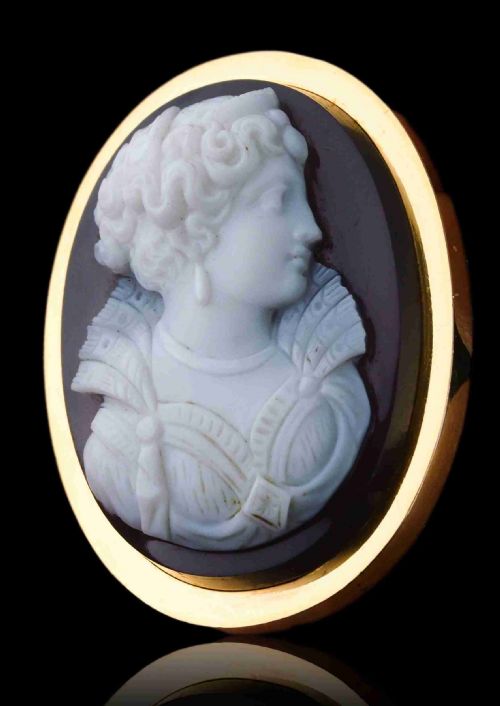
The carving is the object, the mount is how it was worn. Shell is the workhorse material, carved from layered shell so the raised figure stands pale against a darker ground. Hardstone, agate, onyx, carnelian, lava, coral, jet and even glass all turn up as well.
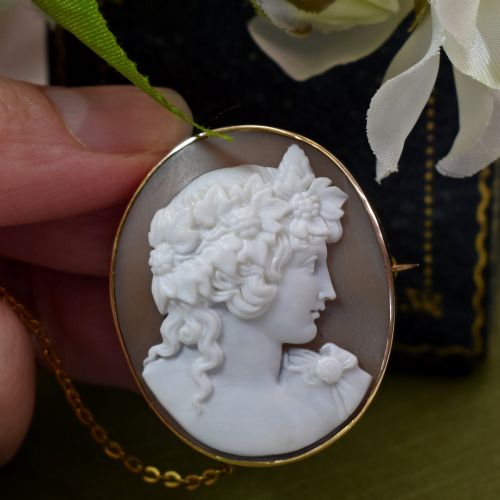
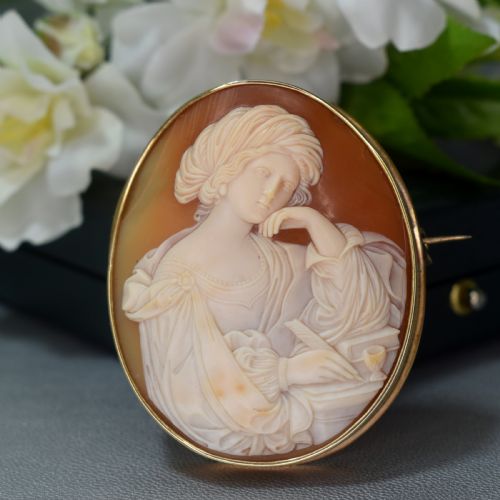
The form you'll meet most is a Victorian carved shell cameo in a gold brooch mount. Gold appears in two thirds of the 125 titles recorded on Sellingantiques, brooches in about four in ten, and "Victorian" in 56. Rings are the clear second form at a quarter of listings, then pendants and earrings.
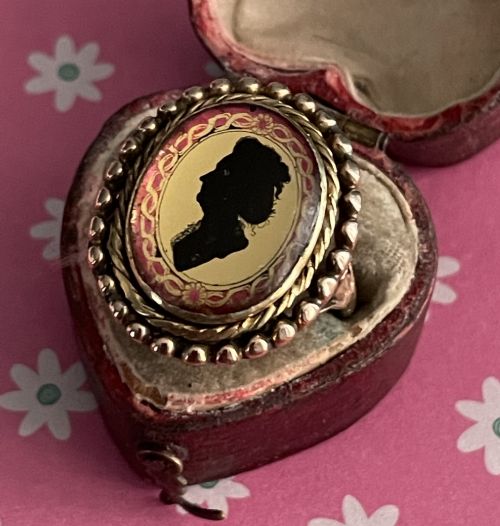
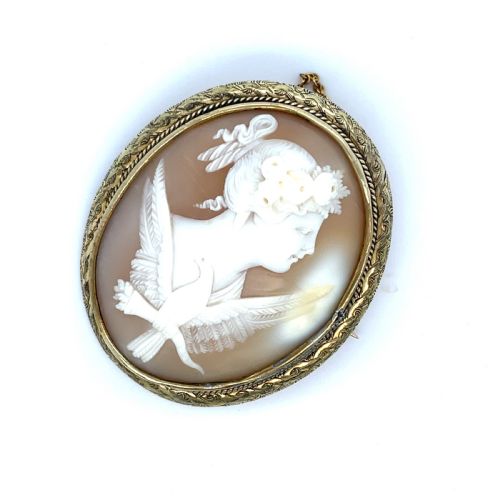
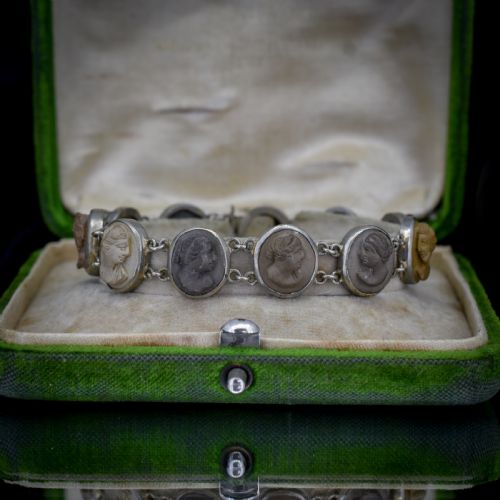
Subjects come almost entirely from classical mythology: Aphrodite, Psyche, Demeter, Bacchus, Nike, Flora, Diana and Apollo. A few historical portrait profiles appear, and one winged fairy scattering roses. The taste goes back to the late 18th century, when Grand Tour travellers bought carved souvenirs in Italy, and lava cameos from that trade still form a distinct small group.
Dating is broad rather than precise. Well over half the archive sits under a 19th-century label, with only 36 listings carrying a clean year, and the field runs from 1800 to 1960. Beyond the Victorian bulk there are small clusters at the 1880s, Edwardian, Georgian, the 1920s and 1930s, and a handful from the 1950s. Where a title says c.1860 or c.1880, that's the tighter date.

The Range
Material sets the floor and the ceiling. The highest-priced pieces name hardstone, agate, onyx and carnelian, where the carver has worked banded layers so the relief reads in contrasting colour. Shell and lava spread across the middle and lower range, shell being quicker and cheaper to cut than stone.
The mount does as much work as the carving. Titles stating 18ct sit above those stating 9ct, and silver, pinchbeck and gold-plated frames sit lower again. Odd standards turn up more than once: 15ct in several titles, with single appearances of 12ct, 20ct, 21ct and 22ct. Diamond clusters, pearls, emerald and black opal set around a cameo push a piece upward.
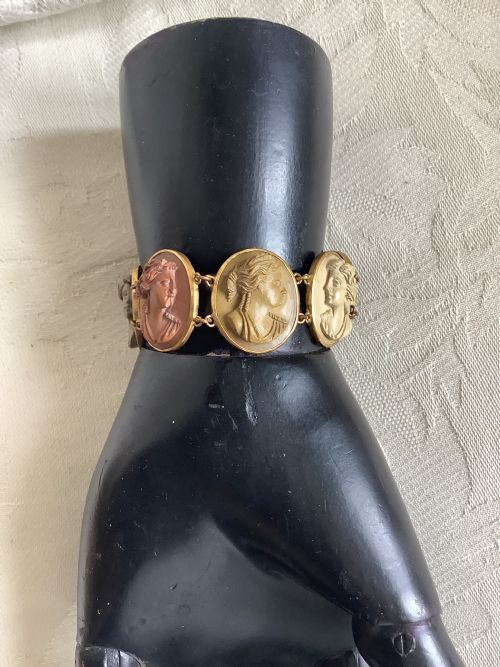
Scale and subject separate the top. "Large" appears in 15 titles, with "huge" and "monumental" once each, and the biggest carvings are quoted in inches: a three-inch shell brooch, a seven-inch lava portrait bracelet. Upper-range descriptions name the figure carved rather than calling it a maiden, and "finely carved" is the recurring quality claim.
Antique Cameos Retail Price Guide 2026
Typical UK retail prices for cameos, calculated from the Sellingantiques database of over a million retail prices indexed since 2003. This retail price guide relies exclusively on Sellingantiques data; no external sources or auction records are used, so the figures do not describe the wider market.
The largest carvings through Sellingantiques are stated in inches: a three-inch shell brooch of Nike, and a seven-inch lava portrait bracelet.
The Antique Cameos Glossary
- Cameo
- A design carved in relief so it stands above the surrounding ground. The opposite of an intaglio.
- Shell cameo
- Carved from a layered shell such as queen conch, and the commonest material in this archive.
- Hardstone
- Agate, onyx, carnelian and similar banded stones, cut so the layers give a contrasting relief.
- 9ct / 18ct / 15ct
- Gold standards as stated in titles. 15ct and 12ct point to British work made before 1932.
- Lava cameo
- Carved from Vesuvian lava, typically bought in Italy as a Grand Tour souvenir. Brooches, pendants and a bracelet appear.
- Reversible
- A mount that turns to show a second face, seen in locket brooches and a flip ring.
Antique Cameos: Frequently Asked Questions
What material are most cameos carved from?
Shell does the heavy lifting. It appears in 25 of the 125 titles recorded, and "carved shell" in nine more, usually mounted as a brooch or pendant.
Beyond shell the archive records lava, Whitby jet, coral, agate, onyx, green onyx, carnelian, tiger's eye, citrine and purple glass. Hardstone and agate make up perhaps a tenth of the category, and they're rising as a share of live stock.
Which forms turn up besides brooches?
Rings are the clear second form, at 32 titles, in 9ct, 18ct, 15ct and 10K mounts, some with diamond or pearl accents. Pendants follow, then earrings.
Bracelets are the rarest wearable form, a handful only. One is 15ct gold strung with thirteen separate shell cameo links; another is a seven-inch gilt lava portrait piece.
A few things sit outside jewellery altogether, including a shell cameo framed in gold as a standing display piece.
Are cameos signed by their carvers?
Not in this archive. The evidence yields no maker names at all for the carvings, so cameos here are described by material, subject and mount rather than by workshop.
What titles do state is the gold standard and, at the upper end, the figure carved.
How are cameos dated in listings?
Broadly. Victorian alone accounts for 62 of the listings, with another 11 filed simply as 19th Century, so more than half the archive sits under a wide label.
Only 36 listings carry a clean year, and the field runs 1800 to 1960. Where a dealer has written c.1860 or c.1880 in the title, the piece is still filed as Victorian, so the title carries the tighter date.
Do gold mounts always state a carat standard?
Often, but not always. Gold appears in 83 of the 125 titles, and 9ct is the commonest stated standard at 29 titles, ahead of 18ct at 20.
Unusual standards appear too: 15ct in several titles, with single showings of 12ct, 20ct, 21ct and 22ct. Silver, pinchbeck and gold-plate mounts also turn up.
What subjects were carved?
Classical, almost without exception. Goddesses, maidens and mythological heads dominate, with Aphrodite, Psyche, Demeter, Bacchus, Nike, Flora, Diana and Apollo, and Antinous all named in titles.
Portrait profiles account for most of the rest. Titles at the top of the range tend to identify the figure rather than leave it general.