


Antique Crosses
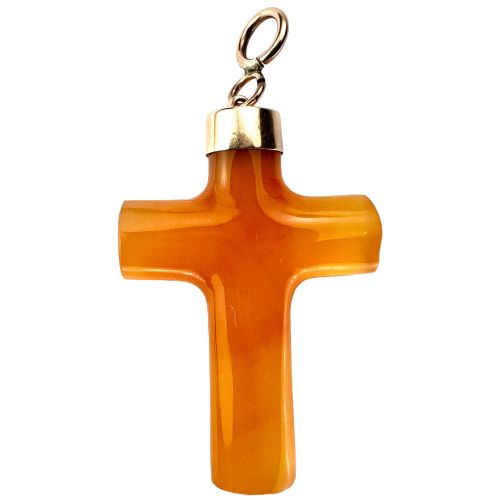
A small gold or silver cross worn on a neck chain, made as devotional jewellery and, in its darker forms, as mourning wear.
What Are Antique Crosses?
Most of what sits under this heading is cross-shaped jewellery meant to hang from a chain: 88 of 146 titles say "pendant", 98 say gold and 29 silver. The cross has been worn as a Christian ornament since antiquity and as a neck pendant since the medieval period, and hallmarked gold and silver versions became a staple of the British trade in the nineteenth century.
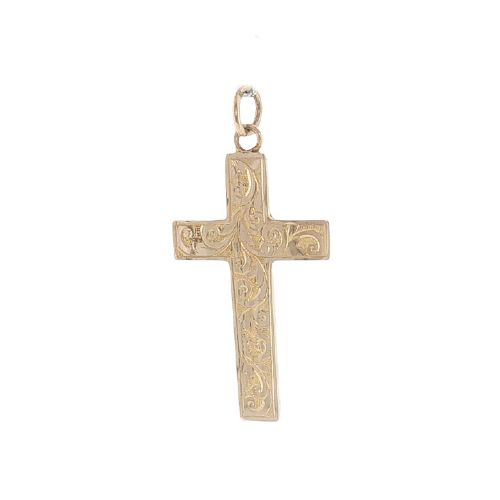
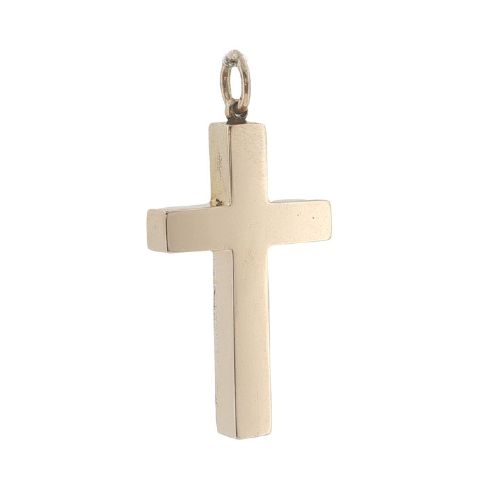
The form you'll meet most is a 9ct gold pendant, plain or engraved, Victorian or Edwardian, often struck at Birmingham or Chester. "9ct" appears in 45 titles. Above that sit 18ct and 15ct examples, and rose and yellow gold both turn up throughout.
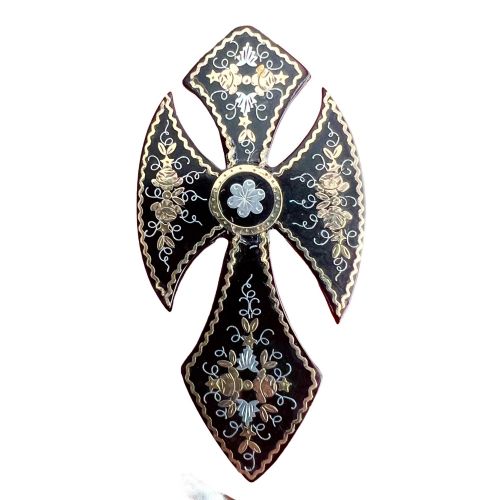
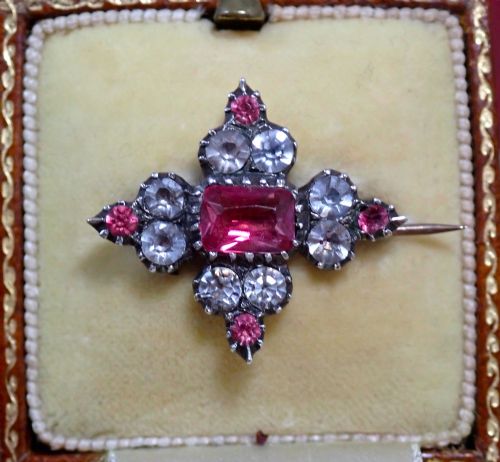
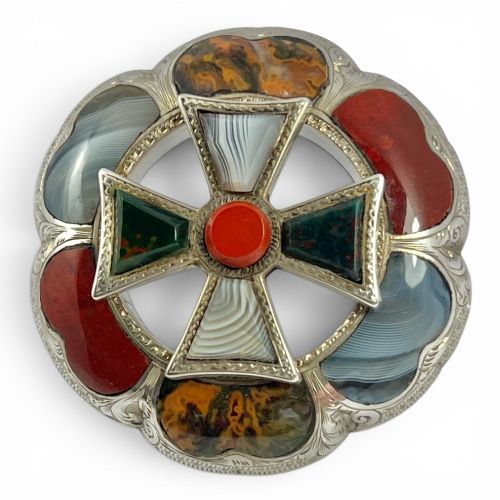
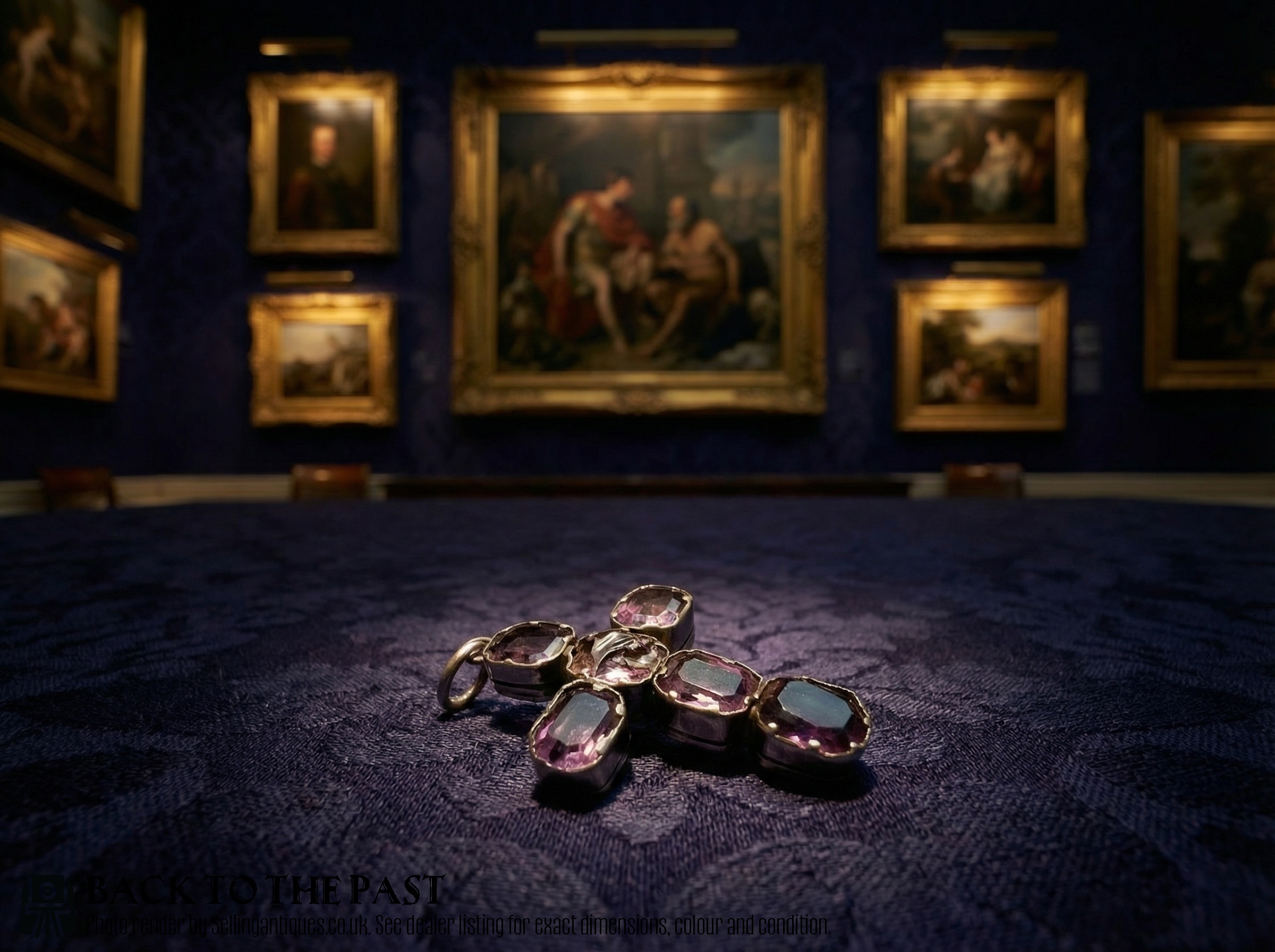
Stone-set crosses make up about a quarter. Diamond appears in 34 titles, pearl in 18, amethyst and sapphire in 8 each, with turquoise, opal, topaz, garnet and multi-gem pieces in the mix. Silver, paste and enamel work accounts for around a fifth, including Georgian foiled amethyst and black-dot paste crosses, Austro-Hungarian silver gilt and Scottish silver-and-agate.
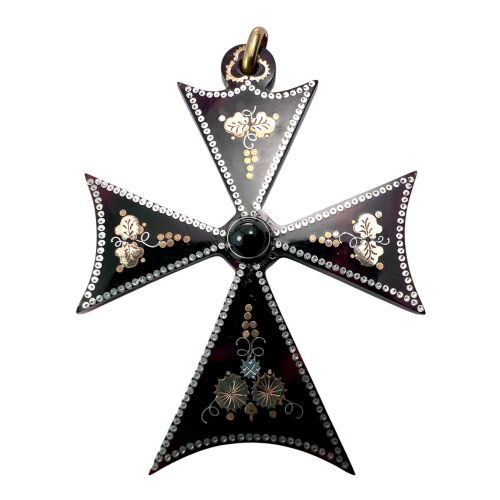
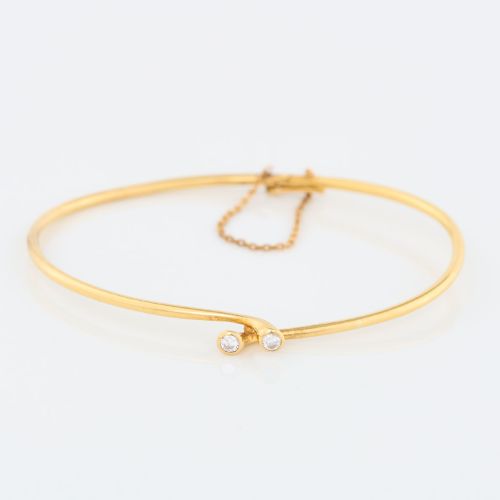
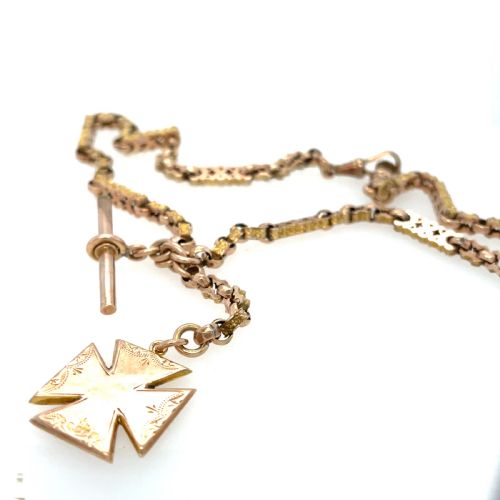
Roughly a fifth of titles use "cross" in another sense altogether: cross-over and crossover rings, a cross-over bangle, crossed stud earrings, brooches depicting a cross. Named types surface occasionally too, among them Maltese, Celtic, Iona-style, a Croix de St Lô and an Imperial Russian Orthodox cross. Victorian is the largest period bracket at 32, with the 1950s and 1960s together supplying 30.
Where The Range Splits
Metal does most of the sorting. The 9ct pendants cluster through the lower and middle of the range, while 18ct, 15ct, 22ct, 24ct and platinum examples sit at the upper end. Fifteen carat is worth knowing on sight, since it marks British work made before 1932.
Stones matter when they're named and weighed. A title quoting a carat figure, or an old or rose cut, sits above one that simply says diamond, and the climb runs from a fraction of a carat up to a three-carat old-cut diamond cross at the top of the archive. The bottom is held by tiny 9ct pendants and a single stick pin.
Beyond that, two things lift a piece. A quoted assay office and year gives a date you can rely on rather than a dealer's estimate, and Birmingham, Chester, Glasgow and one Inverness provincial mark all appear. Scale counts as well: "large" turns up in 13 titles, against others that begin "Tiny".
Retail Price Guide 2026
Typical UK retail prices for crosses, calculated from the Sellingantiques database of over a million retail prices indexed since 2003. This retail price guide relies exclusively on Sellingantiques data; no external sources or auction records are used, so the figures do not describe the wider market.
Crosses have been listed on Sellingantiques since 2012.
The Antique Crosses Glossary
- 9ct / 15ct / 18ct
- Gold fineness in carats out of 24. Nine carat dominates this category, and 15ct is a mark of British work made before 1932.
- Pendant necklace
- A title convention meaning the cross comes with its chain rather than on its own. It appears in 17 titles.
- Crucifix
- A cross bearing the figure of Christ. Used in 8 titles, sometimes loosely for a plain cross.
- Cross-over / crossover
- A ring or bangle whose shoulders pass one another. Nothing to do with a cross pendant, though it shares the search term.
- Paste
- Cut and often foil-backed glass standing in for a gemstone, common in Georgian and Victorian silver crosses. Foiling is a reflective backing set behind a closed-back stone to lift its colour.
- Zolotnik
- The Russian fineness system, where 56 zolotnik is roughly 14ct gold.
Frequently Asked Questions
What is the most common type of antique cross?
A 9ct gold pendant, plain or engraved. "9ct" appears in 45 of 146 titles and "pendant" in 88, so that combination is what turns up most often.
Many are Victorian or Edwardian and carry a British hallmark, with Birmingham the commonest office where a mark is quoted.
Why do some listings show rings instead of crosses?
Because "cross" carries a second meaning in jewellery. Roughly a fifth of titles in this category use it in the crossover sense: cross-over rings, half-eternity rings, a cross-over bangle, crossed stud earrings.
A crossover ring is one whose shoulders pass one another. It shares the search term and nothing else.
Which periods do antique crosses come from?
The dated field runs from 1700 to 1960. Victorian is the biggest single bracket at 32 listings, then the 1950s at 16 and the 1960s at 14, with Edwardian at 11 and Georgian at 10.
Only 71 of the 146 listings carry a clean year. Elsewhere you'll see "19th Century", "18th Century", "circa 1870" or plain undated, which means the period label is the dealer's estimate rather than a hallmark date.
Are gem-set crosses common in this category?
Yes. Diamond appears in 34 titles, pearl in 18, and amethyst and sapphire in 8 each. Turquoise, opal, topaz, garnet, emerald, ruby and tanzanite all show up in smaller numbers.
Gem-set pendants make up about a quarter of the category overall. Paste stands in for gemstones in another 10 titles, mostly Georgian and Victorian silver work.
Do antique crosses carry maker's names?
Not as a rule. No maker or retailer stands out as a feature of this category, so what identifies a piece is usually its metal, its stones and its hallmark rather than a name.
Where a mark is quoted it tends to be a British assay office and year: Birmingham, Chester, Glasgow and an Inverness provincial mark all appear.
How many antique crosses come up for sale?
Thirty-seven dealers have listed in this category on Sellingantiques, and around twenty-one pieces reach the market a year. Steady flow, never a flood.
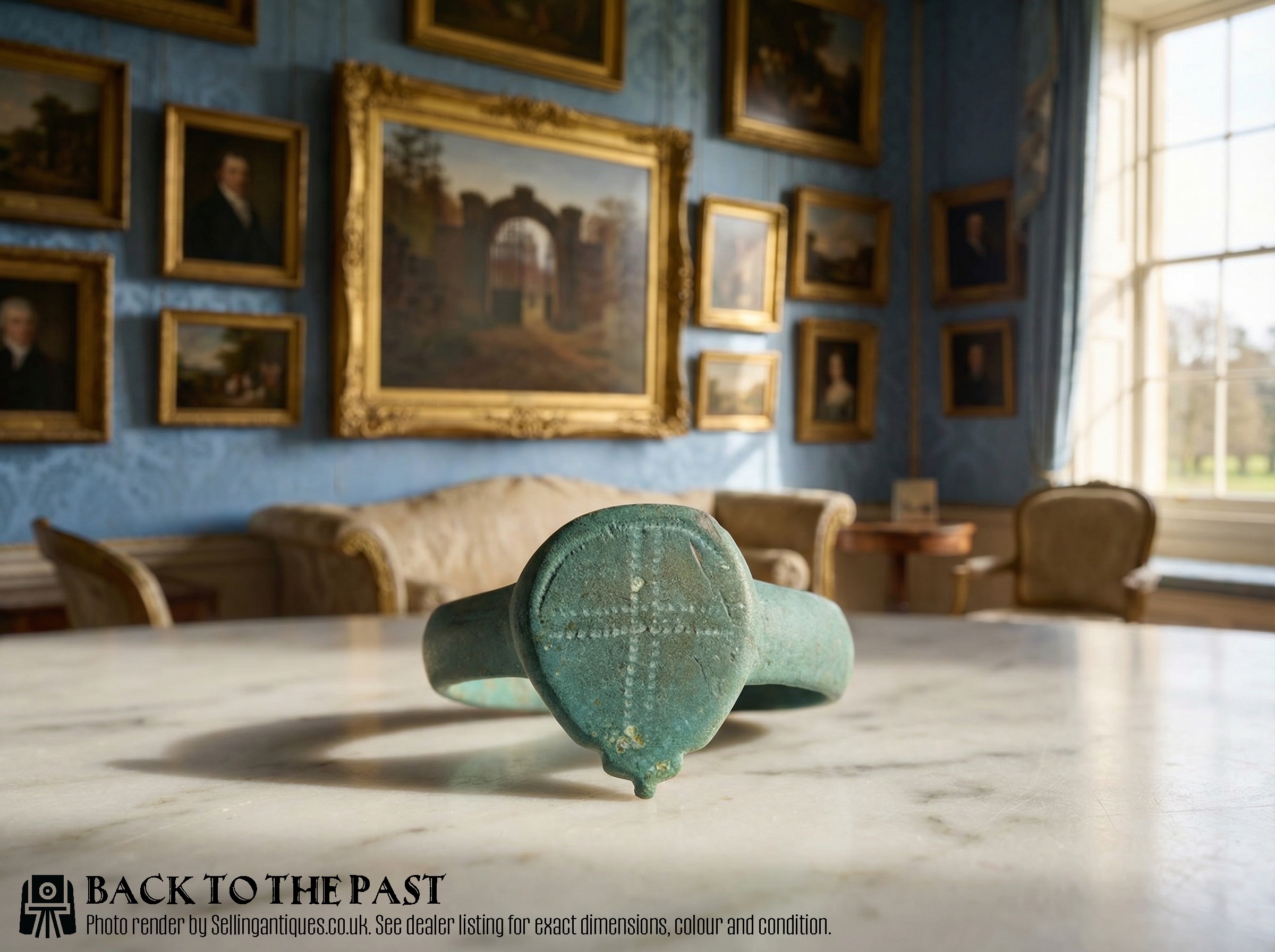
The unusual entries appear once and not again: a Byzantine bronze cross ring, a late medieval bronze shield signet ring with a cross, a Roman silver ring with a cross, an 18th-century decade rosary ring, and a micro-mosaic cross showing views of St Paul's.