
Antique Bangles
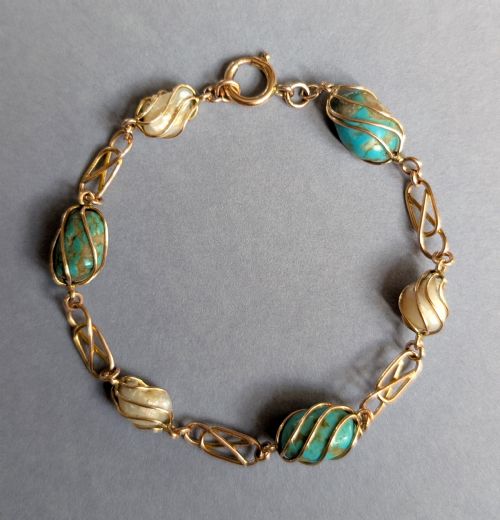
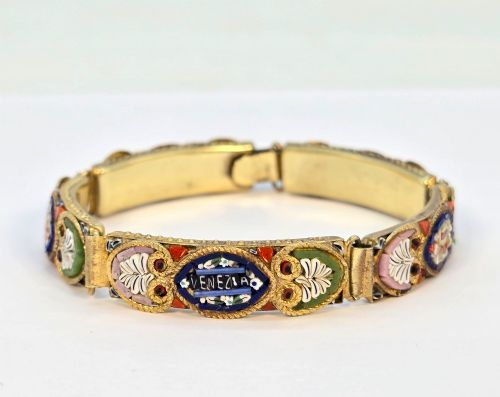
A bangle is a rigid or hinged band worn on the wrist rather than a flexible chain, and the ones listed here are largely nineteenth-century jewellers' stock: engraved cuffs, screw-clasp hoops and gem-set gold made to be worn in pairs or stacked.
What Are Antique Bangles?
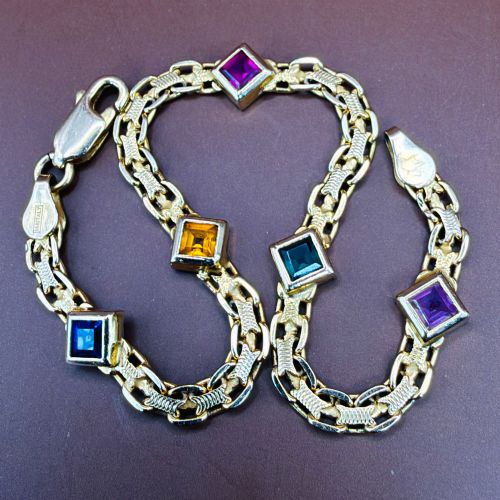
The heading covers rigid and semi-rigid wrist jewellery, and it sits inside the wider bracelet trade. Half of all titles on Sellingantiques use the word bracelet as well as or instead of bangle, and pieces are often offered as "bangle / bracelet", so the rest of the description is where the form gets settled.
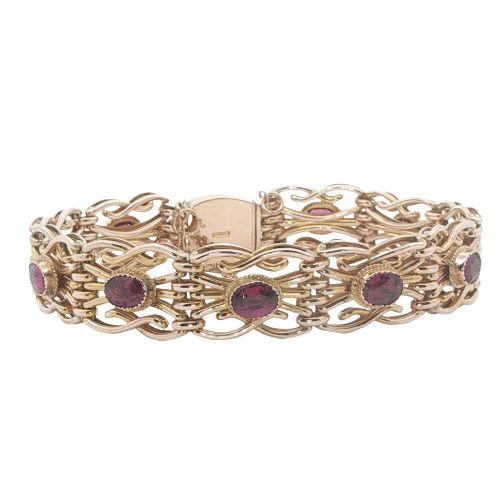
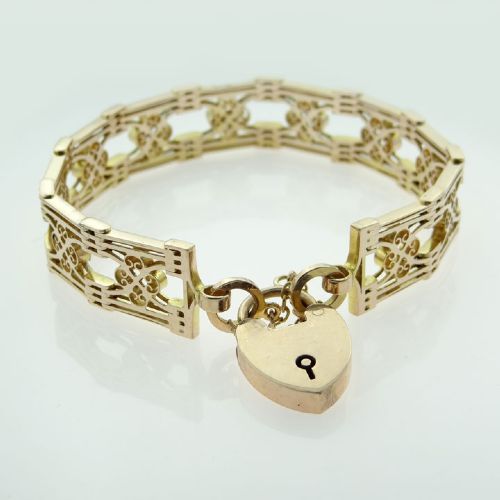
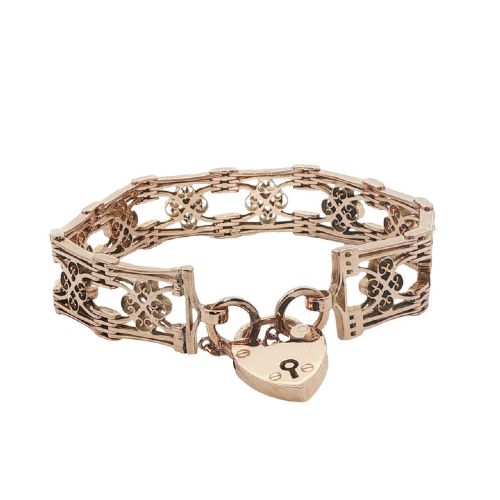
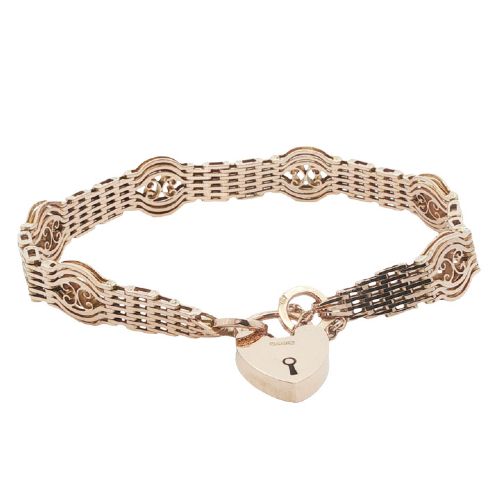
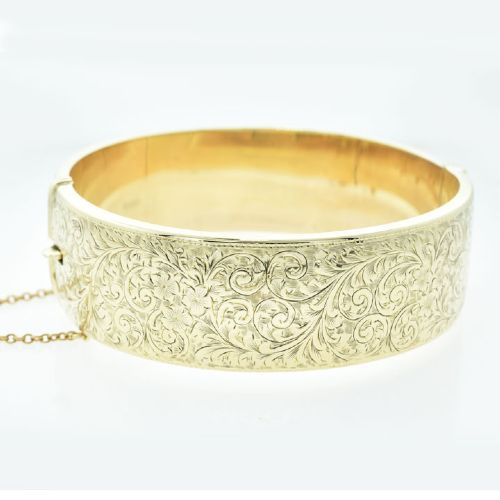
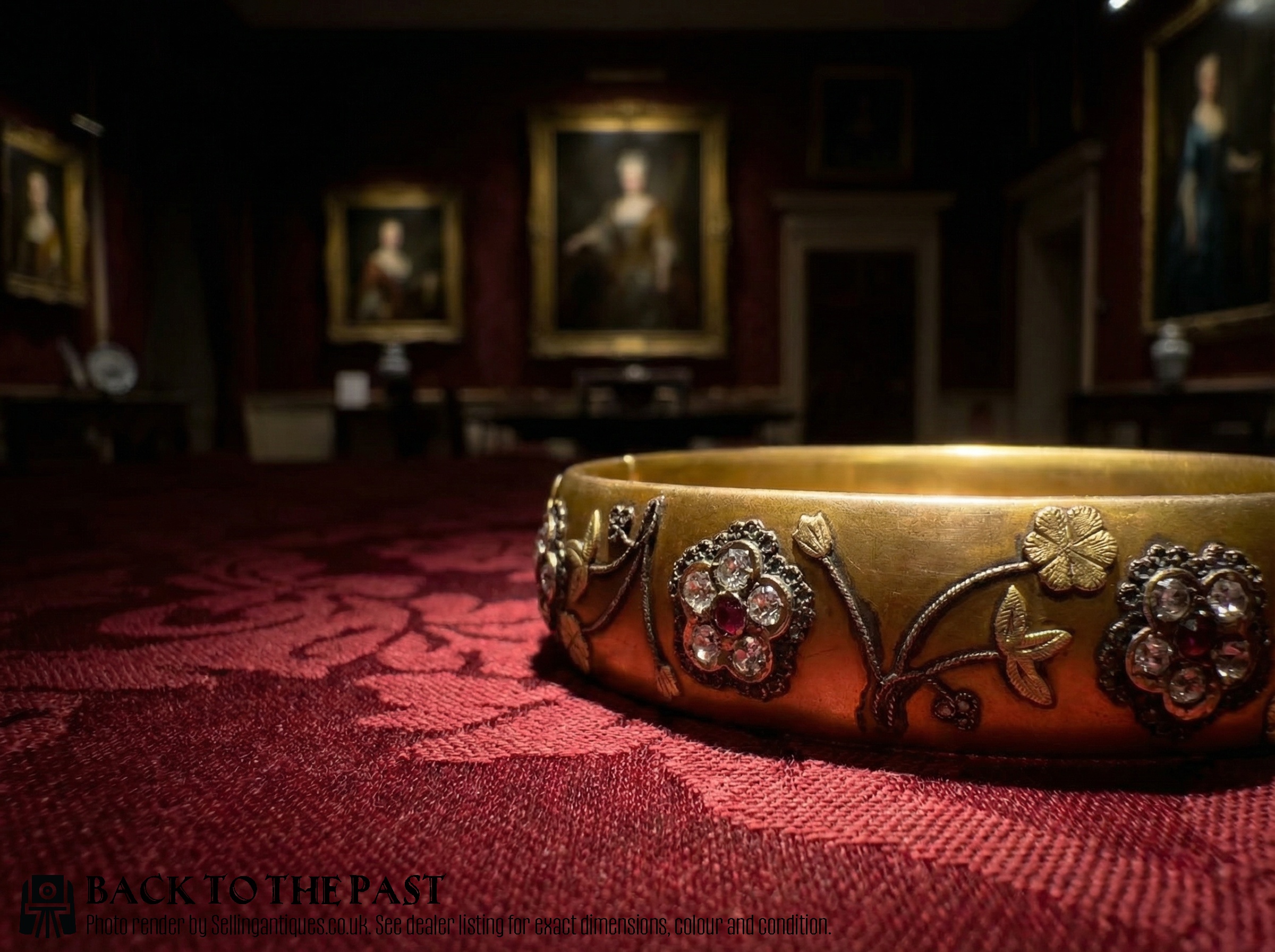
Gold dominates. It appears in just over half the titles, most often 9ct, then 15ct and 18ct, with rose gold a recurring note through the Victorian and Edwardian work. The shapes that repeat are the hinged cuff and the engraved floral or buckle bangle. Victorian dating leads the field by a wide margin, so the piece you are most likely to meet is a British hallmark-standard gold bangle of the second half of the nineteenth century.
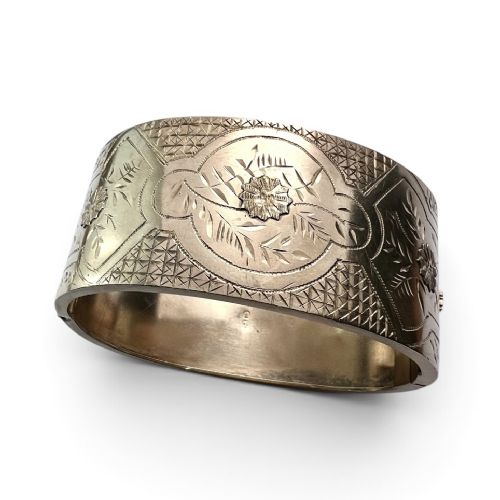
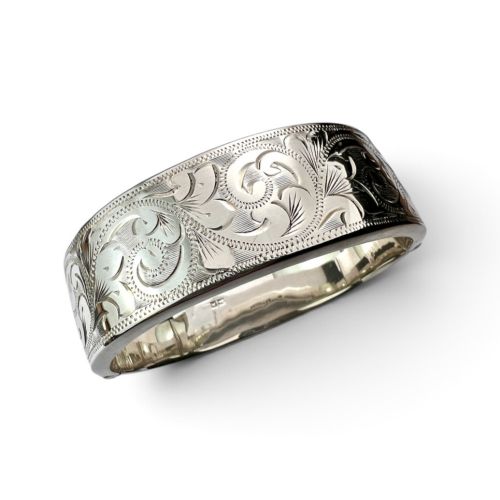
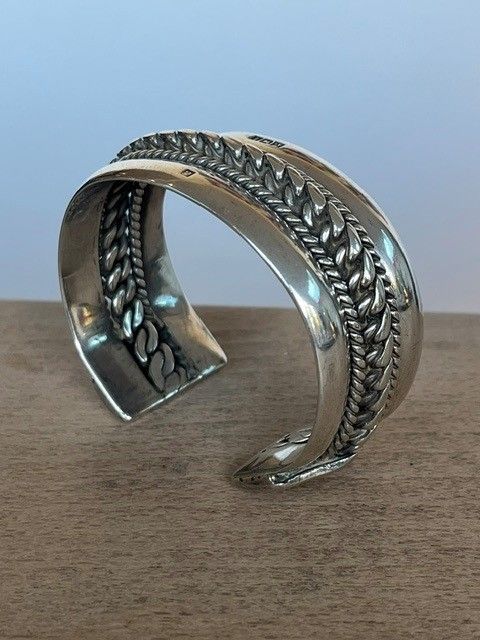
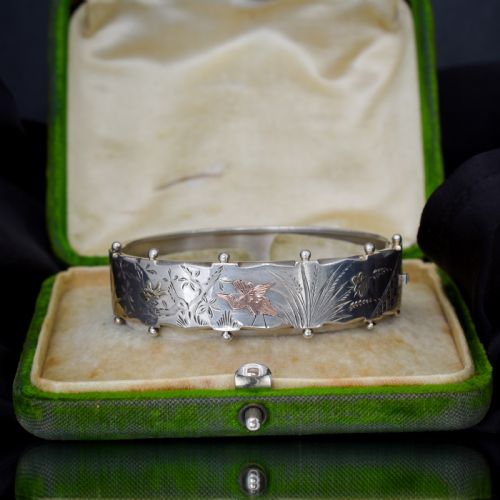
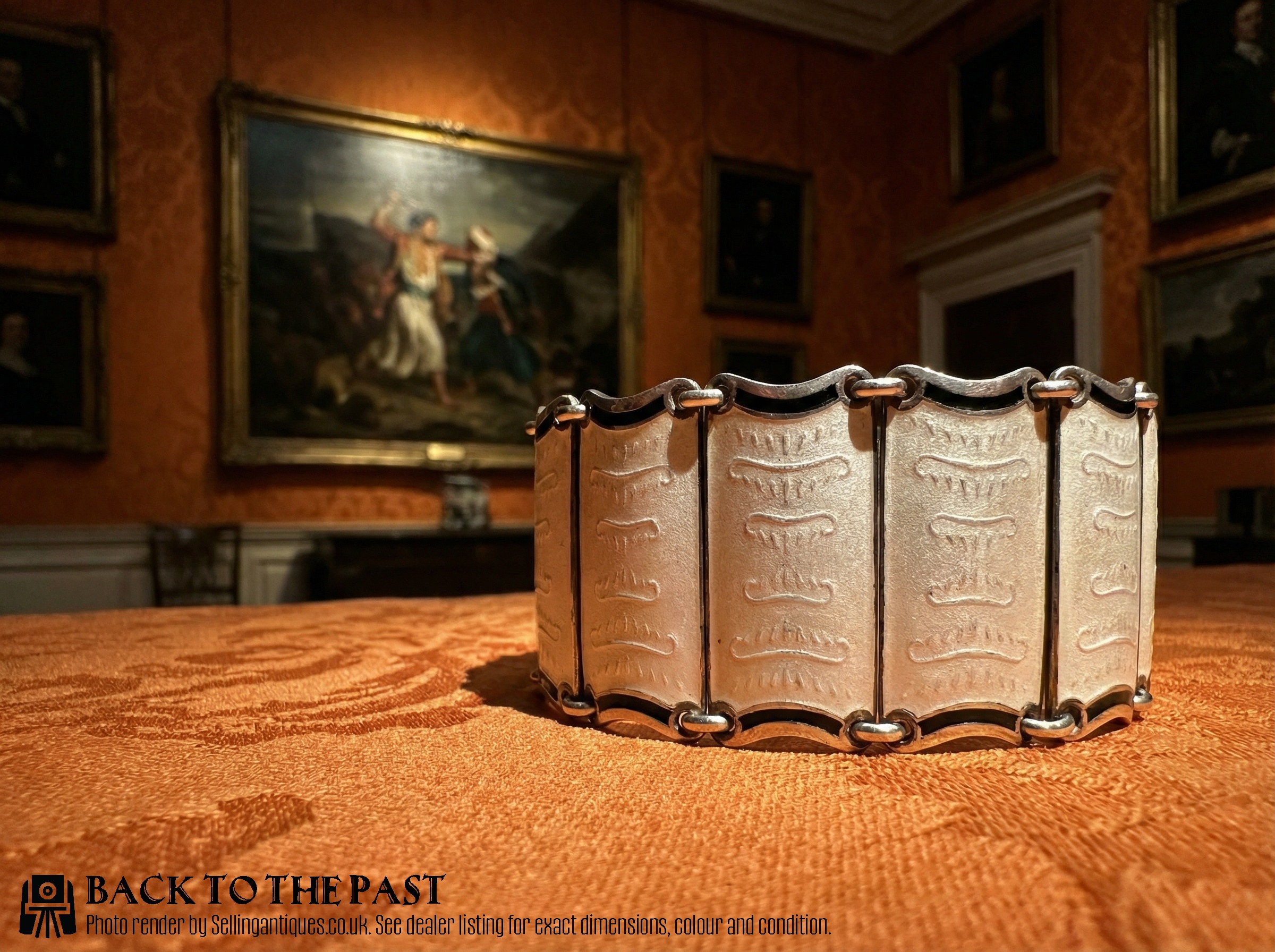
Silver runs a strong second, much of it Victorian hinged cuffs with engraved aesthetic-movement decoration, birds and flowers and bamboo, sitting at the lower and middle of the range. Alongside that is a separate seam of mid-century Scandinavian silver, Danish above all, with Norwegian, Finnish and Swedish examples, clustered in the 1950s and 1960s. The archive has two peaks over a century apart.
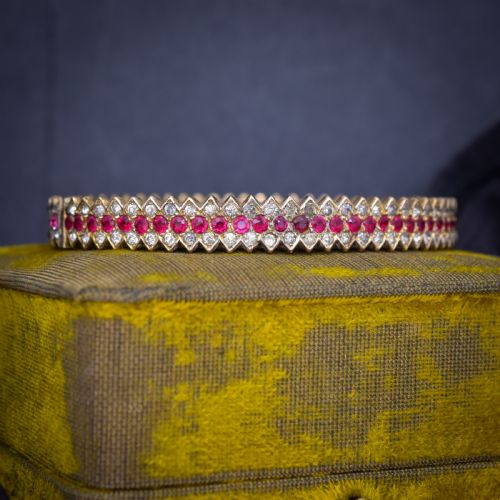
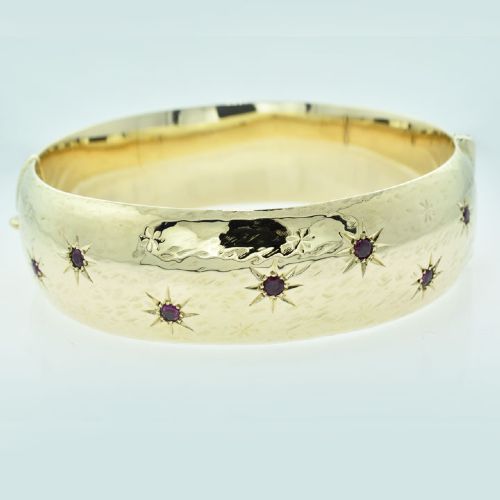
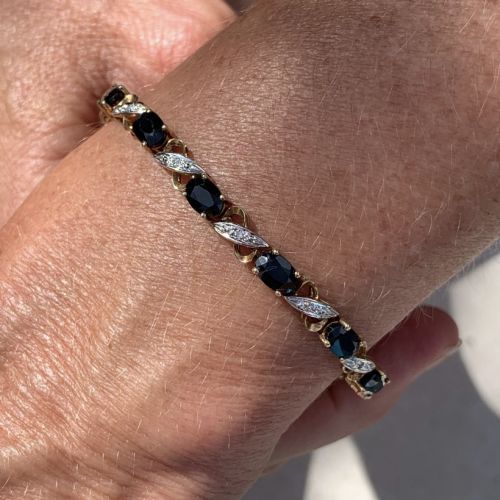
At the top, Art Deco and Art Nouveau gem-set pieces, many of them platinum, take up a small share by count. Diamond appears in a quarter of titles, pearl in around a sixth, with sapphire and ruby behind. Outside the precious-metal mainstream, jade, bakelite, carved ivory, bamboo, chromium and enamel, Mexican and Rajasthani silver each turn up as one-offs.
Where The Range Splits
Metal does most of the sorting. The bottom of the range is silver, plated and metal-core work, where a base-metal body carries a gold layer and dealers name it openly as rolled gold or gold filled. From there it climbs through 9ct to 15ct and 18ct, and the highest-priced pieces are platinum or 18ct.
Then substance. Weight in grams is volunteered often enough to compare, and "wide", "heavy" and "solid" appear in titles for a reason: a 27g 9ct bangle or a 32.6g 18ct cuff is a different object from a 4.8g one of the same shape. Quoted gem weights work the same way. A stated carat figure is itself a marker, and the larger ones are set in platinum or 18ct.
Two smaller things lift a piece within its own type. A cited hallmark year and assay town, a Chester or Birmingham date letter, puts a bangle above otherwise similar undated examples. An original box or fitted case clusters in the upper half. In the Scandinavian silver, a named designer or model number sits above the unattributed bangles of the same size and date.
Retail Price Guide 2026
Typical UK retail prices for bangles, calculated from the Sellingantiques database of over a million retail prices indexed since 2003. This retail price guide relies exclusively on Sellingantiques data; no external sources or auction records are used, so the figures do not describe the wider market.
The earliest bangle in the Sellingantiques archive is a rose-cut diamond mourning bangle put at about 1800. The dated field runs from then to 1960.

The Antique Bangles Glossary
- Bangle vs bracelet
- A bangle is rigid or hinged, a bracelet flexible. Dealers here commonly use both words in one title, so the body of the description is what tells you which you are looking at.
- Hinged cuff
- Opens on a hinge with a clasp opposite, and the wide engraved version is one of the most repeated Victorian silver forms in the archive.
- 9ct, 15ct, 18ct
- British gold standards. 15ct was legal only between 1854 and 1932, so it pins a piece to that window without a hallmark date needing to be read.
- Metal core, rolled gold, gold filled
- A base-metal body under a thin gold layer. Named plainly in several titles, and it marks the lower end of the range.
- Seed pearl
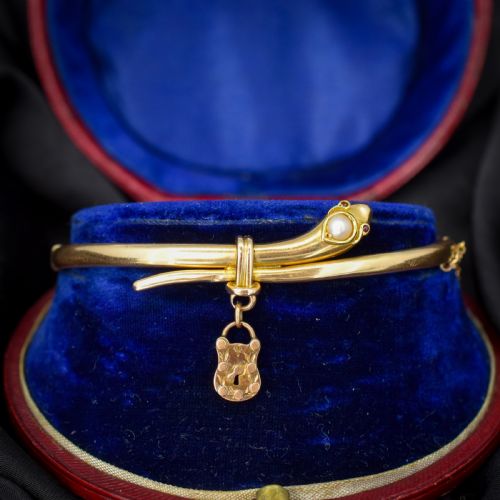
- Tiny natural pearls, usually set in rows or clusters. Seed and split pearl bangles run through the Victorian and Edwardian gold work.
- Aesthetic Movement
- Late-Victorian engraved silver decoration, birds, flowers and bamboo, named in several of the wide cuff titles.
- Old cut, rose cut, old mine cut
- Pre-modern diamond cuts. The cut dates the setting as much as the stone, and turns up in the Deco and earlier gem-set pieces.
Frequently Asked Questions
Is a bangle the same as a bracelet?
In strict terms no. A bangle is rigid or hinged, a bracelet flexible.
In dealer copy the line blurs. Half of all titles on Sellingantiques carry both words, and plenty of pieces are listed as "bangle / bracelet", so the description rather than the heading tells you the form.
What period do most antique bangles come from?
Victorian is the largest single period by a wide margin, followed some way behind by Edwardian, with the 1900s to 1940s filling in steadily.
The second peak is the 1960s, which comes in just under Victorian, and the 1950s is close behind it. Dating in the field runs from 1800 to 1960.
Why do so many say 9ct or 15ct gold?
Those are British gold standards, and gold appears in just over half the titles. 9ct is the most common, then 15ct, then 18ct.
15ct is useful because it was only legal in Britain between 1854 and 1932. A 15ct bangle sits inside that 78-year window on the standard alone.
Are Scandinavian silver bangles a separate group?
Yes. Danish silver appears in around thirty titles, with Norwegian, Finnish and Swedish examples alongside, and they cluster in the 1950s and 1960s.
They read differently from the Victorian material and are found almost entirely in the sold archive rather than current stock. Within that group, a named designer or model number lifts a piece above the unattributed ones.
Which bangles sit at the top of the range?
Art Deco and Art Nouveau gem-set pieces, many of them platinum. They make up a small share by count but occupy the upper end.
Diamond weights quoted in listings run from a fraction of a carat up to well over thirty, and every stated figure above the middle of the range is set in platinum or 18ct gold.
Do non-precious bangles turn up?
They do, as scattered one-offs rather than a branch. Spinach and celadon jade, bakelite, carved ivory, bamboo, chromium and enamel have each appeared.
So have bangles from outside Europe, including Mexican silver, an Egyptian Bedouin cuff and a Rajasthani silver bracelet.