
Antique Brooches
A brooch is an ornament with a pin and catch, worn to fasten or decorate clothing at the neck, bodice or lapel.
Antique Brooches
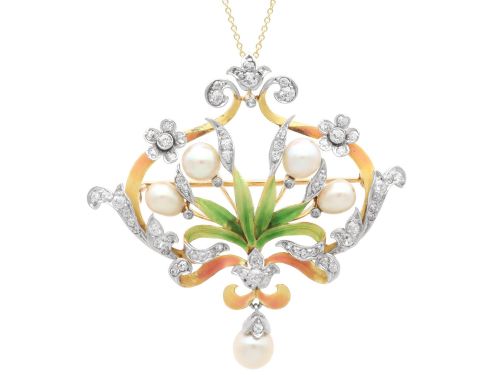
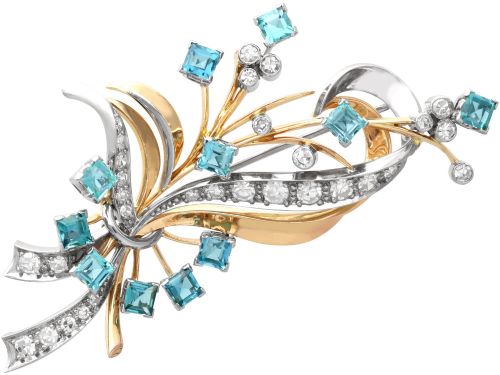
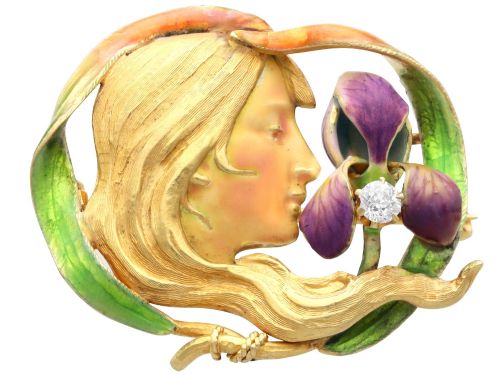
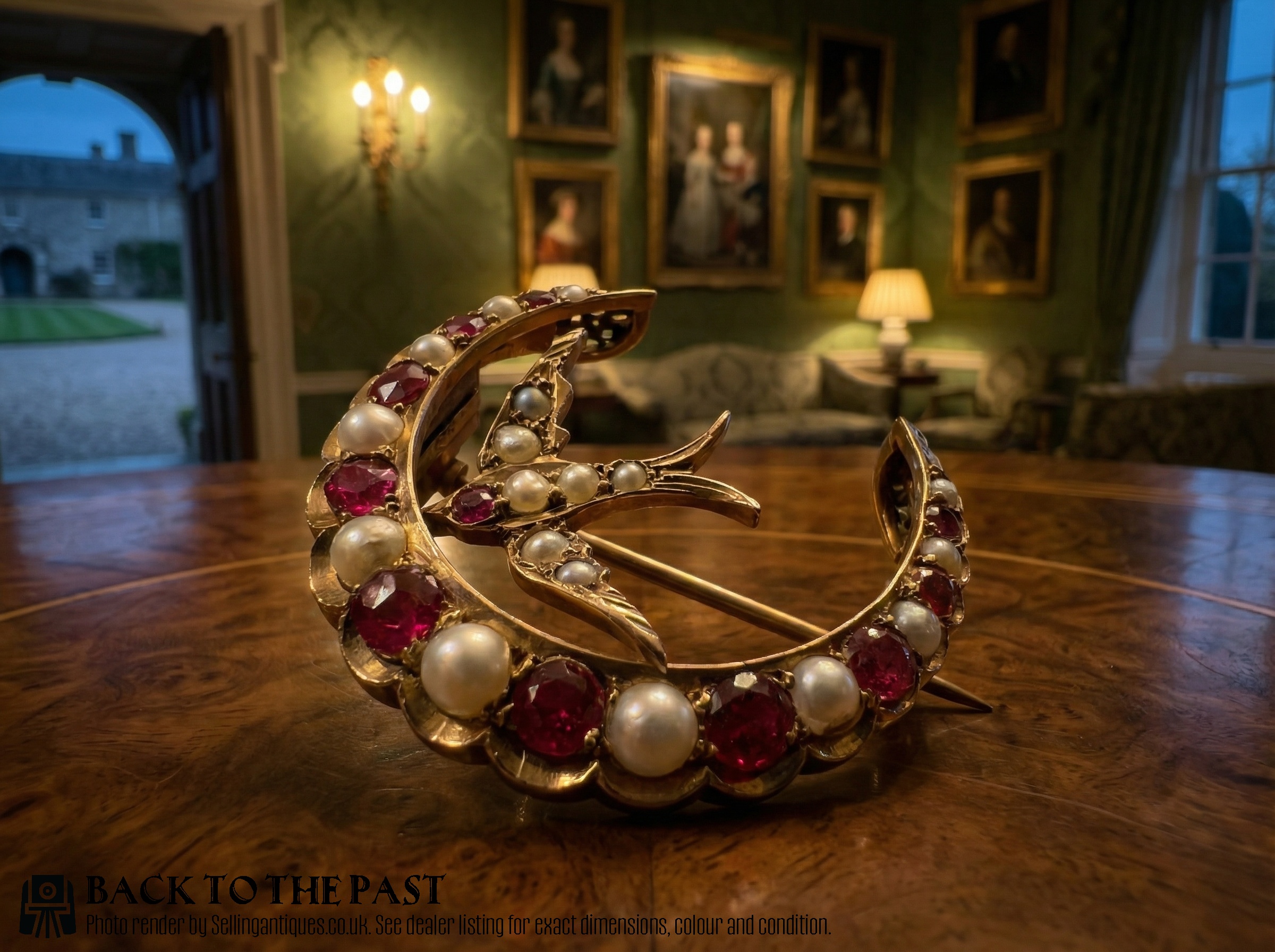
Two materials carry the category. Silver leads the titles, gold follows close behind, and the gold is usually stated by fineness: 9ct, 18ct and 15ct in that order. Platinum turns up in a small minority, and it tends to sit with the diamond pieces. Diamond, enamel and pearl are the three treatments named most often, then amethyst, ruby, sapphire, turquoise, garnet, agate and paste.
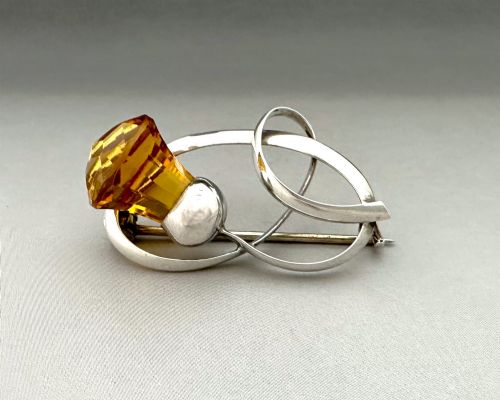
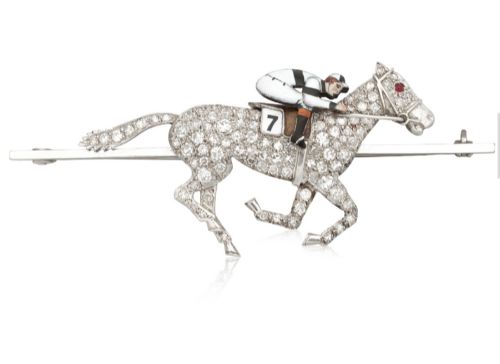
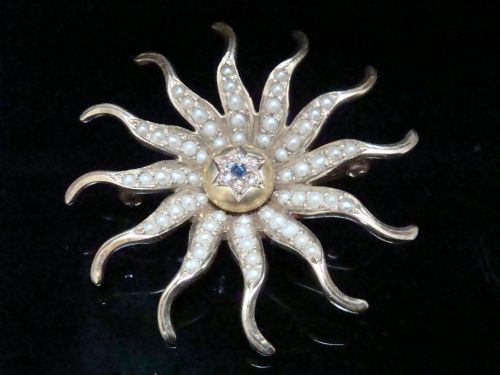
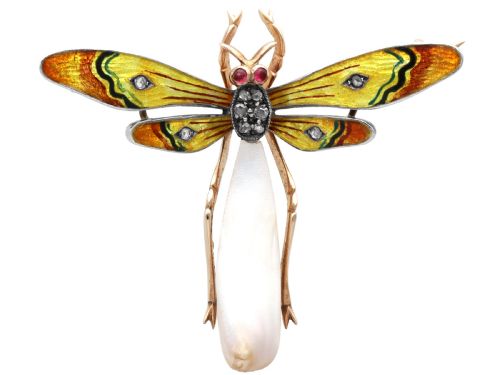
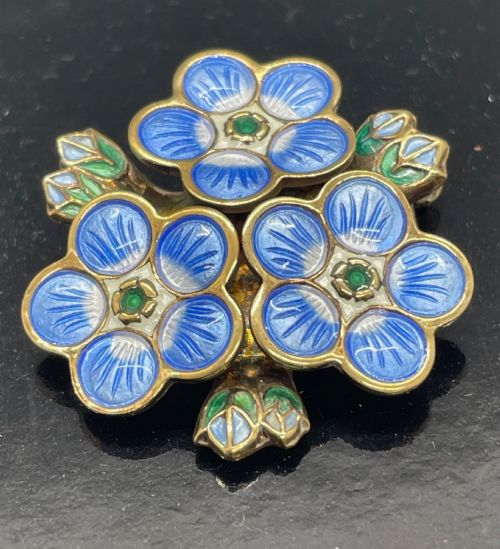
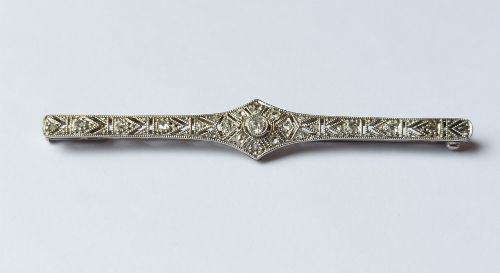
The commonest thing you'll meet is a single small brooch in silver or a stated gold fineness, set with one or a few stones or worked in enamel, and dated Victorian or Edwardian. Those two labels are the largest period groups by a distance. Bar brooches and butterfly brooches are the two shapes named most frequently, the butterfly usually in enamel.
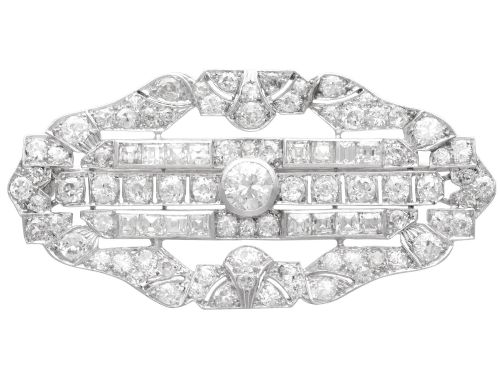
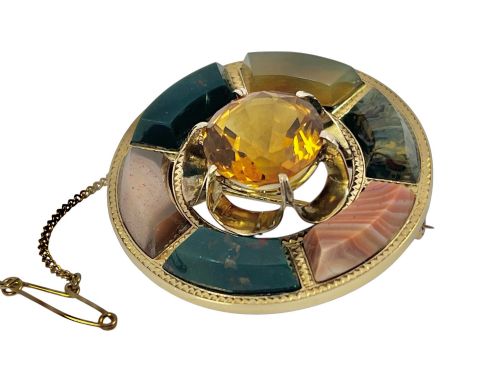
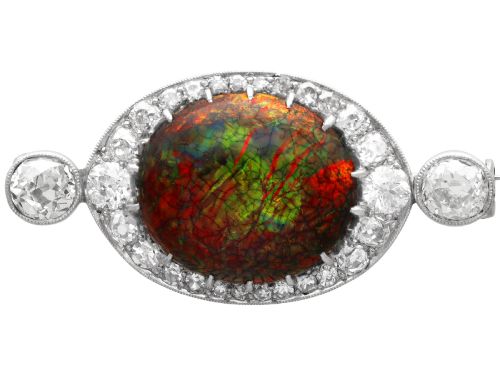
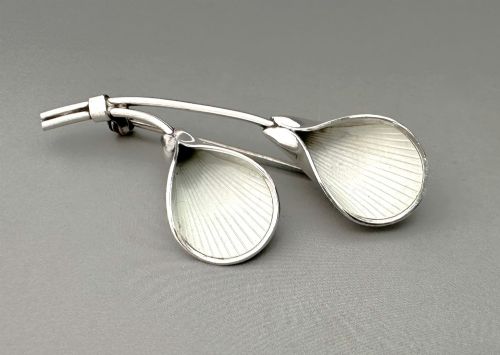
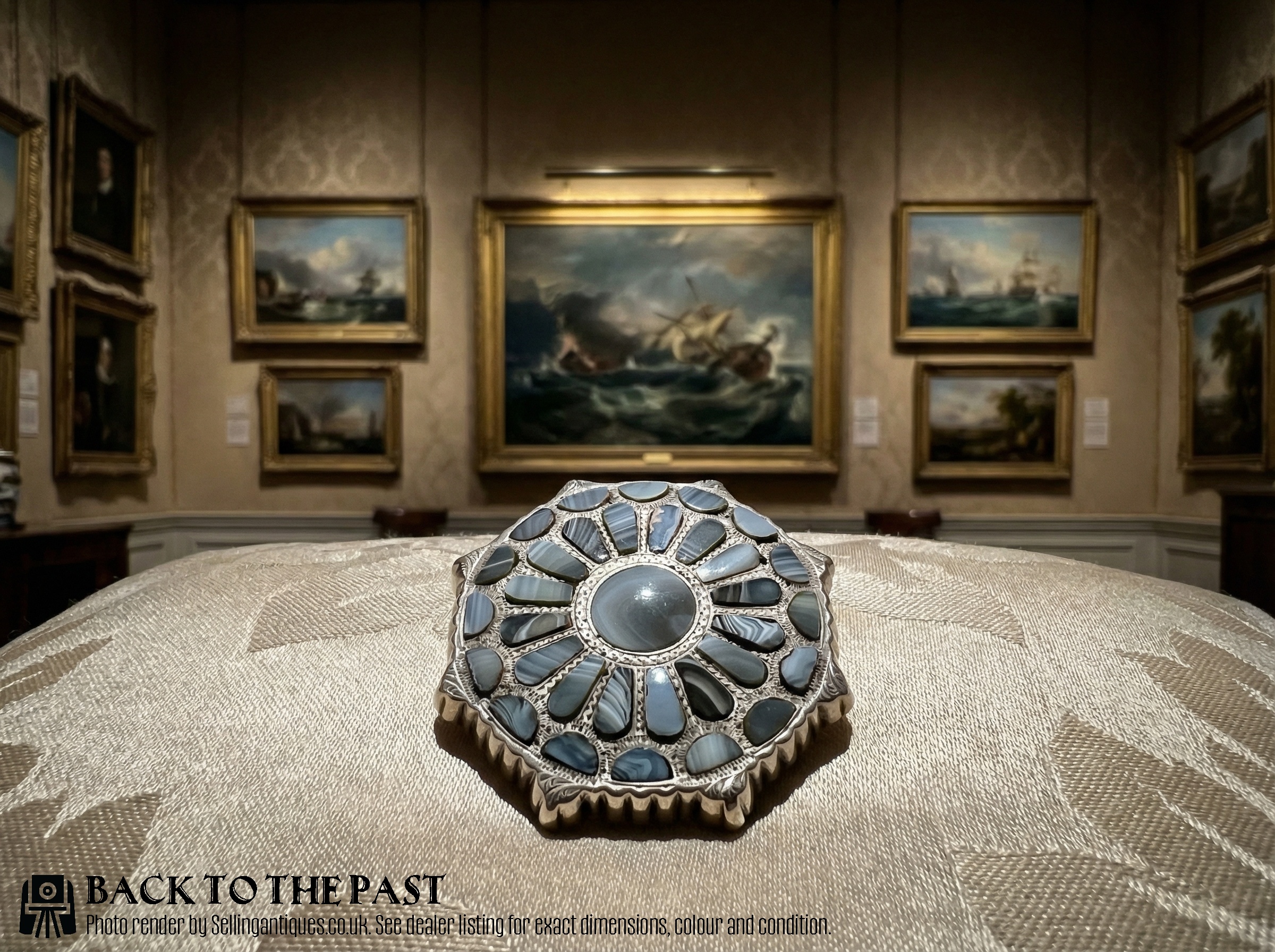
Several distinct branches run through it. Scandinavian silver and enamel, largely Norwegian, accounts for a good share and sits in the 1930s to 1960s bands. Scottish agate, pebble and Celtic work forms its own group, with dirks, luckenbooths, penannulars and kilt pins. Diamond-set brooches, Victorian through Art Deco, hold the whole top of the range. Art Deco and Art Nouveau silver, paste and marcasite make up a smaller slice.
Roughly one in six titles describes a piece that does two jobs: 144 say pendant as well as brooch, and 108 say pin, taking in stick pins, tie pins, kilt pins and jabot pins. On dates, the field runs 1800 to 1960, though much of it is period label rather than year. Georgian appears in only 41 titles, so anything earlier than about 1800 is scarce, and the 1950s is the third-largest bucket, meaning a great deal of what sells as an antique brooch is mid-century.
Top And Bottom
Metal and stone set the floor and the ceiling. Platinum and 18ct cluster with the diamond pieces; brass, chrome, pewter, silver-plate, bakelite and pinchbeck sit at the other end. Natural stones pull upward, and titles at the upper reaches specify natural pearl or unheated sapphire against paste, rhinestone and synthetic sapphire lower down.
Stated weight is the clearest single signal. Lower down, a title names the stone and leaves it there. Higher up it gives carats, and the largest sampled figures include a 19.00 carat brilliant-and-baguette double brooch, a 17.89 carat yellow Ceylon sapphire and a 71.96 carat citrine. The very top of the archive is an Imperial Russian peridot and diamond trellis brooch in its original Paris retailer's case.
A signature lifts a piece within its own branch, and the Scandinavian enamels respond to this most. Scale and elaboration matter too: large appears in 69 titles, and Scottish shield and agate brooches described as large or extra large sit above the small ones. An original box, fitted case or domed box shows up through the middle and upper part of the range.
Antique Brooches Retail Price Guide 2026
Typical UK retail prices for brooches, calculated from the Sellingantiques database of over a million retail prices indexed since 2003. This retail price guide relies exclusively on Sellingantiques data; no external sources or auction records are used, so the figures do not describe the wider market.
Scottish work runs to 121 titles on Sellingantiques: dirks, sgian dubh, luckenbooth, penannular and kilt pins, plus Montrose agate, Peterhead granite and clan brooches.

Aksel Holmsen·Hroar Prydz
The Antique Brooches Glossary
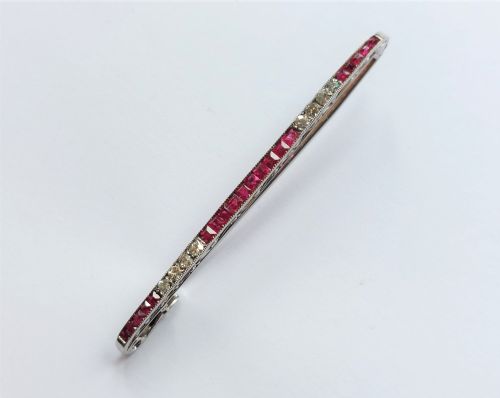
- Bar brooch
- A long narrow horizontal brooch, often with a single stone or a small cluster at the centre. Named in 81 titles, which makes it the commonest specific shape after the butterfly.
- 9ct, 15ct and 18ct
- Gold fineness stated in the title. These three are the ones you'll see most, 9ct ahead of the other two, and 15ct is a British standard of the period.
- Paste
- Cut and often foil-backed glass standing in for gemstones, in 66 titles. It runs from eighteenth-century French work through to Art Deco silver settings.
- Pendant/brooch
- A piece fitted with both a pin and a loop or bale, so it can be worn either way. Pendant appears in 144 titles.
- Guilloché enamel
- Translucent enamel laid over an engine-turned metal ground. It gives the shimmer on the Scandinavian butterflies, of which 76 are enamel.
- Penannular, luckenbooth and dirk
- Scottish brooch forms: an open ring, a twin-heart love token and a dagger shape. They belong to a vocabulary of 121 Scottish titles that also takes in sgian dubh, Montrose agate and Peterhead granite.
Antique Brooches: Frequently Asked Questions
What are antique brooches usually made of?
Silver and gold dominate the titles, silver slightly ahead. Gold is nearly always given by fineness, with 9ct the most common, then 18ct and 15ct.
Platinum is a small minority and keeps company with the diamond pieces. At the lower end of the range you'll find brass, chrome, pewter, silver-plate, bakelite and pinchbeck.
Which period do most of them come from?
Victorian and Edwardian are the two largest period groups, Victorian by a wide margin. Both labels cover long spans, and titles also use looser forms like 19th Century, mid Victorian and circa 1880.
By decade, the 1950s is strongest, then the 1930s and 1920s. Georgian pieces are scarce, at 41 titles, so anything earlier than about 1800 rarely appears.
Why are so many brooches Norwegian?
Norway is the strongest single non-British origin in the archive, named in 100 titles, most of them silver. Danish silversmiths turn up in the sample too.
The group is mainly silver and enamel work from the 1930s to 1960s, and the enamel butterfly is its signature form. Both maker names carried by three or more dealers are Norwegian.
What does a convertible brooch mean?
It's a piece fitted with both a pin and a loop or bale, so it can be worn as a brooch or hung as a pendant. Pendant is named alongside brooch in 144 titles.
A further 108 titles say pin, covering stick pins, tie pins, kilt pins, jabot pins and hatpins, along with clip and double clip brooches.
Are stone weights given in the descriptions?
Only toward the upper end. Lower down, a title names the stone and stops there; carats start appearing as the pieces get more serious.
The largest sampled figures are a 19.00 carat brilliant-and-baguette double brooch, a 17.89 carat yellow Ceylon sapphire and a 71.96 carat citrine.
How many come up for sale each year?
About 215 come to market in a year on Sellingantiques, from a body of roughly 1,500 listings. Ninety-eight dealers have listed them.
That makes brooches one of the most widely stocked jewellery forms on the site.