
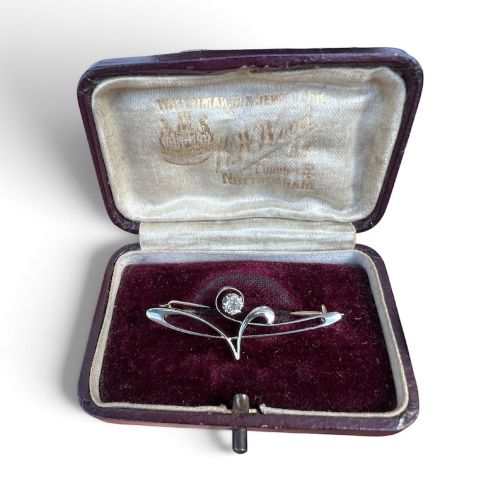
Art Nouveau Jewellery
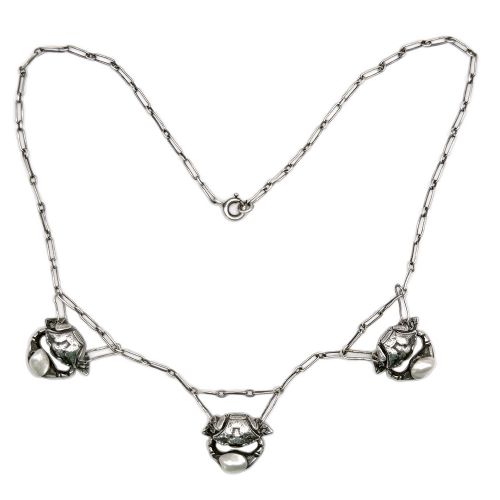
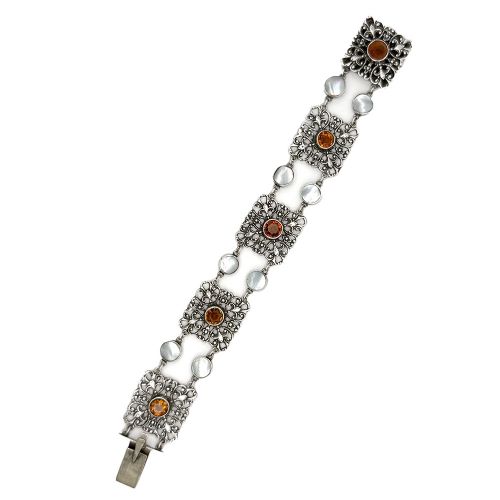
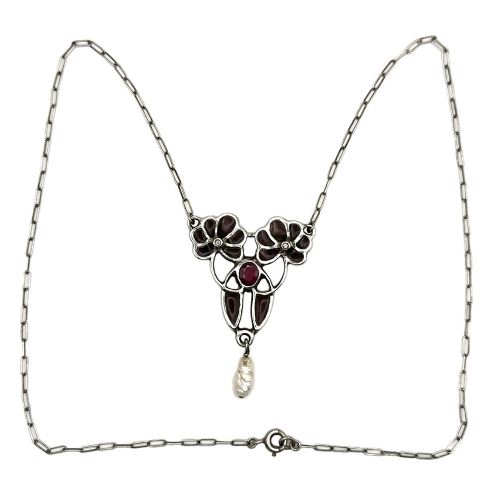
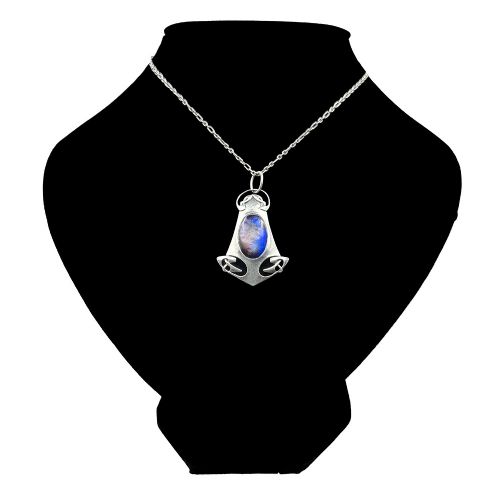
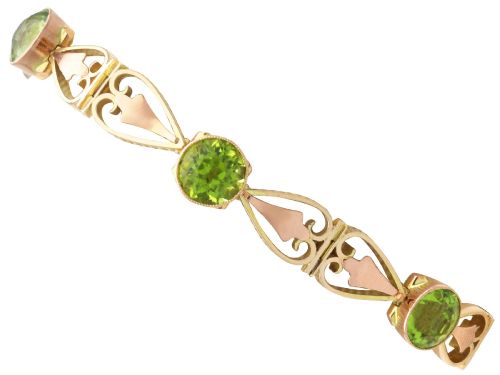
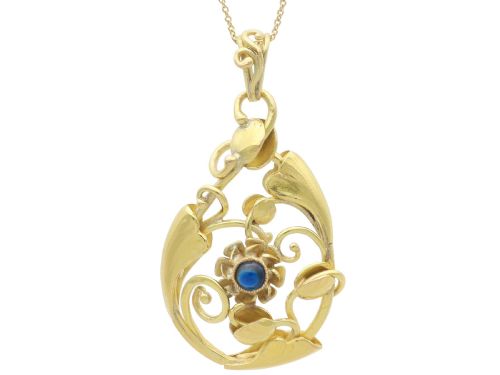
Small personal jewellery of about 1890 to 1920, worn every day: pendants and lavaliers, brooches, rings, hat pins and buttons, in gold or hallmarked silver, set with pearl, coloured stone or enamel.
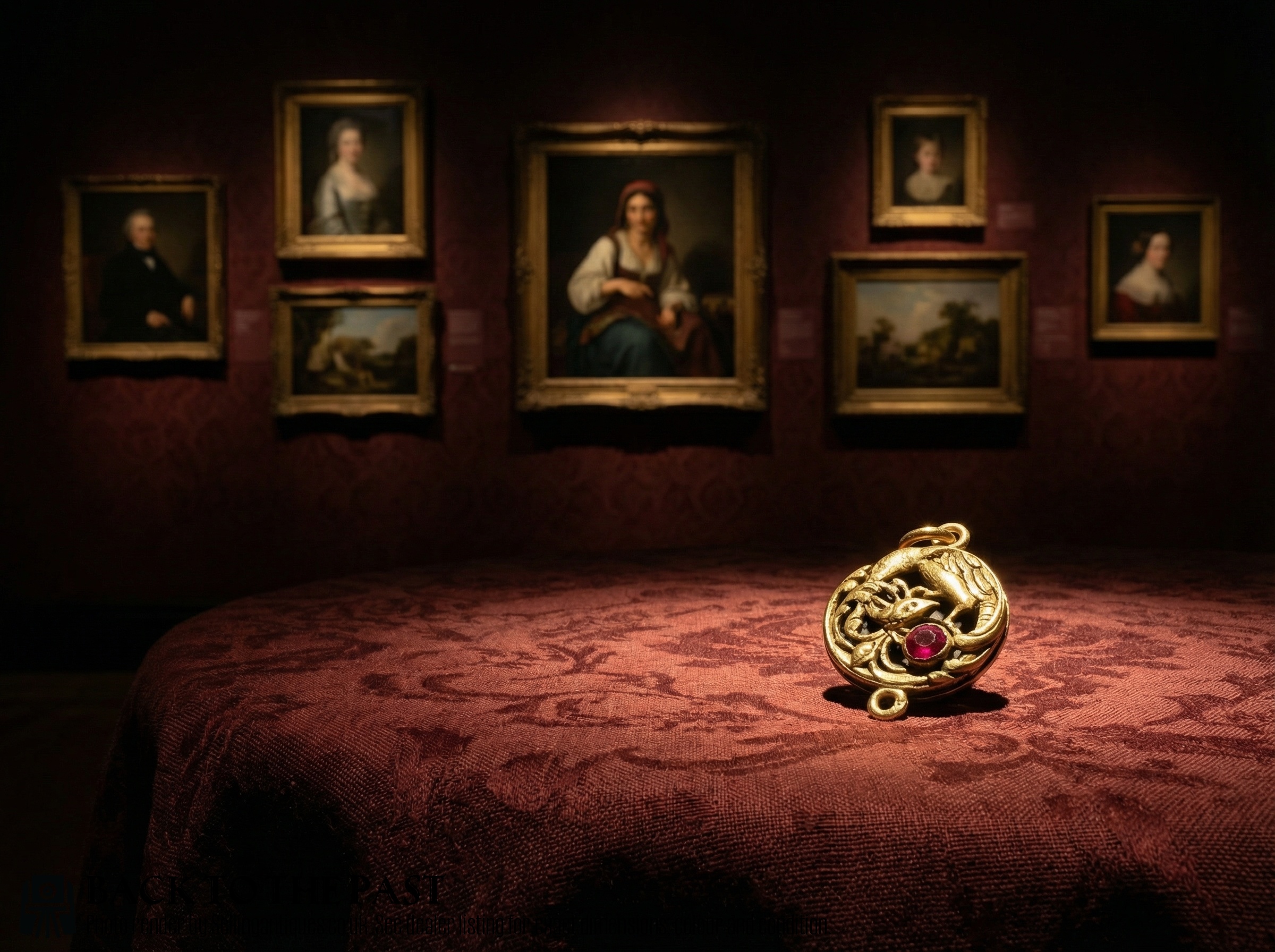
Art Nouveau Jewellery
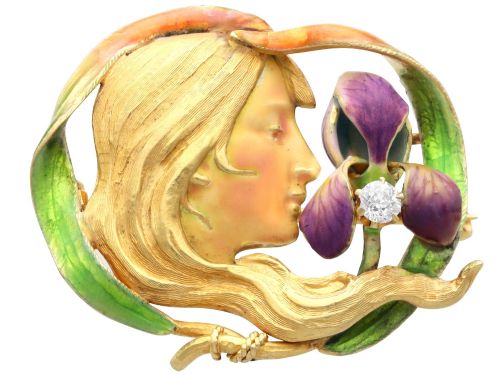
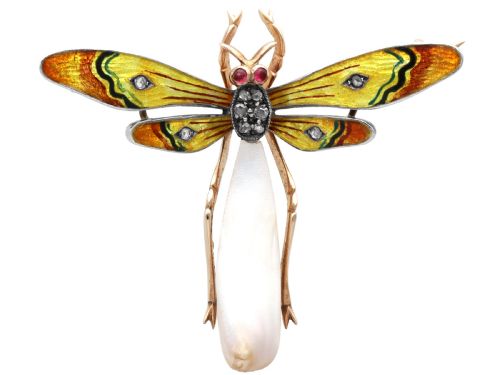
Art Nouveau was an international decorative movement of roughly 1890 to 1910, fond of whiplash curves, plant and insect forms and the female figure, and more interested in enamel and colour than in carat weight. The jewellery made under it was for ordinary wear rather than display: pendants, brooches, hat pins, buttons and rings, across Britain, France and German-speaking Europe.
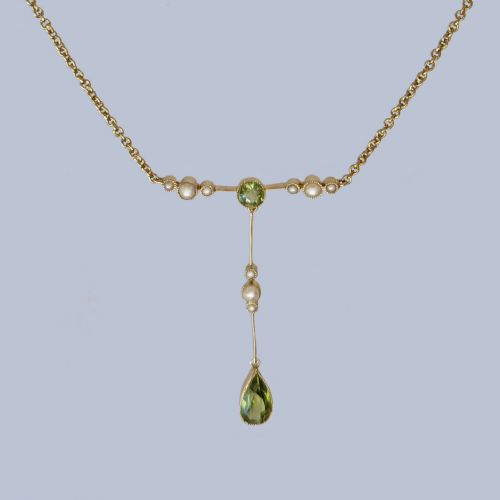
The piece you're most likely to meet on Sellingantiques is a gold pendant or pendant-necklace. Pendants account for 181 of 408 titles, close to half the category, and nearly a third mention a pearl. The repeated formula is a 9ct gold lavalier drop hung with amethyst, peridot or aquamarine and a scatter of seed pearls. Brooches and rings follow behind.
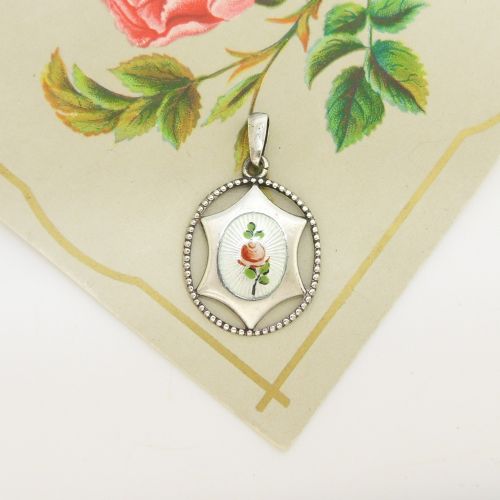
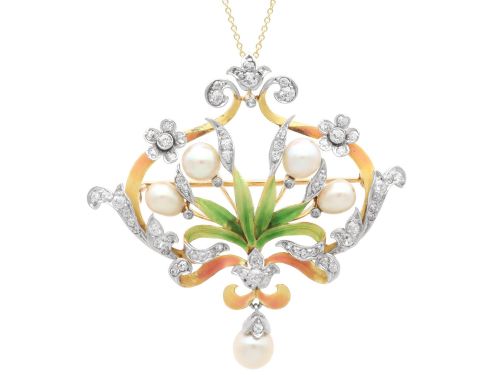
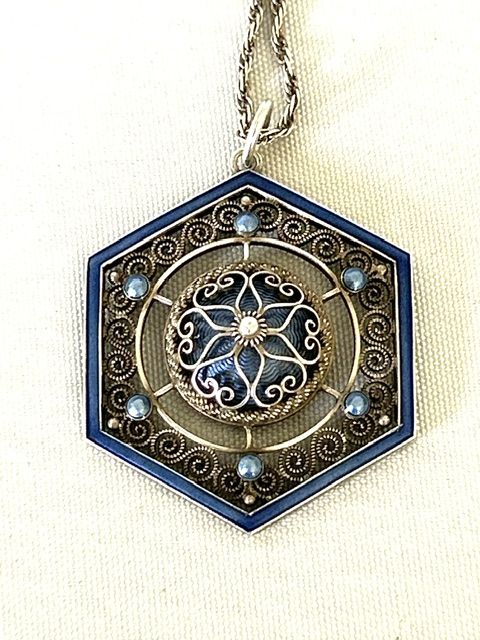
Alongside that sit three other seams. Hallmarked British silver and enamel makes up about a quarter, taking in brooches, hat pins, pendants and cased sets of six buttons with repeating subjects: classical maidens, irises, water lilies, snowdrops, peacocks. Roughly one listing in eight is a French gold devotional medal or charm pendant, often a Virgin Mary. Diamond-set rings, brooches and pendants in old and rose cuts run through about one in five, and hold most of the upper range.
Dating clusters hard on the turn of the century, with the 1900s, Edwardian and the 1910s taking the bulk of it. Read the period labels with that in mind: 'Edwardian', 'Victorian' and '19th Century' are used loosely and sometimes sit beside a circa date that says something different. Where a title carries an assay year, Chester 1901 or Birmingham 1909 among them, the dating is firmer than the period field alone suggests.
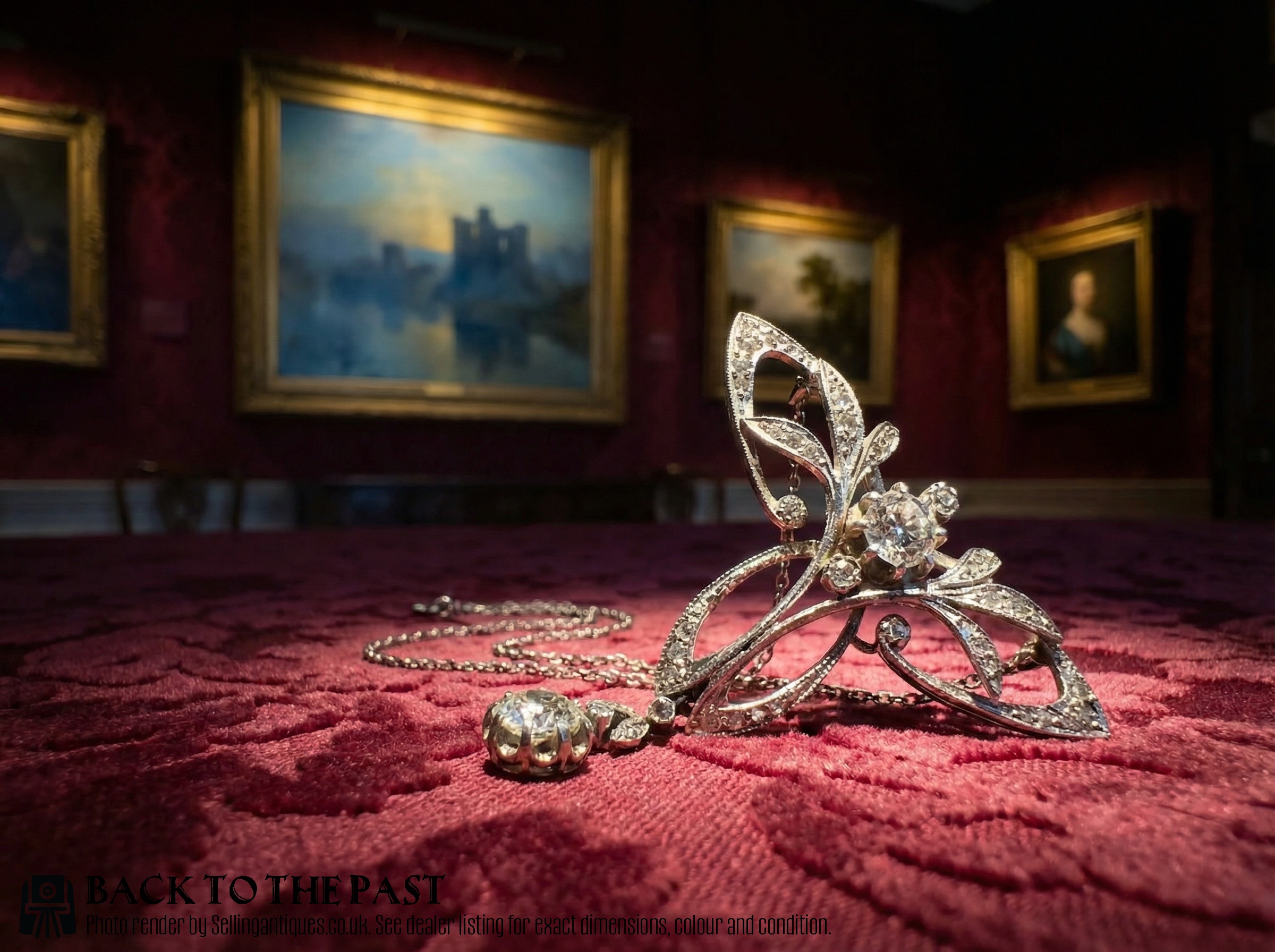
Where The Range Splits
Metal sets the floor and the ceiling. Silver hat pins, buttons and paste brooches sit at the bottom; 18ct gold and platinum diamond rings, brooches and bracelets sit at the top. The 9ct gold lavaliers that make up the biggest single group occupy the middle, and that is where most of the category lives.
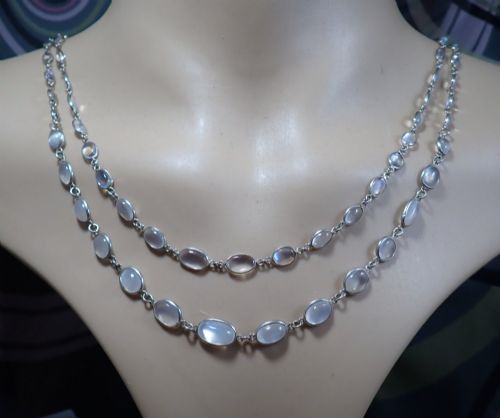
Stones do the rest. A quoted carat weight pushes a piece up, and the diamond rings and pendants that state theirs are consistently the highest-priced; unquoted amethyst and peridot pendants stay mid-range. Titles also separate natural, wild and saltwater pearl from cultured pearl, and real stone from paste and synthetic, and that distinction moves the piece either way.
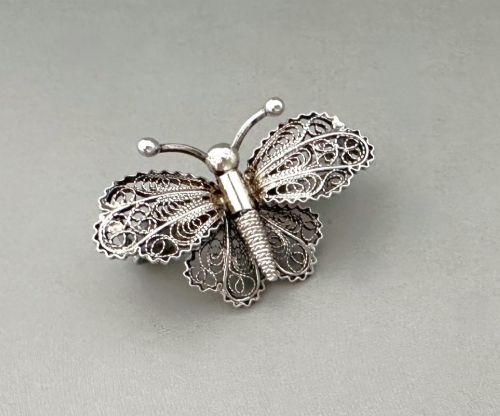
Enamel divides on technique. Plique à jour, enamel set in open cells with no backing so light passes through, is the hardest of the methods named here and appears in only 23 of 408 titles; those pendants and medals run well above the guilloche butterfly brooches that otherwise share the same silver-and-enamel description. A named workshop or a firm attribution lifts a piece above its anonymous equivalent in the same metal and stone, though most titles carry no name at all.
Art Nouveau Jewellery Retail Price Guide 2026
Typical UK retail prices for art nouveau jewellery, calculated from the Sellingantiques database of over a million retail prices indexed since 2003. This retail price guide relies exclusively on Sellingantiques data; no external sources or auction records are used, so the figures do not describe the wider market.
Cased sets of six hallmarked silver buttons keep turning up on Sellingantiques, with the same subjects: classical maidens, irises, water lilies, snowdrops and peacocks.
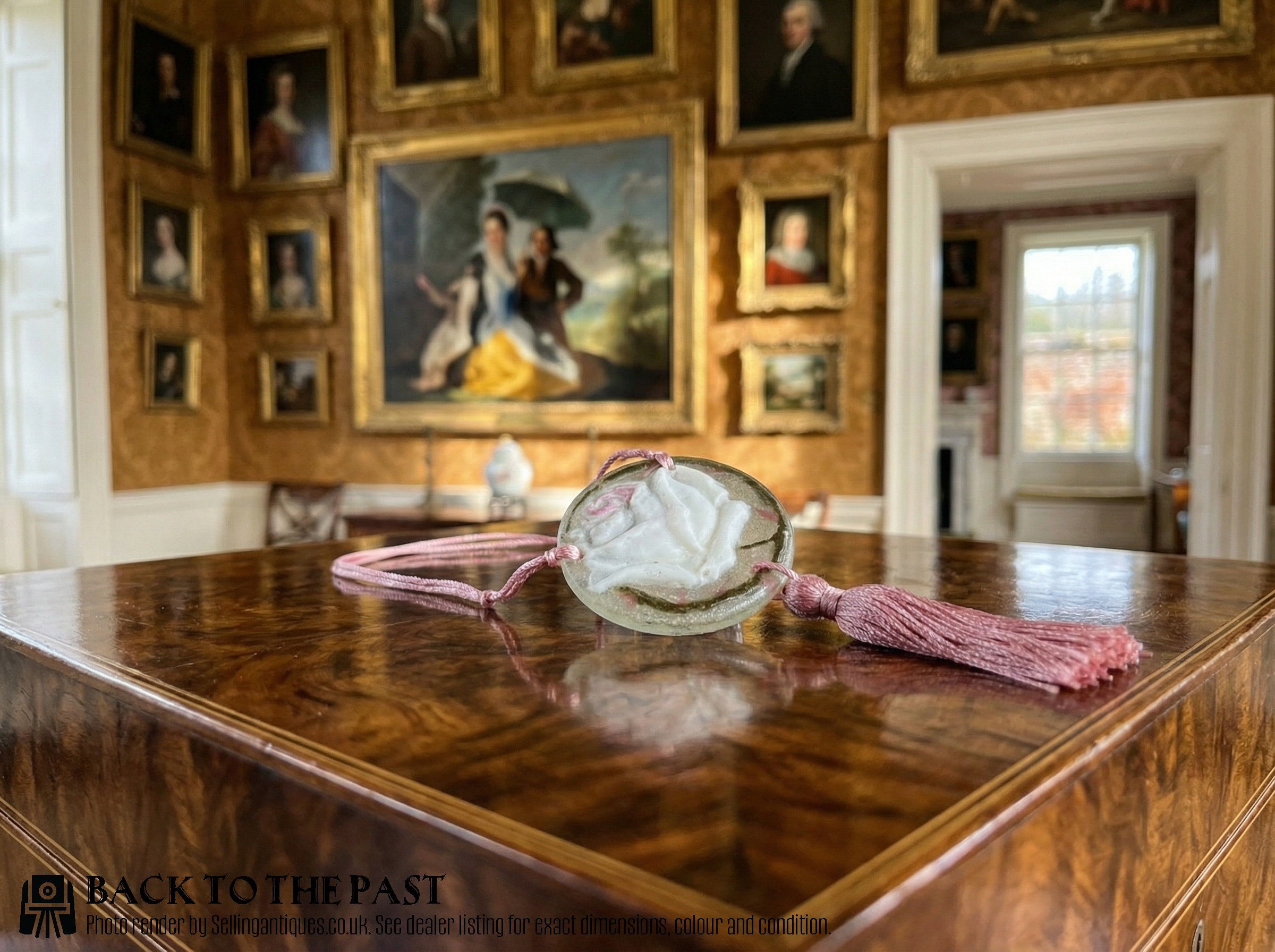
The Art Nouveau Jewellery Glossary
- 9ct / 15ct
- British gold standards, and the two commonest golds in this category. 9ct appears in 72 titles, 15ct in 33.
- 18kt / 18K
- Continental and French marking for 18 carat gold, used mostly on the French pieces here.
- Lavalier
- A pendant hung from a fine chain, usually with a stone drop below. A recurring title word on the gold necklaces.
- Seed pearl
- Very small natural pearl, used in clusters and as borders around a coloured stone.
- Plique à jour
- Enamel held in open cells with no metal backing, so light passes through it like a window.
- Toi et moi
- A two-stone ring setting, turning up repeatedly among the French diamond rings.
Art Nouveau Jewellery: Frequently Asked Questions
What metals turn up most often?
Gold leads, in 202 of 408 titles, with silver behind it at 112. Within the gold, 9ct and 15ct are the British standards you'll see most.
French pieces tend to carry 18kt or 18K instead. Platinum appears in a smaller run of titles, almost all of them diamond-set.
Which stones are typical?
The vocabulary is narrow and it repeats. Pearl is in 121 titles, diamond in 85, then amethyst and peridot as the two signature colour stones.
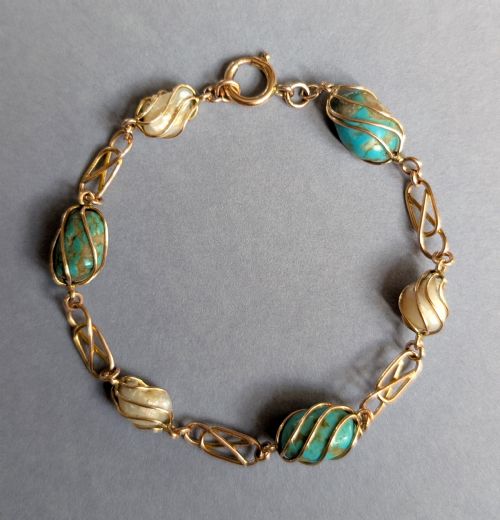
Opal, turquoise, aquamarine and garnet fill in behind them. Stated weights in the samples run from modest diamonds up to a 5.00ct platinum brooch, an 8.35ct opal and a 14.81ct peridot.
Why do so many listings say Edwardian?
Because the style and the reign overlap. Edwardian appears in 82 listings and the 1900s in 140, so the two labels are describing much the same window.
The period words are applied loosely, and a title marked Victorian can carry a circa 1900 date beside it. Assay years in silver titles, Chester and Birmingham between 1900 and 1911, give firmer ground.
Are French religious medals part of this category?
They are, and they form a consistent seam rather than a stray few. Twenty-four titles carry 'medal' and 18 name the Virgin.
Subjects repeat: Virgin Mary, Madonna and Child, Sacred Heart, a Jesus Christ Crown of Thorns. Most are gold, dated circa 1900 to 1920 and given as French.
How much comes to market each year?
About 55 pieces a year, and 54 different dealers have listed in the category on Sellingantiques.
That works out at close to one dealer per annual piece, so the stock is spread very widely rather than sitting with a handful of specialists.
Does Arts and Crafts jewellery appear under this heading?
Yes, mostly silver and enamel. It's a small presence in the archive but a sizeable one in current stock, so live listings show more of it than the sold record does.
Jugendstil, the German-speaking name for the same style, is used on several Continental silver and enamel pieces.