
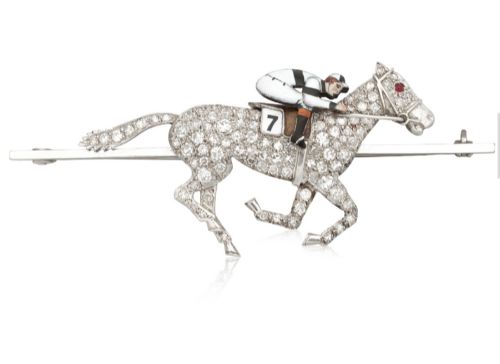


Antique Stickpins
A stickpin is a long straight pin with a decorative head, worn through a cravat, tie or lapel to hold the knot and show off a small ornament.
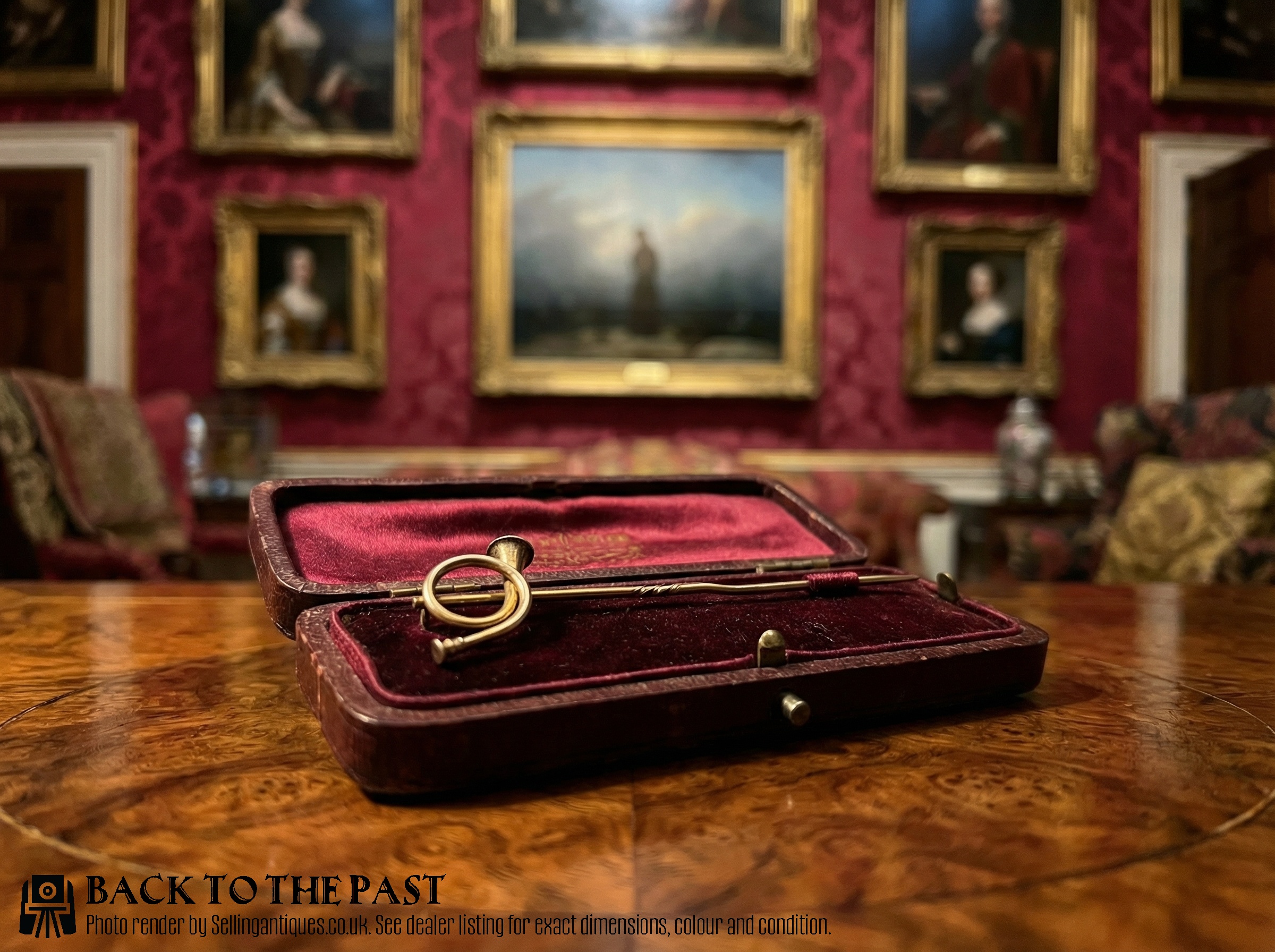
Antique Stickpins
Stickpins came in during the early nineteenth century as fasteners for men's cravats and stocks: the long shaft held the knot, the head sat proud of the fabric. As neckwear narrowed through the Victorian and Edwardian years the job became decorative, and the pins were worn in the tie or lapel by men and women alike.
Gold dominates. It appears in twelve of the sixteen titles on Sellingantiques, with 18ct or 18kt outnumbering 9ct by better than three to one. Heads are commonly a small set stone or pearl, diamond and pearl leading, then garnet, with ruby, sapphire and quartz turning up singly. One pin is silver and enamel rather than gold.
The other recurring strand is the figural head. A hunting bugle, a snipe, a beetle, a sword, a jockey cap and a garnet claw each appear exactly once, and club and field-sport subjects run alongside them, including a yacht club insignia pin. Two pieces are catalogued as jabot pins, decorated at both ends, and one as a hatpin.
Dates run from 1860 to 1960, a clean century, with nine listings carrying a firm year. Victorian is the largest single label, and where those pins carry a circa it tends to sit in the 1860s and 1870s; the 1900s and 1910s follow. France is the only country named in any title. The most typical piece you'll meet is a Victorian or Edwardian 18ct yellow gold pin with a small set head.
Where The Range Splits
Metal sets the floor. The two 9ct pins sit at the cheap end of the sampled range, while the 18ct and 18kt pieces fill the middle and the top. A title that says no more than "gold stick pin" sits at the bottom; the ones that name the standard do better.
Detail in the stone description carries a pin upward. Titles quoting a weight or a cut, an old brilliant, a rose cut, a 12.20 carat garnet, a 0.45 carat diamond, sit in the upper half. So do the pieces that name a technique: cannetille goldwork, enamel, platinum combined with gold, each appearing only above the middle of the range.
Modelling and attribution do the rest. Elaborate figural heads such as the beetle, the jockey cap and the sword price well above plain and small-gem pins, and the three titles that name a house or maker are the three highest-priced listings in the set. The two jabot pins and the hatpin also sit toward the top.
Antique Stickpins Retail Price Guide 2026
Typical UK retail prices for stickpins, calculated from the Sellingantiques database of over a million retail prices indexed since 2003. This retail price guide relies exclusively on Sellingantiques data; no external sources or auction records are used, so the figures do not describe the wider market.
The most expensive stickpin ever sold on Sellingantiques was a Victorian garnet claw pin in 18kt yellow gold, circa 1880. It sold in March 2023.
The Antique Stickpins Glossary
- Stickpin
- A long straight pin with a decorative head, worn through a cravat, tie or lapel. Both "stickpin" and "stick pin" appear in titles.
- Jabot pin
- A pin decorated at both ends rather than one, worn through a jabot or lapel. Two examples in the archive, both toward the top of the range.
- 18ct / 18kt
- Eighteen carat gold, the commonest standard in these titles. 9ct is the lower British standard, seen on two of the pins.
- Old brilliant cut
- An early hand-cut round diamond with a small table and open culet. "Old cut" is the general term for pre-modern hand cutting.
- Rose cut
- A flat-backed diamond cut with triangular facets rising to a point, named on one of the jabot pins.
- Cannetille
- Fine coiled and scrolled goldwork, close to filigree. Named once across the whole archive.
Antique Stickpins: Frequently Asked Questions
What were stickpins actually used for?
They started as fasteners. The long shaft passed through a cravat or stock and held the knot, with the decorative head left showing above the fabric.
As neckwear got narrower through the Victorian and Edwardian periods the fastening job faded and the pins became ornaments, worn in the tie or the lapel by men and women.
Which metals turn up most?
Gold, in twelve of the sixteen titles on Sellingantiques. Within that, 18ct and 18kt outnumber 9ct by better than three to one.
One pin is silver and enamel. Platinum appears in combination with gold rather than on its own.
How old are the ones that come up for sale?
The dated field spans exactly a century, 1860 to 1960, and nine of the sixteen listings carry a clean year.
Victorian is the largest single label, clustering around 1860 to 1880 where a circa is given, then the 1900s and 1910s. One piece is titled Art Deco, dated 1930, and a yacht club pin at 1960 is the only post-war entry.
Are figural stickpins common?
They are a steady minority. A hunting bugle, a snipe, a beetle, a sword, a jockey cap and a garnet claw each appear once, so no single subject repeats.
Club and sporting subjects sit alongside them, four titles in all, including yacht club insignia and the jockey cap.
What is the difference between a stickpin and a jabot pin?
A stickpin is decorated at one end. A jabot pin carries ornament at both ends of the shaft.
Two pieces in the archive are catalogued as jabot pins, a sword head and a rose-cut diamond example, and both sit at the upper end of the range.
How often do stickpins appear on Sellingantiques?
About three a year. Eleven different dealers have offered one across the whole archive.
That means most dealers who carry them carry a single example at a time rather than a run.