
A 2026 Guide by Sellingantiques
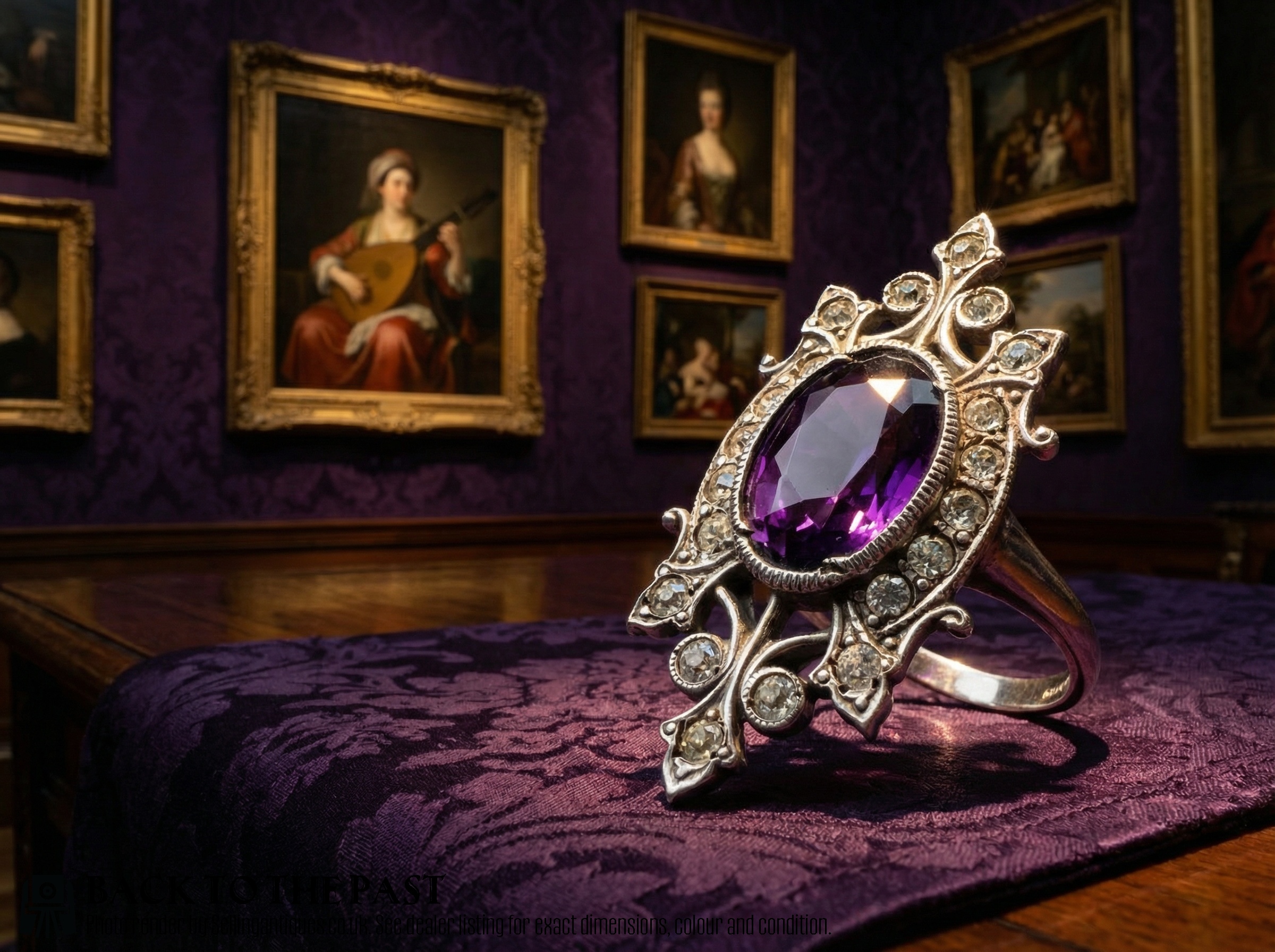
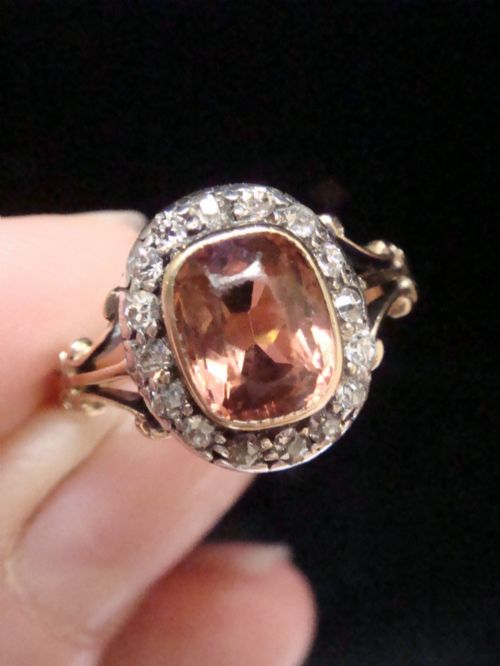
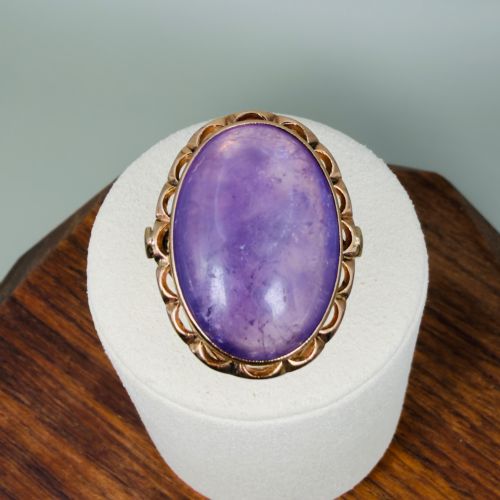
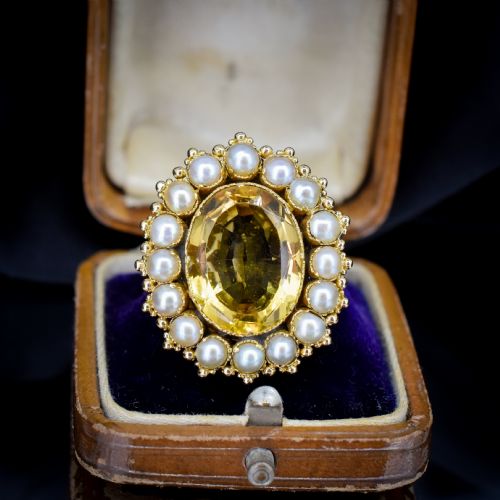
Large Antique Silver Paste Amethyst Cocktail Ring, 19th Century
Priced at £285 from Corvidae Antique
Prohibition era speakeasies gave birth to the form. Women needed something bold to wear on the hand holding their drink.
Look for the shift from delicate Edwardian designs to heavy geometry. The 1920s changed how these rings sat on the finger.
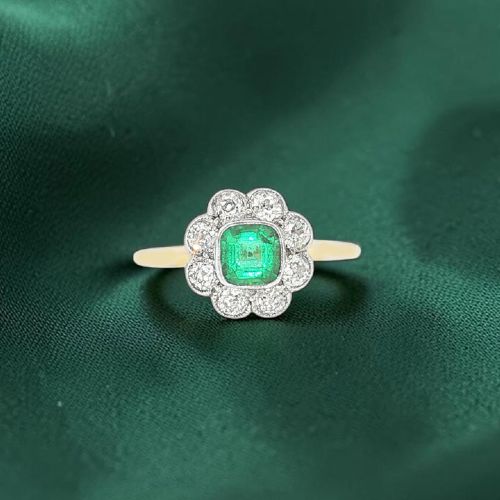
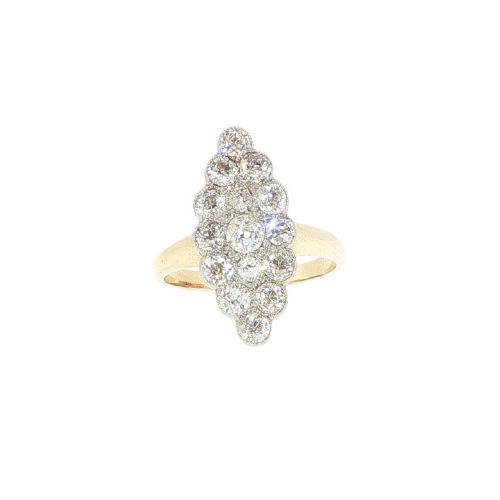
Most authentic antique cocktail rings date from the Art Deco period through to the late 1940s.
Social changes meant women bought these for themselves. They weren't engagement rings or traditional gifts.
Cartier produced heavy geometric cocktail rings during the 1920s. They often used carved coloured stones.
Van Cleef & Arpels adopted the form. Their early pieces sometimes feature the mystery setting technique.
Boucheron worked extensively with large cabochon gems. They favoured bulky gold mounts during the Retro period.
The 2026 retail price guide for Antique Cocktail Rings is drawn from a proprietary archive of over 1.1 million retail prices indexed by Sellingantiques since 2003. This guide relies exclusively on their own internal data; no external sources or auction records are used.
Analysing nearly 25 years of UK antique market history alongside current retail values, the data indicates that typical UK retail prices for Antique Cocktail Rings range between £1,000 and £6,800. Entry-level prices generally fall under £1,000 and premium examples upwards of £6,800.
Size is the main giveaway. The face of an antique cocktail ring covers a significant portion of the lower phalanx.
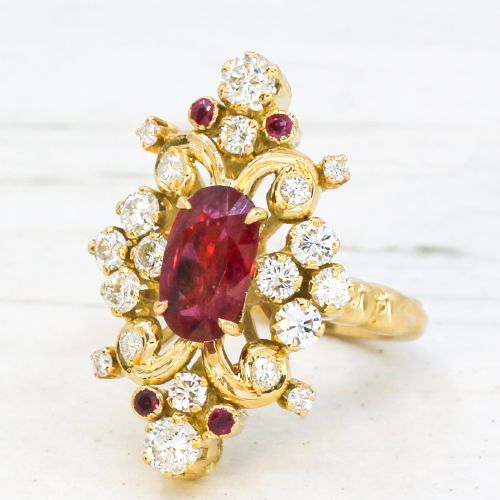
High-profile settings elevate the centre stone well above the finger.
Notice the structural undergallery. Good makers spent time piercing the hidden gold work resting against the skin.
Early makers pierced solid platinum sheets by hand. They used fine saws to create lace-like galleries.
Cast gold became more common by the late 1930s. The rings grew bulkier with less negative space.
Stone setters had to secure massive central gems. They did this without making the prongs look clumsy.
"Synthetic stones were highly prized. Lab-grown rubies appear frequently in high-end Art Deco rings."
"Some bands contain hidden sizing beads soldered inside. These kept top-heavy mounts from spinning."
"Oversized designs often hid intricate geometric patterns. The wearer could only see these when glancing down at the side profile."
Based on almost 25 years of Sellingantiques UK antique market data, Antique Cocktail Rings appeared 1174 times (out of 1,100,000 antiques) which gives it a rarity score of 79/100.
This score measures scarcity within the Sellingantiques archive only and is not a survey of the entire antiques market, so these statistics may not be indicative of the general availability of Antique Cocktail Rings elsewhere.
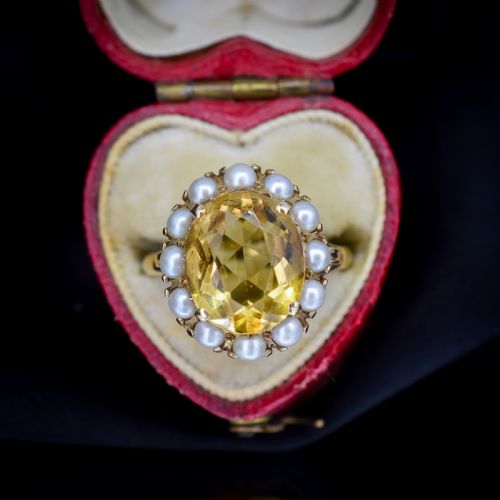
Jewellers in the 1940s often used large semi-precious stones. Aquamarine and citrine were popular choices for the main setting.
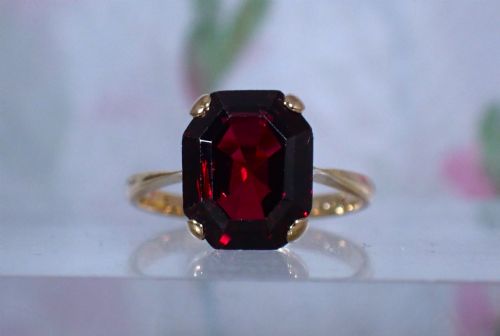
You also see synthetic rubies. The war disrupted global supply routes, making natural precious stones quite hard to source for bulky statement pieces.
The shank on a vintage ring often wears down over time. Gold and platinum slowly rub away through decades of gripping door handles and carrying bags.
Antique cocktail rings are naturally top-heavy by design. The original makers focused the weight and material on the face of the ring rather than the band. It is very common to find original shanks that look disproportionately slender compared to the bulky mount.
Most platinum rings can be resized safely. A jeweller will simply heat the metal and add or remove material at the base of the shank.
Rings with stones set all the way around the band are the exception. Changing the size distorts the curve and forces side stones out of their settings.
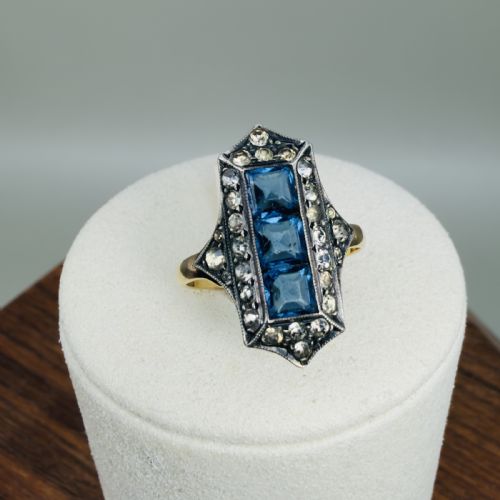
Paste is a heavy lead glass cut to mimic gemstones.
Many women owned fine paste rings. They wore them while travelling to keep valuable pieces safe.
Please note: This Antique Cocktail Rings guide and its associated pricing data are provided for general informational purposes only. It does not constitute formal financial, investment, or appraisal advice and should not be relied upon as the sole basis for any commercial activity, purchasing, or sales decisions. Sellingantiques.co.uk accepts no liability for any actions taken in reliance on this information. Always consult with a qualified professional or independent appraiser.
