


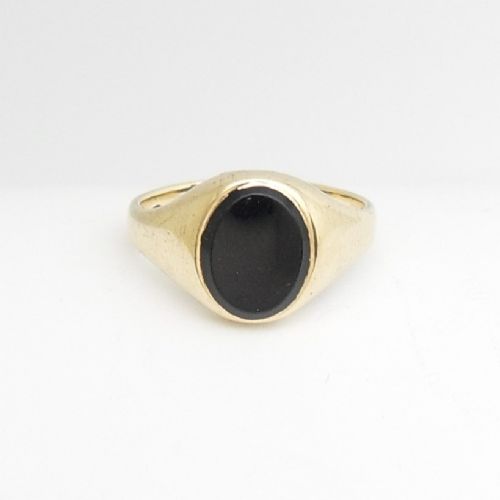

A 2026 Guide by Sellingantiques
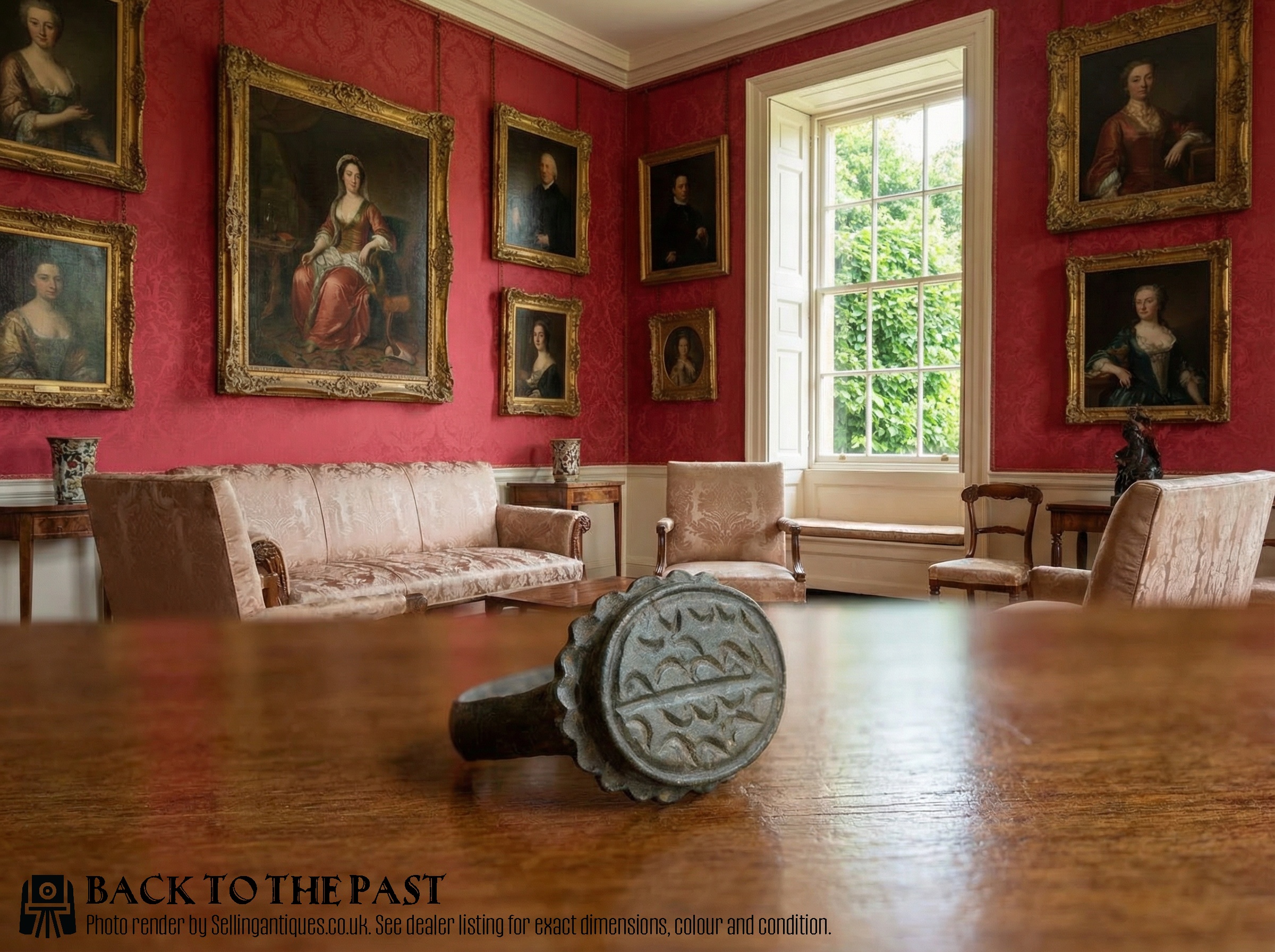
Late Medieval Bronze Signet Ring with Waves, 1700
Priced at £375 from Robert Harris Jewellers
Early examples acted as signatures. Few people could write, so pressing a seal into wax proved identity on legal documents.
Roman rings often carried carved stones, which wealthy citizens wore proudly on the index finger.
By the Middle Ages, merchants adopted distinct marks. These trade symbols separated them from the armorial crests of the nobility.
Destroying the ring upon the owner's death stopped forgery and fraud. This explains why genuine medieval antique signet rings remain scarce today.
Victorian revivals brought back heavy heraldic carving. They're mostly worn for status now rather than sealing wax.
Finding a specific documented maker isn't easy. Most historic rings just carry standard assay marks rather than a named sponsor.
Look for Charles Green & Son. They operated in Birmingham from the nineteenth century and produced plain signets for engraving.
Garrard supplied armorial rings to the British aristocracy. Their heavy gold mounts feature deep heraldic carving.
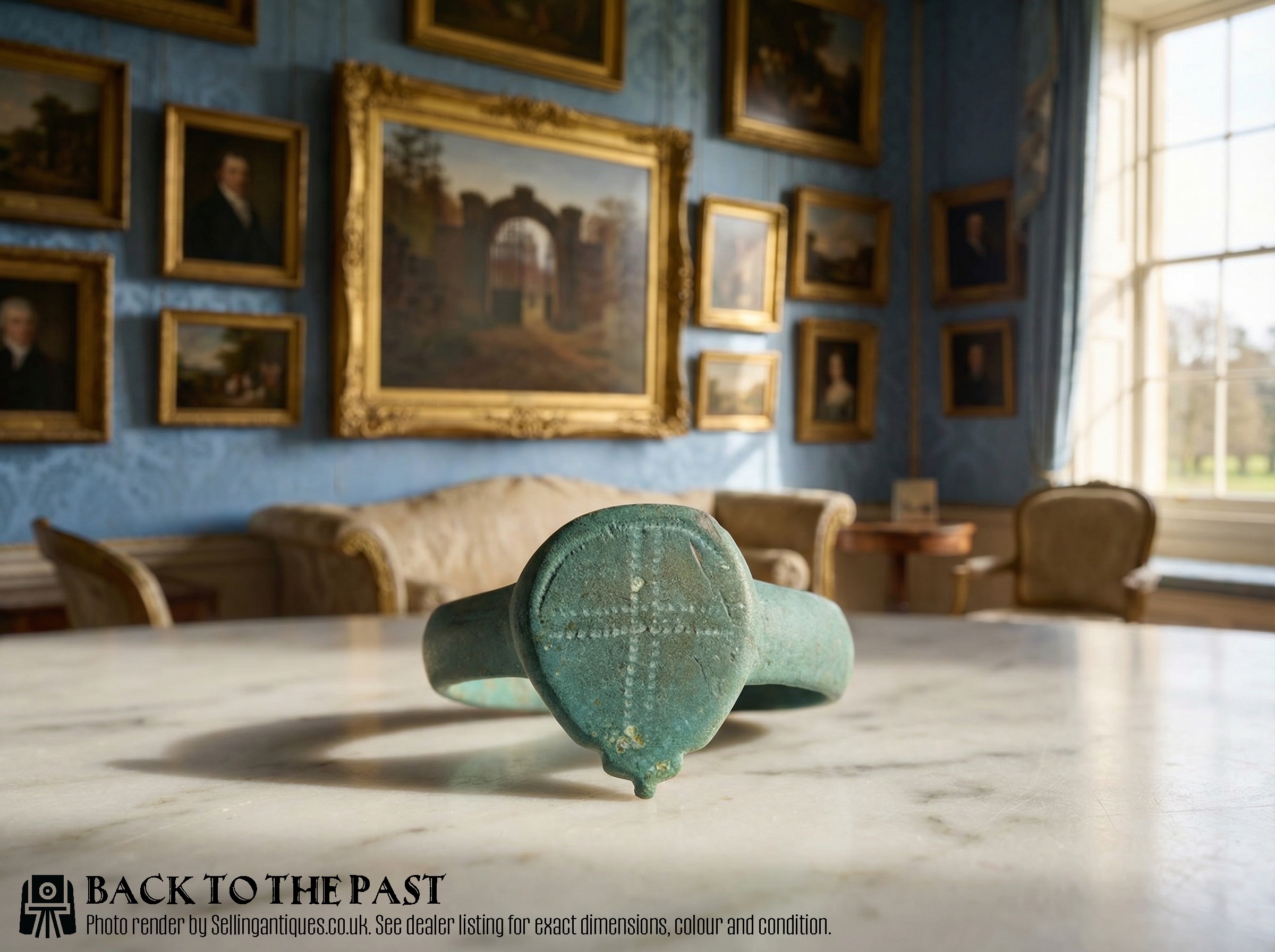
Late Medieval Bronze Shield Signet Ring with Cross, Pre 16th century
Priced at £350 from Robert Harris Jewellers
The 2026 retail price guide for Antique Signet Rings is drawn from a proprietary archive of over 1.1 million retail prices indexed by Sellingantiques since 2003. This guide relies exclusively on their own internal data; no external sources or auction records are used.
Analysing nearly 25 years of UK antique market history alongside current retail values, the data indicates that typical UK retail prices for Antique Signet Rings range between £300 and £1,400. Entry-level prices generally fall under £300 and premium examples upwards of £1,400.
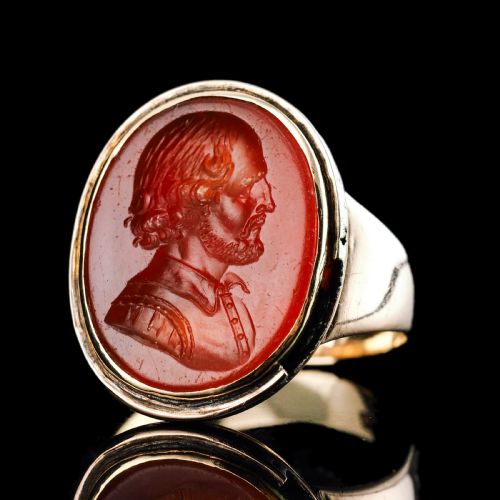
Intaglio carving goes deep into the surface. The maker cuts the design in reverse to ensure the wax impression reads correctly.
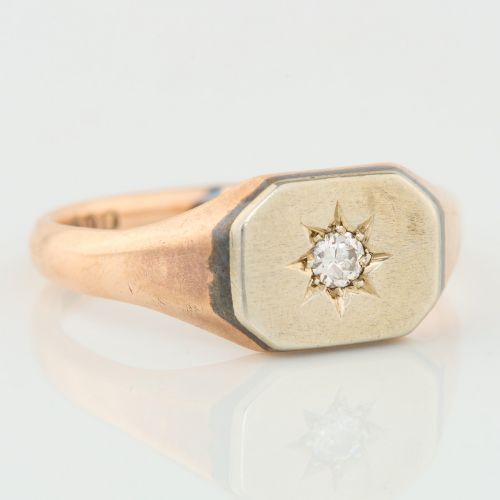
Check the bezel shape. Ovals and shields are standard. Cushion shapes appear frequently later on.
Shoulders often taper cleanly towards the main band on plain examples. Elaborate chasing here sometimes indicates a later piece trying to look older.
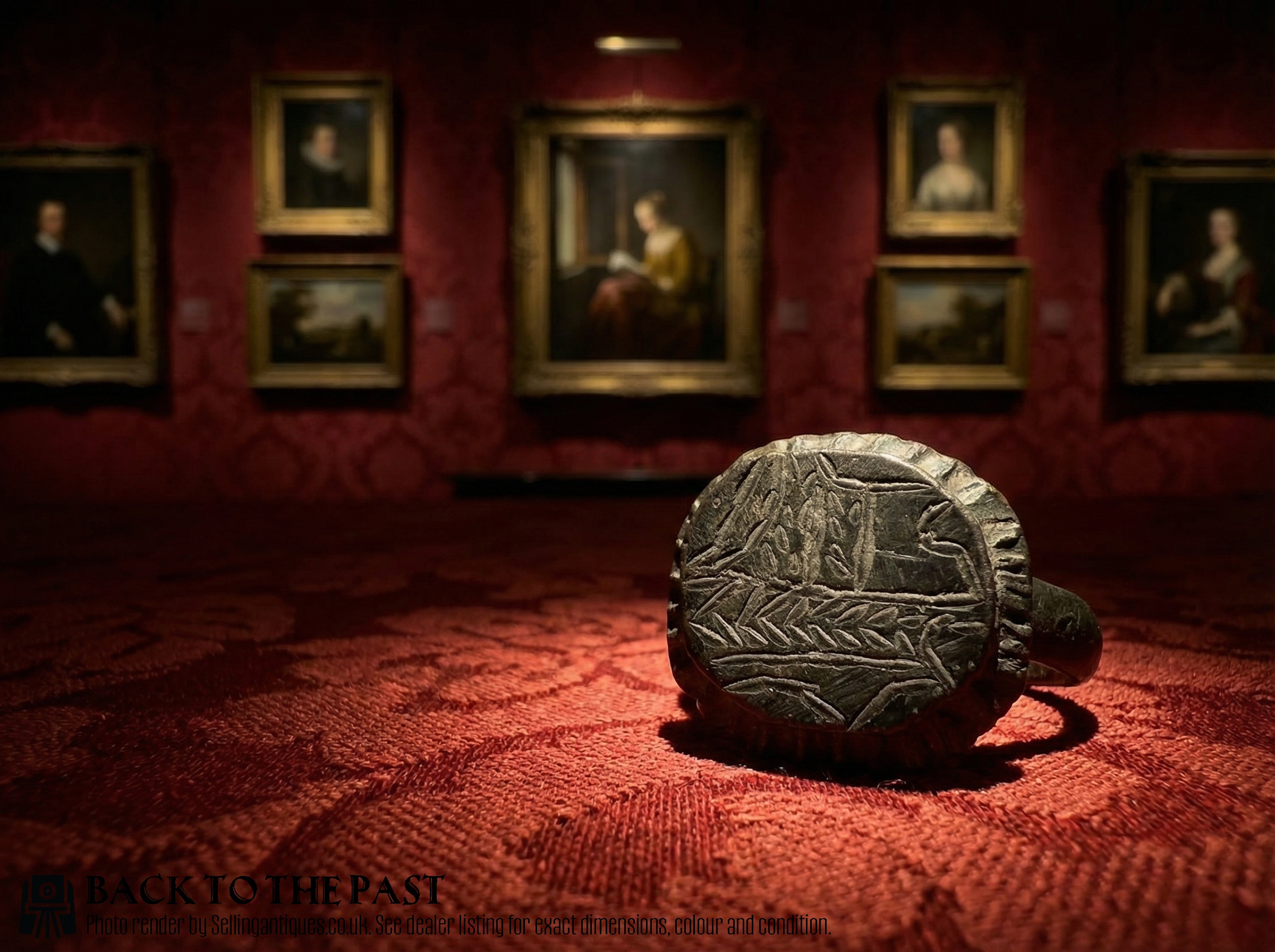
Late Medieval Bronze Signet Ring with Ship Design, Pre 16th century
Priced at £395 from Robert Harris Jewellers
Early shanks were hammered from single gold ingots. You'll find a dense ring lacking weak solder joints.
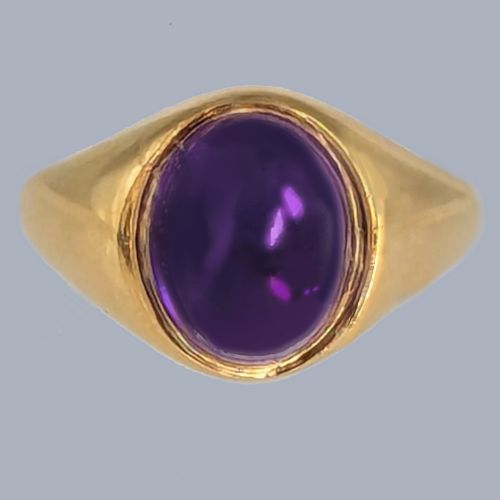
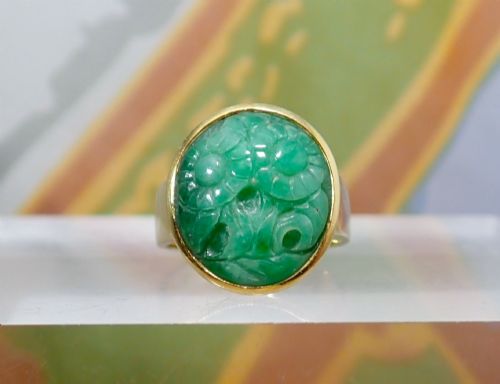
Stone-set bezels require precise rub-over mounts. The jeweller pushes a fine lip of gold tightly over the hardstone edge to secure it.
Die-stamping became standard later. Hollow shoulders made the rings lighter but prone to denting from underneath.
"Many rings hold a secret locket compartment. The bezel flips up to reveal braided hair or a miniature portrait."
"Women wore them too. Smaller antique signet rings often feature lozenge-shaped bezels rather than the heavy shields favoured by men."
"Certain stones were chosen for their perceived medical powers. Carnelian was thought to stop bleeding."
Based on almost 25 years of Sellingantiques UK antique market data, Antique Signet Rings appeared 524 times (out of 1,100,000 antiques) which gives it a rarity score of 90/100.
This score measures scarcity within the Sellingantiques archive only and is not a survey of the entire antiques market, so these statistics may not be indicative of the general availability of Antique Signet Rings elsewhere.
Yes, mostly. A skilled jeweller cuts the back of the band and adds or removes gold.
They've got to manage the heat carefully. If the torch gets too close to a lapis or bloodstone, the gem can crack or change colour.
Recutting a worn gold matrix is possible. A hand-engraver uses steel gravers to deepen the original lines and bring the lion back to life.
This removes more metal from the bezel. If the top is already thin, the engraver might punch right through to the hollow back.
Solid bezels take a recut well. Check the thickness from the side before proceeding.
Bloodstone is a dark green jasper. It has distinct red spots running through the material.
Jewellers favour it for signets because it takes a polish well and does not chip easily.
Standard practice varied across different assay offices. The punches were applied by hand, often in a hurry.
The clerk simply struck the metal where there was space. Upside down or overlapping marks appear frequently on genuine rings.
Please note: This Antique Signet Rings guide and its associated pricing data are provided for general informational purposes only. It does not constitute formal financial, investment, or appraisal advice and should not be relied upon as the sole basis for any commercial activity, purchasing, or sales decisions. Sellingantiques.co.uk accepts no liability for any actions taken in reliance on this information. Always consult with a qualified professional or independent appraiser.
