

A 2026 Guide by Sellingantiques
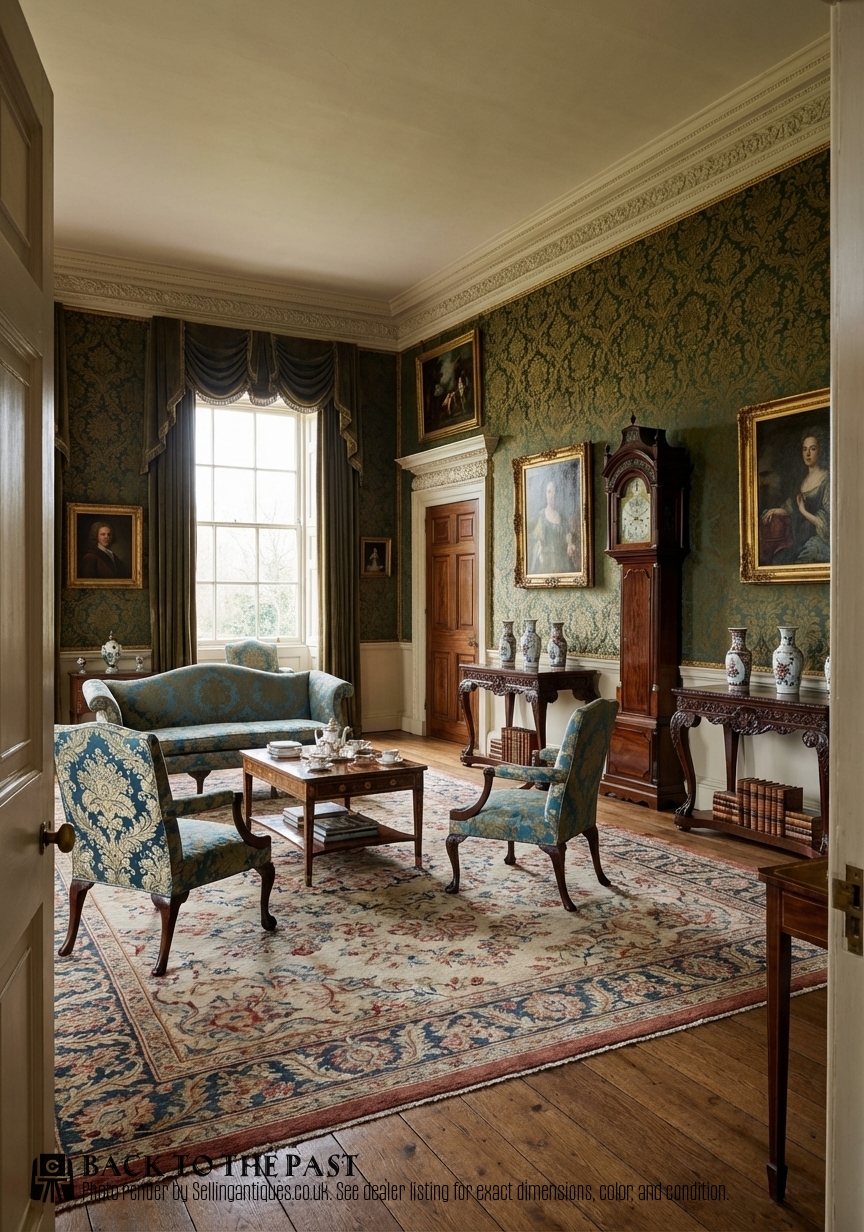
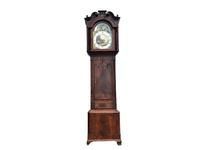
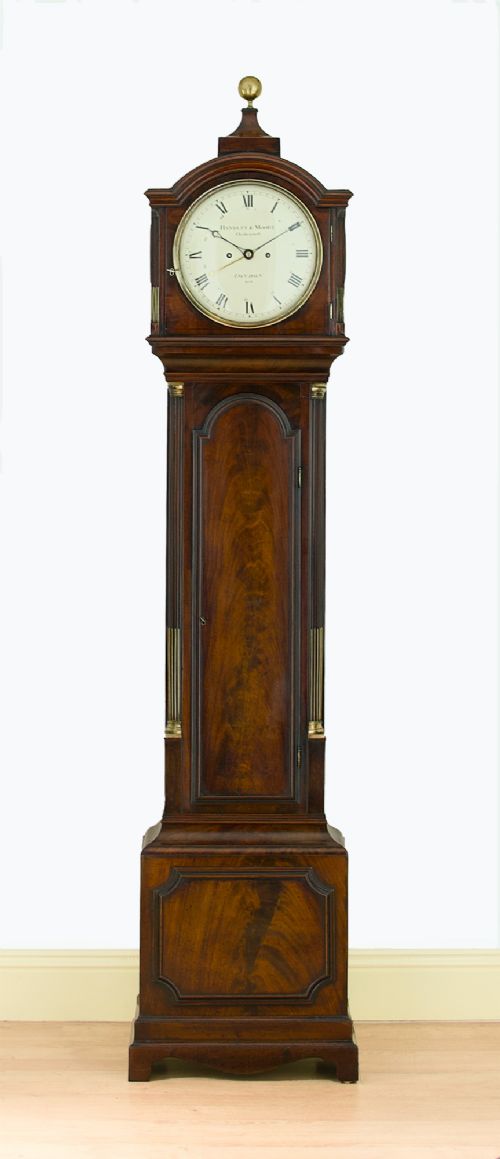
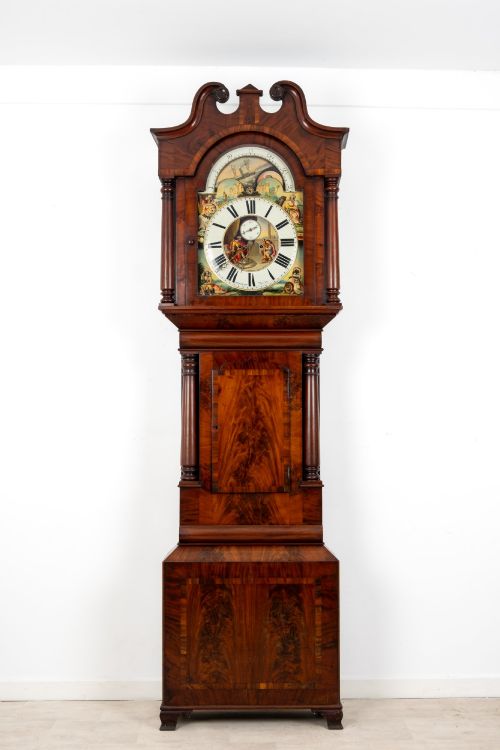
A Fine Mahogany Longcase Clock by John Rainsford Leicester Square, London, 18th Century
Priced at £22,500 from W.R. Harvey & Co. (Antiques) Ltd
Demand for these Antique Georgian Clocks grew rapidly during the eighteenth century. Wealthy merchants needed accurate time for shipping and trade.
Provincial towns soon supported their own clockmakers. You find names from small market towns across the country on the dials.
A standard longcase could regulate a whole household. Servants used the chimes to structure the domestic day.
Look at the transition from single-handed thirty-hour movements to eight-day mechanisms with minute hands. This shift tracks the growing obsession with exact time.
Thomas Tompion worked into the early Georgian period. He built complex movements with numbered backplates that set the standard for London work.
George Graham took over Tompion's business. His invention of the deadbeat escapement improved timekeeping accuracy for precision regulators.
Look out for the Ellicott family. John Ellicott designed a temperature-compensated pendulum and supplied clocks to the royal household.
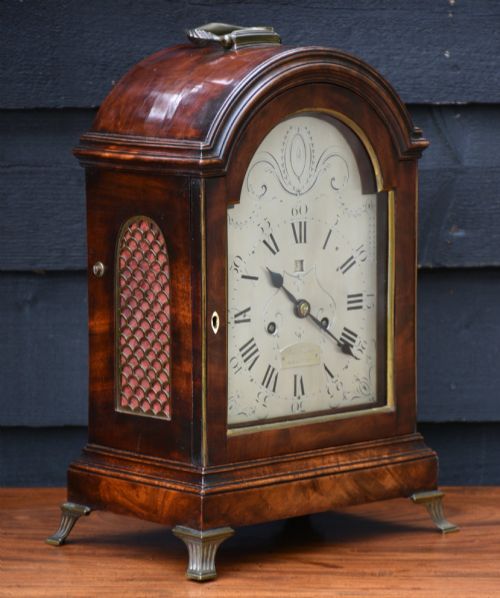
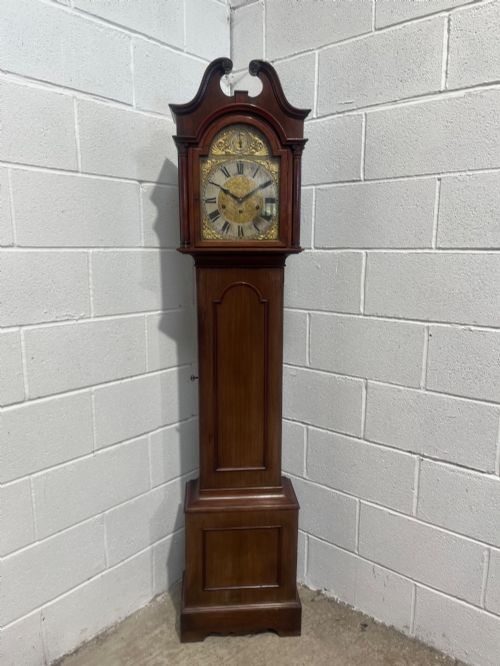
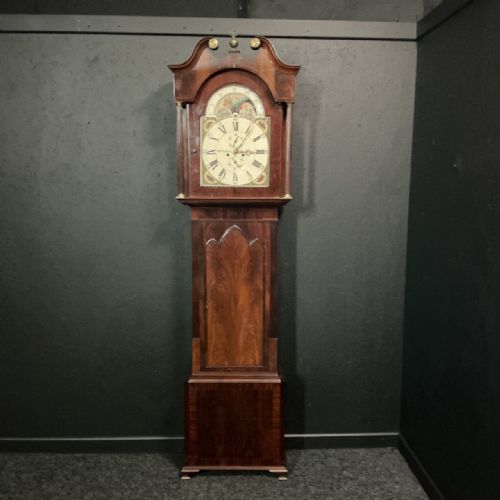
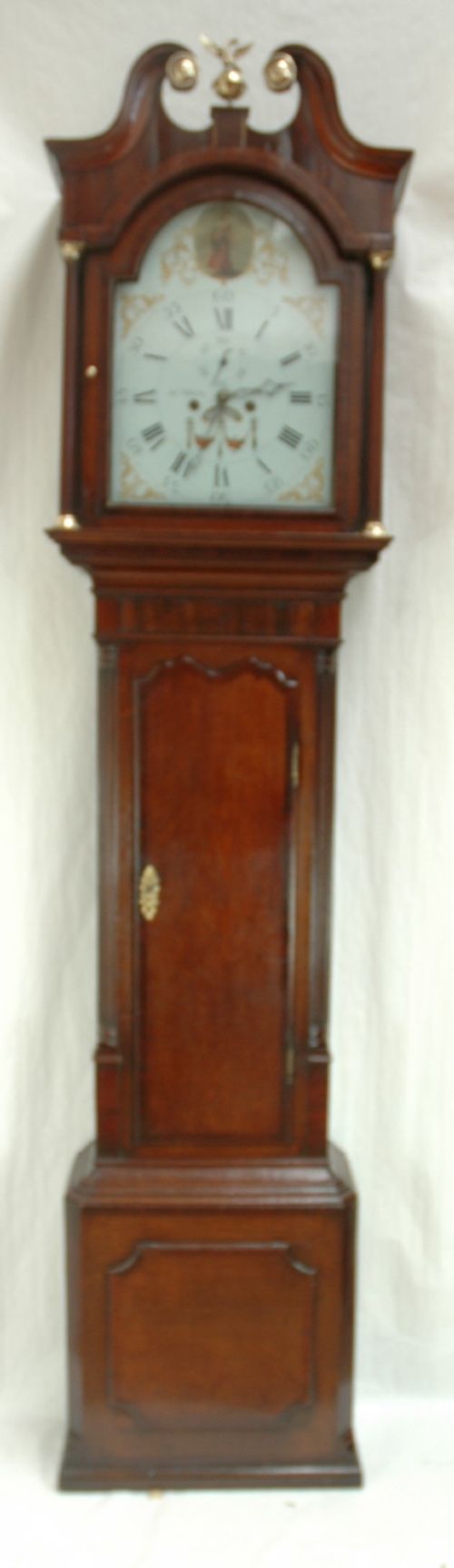
Quality Long-case Clock. Thos. Burchall of Nantwich, 19th Century
Priced at £1,950 from Masons Antiques
The 2026 retail price guide for Antique Georgian Clocks is drawn from a proprietary archive of over 1.1 million retail prices indexed by Sellingantiques since 2003. This guide relies exclusively on their own internal data; no external sources or auction records are used.
Analysing nearly 25 years of UK antique market history alongside current retail values, the data indicates that typical UK retail prices for Antique Georgian Clocks range between £1,400 and £6,800. Entry-level prices generally fall under £1,400 and premium examples upwards of £6,800.
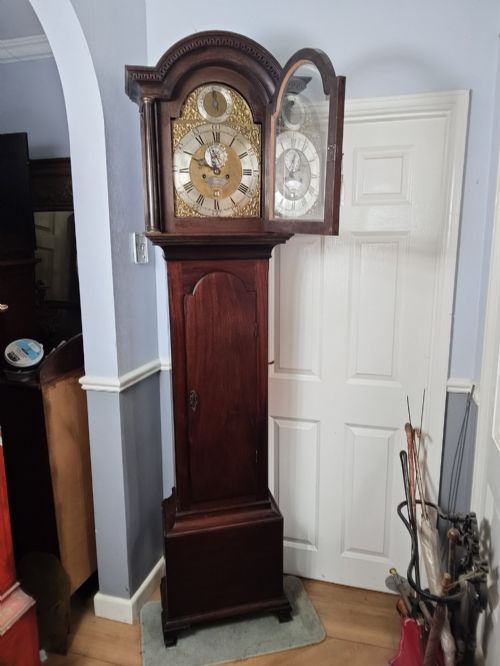
Break-arch dials appear on many Antique Georgian Clocks. This upper curved section often houses a moon phase disc or a strike-silent indicator.
The cases feature architectural hoods with classical columns. You will often see brass finials crowning the very top of the pediment.
Pay attention to the winding holes. Eight-day movements have two holes in the dial for winding the separate going and striking trains.

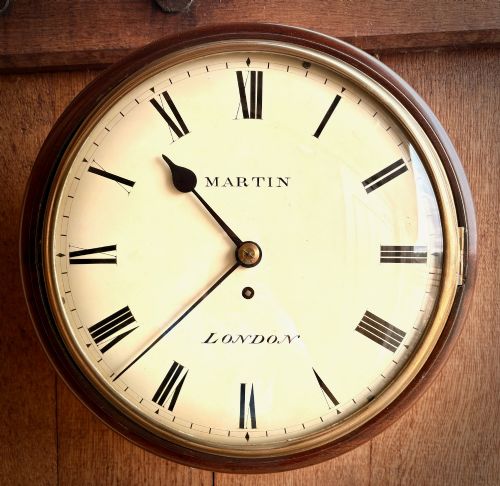
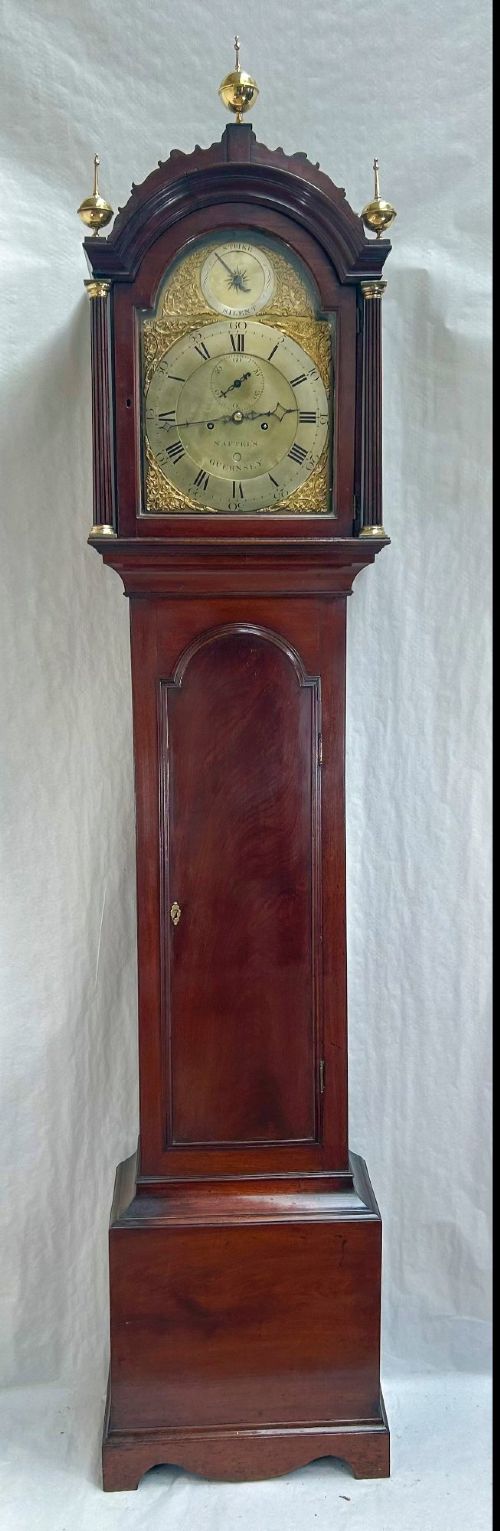
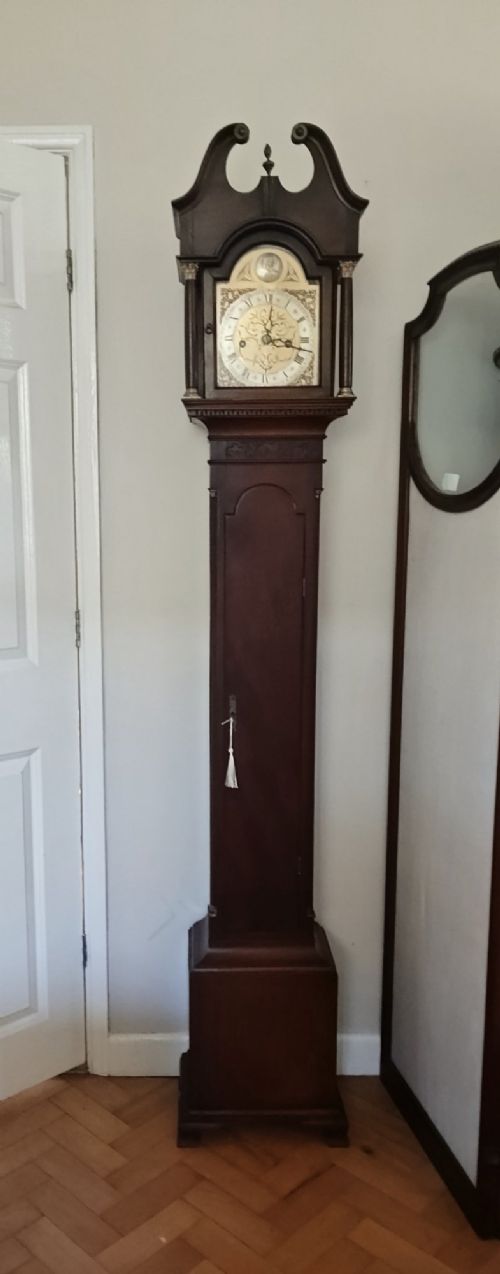
Fine 18th Century 8 Day Moon Phase Inlaid Mahogany Longcase Clock 'R Lawson , Leigh', 18th Century
Priced at £3,750 from Abersoch Antiques
Early examples feature square brass dials. Painted white dials became popular later in the period to make reading the time easier by candlelight.
Cabinetmakers shifted from walnut to mahogany mid-century. The denser mahogany allowed for crisper carving on the hood mouldings and case door.
Notice the hand-cut steel pinions inside the movement. Clockmakers filed these gear teeth individually to mesh smoothly with the brass wheels.
"Some provincial makers bought rough-cast brass parts from foundries. They then finished and assembled the movements locally."
"You can sometimes track a clock's movement through history. Repairers often scratched their initials and dates inside the movement plates."
"The wood choice tells a geographical story. Northern English cases are often broader and use solid oak or mahogany rather than veneers."
Based on almost 25 years of Sellingantiques UK antique market data, Antique Georgian Clocks appeared 1785 times (out of 1,100,000 antiques) which gives it a rarity score of 70/100.
This score measures scarcity within the Sellingantiques archive only and is not a survey of the entire antiques market, so these statistics may not be indicative of the general availability of Antique Georgian Clocks elsewhere.
Leave the silvered chapter ring alone. Commercial brass polish strips the thin layer of silvering right off the metal.
Dust the dial gently with a soft brush. If the brass spandrels are heavily tarnished, a specialist restorer can clean them without damaging the surrounding silver work.
Carpet causes stability issues for tall cases. The thick pile compresses unevenly under the weight, which can throw the pendulum out of beat.
Place a solid wooden board underneath the plinth to give the clock a firm footing. You might still need to wedge small wooden shims under the front corners to get the case level so the pendulum swings evenly.
The clock is likely out of beat. Listen to the tick-tock sound. The gap between the tick and the tock needs to be steady, like a heartbeat.
If the floor is uneven, the case leans slightly. This changes the angle of the escapement inside. Try slipping a thin piece of card under one side of the base to see if the ticking evens out.
Dried oil in the movement also stops a clock. Dust mixes with old lubricants over the decades to form a sticky paste in the pivot holes. A clockmaker will need to dismantle and clean the mechanism.
White painted dials were easier to read in dim light. A pale background with dark numerals shows up clearly across a room lit only by candles or oil lamps.
They also became cheaper to produce in bulk. Foundries in Birmingham stamped out iron dial sheets, and specialist painters decorated them. This meant provincial clockmakers could buy finished dials ready to attach to their own movements.
The decoration on painted dials often reflects regional tastes. You find painted scenes of rural life, naval battles, or local architecture in the arch.
Please note: This Antique Georgian Clocks guide and its associated pricing data are provided for general informational purposes only. It does not constitute formal financial, investment, or appraisal advice and should not be relied upon as the sole basis for any commercial activity, purchasing, or sales decisions. Sellingantiques.co.uk accepts no liability for any actions taken in reliance on this information. Always consult with a qualified professional or independent appraiser.
