


A 2026 Guide by Sellingantiques

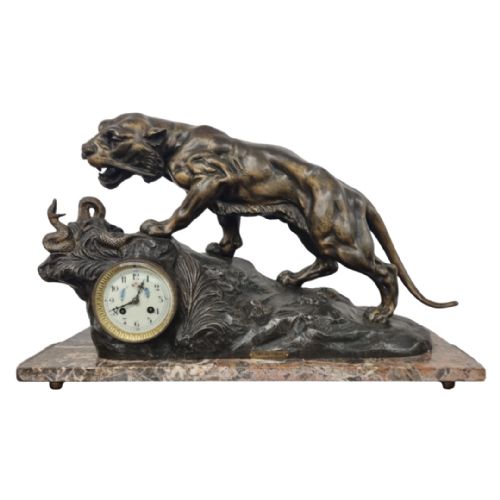
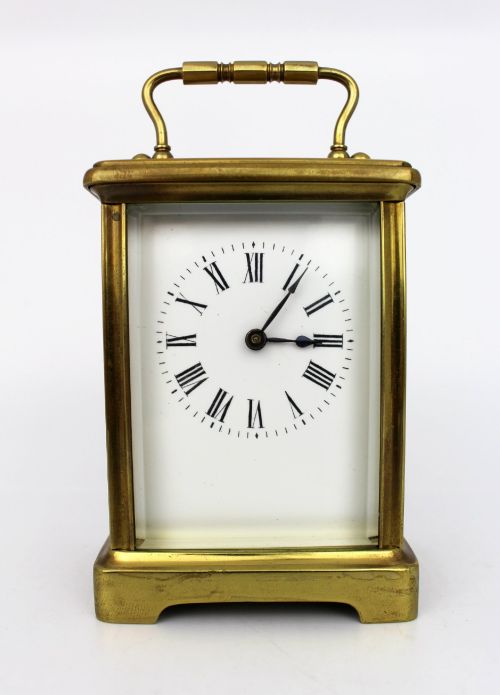
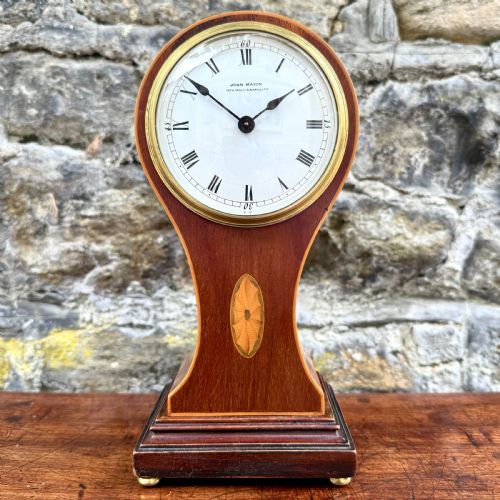
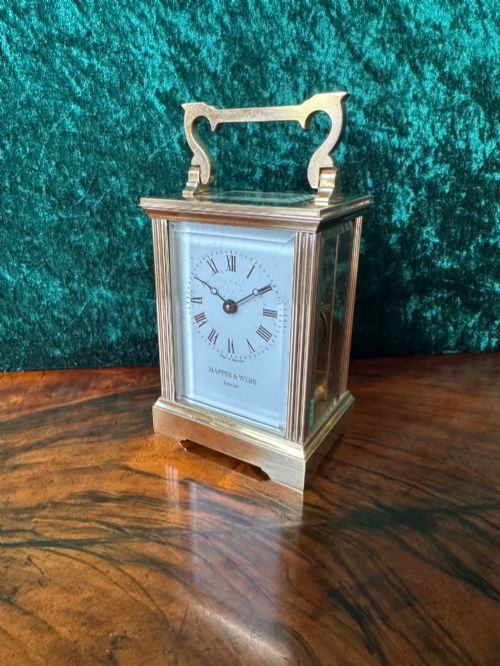
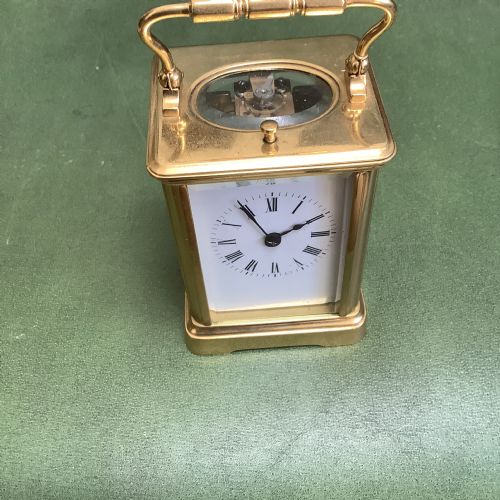
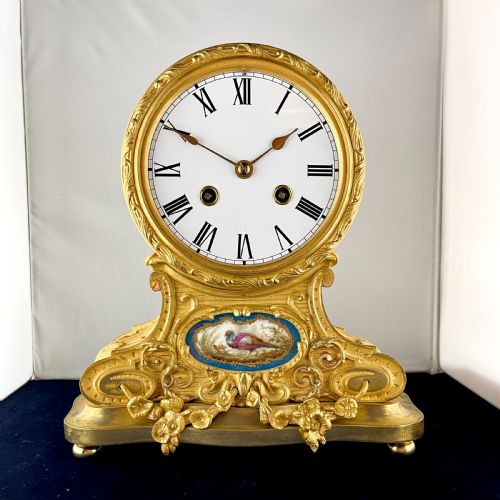
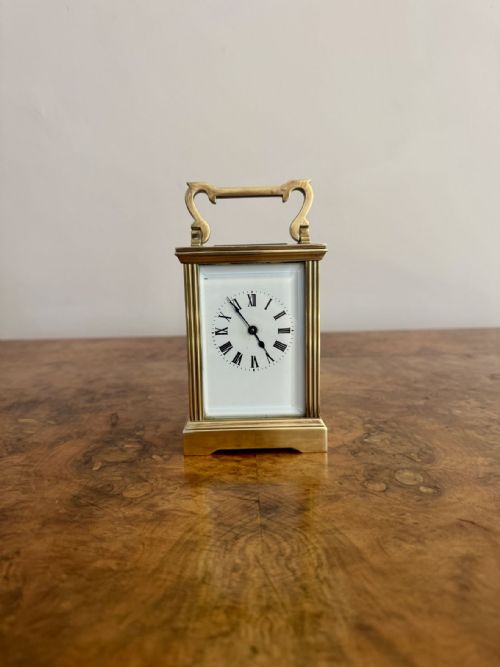
Antique Victorian Ornate Brass Desk Clock, 1860
Priced at £925 from London City Antiques
The earliest examples emerged when spring-driven movements allowed clockmakers to abandon heavy driving weights.
Smaller cases built for intimate spaces like studies and libraries rather than grand public rooms.
Notice how the transition from pendulum to balance spring technology made these antique desk clocks genuinely portable across the nineteenth century.
Travel expansion during the Victorian period prompted makers to adapt carriage clock designs into static desk formats.
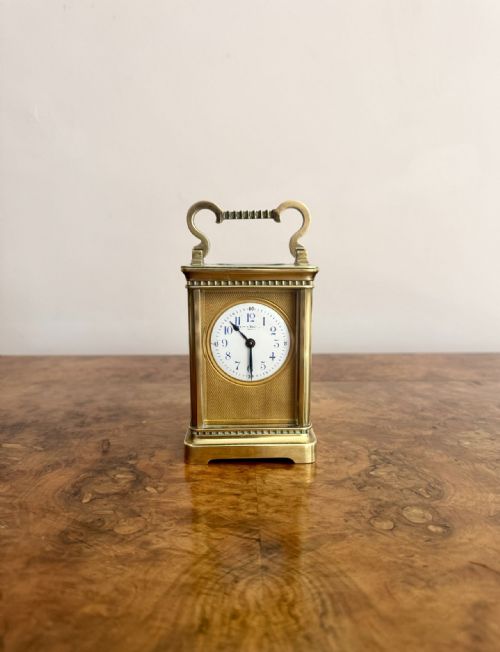
Matthew Norman built a solid reputation in the twentieth century producing mechanical movements in traditional brass cases.
French firms like Japy Frères supplied blank movements to countless Parisian case makers throughout the nineteenth century.
English makers such as Thomas Mercer focused heavily on marine chronometers but occasionally adapted those precise escapements for desk use.
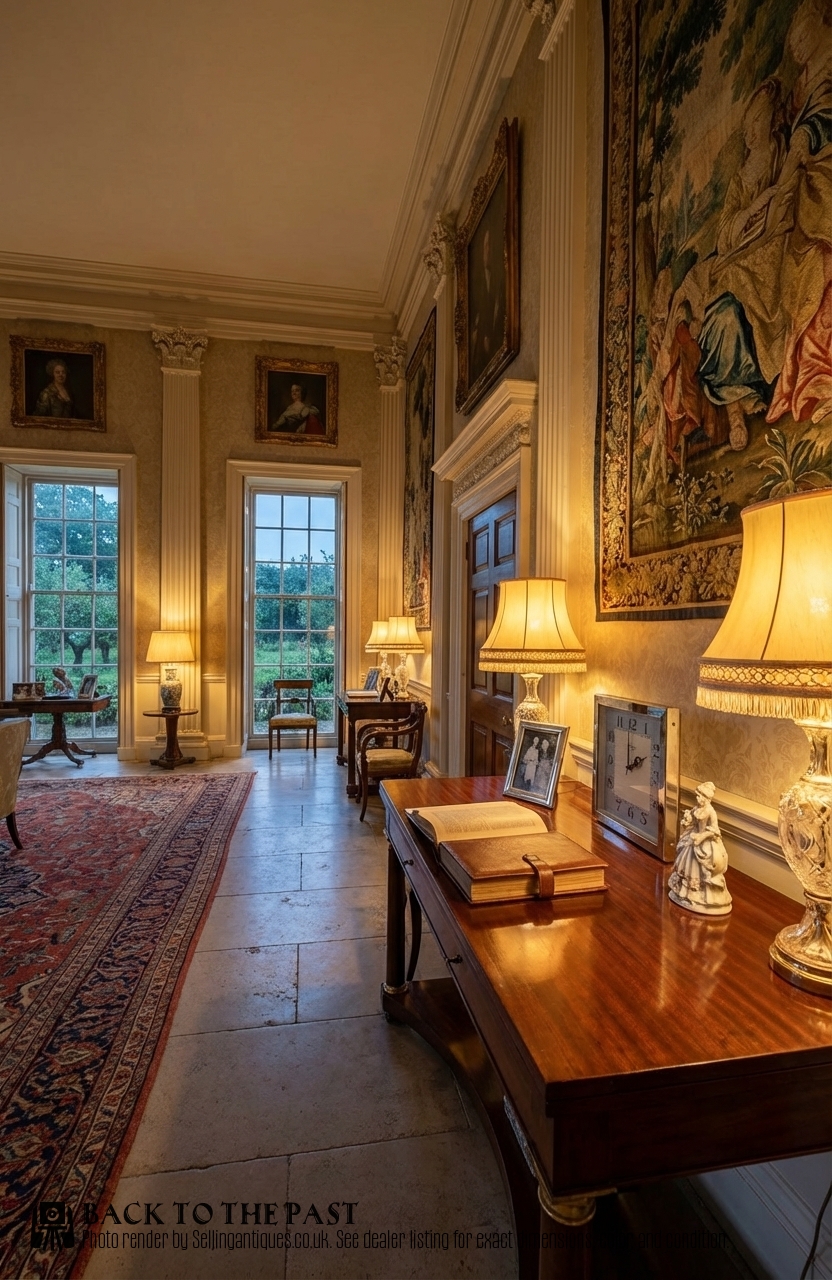
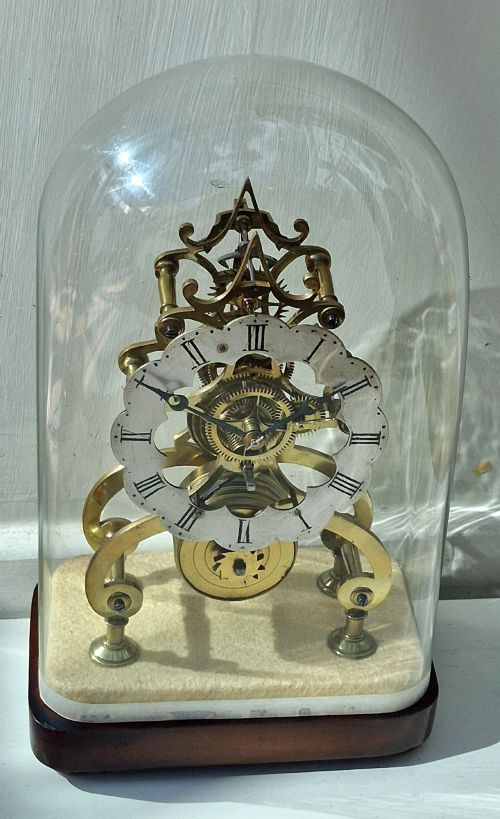
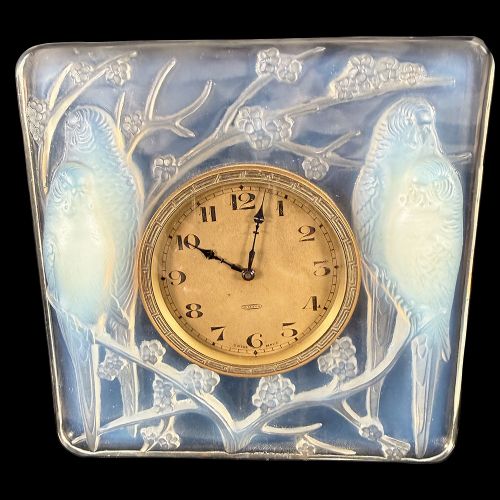
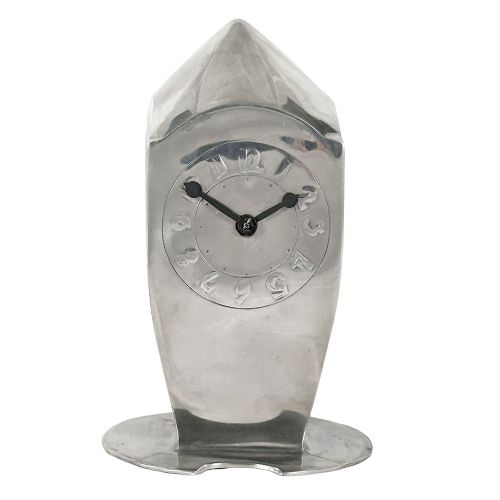
Art Deco Chrome Desk Clock, Newport, C1930, 1930
Priced at £295 from Art Deco World
The 2026 retail price guide for Antique Desk Clocks is drawn from a proprietary archive of over 1.1 million retail prices indexed by Sellingantiques since 2003. This guide relies exclusively on their own internal data; no external sources or auction records are used.
Analysing nearly 25 years of UK antique market history alongside current retail values, the data indicates that typical UK retail prices for Antique Desk Clocks range between £600 and £3,800. Entry-level prices generally fall under £600 and premium examples upwards of £3,800.
Escapements sit prominently near the top or back, regulating the release of power from the mainspring.
Winding squares protrude through the dial or rear plate to accept a matching key.
Some feature a strike mechanism that sounds the hours on a coiled steel gong or a cast bell.
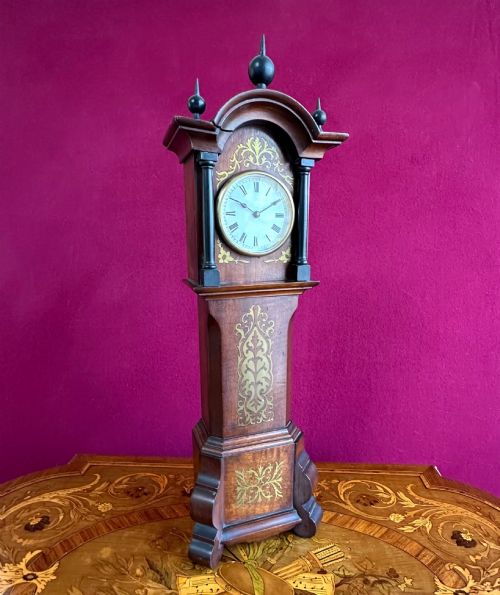
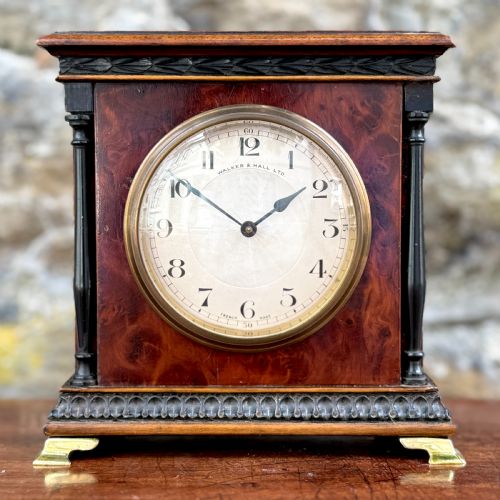
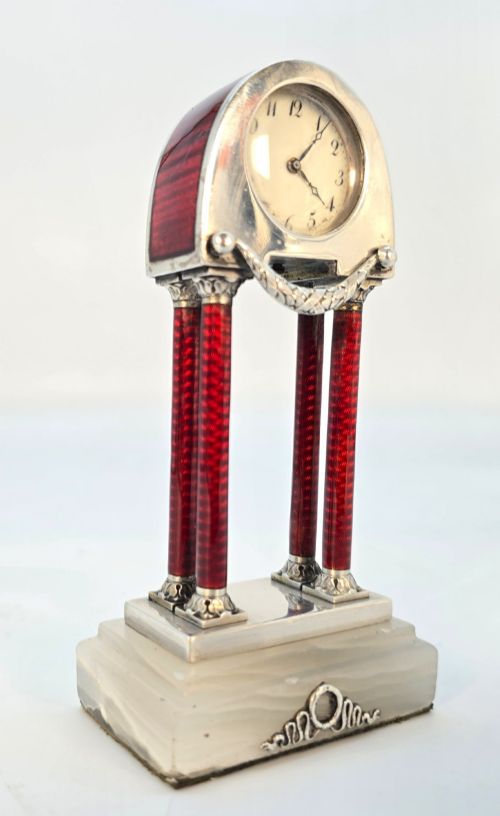
A Gilded Egyptian Revival Timepiece Desk Clock, 1880
Priced at £1,650 from Chalfont Clocks
Hand-cut pinions require precise filing to mesh smoothly with the larger brass wheels.
Engine turning decorates many metal dials with tight geometric patterns cut directly into the surface.
Notice how wooden cases rely on traditional cabinetmaking joints hidden beneath decorative veneers.
"Silvered dials get their finish from a traditional paste of silver chloride rubbed directly into the brass surface."
"Blued steel hands achieve their deep colour through careful heating over an open flame to build up an oxide layer."
"Expect many movements to run for eight days on a single wind thanks to a coiled ribbon of high-carbon steel."
Based on almost 25 years of Sellingantiques UK antique market data, Antique Desk Clocks appeared 1173 times (out of 1,100,000 antiques) which gives it a rarity score of 79/100.
This score measures scarcity within the Sellingantiques archive only and is not a survey of the entire antiques market, so these statistics may not be indicative of the general availability of Antique Desk Clocks elsewhere.
You will feel a definite resistance when the mainspring is fully coiled inside its barrel. Stop turning the key once you meet that hard stop.
Most modern damage happens when someone tries to force just one more click out of the ratchet. The steel spring itself rarely snaps from being fully wound, but the sudden release of tension if a click fails can shear teeth off the main barrel.
A clock stopping after a few minutes often indicates it is out of beat. The tick and tock need to be even. If one is longer than the other, the pendulum loses momentum and stops swinging.
Try adjusting the levelling screws under the base, or simply slip a thin wedge of cardboard under one side. Listen closely as you make tiny adjustments. When the sound becomes a steady rhythm, the movement should run continuously.
Most movements need a basic service every five years. Old oil dries out and turns into an abrasive paste.
Running it dry accelerates wear. Have a horologist re-oil the mechanism before the brass plates get damaged.
Moving the hands backwards on a simple timepiece without a strike mechanism is generally safe. The internal friction clutch allows the hands to slip independently of the main gear train.
However, if the clock chimes or strikes the hour, turning the minute hand backwards can jam the lifting levers. Always move a striking clock forwards, pausing to let it sound at the hour and half-hour marks.
Please note: This Antique Desk Clocks guide and its associated pricing data are provided for general informational purposes only. It does not constitute formal financial, investment, or appraisal advice and should not be relied upon as the sole basis for any commercial activity, purchasing, or sales decisions. Sellingantiques.co.uk accepts no liability for any actions taken in reliance on this information. Always consult with a qualified professional or independent appraiser.
