





A 2026 Guide by Sellingantiques

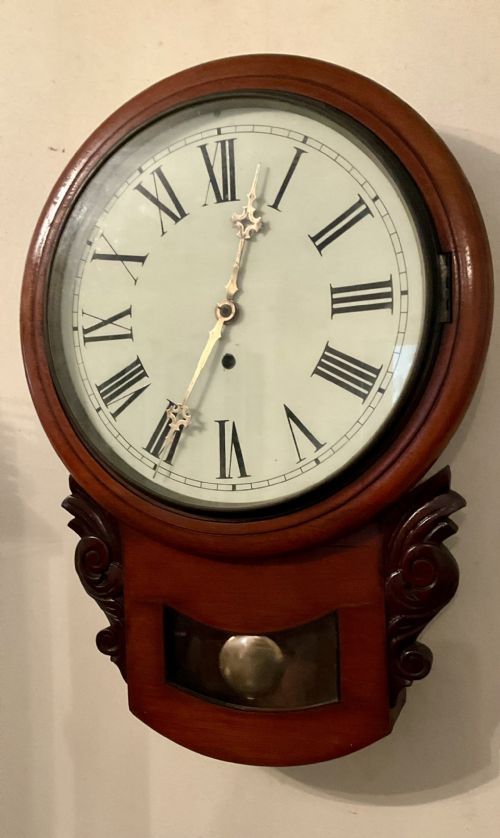
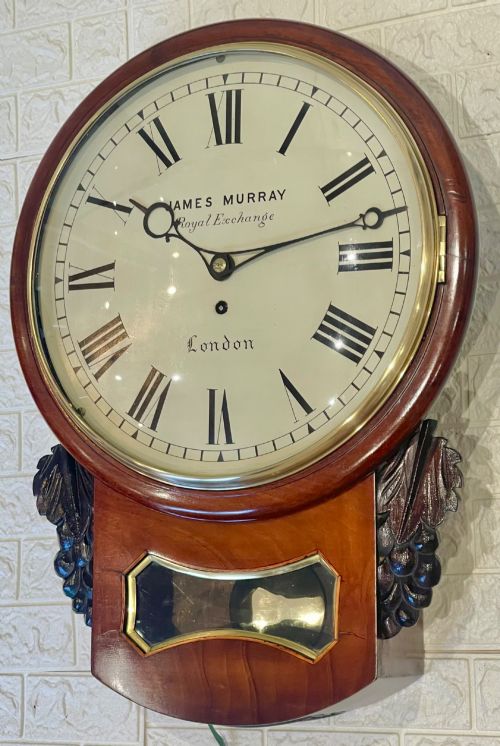
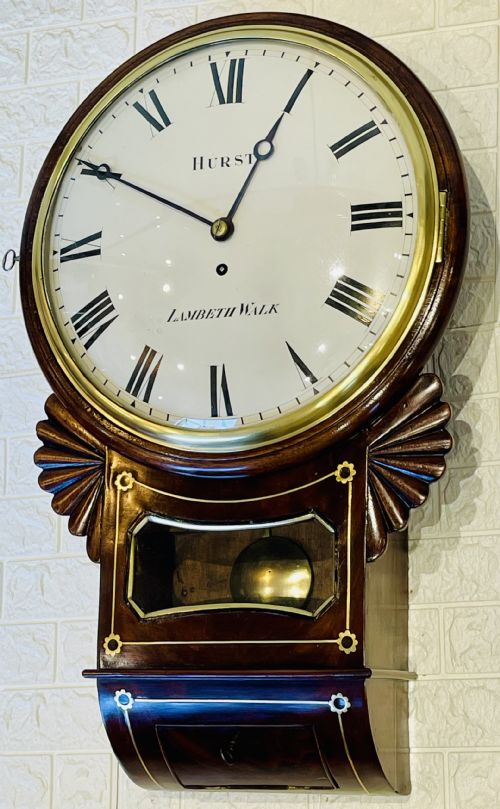
Antique Mahogany Drop Dial Wall Clock, Victorian
Priced at £675 from Rebecca Sarah Antiques
These emerged in the late eighteenth century as a variation of the standard dial clock.
Think of railway stations and counting houses. They needed time visible from across a crowded room.
Popularity peaked during the Victorian era when commercial spaces expanded rapidly.
The drop trunk allowed for a longer pendulum, which meant better timekeeping for busy offices.
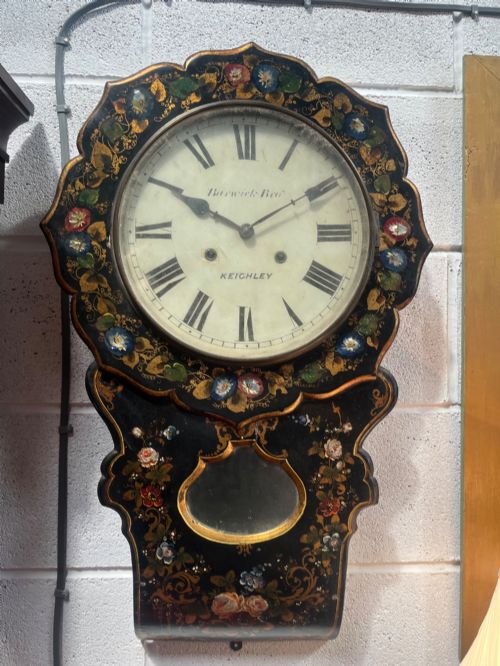
Thwaites & Reed produced many reliable movements in London during the nineteenth century.
Regional makers buying in blank movements and dials. They painted their own names on the face.
Watch for Seth Thomas. They exported thousands of American drop dial clocks to British markets later in the period.

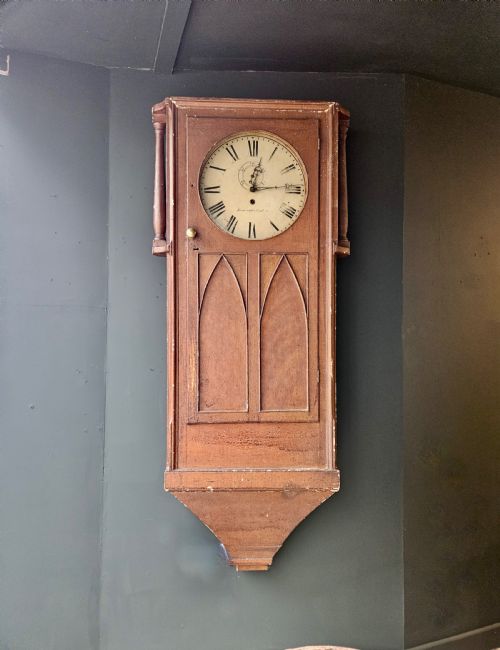
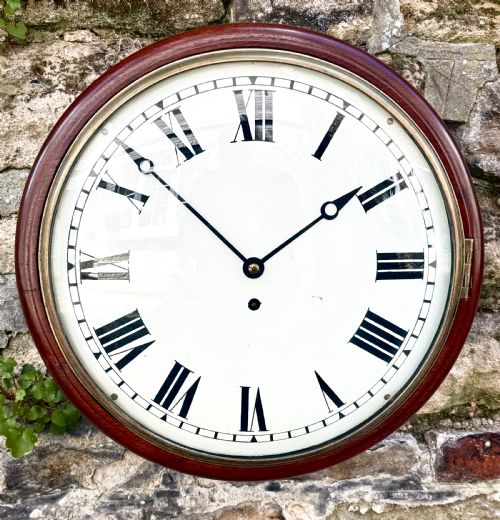
19th Century Mahogany Drop-dial Wall Clock by J.w. Enock of Warwick, 19th Century
Priced at £1,400 from Quiet Street Antiques of Bath
The 2026 retail price guide for Antique Drop Dial Clocks is drawn from a proprietary archive of over 1.1 million retail prices indexed by Sellingantiques since 2003. This guide relies exclusively on their own internal data; no external sources or auction records are used.
Analysing nearly 25 years of UK antique market history alongside current retail values, the data indicates that typical UK retail prices for Antique Drop Dial Clocks range between £700 and £2,800. Entry-level prices generally fall under £700 and premium examples upwards of £2,800.
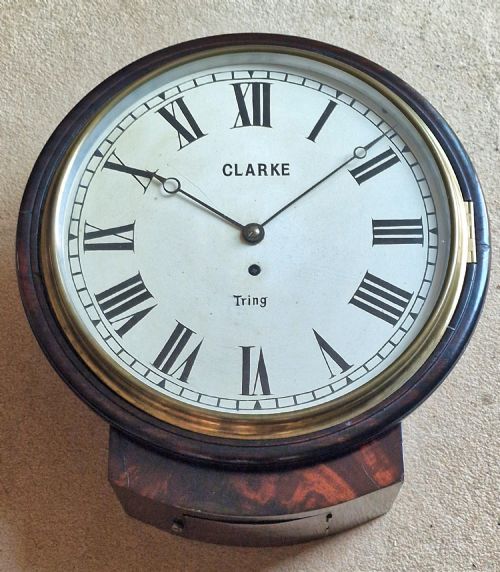
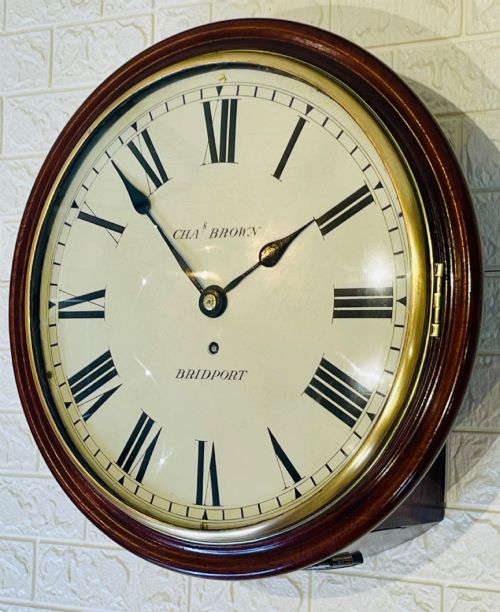
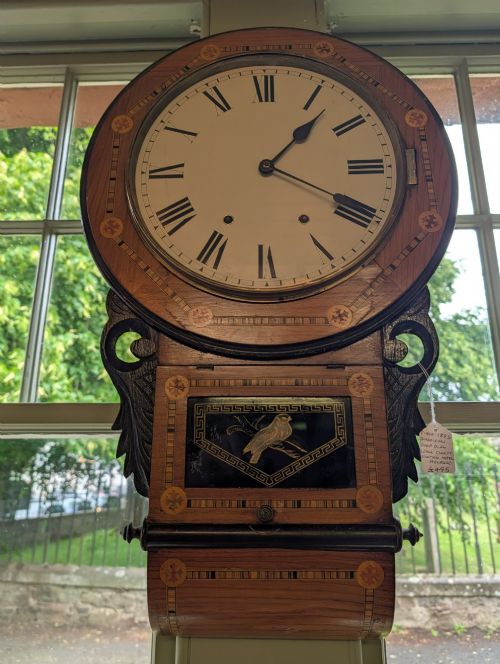
A large and prominent circular dial dominating the top section of the case.
The pendulum trunk hangs directly beneath. It's often fitted with a small glazed viewing window.
Open the side doors on the dial surround to check the movement. The bottom door lets you adjust the pendulum.

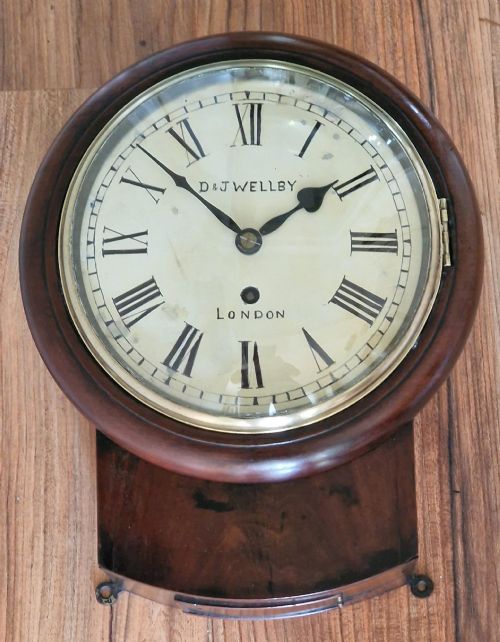
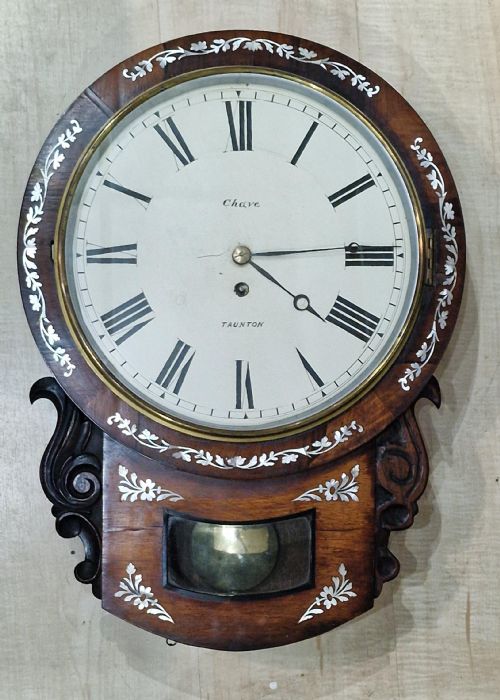
Twin Fusee, Bell Striking, London, Drop-dial Wall Clock., 1800
Priced at £1,850 from Masons Antiques
Early examples featuring solid wood for the dial surround. Turners cut the circular mouldings from joined timber blocks.
Mid-century makers shifted to thin veneers over a pine carcase. This allowed intricate grain matching around the trunk.
Inspect the brass movements. Late nineteenth-century stamped gears sped up assembly compared to earlier hand-finished components.
"The bottom door was often left unlocked. Junior clerks could easily adjust the time without opening the main dial."
"Look closely at the trunk. Regional cabinetmakers frequently added carved local motifs to standard factory cases."
"A longer trunk houses a heavier pendulum bob. This added stability keeps the clock running steadily in busy spaces."
Based on almost 25 years of Sellingantiques UK antique market data, Antique Drop Dial Clocks appeared 559 times (out of 1,100,000 antiques) which gives it a rarity score of 89/100.
This score measures scarcity within the Sellingantiques archive only and is not a survey of the entire antiques market, so these statistics may not be indicative of the general availability of Antique Drop Dial Clocks elsewhere.
Most antique drop dial clocks have an eight-day movement. You'll wind them once a week.
Spring-driven models just need winding from the front. Weight-driven versions use cords inside the trunk.
Strict office clocks were usually timepieces. They only showed the time. A loud bell striking the hour disturbed clerks trying to work on ledgers.
However, plenty of drop dials were built for domestic settings or taverns. These often have a striking train. A clock striking a gong is normal if it was built for a busy public room.
Convex dials scatter glare from windows and gas lamps. Flat glass reflects light directly back. This makes the hands hard to read from certain angles.
The curve also gives the hands space to move.
Wood is stable. Metal expands and contracts as room temperature changes. That alters the length of the pendulum and ruins the timekeeping.
Straight-grained timber like mahogany resists those temperature swings. It keeps the clock running steadily through summer and winter. Support the bob with your hand and turn the nut gently.
Please note: This Antique Drop Dial Clocks guide and its associated pricing data are provided for general informational purposes only. It does not constitute formal financial, investment, or appraisal advice and should not be relied upon as the sole basis for any commercial activity, purchasing, or sales decisions. Sellingantiques.co.uk accepts no liability for any actions taken in reliance on this information. Always consult with a qualified professional or independent appraiser.
