
Antique Walnut Cabinets
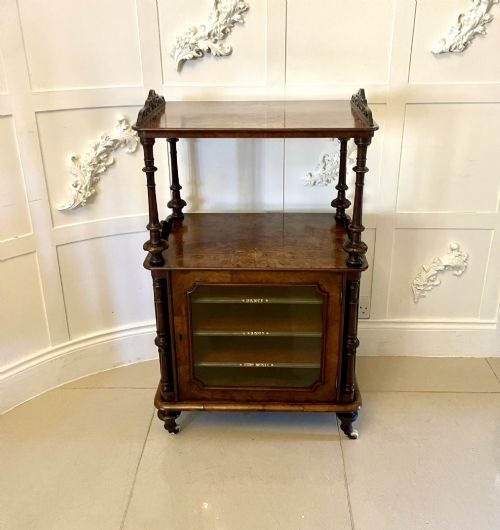
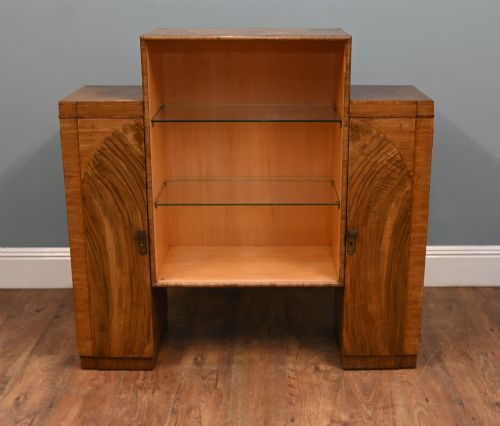
Walnut case furniture, mostly veneered, running from small table and music cabinets to Victorian pier and display cabinets and the fitted burr-walnut cocktail cabinets of the 1920s and 30s.
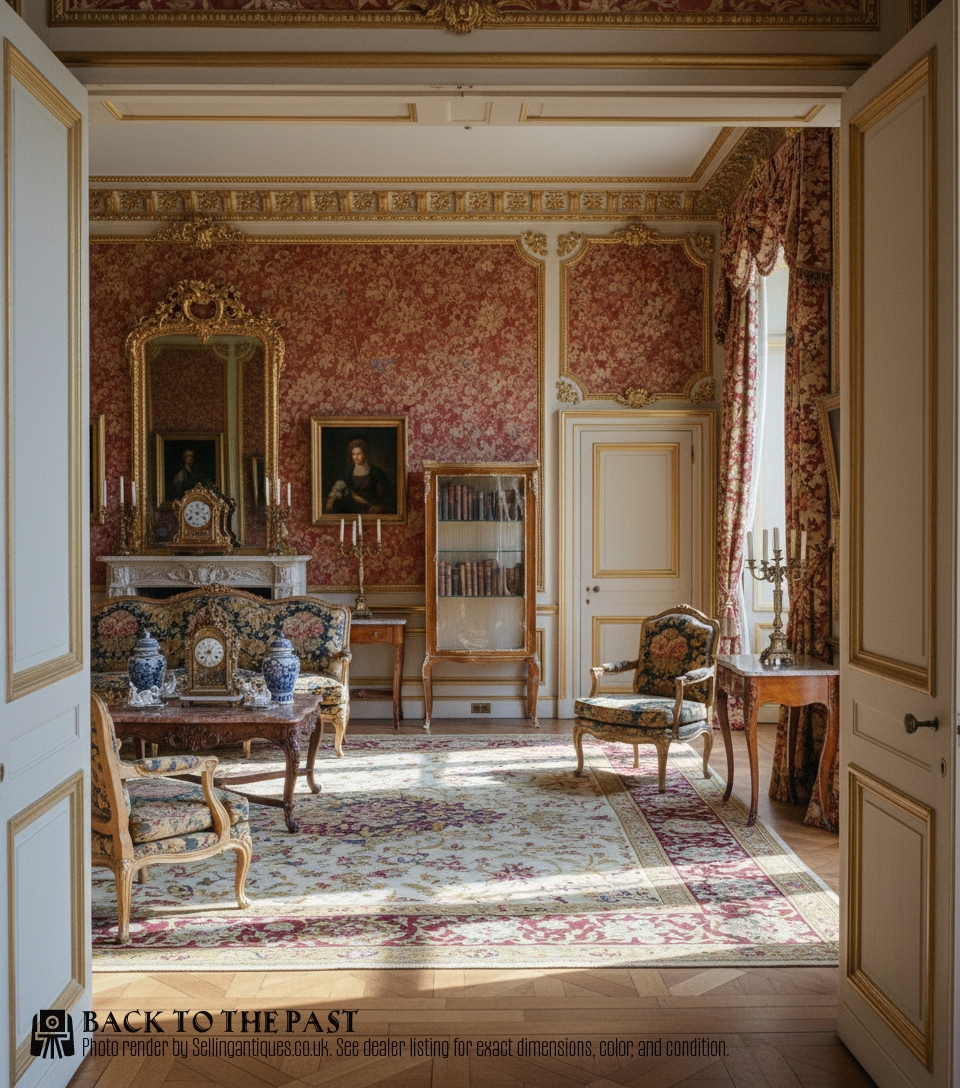
Antique Walnut Cabinets
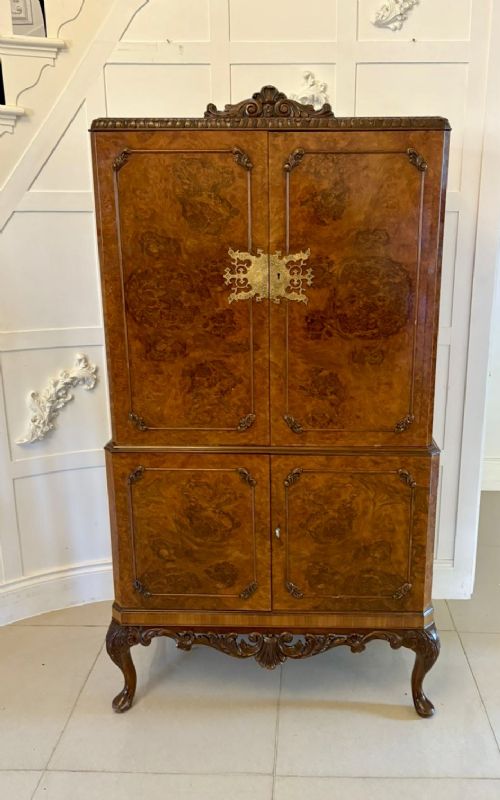
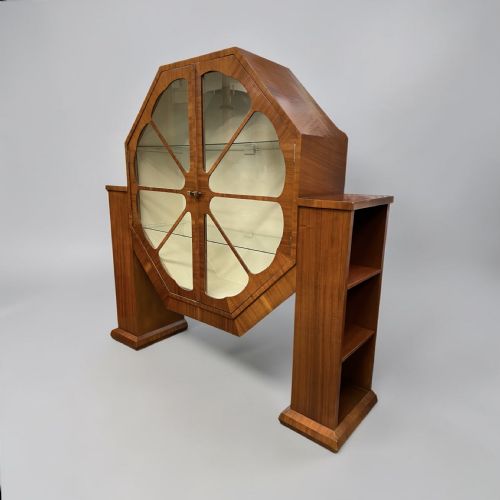
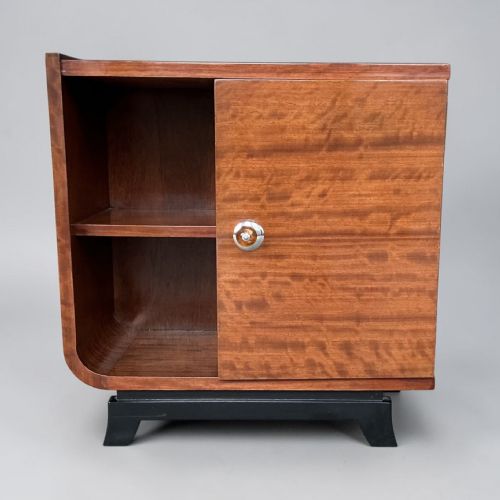
Walnut has been the fashionable cabinet timber twice over. It came in during the later 17th century for the figure of its burrs and crotch veneers, laid over a carcass; it came back in the 19th century for drawing-room side and display cabinets, and again between the wars, when big sheets of burr veneer suited the flat curved surfaces of Art Deco.
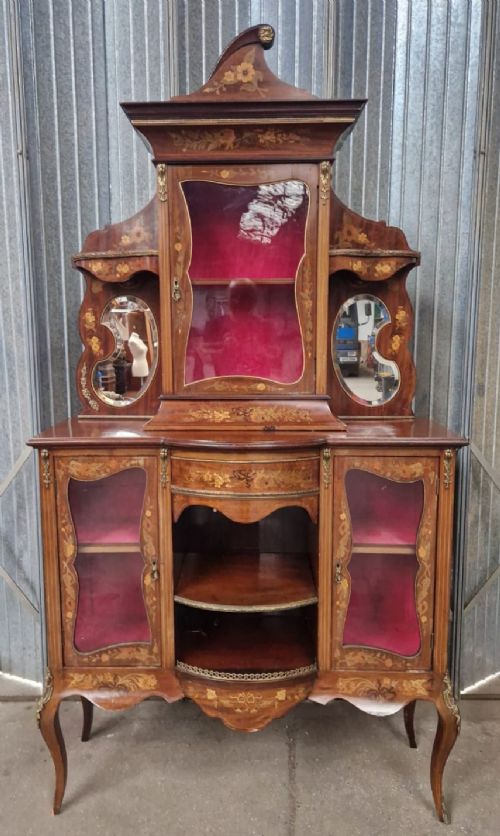
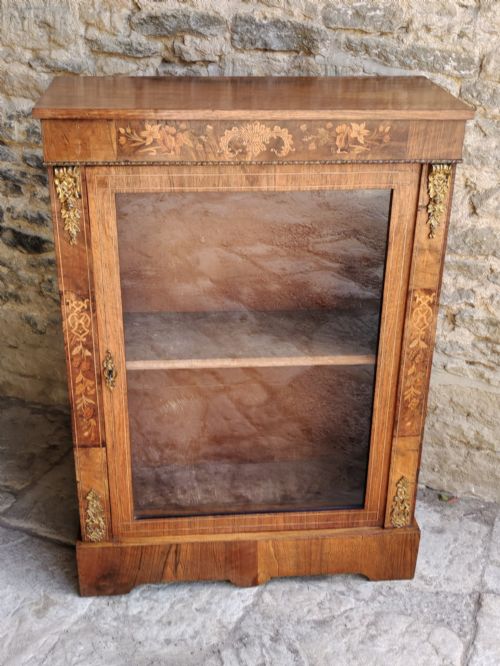
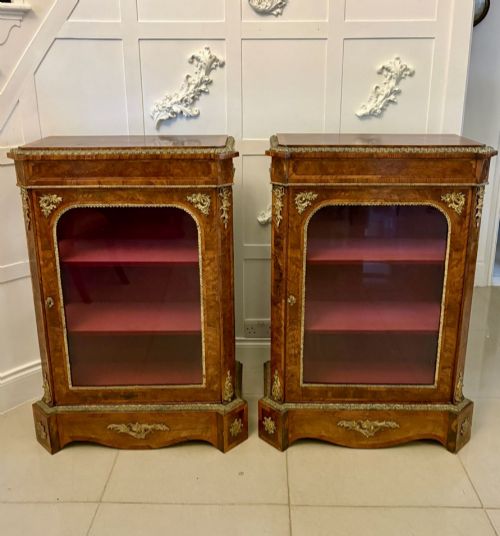
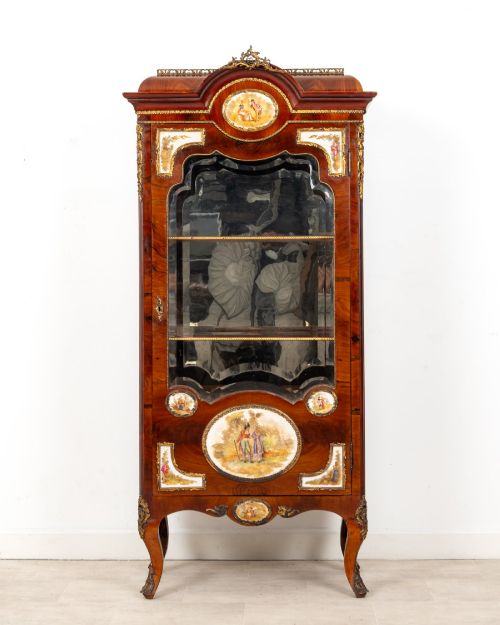
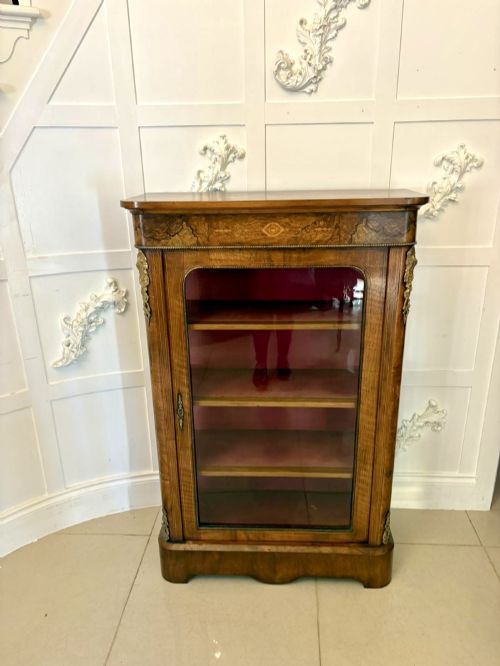
Two forms share the ground on Sellingantiques. The Victorian glazed or inlaid pier and side cabinet, often with marquetry panels and gilded metal mounts, is one. The Art Deco burr-walnut cabinet is the other, with 345 titles calling themselves Art Deco and 236 fitted as cocktail cabinets. The dating bears that out: 434 pieces are given to the 1930s and 369 to the 1920s, so the average walnut cabinet in this archive is younger than the word antique suggests.
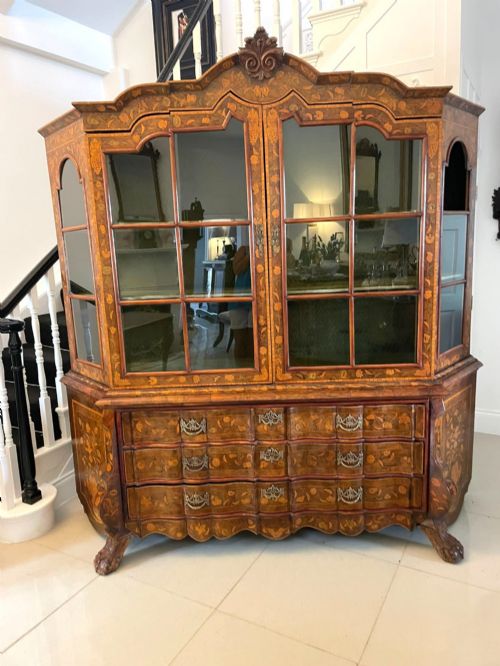
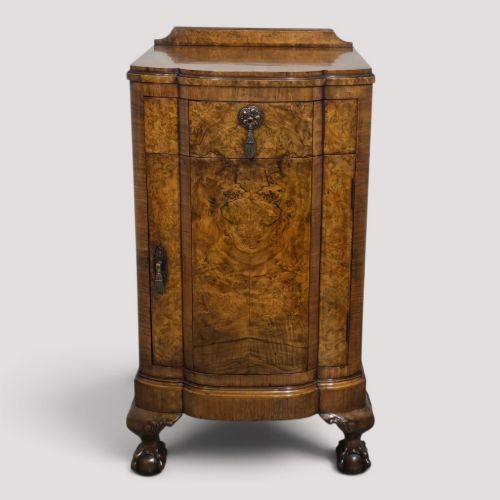
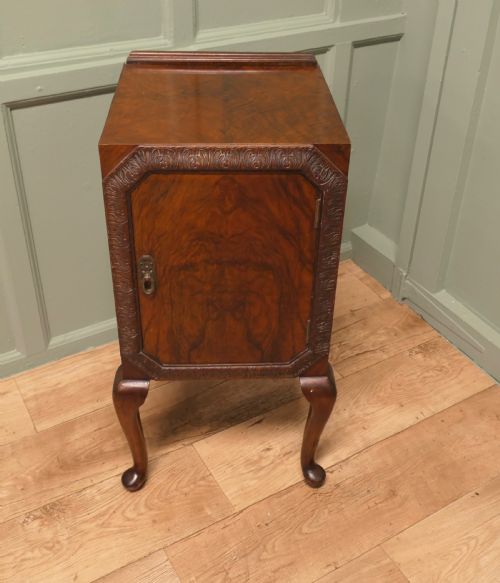
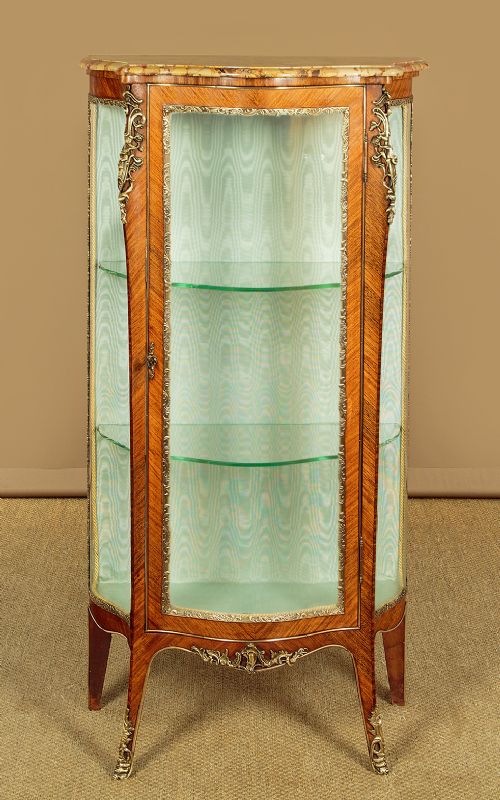
Running through both is the bedside cabinet. Bedside appears in 461 titles, along with pot cupboards, nightstands and small bedside chests, and 444 titles across the category say pair. Glazed display cabinets and vitrines make up another strand, including Dutch and Continental marquetry pieces, some raised on a chest.
Around the edges sit the specialists: music and gramophone-record cabinets, 95 of them, collectors cabinets with drawer counts running into the dozens, stationery and folio cabinets, filing and dentists' cabinets. Earlier walnut is present but thin on the ground, a scattering of 17th- and 18th-century Dutch, Flemish, Italian, German and William and Mary pieces.
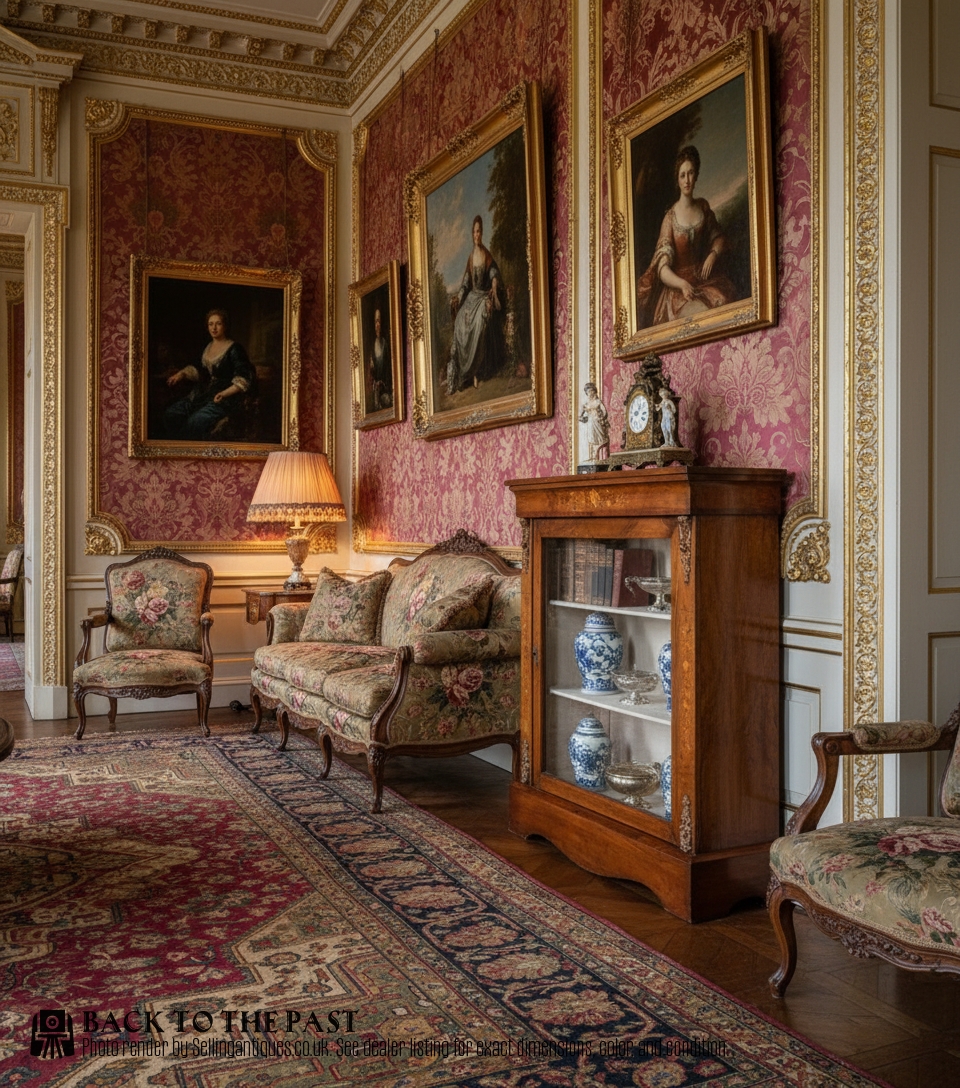
What Sets Them Apart
Figure carries the category. Burr walnut is named in 703 titles, close to a third, and figured in another 107, from "victorian burr" through to "deco burr". Plain walnut sits below both, and the titles that reach for graining are telling you where the money went on the original piece.
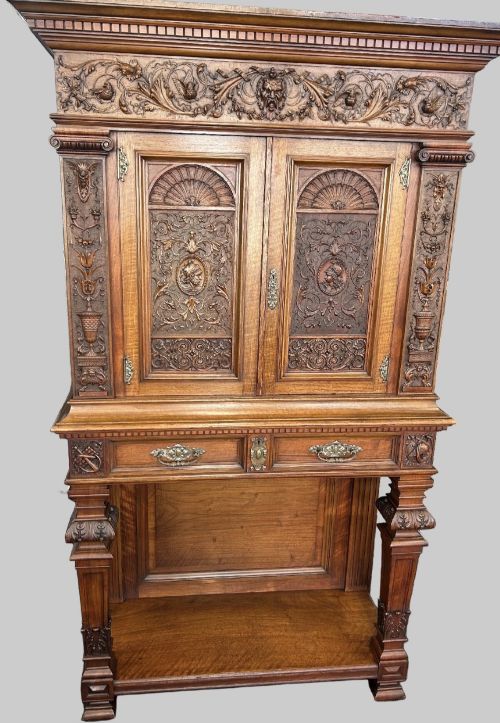
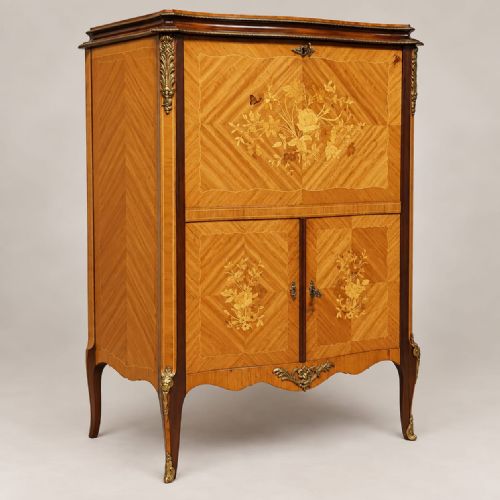
Decoration is the next step up. Marquetry appears in 115 titles and inlay in 210, with ormolu mounts in 48, and the highest-priced sampled pieces are marquetry and ormolu-mounted display cabinets and credenzas. Origin pulls in the same direction: Dutch and Flemish marquetry display cabinets take a share of the top of the range out of all proportion to their 60 titles, while small music, filing and bedside cabinets cluster at the bottom.
Two other things count. Pairs sit above singles, and the language of the listings supports it, with near pair, matched pair and matching pair all in use. And a fitted interior beats a plain one: rise-and-fall drinks actions, mirrored and illuminated cocktail interiors, fitted writing compartments, collectors cabinets running to eighteen, twenty or sixty drawers.
Antique Walnut Cabinets Retail Price Guide 2026
Typical UK retail prices for walnut cabinets, calculated from the Sellingantiques database of over a million retail prices indexed since 2003. This retail price guide relies exclusively on Sellingantiques data; no external sources or auction records are used, so the figures do not describe the wider market.
The most expensive walnut cabinet ever sold on Sellingantiques was a Victorian burr walnut carved breakfront display cabinet, exhibition quality, in April 2022.
Hille·Maple & Co·Gillows
The Antique Walnut Cabinets Glossary
- Burr
- Veneer cut from a wart-like growth on the tree, giving dense swirling figure. It is named in roughly a third of titles in this category.
- Pier cabinet
- A tall narrow cabinet made to stand against the pier of wall between two windows. The word turns up in 247 titles.
- Cocktail cabinet
- A fitted drinks cabinet of the 1920s and 30s, sometimes with a mirrored or illuminated interior. Named in 236 titles, with drinks cabinet in a further 104.
- Marquetry
- Pictorial or floral inlay in contrasting woods, laid into the veneer. Often written as "marquetry inlaid" in these listings.
- Vitrine
- A glazed display cabinet, usually French or Continental where the word is used. Around 43 titles.
- Pot cupboard
- A small bedside cupboard, the older name for a nightstand, and a form that frequently comes as a pair.
Antique Walnut Cabinets: Frequently Asked Questions
What is burr walnut?
Burr is veneer cut from a growth on the trunk, and the grain in it swirls rather than runs straight. It was prized for exactly that.
It dominates this category. Burr is named in 703 of the titles, and it crosses the periods, from Victorian burr side cabinets through to Art Deco burr cocktail cabinets.
How old are most walnut cabinets on the market?
Younger than you might expect. The dated field spans 1700 to 1940, but the mass sits late, with 434 pieces given to the 1930s and 369 to the 1920s.
Victorian accounts for 319, with a further 217 given only as 19th Century and 67 as Edwardian. A good deal of the dating is a period label rather than a year.
Earlier walnut appears in small numbers: a table cabinet inscribed 1613, a German marquetry table cabinet, an Italian Baroque cupboard, a William and Mary cabinet on chest.
Why are bedside cabinets so often sold in pairs?
They were made that way, one for each side of the bed. Pairs are a category in their own right here, with 444 titles using the word, most of them bedside cabinets, chests or nightstands.
A matched pair sits above a single cabinet in the range, and pairs of pier cabinets recur in the upper half too. Near pair and matched pair both appear in the listings.
What is a pier cabinet?
A tall narrow cabinet built for the pier, the stretch of wall between two windows. The proportions follow the space rather than the contents.
It is a Victorian form above all, and 247 titles use the term. Glazed doors, inlay and gilded metal mounts are all common on them.
Which walnut cabinets sit at the top of the range?
Marquetry and ormolu-mounted display cabinets and credenzas take the highest prices in the sampled listings, along with Dutch and Flemish marquetry display cabinets, some raised on a chest.
At the other end sit the small utility forms: music cabinets, filing cabinets and single bedside cupboards.
Are there unusual walnut cabinets besides the standard forms?
Yes, and some appear only once or twice across the whole archive. A butterfly collectors cabinet with eighteen wide drawers, a sixty-drawer collectors cabinet, an oological egg cabinet.
Others include dentists' cabinets, a billiard scoreboard cabinet, a coal purdonium, a sewing machine console and a diamond-shaped shop counter in brass and walnut.
Music cabinets are the steadiest of the small forms, 95 titles, including sheet-music and gramophone-record types, several with fitted writing compartments.