




A 2026 Guide by Sellingantiques
Born out of the widespread Victorian obsession with categorising the natural world.
Look at the mid-nineteenth century as the peak period for these forms, matching a huge boom in amateur entomology.
Collectors needed dark, dry storage to stop light fading butterfly wings and damp ruining fragile shells.
A few early antique specimen cabinets trace back to eighteenth-century curiosity rooms, though they look more like standard chests.
They weren't kept in formal reception rooms, usually sitting in private studies or library corners.
Thomas Gurney is a recognised name in the London trade, actively supplying entomologists with purpose-built storage.
Look for J.T. Crockett & Son in the late nineteenth century, a firm specialising in cabinets for lepidopterists.
Regional joiners made plenty of them to order. This means most antique specimen cabinets lack a maker's stamp.
The 2026 retail price guide for Antique Specimen Cabinets is drawn from a proprietary archive of over 1.1 million retail prices indexed by Sellingantiques since 2003. This guide relies exclusively on their own internal data; no external sources or auction records are used.
Analysing nearly 25 years of UK antique market history alongside current retail values, the data indicates that typical UK retail prices for Antique Specimen Cabinets range between £500 and £2,900. Entry-level prices generally fall under £500 and premium examples upwards of £2,900.
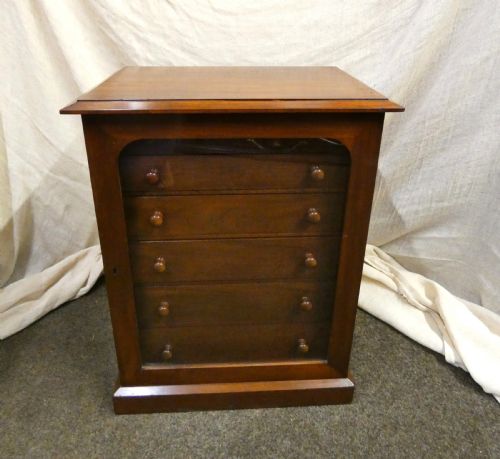
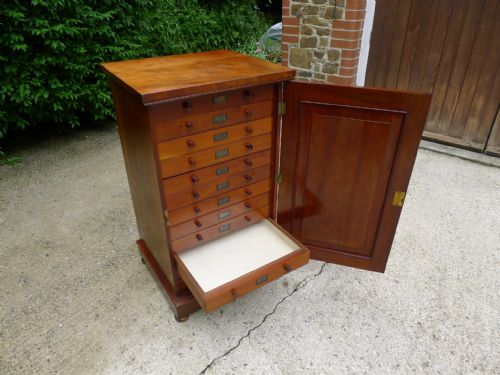
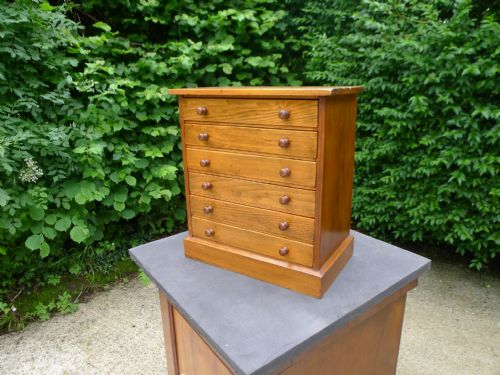
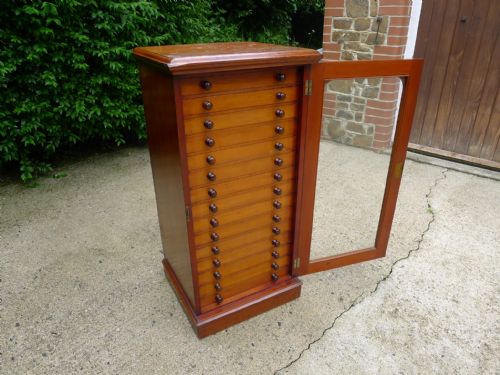
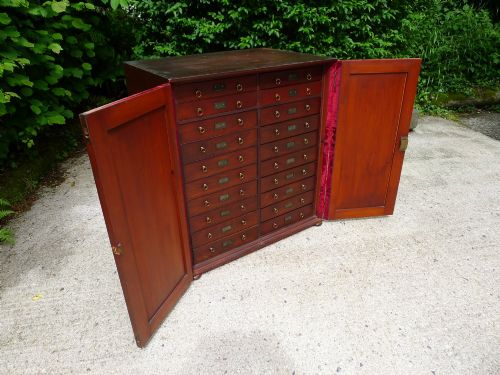
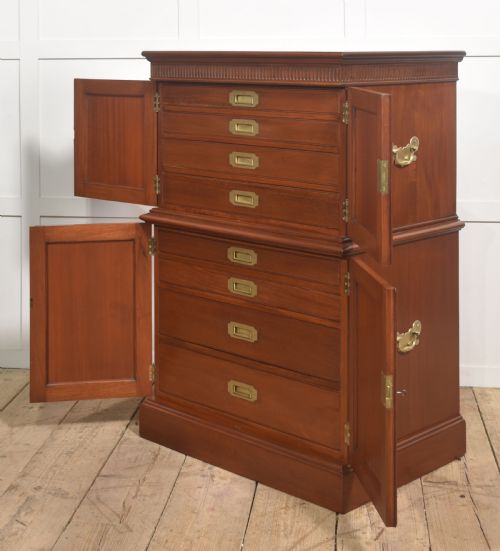
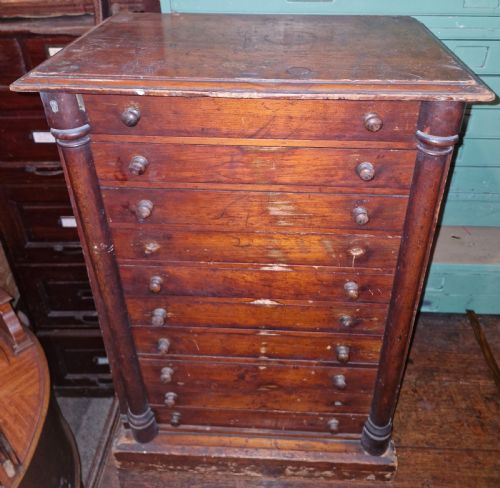
Shallow drawers are the defining trait, stacked closely together so you don't waste vertical space.
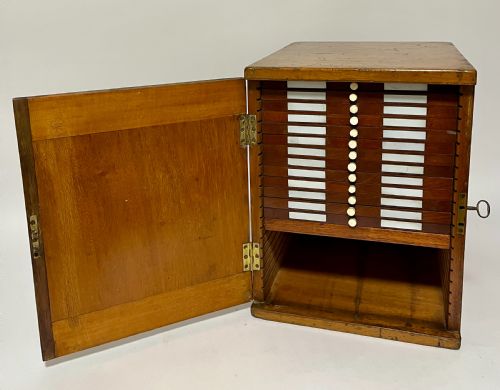
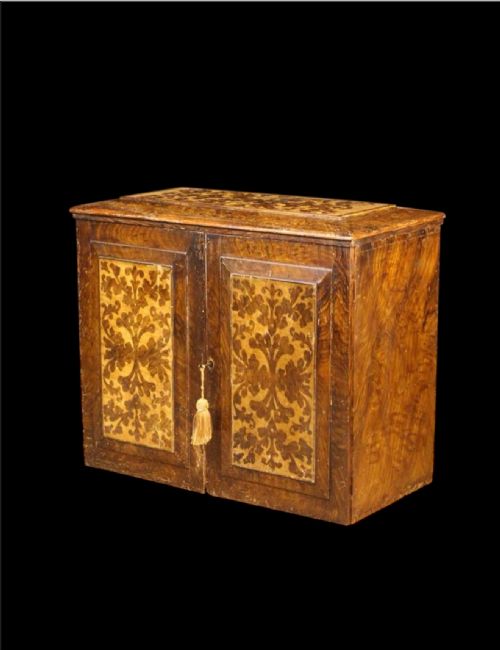
Expect a locking mechanism, usually a side hinge or a pair of panel doors, keeping the entire bank secure.
Check the drawer bases closely. Many have old cork layers glued beneath paper to hold brass mounting pins.
Built with fine, hand-cut dovetails on the drawer sides, needing skill on such shallow proportions.
Note the tight tolerances. A well-made antique specimen cabinet has drawers that slide in with a distinct whoosh.
Earlier examples often rely on solid timber, while late Victorian versions use thin show veneers over a cheaper core.
"Drawer depths sometimes vary within the same cabinet to fit different sized minerals or egg clutches."
"The hidden camphor cells often still carry a faint, spicy scent after a hundred years."
"They double up easily as storage for modern collections like coins or watches, giving them a new lease of life."
Based on almost 25 years of Sellingantiques UK antique market data, Antique Specimen Cabinets appeared 688 times (out of 1,100,000 antiques) which gives it a rarity score of 87/100.
This score measures scarcity within the Sellingantiques archive only and is not a survey of the entire antiques market, so these statistics may not be indicative of the general availability of Antique Specimen Cabinets elsewhere.
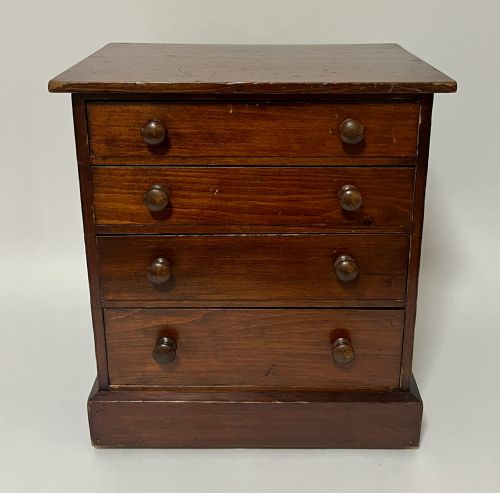
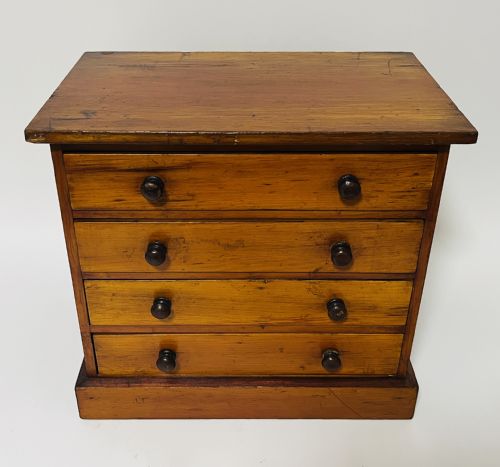
Weight depends heavily on the timber and the size of the piece. A small mahogany tabletop model might weigh under ten kilos and is easy to move.
Floor-standing banks of thirty drawers built from dense woods are a different matter. You need two strong people to lift them, even with the drawers removed.
The glazed frames should fit tightly into the drawer rebates. Makers designed them this way to create a barrier against dust and pests like museum beetles.
If they slide out too easily, the timber has probably shrunk over the decades. You have to lift them carefully, often using a small bone or brass ring pull set into the frame edge.
Most makers used thin sheets of mahogany or pine for the solid base. On top of that, entomological cabinets have a layer of sheet cork glued down to grip mounting pins.
The cork is usually covered with a layer of plain white paper. Mineral cabinets skip the cork and paper, sometimes using bare wood or baize linings instead.
Many dividers are loose and lift straight out, especially in egg or mineral cabinets. Collectors added them later to suit their specific finds.
Sometimes they are pinned or glued into the drawer sides. Removing those risks damaging the mahogany linings, so you're better off finding a cabinet that already has open drawers.
Please note: This Antique Specimen Cabinets guide and its associated pricing data are provided for general informational purposes only. It does not constitute formal financial, investment, or appraisal advice and should not be relied upon as the sole basis for any commercial activity, purchasing, or sales decisions. Sellingantiques.co.uk accepts no liability for any actions taken in reliance on this information. Always consult with a qualified professional or independent appraiser.
