


A 2026 Guide by Sellingantiques
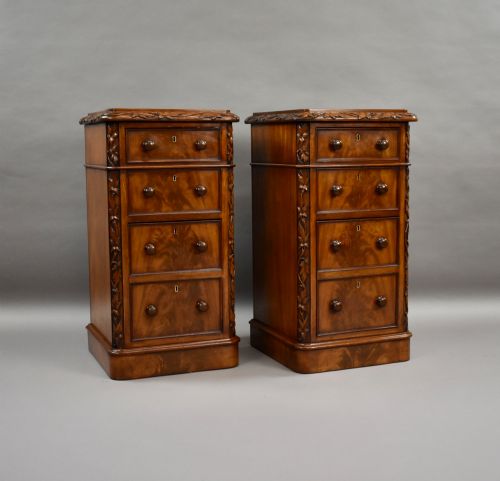
Developed in the late eighteenth century, antique pedestal cabinets were initially conceived as integral parts of grand dining room suites, designed to stand like sentinels at either end of a sweeping sideboard.
Robert Adam frequently incorporated them into his neoclassical room schemes.
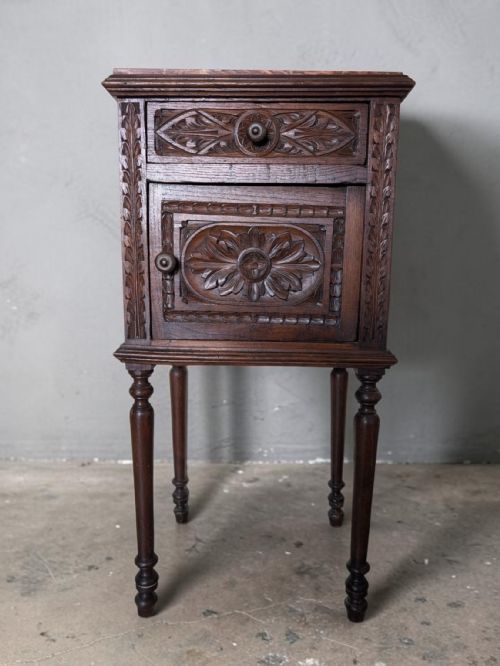
Some held ceramic chamber pots when placed in large country house bedchambers, keeping everyday necessities neatly hidden out of sight behind a formal mahogany exterior.
Look for adaptations made during the Victorian era, when many were repurposed as standalone bedside tables.
Most surviving pairs have been split up over the generations.
Gillows of Lancaster produced hundreds of these for country houses between 1780 and 1840.
Thomas Chippendale supplied matching pairs to complement his large sideboard tables at Harewood House.
Countless unsigned regional pieces form the vast bulk of what survives today, crafted by local joiners copying fashionable London patterns.
The 2026 retail price guide for Antique Pedestal Cabinets is drawn from a proprietary archive of over 1.1 million retail prices indexed by Sellingantiques since 2003. This guide relies exclusively on their own internal data; no external sources or auction records are used.
Analysing nearly 25 years of UK antique market history alongside current retail values, the data indicates that typical UK retail prices for Antique Pedestal Cabinets range between £600 and £3,200. Entry-level prices generally fall under £600 and premium examples upwards of £3,200.
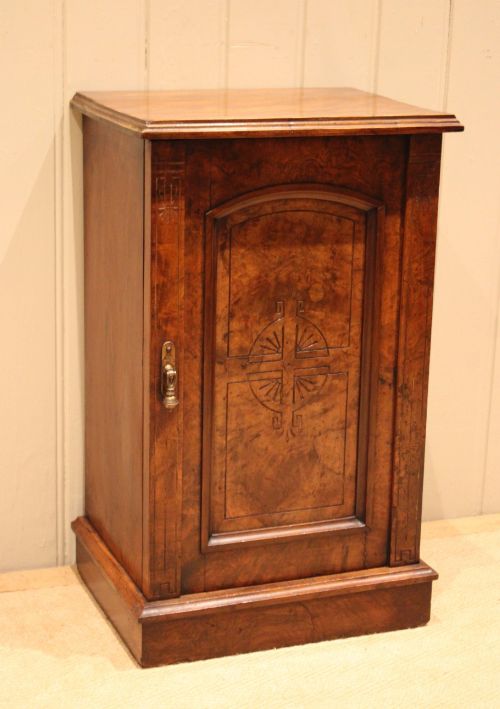
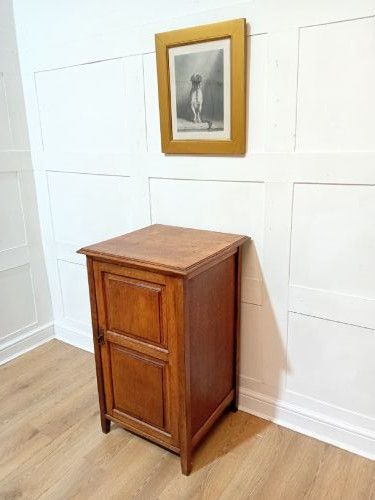
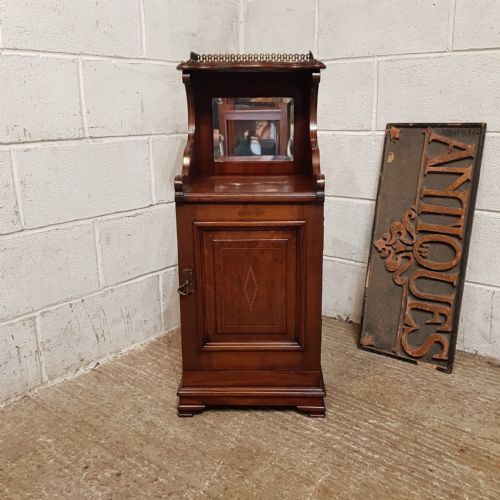
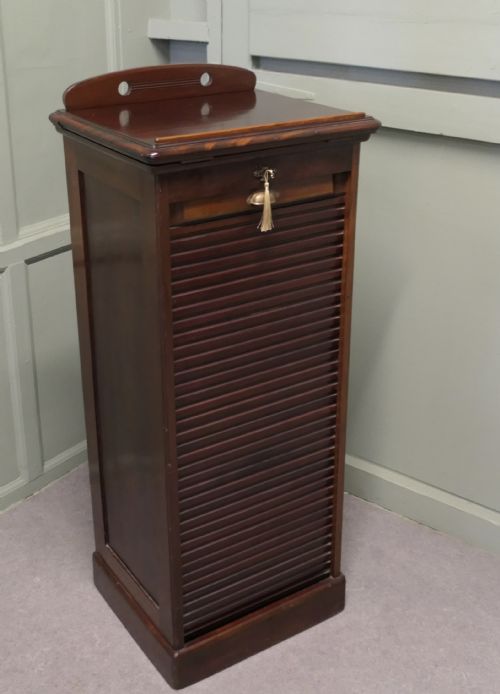
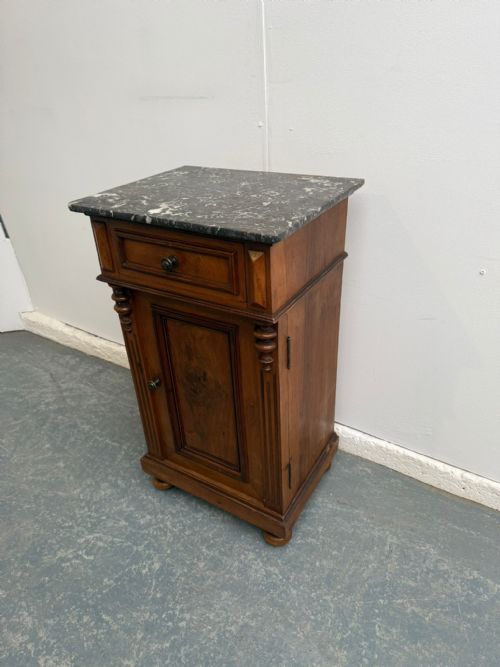
The classic antique pedestal cabinet stands on a solid plinth base rather than wooden legs.
A single panelled door usually encloses the main storage section, opening to reveal either simple wooden shelves or specialised compartments for wine bottles.
Check the top surface for a fitted metal gallery or a raised wooden lip.
Early Georgian makers favoured solid timber panels with hand-cut dovetails joining the carcase corners.
Flame mahogany veneers later became popular, glued over cheaper pine substrates for decorative effect.
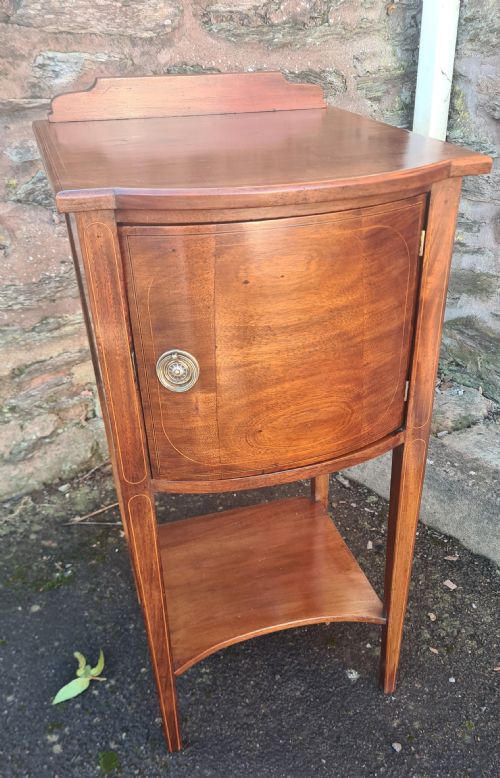
Notice the gradual progression from plain, flat-fronted early doors to complex bow-fronted designs requiring steam-bent woods.
"Metal-lined examples were specifically built to function as plate warmers in grand dining rooms."
"A single pedestal from a broken pair still makes an excellent freestanding lamp table."
"Consider the surprising internal volume they offer for modern storage in narrow hallways or alcoves."
Based on almost 25 years of Sellingantiques UK antique market data, Antique Pedestal Cabinets appeared 922 times (out of 1,100,000 antiques) which gives it a rarity score of 83/100.
This score measures scarcity within the Sellingantiques archive only and is not a survey of the entire antiques market, so these statistics may not be indicative of the general availability of Antique Pedestal Cabinets elsewhere.
Height varies depending on the original room scheme. Most fall between thirty and forty inches tall.
They needed to be a practical height for a servant to reach items on top, or to align properly with a central sideboard.
They are solid pieces of furniture. A mahogany carcase with a plinth base carries a fair bit of weight.
You can certainly slide them across a hard floor on felt pads. Lifting them is often a struggle for one person. Taking out any internal shelves or drawers first helps lighten the load.
Most have some form of internal fitting. A single fixed shelf is the most common arrangement.
Some dining room examples feature pull-out trays instead.
A single antique pedestal cabinet works well on its own. People often use them as standalone alcove cupboards or telephone tables in modern interiors.
The original pairs were designed for vast Georgian dining rooms. Few modern homes have the wall space to display a full symmetrical suite. Mixing a single cabinet with your existing furniture adds character without looking mismatched.
Please note: This Antique Pedestal Cabinets guide and its associated pricing data are provided for general informational purposes only. It does not constitute formal financial, investment, or appraisal advice and should not be relied upon as the sole basis for any commercial activity, purchasing, or sales decisions. Sellingantiques.co.uk accepts no liability for any actions taken in reliance on this information. Always consult with a qualified professional or independent appraiser.
