

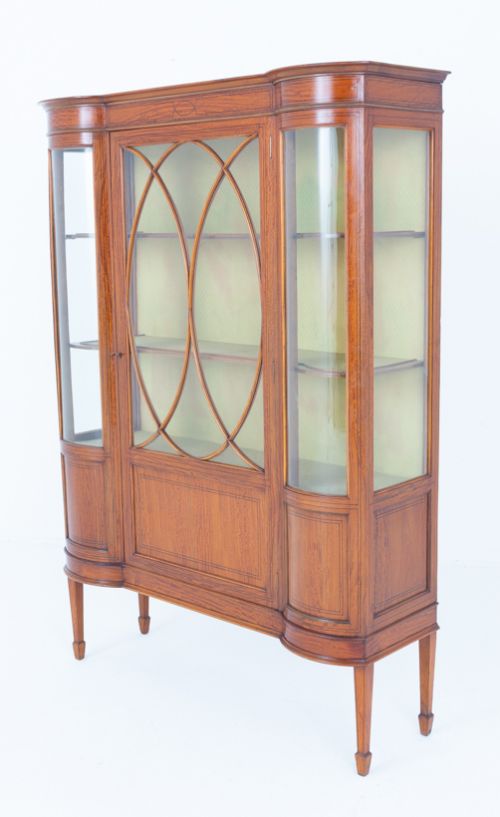


Antique Bow Front Cabinets
A cabinet whose front curves outward in a shallow bow, made in England to hold and show china, glass and small objects, or to stand beside a bed or fill a corner.
Antique Bow Front Cabinets
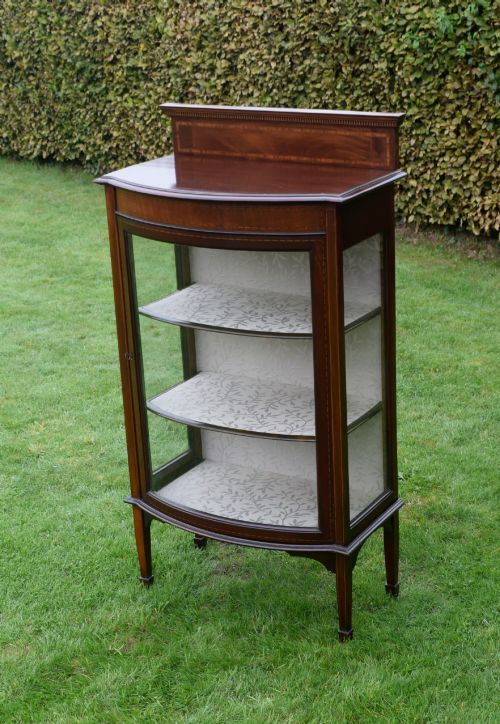
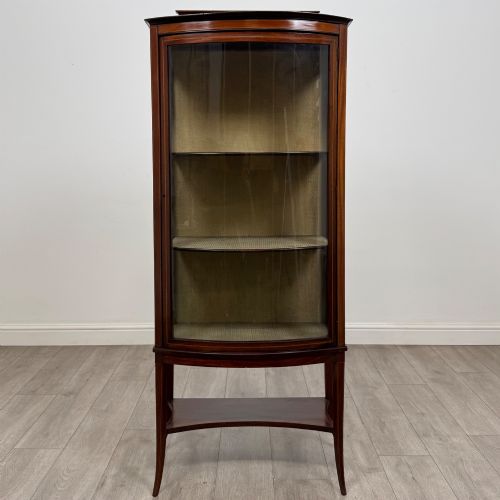
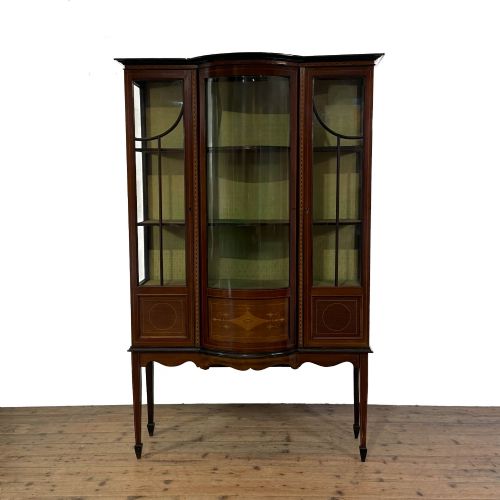
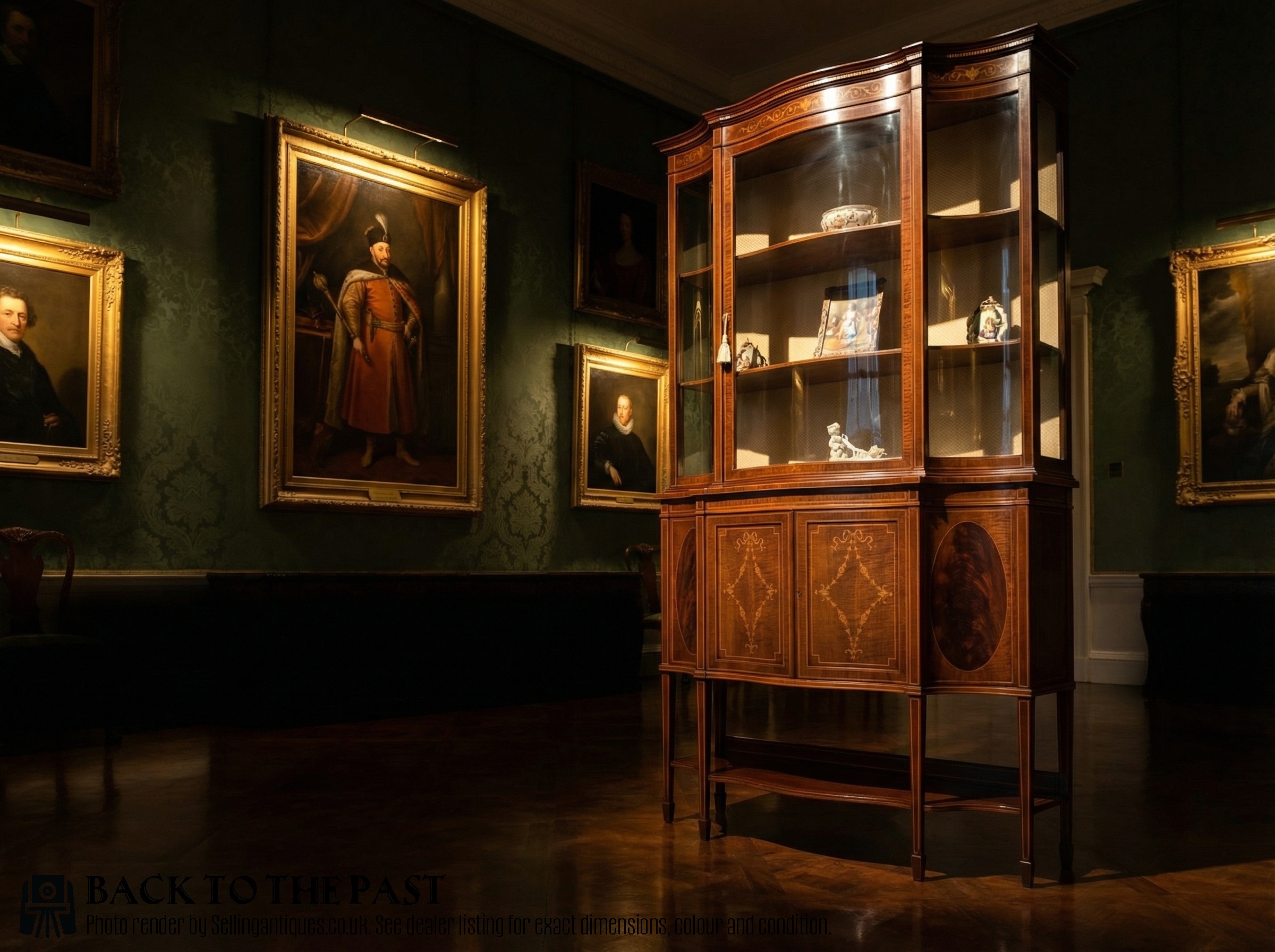
The bow front is a shallow convex sweep across the carcase or door. It became a standard English cabinetmaking form in the later 18th century, used to soften case furniture and to sit neatly in corners and alcoves, and it carried on through the 19th century into a long Edwardian revival.
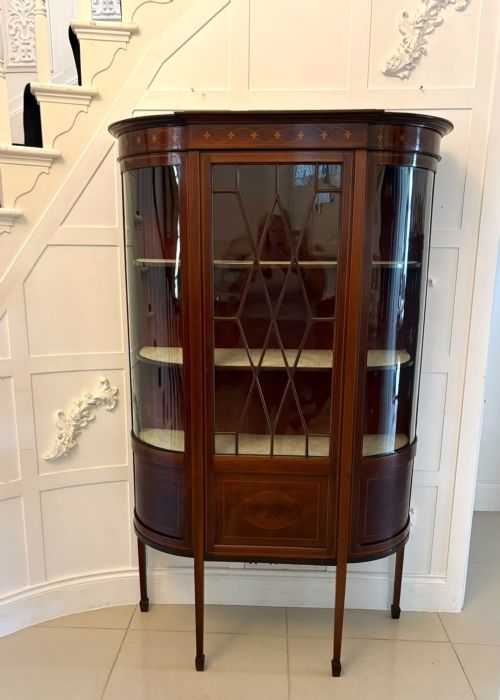
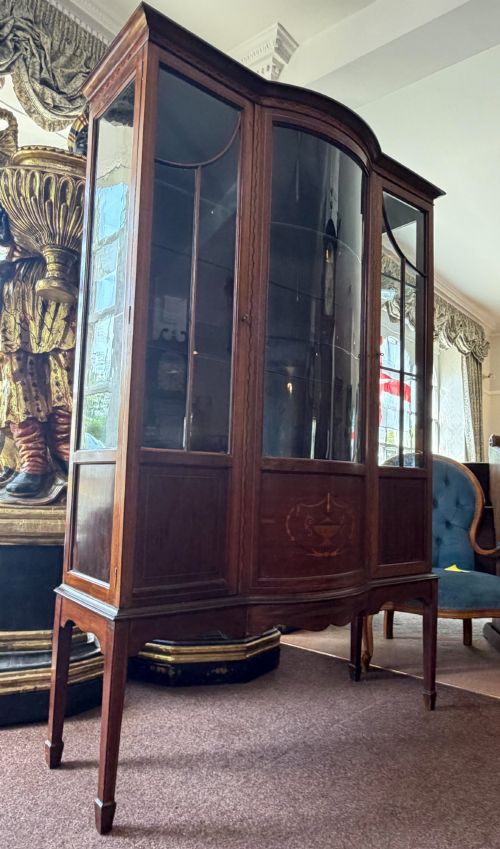
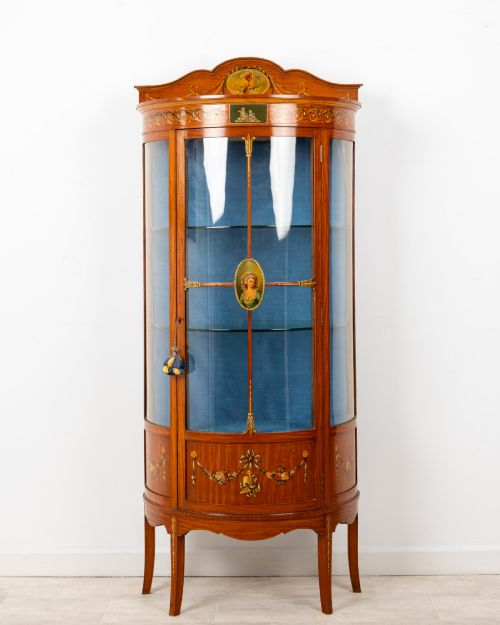
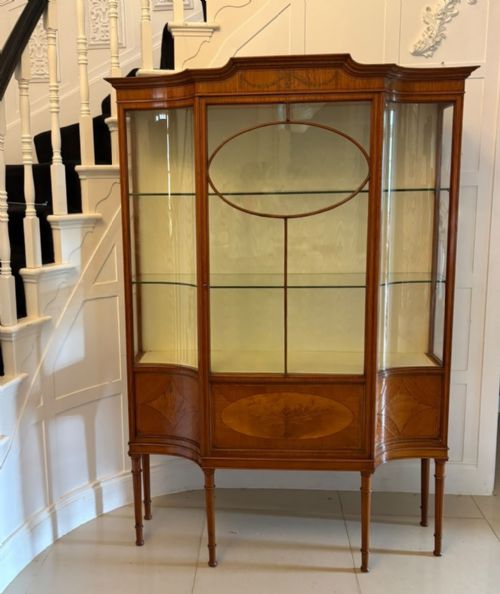
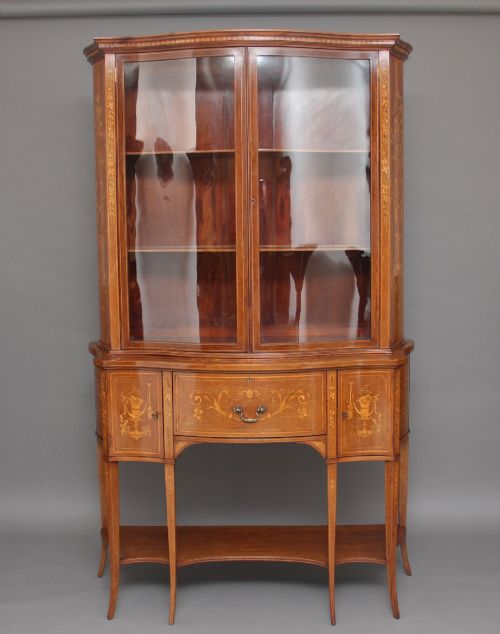
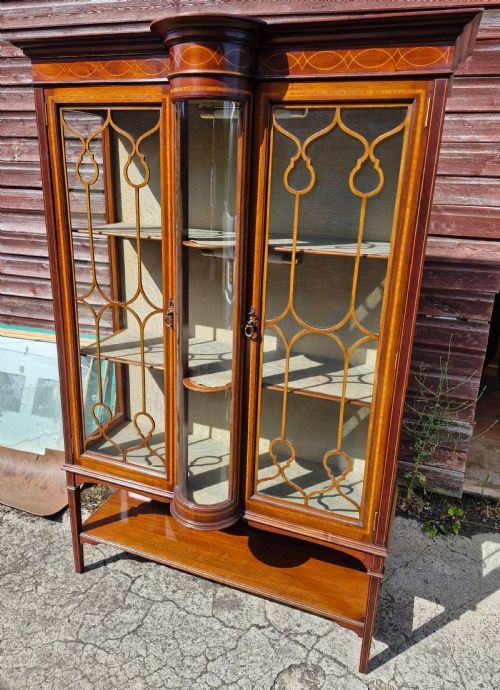
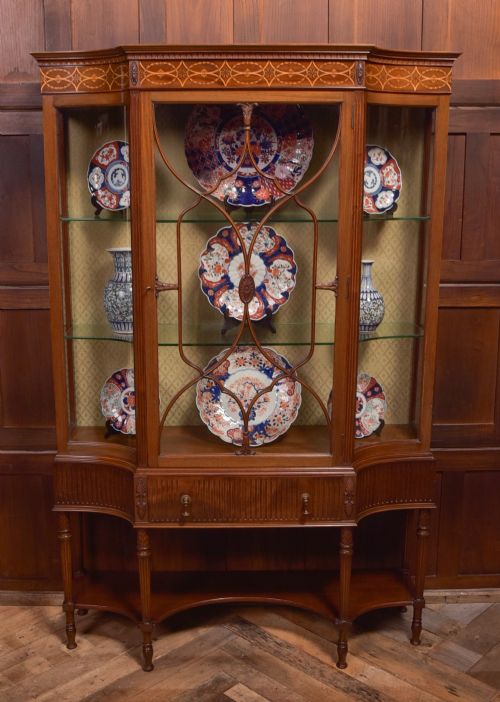
Mahogany dominates, named in more titles on Sellingantiques than every other timber put together. Walnut follows well behind, with satinwood, oak and pine turning up occasionally. The single form you're most likely to meet is an Edwardian inlaid mahogany bow front glazed display cabinet: "display" appears in almost half of all titles, and Edwardian is the largest dated group.
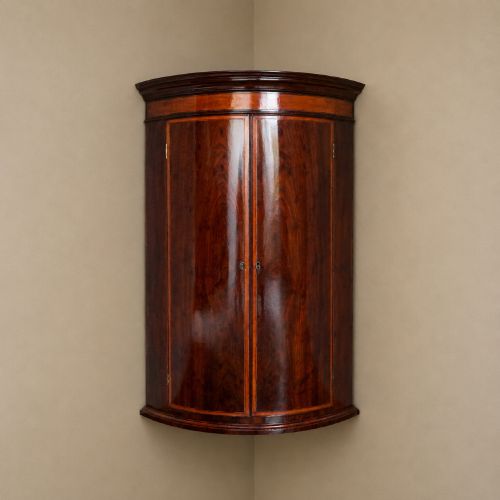
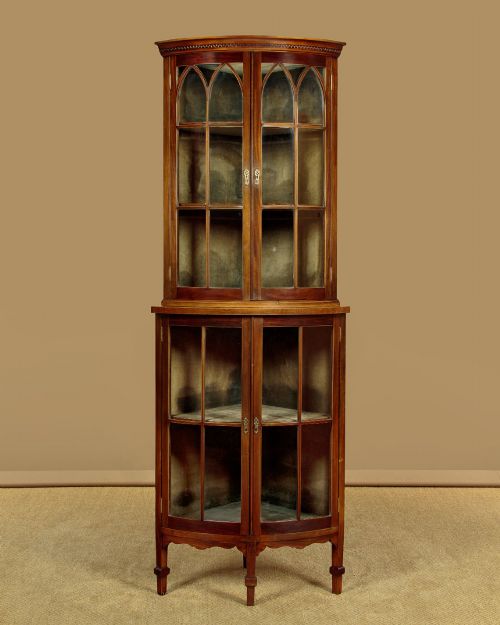
Corner cabinets are the second personality of the category, close to a quarter of titles, and they arrive two ways. Some hang on the wall as small cupboards; others stand full height on the floor, triangular in plan. Bedside cabinets, bedside chests and night stands make up roughly one in ten, and pairs run through that group in particular.
Two smaller pockets sit apart from the mahogany mainstream. Burr walnut cocktail and drinks cabinets of the 1920s and 30s form a consistent Art Deco run, and shop fittings appear now and then: a bow front counter, a chemist's corner cabinet, a table-top display case. Dating spans 1800 to 1940 in the dated field, though many listings give only a reign or a century, and sample titles reach back to c.1710.
Where The Range Splits
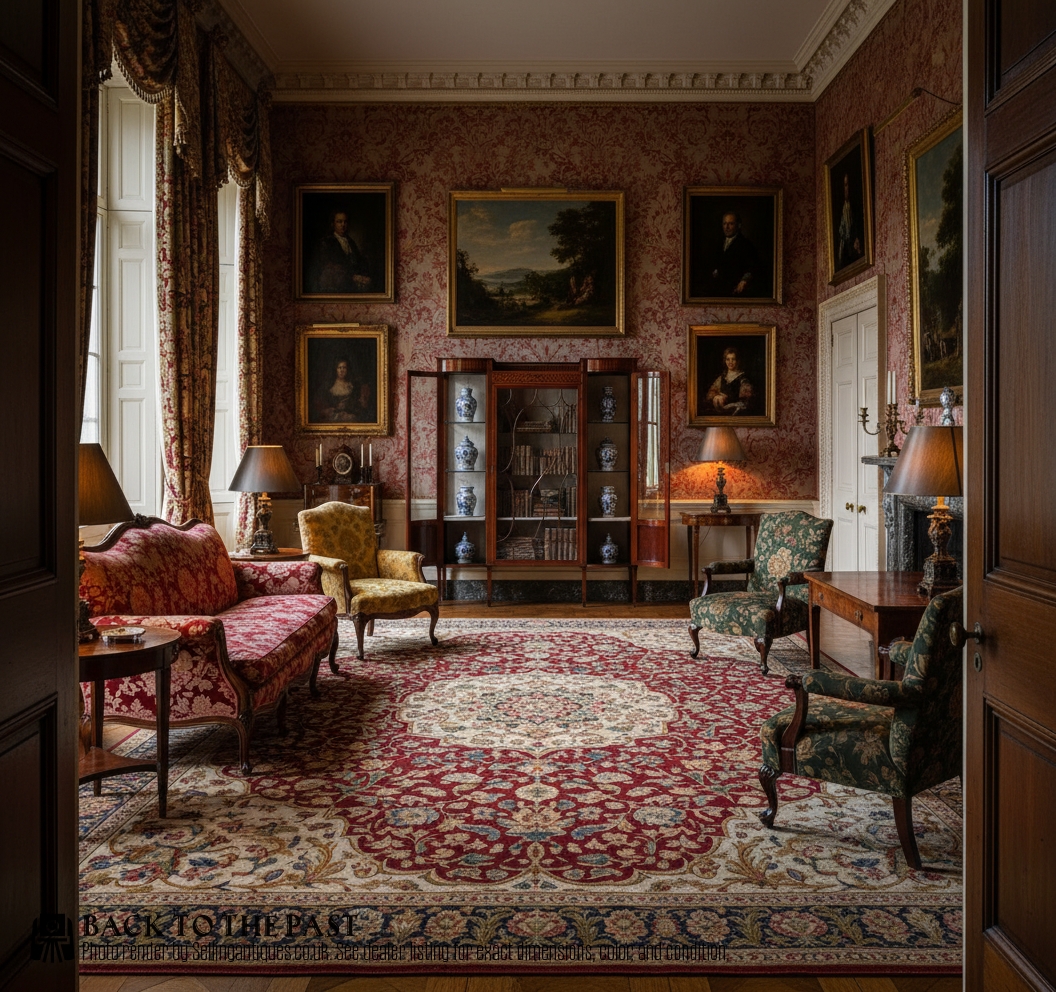
Timber and figure do most of the separating. Satinwood, burr walnut and flame or figured mahogany sit in the upper half of the range, while plain mahogany and oak corner cupboards gather at the bottom. Decoration follows the same line: inlay is the strongest single decorative term in the category, and marquetry-inlaid pieces appear among the highest sampled titles.
Scale and construction matter almost as much. A small hanging corner cupboard is at one end; tall floor-standing corner cabinets and display cabinets raised on a stand are at the other. Named revival styles hold up well too, with Sheraton Revival titles all landing in the upper part of the range.
Pairs are a real sub-market, around a tenth of titles, and they sit well above singles. Bedside chests account for most of them, but pairs of tall glazed corner cabinets and a pair of Sheraton revival bowed side cabinets reach the very top.
Antique Bow Front Cabinets Retail Price Guide 2026
Typical UK retail prices for bow front cabinets, calculated from the Sellingantiques database of over a million retail prices indexed since 2003. This retail price guide relies exclusively on Sellingantiques data; no external sources or auction records are used, so the figures do not describe the wider market.
Edwardian is the period label used most on Sellingantiques for bow front cabinets, with the 1910s next and Victorian third.
The Antique Bow Front Cabinets Glossary
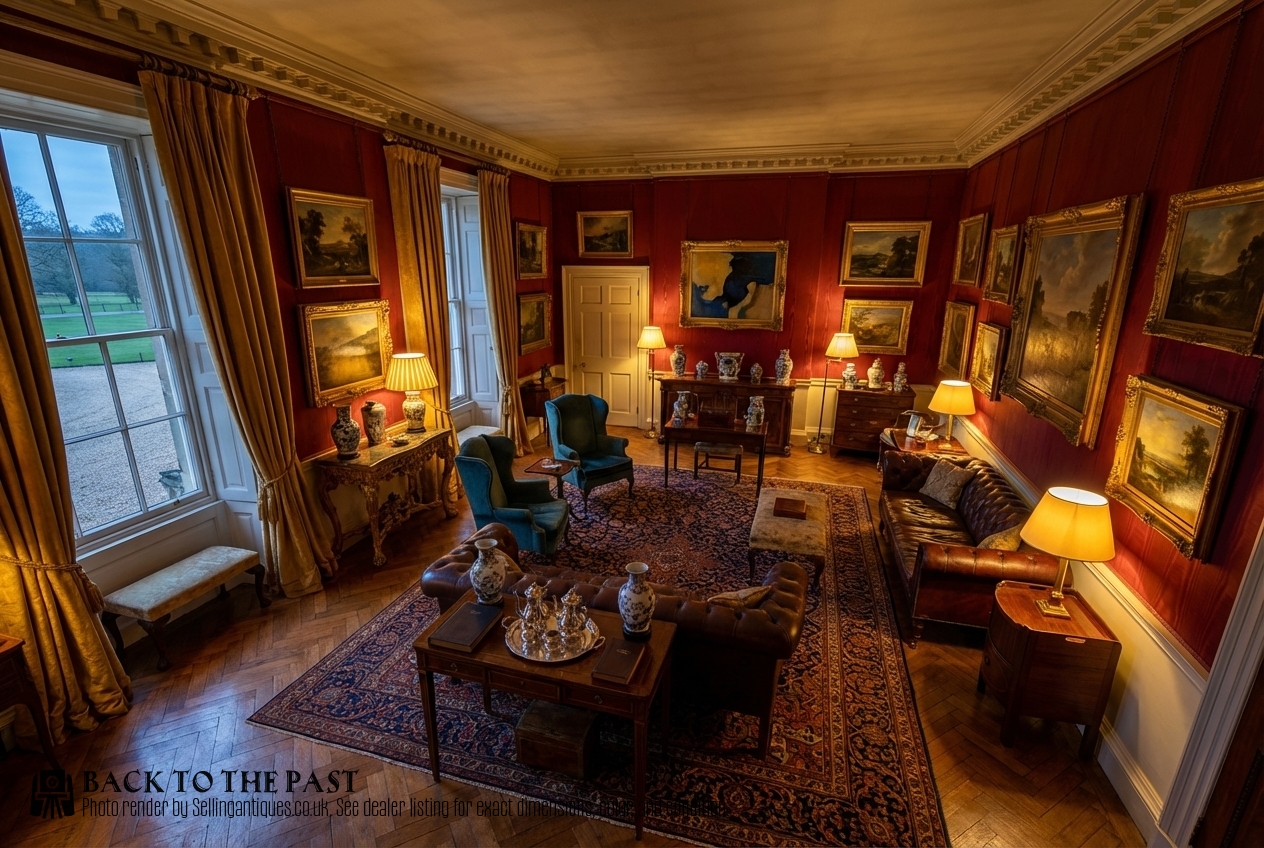
- Bow front
- A front curving outward in a single shallow convex sweep; "fronted" appears in 75 titles.
- Display cabinet
- A glazed cabinet made to show china or small objects, the commonest type in the category.
- Corner cabinet
- Triangular in plan so it sits in a corner, either hanging on the wall or standing on the floor.
- Inlaid
- Decorative woods let into the surface. Stringing is the fine version: thin lines of contrasting wood inlaid as a border, often satinwood.
- Astragal glazed
- Glazing divided by slender moulded bars.
- Encoignure
- The French term for a corner cabinet, used on the pricier corner pieces; vitrine is the same borrowing for a glazed display cabinet.
Antique Bow Front Cabinets: Frequently Asked Questions
What wood are bow front cabinets usually made from?
Mahogany, named in more titles on Sellingantiques than every other timber added together.
Walnut comes next, with burr walnut concentrated in 1920s cocktail and bedside pieces. Satinwood appears in a small run of titles, oak and pine only occasionally.
Which period do most of them come from?
Edwardian is the single largest dated label, ahead of the 1910s, Victorian, the 1920s and the 1900s. Georgian and "19th Century" appear in smaller numbers.
The dated field runs 1800 to 1940. Many dealers give only a reign or a century rather than a year, so a large slice of the category is dated to "Edwardian" or "Georgian" and no closer. Sample titles reach back to c.1710 and c.1725.
Are corner versions common?
Yes. Corner cabinets and cupboards make up close to a quarter of titles, the second personality of the category.
They come in two heights: small cupboards that hang on the wall, and full-height cabinets that stand on the floor. Some listings use the French word encoignure.
Do they come in pairs?
Pairs run through roughly a tenth of titles and form a genuine sub-market of their own.
Bedside chests account for most of them. There are also pairs of tall glazed corner cabinets, and a pair of Sheraton revival bowed side cabinets sits at the very top of the sampled range.
Were bow front cabinets made for shops?
A handful were. Eight titles are shop fittings: a bow front counter, a chemist's corner cabinet, a table-top display case.
They mark one end of the size range. At the other end are miniature pieces, including an apprentice chest sampler and a miniature bow fronted chest.
Are any of them by named makers?
Not as a rule. Firm names show up only as one-off mentions in titles, so this isn't a category read through its makers.
What dealers name instead is timber, period and decoration: inlaid mahogany, burr walnut, satinwood stringing, Sheraton Revival.