

A 2026 Guide by Sellingantiques
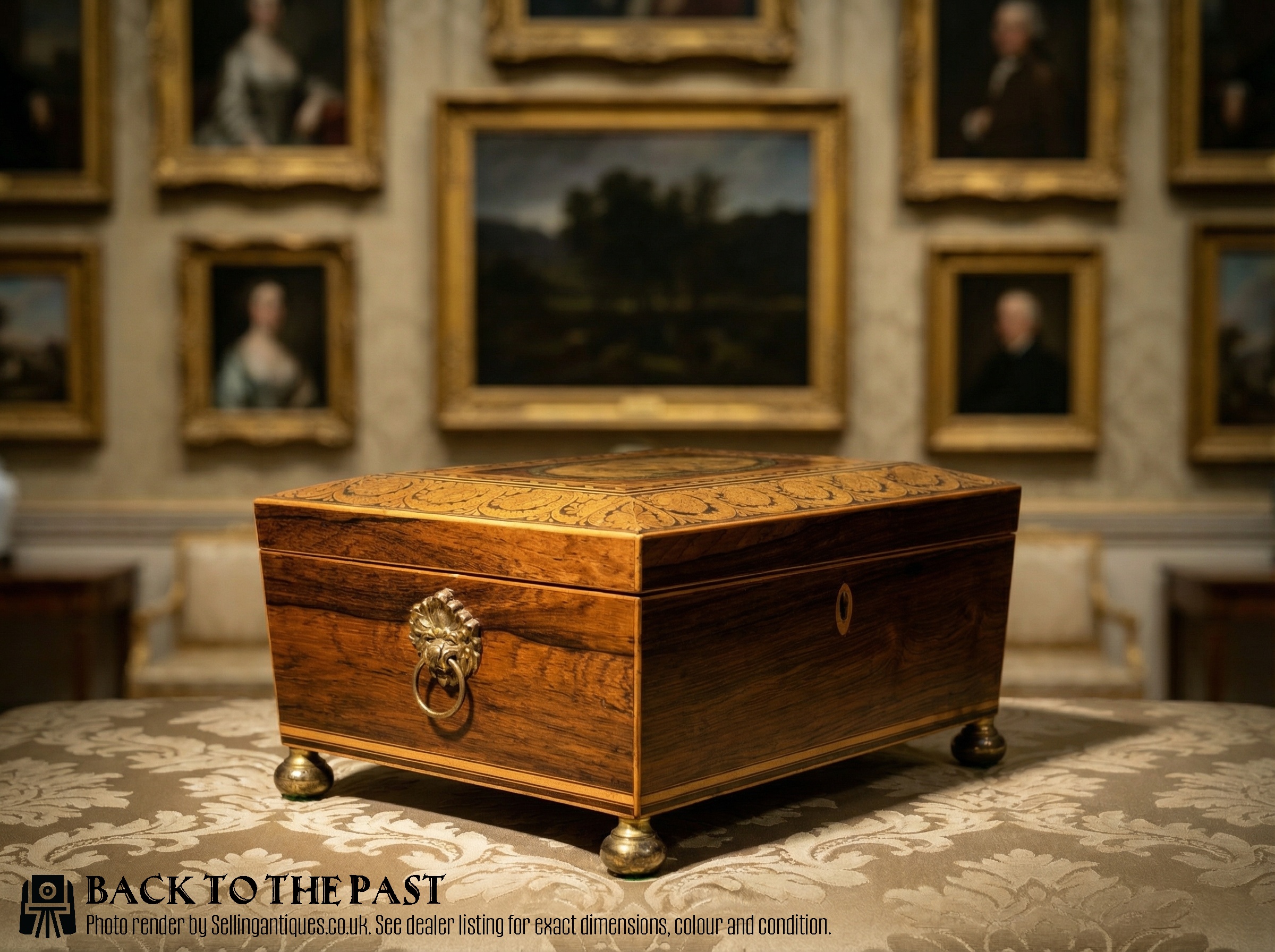
A Regency Rosewood Sewing Box, Regency
Priced at £475 from W.J. Gravener Antiques Ltd.
Needlework was a daily necessity long before it became a genteel pastime. Antique sewing boxes kept vital tools secure in busy households.
Look at the shift during the late eighteenth century. These caskets evolved from plain storage into status items displayed in drawing rooms.
Dedicated workboxes emerged as specialised trades developed in major cities. Box makers separated from standard cabinet makers.
Victorian examples often catered to specific needlework types. Berlin wool work required larger compartments than delicate embroidery.
Thomas Lund operated in London during the early nineteenth century. His workshops produced fitted boxes often bearing a stamped maker mark on the rim.
Most antique sewing boxes lack any signature or trade label. The trade relied on anonymous outworkers supplying retail jewellers and stationers.
Look out for Tunbridge ware examples from makers like Thomas Barton. They applied detailed geometric wood mosaics to the box exteriors between 1836 and 1897.

19th Century Coromandel-wood Sewing Box by Edwards, 1860
Priced at £1,950 from Quiet Street Antiques of Bath
The 2026 retail price guide for Antique Sewing Boxes is drawn from a proprietary archive of over 1.1 million retail prices indexed by Sellingantiques since 2003. This guide relies exclusively on their own internal data; no external sources or auction records are used.
Analysing nearly 25 years of UK antique market history alongside current retail values, the data indicates that typical UK retail prices for Antique Sewing Boxes range between £300 and £1,400. Entry-level prices generally fall under £300 and premium examples upwards of £1,400.
Lift-out trays are the defining characteristic. They sit on narrow wooden runners fixed to the inner sides of the carcase.
Many feature a ruched fabric panel inside the lid. This padded section held flat items like patterns or finished work.
Fitted compartments below the tray usually lack lids. They provide open space for bulkier fabric scraps and larger scissors.
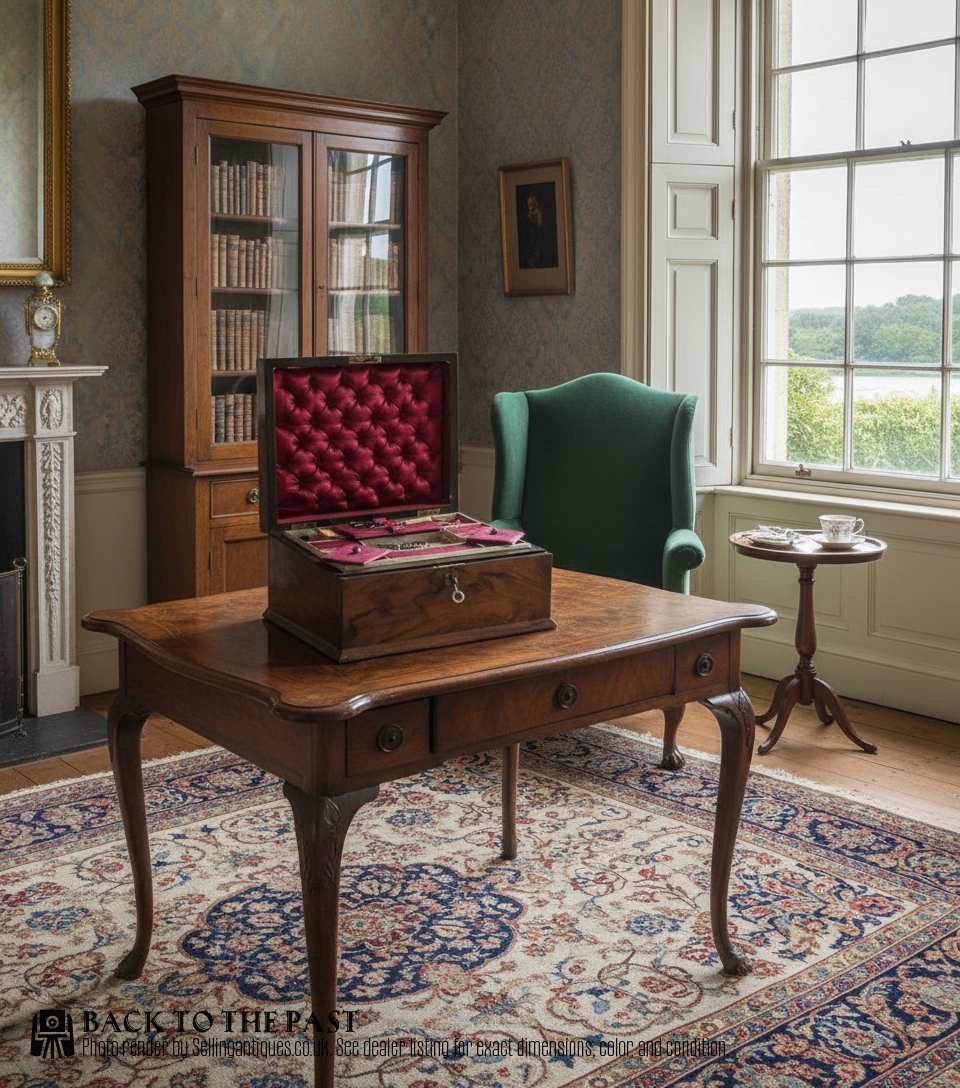
Antique Victorian Quality Figured Walnut Sewing Box, 1860
Priced at £875 from London City Antiques
Early joints relied on simple glued mitres reinforced with hidden wooden keys. Dovetails became more common as box sizes increased.
Veneer application required heating animal hide glue and pressing thin wood sheets flat with heavy cauls.
Note the interior partitions. Craftsmen formed these by sliding thin wooden dividers into shallow grooves cut into the tray sides.
"Hidden drawers sometimes sit flush within the base moulding. You release them by pressing a concealed wooden pin in the main compartment."
"The silk panels inside the lid often fold down to reveal a hidden leather wallet for storing flat paper patterns."
"Many surviving boxes retain their original bone or mother-of-pearl winding stars. These flat, shaped pieces kept delicate silk threads from tangling."
Based on almost 25 years of Sellingantiques UK antique market data, Antique Sewing Boxes appeared 1407 times (out of 1,100,000 antiques) which gives it a rarity score of 75/100.
This score measures scarcity within the Sellingantiques archive only and is not a survey of the entire antiques market, so these statistics may not be indicative of the general availability of Antique Sewing Boxes elsewhere.
Many smaller sections within the lift-out tray were never designed to have lids. They were built open to allow quick access to thimbles and thread spools while working.
Other compartments originally had loose padded silk covers. These small fabric lids often fall out and get lost over the centuries.
You leave it alone. Touching fragile, century-old silk usually causes the fibres to disintegrate into dust.
If the fabric is badly soiled, a gentle vacuum using a soft brush attachment held slightly above the surface will remove loose dirt. Liquid cleaners will permanently stain the old silk.
Adding liquid oil to an antique box lock is a bad idea. The oil attracts dust and lint over time, which forms a thick sludge that will seize the mechanism.
Try rubbing a soft lead pencil against the teeth of the key. The graphite acts as a dry lubricant and can often ease a stiff brass lever without leaving a sticky residue behind.
Wood warps. The pine carcase beneath the veneer moves as humidity changes over the years. This movement frequently pulls the lid slightly out of alignment with the base.
Check the screws on the back hinges. If they sit flush and match the surrounding metal, the hinges are likely original and the gap is just natural timber movement.
Please note: This Antique Sewing Boxes guide and its associated pricing data are provided for general informational purposes only. It does not constitute formal financial, investment, or appraisal advice and should not be relied upon as the sole basis for any commercial activity, purchasing, or sales decisions. Sellingantiques.co.uk accepts no liability for any actions taken in reliance on this information. Always consult with a qualified professional or independent appraiser.
