
There are no results to show on this page for that combination of filters:
Art Deco Mahogany Boxes
A 2026 Guide by Sellingantiques
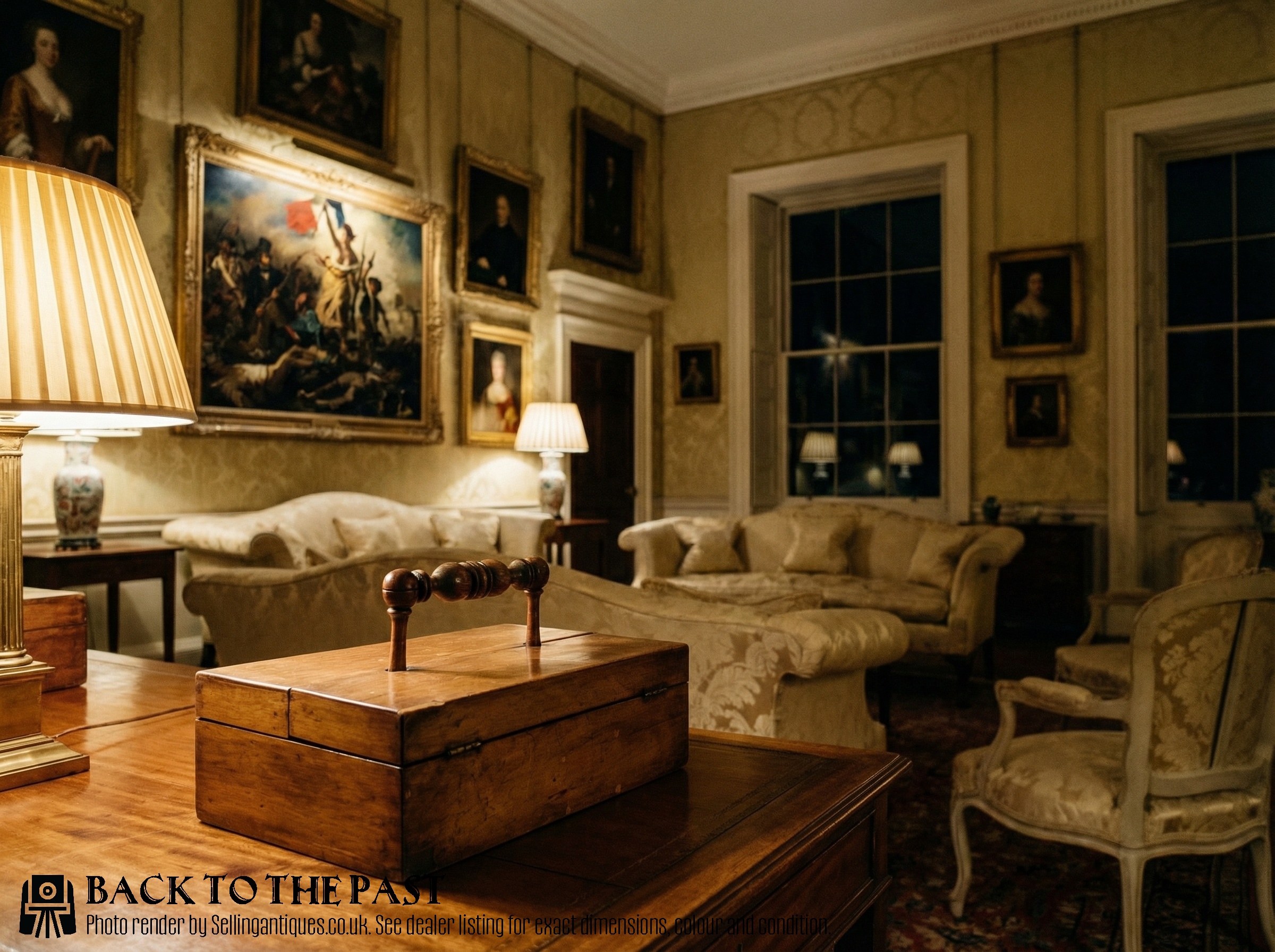
Unusual Antique Mahogany Stationary Box, 1880
Priced at £265 from Rebecca Sarah Antiques
Solid blocks of imported timber arriving in Britain during the eighteenth century began the trade.
Most wealthy households kept several antique mahogany boxes on hand for different daily tasks, storing everything from loose leaf tea to private letters.
Notice how the early Georgian examples often lack the complex brass inlay you'll find on Regency pieces.
Cabinet makers produced them in huge numbers right up until the Edwardian era, adapting the interior layouts as household fashions changed.
David Roentgen produced complex, multi-compartment boxes with mechanical fittings during the late eighteenth century.
Edwards and Roberts, working in London through the nineteenth century, stamped their names on high-quality examples intended for retail.
Treat unsigned boxes as the norm, since most regional craftsmen didn't leave marks on their standard output.
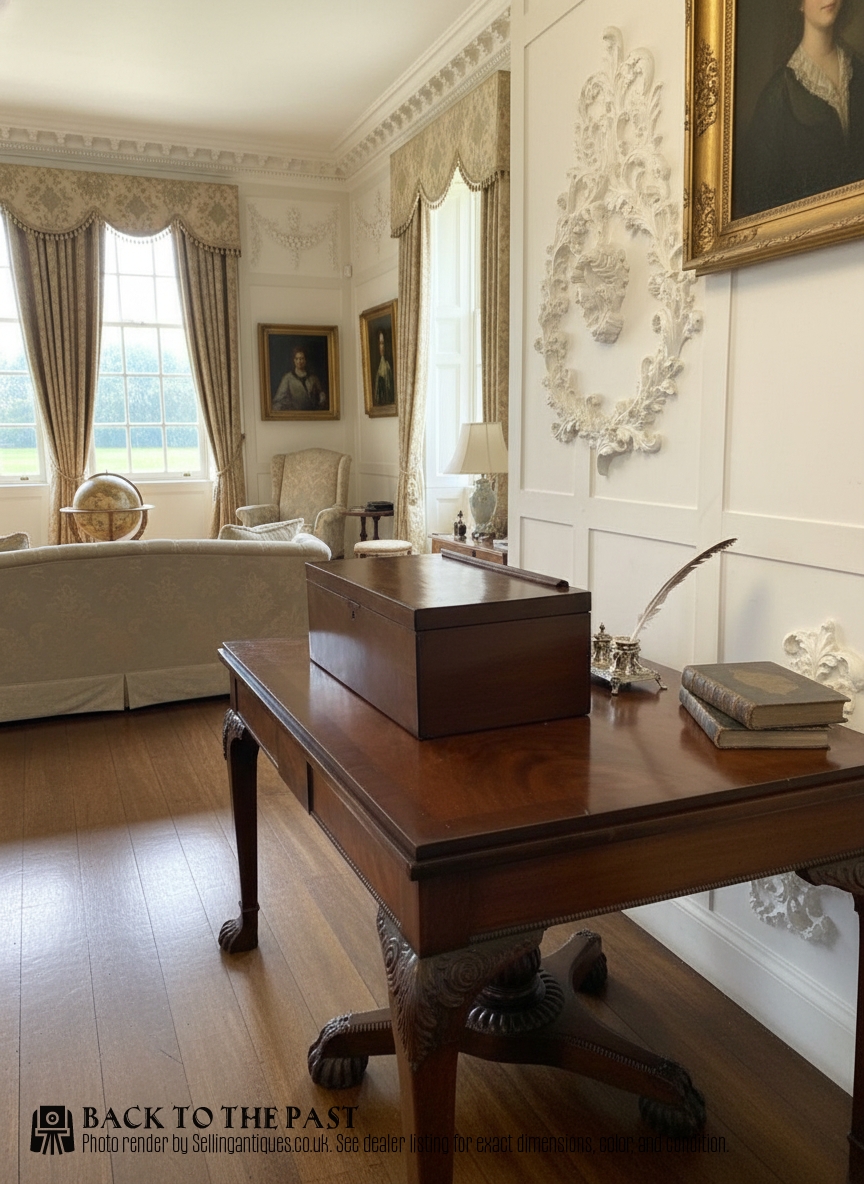
Fine Antique Quality George III Figured Mahogany Writing Box, 1800
Priced at £875 from London City Antiques
The 2026 retail price guide for Antique Mahogany Boxes is drawn from a proprietary archive of over 1.1 million retail prices indexed by Sellingantiques since 2003. This guide relies exclusively on their own internal data; no external sources or auction records are used.
Analysing nearly 25 years of UK antique market history alongside current retail values, the data indicates that typical UK retail prices for Antique Mahogany Boxes range between £300 and £1,500. Entry-level prices generally fall under £300 and premium examples upwards of £1,500.
Hardware around the lock includes key escutcheons formed from cast brass or carved bone.
Blank brass cartouches set into the lid allowed a future owner to engrave their family crest or initials.
Check the internal configuration, which dictates whether it held sewing tools or slanted writing boards.
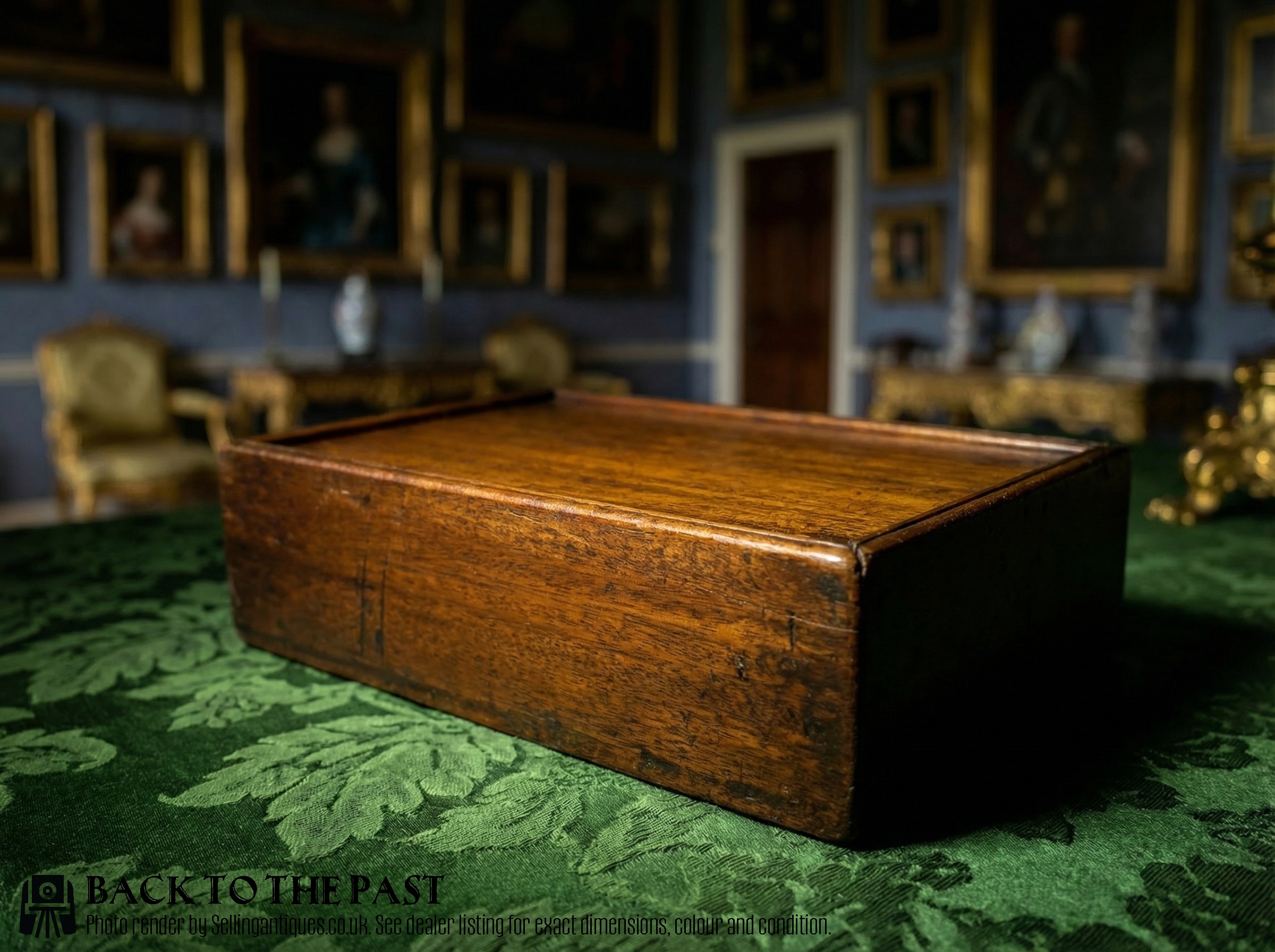
Unusual Small Mahogany Box with Spring Locking Mechanism, Georgian
Priced at £185 from Rupert Landen Antiques
Cabinet makers relied on tiny hand-cut dovetails to hold the corners tight against seasonal wood movement.
Thick sawn veneers in the eighteenth century gave way to much thinner machine-cut layers later on, altering how the joints were concealed.
Examine the base board, usually attached with hide glue and small iron sprigs driven directly into the frame.
"The dense grain of the timber naturally repels certain wood-boring insects, helping them survive intact."
"Lift the removable trays and you'll find hidden puzzle compartments designed to conceal gold coins from casual thieves."
"Rich, fiery figure patterns gaining depth and character after a century of handling and waxing."
Based on almost 25 years of Sellingantiques UK antique market data, Antique Mahogany Boxes appeared 4373 times (out of 1,100,000 antiques) which gives it a rarity score of 42/100.
This score measures scarcity within the Sellingantiques archive only and is not a survey of the entire antiques market, so these statistics may not be indicative of the general availability of Antique Mahogany Boxes elsewhere.
Dust the surface using a dry cotton cloth. Don't use harsh chemicals. You can remove light grime with a damp rag, drying the wood immediately afterwards to prevent moisture damage.
Apply a clear beeswax polish sparingly once or twice a year. Buff it off along the grain.
Small keys easily go missing over a century of household moves. Most people kept them loose in drawers rather than tied to the lock.
Replacement blanks can be cut to fit early box locks. A competent locksmith can shape one using the original mechanism.
Thick solid timber often warps when exposed to central heating or direct sunlight. The wood shrinks on one side, pulling the board into a curve over time.
Flattening it involves adding moisture to the concave side and applying heavy clamps. This takes time and carries a risk of splitting the wood.
Leave a minor bow alone. It forms part of the history.
Yes, loose dividers turn up frequently. The thin secondary timbers shrink at a different rate to the outer carcase, breaking the old glue bonds.
They're simple to slide back into place with a spot of fresh hide glue.
Please note: This Antique Mahogany Boxes guide and its associated pricing data are provided for general informational purposes only. It does not constitute formal financial, investment, or appraisal advice and should not be relied upon as the sole basis for any commercial activity, purchasing, or sales decisions. Sellingantiques.co.uk accepts no liability for any actions taken in reliance on this information. Always consult with a qualified professional or independent appraiser.
