


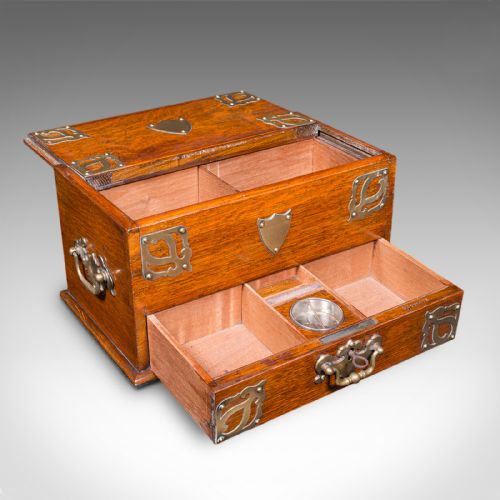


Antique Cigar Boxes
A lidded wooden casket, usually cedar-lined, made to keep cigars in good order on a dining table or smoking-room desk.
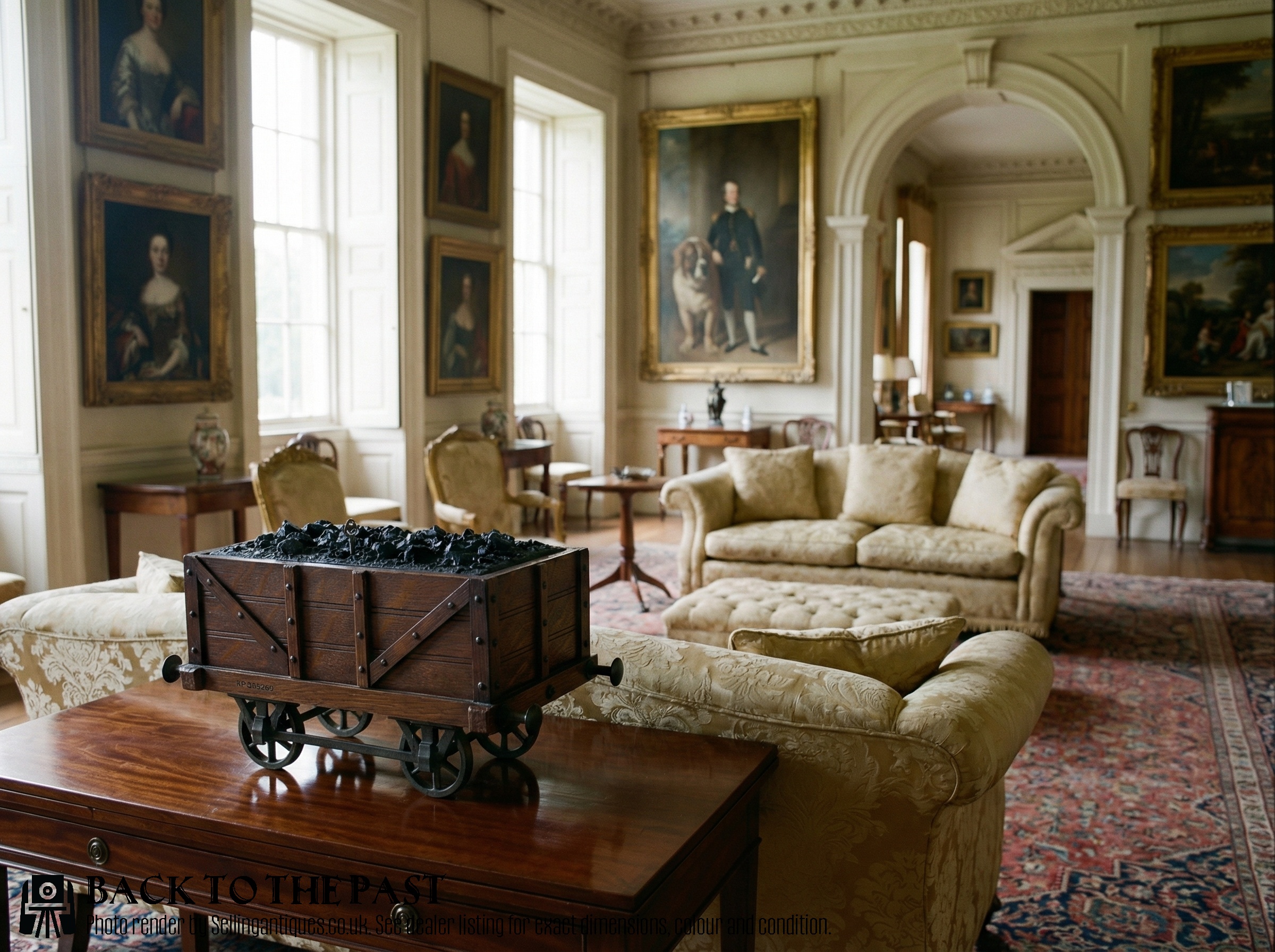
Antique Cigar Boxes
The heading covers four labels dealers use interchangeably: cigar box, humidor, smoker's box and cigar cabinet. Behind them sits one dominant object, an oak table casket with a hinged lid and a lined or compartmented interior. Oak appears in 29 of 91 titles, and "humidor" in 30.
Purpose-made cigar boxes followed the spread of cigar smoking in Europe from the early nineteenth century, and by the Victorian period they were standard dining-room and smoking-room furniture in Britain. The sealing, lined box built to hold humidity came later, as a refinement of the plain lidded casket.
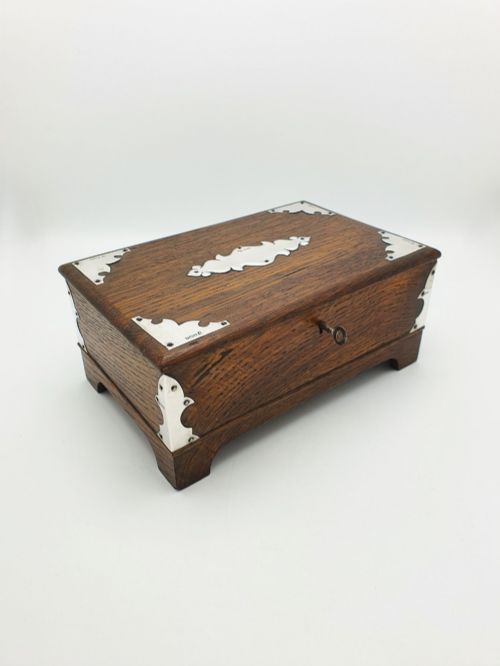
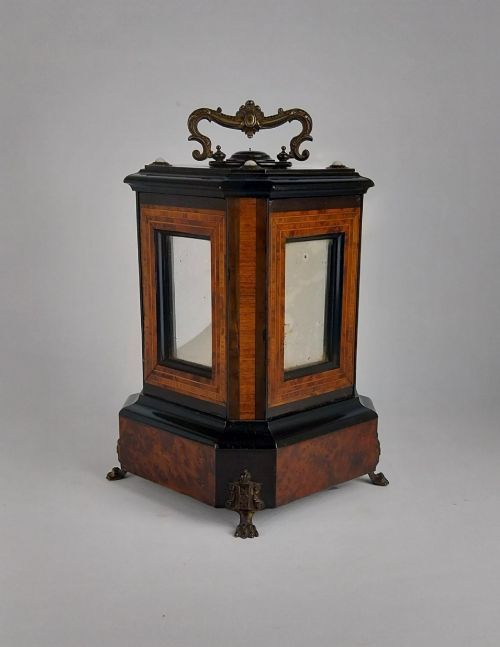
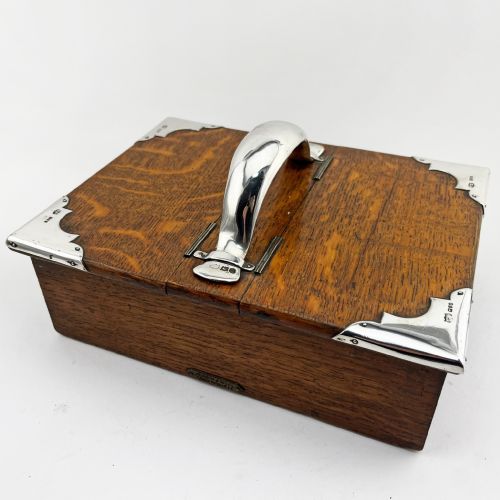
The recurring formula is brass bound oak, or oak with silver mounts and hallmarks. Beyond that core sit figured and exotic timbers, walnut and burr walnut, mahogany, satinwood, amboyna, rosewood, coromandel and teak, then boxes in solid silver, plate, copper, gilt metal and harder materials such as onyx and malachite.
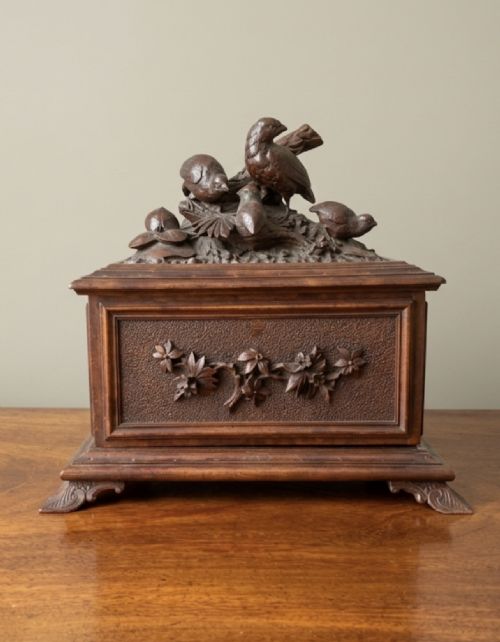
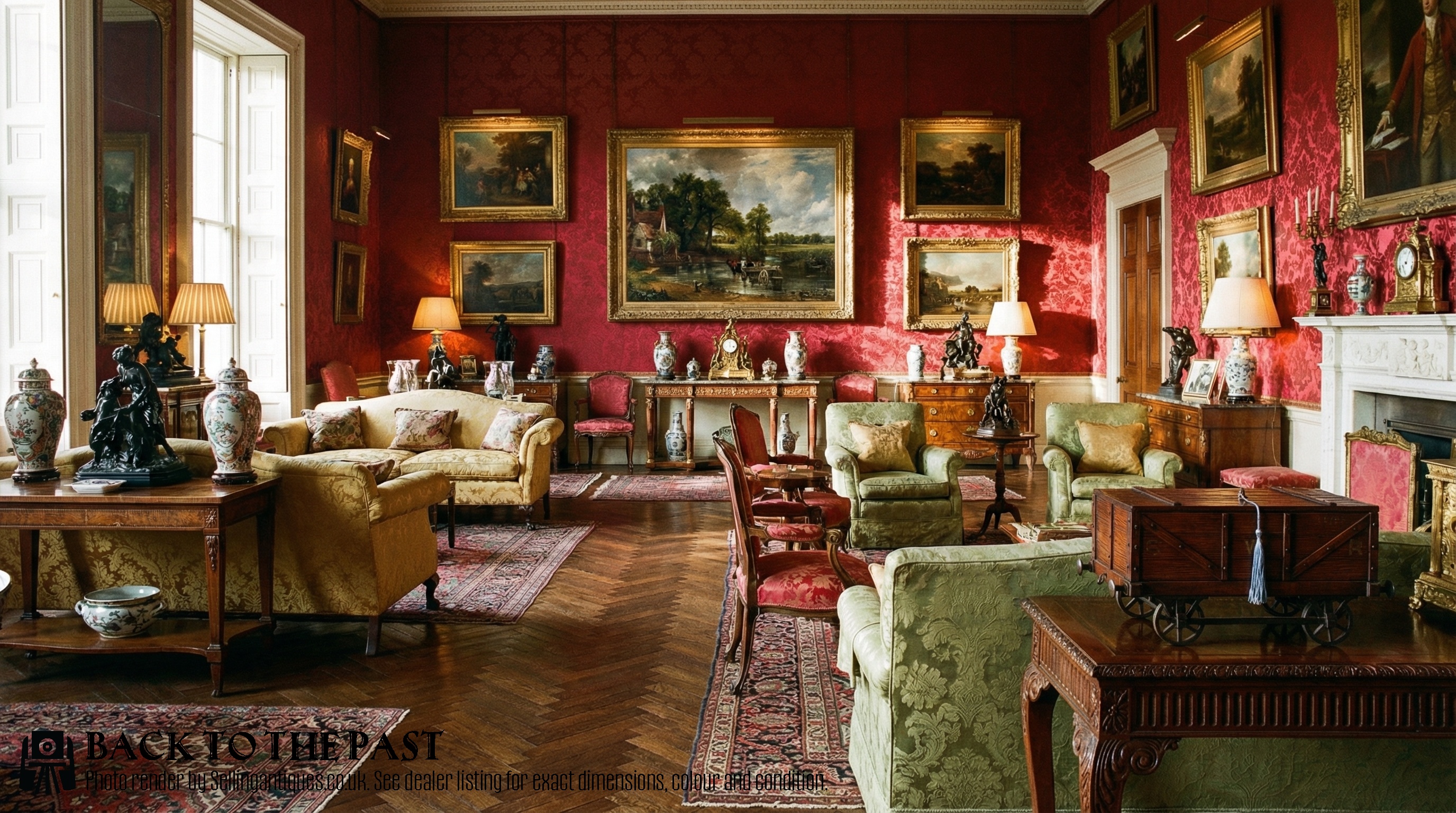
A novelty strand runs right through the archive: two boxes modelled as dog kennels, three as railway coal wagons including a Great Western Railway one, a carved Black Forest bear, a book, a carriage and a leather trunk. Smaller again are pocket and travel cases in tortoiseshell, crocodile leather or silver.
Where The Range Splits
Timber does most of the work. Plain oak boxes sit low in the sampled range, while burr walnut, satinwood, amboyna, coromandel and rosewood cluster well above them. Metal follows the same logic: silver plate lands mid-range, sterling silver mounts and hallmarked work above it, and a solid silver box higher still.
Form beats material at the top. Dog kennels, railway wagons, a carved bear, a carriage and a book-shaped box all appear in the upper half, because they are being bought as sculpture as much as storage. Mechanism pulls the same way, with musical, tambour-fronted, locking and multi-drawer examples above the plain lidded box.
Size counts too. Titles reaching for "large", "very large" and "impressive" belong to table cabinets and deep caskets, one cedar humidor measured at 26cm. Pocket and travel cases sit at the bottom of the size range and the bottom of the price range with it.
Antique Cigar Boxes Retail Price Guide 2026
Typical UK retail prices for cigar boxes, calculated from the Sellingantiques database of over a million retail prices indexed since 2003. This retail price guide relies exclusively on Sellingantiques data; no external sources or auction records are used, so the figures do not describe the wider market.
Materials on Sellingantiques run well beyond wood: onyx and malachite, bronze and agate, gilt metal, copper, and one box set with lepidolite cabochons.
The Antique Cigar Boxes Glossary
- Humidor
- A cigar box built to hold moisture, usually lined and close-fitting. It's used in about a third of titles on Sellingantiques, sometimes loosely for any cigar box.
- Brass bound
- Corners and edges strapped with brass, the commonest metalwork found on the oak boxes in this category.
- Silver mounted
- Silver applied to a wooden box as banding, plaques or a lid panel, which is a different thing from a solid silver box.
- Cedar lined
- Interior faced with cedar to hold scent and humidity, named explicitly in some titles.
- Smoker's box
- A compartmented box holding cigars alongside cigarettes, matches and vestas, the vesta being the match compartment built in.
- Black Forest
- Naturalistically carved wood in animal and rustic forms, a recurring novelty type here and one that includes the carved bear.
Antique Cigar Boxes: Frequently Asked Questions
How many come up for sale each year?
Around ten cigar boxes come to market on Sellingantiques in a year, drawn from 91 listings across the archive.
Forty-seven different dealers have listed one, close to one dealer per two boxes. Almost nobody stocks them in depth, so they arrive singly rather than in runs.
What period do most of them come from?
The dated field runs from 1860 to 1940, and 40 of the 91 listings carry a clean year. The rest are given only as "19th Century", "Victorian" or "Edwardian".
Those three labels overlap rather than divide the century neatly. A box called "19th Century" may sit anywhere across sixty years.
Are Georgian or Regency cigar boxes found?
A handful of sampled pieces carry Georgian or Regency attributions around 1820, earlier than the dated field's own 1860 floor.
They are the outliers of the archive, and the date is the dealer's attribution rather than a documented year.
Is a humidor different from a cigar box?
Strictly, a humidor is the lined, close-fitting box built to hold humidity, developed later in the nineteenth century as a refinement of the plain lidded casket.
In practice the word is used loosely. It appears in about a third of titles, alongside cigar box, smoker's box and cigar cabinet, often for the same kind of object.
Which novelty shapes turn up?
Dog kennels in rosewood and oak, railway coal wagons including a Great Western Railway one, a book, a carriage and a leather trunk. A carved Black Forest bear sits alongside them.
Musical and mechanically automated boxes are far scarcer, with two examples across the whole archive.
Do any come from outside Britain?
English is named in 11 titles, and French, Continental and Black Forest pieces appear a few times each.
The rarest origins to surface are a single Chinese brass and cloisonné box, a single Viennese box, and a Kashmiri Anglo-Indian carved walnut example.