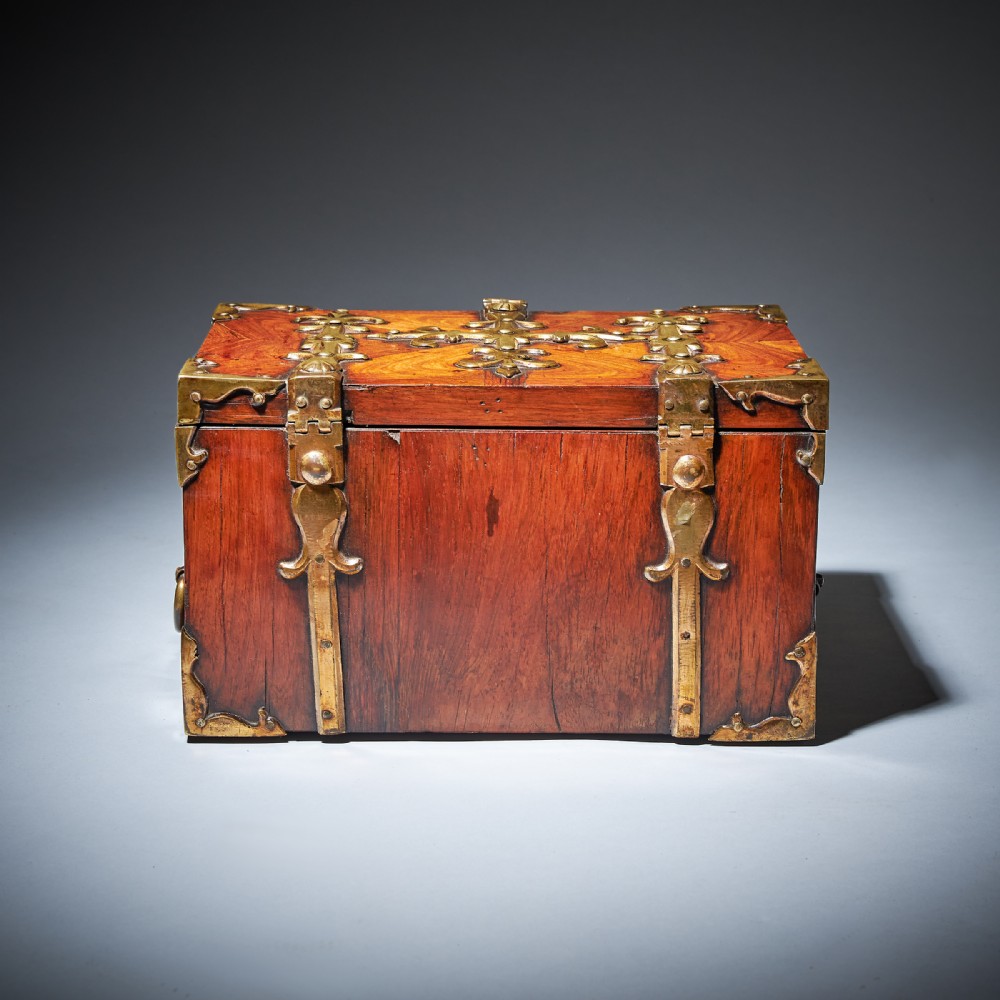
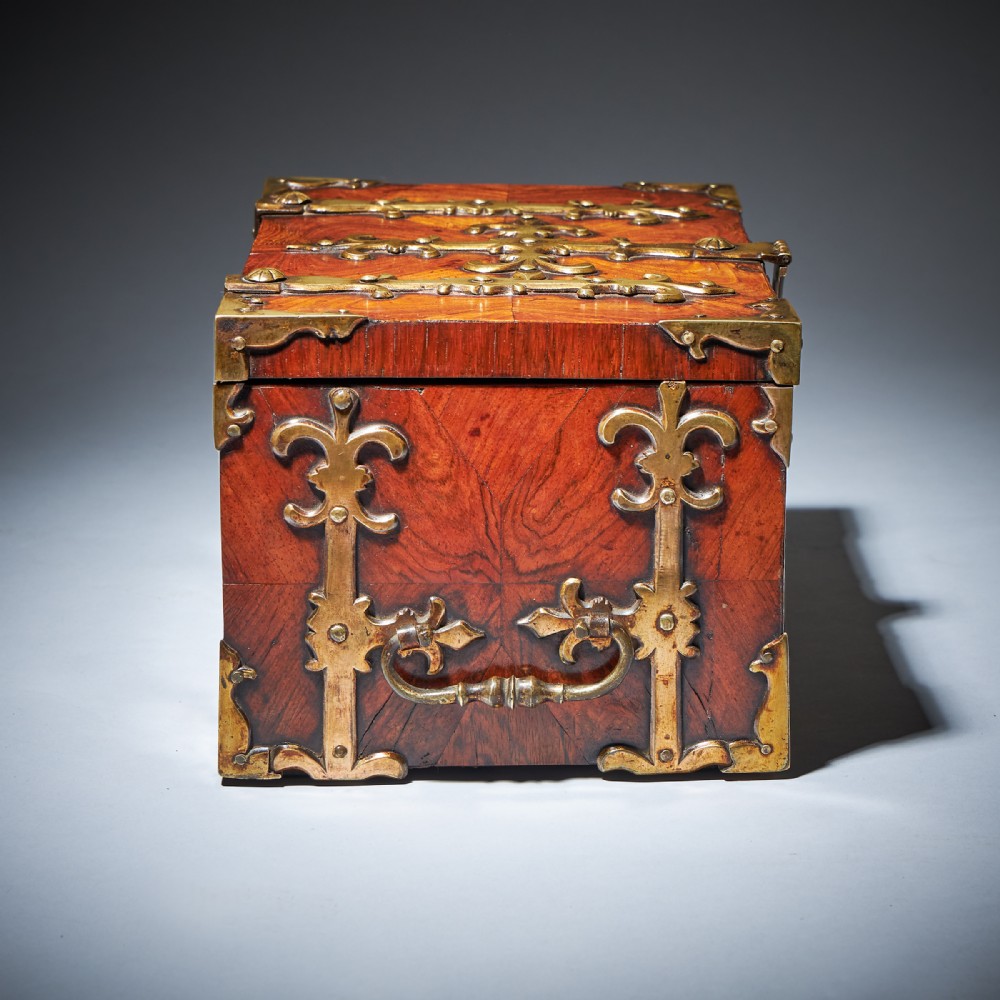
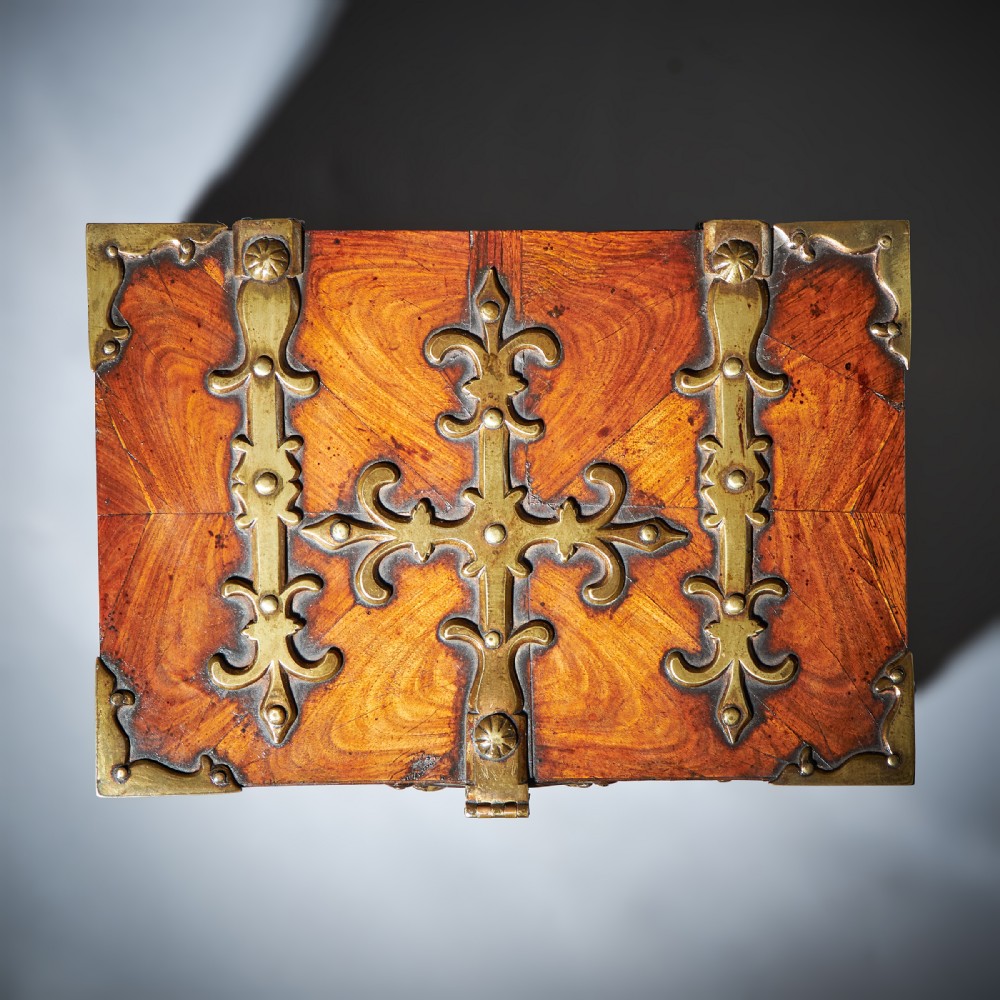
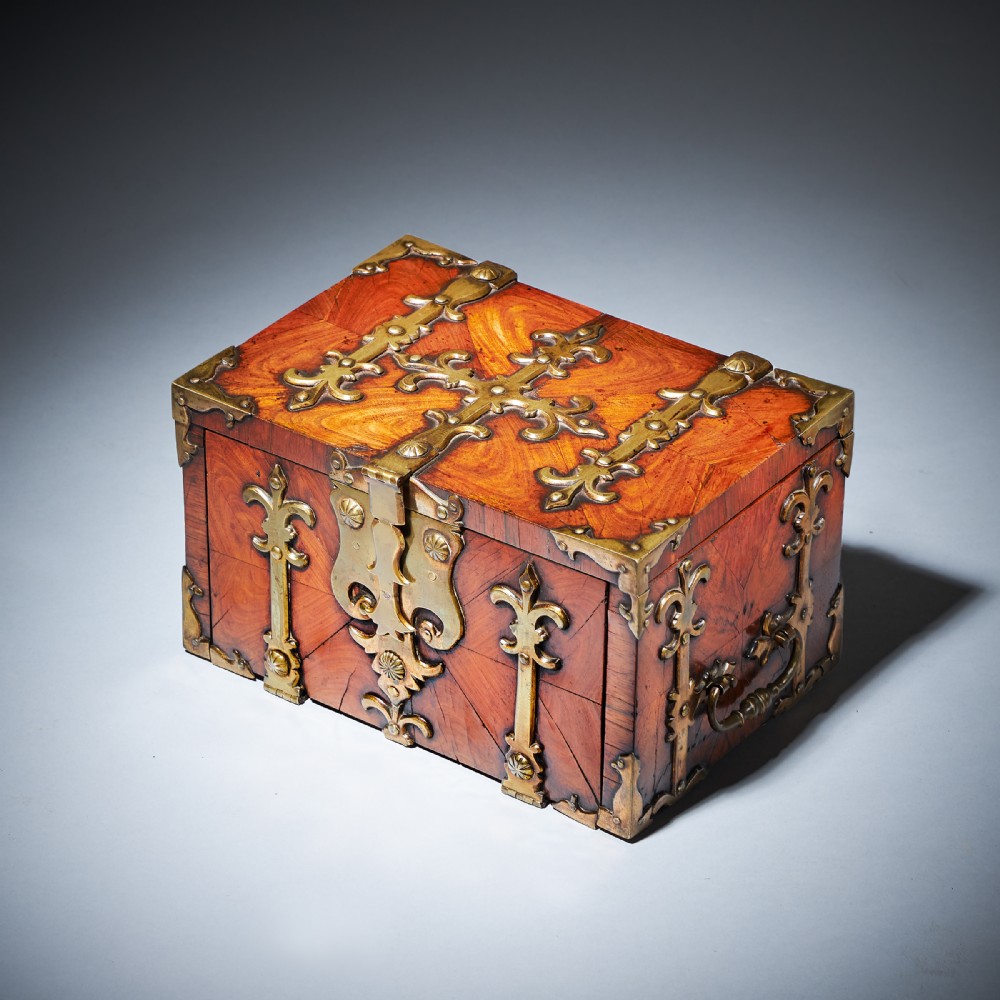
Alexander George Antiques Ltd. has dated this piece to the 17th Century.
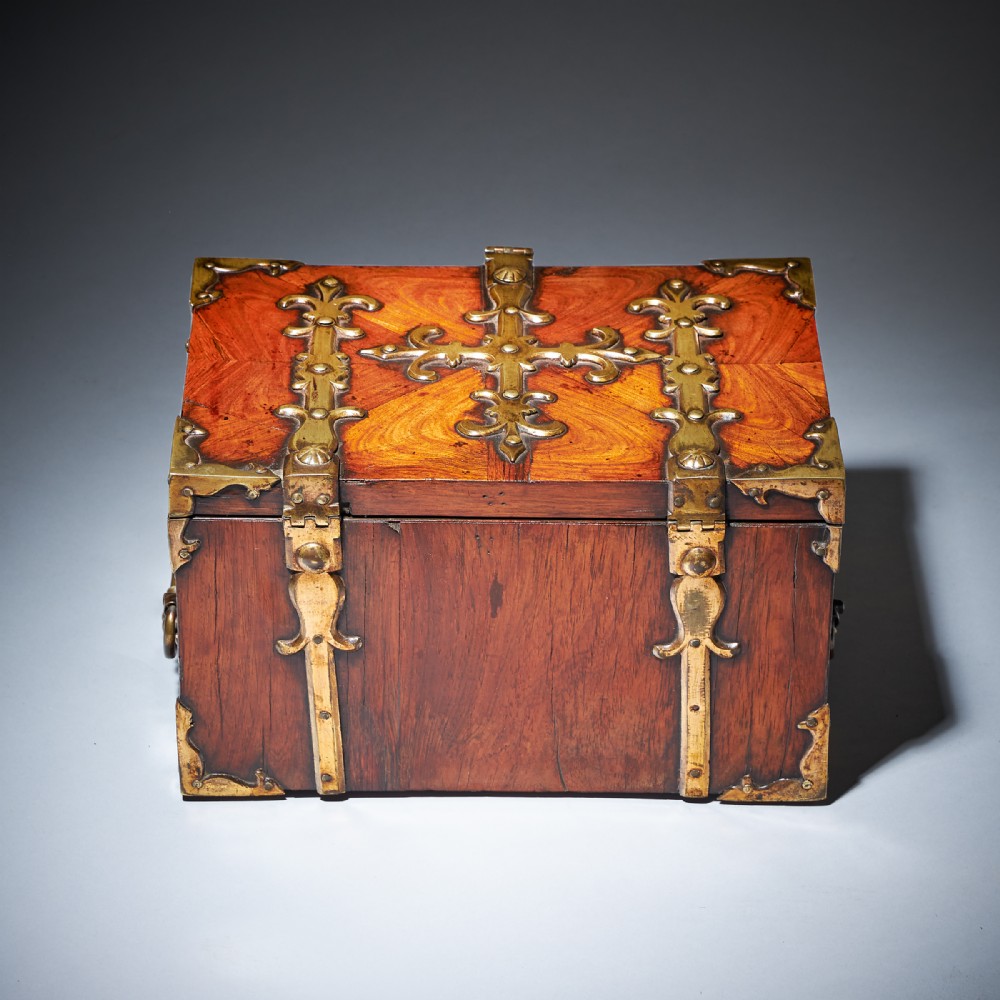
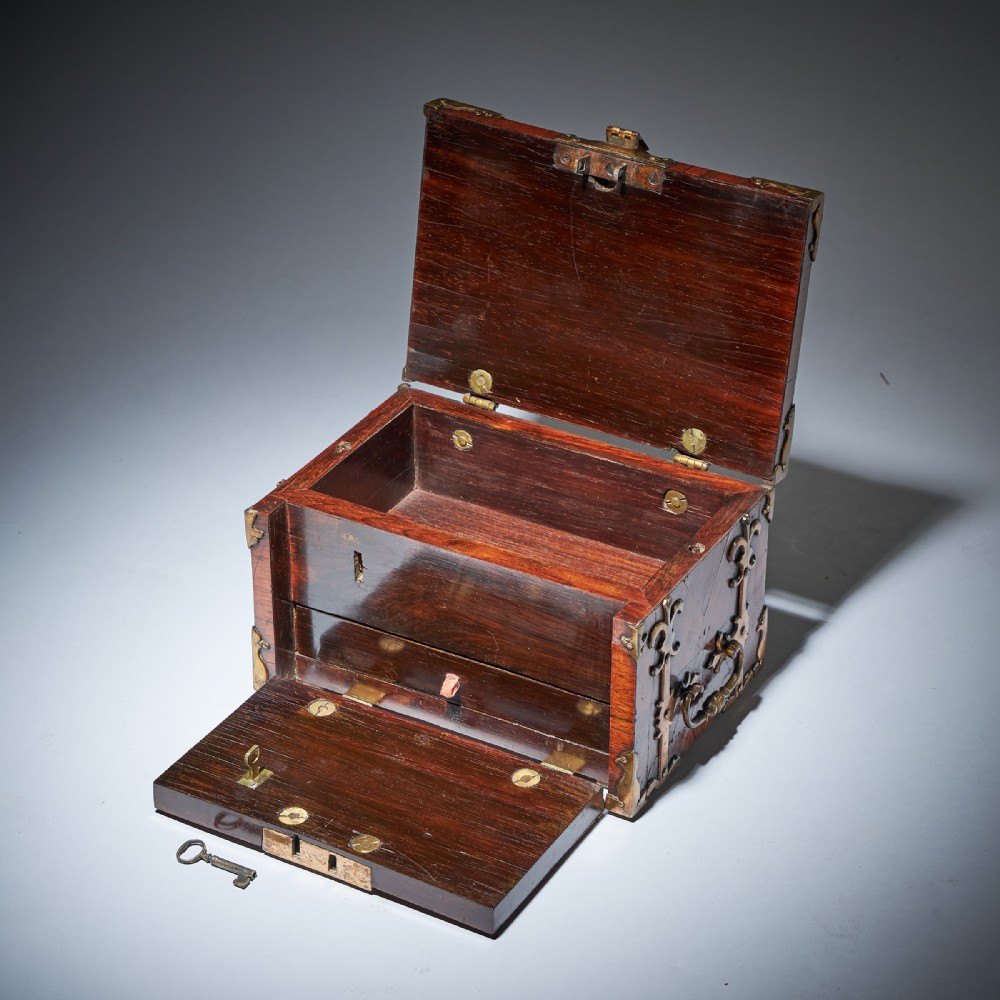
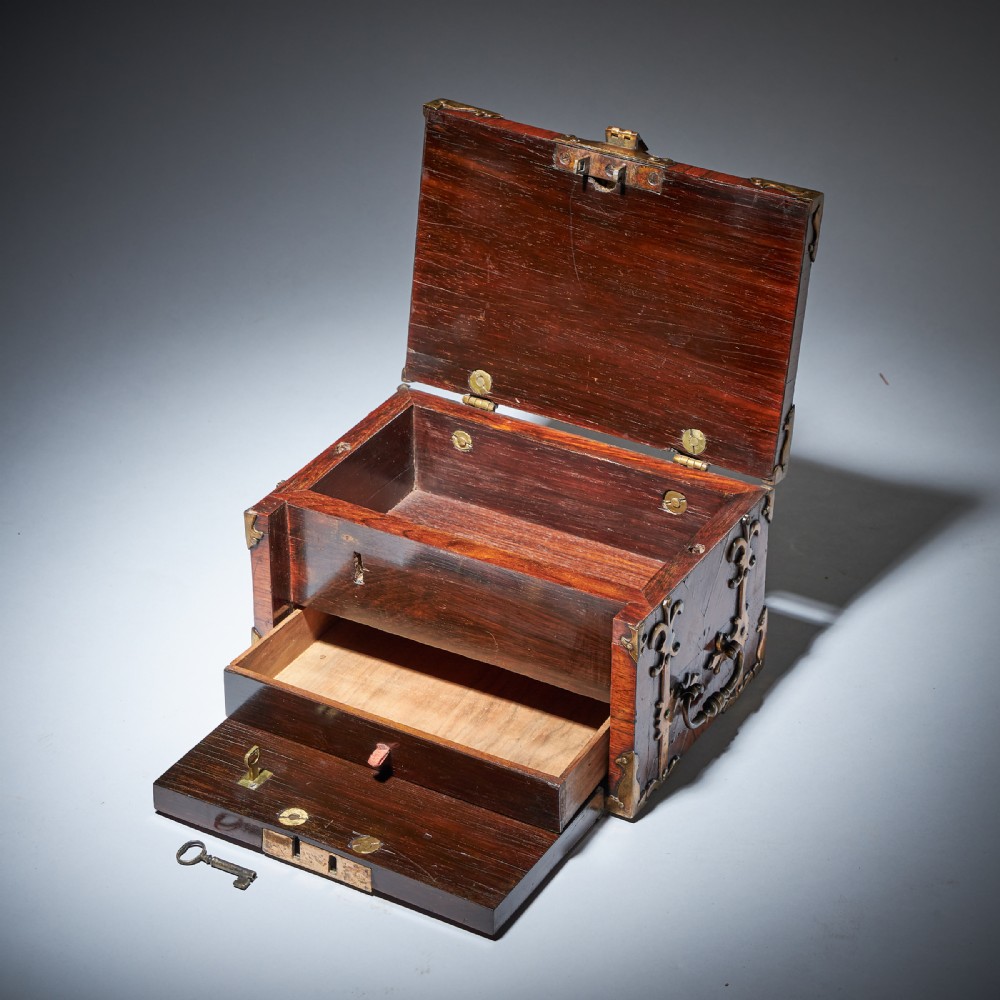
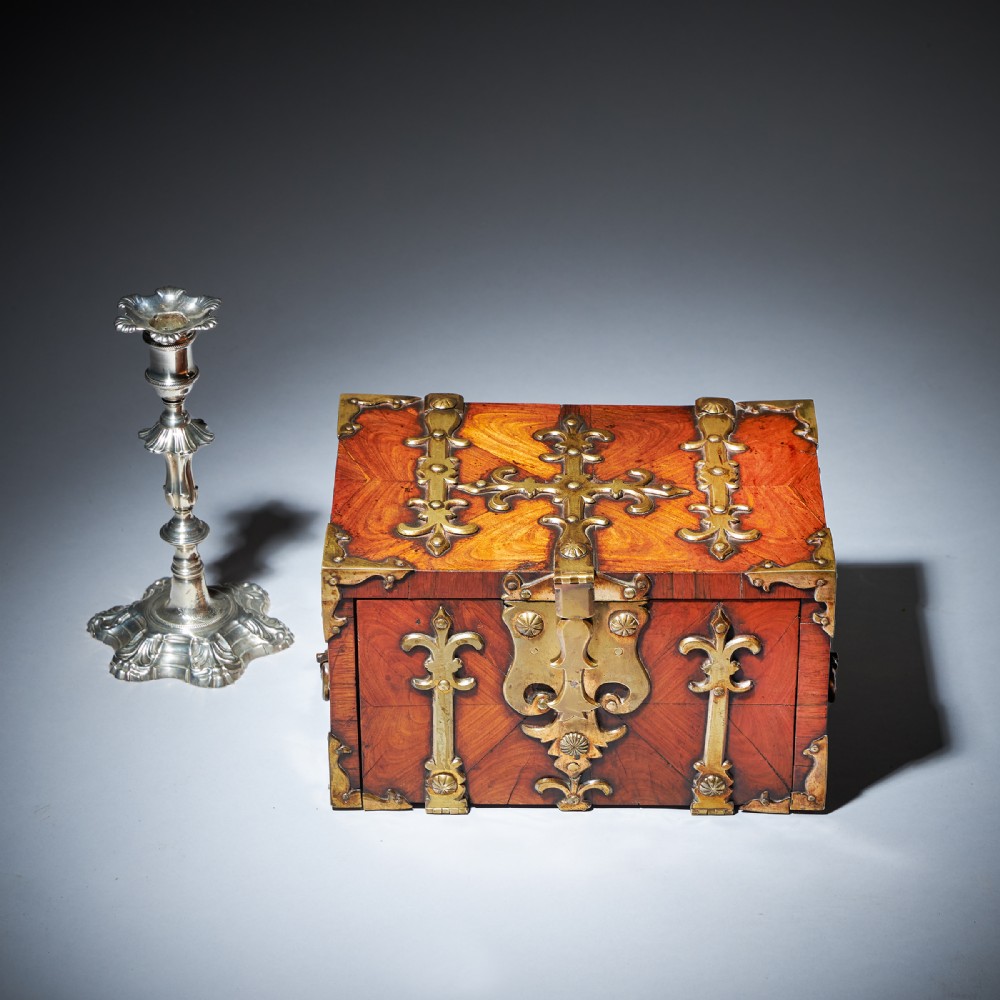
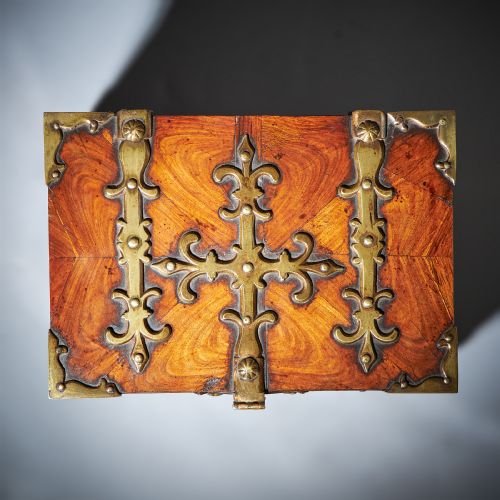
The large gilt brass shield-shaped clasp opens on a push-spring release to reveal a box interior lined in rosewood with one drawer and securing bolts.
Once the lid is opened you can reach inside to slide the original gilt brass bolt lock to open the fall. Once the fall is open you will find a drawer lined in oak and simulated kingwood.
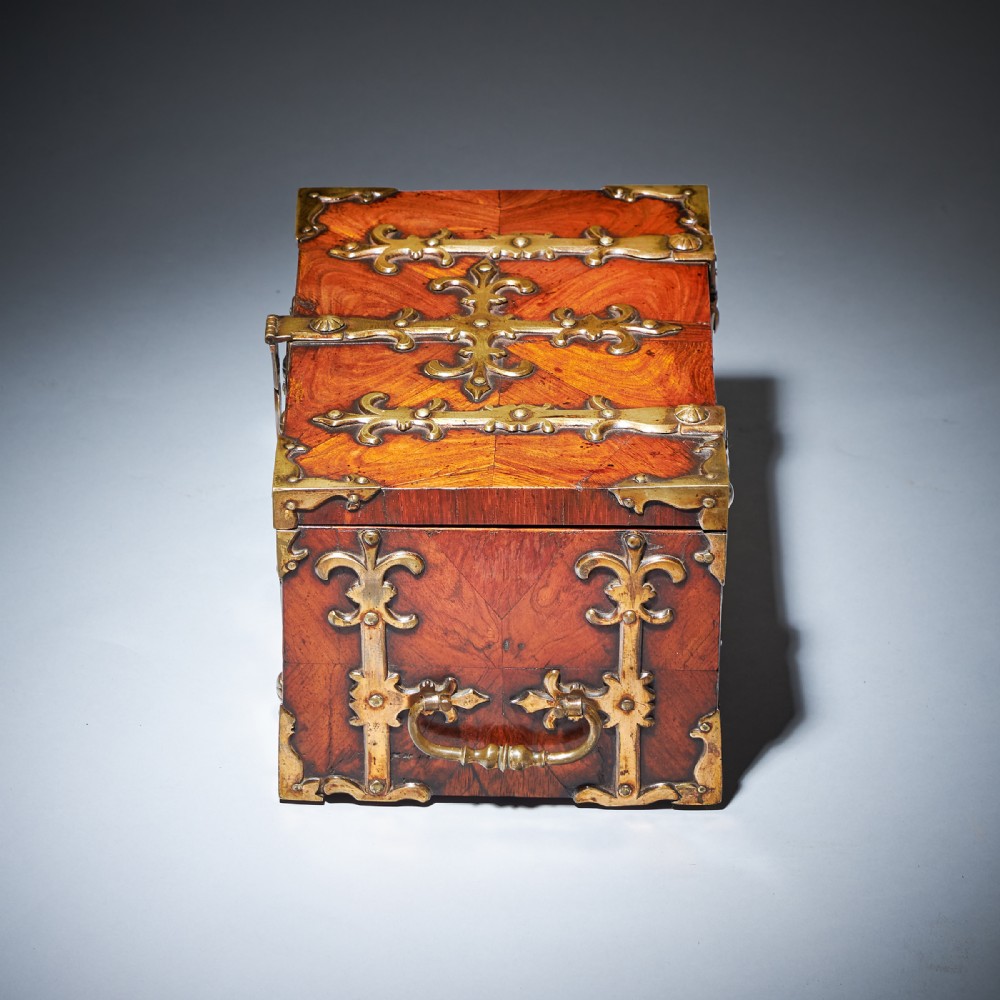
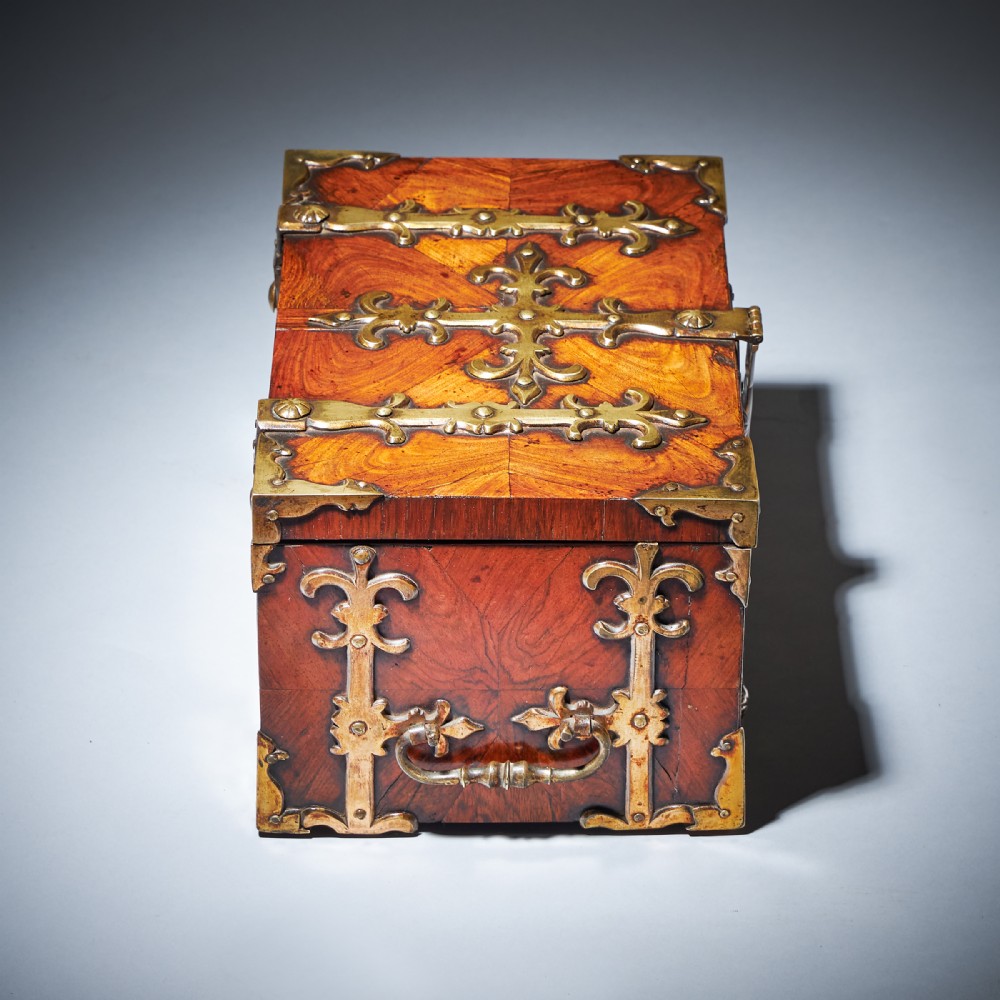
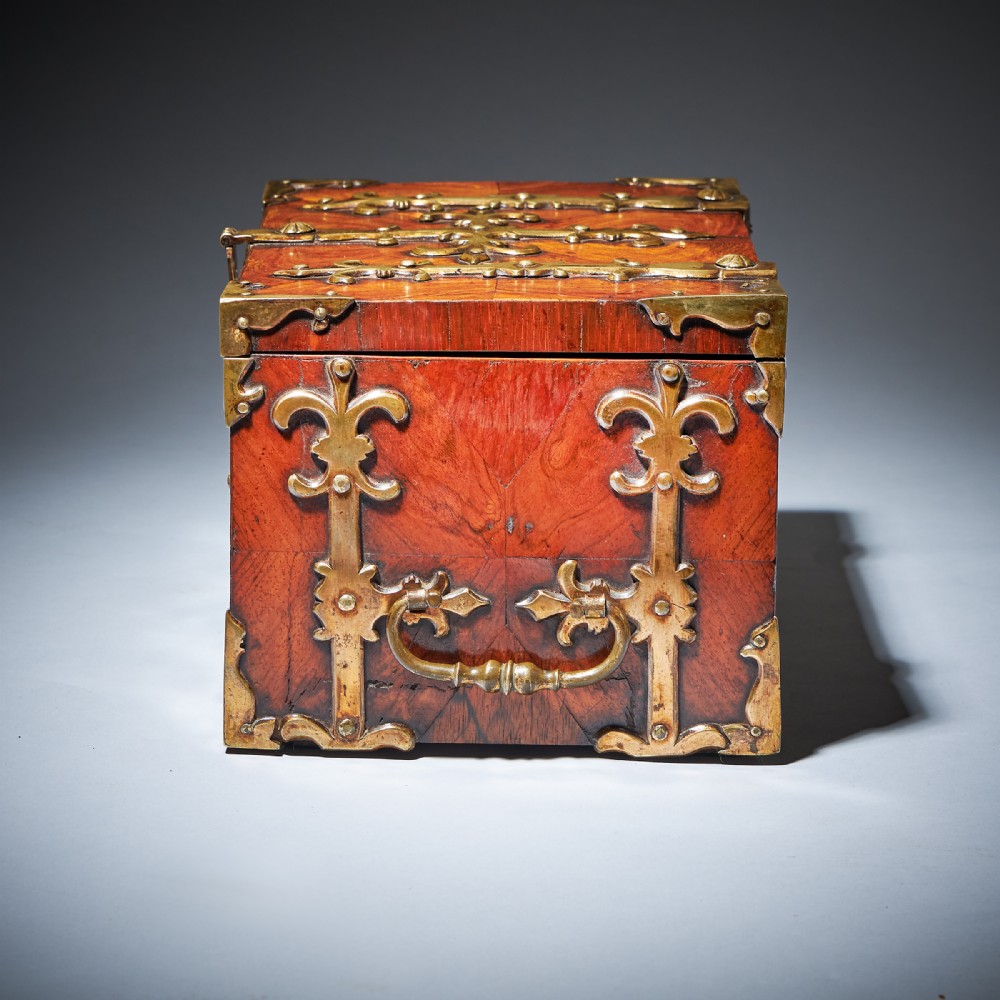
The box appears decorative, but it was also very difficult to break open or steal. It has a strong lock to the centre and two bolts concealed in the sides, so that it could be screwed down into floorboards if necessary or that of a horse-drawn carriage. Strong-boxes veneered in oysters of Princewood such as this were luxury objects.
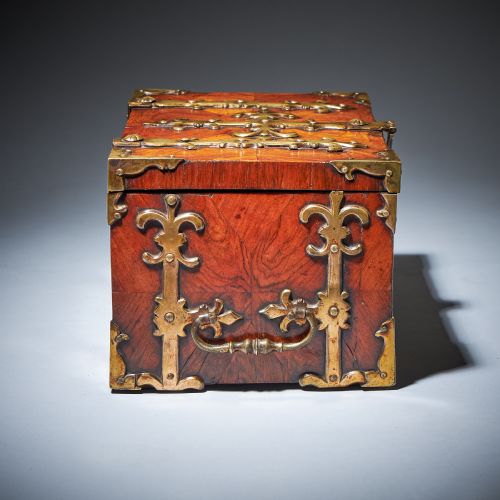
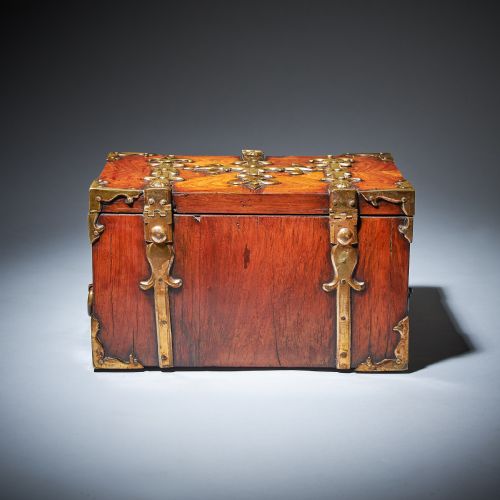
The cabinet-makers who would have constructed and veneered the carcase apparently sold them, often using tropical hardwood veneers, and mounted it with sets of mounts, handles and locks bought in from brass founders. The elaborate veneering and conspicuous gilded brass mounts show that the appearance of these objects was important.
Thomas Pistor, of Ludgate Hill, London worked with the renowned cabinetmaker Gerrit Jensen. Gerrit Jensen supplied a walnut-veneered ‘strongbox’ to Colonel James Grahame in 1668, Levens Hall. It is recorded that Thomas Pistor’s remaining stock was sold off post his death in 1711, included ‘three fine Princes wood strongboxes’.
The present example relates almost exactly to a strongbox held in the Victoria & Albert Museum. Accession Number: W.10-1951.
Alexander George Antiques Ltd. has dated this piece to the 17th Century.
Offering carefully selected antique masterpieces from the 17th & 18th centuries
You can view the stock and full dealer information on the Alexander George Antiques Ltd. Profile Page
Alexander George Antiques Ltd. is a registered member of LAPADA
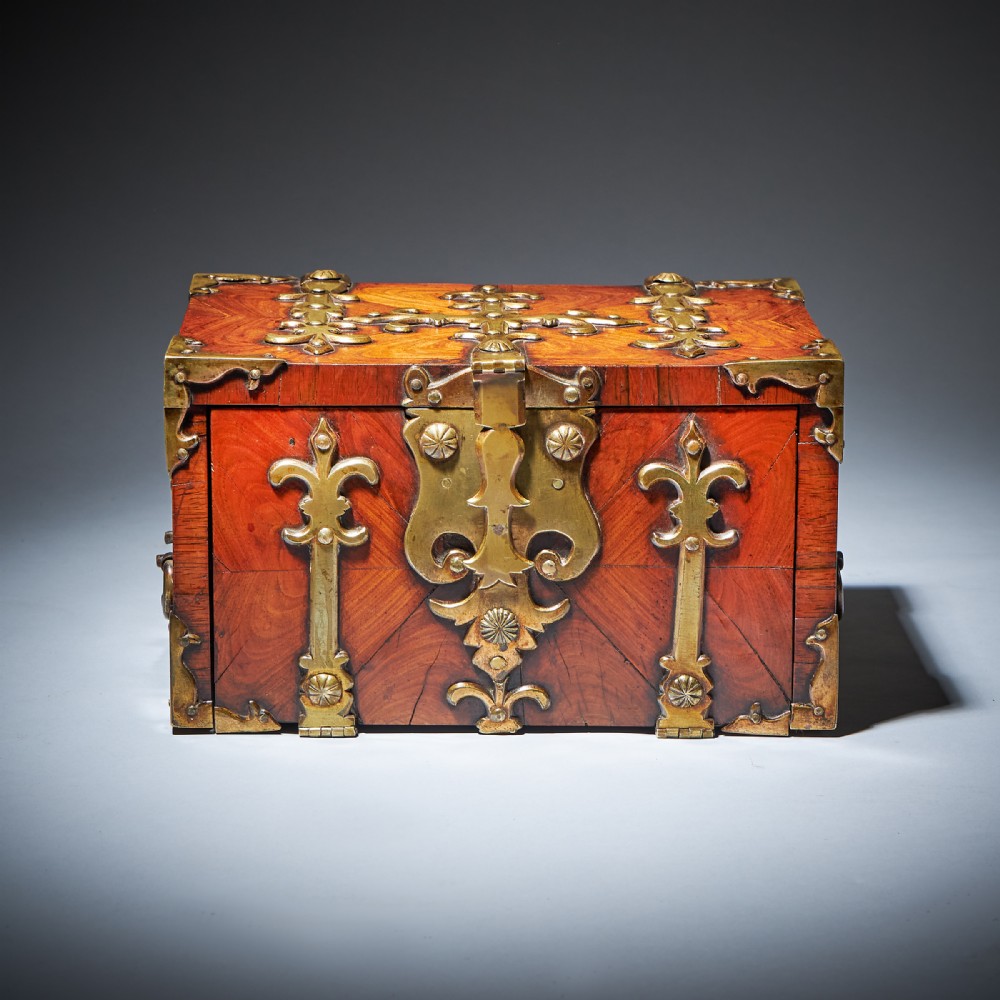
17th C. Diminutive William and Mary Kingwood Strongbox or Coffre Fort, C. 1690