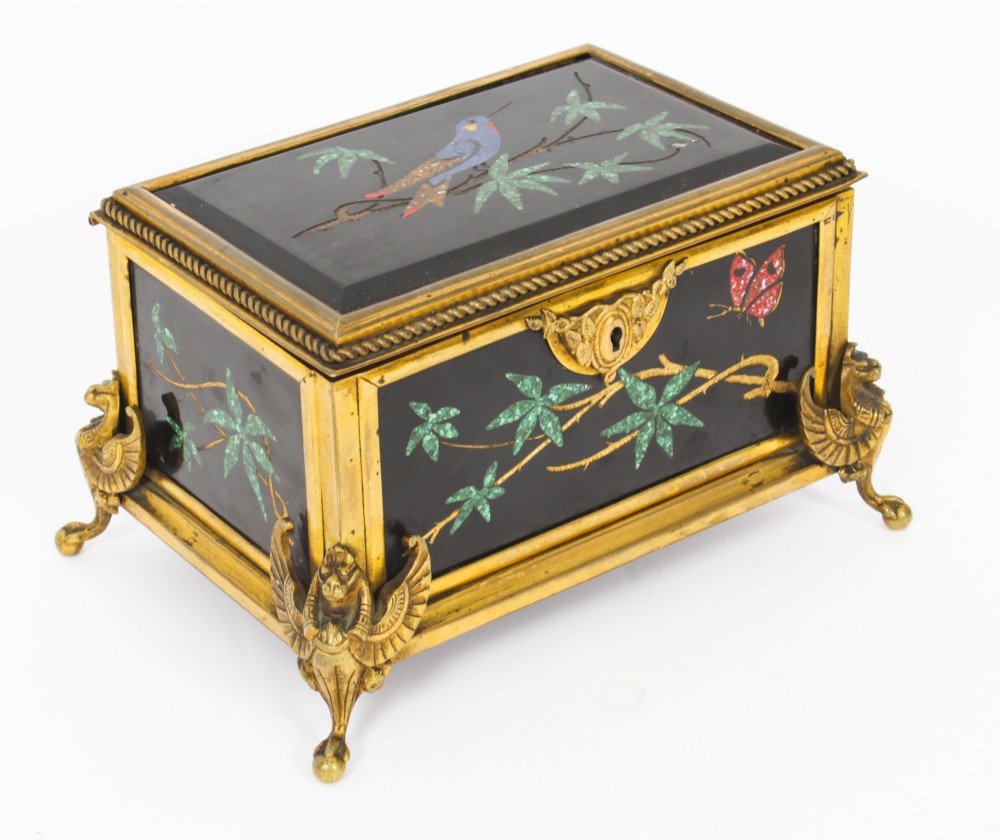
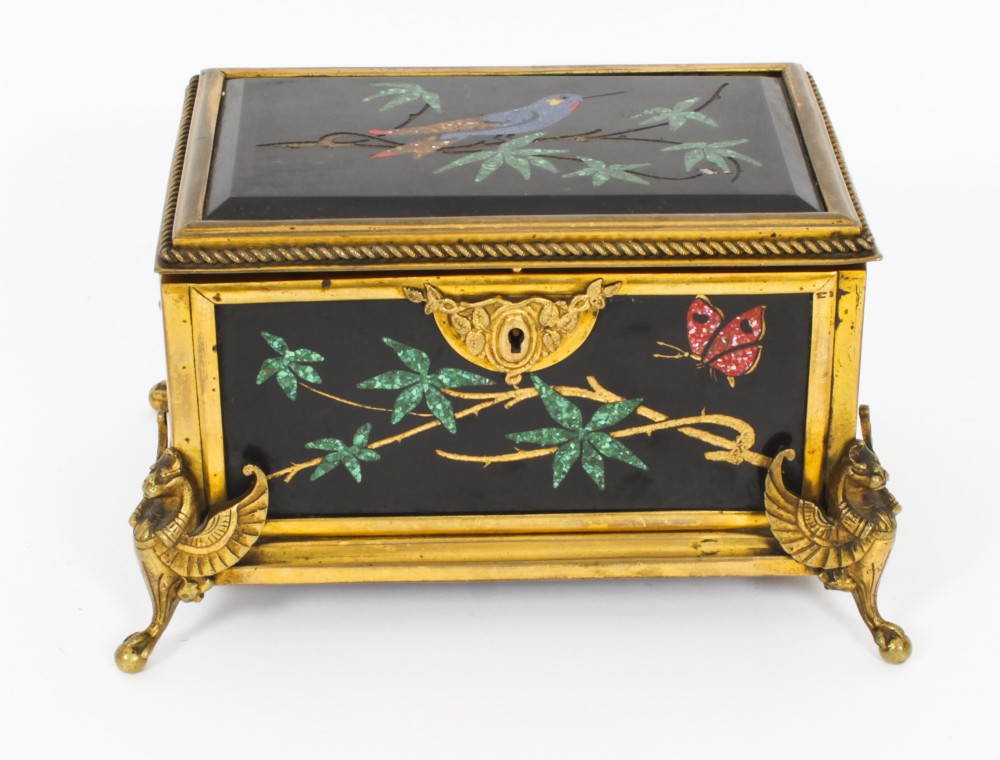
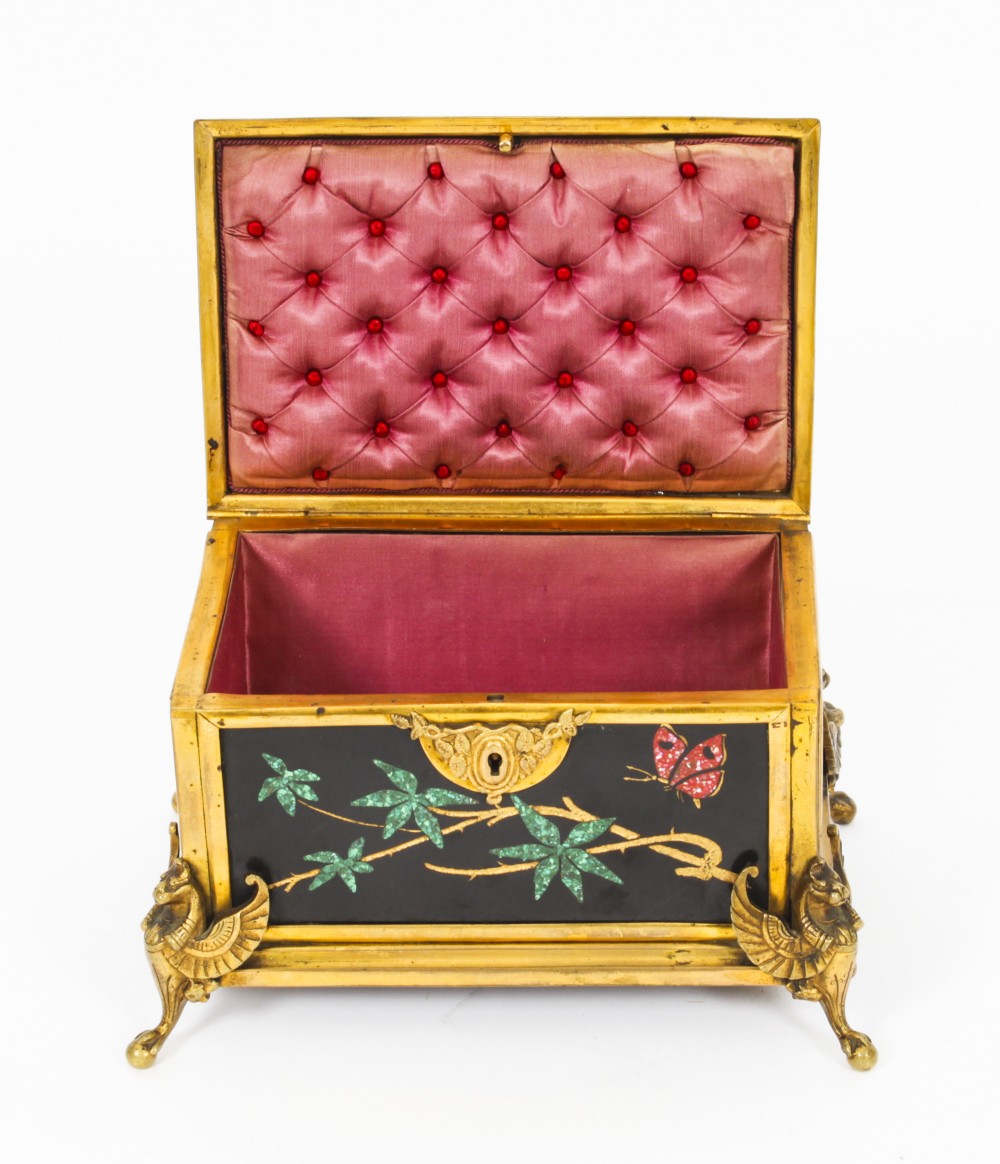
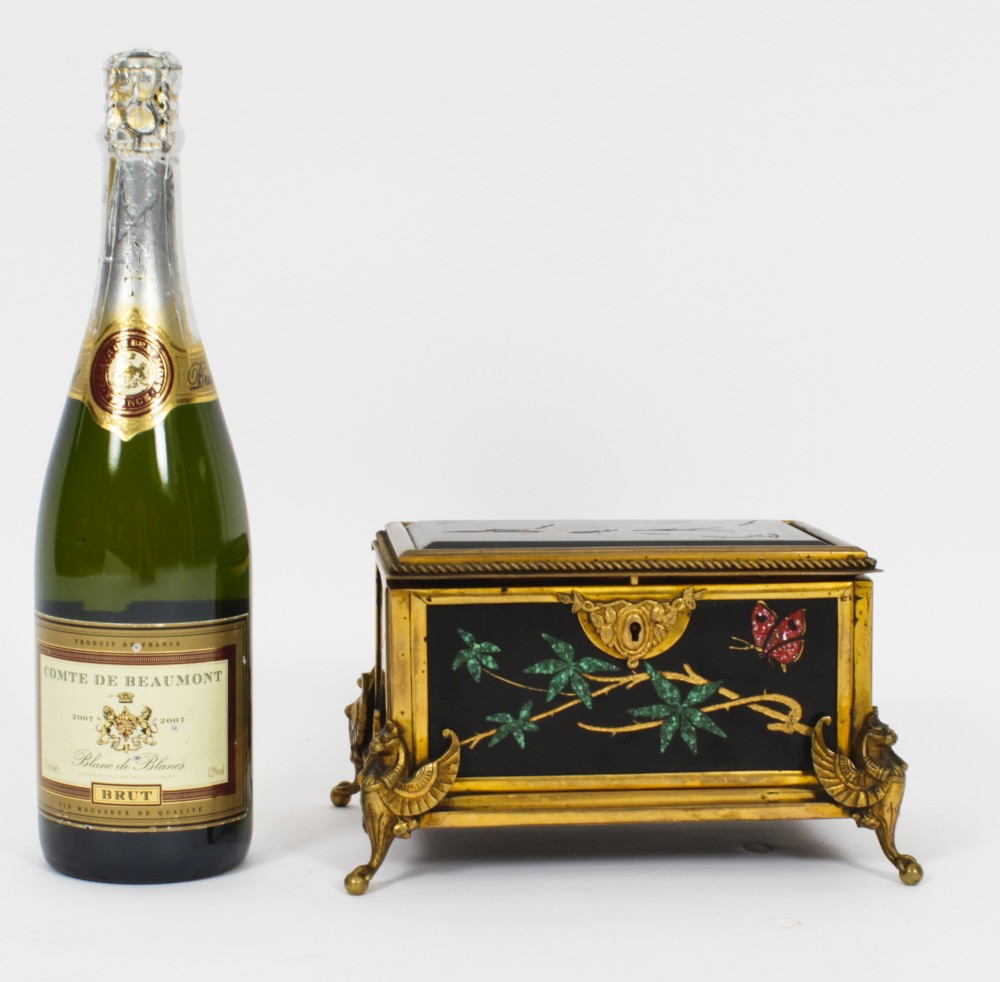
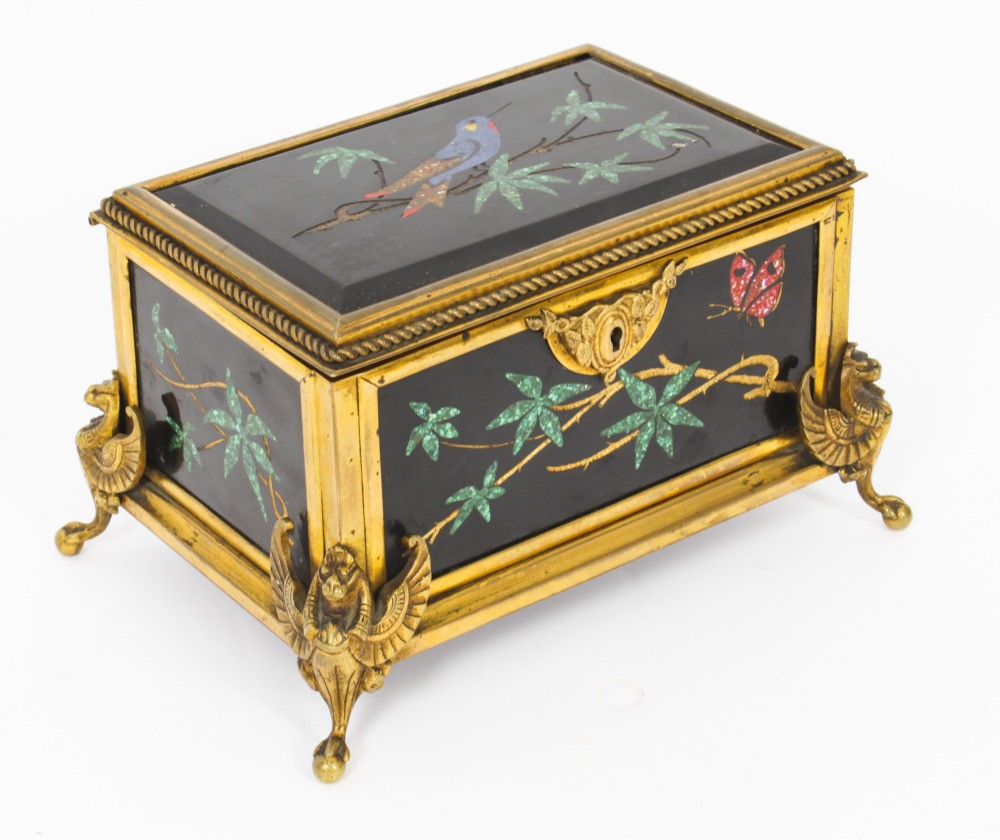
This is a superb quality antique French ormolu and pietra dura jewellery casket, C1860 in date.
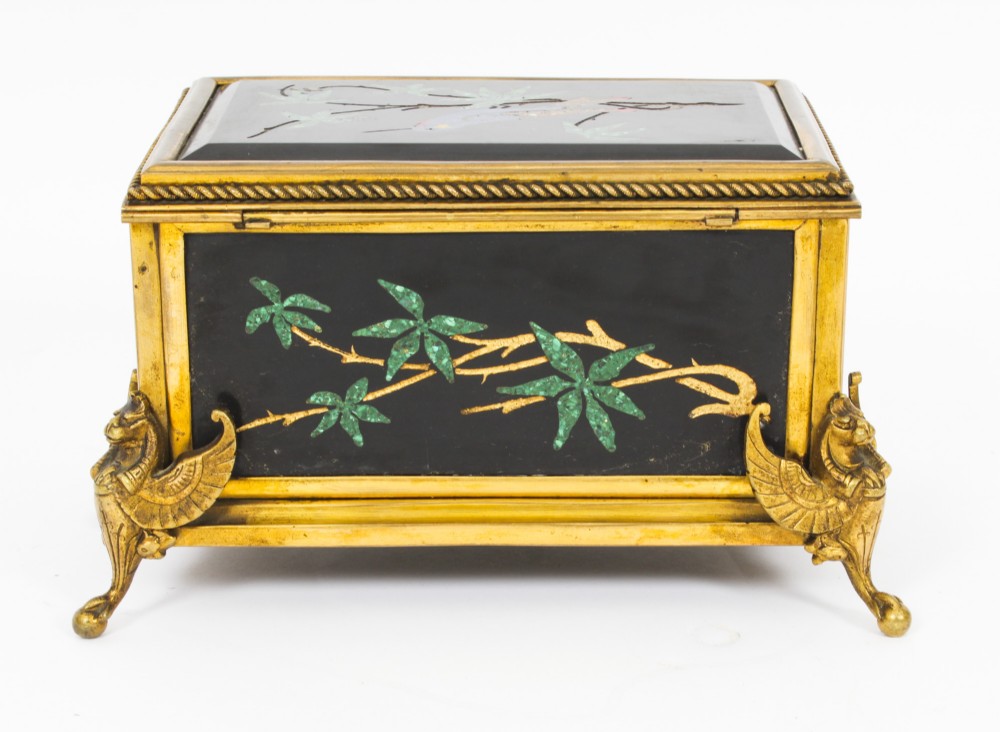
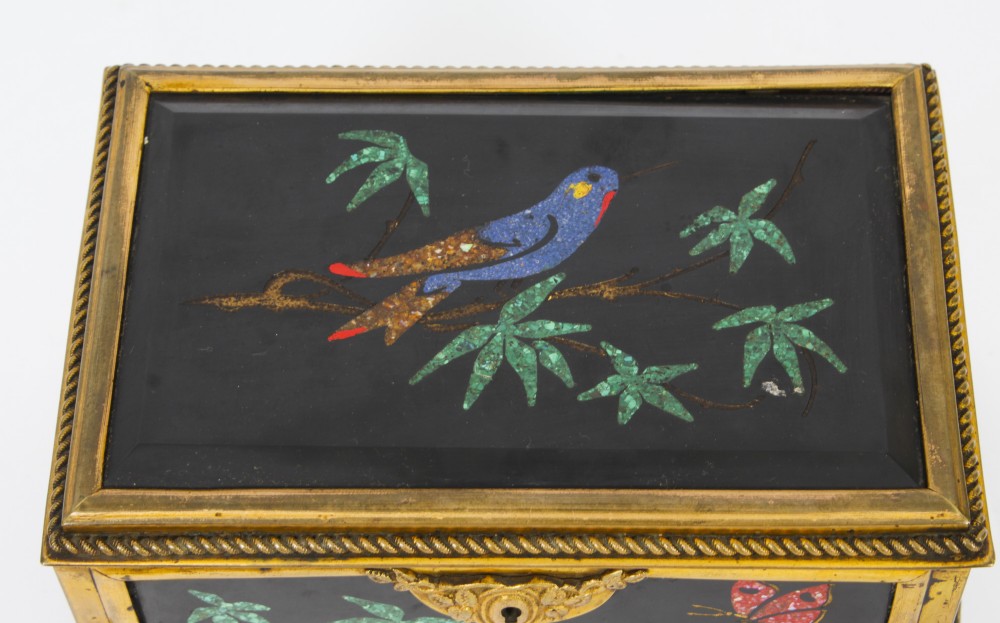
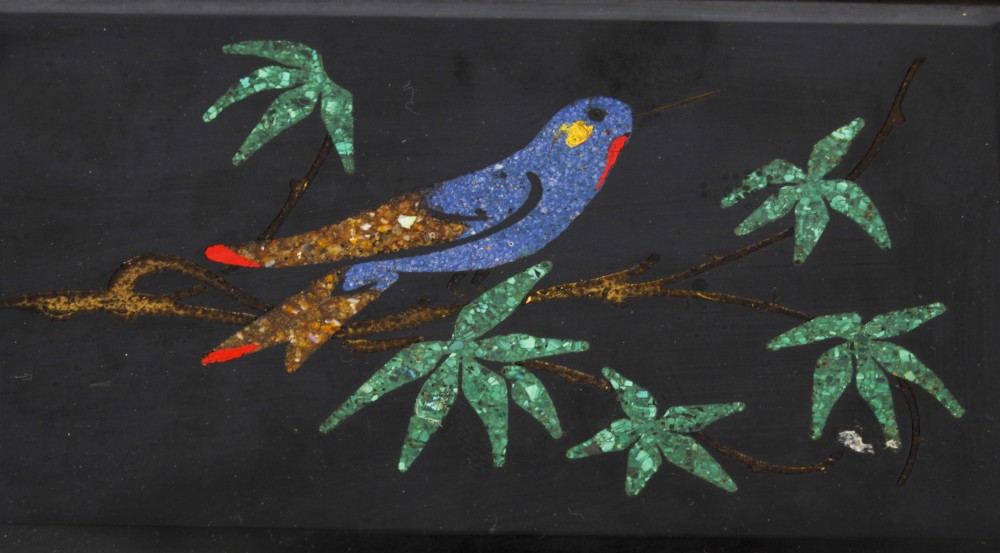
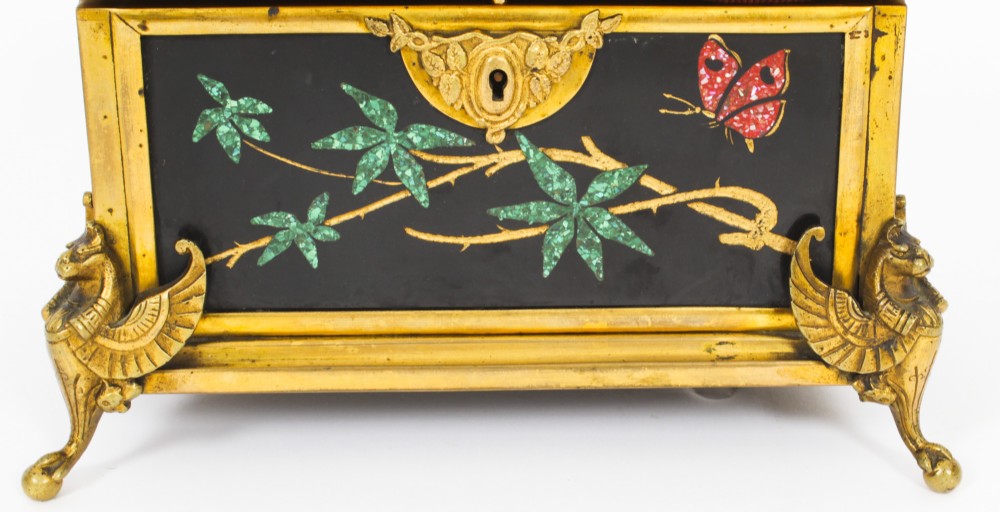
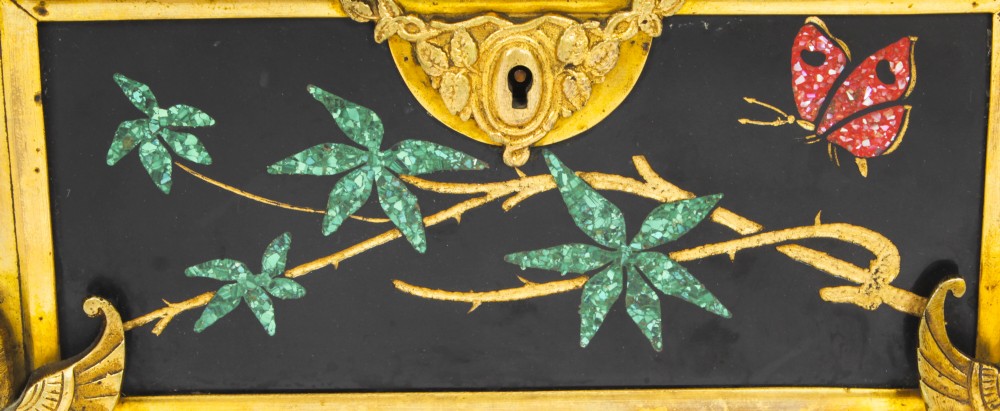
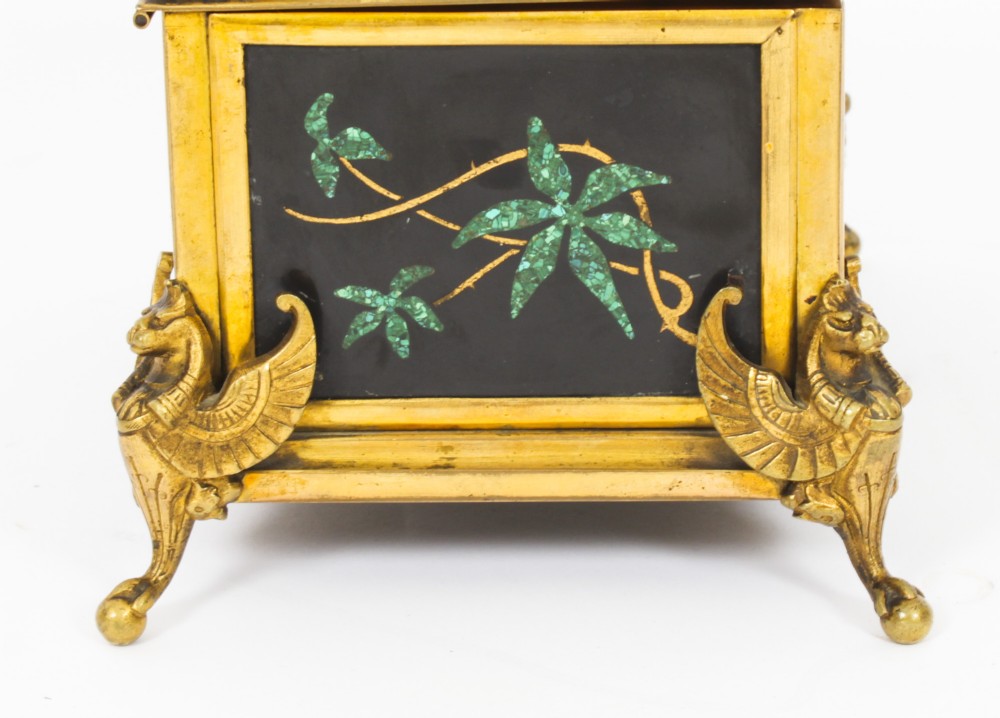
The top, front, sides and back are each inset with panels of black polished marble inlaid and engraved with humming bird, butterfly and leafy stems.
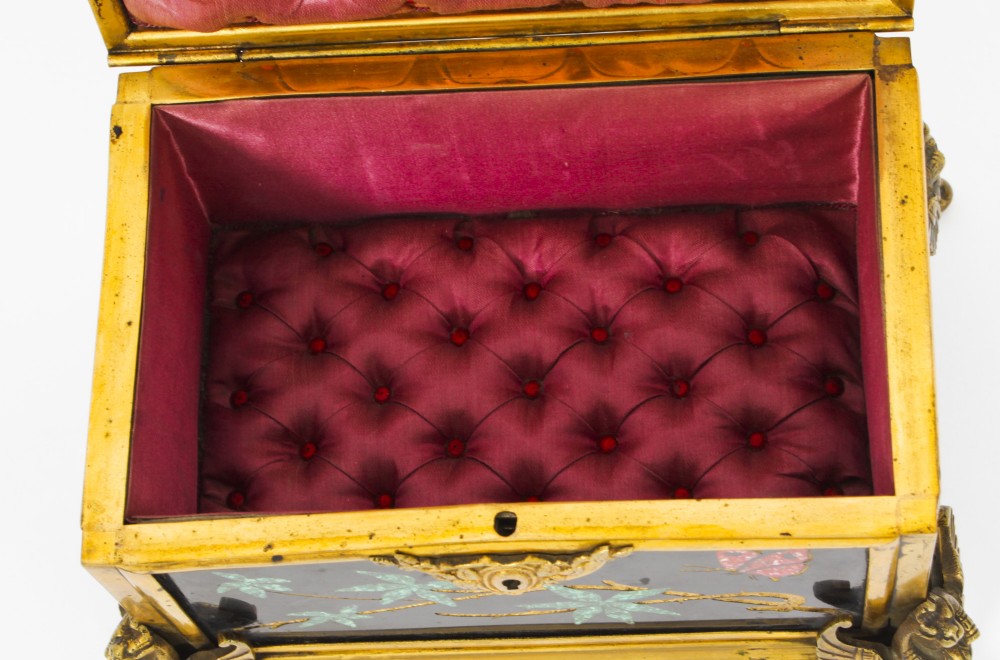
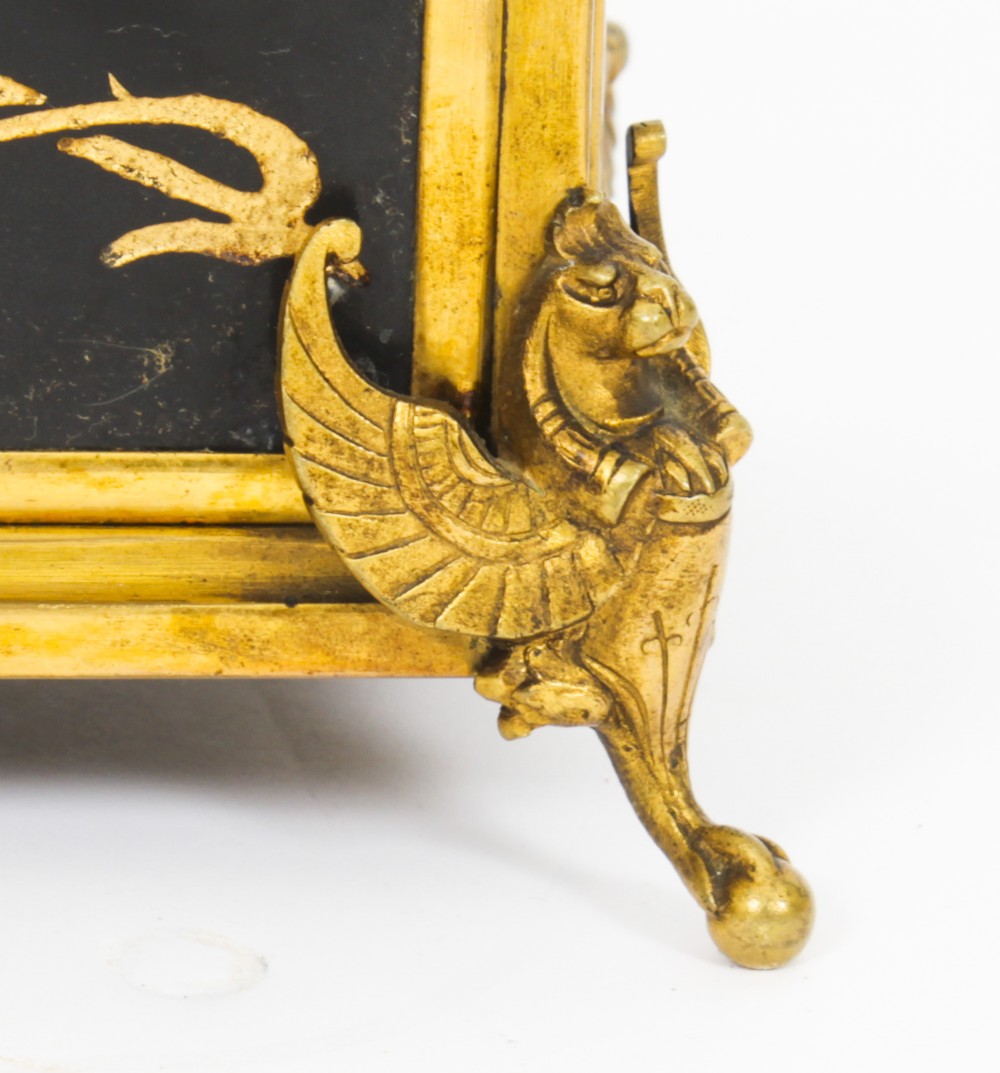
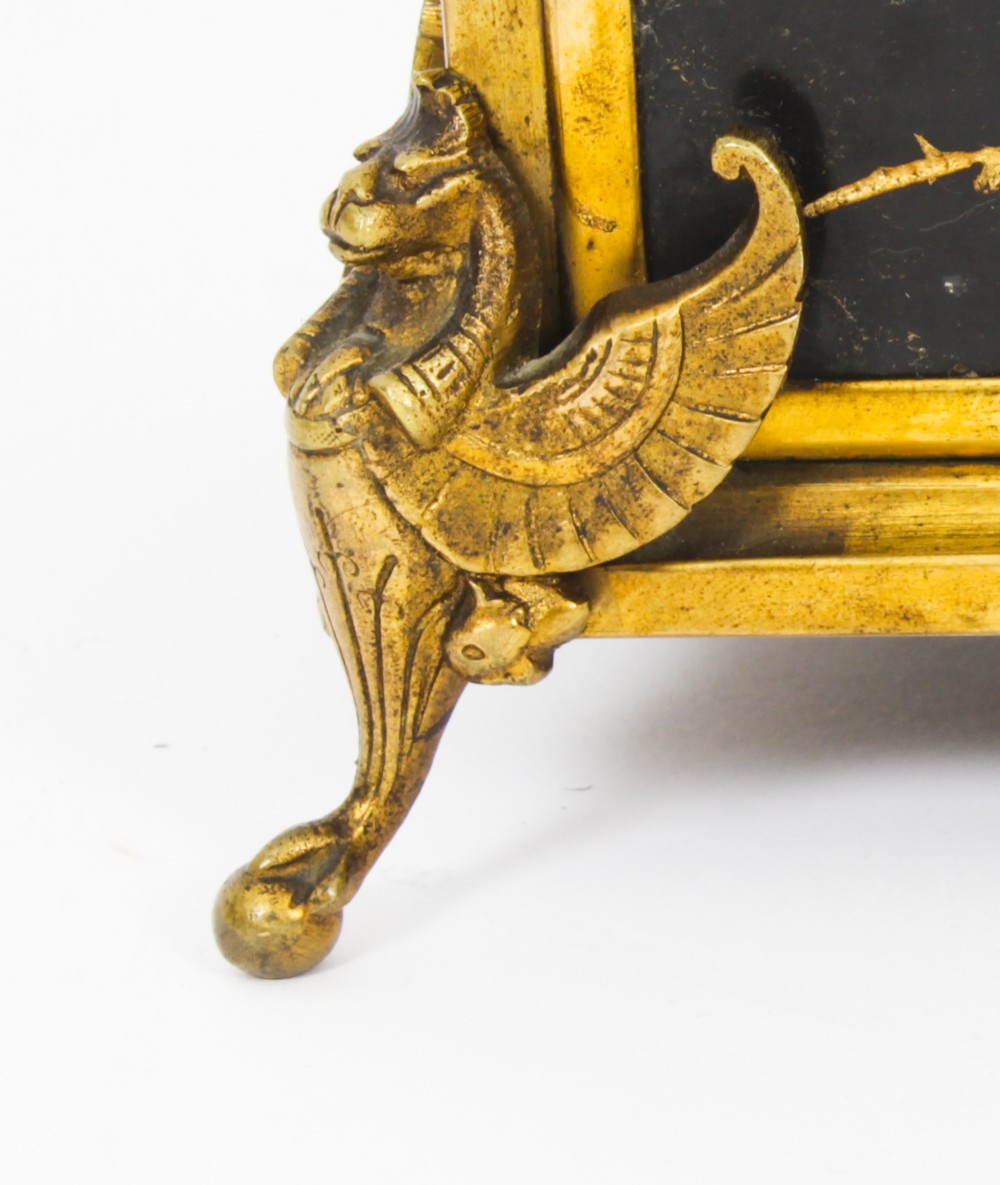
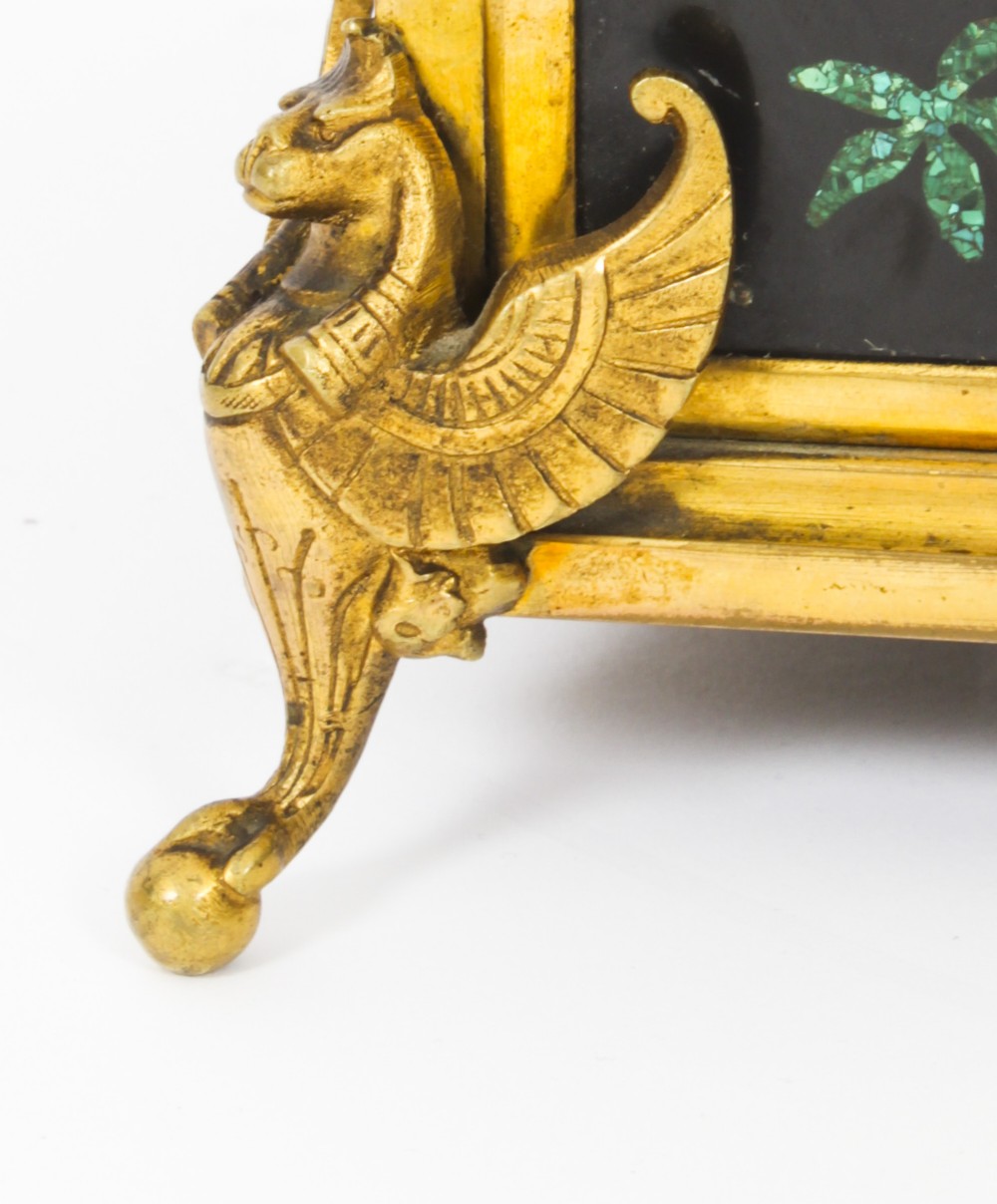
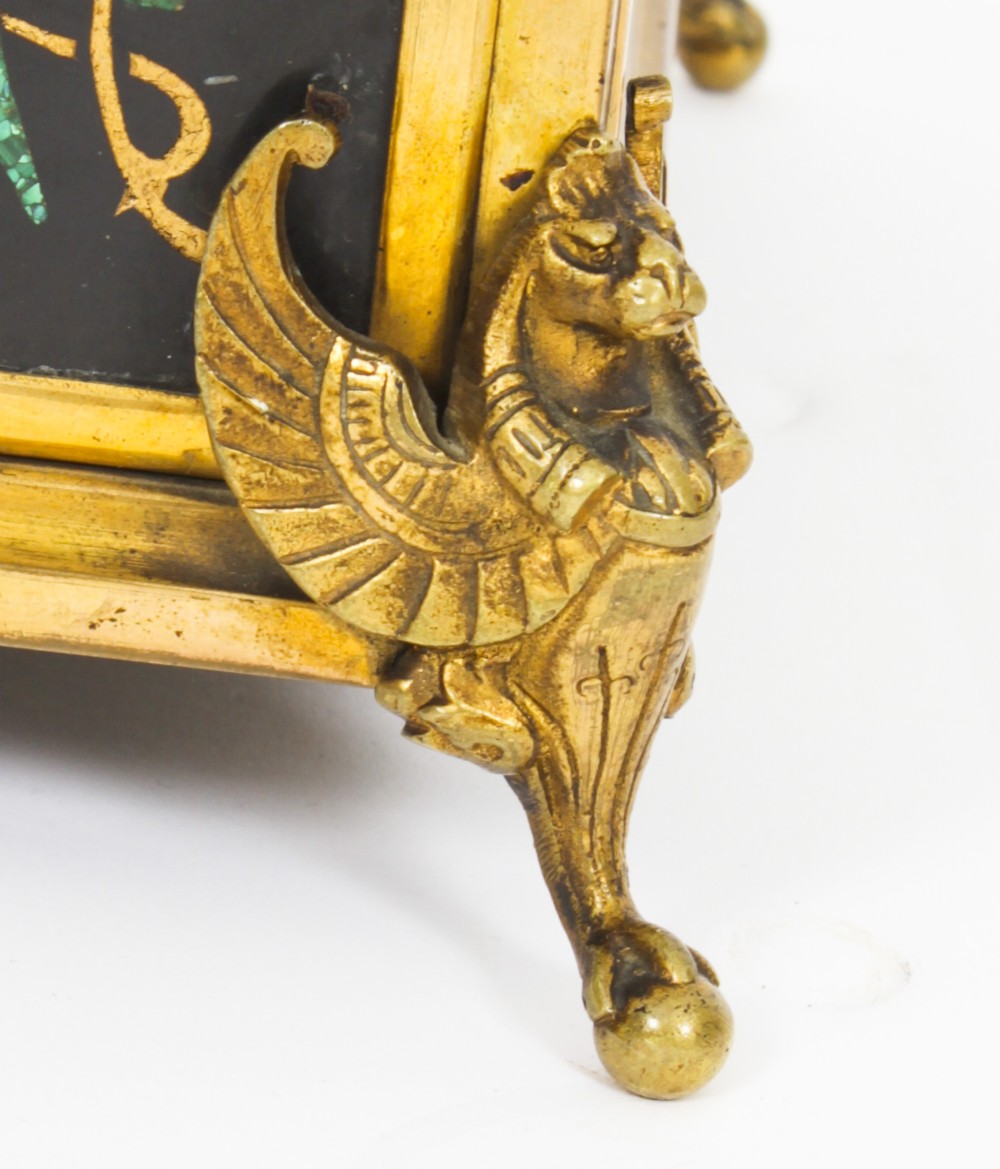
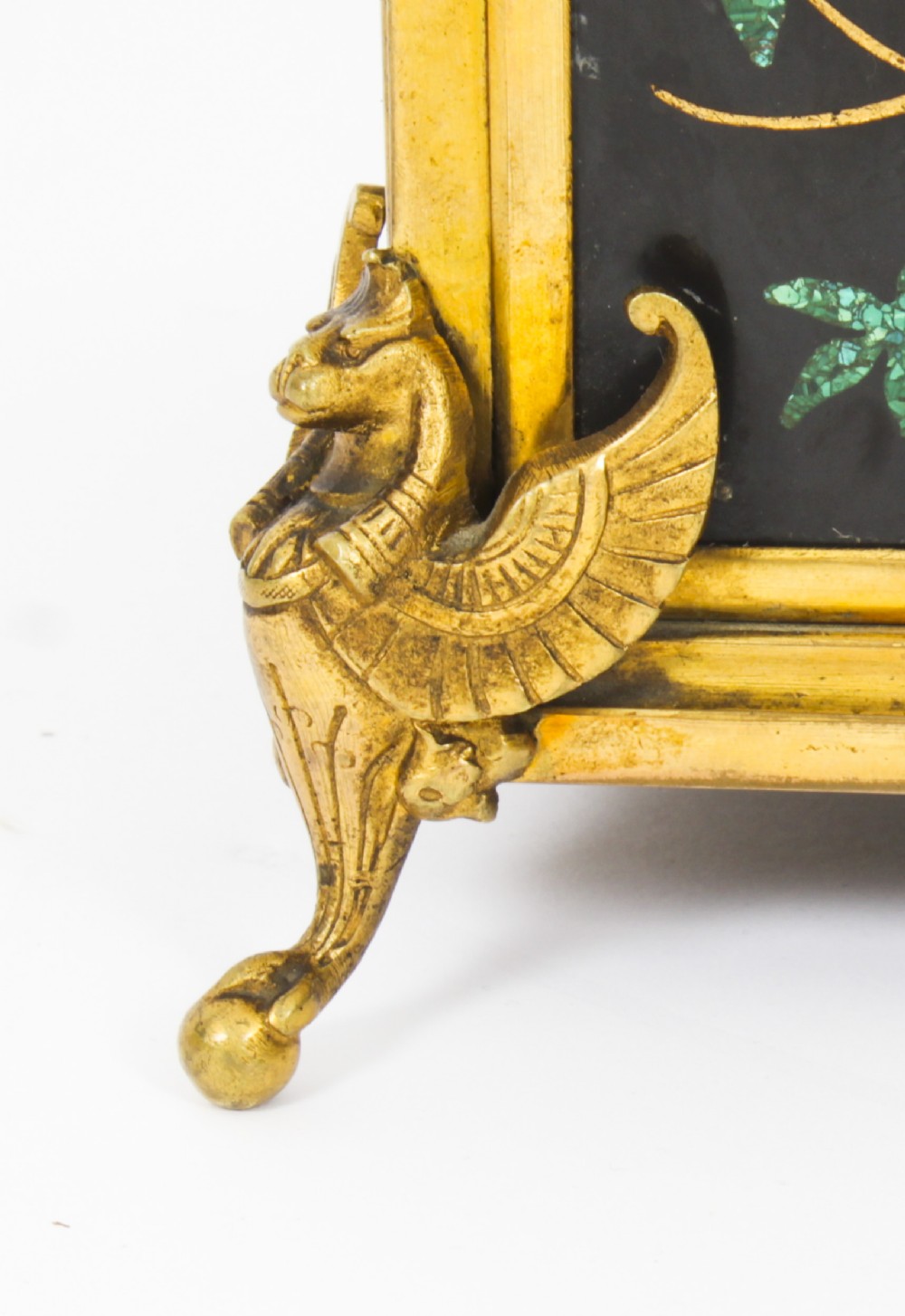
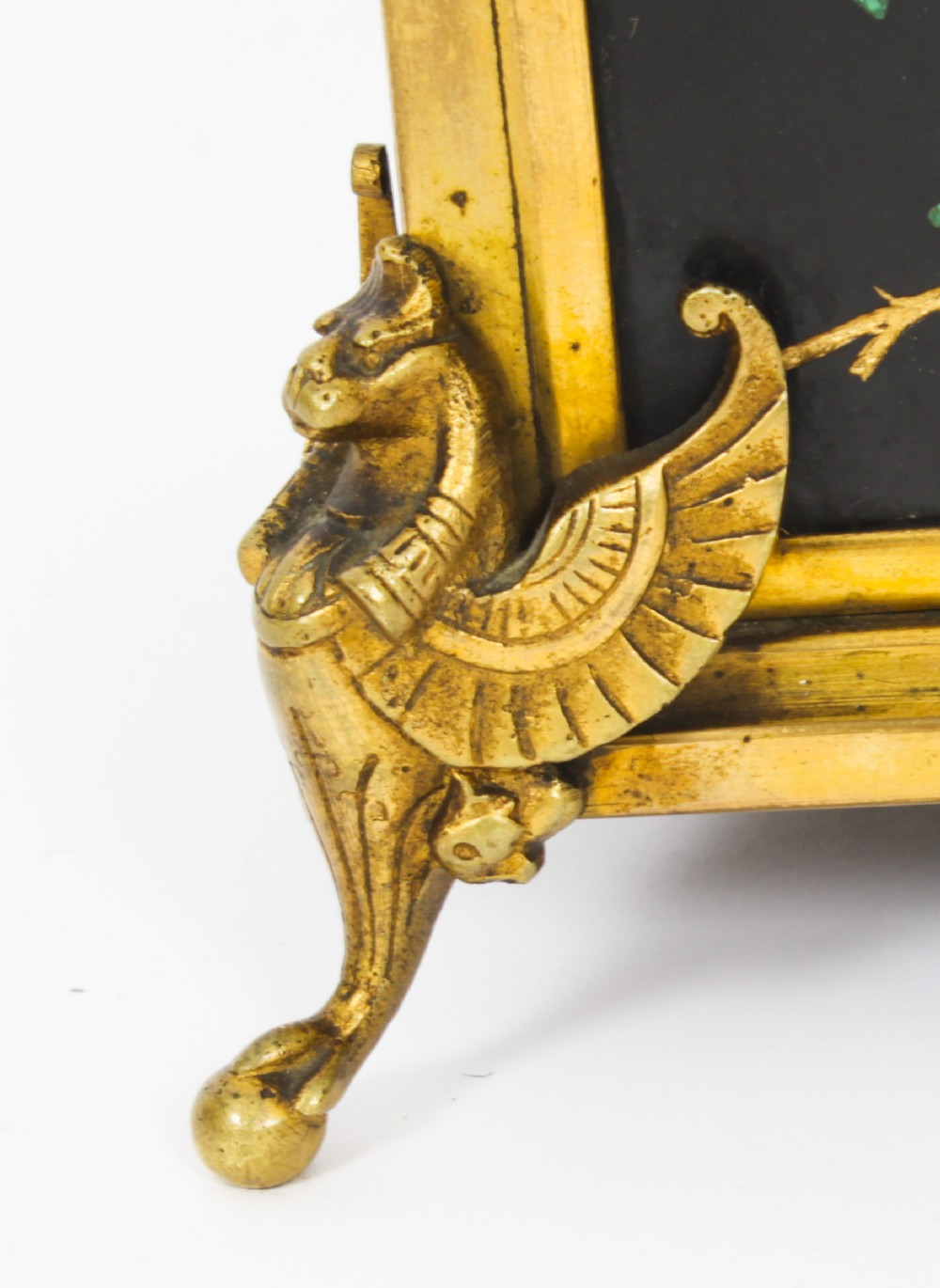
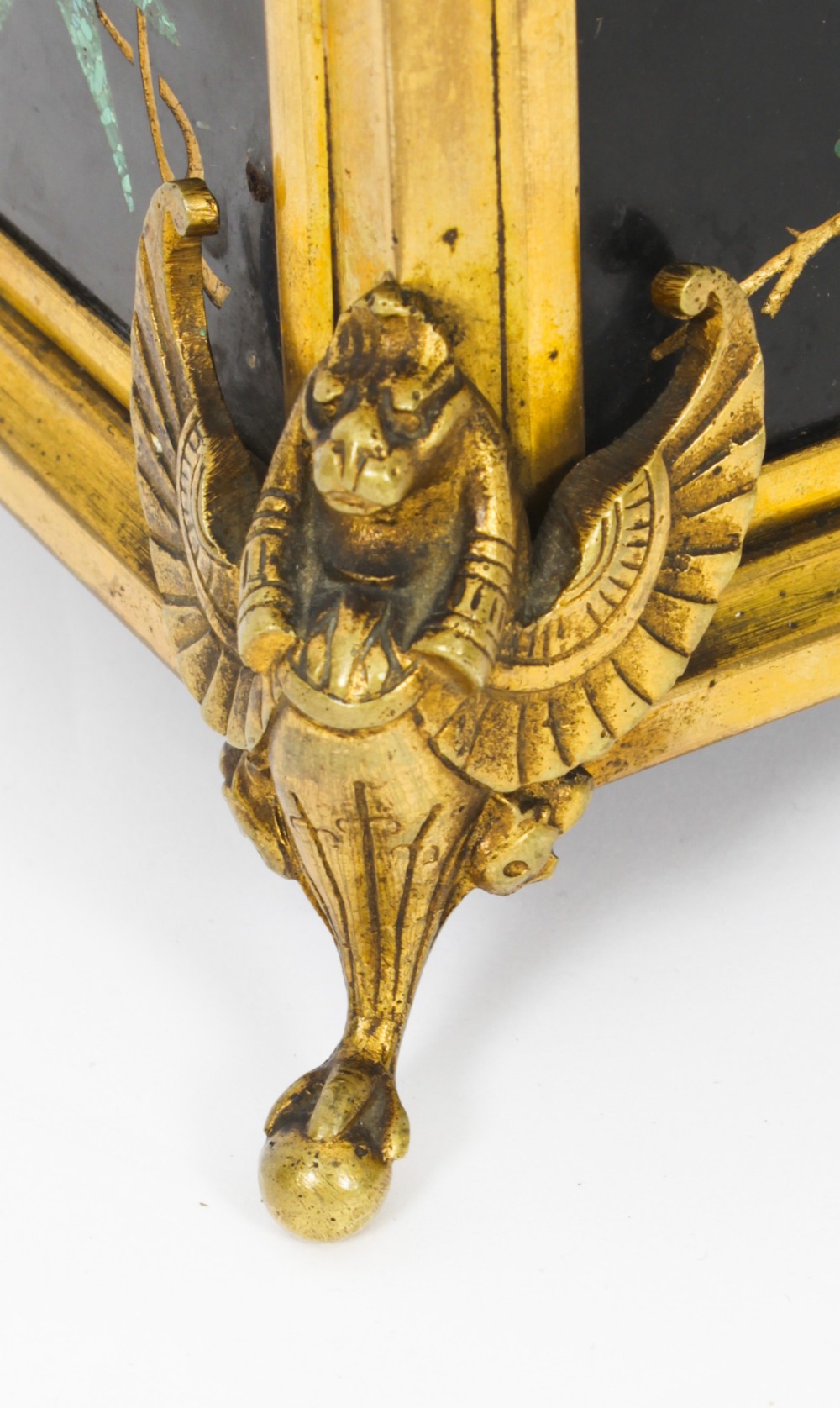
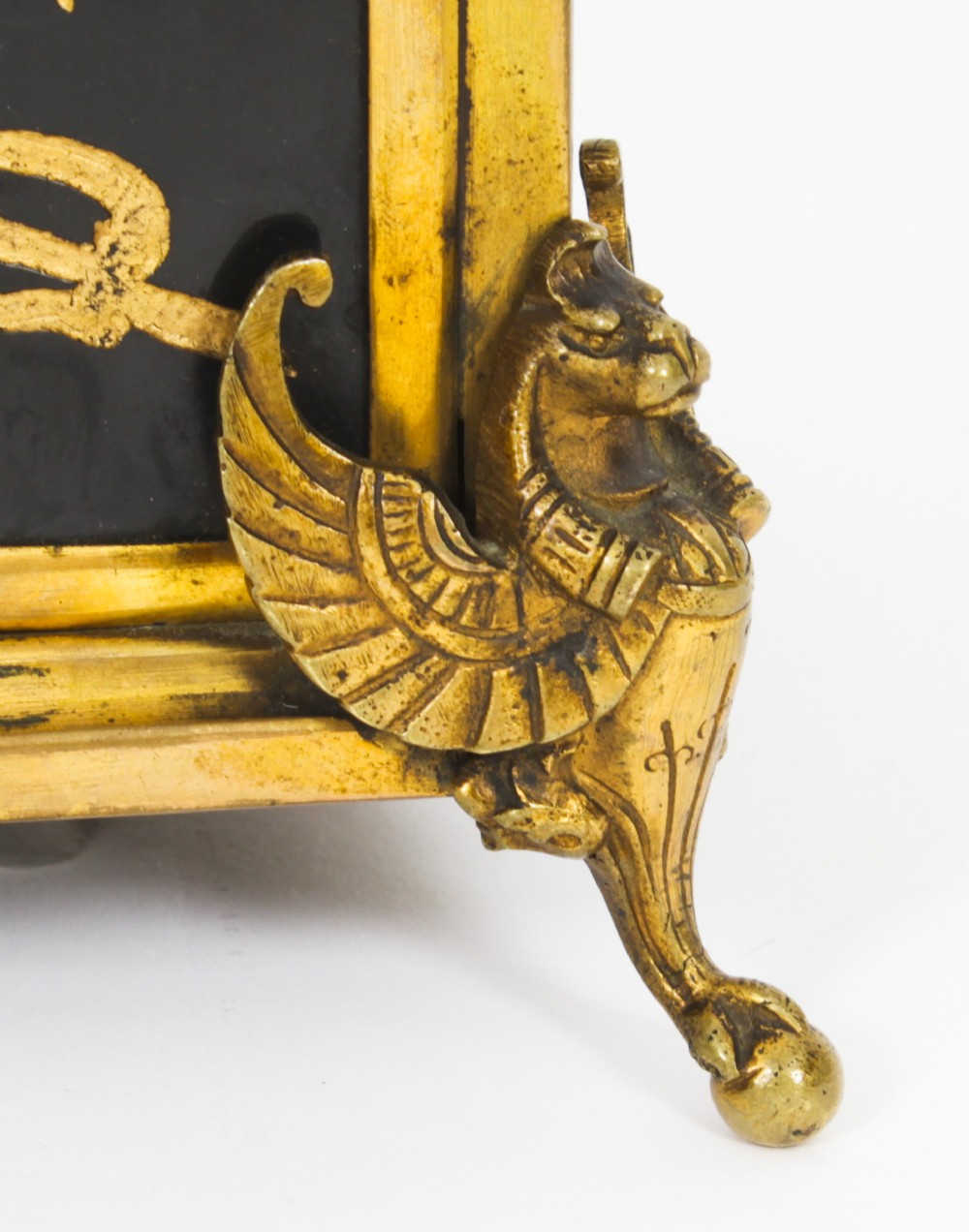
The casket has Egyptian revival winged demi beasts to each corner with ball and claw feet. The hinged lid opens to reveal a deep buttoned rose silk lined interior.
It is a lovely piece which will make an unforgettable gift.
Condition:
In excellent condition having been beautifully cleaned and waxed in our workshops, please see photos for confirmation.
Dimensions in cm:
Height 13 x Width 22 x Depth 16
Dimensions in inches:
Height 5 inches x Width 9 inches x Depth 6 inches
Pietra dura is a term for the inlay technique of using cut and fitted, highly polished coloured stones to create images. It is considered a decorative art.
Pietre dure is an Italian plural meaning "hard rocks" or hardstones; the singular pietra dura is also encountered in Italian. In Italian, but not in English, the term embraces all gem engraving and hardstone carving, which is the artistic carving of three-dimensional objects in semi-precious stone, normally from a single piece, for example in Chinese jade.
The traditional convention in English has been to use the singular pietra dura just to denote multi-colored inlay work. However, in recent years there has been a trend to use pietre dure as a term for the same thing, but not for all of the techniques it covers, in Italian.
But the title of a 2008 exhibition at the Metropolitan Museum of Art, New York, Art of the Royal Court: Treasures in Pietre Dure from the Palaces of Europe used the full Italian sense of the term, probably because they thought that it had greater brand recognition. The material on the website speaks of objects such as a vase in lapis lazuli as being examples of "hardstone carving (pietre dure)"
The Victoria & Albert Museum in London uses both versions on its website, but uses pietra dura. "A method of inlaying coloured marbles or semi-precious stones into a stone base, often in geometric or flower patterns...."
Our reference: A2461