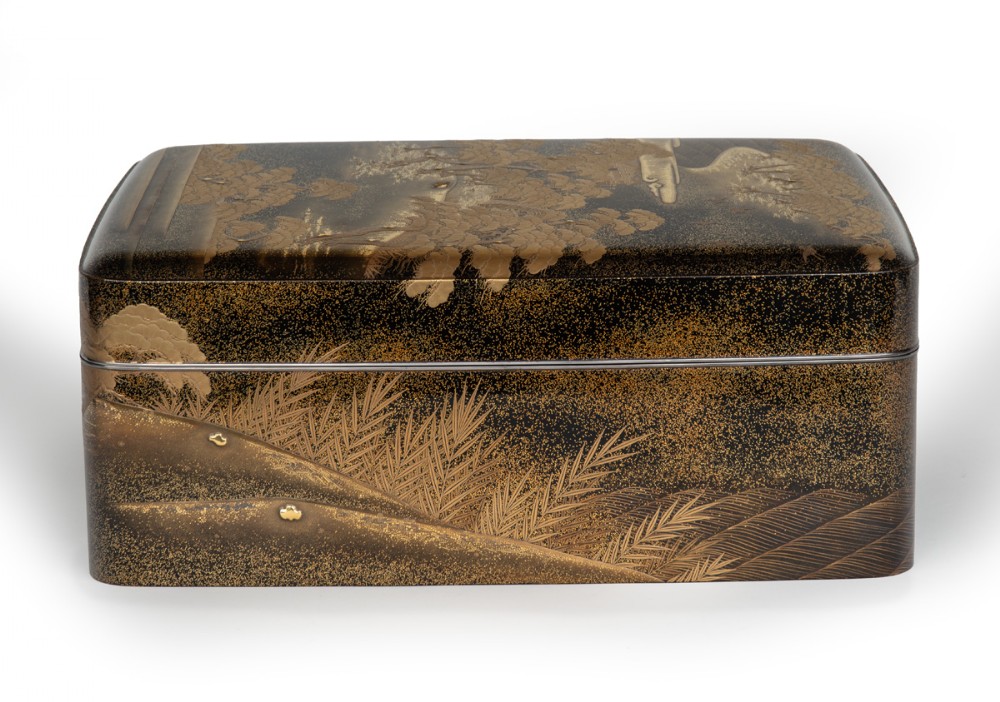
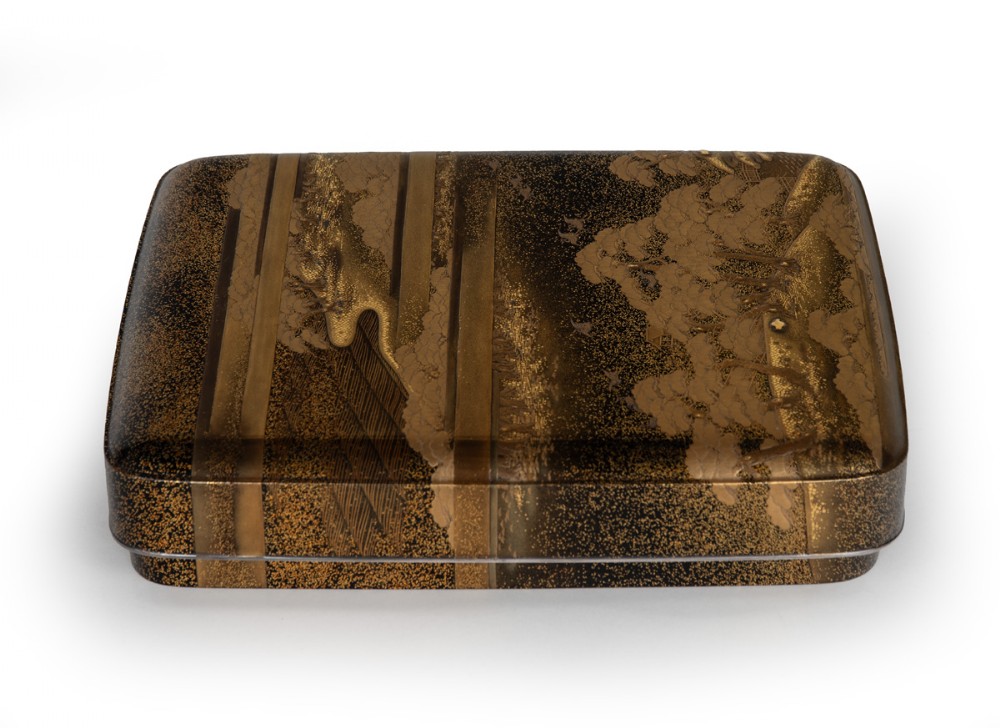
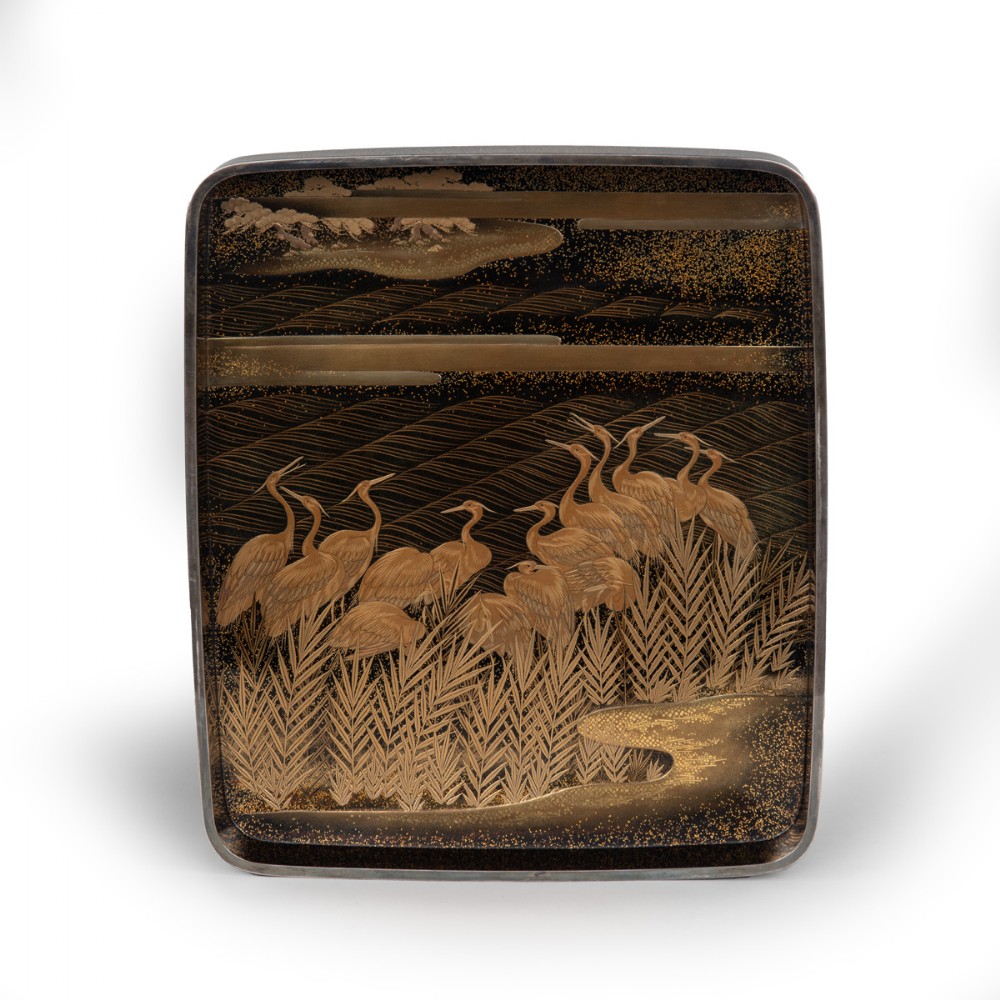
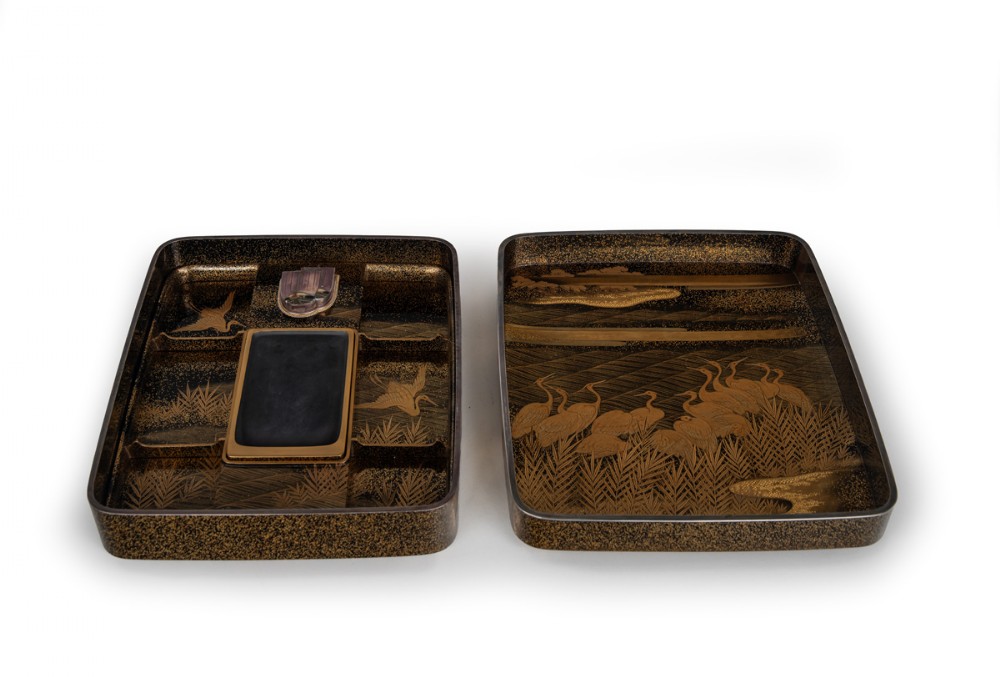
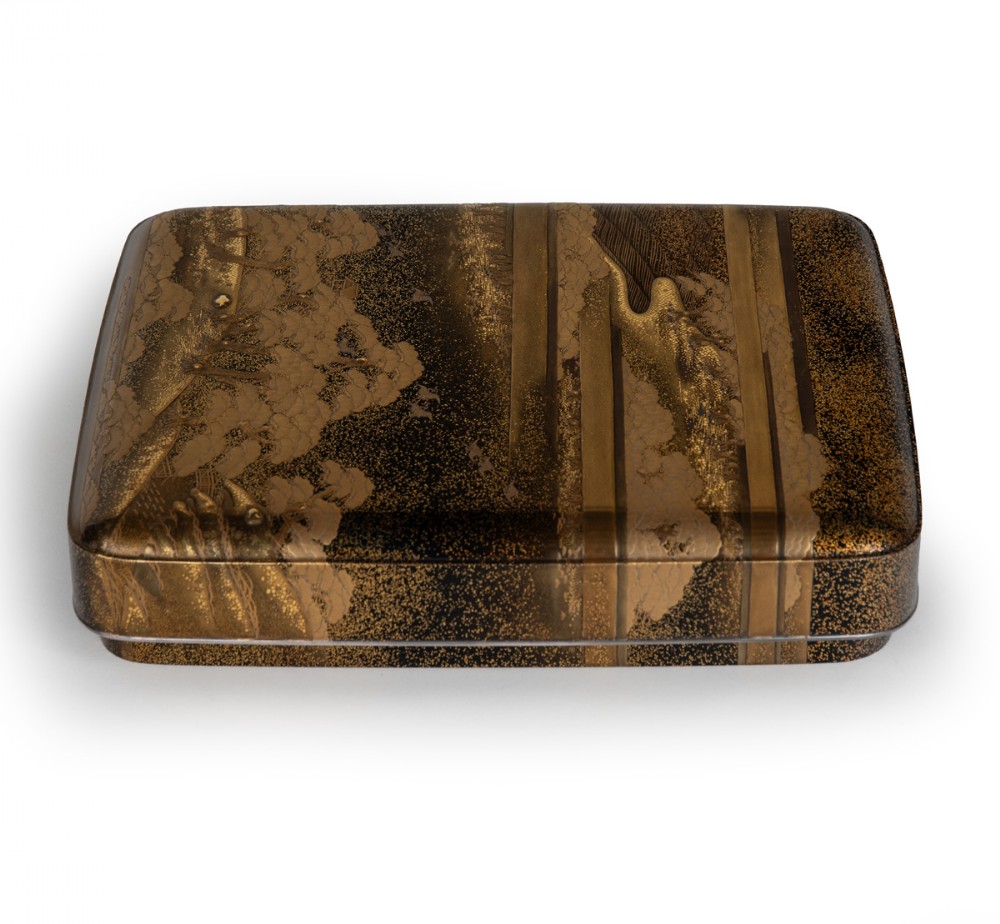
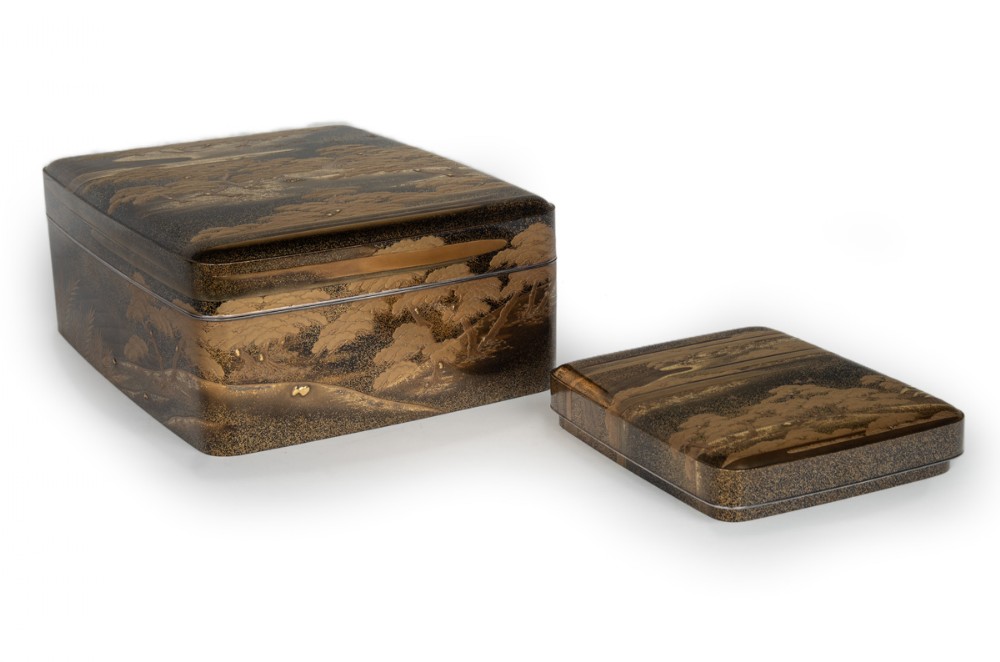
Steve Sly Japanese Works of Art has dated this piece to the 19th Century.
Literature :
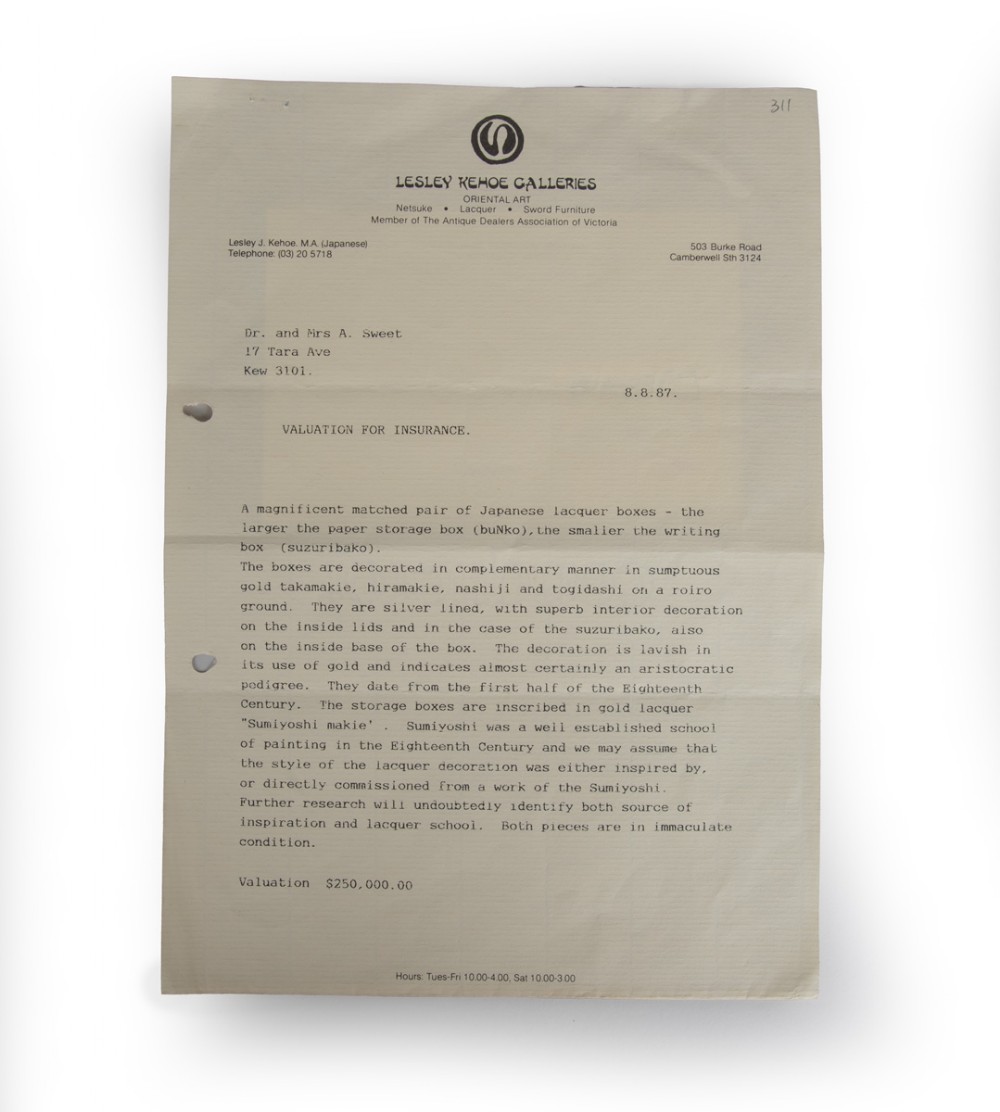
About "Sumiyoshi makie":
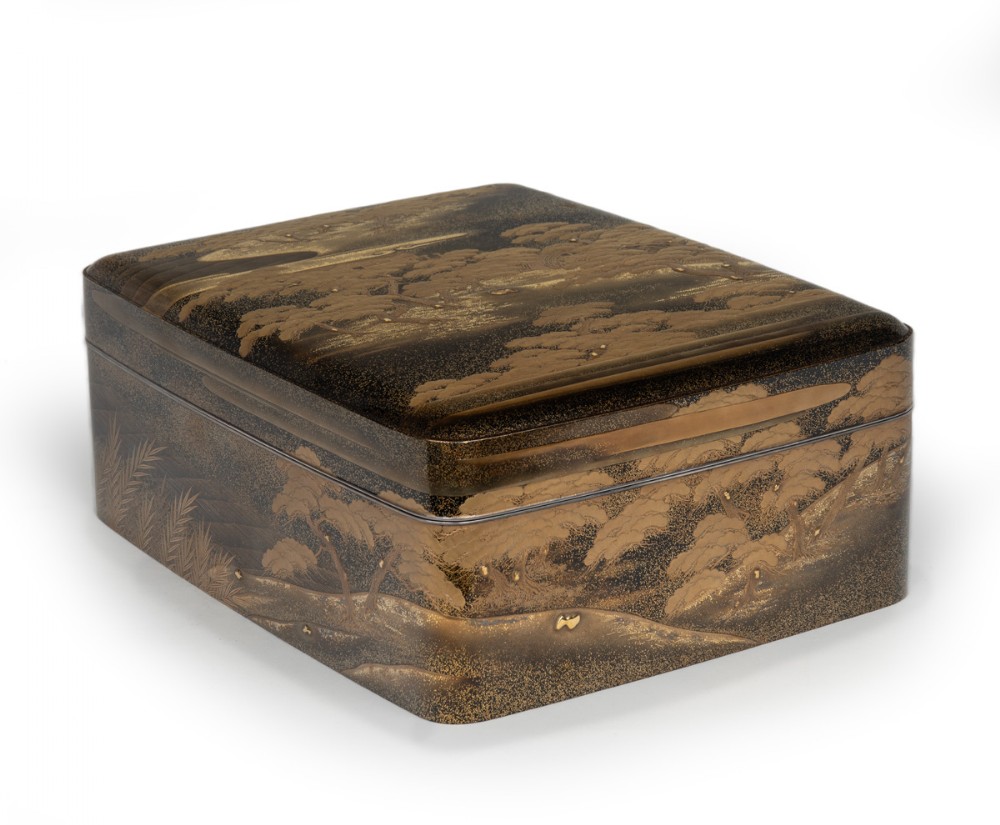
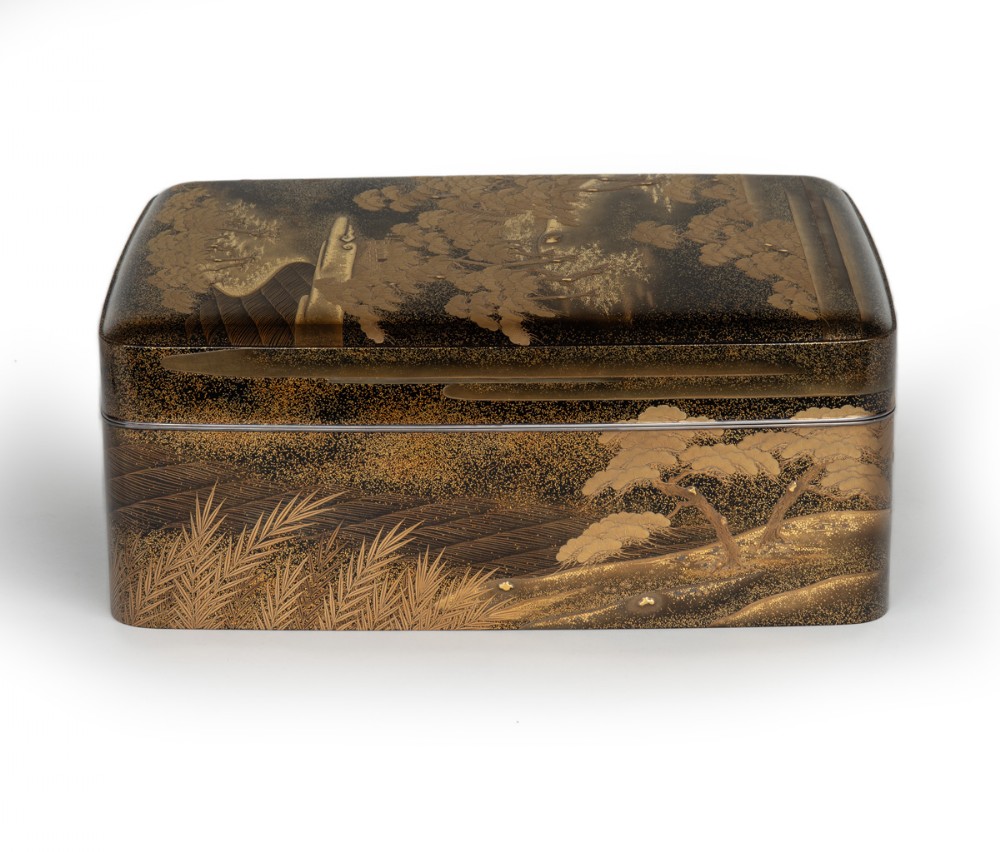
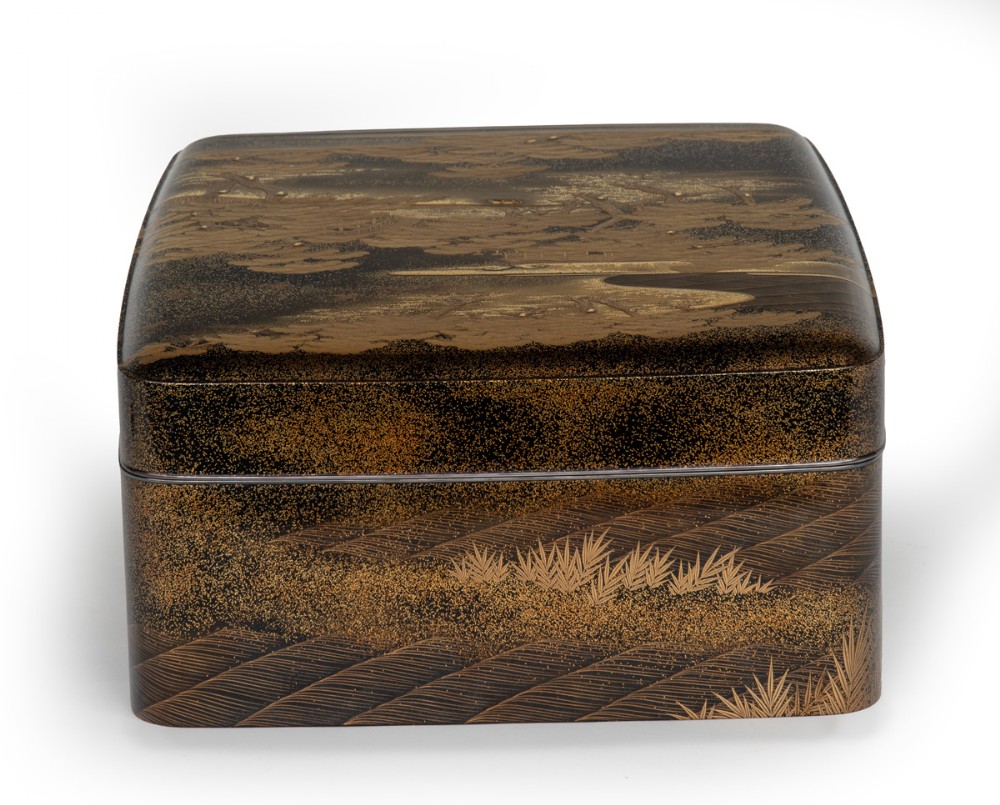
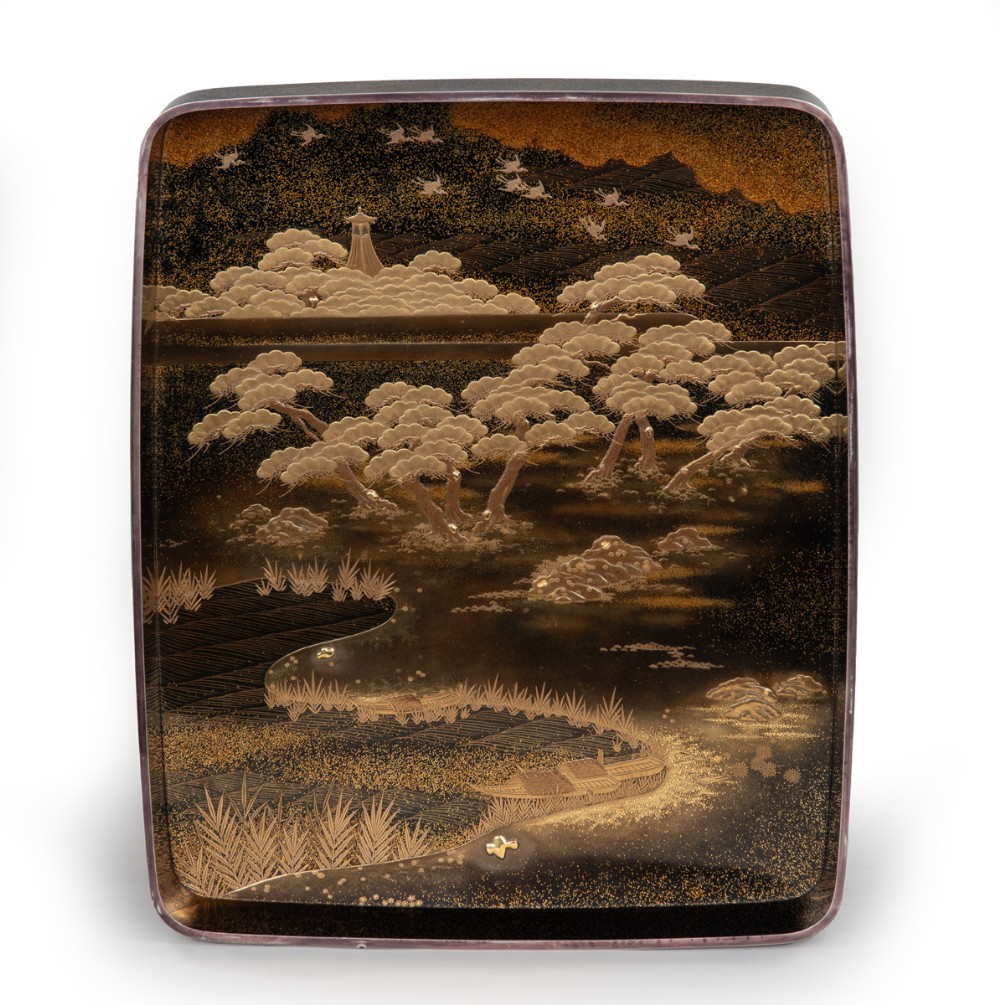
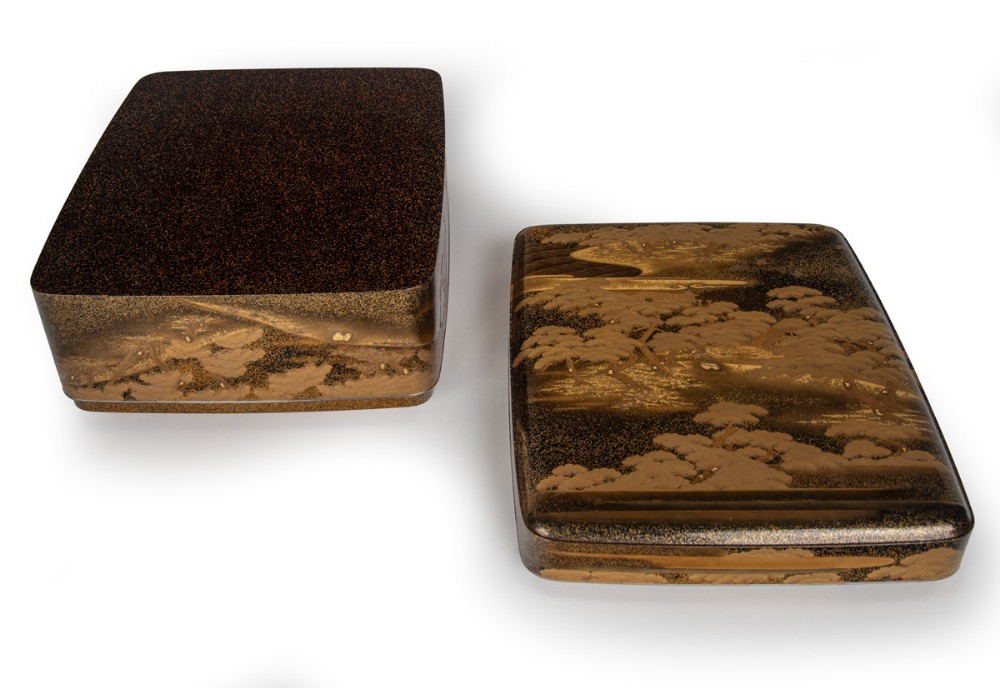
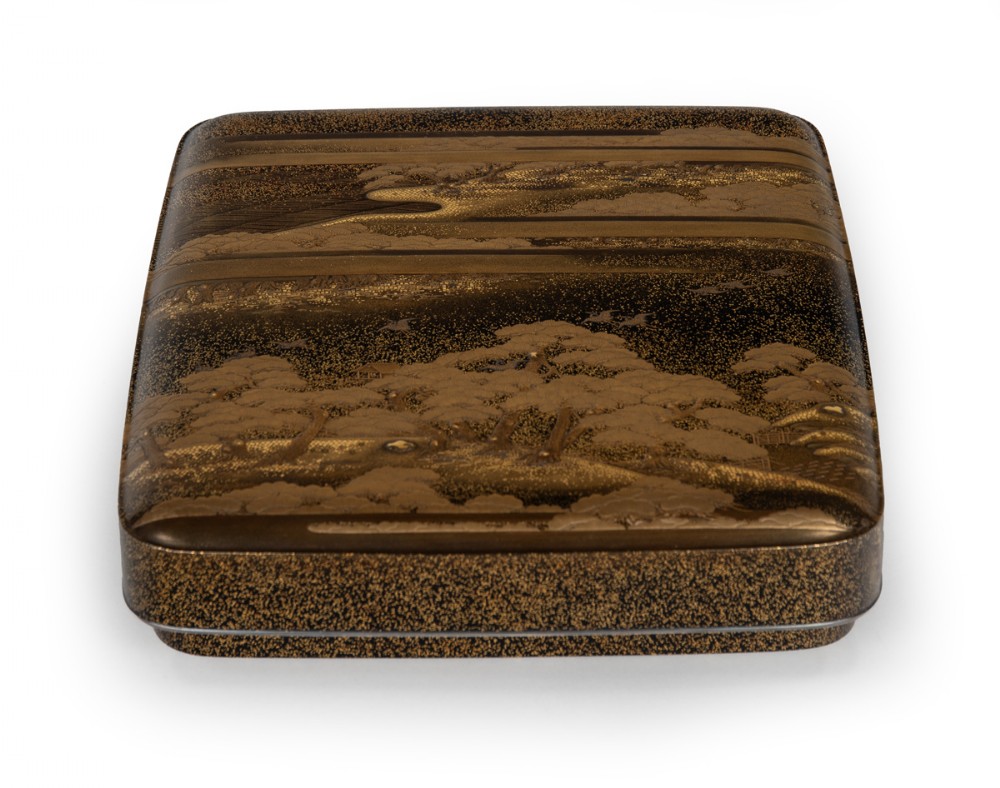
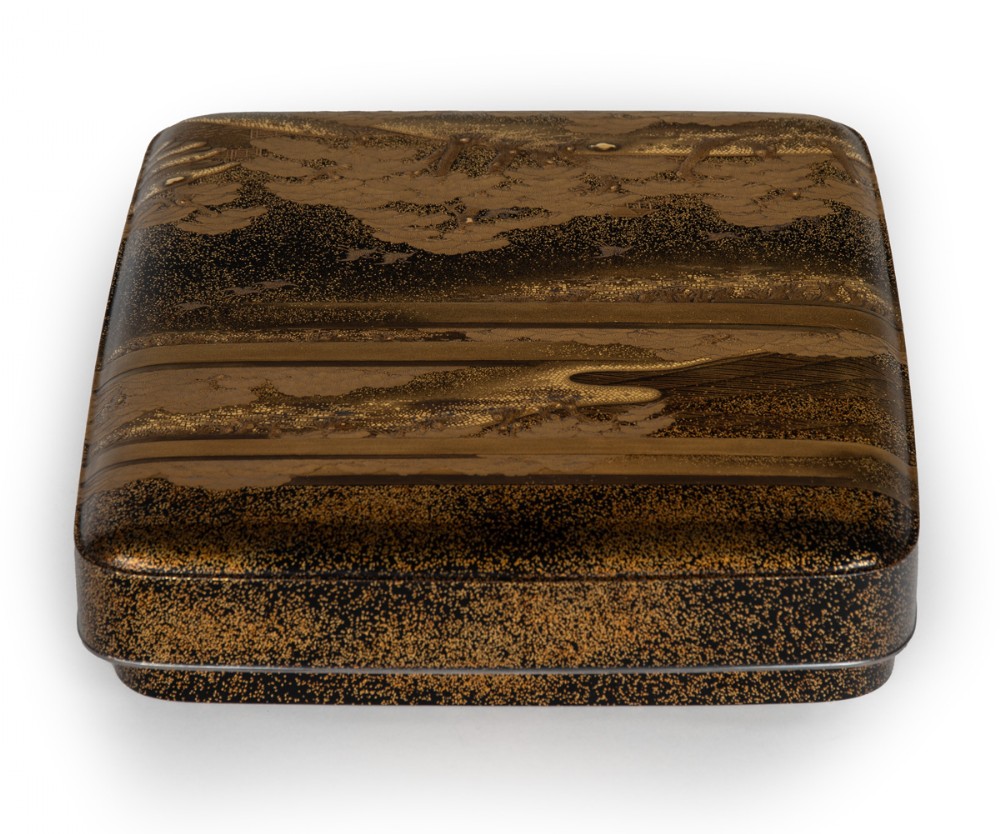
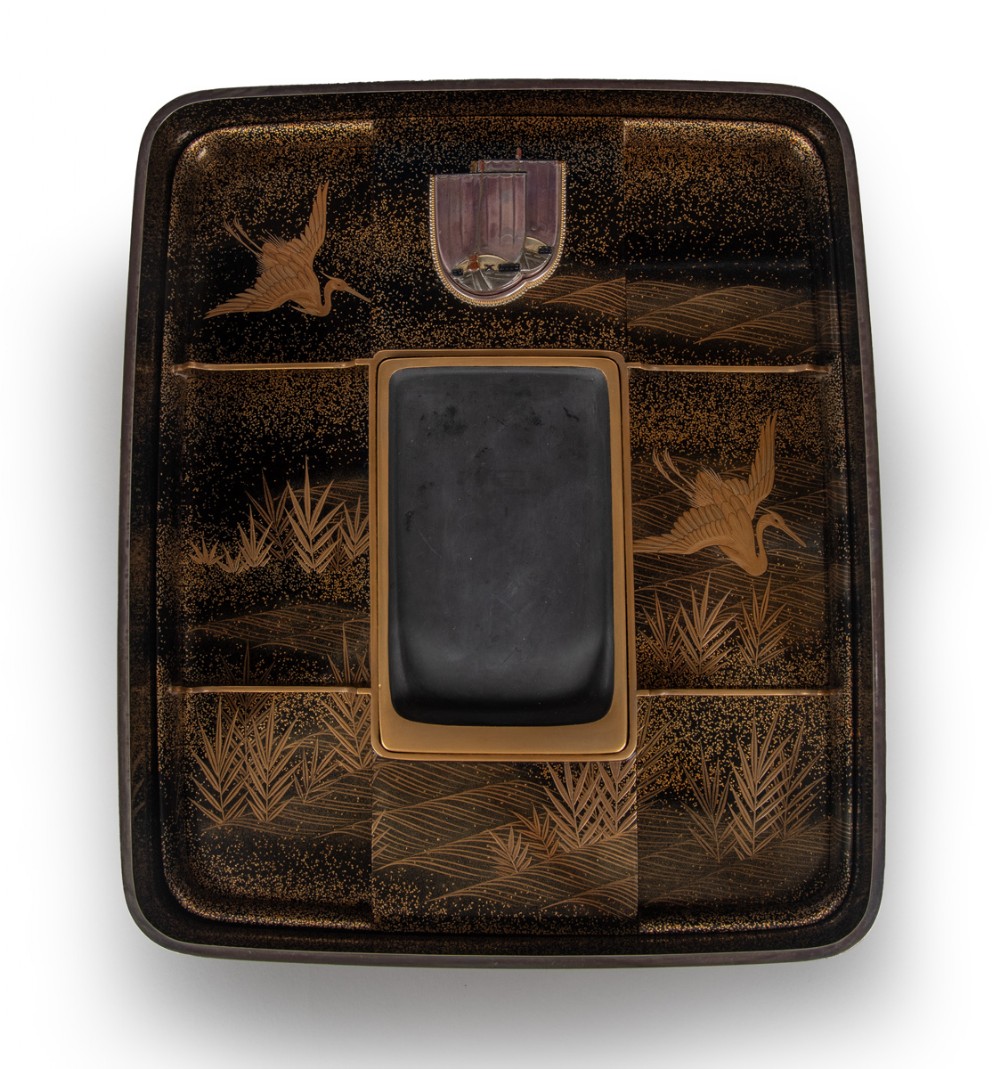
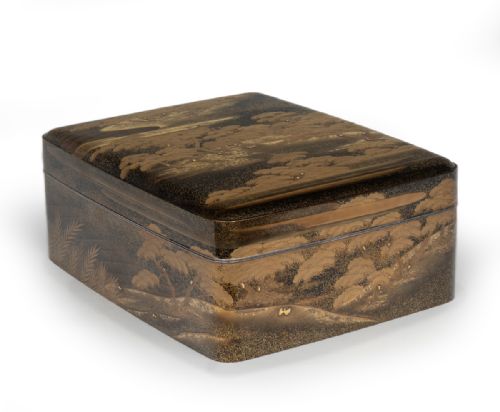
Sumiyoshi Makie (???????) A type of makie decorative design. It depicts the torii gate, drum bridge, pond, and shrine buildings of Osaka’s Sumiyoshi Shrine, with pine trees arranged around them. From the Momoyama period onward, this motif—derived from classical court literature such as The Tale of Genji and The Tale of Sumiyoshi—was widely used as a traditional design in makie. Thin sheets of gold and kirigane (cut gold foil) were lavishly employed, and the design was commonly applied to writing desks, tebako (cosmetic or accessory boxes), suzuribako (writing boxes for inkstones), and natsume (tea caddies).

“Sumiyoshi.” For Noh theatre and dance audience, “Sumiyoshi” means the Noh play Takasago. Tomonari, the chief priest of Aso Shrine in Kyushu, stops by the shore of Takasago on his way up to the capital. There he encounters an elderly couple sweeping and purifying beneath a pine tree. As they converse, the couple reveals that they are the pines of Aioi and Sumiyoshi, and they recount the tale of the “Aioi no Matsu.” When Tomonari asks, “If you are Aioi, why then are you divided between Takasago and Sumiyoshi?” they reply, “Let us meet at Sumiyoshi,” and then vanish like a breeze. Resolute, Tomonari sets sail for Sumiyoshi (the Sumiyoshi Grand Shrine in Osaka). At this moment is chanted the famous passage: “Takasago ya, kono ura fune ni, ura o agete…”—a chant often performed at wedding celebrations, praising the eternal bond of husband and wife. Eventually, when Tomonari arrives at Sumiyoshi, the deity of Sumiyoshi Shrine appears and bestows blessings upon him. Thus, whenever we encounter Sumiyoshi maki-e (lacquerware decorated with Sumiyoshi motifs), we are reminded of the Noh play Takasago.

Provenance :
Eminent Australian collection , previously supplied in 1987 by Lesley Keyhoe Galleries , Melbourne. Comes complete with descriptive valuation .
Condition report :
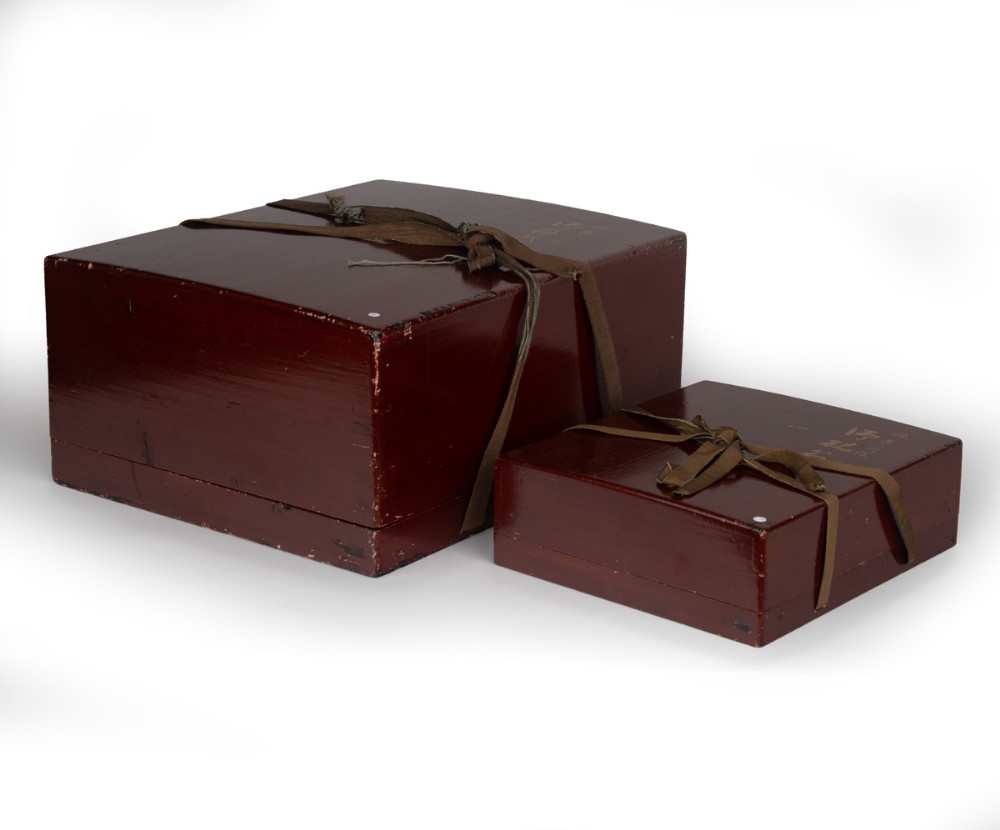
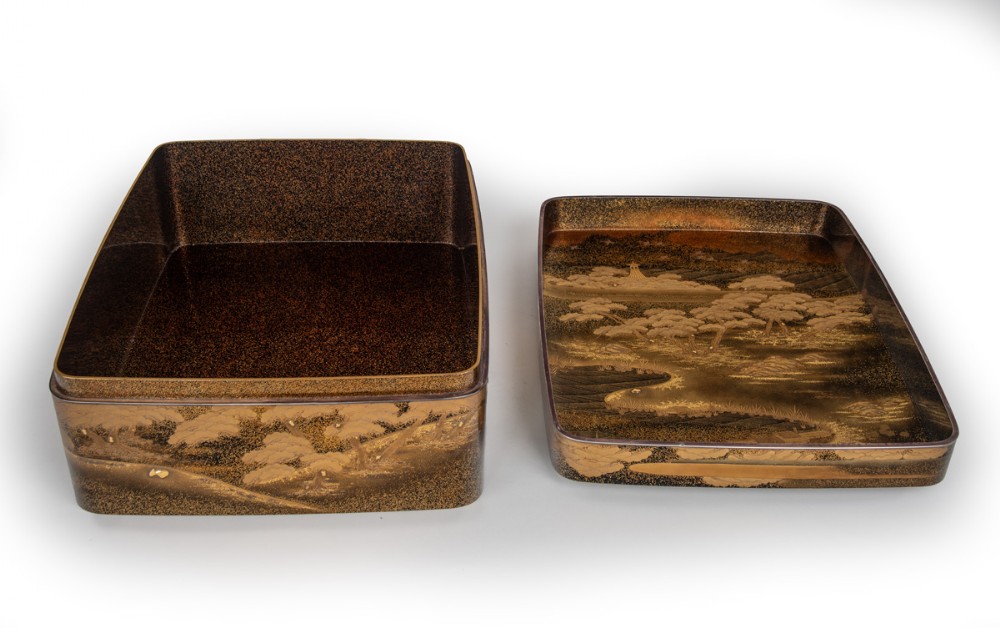
Exceptional condition throughout. (nb: Lacquer appear slightly darker in these images )

Approximate Sizes :
Bunko :
Length: 17 1/4" 44.5 cm
Width : 14 " 35.5 cm
Height : 6 3/4" 17 cm
Suzuribako :
Length : 10 1/2" 27 cm
Width : 9 " 23 cm
Height : 2 1/4" 5.5cm
Free fully insured worldwide delivery and a certificate of authenticity are included within the price of this item.
Steve Sly Japanese Works of Art has dated this piece to the 19th Century.
Specialists in japanese works of art from the meiji period 1868-1912
You can view the stock and full dealer information on the Steve Sly Japanese Works of Art Profile Page
Steve Sly Japanese Works of Art is a registered member of BADA
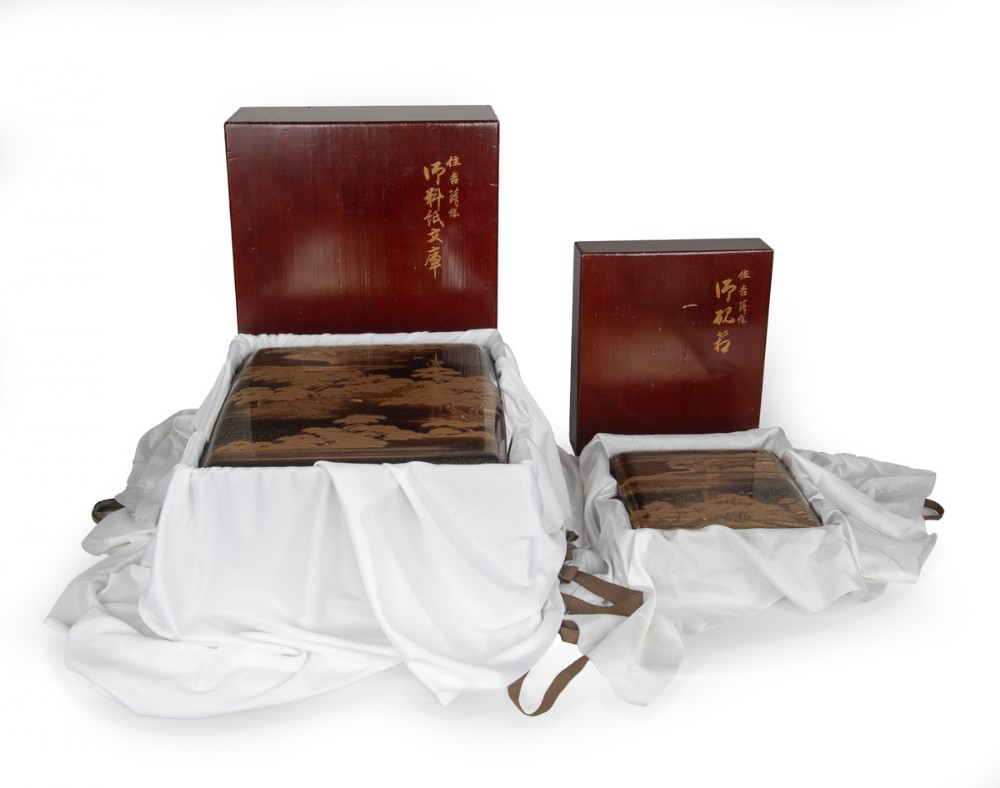
Exceptional Japanese Gold Lacquer Suzuribako and Bunko Set