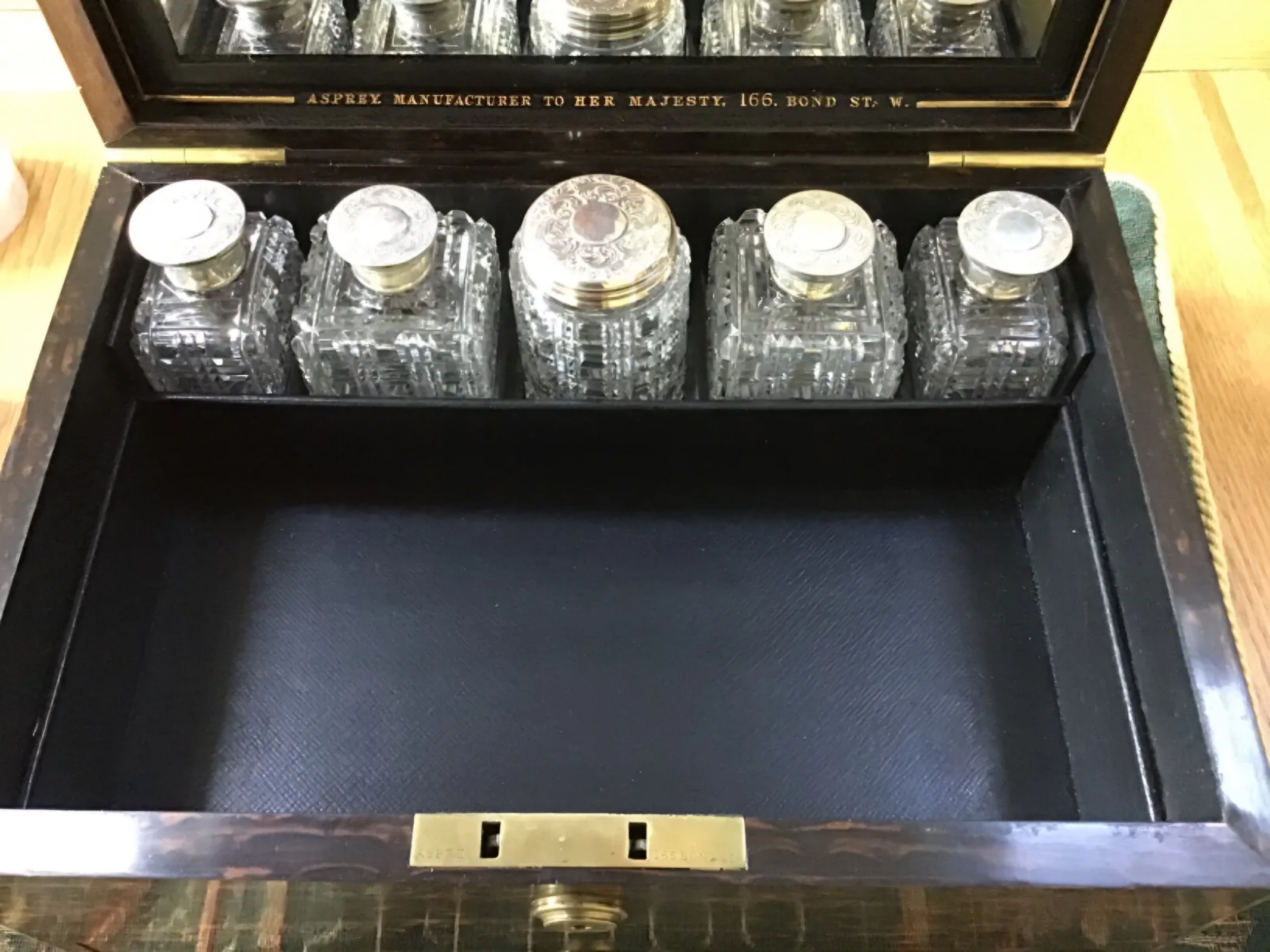
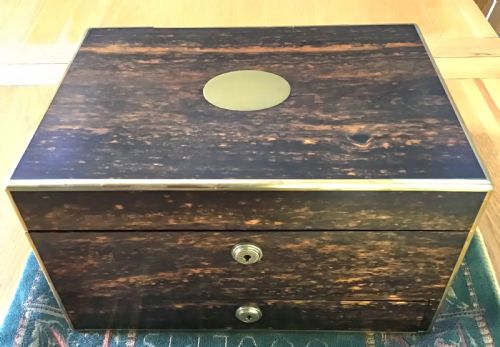
Dragoncharger Antiques has dated this Victorian Coromandel Vanity Case to the 1860s.
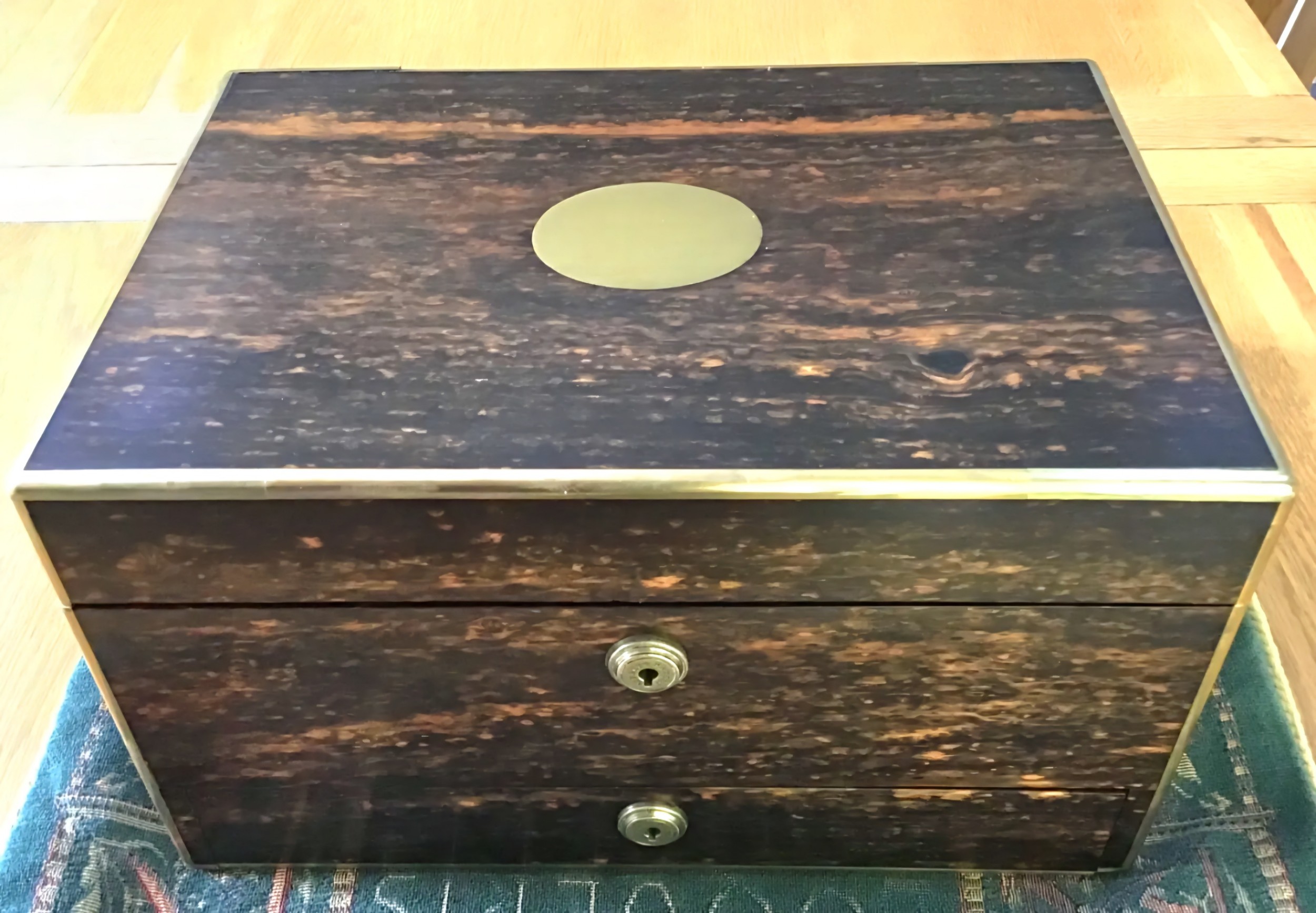
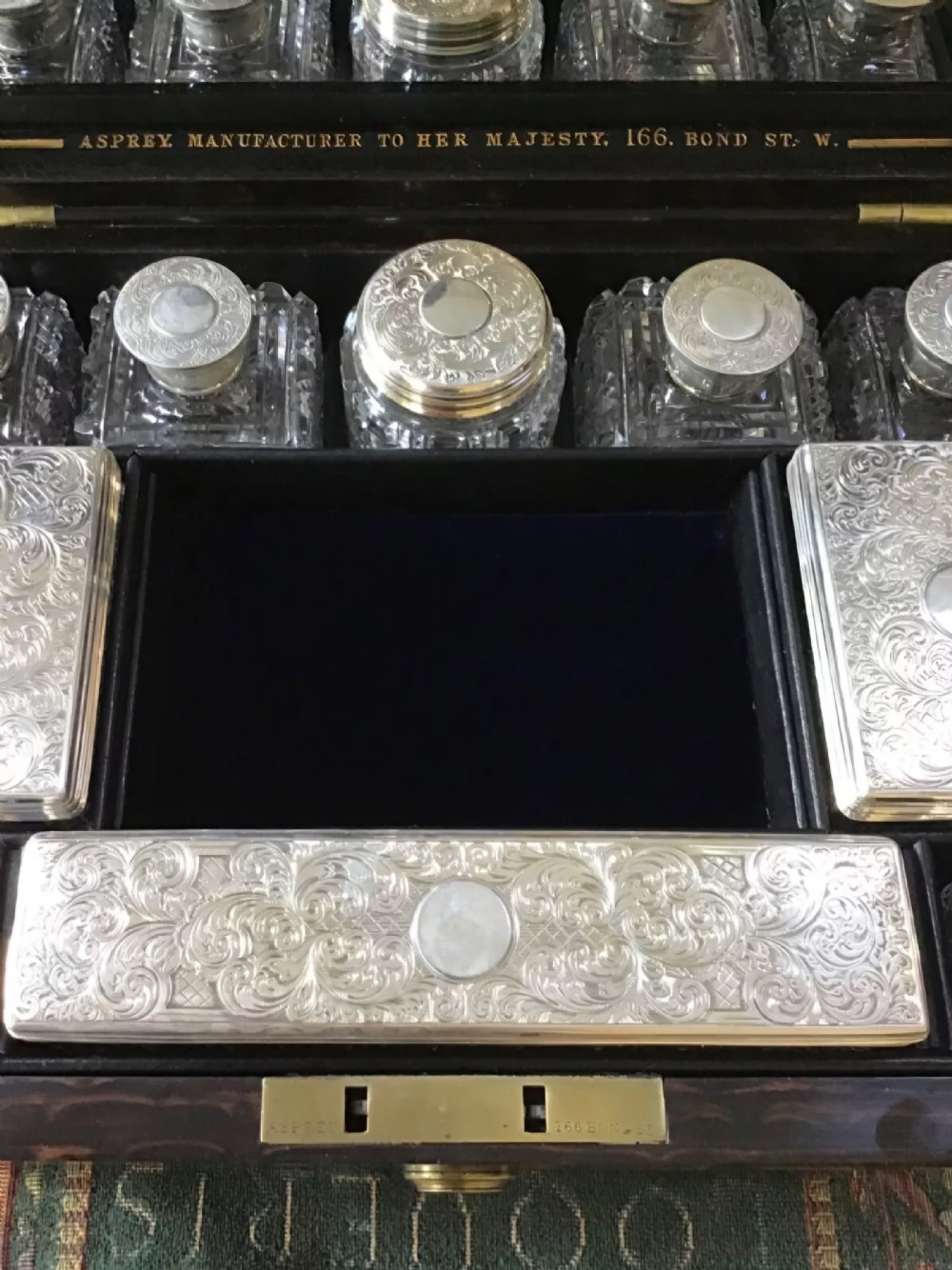
The top lock face slides to the right to open and the bottom one slides down to reveal the jewellery drawer with it's leather writing board. These locks were based on the Bramah lock design the patent for which expired in the 1850s. Asprey decided to improve this design by coming up with this "sliding" mechanism. It has a few minor marks which are difficult to spot but this is to be expected on a box of this age (over 150yrs). Please note I don’t have the original keys.
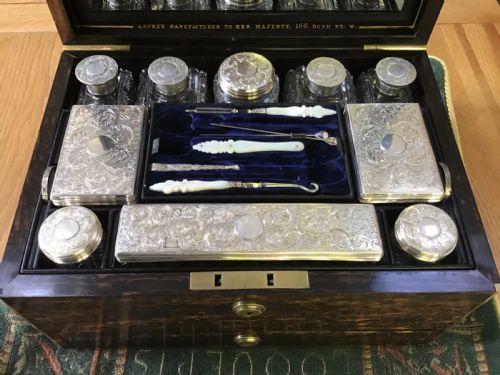
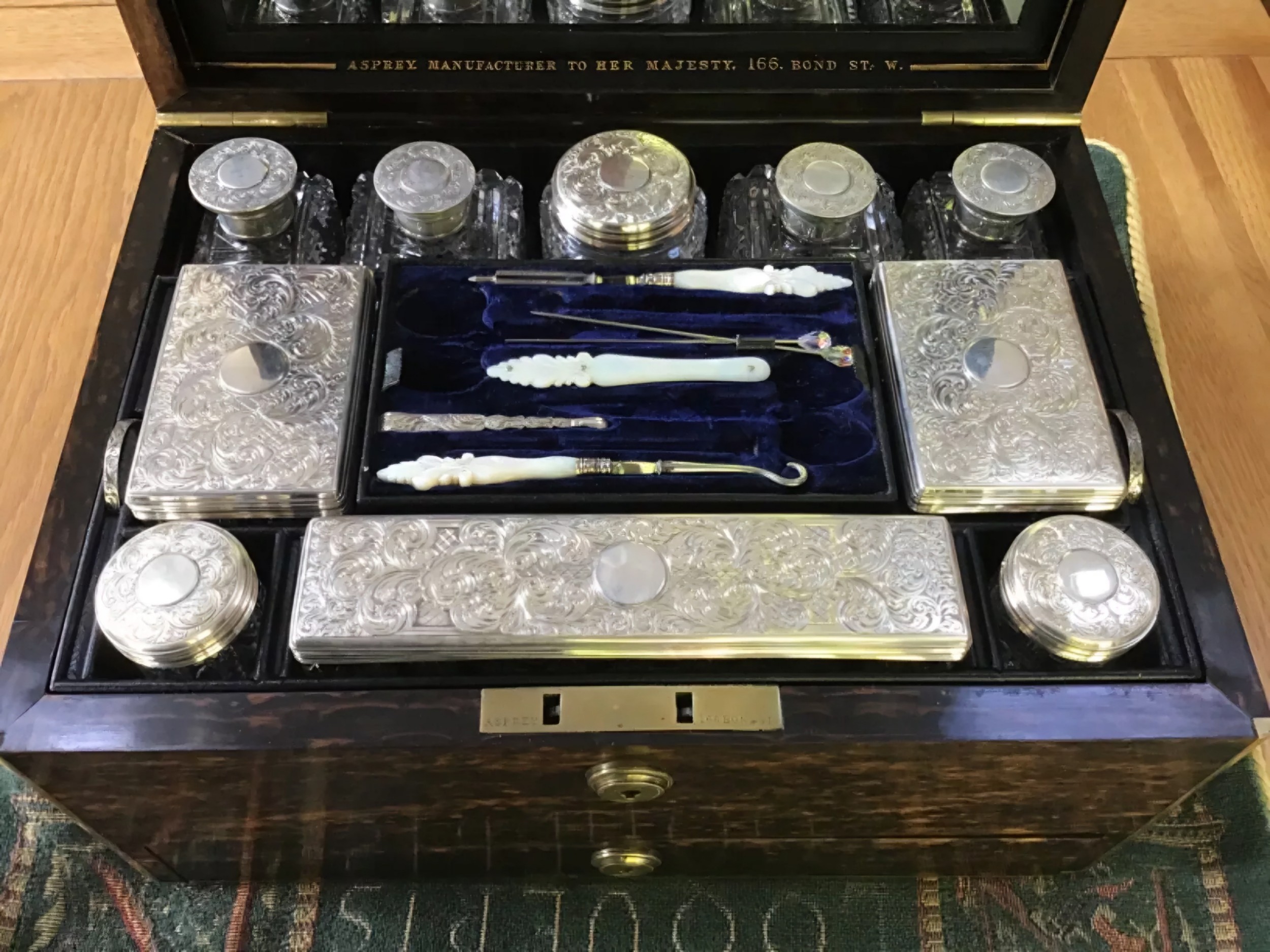
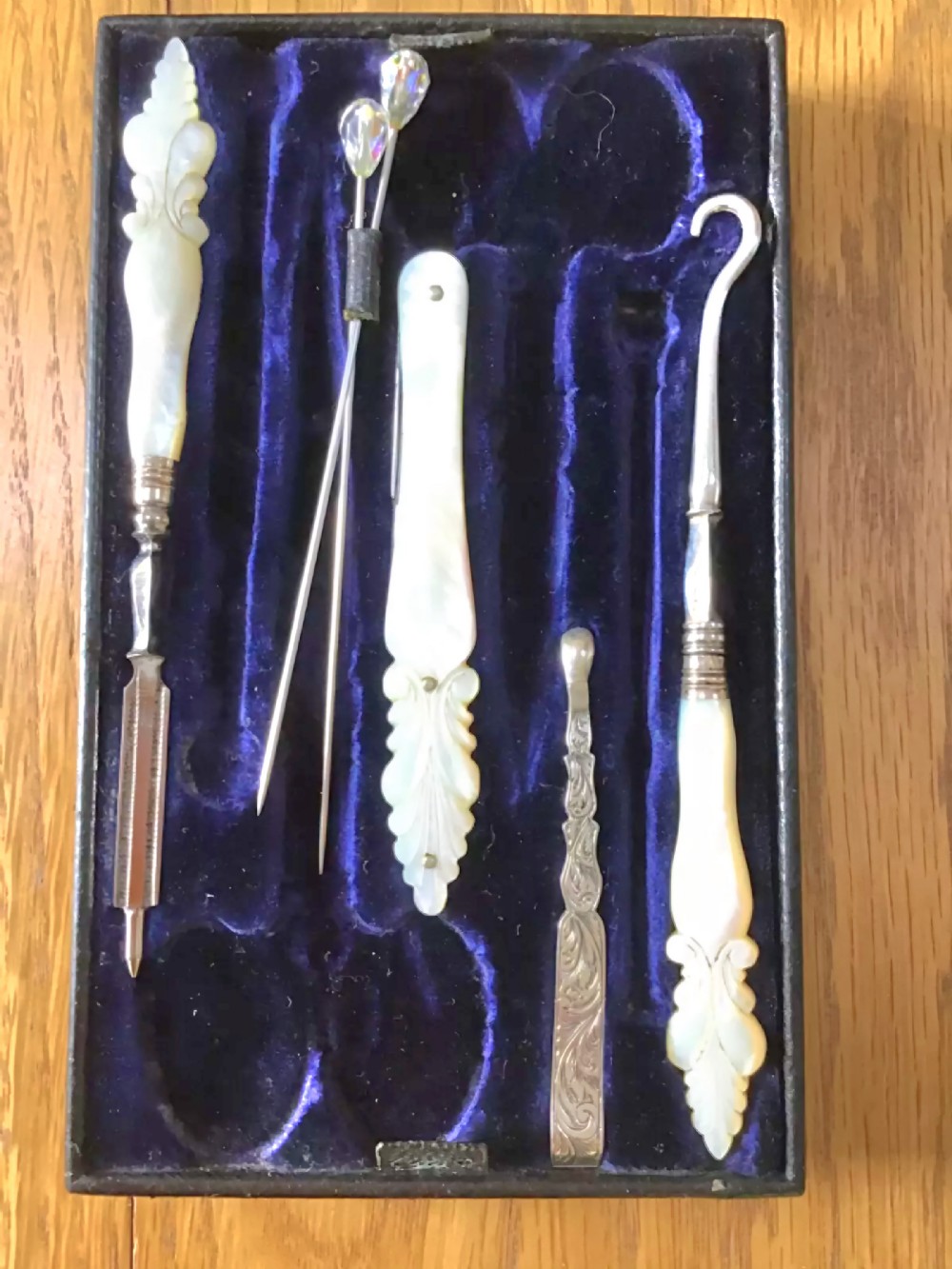
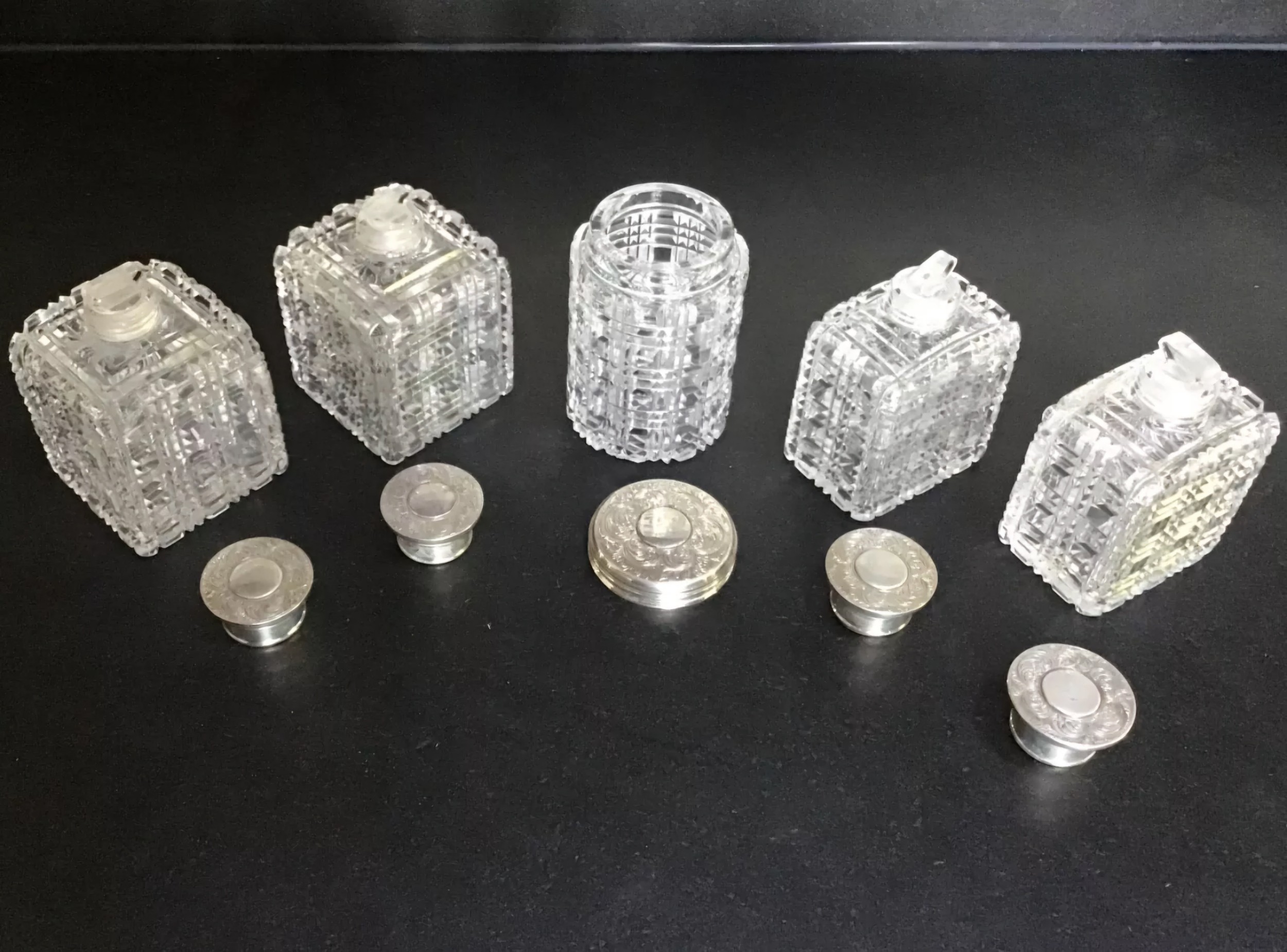
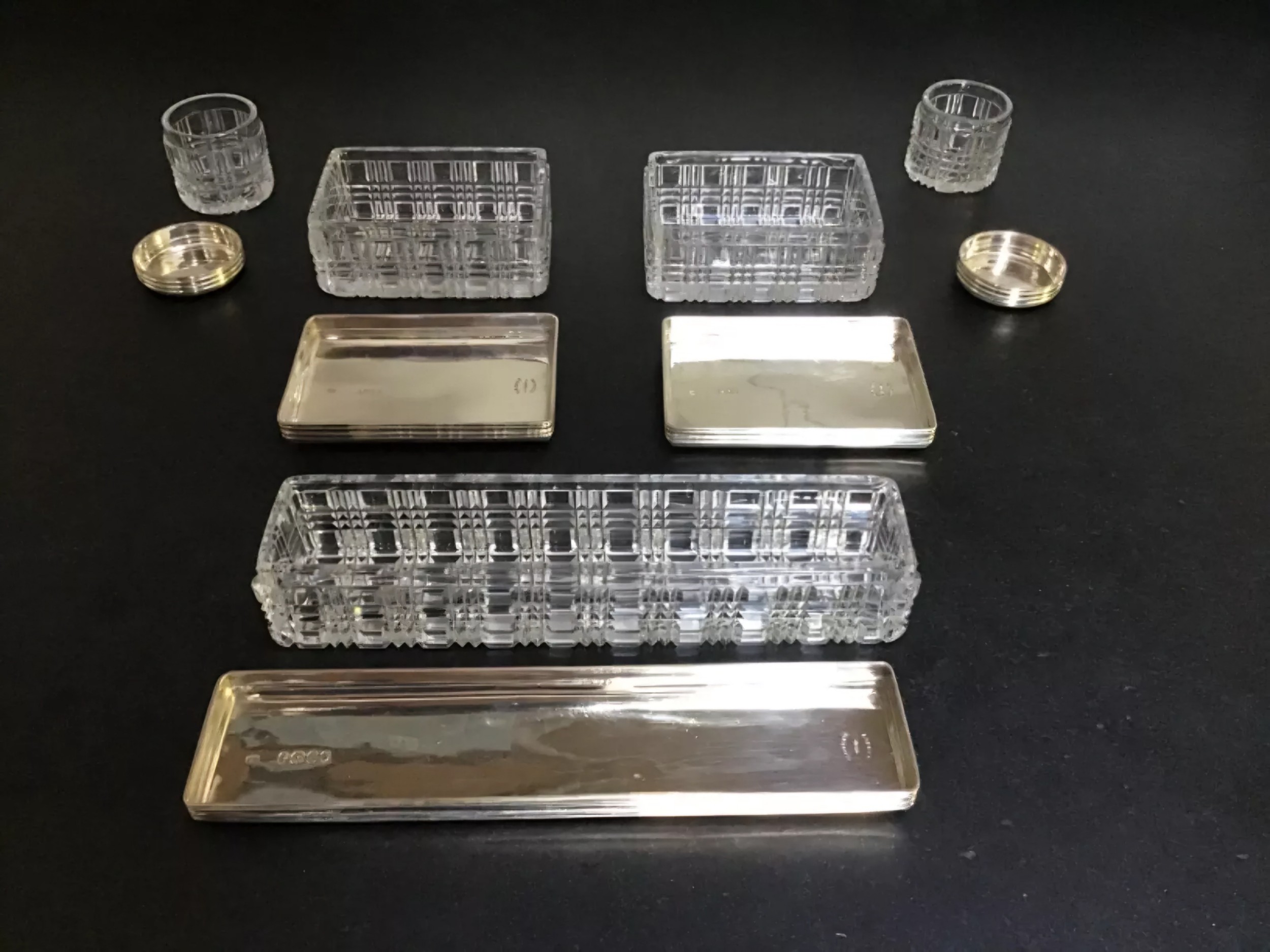
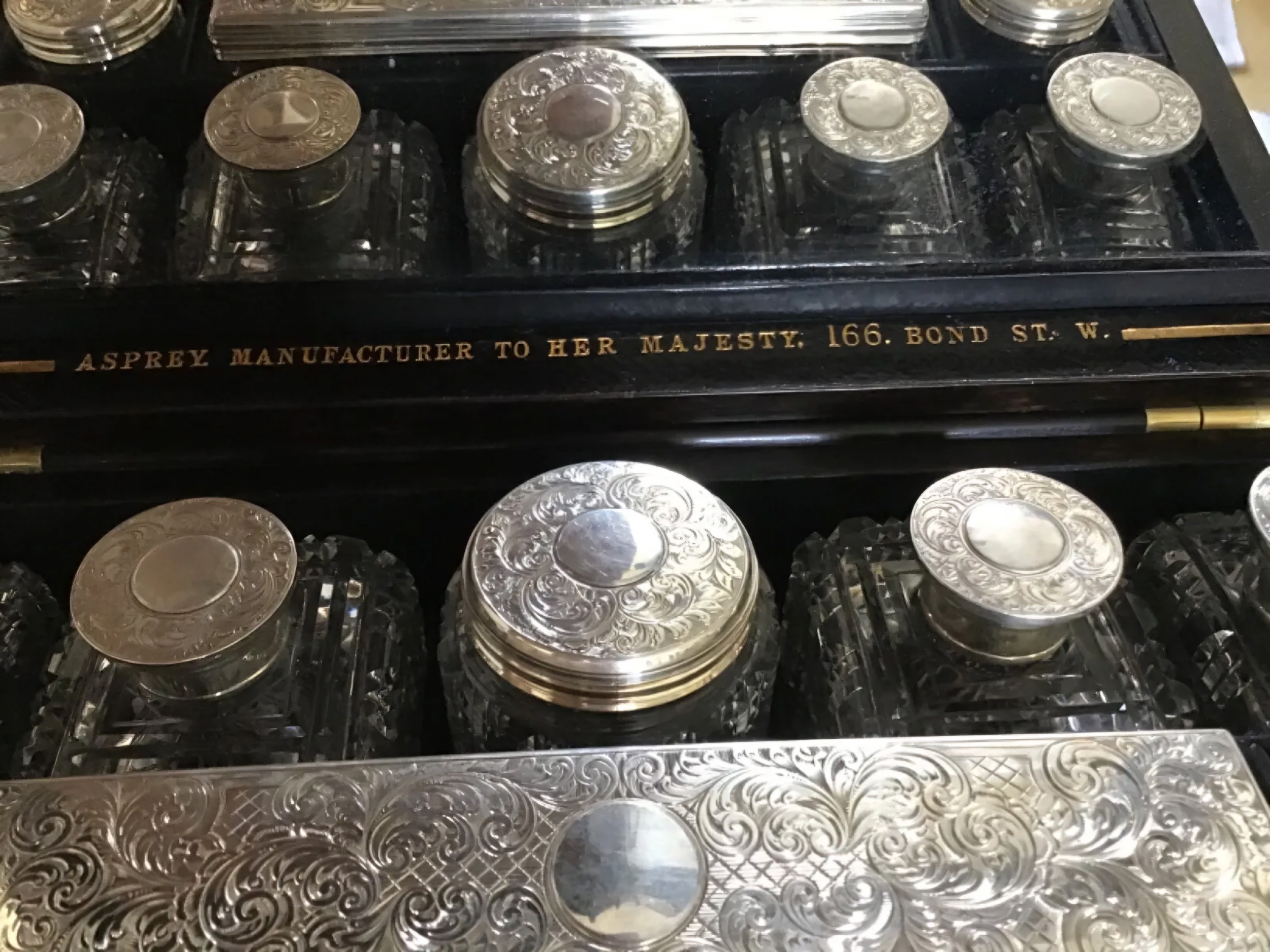
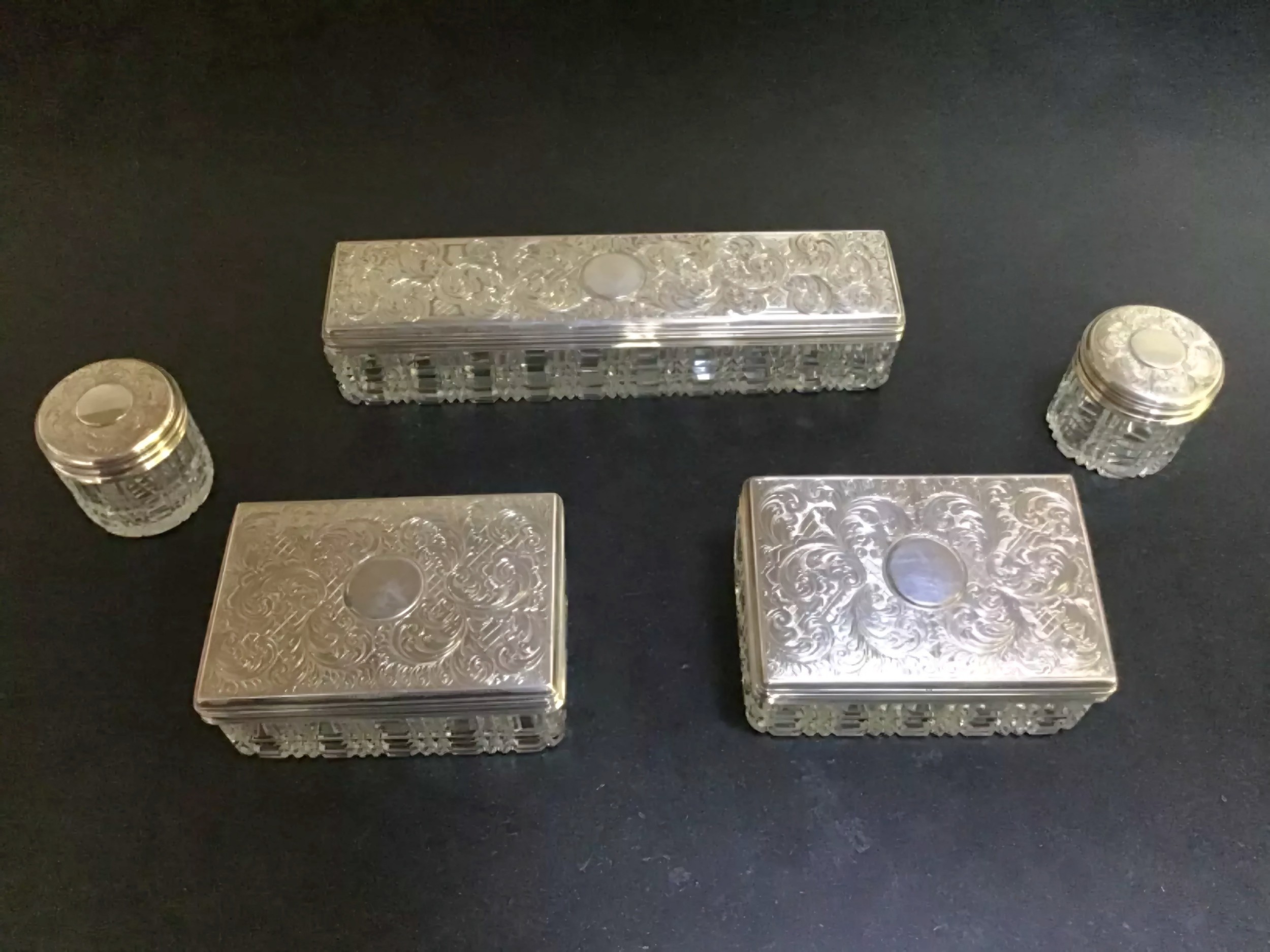
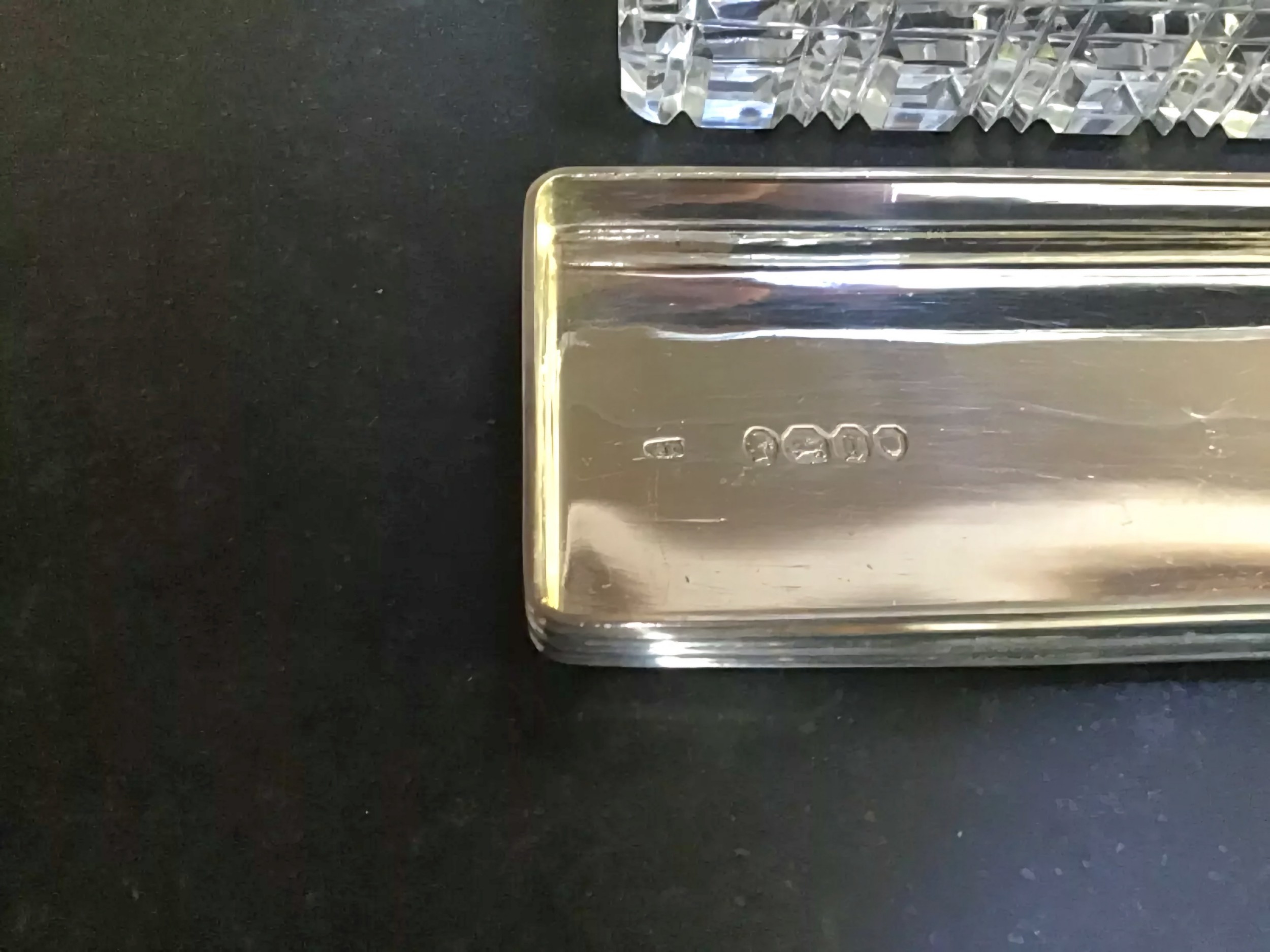
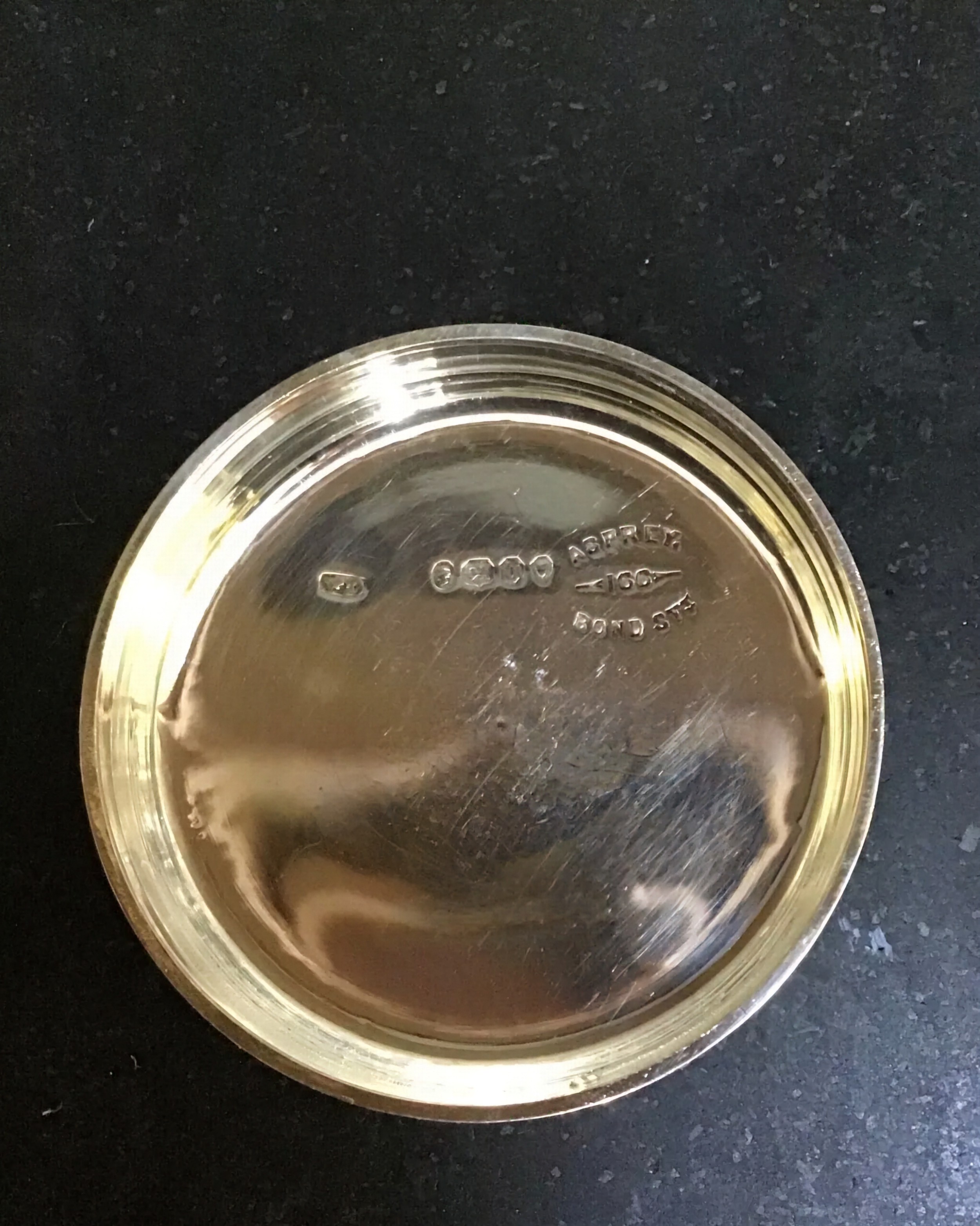
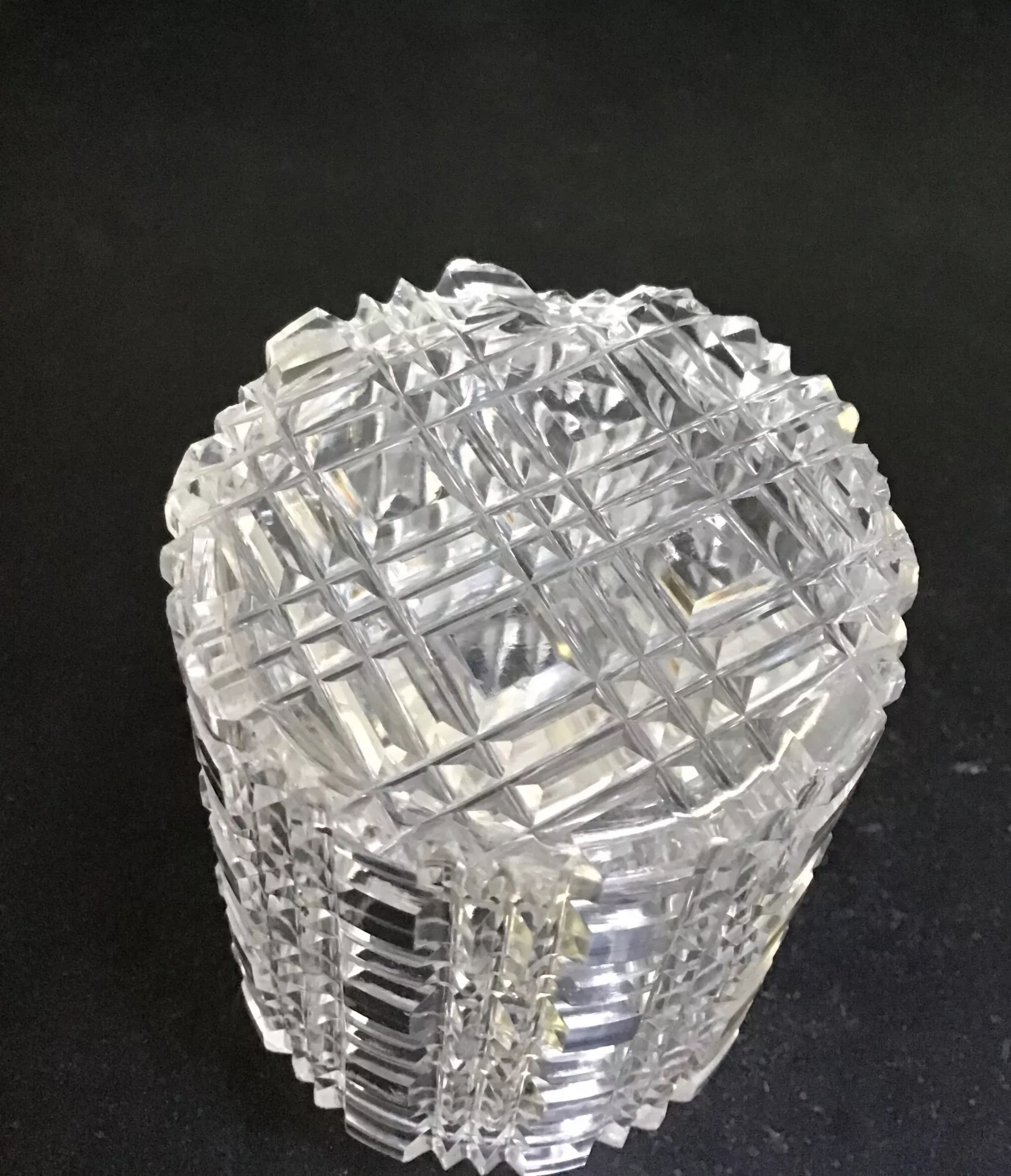
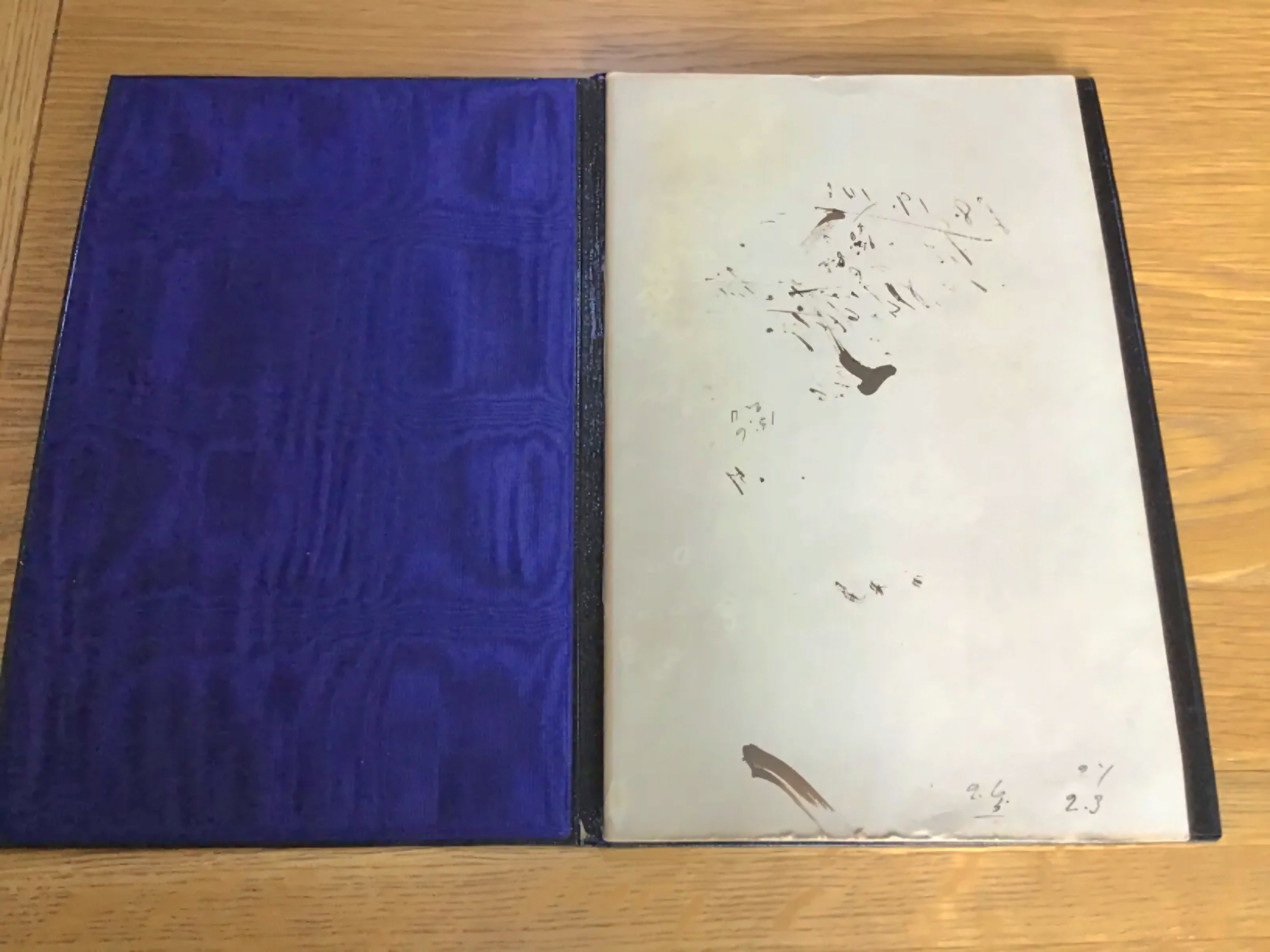
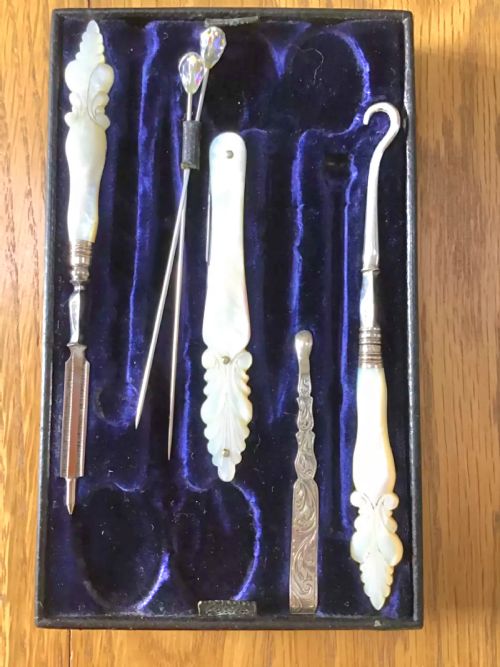
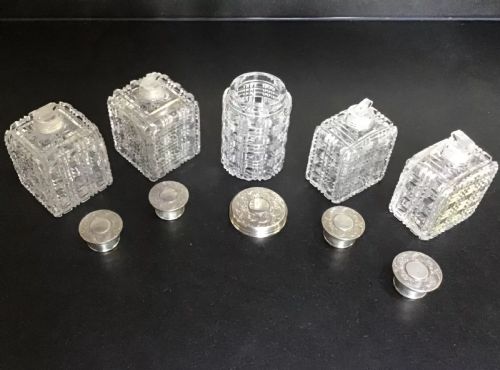
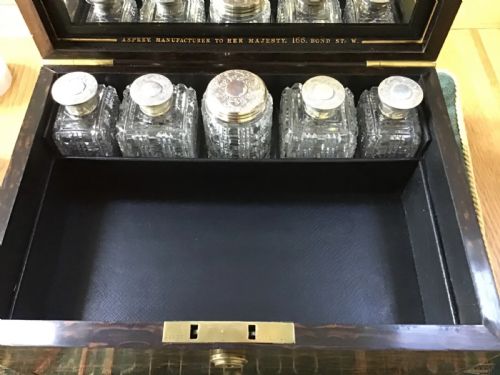
Within the lid is a leather backed mirror and a leather bound blotter. The ten heavy gauge solid silver topped jars and bottles fit snugly into the leather lined compartments. Other than the four bottle tops, all are hallmarked for London 1862 with the Asprey stamp. The glassware is beautifully hobnailed and almost as new condition. The rear central jar has a small chip to it's base and is the only defect. The bottles also include their original glass stoppers. The manicure tray is missing two pairs of scissors and another unknown tool however the original button hook, penknife and nail file along with the silver tweezers and ear spoon are all present. All the silver tops have a matching scrolling foliate design and have no initials on the blank cartouches.
Notably:
The case includes an extremely rare original blotter (hidden behind mirror) with authentic use. These are usually lost over time.
Hallmarked 1862, this is the same year as Great London Exposition and Asprey was awarded Queen Victoria Royal Warrant for their dressing cases (hence once of the earliest cases marked as such). The silver is in beautiful condition and has an additional hallmark of FD for Frances Douglas who was well respected for his detailing of vanity set jar tops.
The beautiful hobnail crystal cut bottles retain their original glass stoppers. The glass of all the bottles and jars are extremely clear with no staining, suggesting very little use.
History of dressing cases and vanity boxes:
Towards the end of the 18th century, dressing cases were manufactured specifically to accompany upper class gentleman during travel. Dressing cases were originally rather utilitarian but they spoke volumes about their owners’ wealth and place in society, as at that time, travelling was only undertaken by the elite. Gentleman’s dressing cases would contain bottles and jars for colognes, aftershaves and creams as well as essential shaving and manicure tools. As these boxes became more popular, many further travelling item options were offered for inclusion. By the early Victorian era, ladies also began to travel and suddenly their requirements were anything but utilitarian! Ladies dressing cases could feature a wide range of decorative bottles and jars as well as a vast array of beautification tools, all designed with pure luxury in mind. The exterior of the box became almost as important as the interior and these boxes started being veneered with beautiful exotic woods from all over the world. As demand for gentleman’s boxes lessened, the dressing case started to also become known by the more feminine term ‘vanity box’. These boxes, with their excessive price tags, were now considered as true works of art and beauty in their own right, and were often bought as status symbols rather than actual travelling companions.
Asprey Manufacture: The Asprey company was originally founded as a silk printing business by William Asprey in 1781. Based from a shop in Mitcham, Surrey, William and his son Charles soon started to retail luxury goods. In 1841, Charles formed a business partnership with his son-in-law, Francis Kennedy, a stationer based at 49 Bond Street, London. This partnership was to last until 1846, wit
Dragoncharger Antiques has dated this Victorian Coromandel Vanity Case to the 1860s.
Specialising in early japanese cloisonne, edo enamel artisan period.
You can view the stock and full dealer information on the Dragoncharger Antiques Profile Page
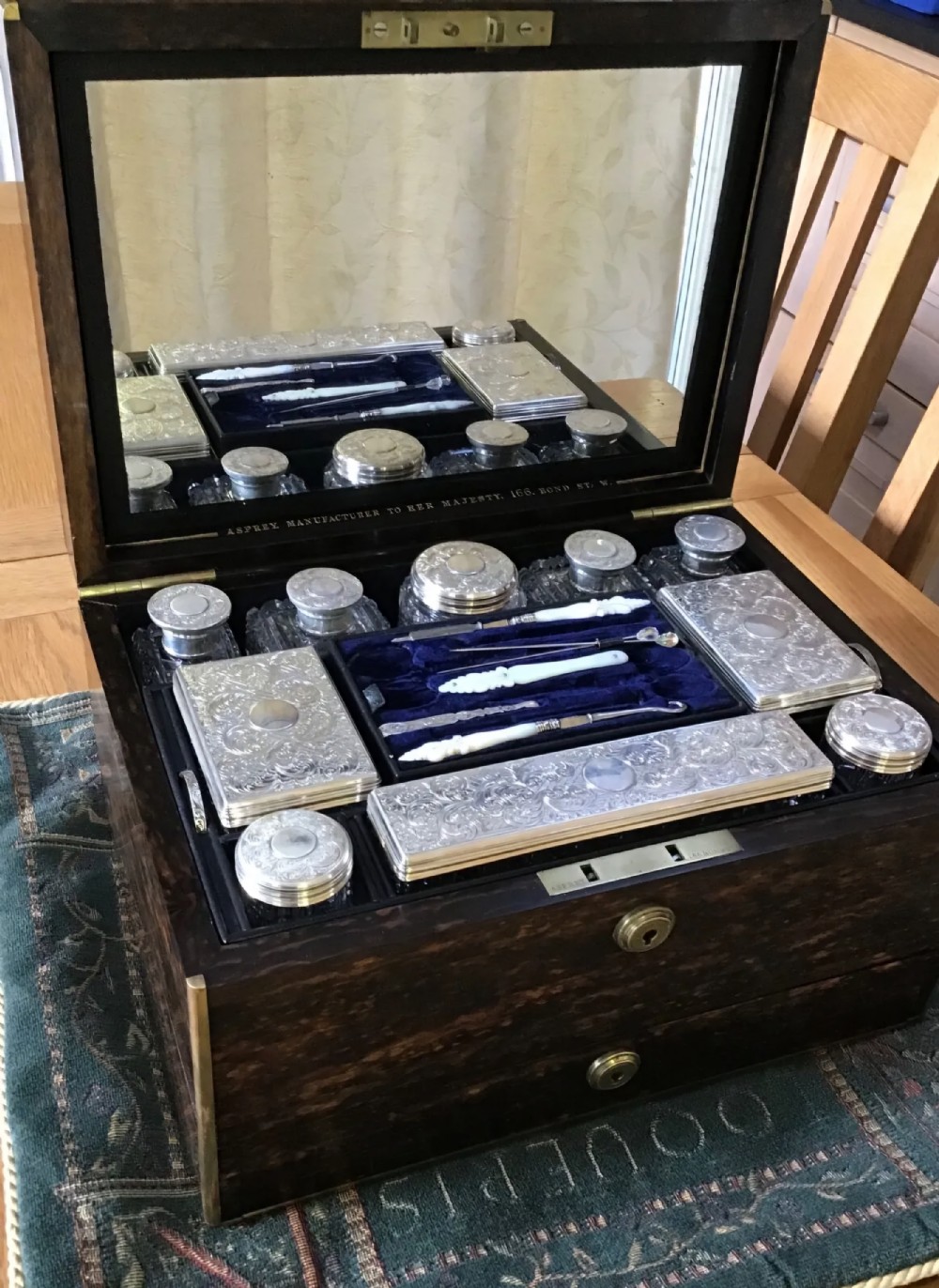
Rare Asprey Coromandal Vanity Case Wtth Crystal Cut Bottles / Trays. 1862.