32,052  PAGES BROWSED TODAY PAGES TODAY • 145 ANTIQUES UPLOADED TODAYNEW ARRIVALS
GIFTS
145 ITEMS ADDED TODAY
Sort Order
Items Per Page
Antiques dealer?
Join as a Seller
Browse Categories
Sort order
Relevant Links
Items per page
sold SA1080331
Sorry, but this item has been sold.
Regent Antiques

Regent Antiques

Sellingantiques Verified Since Sep 2016
Browse dealers 639 items
  • About Us
    We specialise in english and continental furniture, silver, porcelain and decorative items.
  • Trade Associations
    Regent Antiques is a registered member of LAPADA  CINOA
Id #SA1080331
SHARE
SAVE

Antique Pair Adam Revival Satin Wood Painted Cabinets Commodes C1920

1900 - 1920
Sold 9 December 2024 · Regent Antiques
This “Antique Pair Adam Revival Satin Wood Painted Cabinets Commodes C1920” found a buyer.

It was listed by Regent Antiques. Sold pieces stay on Sellingantiques as a record of what has passed through, and the next one is rarely far away.

Description

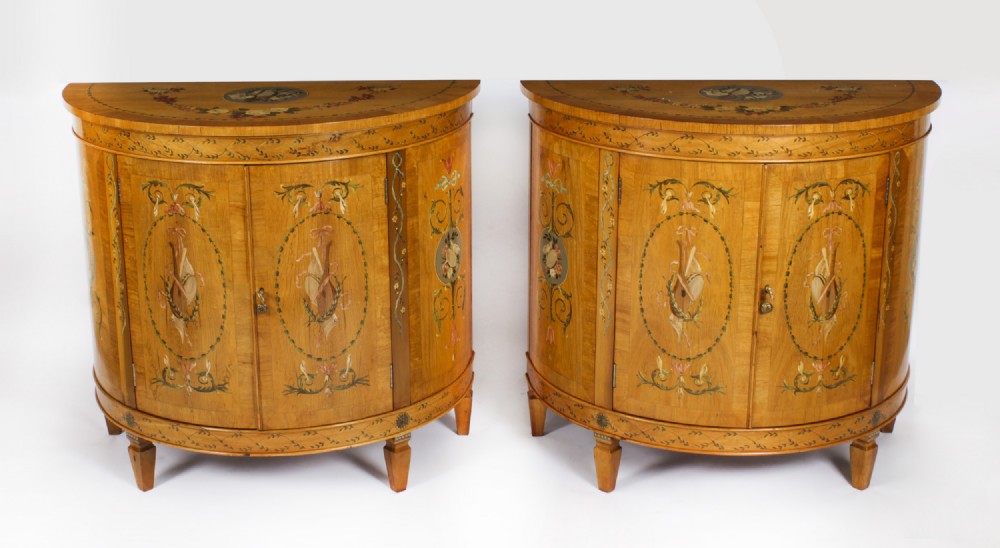
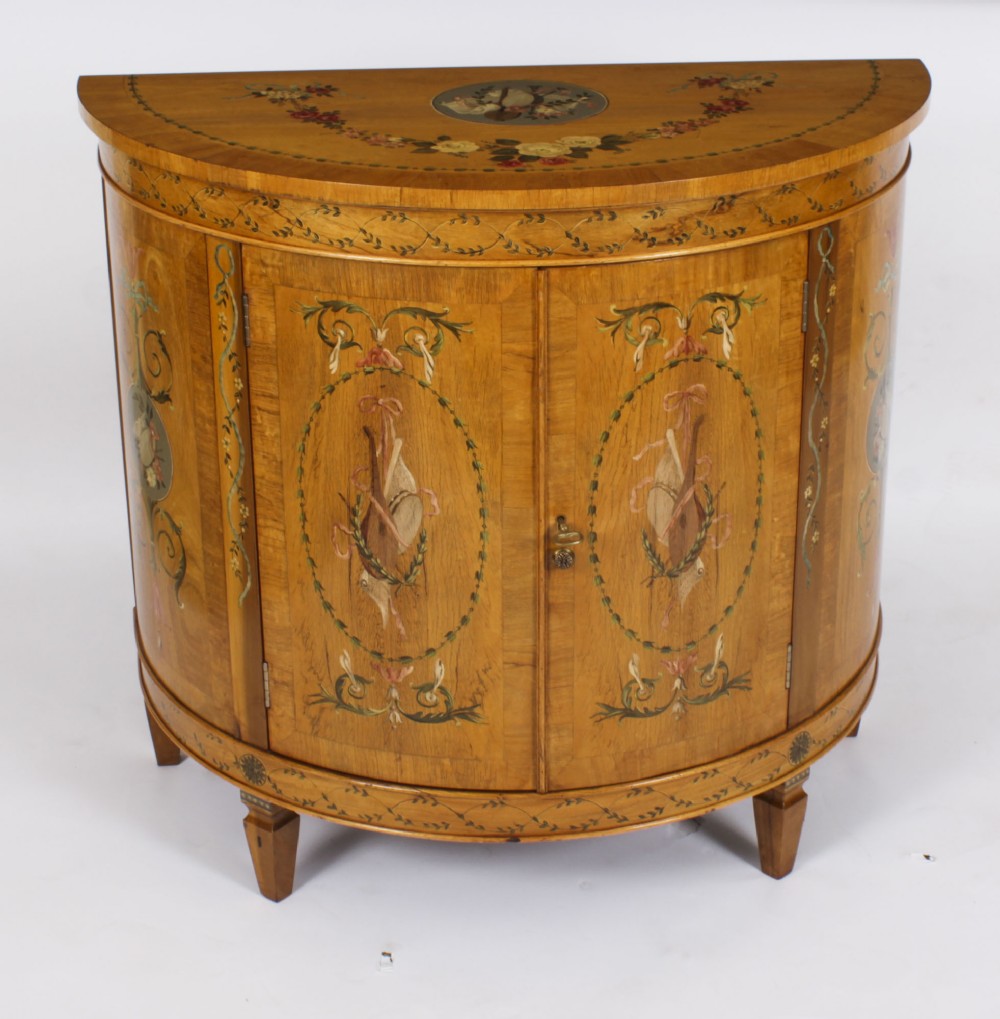
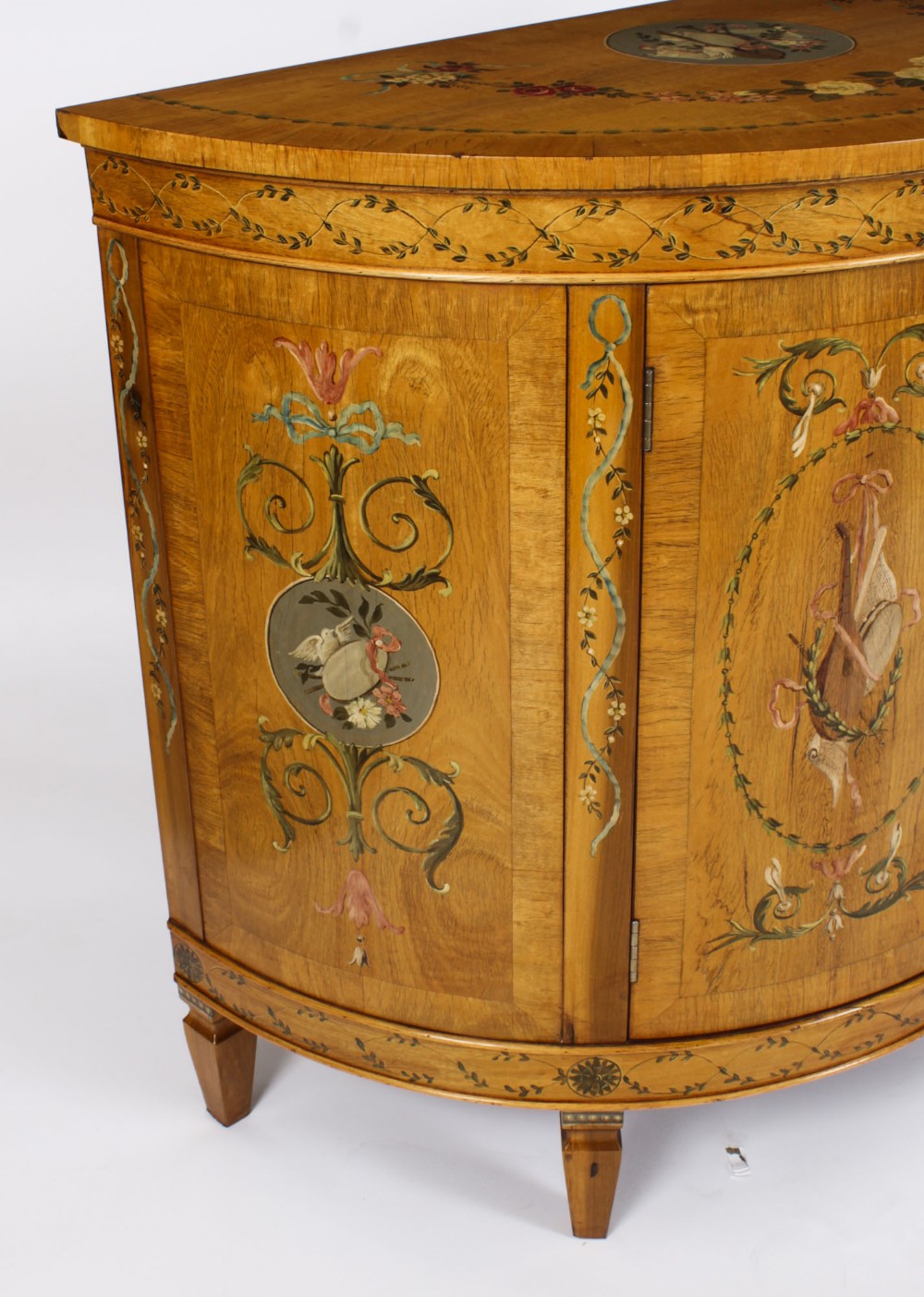
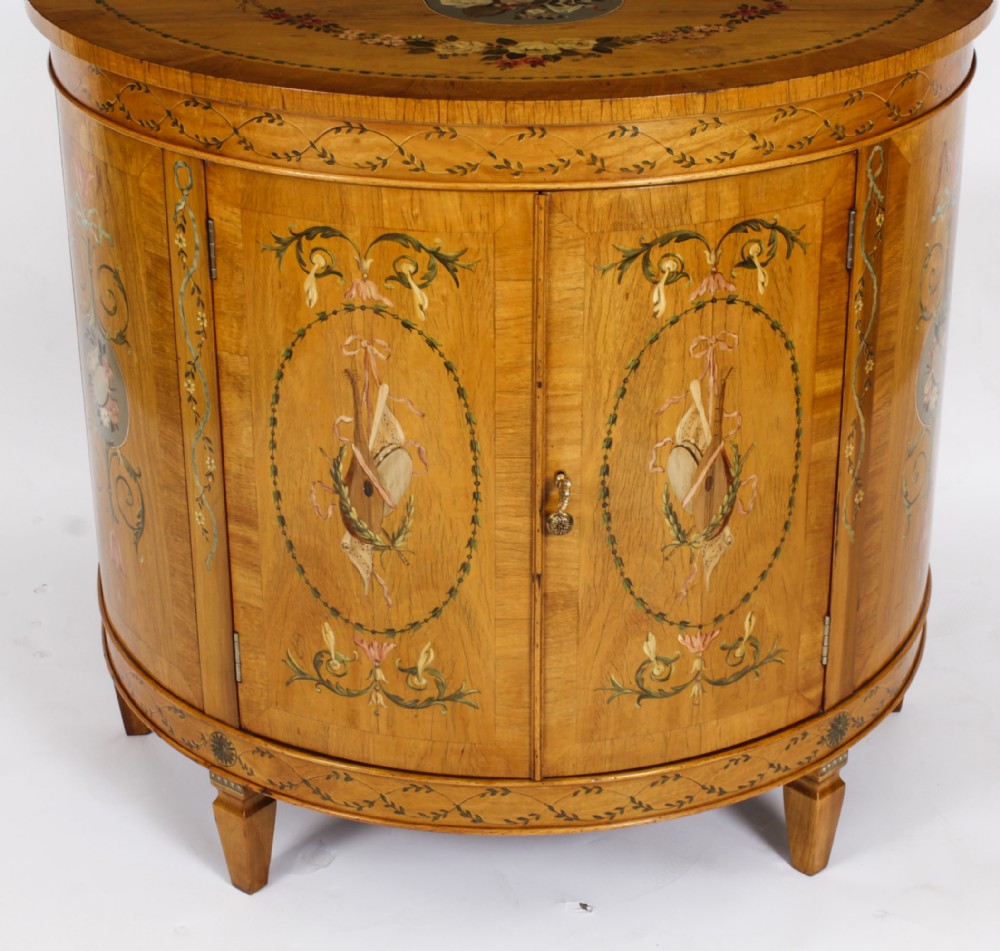
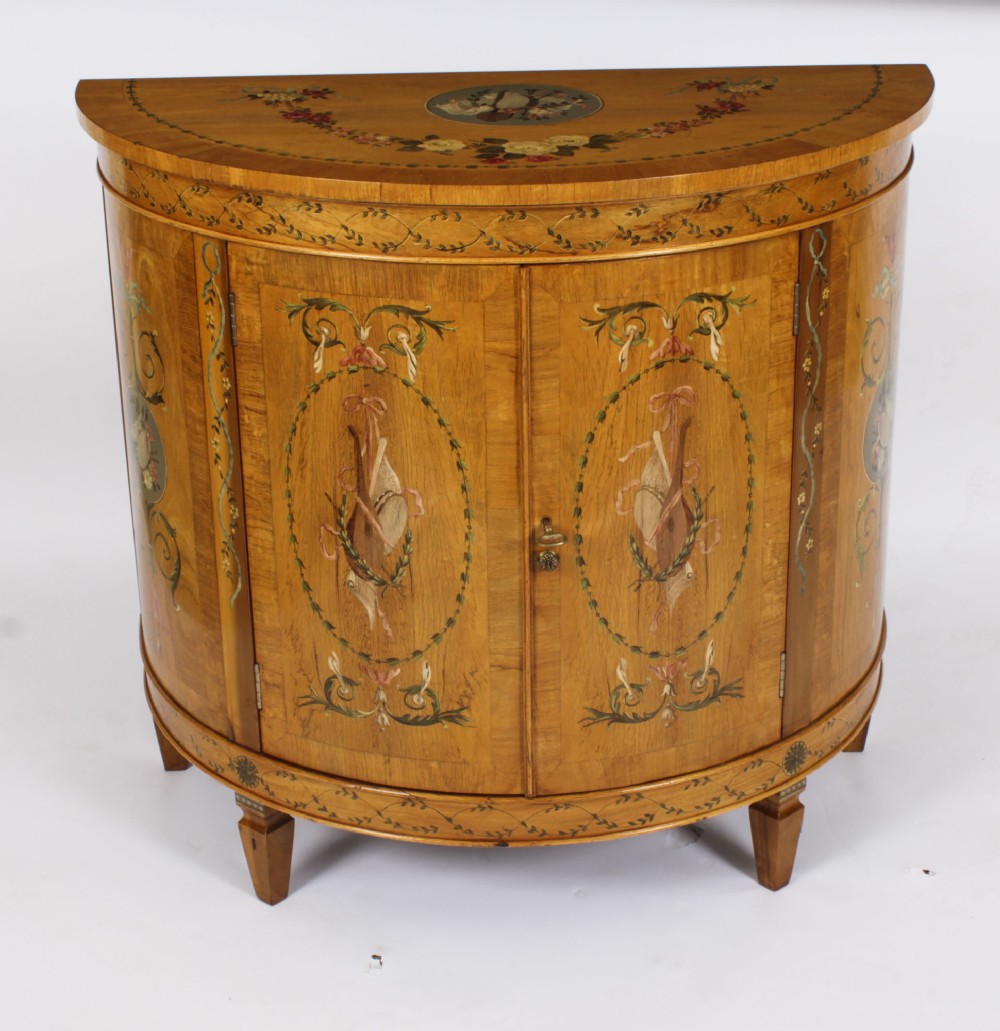
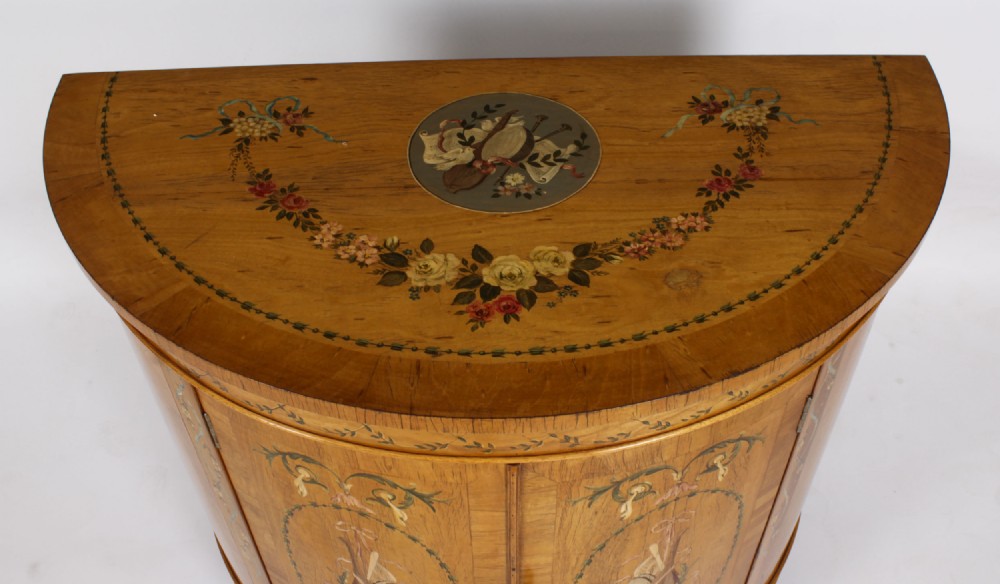
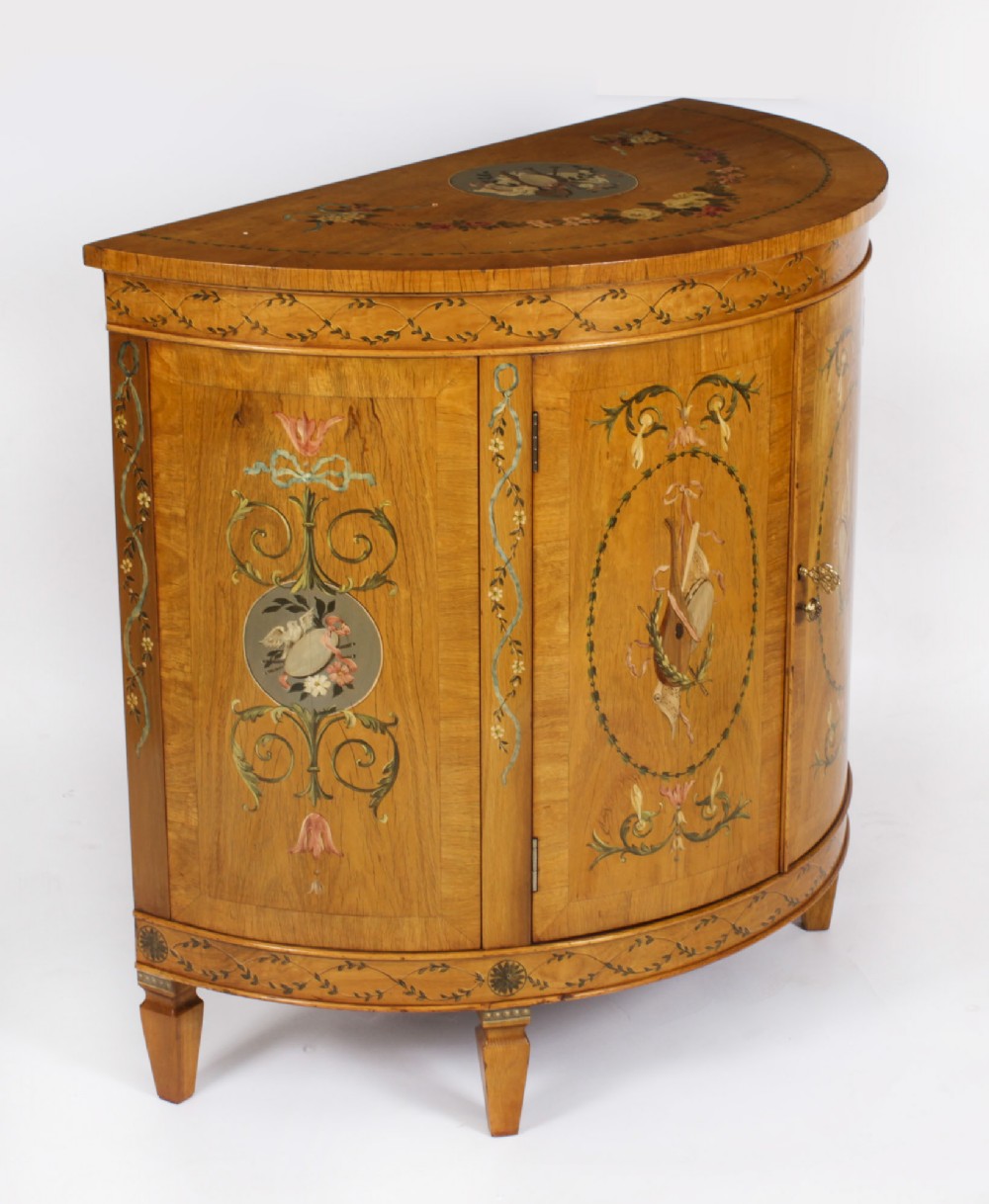
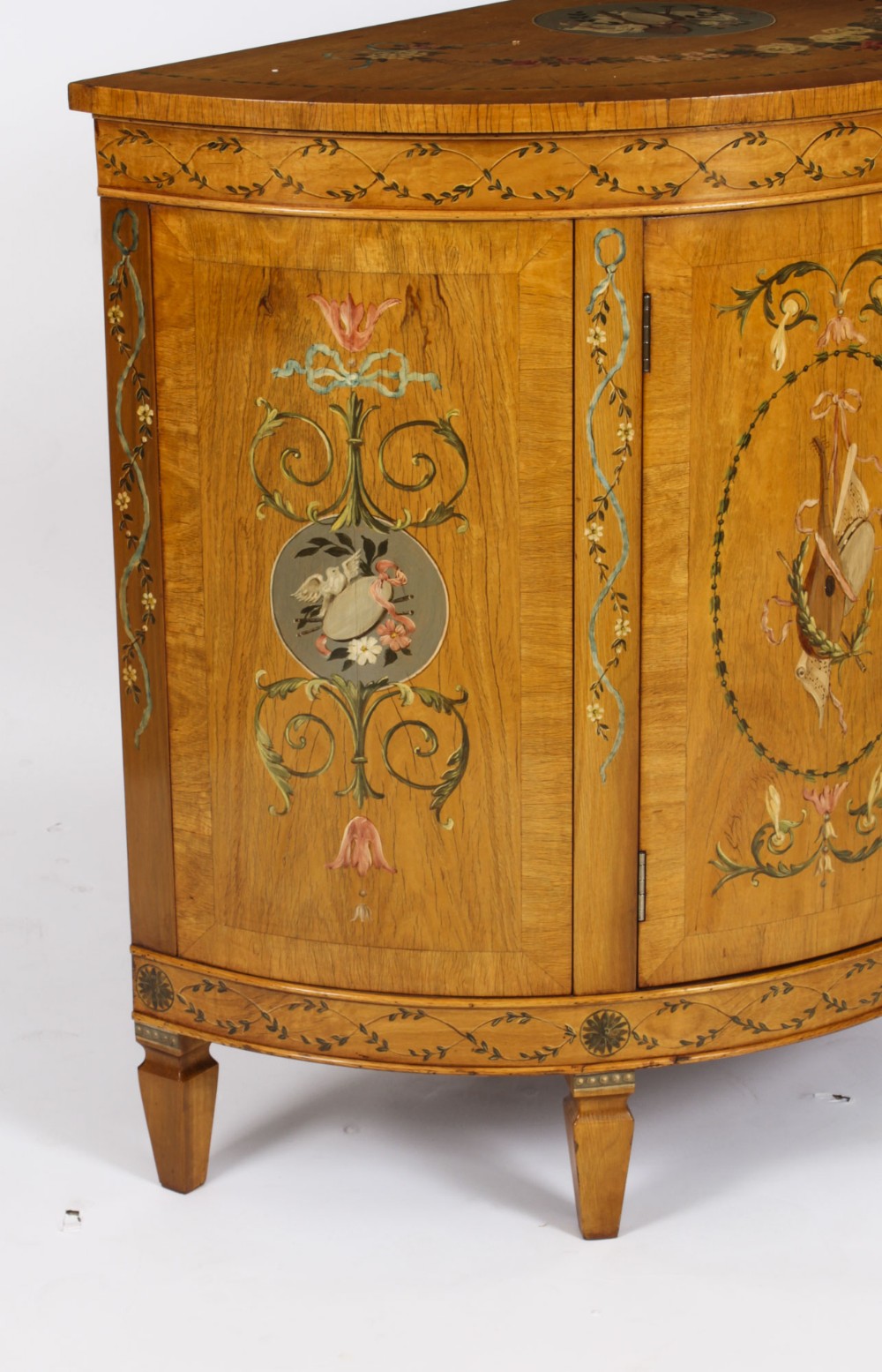
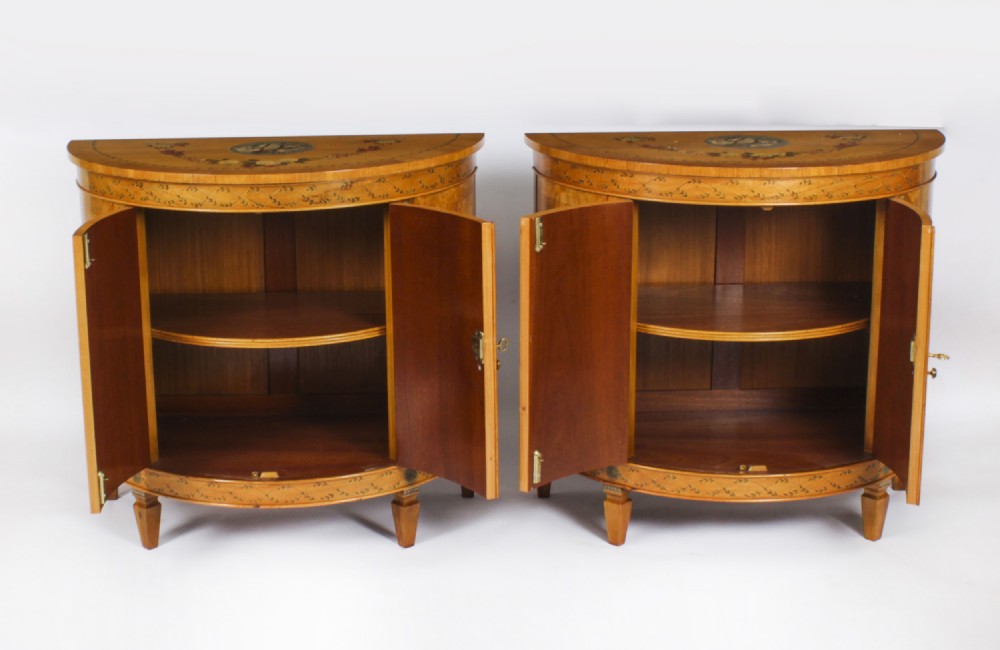
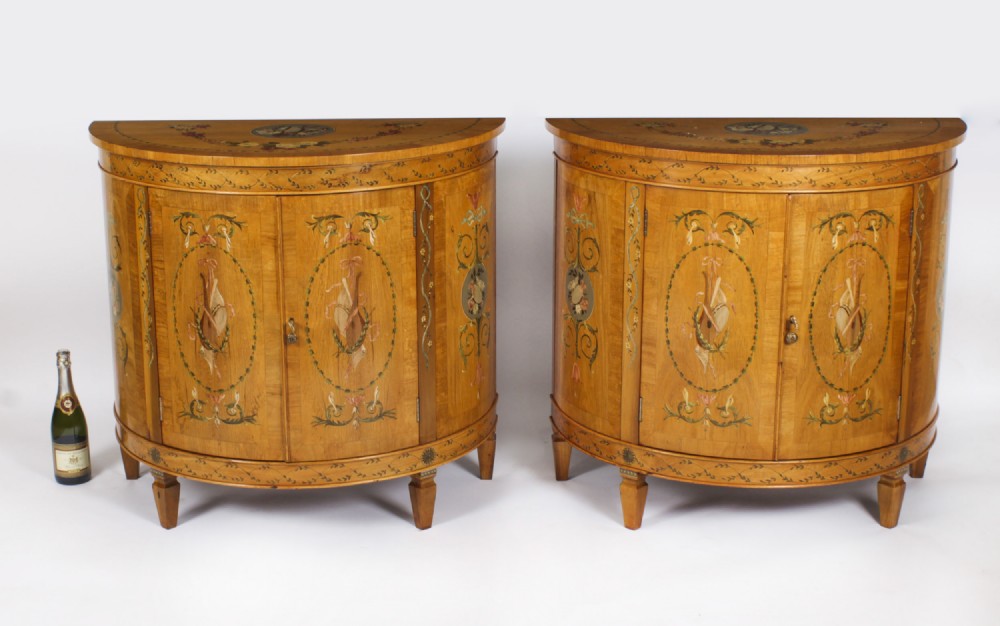
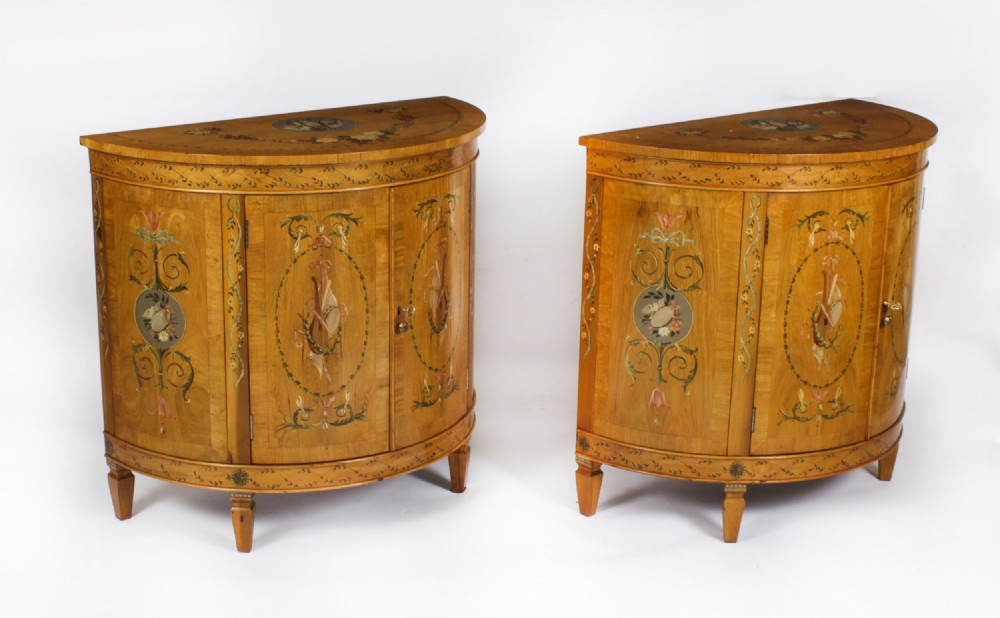
This is a gorgeous pair of antique Adam Revival satin wood demi lune commodes with beautiful hand painted decoration, dating from Circa 1920.

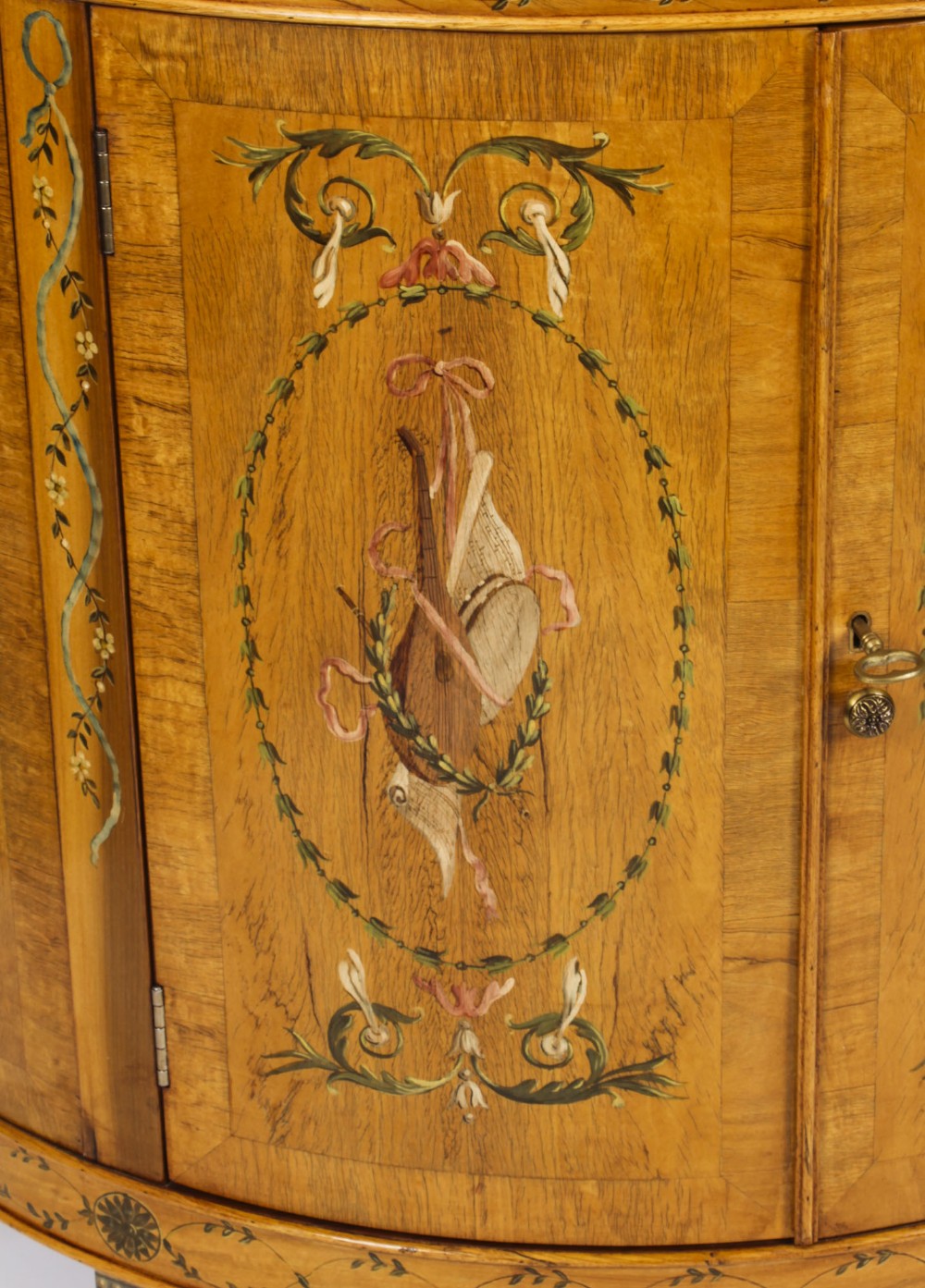
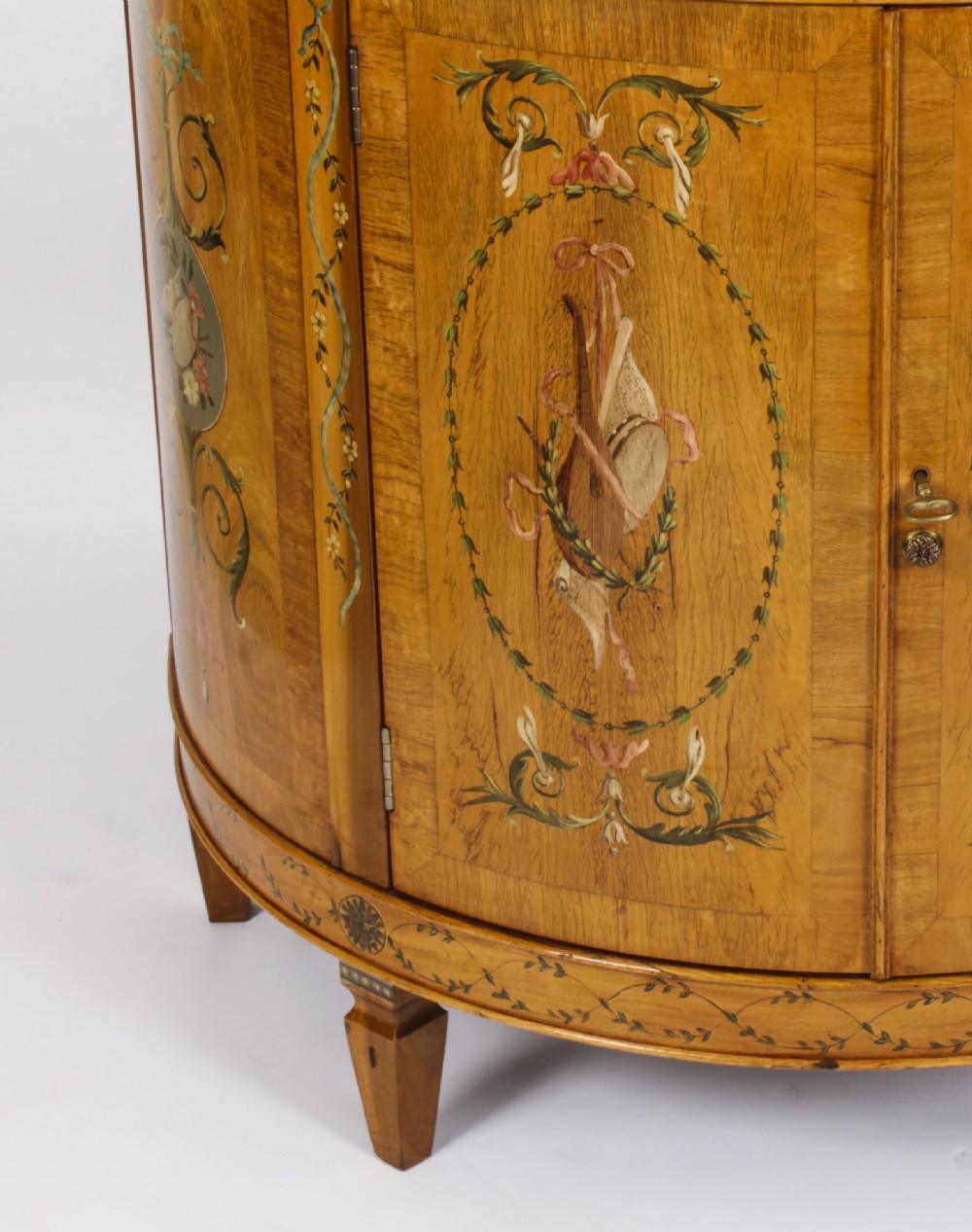
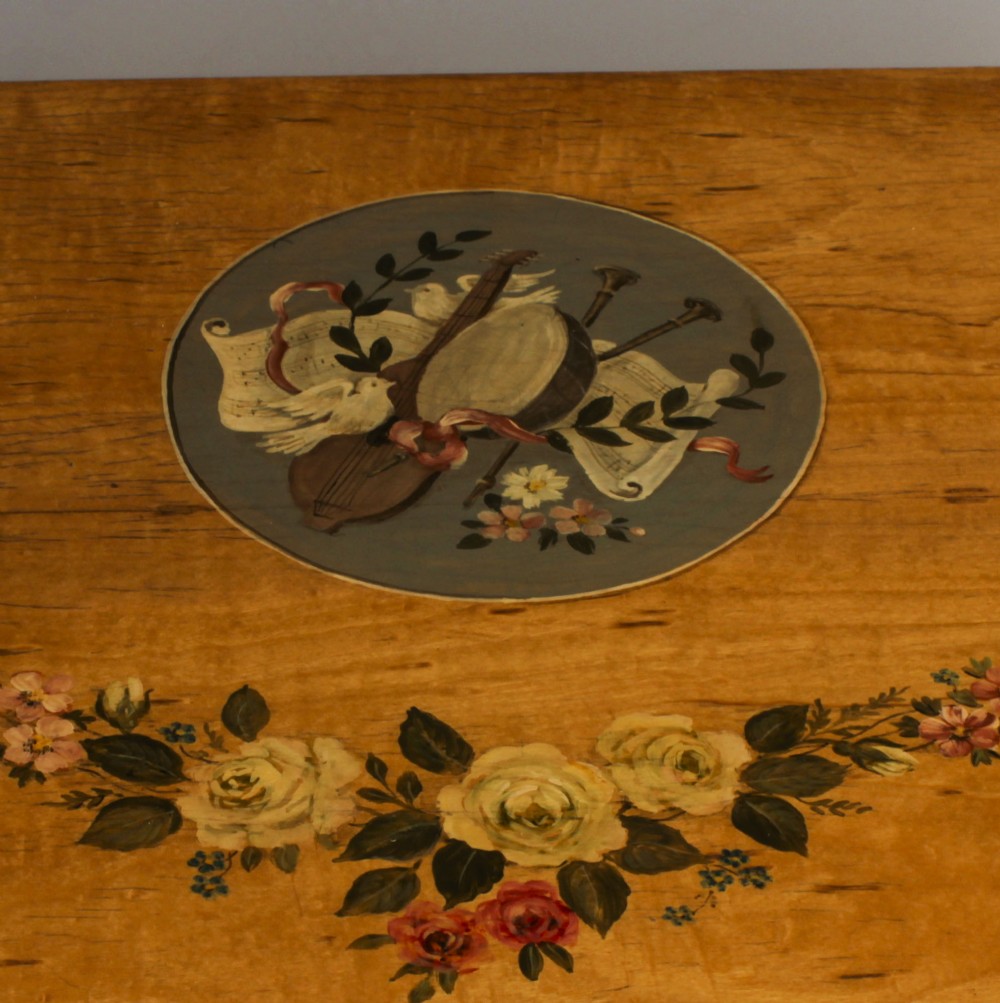
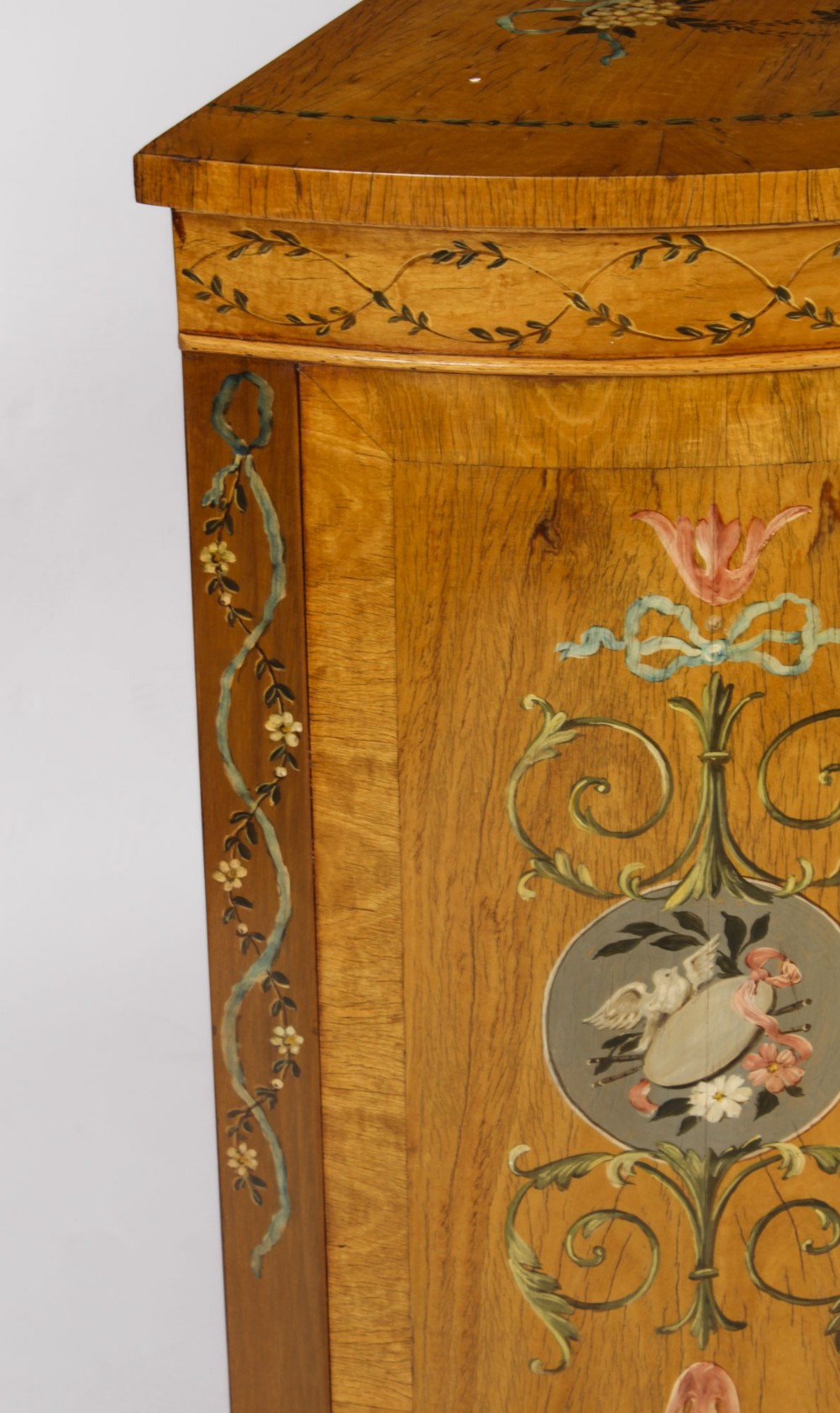
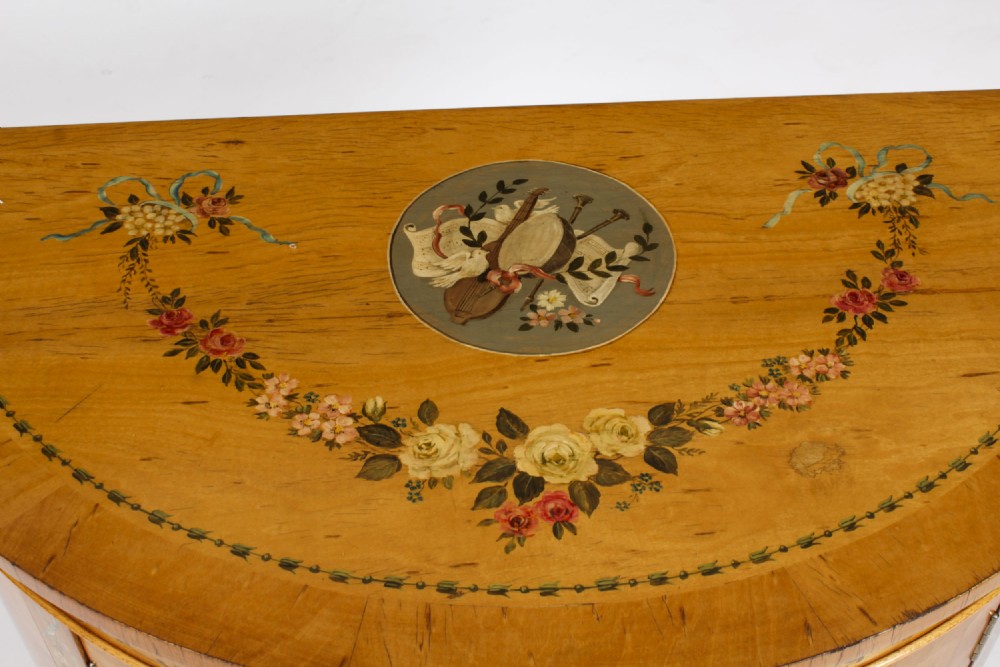
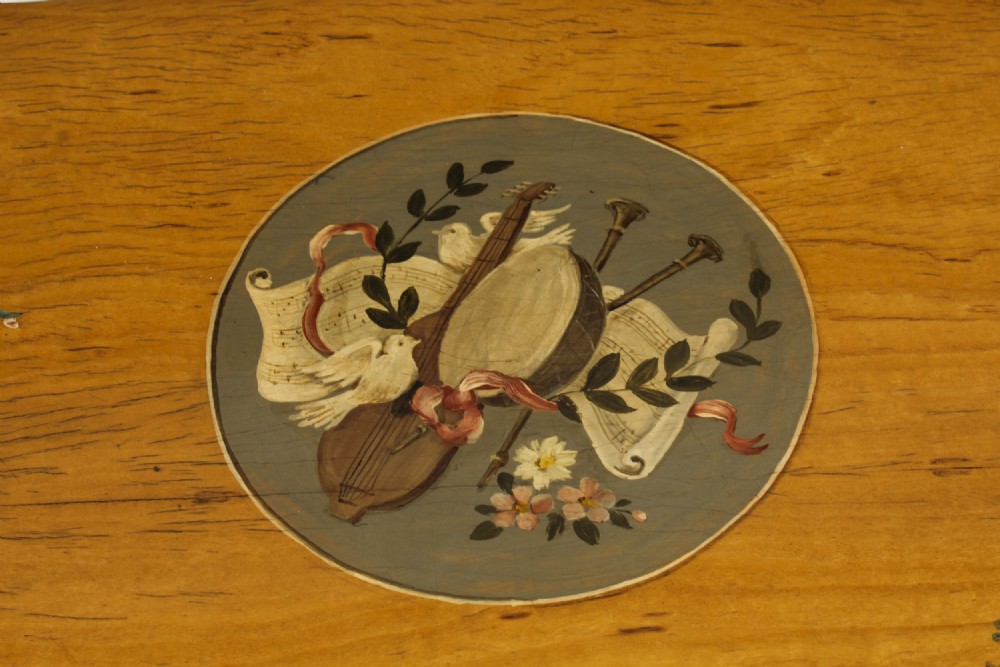
Each commode has striking hand painted decoration of musical instruments, including trumpets, lyres, drums, music sheets, as well as floral garlands and ribbons, in the manner of Angelica Kauffman.

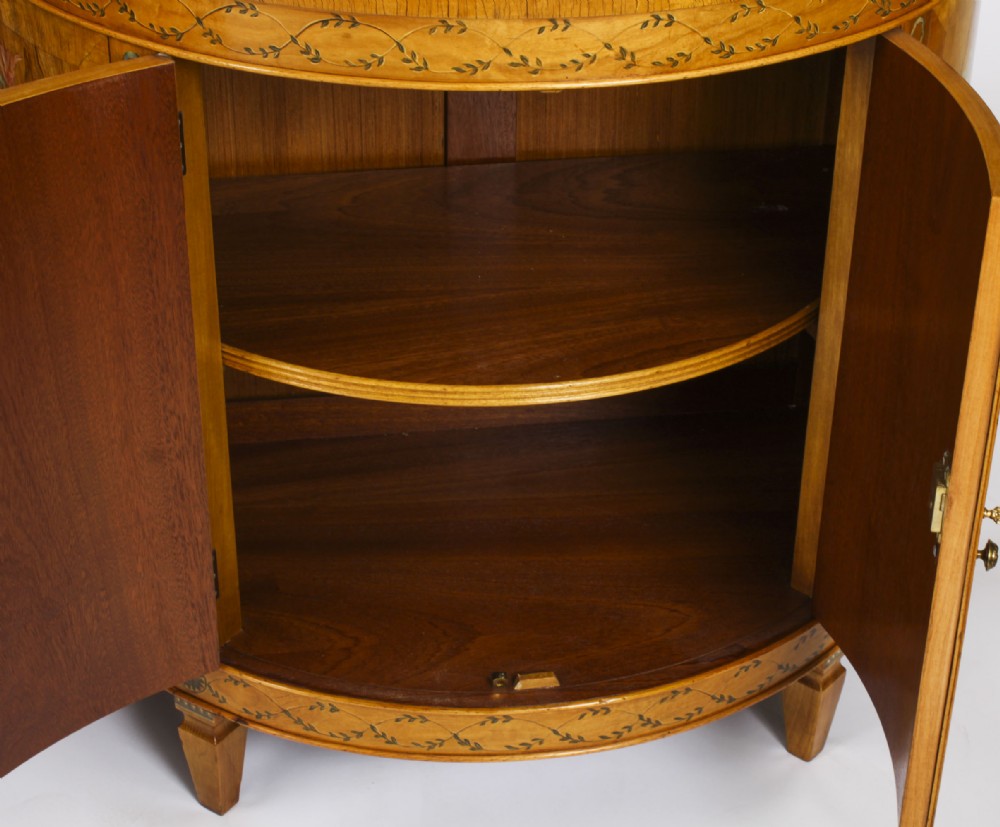
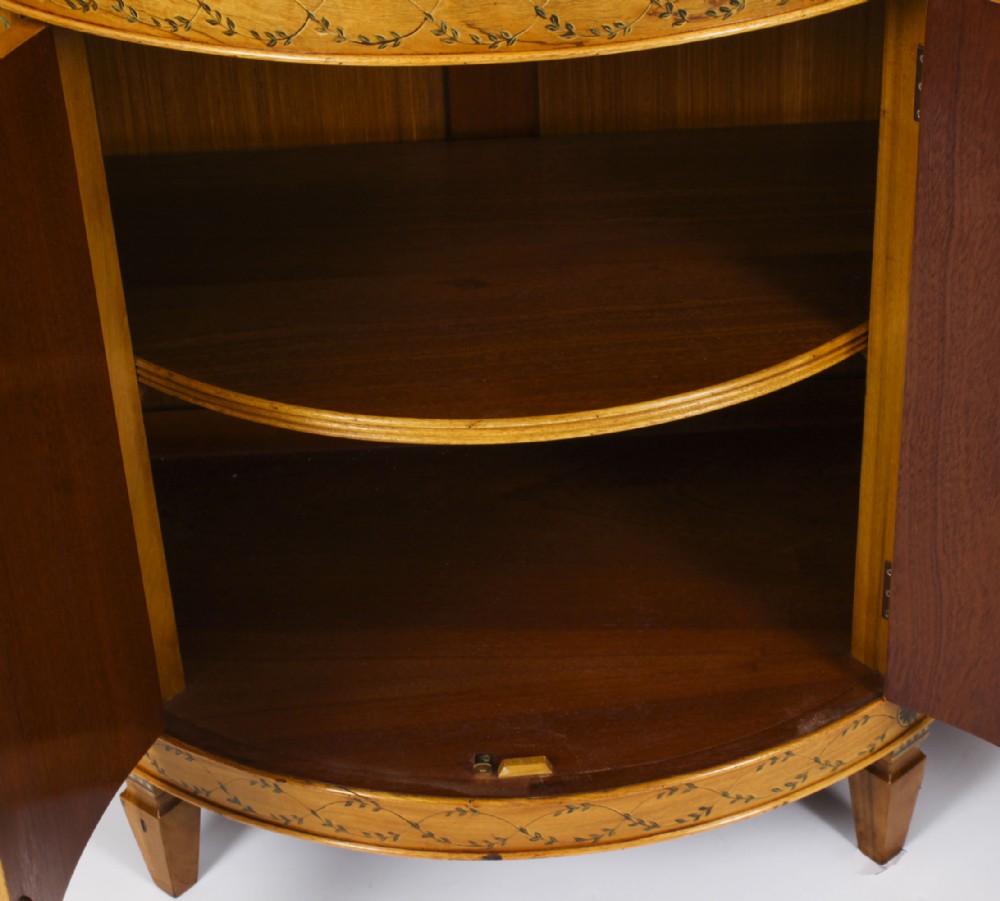
Each commode has a pair of doors that to reveal a cupboard with a central shelf.

Add a touch of elegance to a special room in your home with this superb pair.

Complete with working locks and keys.

Condition:

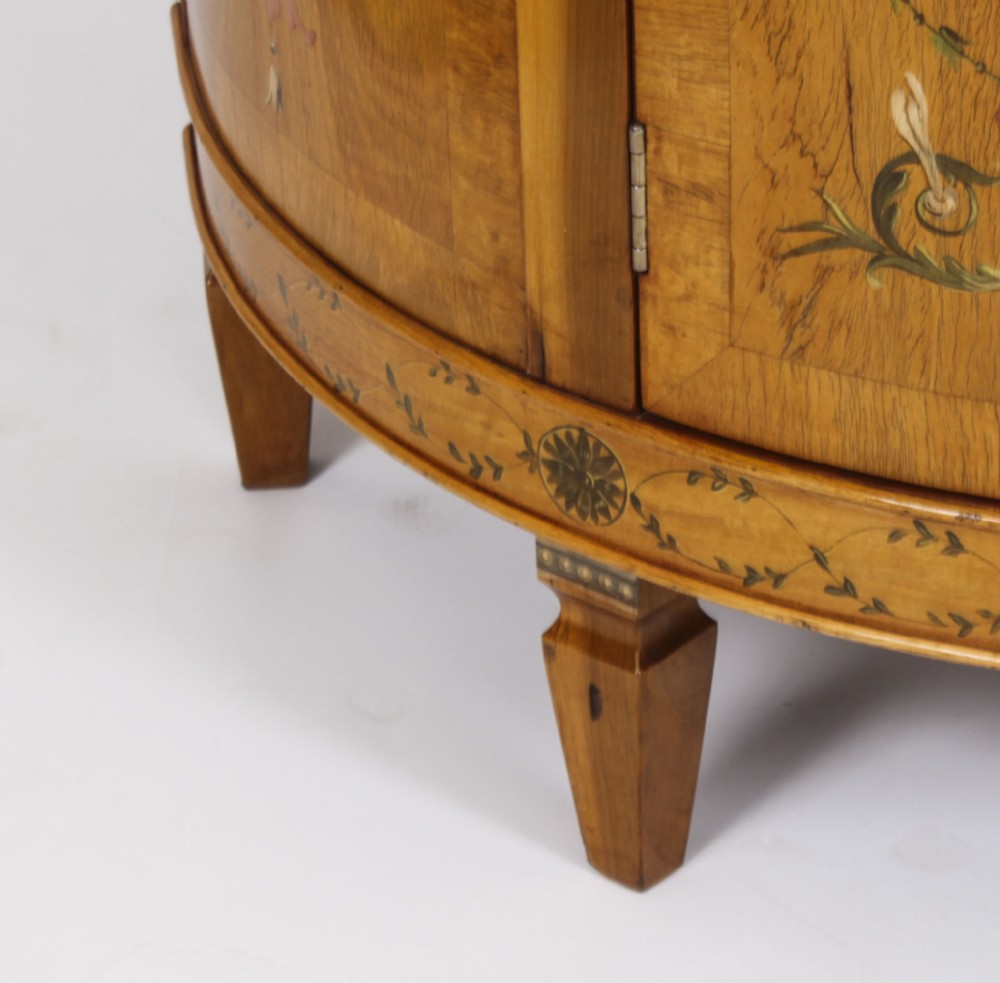
In really excellent condition having only been beautifully cleaned and waxed in our workshops, please see photos for confirmation.

Dimensions in cm:

Height 84 cm x Width 92 cm x Depth 46 cm

Dimensions in inches:

Height 2 foot, 9 inches x Width 3 foot x Depth 1 foot, 6 inches

Angelica Kauffman, RA (1741 - 1807)

was a Swiss-born Austrian Neoclassical painter who had a successful career in London and Rome. Though born as "Kauffmann", Kauffman is the preferred spelling of her name in English; it is the form she herself used most in signing her correspondence, documents and paintings.

While Kauffman produced many types of art, she identified herself primarily as a history painter, an unusual designation for a woman artist in the 18th century. History painting, was considered the most elite and lucrative category in academic painting during this time period. Under the direction of Sir Joshua Reynolds, the Royal Academy made a strong effort to promote history painting to a native audience who were more interested in commissioning and buying portraits and landscapes.

Despite the popularity that Kauffman enjoyed in British society and her success as an artist, she was disappointed by the relative apathy that the British had towards history painting. Ultimately she left Britain for the continent, where history painting was better established, held in higher esteem and patronized.

The works of Angelica Kauffman have retained their reputation. By 1911, rooms decorated with her work were still to be seen in various quarters. At Hampton Court was a portrait of the duchess of Brunswick; in the National Portrait Gallery, a self-portrait. There were other pictures by her at Paris, at Dresden, in the Hermitage at St Petersburg, in the Alte Pinakothek atMunich, in Kadriorg Palace, Tallinn (Estonia).

Satin wood

is a hard and durable wood with a satinlike sheen, much used in cabinetmaking, especially in marquetry. It comes from two tropical trees of the family Rutaceae (rue family). East Indian or Ceylon satinwood is the yellowish or dark-brown heartwood of Chloroxylon swietenia.

The lustrous, fine-grained, usually figured wood is used for furniture, cabinetwork, veneers, and backs of brushes. West Indian satin wood, sometimes called yellow wood, is considered superior. It is the golden yellow, lustrous, even-grained wood found in the Florida Keys and the West Indies.

It has long been valued for furniture. It is also used for musical instruments, veneers, and other purposes. Satin wood is classified in the division Magnoliophyta, class Magnoliopsida, order Sapindales, family Rutaceae.

Our reference: A3991

Date of Manufacture

Regent Antiques has dated these Antique Satinwood Painted Commodes to the 1920s.

Physical Dimensions
Height
84cm (33.07")
Width
92cm (36.22")
Depth
46cm (18.11")
Reference Numbers
Sellingantiques Reference
SA1080331
Dealers Internal Reference
A3991
A pair of semi-circular satinwood commodes featuring delicate hand-painted neoclassical motifs, double cabinet doors, and tapered supports.Detail view 1Detail view 2Detail view 3Detail view 4Detail view 5Detail view 6Detail view 7Detail view 8Detail view 9Detail view 10Detail view 11Detail view 12Detail view 13Detail view 14Detail view 15Detail view 16Detail view 17Detail view 18Detail view 19
SOLD6+ MONTHS AGO
1 / 20
1920s · SA1080331
Antique Pair Adam Revival Satin Wood Painted Cabinets Commodes C1920
Sorry, but this item has been sold.
Description
This is a gorgeous pair of antique Adam Revival satin wood demi lune commodes with beautiful hand painted decoration, dating from Circa 1920.

Each commode has striking hand painted decoration of musical instruments, including trumpets, lyres, drums, music sheets, as well as floral garlands and ribbons, in the manner of Angelica Kauffman.

Each commode has a pair of doors that to reveal a cupboard with a central shelf.

Add a touch of elegance to a special room in your home with this superb pair.

Complete with working locks and keys.

Condition:

In really excellent condition having only been beautifully cleaned and waxed in our workshops, please see photos for confirmation.

Dimensions in cm:

Height 84 cm x Width 92 cm x Depth 46 cm

Dimensions in inches:

Height 2 foot, 9 inches x Width 3 foot x Depth 1 foot, 6 inches

Angelica Kauffman, RA (1741 - 1807)

was a Swiss-born Austrian Neoclassical painter who had a successful career in London and Rome. Though born as "Kauffmann", Kauffman is the preferred spelling of her name in English; it is the form she herself used most in signing her correspondence, documents and paintings.

While Kauffman produced many types of art, she identified herself primarily as a history painter, an unusual designation for a woman artist in the 18th century. History painting, was considered the most elite and lucrative category in academic painting during this time period. Under the direction of Sir Joshua Reynolds, the Royal Academy made a strong effort to promote history painting to a native audience who were more interested in commissioning and buying portraits and landscapes.

Despite the popularity that Kauffman enjoyed in British society and her success as an artist, she was disappointed by the relative apathy that the British had towards history painting. Ultimately she left Britain for the continent, where history painting was better established, held in higher esteem and patronized.

The works of Angelica Kauffman have retained their reputation. By 1911, rooms decorated with her work were still to be seen in various quarters. At Hampton Court was a portrait of the duchess of Brunswick; in the National Portrait Gallery, a self-portrait. There were other pictures by her at Paris, at Dresden, in the Hermitage at St Petersburg, in the Alte Pinakothek atMunich, in Kadriorg Palace, Tallinn (Estonia).

Satin wood

is a hard and durable wood with a satinlike sheen, much used in cabinetmaking, especially in marquetry. It comes from two tropical trees of the family Rutaceae (rue family). East Indian or Ceylon satinwood is the yellowish or dark-brown heartwood of Chloroxylon swietenia.

The lustrous, fine-grained, usually figured wood is used for furniture, cabinetwork, veneers, and backs of brushes. West Indian satin wood, sometimes called yellow wood, is considered superior. It is the golden yellow, lustrous, even-grained wood found in the Florida Keys and the West Indies.

It has long been valued for furniture. It is also used for musical instruments, veneers, and other purposes. Satin wood is classified in the division Magnoliophyta, class Magnoliopsida, order Sapindales, family Rutaceae.

Our reference: A3991
Date1920s
Height84cm (33.07")
Width92cm (36.22")
Depth46cm (18.11")
ReferenceSA1080331
Dealer's referenceA3991
Regent Antiques
Regent AntiquesSellingantiques verified since Sep 2016

We specialise in english and continental furniture, silver, porcelain and decorative items.

Member of LAPADA CINOA

SHARE
SAVE
Archive I A pair of semi-circular satinwood commodes featuring delicate hand-painted neoclassical motifs, double cabinet doors, and tapered supports. SOLD6+ MONTHS AGO

Antique Pair Adam Revival Satin Wood Painted Cabinets Commodes C1920

Archive II A pair of semi-circular satinwood commodes featuring delicate hand-painted neoclassical motifs, double cabinet doors, and tapered supports. View II
Archive III A pair of semi-circular satinwood commodes featuring delicate hand-painted neoclassical motifs, double cabinet doors, and tapered supports. View III
Archive IV A pair of semi-circular satinwood commodes featuring delicate hand-painted neoclassical motifs, double cabinet doors, and tapered supports. View IV
Archive V A pair of semi-circular satinwood commodes featuring delicate hand-painted neoclassical motifs, double cabinet doors, and tapered supports. View V
Archive VI A pair of semi-circular satinwood commodes featuring delicate hand-painted neoclassical motifs, double cabinet doors, and tapered supports. View VI
Archive VII A pair of semi-circular satinwood commodes featuring delicate hand-painted neoclassical motifs, double cabinet doors, and tapered supports. View VII
Archive VIII A pair of semi-circular satinwood commodes featuring delicate hand-painted neoclassical motifs, double cabinet doors, and tapered supports. View VIII
Archive IX A pair of semi-circular satinwood commodes featuring delicate hand-painted neoclassical motifs, double cabinet doors, and tapered supports. View IX
Archive X A pair of semi-circular satinwood commodes featuring delicate hand-painted neoclassical motifs, double cabinet doors, and tapered supports. View X
Archive XI A pair of semi-circular satinwood commodes featuring delicate hand-painted neoclassical motifs, double cabinet doors, and tapered supports. View XI
Archive XII A pair of semi-circular satinwood commodes featuring delicate hand-painted neoclassical motifs, double cabinet doors, and tapered supports. View XII
Archive XIII A pair of semi-circular satinwood commodes featuring delicate hand-painted neoclassical motifs, double cabinet doors, and tapered supports. View XIII
Archive XIV A pair of semi-circular satinwood commodes featuring delicate hand-painted neoclassical motifs, double cabinet doors, and tapered supports. View XIV
Archive XV A pair of semi-circular satinwood commodes featuring delicate hand-painted neoclassical motifs, double cabinet doors, and tapered supports. View XV
Archive XVI A pair of semi-circular satinwood commodes featuring delicate hand-painted neoclassical motifs, double cabinet doors, and tapered supports. View XVI
Archive XVII A pair of semi-circular satinwood commodes featuring delicate hand-painted neoclassical motifs, double cabinet doors, and tapered supports. View XVII
Archive XVIII A pair of semi-circular satinwood commodes featuring delicate hand-painted neoclassical motifs, double cabinet doors, and tapered supports. View XVIII
Archive XIX A pair of semi-circular satinwood commodes featuring delicate hand-painted neoclassical motifs, double cabinet doors, and tapered supports. View XIX
Archive XX A pair of semi-circular satinwood commodes featuring delicate hand-painted neoclassical motifs, double cabinet doors, and tapered supports. View XX
Enlarged Archival View
Location
Manor Warehouse
318 Green Lanes
London
N4 1BX
United Kingdom
Verified Since Sep 2016
Items For Sale 639
Items Sold 2,756
Regent Antiques
Regent Antiques
Verified Since Sep 2016
View Dealer Info
Location: Manor Warehouse, 318 Green Lanes, London, N4 1BX, United Kingdom
Verified
Sep 2016
For Sale
639
Sold
2,756
A pair of semi-circular satinwood commodes featuring delicate hand-painted neoclassical motifs, double cabinet doors, and tapered supports.
Antique Pair Adam Revival Satin wood Painted Cabinets Commodes C1920
Ref: SA1080331
A pair of semi-circular satinwood commodes featuring delicate hand-painted neoclassical motifs, double cabinet doors, and tapered supports.
Detail View 1
Detail View 2
Detail View 3
Detail View 4
Detail View 5
Detail View 6
Detail View 7
Detail View 8
Detail View 9
Detail View 10
Detail View 11
Detail View 12
Detail View 13
Detail View 14
Detail View 15
Detail View 16
Detail View 17
Detail View 18
Detail View 19
Archival Detail
Every single antique dealer on our platform is individually approved by our internal team. We verify their professional trade history, ethical standards, and photographic quality to ensure a secure, high-standard buying environment. Upon joining, every dealer agrees to a strict 9-point code of conduct. While issues can occasionally arise, our dealers typically resolve them swiftly and directly with the buyer. In fact, since our founding in 2002, Sellingantiques has only had to step in to help resolve an issue on roughly five occasions—a true testament to the quality of our dealers and their dedication to your happiness.
Our dealers are highly experienced in packing and shipping fragile, high-value antiques. Because you are in direct contact with the dealer, you will be able to easily go through all available shipping and insurance options together to ensure your item arrives safely.
Antiques are the ultimate green purchase. By choosing historical pieces over newly manufactured goods, you completely eliminate the carbon footprint of modern mass production while preserving exceptional, timeless craftsmanship.
Written by Sellingantiques from the dealer’s photographs and listing
  • ObjectCommodes & Cabinets
  • Period1900 - 1920
  • StyleAdam Revival
  • MaterialSatinwood, Various Timbers
  • ColourGolden Yellow
  • MotifsHand-painted floral garlands, Neoclassical urns, Satinwood veneer, Tapered legs
  • SizeH 84 cm (33 in) x W 92 cm (36 in) x D 46 cm (18 in)

The Adam revival style draws heavily from neoclassical design principles popularised by the Adam brothers in the 18th century, characterised by symmetrical layouts, classical motifs such as urns and swags, and delicate hand-painted ornamentation.

These pieces typically utilise fine satinwood veneers laid over a secondary timber substrate, combined with intricate marquetry, cross-banding, and hand-painted polychrome details executed by skilled artisans.

Authentic pieces from the revival period can be identified through timber ageing characteristics, hand-cut joinery methods, the specific nature of the hand-painted pigments, and historical hardware consistent with early 20th-century manufacturing.

These cabinets work well as focal points in neutral rooms, allowing the intricate painted details to stand out against plain walls while complementing both traditional and transitional decor schemes.

Preservation involves maintaining stable indoor humidity levels away from direct sunlight to prevent veneer cracking and fading, alongside occasional gentle dusting with a soft, dry cloth without harsh chemical polishes.
items
Add keywords to the filter
Price
£100
£250000
Era
Period
Style
Material
Origin
Stock Location
Recently Added
Online Payments
Categories