36,322  PAGES BROWSED TODAY PAGES TODAY • 145 ANTIQUES UPLOADED TODAYNEW ARRIVALS
GIFTS
145 ITEMS ADDED TODAY
Sort Order
Items Per Page
Antiques dealer?
Join as a Seller
Browse Categories
Sort order
Relevant Links
Items per page
sold SA1041724
Sorry, but this item has been sold.
Regent Antiques

Regent Antiques

Sellingantiques Verified Since Sep 2016
Browse dealers 637 items
  • About Us
    We specialise in english and continental furniture, silver, porcelain and decorative items.
  • Trade Associations
    Regent Antiques is a registered member of LAPADA  CINOA
Id #SA1041724
SHARE
SAVE

Antique Swiss 10 Air Musical Box Langdorff & Fils 19th C

19th century
Sold 4 February 2026 · Regent Antiques
This “Antique Swiss 10 Air Musical Box Langdorff & Fils 19th C” found a buyer.

It was listed by Regent Antiques. Sold pieces stay on Sellingantiques as a record of what has passed through, and the next one is rarely far away.

Description

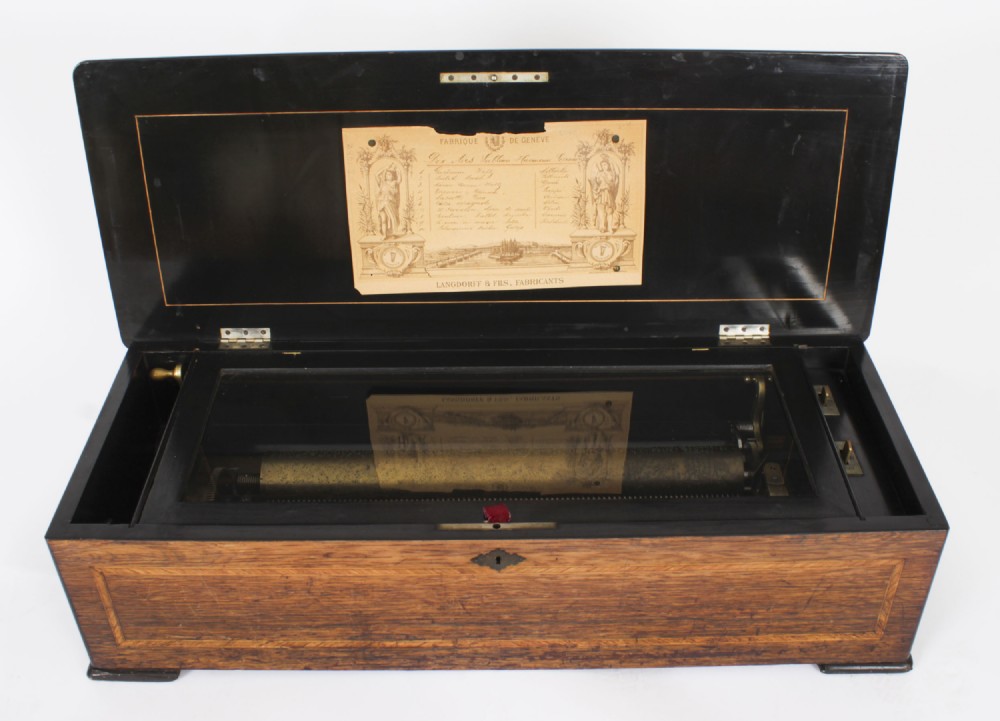
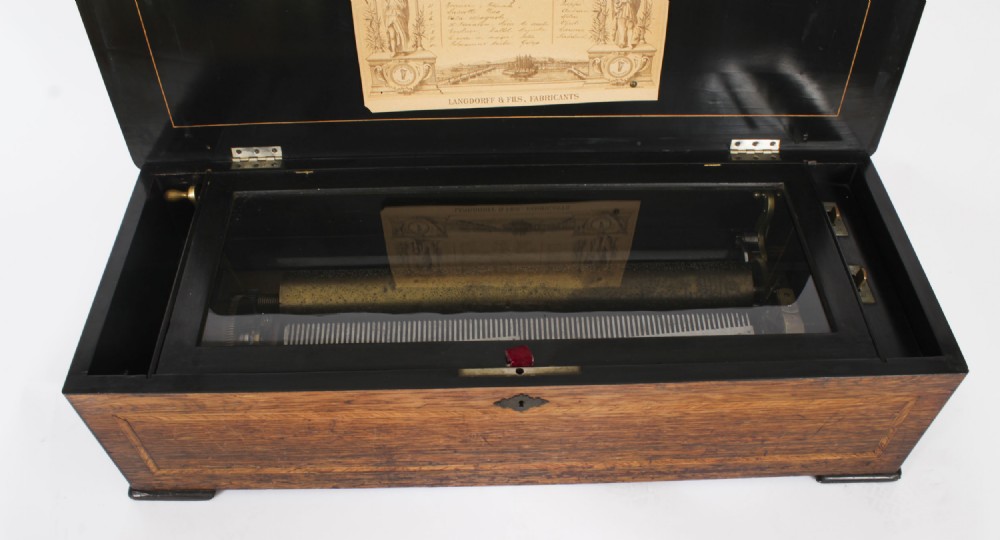
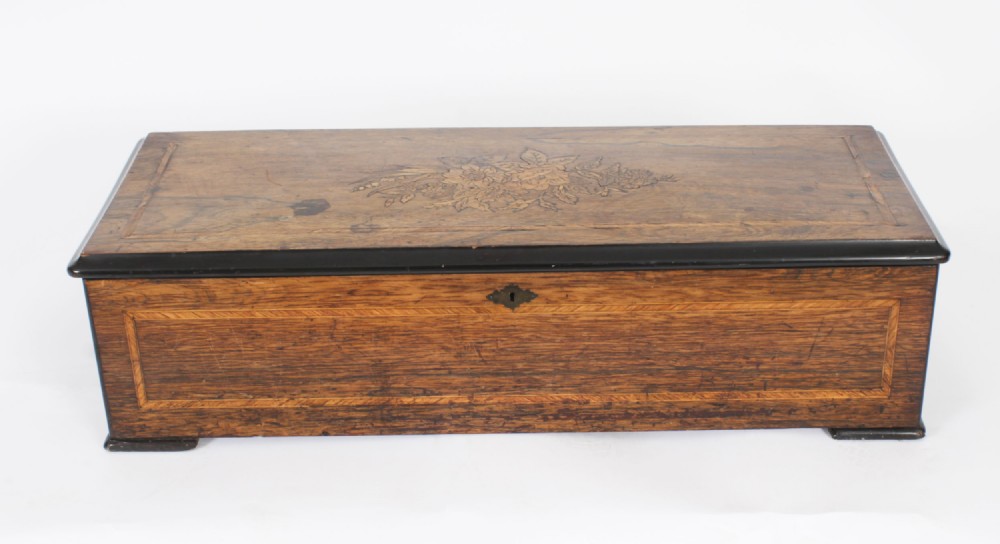
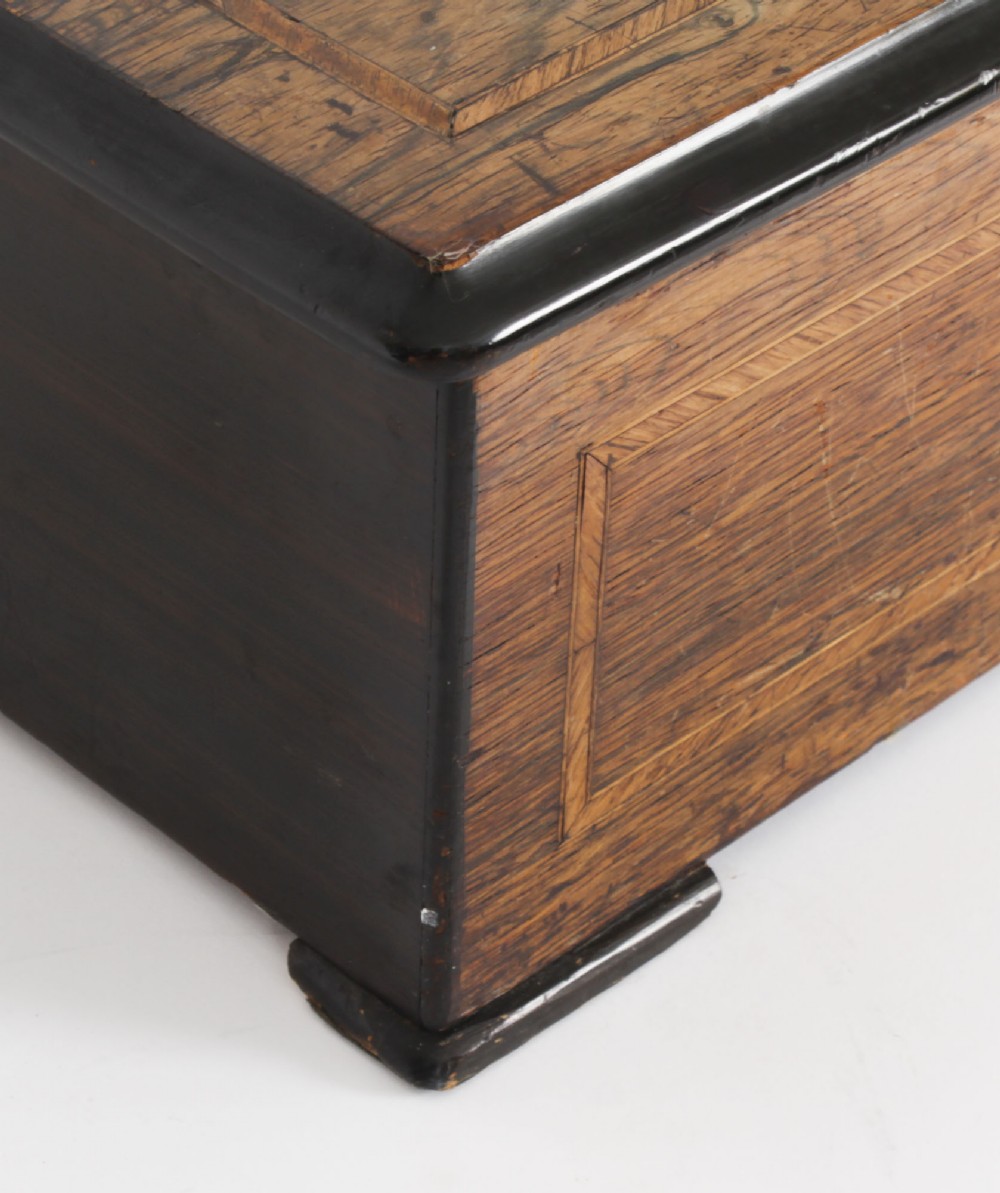
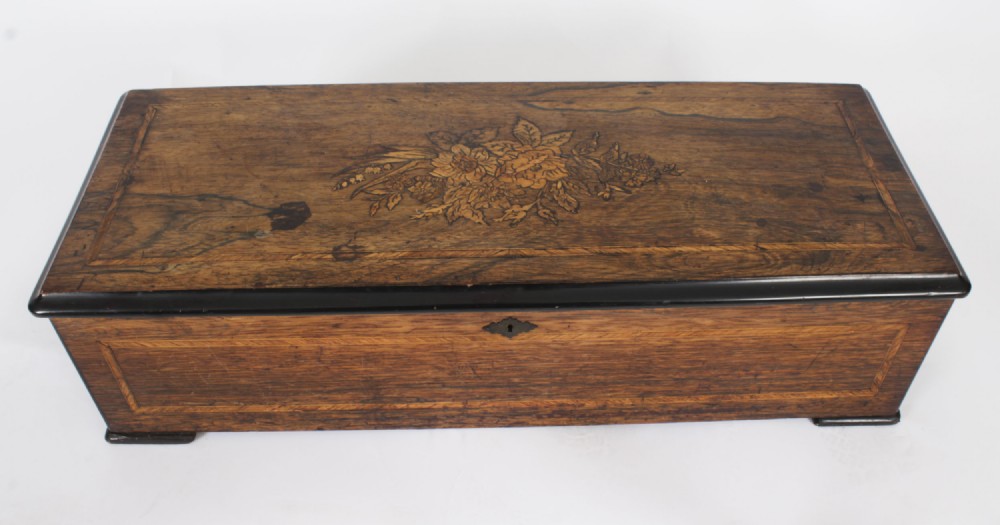
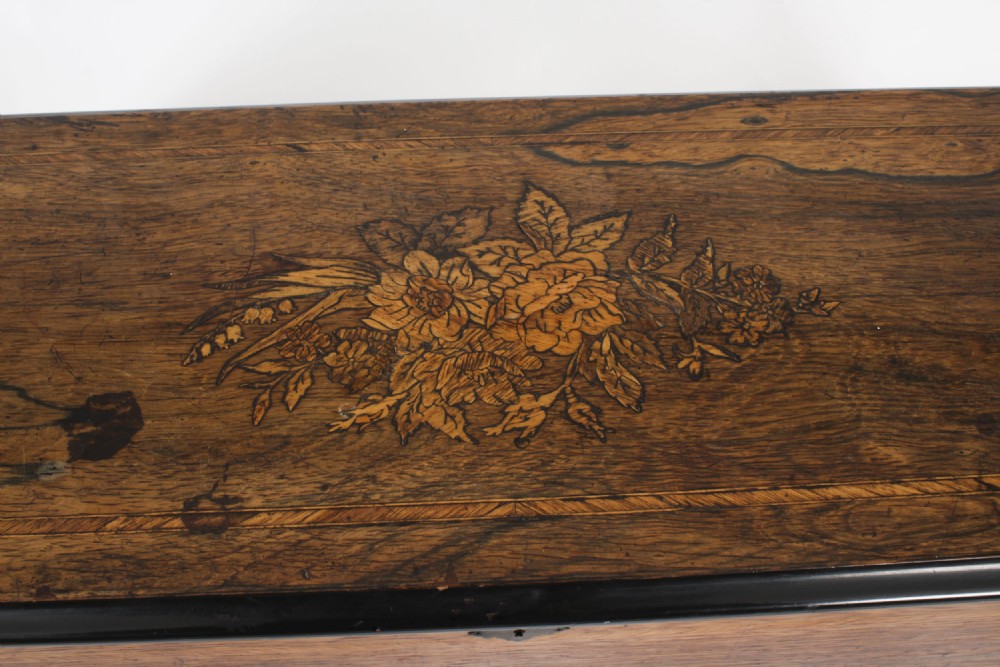
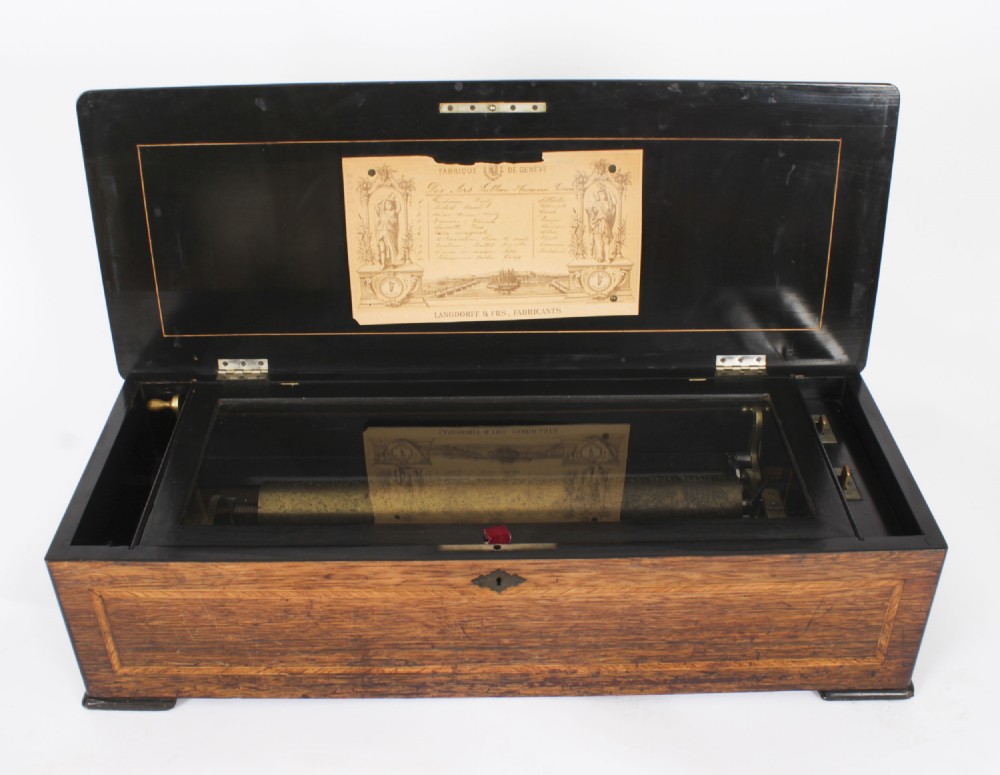
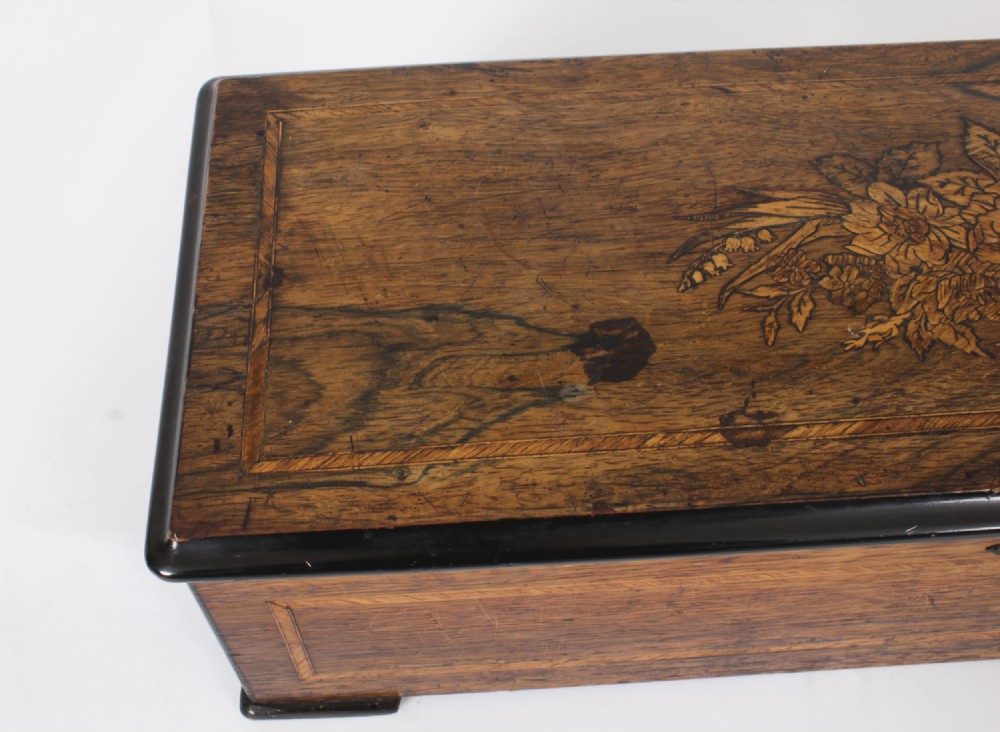
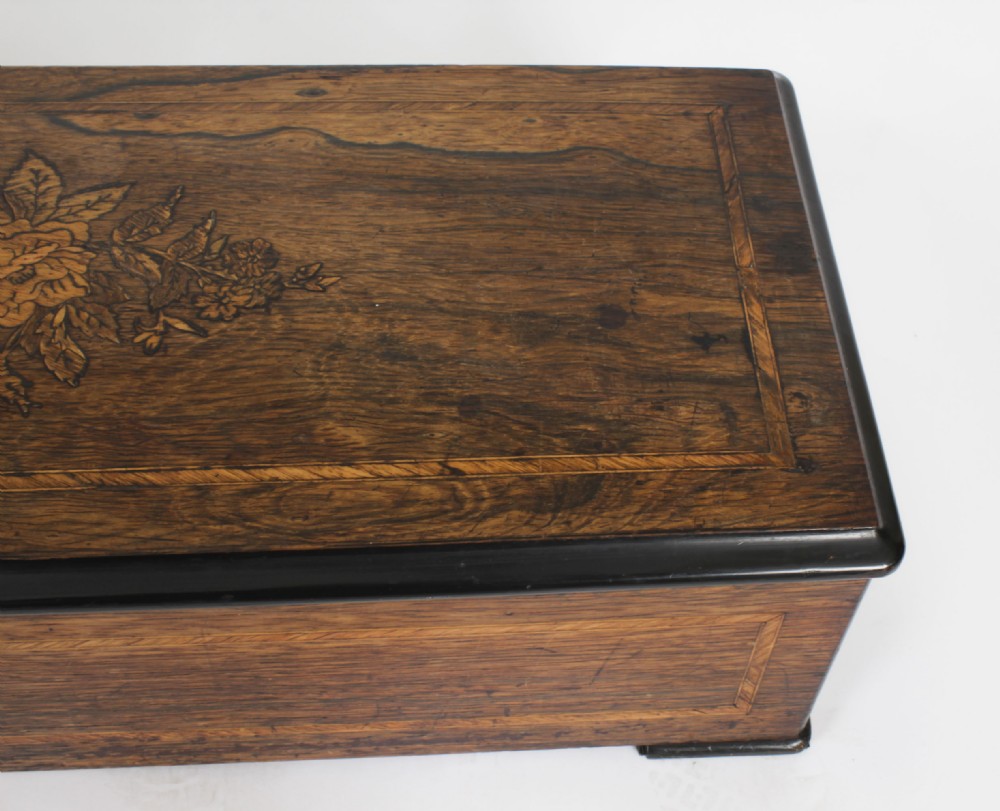
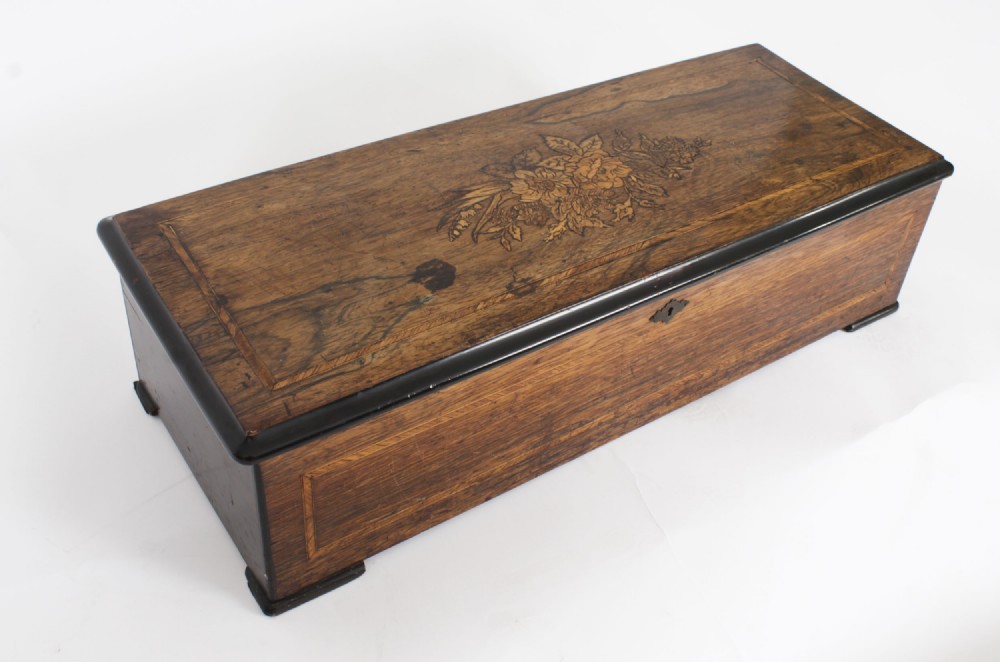
This is a lovely antique Swiss 10 airs Gonçalo Alves cylinder music box, manufactured by Langdorff & Fils, circa 1880.

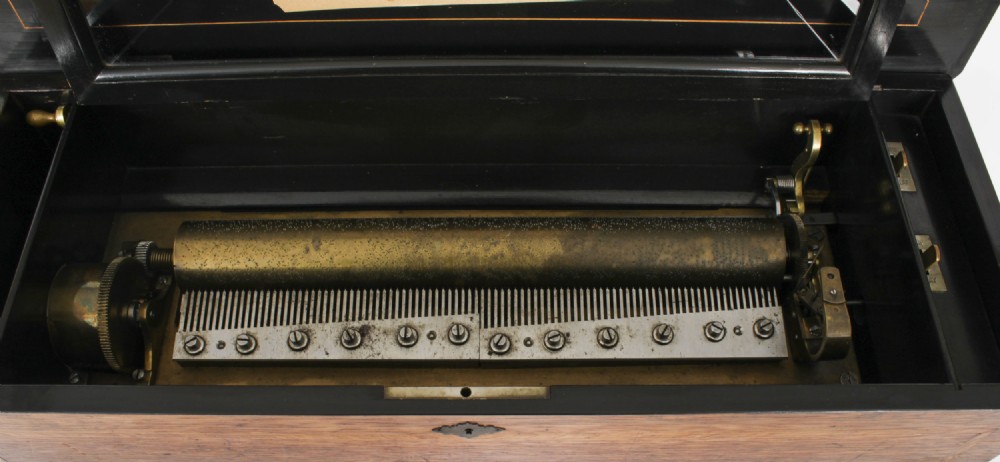
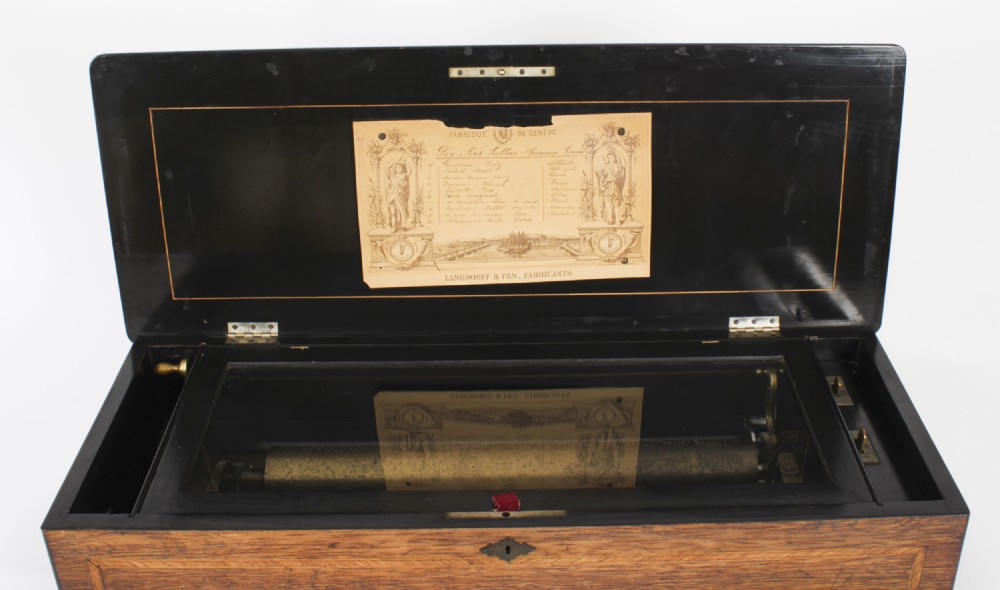
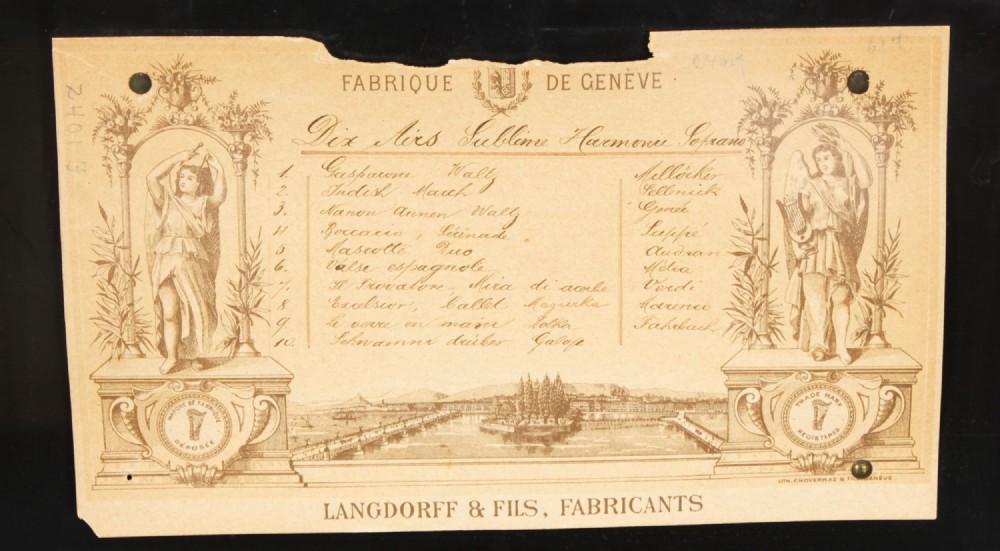
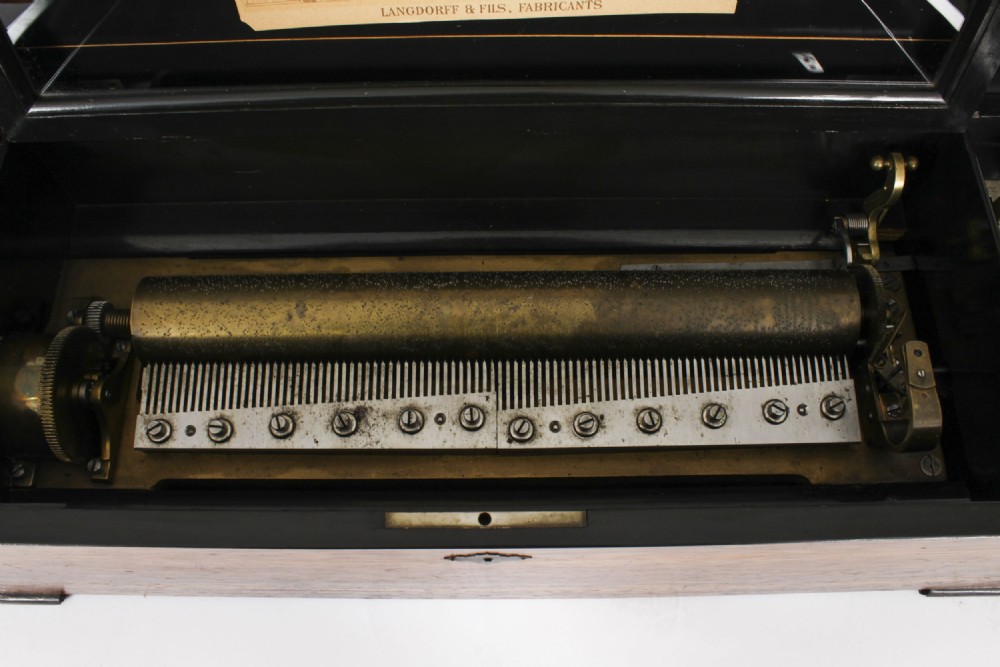
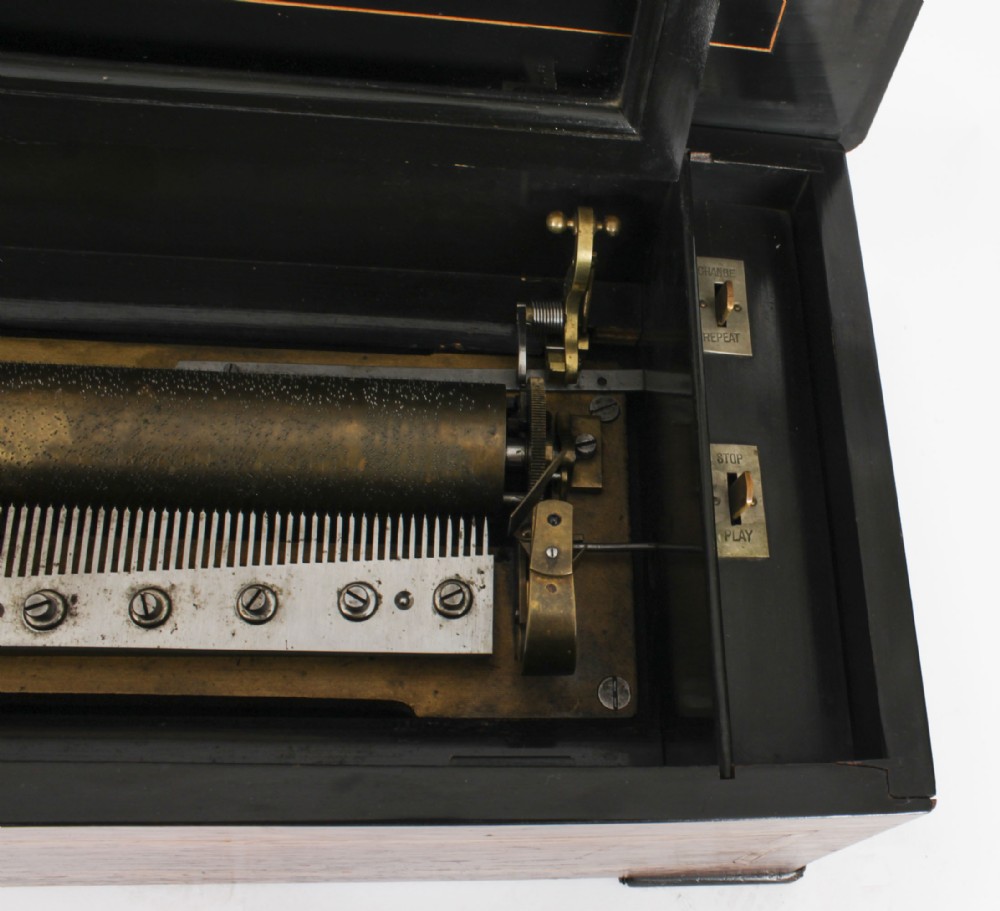
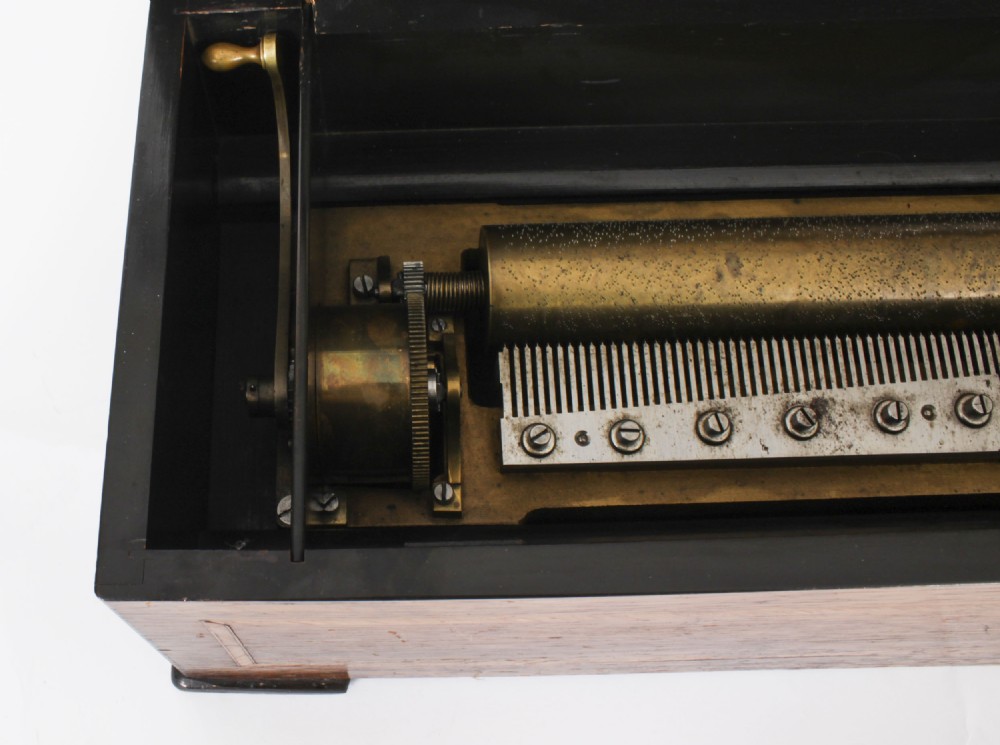
The case is inlaid and crossbanded with floral marquetry and banded decoration. The lid opens to reveal an ebonised interior with a glazed hinged cover showing the comb, and a paper label to the underside of the lid stating 'Fabrique De Geneve' Langdorff & Fils, Fabricants

The music box has got its original tune sheet which is stamped:

"No 24017 Fabrique de Geneve" and lists the ten tunes and composers.

Condition:

It is is in excellent condition and in working order.

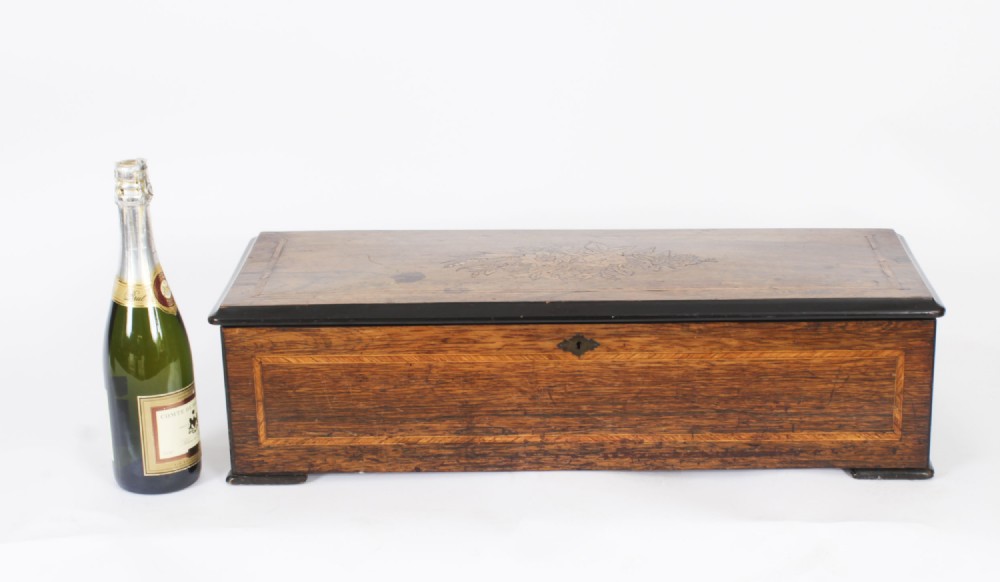
Dimensions in cm:

Height 18 cm x Width 69 cm x Depth 27 cm

Dimensions in inches:

Height 7 inches x Width 2 foot, 3 inches x Depth 11 inches

Music box

(also musical box) is a 19th/20th century automatic musical instrument that produces sounds by the use of a set of pins placed on a revolving cylinder or disc so as to pluck the tuned teeth (or lamellae) of a steel comb. They were developed from musical snuff boxes of the 18th century and called carillons à musique. Some of the more complex boxes also have a tiny drum and/or small bells, in addition to the metal comb.

For most of the 19th century, the bulk of music box production was concentrated in Switzerland, building upon a strong watchmaking tradition. The first music box factory was opened there in 1815 by Jérémie Recordon and Samuel Junod. There were also a few manufacturers in Bohemia and Germany. By the end of the 19th century, some of the European makers had opened factories in the United States.

The cylinders were normally made of metal and powered by a spring. In some of the costlier models, the cylinders could be removed to change melodies, thanks to an invention by Paillard in 1862, which was perfected by Metert of Geneva in 1879.[citation needed] In some exceptional models, there were four springs, to provide continuous play for up to three hours.

Gonçalo Alves is a hardwood (from the Portuguese name, Gonçalo Alves). It is sometimes referred to as tigerwood — a name that underscore the wood’s often dramatic, contrasting color scheme.

While the sapwood is very light in color, the heartwood is a sombre brown, with dark streaks that give it a unique look. The wood’s color deepens with exposure and age and even the plainer-looking wood has a natural luster.

Two species are usually listed as sources for gonçalo alves: Astronium fraxinifolium and Astronium graveolens, although other species in the genus may yield similar wood; the amount of striping that is present may vary.

In the high tropical forests of Central and South America, well-drained soils furnish nutrients for a variety of dense, durable hardwoods sought for maritime use, heavyconstruction, and furniture. The Spanish began harvesting in Latin American forests in the early 1500s to provide timber for boatbuilding and repair. By the early 1900s, however, steel ships had replaced wooden ones, and the interest in tropical forests by both Europeans and Americans shifted to appearance-grade woods for furniture.

Although history fails to provide us with a shopping list of species from either harvest period, it's probable that the wood we know today as goncalo alves has always been sought. That's because goncalo alves, considered one of the most beautiful of tropical woods, has a tough reputation, too. Strong and durable, it's used for construction in its homeland and secondarily for fine furniture. Woodworkers elsewhere treasure the wood for decorative items and veneer accents.

Our reference: A3658

Date of Manufacture

Regent Antiques has dated this Antique Musical Box to the 1880s.

Physical Dimensions
Height
18cm (7.09")
Width
69cm (27.17")
Depth
27cm (10.63")
Reference Numbers
Sellingantiques Reference
SA1041724
Dealers Internal Reference
A3658
An open antique wooden musical box displaying a brass cylinder mechanism and an interior tune sheet.Detail view 1Detail view 2Detail view 3Detail view 4Detail view 5Detail view 6Detail view 7Detail view 8Detail view 9Detail view 10Detail view 11Detail view 12Detail view 13Detail view 14Detail view 15Detail view 16
SOLD6+ MONTHS AGO
1 / 17
1880s · SA1041724
Antique Swiss 10 Air Musical Box Langdorff & Fils 19th C
Sorry, but this item has been sold.
Description
This is a lovely antique Swiss 10 airs Gonçalo Alves cylinder music box, manufactured by Langdorff & Fils, circa 1880.

The case is inlaid and crossbanded with floral marquetry and banded decoration. The lid opens to reveal an ebonised interior with a glazed hinged cover showing the comb, and a paper label to the underside of the lid stating 'Fabrique De Geneve' Langdorff & Fils, Fabricants

The music box has got its original tune sheet which is stamped:

"No 24017 Fabrique de Geneve" and lists the ten tunes and composers.

Condition:

It is is in excellent condition and in working order.

Dimensions in cm:

Height 18 cm x Width 69 cm x Depth 27 cm

Dimensions in inches:

Height 7 inches x Width 2 foot, 3 inches x Depth 11 inches

Music box

(also musical box) is a 19th/20th century automatic musical instrument that produces sounds by the use of a set of pins placed on a revolving cylinder or disc so as to pluck the tuned teeth (or lamellae) of a steel comb. They were developed from musical snuff boxes of the 18th century and called carillons à musique. Some of the more complex boxes also have a tiny drum and/or small bells, in addition to the metal comb.

For most of the 19th century, the bulk of music box production was concentrated in Switzerland, building upon a strong watchmaking tradition. The first music box factory was opened there in 1815 by Jérémie Recordon and Samuel Junod. There were also a few manufacturers in Bohemia and Germany. By the end of the 19th century, some of the European makers had opened factories in the United States.

The cylinders were normally made of metal and powered by a spring. In some of the costlier models, the cylinders could be removed to change melodies, thanks to an invention by Paillard in 1862, which was perfected by Metert of Geneva in 1879.[citation needed] In some exceptional models, there were four springs, to provide continuous play for up to three hours.

Gonçalo Alves is a hardwood (from the Portuguese name, Gonçalo Alves). It is sometimes referred to as tigerwood — a name that underscore the wood’s often dramatic, contrasting color scheme.

While the sapwood is very light in color, the heartwood is a sombre brown, with dark streaks that give it a unique look. The wood’s color deepens with exposure and age and even the plainer-looking wood has a natural luster.

Two species are usually listed as sources for gonçalo alves: Astronium fraxinifolium and Astronium graveolens, although other species in the genus may yield similar wood; the amount of striping that is present may vary.

In the high tropical forests of Central and South America, well-drained soils furnish nutrients for a variety of dense, durable hardwoods sought for maritime use, heavyconstruction, and furniture. The Spanish began harvesting in Latin American forests in the early 1500s to provide timber for boatbuilding and repair. By the early 1900s, however, steel ships had replaced wooden ones, and the interest in tropical forests by both Europeans and Americans shifted to appearance-grade woods for furniture.

Although history fails to provide us with a shopping list of species from either harvest period, it's probable that the wood we know today as goncalo alves has always been sought. That's because goncalo alves, considered one of the most beautiful of tropical woods, has a tough reputation, too. Strong and durable, it's used for construction in its homeland and secondarily for fine furniture. Woodworkers elsewhere treasure the wood for decorative items and veneer accents.

Our reference: A3658
Date1880s
Height18cm (7.09")
Width69cm (27.17")
Depth27cm (10.63")
ReferenceSA1041724
Dealer's referenceA3658
Regent Antiques
Regent AntiquesSellingantiques verified since Sep 2016

We specialise in english and continental furniture, silver, porcelain and decorative items.

Member of LAPADA CINOA

SHARE
SAVE
Archive I An open antique wooden musical box displaying a brass cylinder mechanism and an interior tune sheet. SOLD6+ MONTHS AGO

Antique Swiss 10 Air Musical Box Langdorff & Fils 19th C

Archive II An open antique wooden musical box displaying a brass cylinder mechanism and an interior tune sheet. View II
Archive III An open antique wooden musical box displaying a brass cylinder mechanism and an interior tune sheet. View III
Archive IV An open antique wooden musical box displaying a brass cylinder mechanism and an interior tune sheet. View IV
Archive V An open antique wooden musical box displaying a brass cylinder mechanism and an interior tune sheet. View V
Archive VI An open antique wooden musical box displaying a brass cylinder mechanism and an interior tune sheet. View VI
Archive VII An open antique wooden musical box displaying a brass cylinder mechanism and an interior tune sheet. View VII
Archive VIII An open antique wooden musical box displaying a brass cylinder mechanism and an interior tune sheet. View VIII
Archive IX An open antique wooden musical box displaying a brass cylinder mechanism and an interior tune sheet. View IX
Archive X An open antique wooden musical box displaying a brass cylinder mechanism and an interior tune sheet. View X
Archive XI An open antique wooden musical box displaying a brass cylinder mechanism and an interior tune sheet. View XI
Archive XII An open antique wooden musical box displaying a brass cylinder mechanism and an interior tune sheet. View XII
Archive XIII An open antique wooden musical box displaying a brass cylinder mechanism and an interior tune sheet. View XIII
Archive XIV An open antique wooden musical box displaying a brass cylinder mechanism and an interior tune sheet. View XIV
Archive XV An open antique wooden musical box displaying a brass cylinder mechanism and an interior tune sheet. View XV
Archive XVI An open antique wooden musical box displaying a brass cylinder mechanism and an interior tune sheet. View XVI
Archive XVII An open antique wooden musical box displaying a brass cylinder mechanism and an interior tune sheet. View XVII
Enlarged Archival View
Location
Manor Warehouse
318 Green Lanes
London
N4 1BX
United Kingdom
Verified Since Sep 2016
Items For Sale 637
Items Sold 2,758
Regent Antiques
Regent Antiques
Verified Since Sep 2016
View Dealer Info
Location: Manor Warehouse, 318 Green Lanes, London, N4 1BX, United Kingdom
Verified
Sep 2016
For Sale
637
Sold
2,758
An open antique wooden musical box displaying a brass cylinder mechanism and an interior tune sheet.
Antique Swiss 10 Air Musical Box Langdorff & Fils 19th C
Ref: SA1041724
An open antique wooden musical box displaying a brass cylinder mechanism and an interior tune sheet.
Detail View 1
Detail View 2
Detail View 3
Detail View 4
Detail View 5
Detail View 6
Detail View 7
Detail View 8
Detail View 9
Detail View 10
Detail View 11
Detail View 12
Detail View 13
Detail View 14
Detail View 15
Detail View 16
Archival Detail
Every single antique dealer on our platform is individually approved by our internal team. We verify their professional trade history, ethical standards, and photographic quality to ensure a secure, high-standard buying environment. Upon joining, every dealer agrees to a strict 9-point code of conduct. While issues can occasionally arise, our dealers typically resolve them swiftly and directly with the buyer. In fact, since our founding in 2002, Sellingantiques has only had to step in to help resolve an issue on roughly five occasions—a true testament to the quality of our dealers and their dedication to your happiness.
Our dealers are highly experienced in packing and shipping fragile, high-value antiques. Because you are in direct contact with the dealer, you will be able to easily go through all available shipping and insurance options together to ensure your item arrives safely.
Antiques are the ultimate green purchase. By choosing historical pieces over newly manufactured goods, you completely eliminate the carbon footprint of modern mass production while preserving exceptional, timeless craftsmanship.
Written by Sellingantiques from the dealer’s photographs and listing
  • ObjectMusical Box
  • Period19th century
  • StyleVictorian
  • MaterialWood, Brass, Steel, Paper
  • ColourDark Brown
  • MotifsBrass cylinder, Tuned steel comb, Interior tune sheet, Inlaid wooden veneer
  • SizeH 18 cm (7 in) x W 69 cm (27 in) x D 27 cm (11 in)

Swiss musical boxes originated in Geneva and the Vallee de Joux during the late 18th century, evolving from musical pocket watches into sophisticated cabinet instruments featuring pinned brass cylinders and tuned steel combs.

These instruments typically feature solid wood or veneered cases housing precision brass clockwork movements, steel comb teeth tuned to specific notes, and pinned metal cylinders driven by a spring-wound barrel.

Authentic pieces often bear maker marks, tune sheets adhered to the interior lid detailing the programmed airs, hand-pinned brass cylinders, and serial numbers stamped onto the comb or baseplate.

Position the piece as a focal point on a console table, sideboard, or desk where its craftsmanship can be appreciated, pairing it with minimalist surroundings to highlight its historical character.

Keep the mechanism away from direct sunlight, extreme temperature fluctuations, and high humidity. Avoid over-winding the spring and consult a specialist horologist for any servicing or repairs.
items
Add keywords to the filter
Price
£100
£250000
Era
Period
Style
Material
Origin
Stock Location
Recently Added
Online Payments
Categories