57,964  PAGES BROWSED TODAY PAGES TODAY • 231 ANTIQUES UPLOADED TODAYNEW ARRIVALS
GIFTS
231 ITEMS ADDED TODAY
Sort Order
Items Per Page
Browse Categories
Sort order
Relevant Links
Items per page
ID #SA1244050
FOR SALE
£180
Email Phone
Save
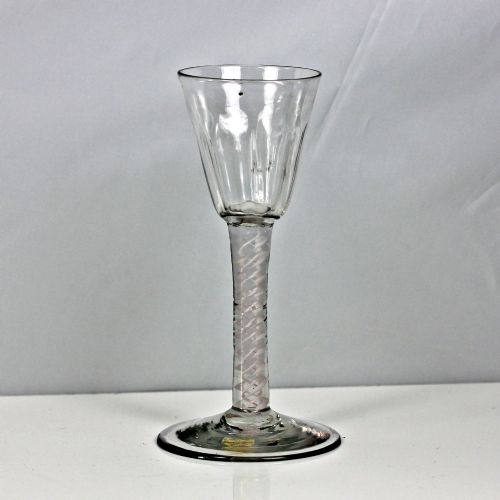
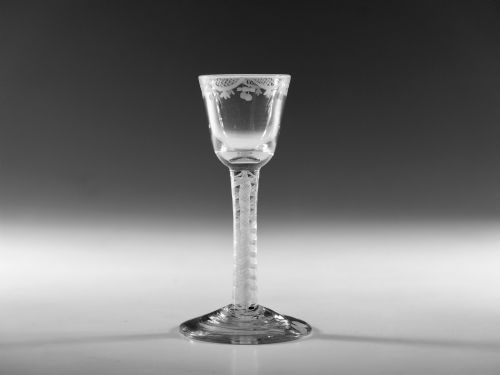
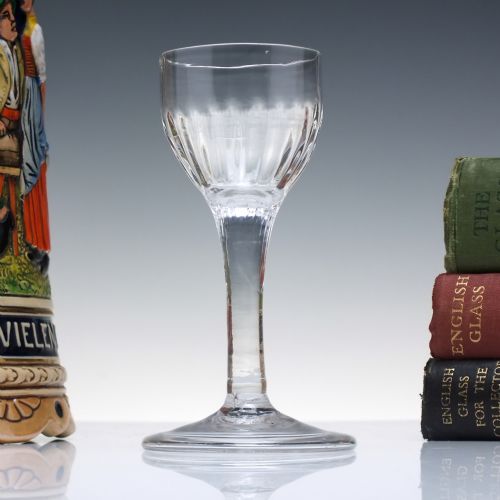
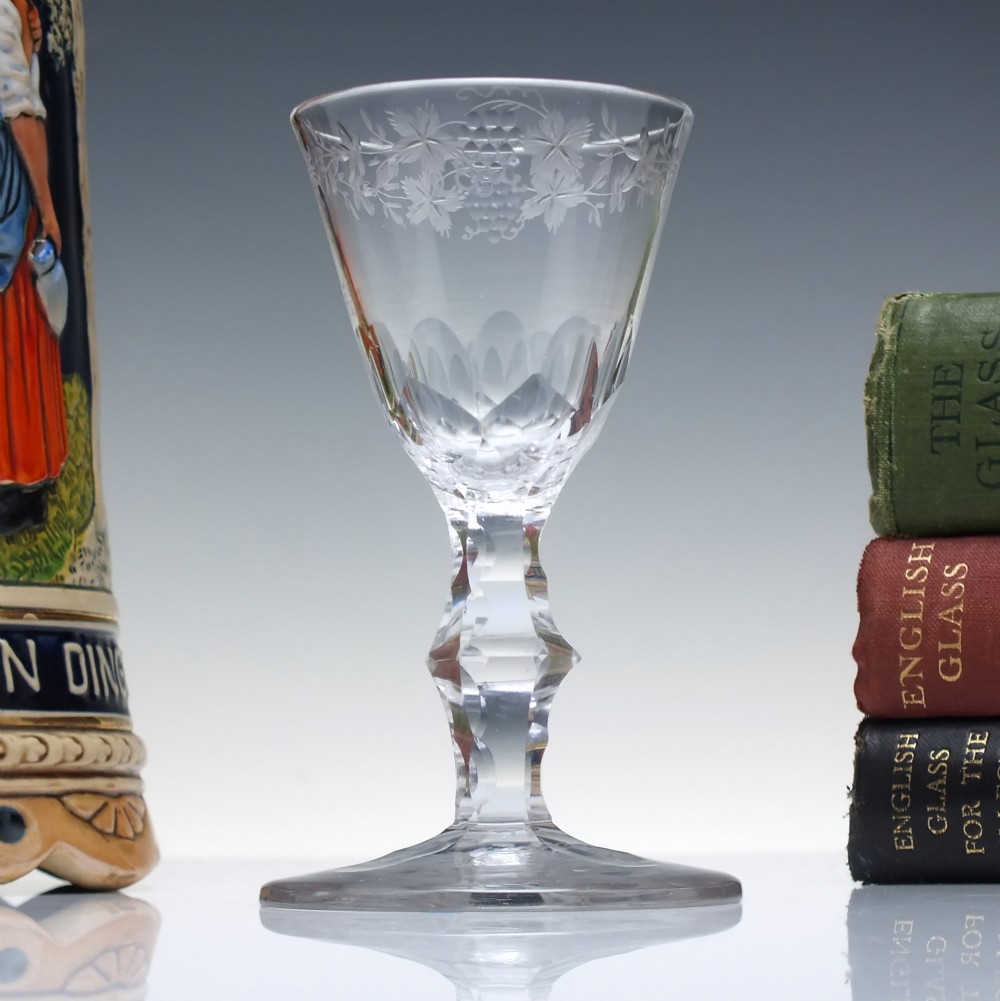
18th Century Georgian Engraved Facet Cut Wine Glass C1780
For sale by Exhibit Antiques
for sale €211     $229
£180
Exhibit Antiques

Exhibit Antiques

Sellingantiques Verified Since Mar 2019
Browse dealers 222 items
  • About Us
    Specialists in 18th & 19th century antique glass
Id #SA1244050
PDF SHARE
SAVE

18th Century Georgian Engraved Facet Cut Wine Glass C1780

18th century
For Sale by Exhibit Antiques
Description

Description

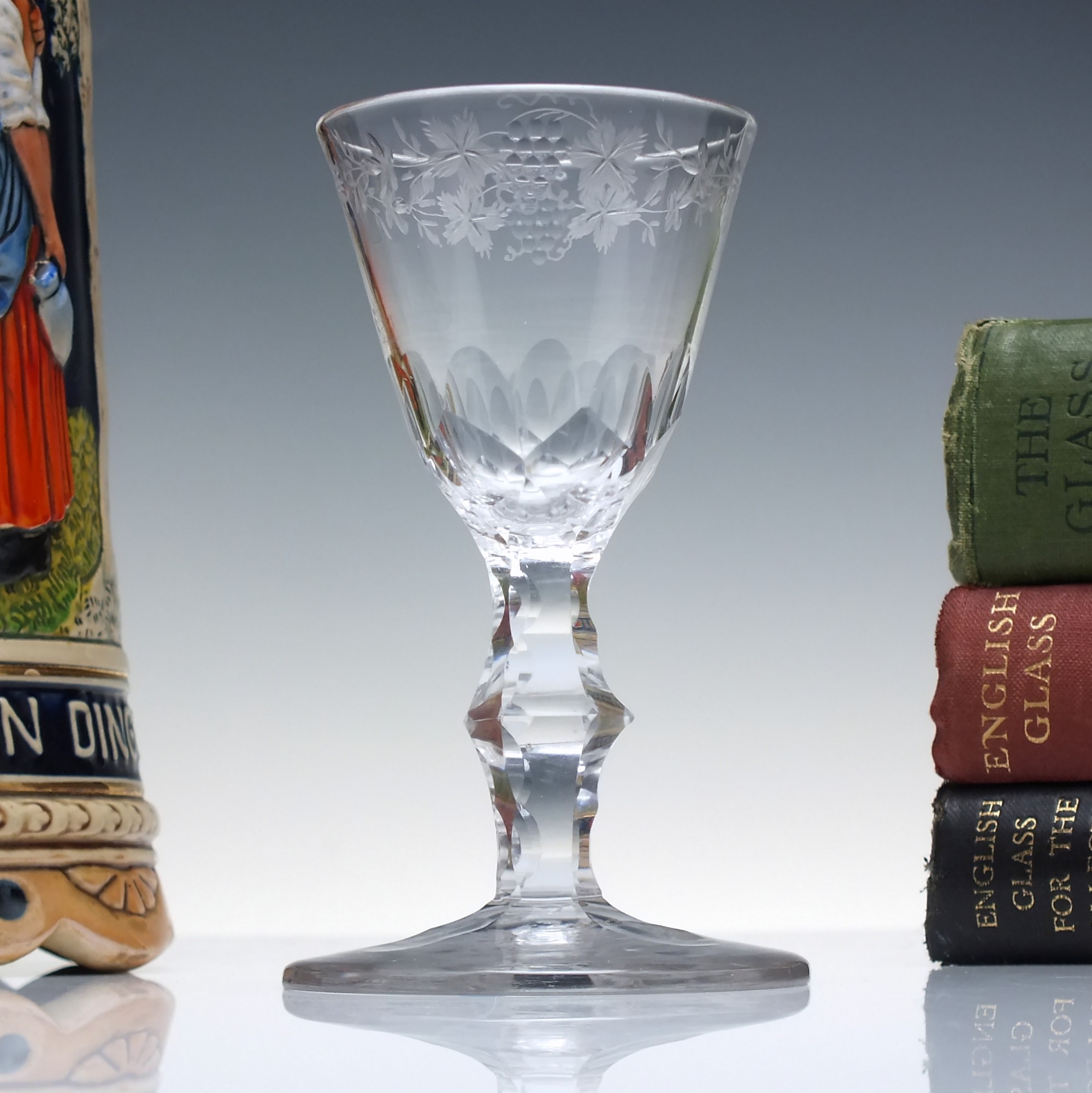
A very fine Georgian 18th-century facet-cut wine glass, dating to circa 1780.

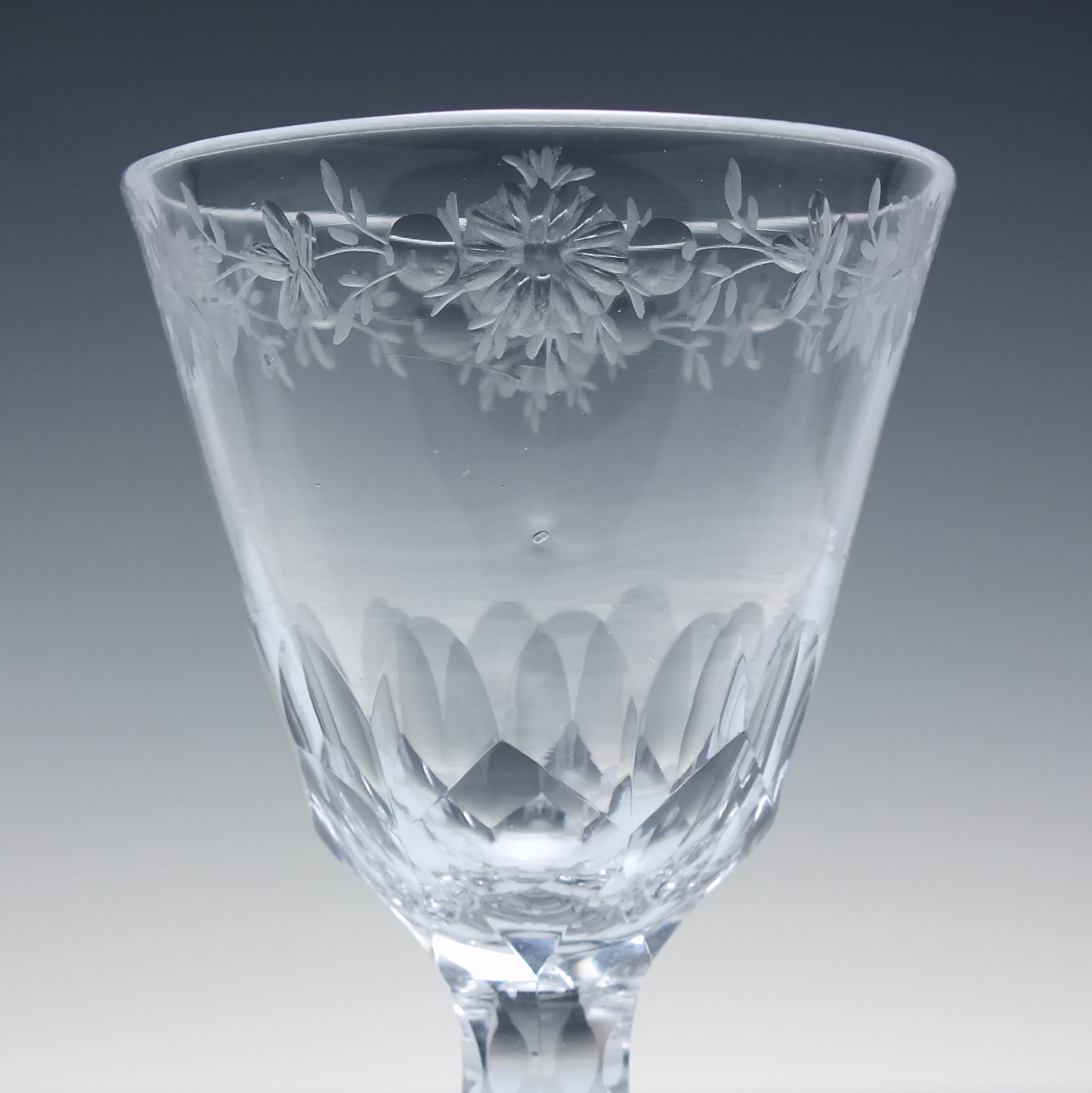
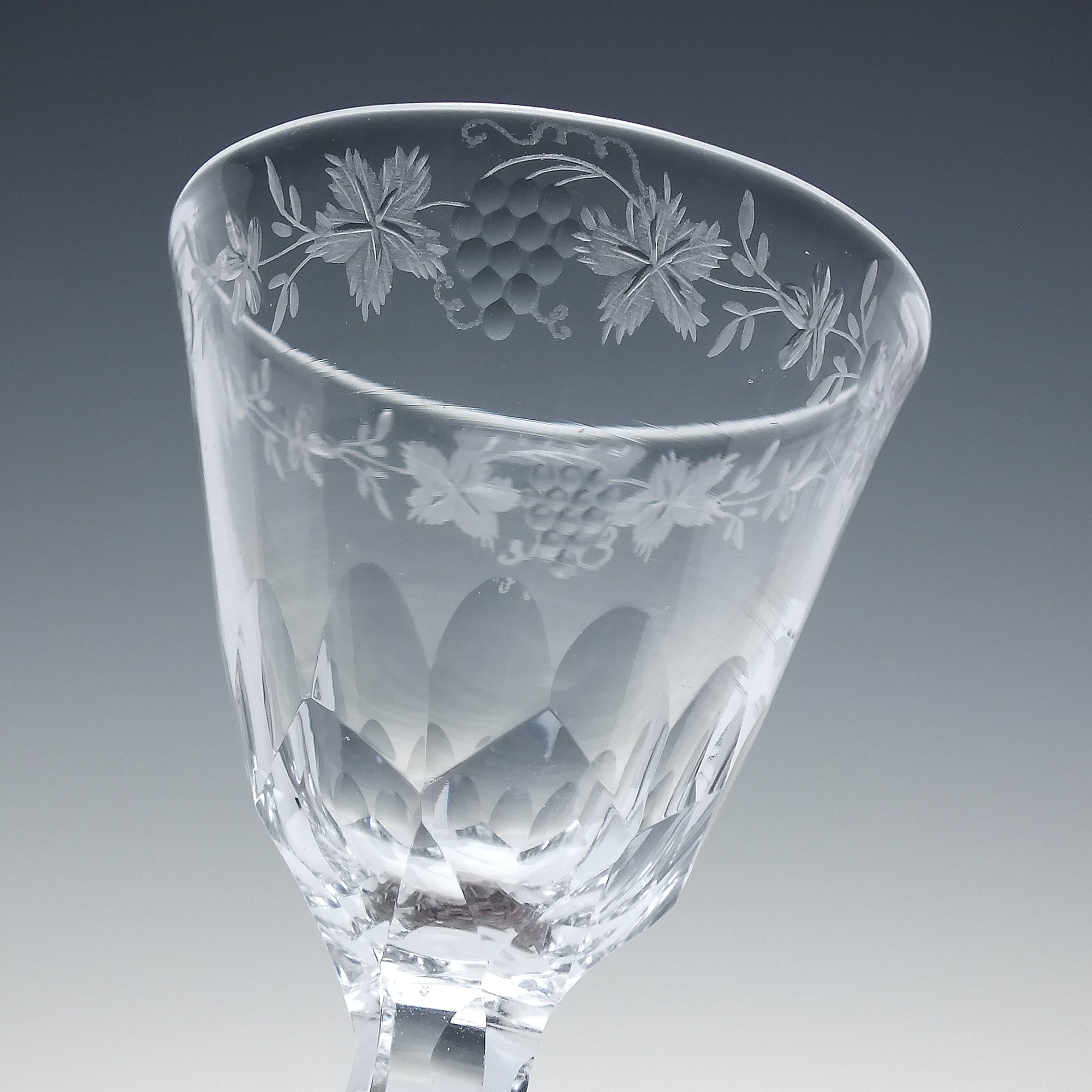
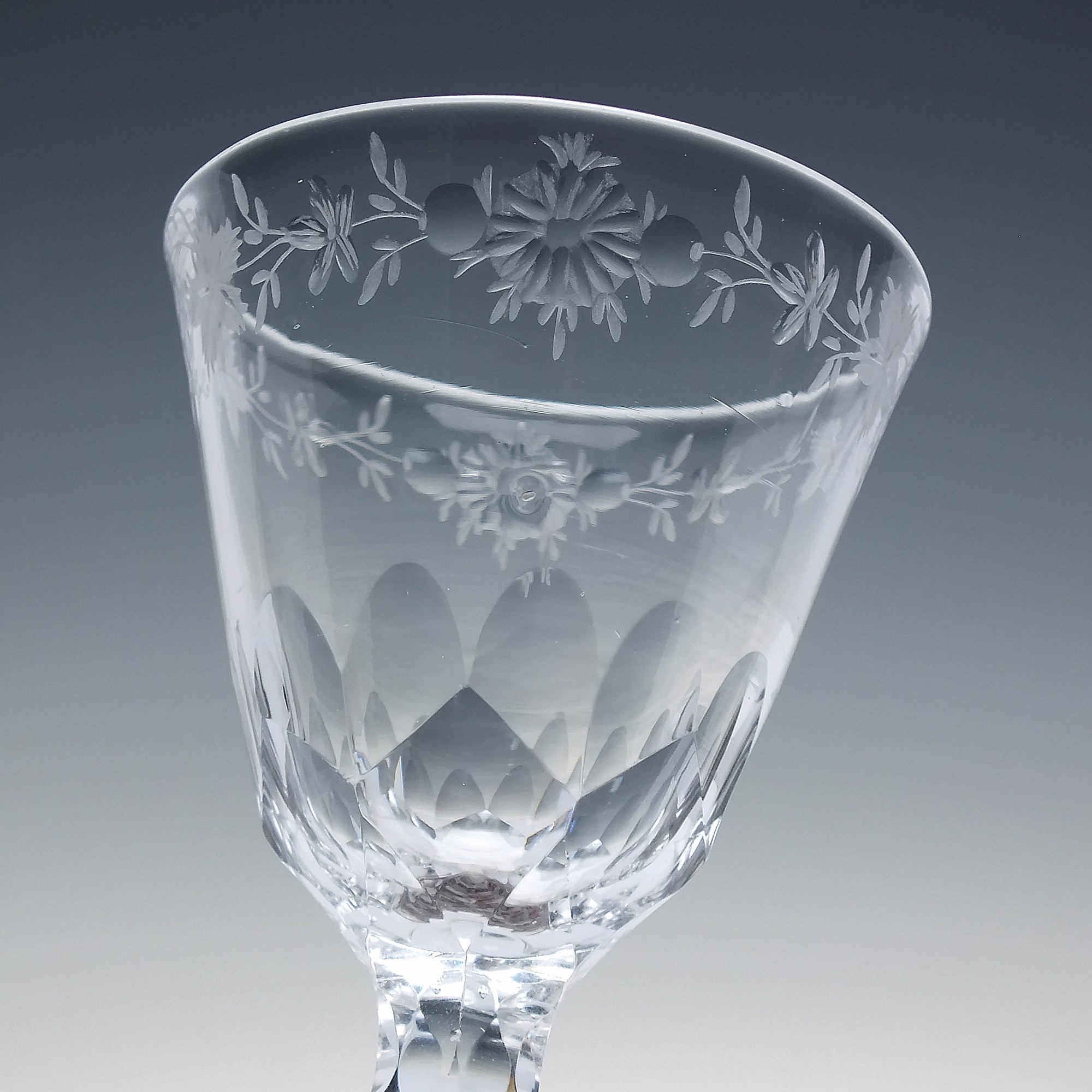
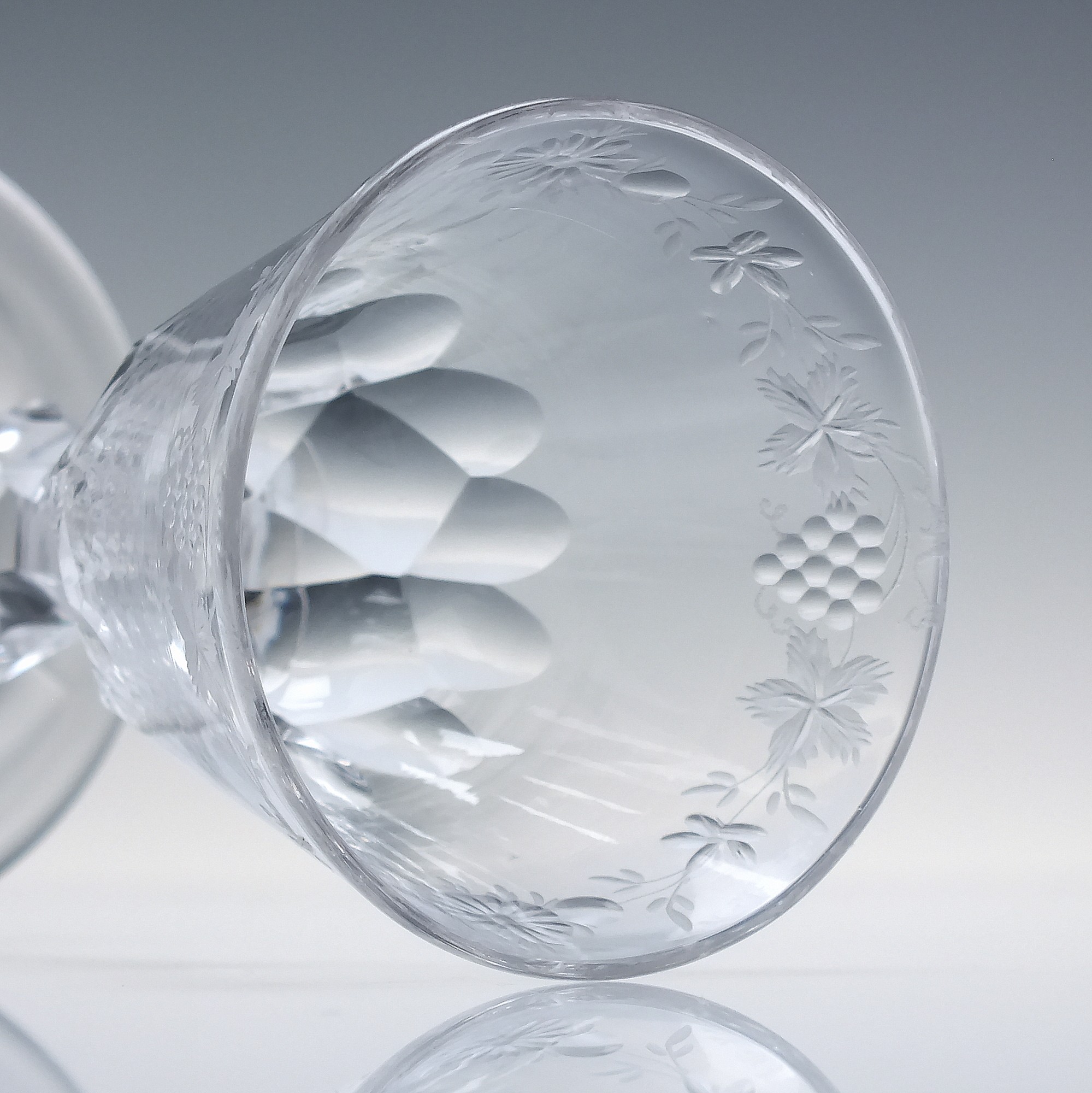
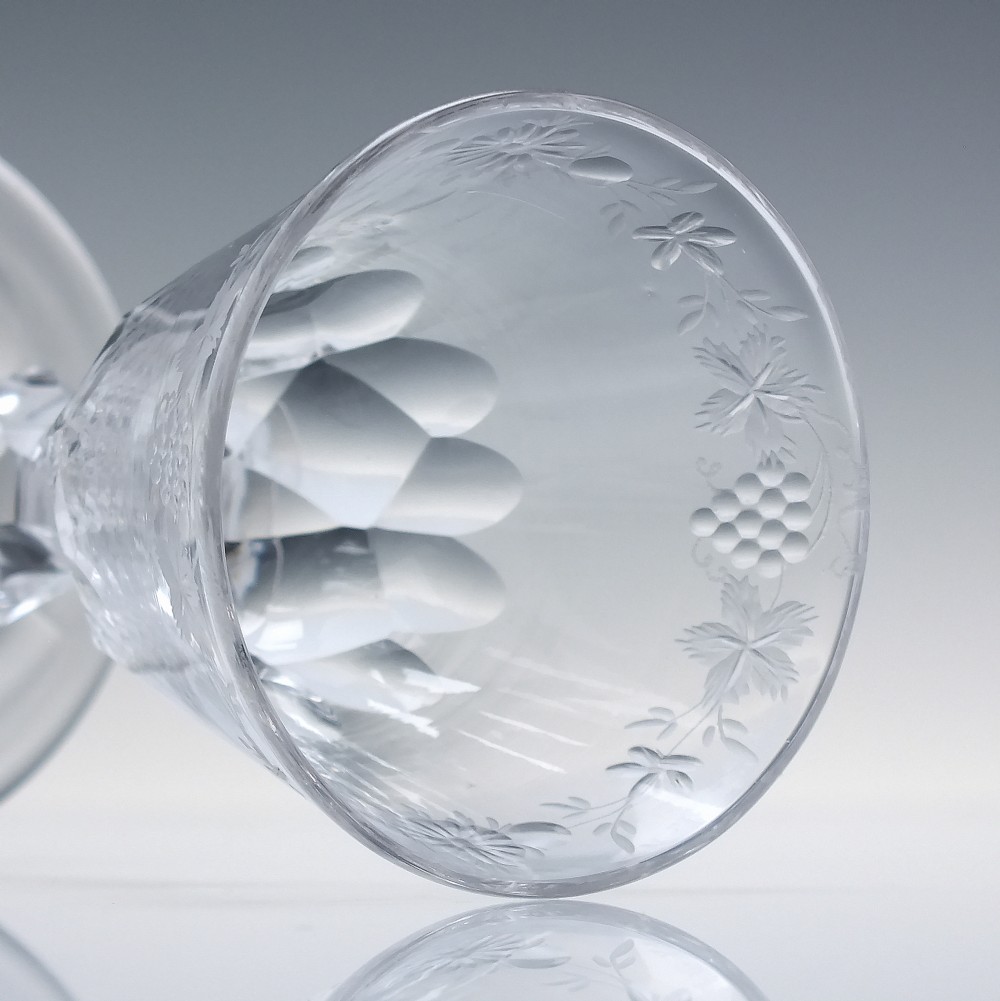
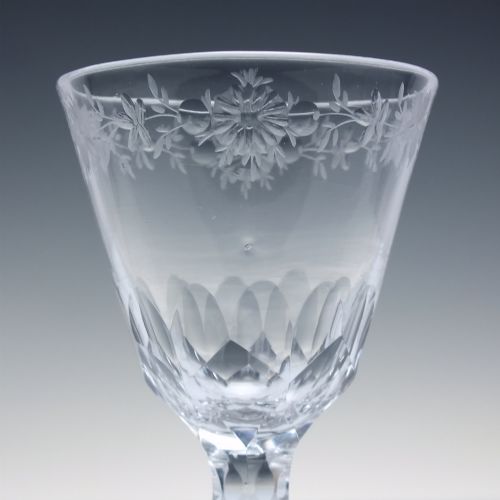
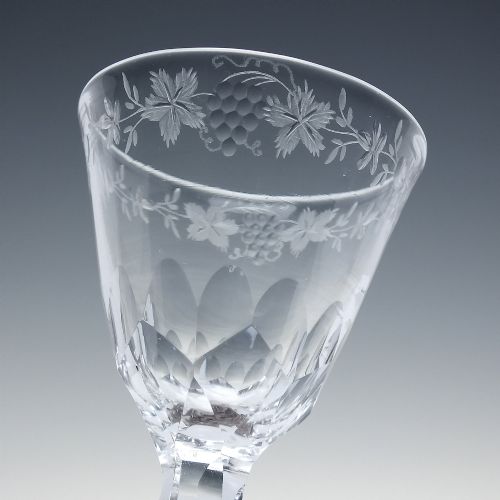
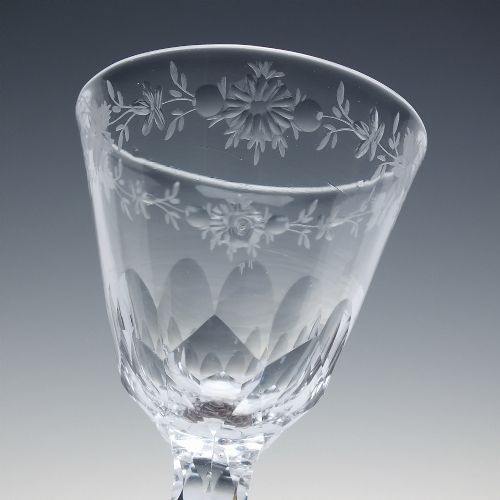
It features a round funnel bowl, delicately engraved with a band of fruiting vine and flowers around the rim. The lower section is richly decorated with a finely executed band of elongated diamond and flute cuts, creating a crisp and highly refractive effect.
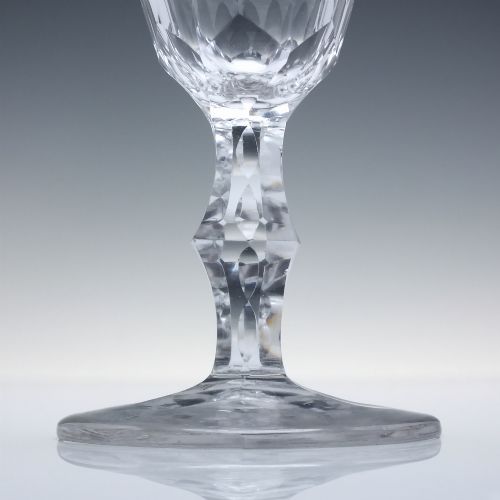
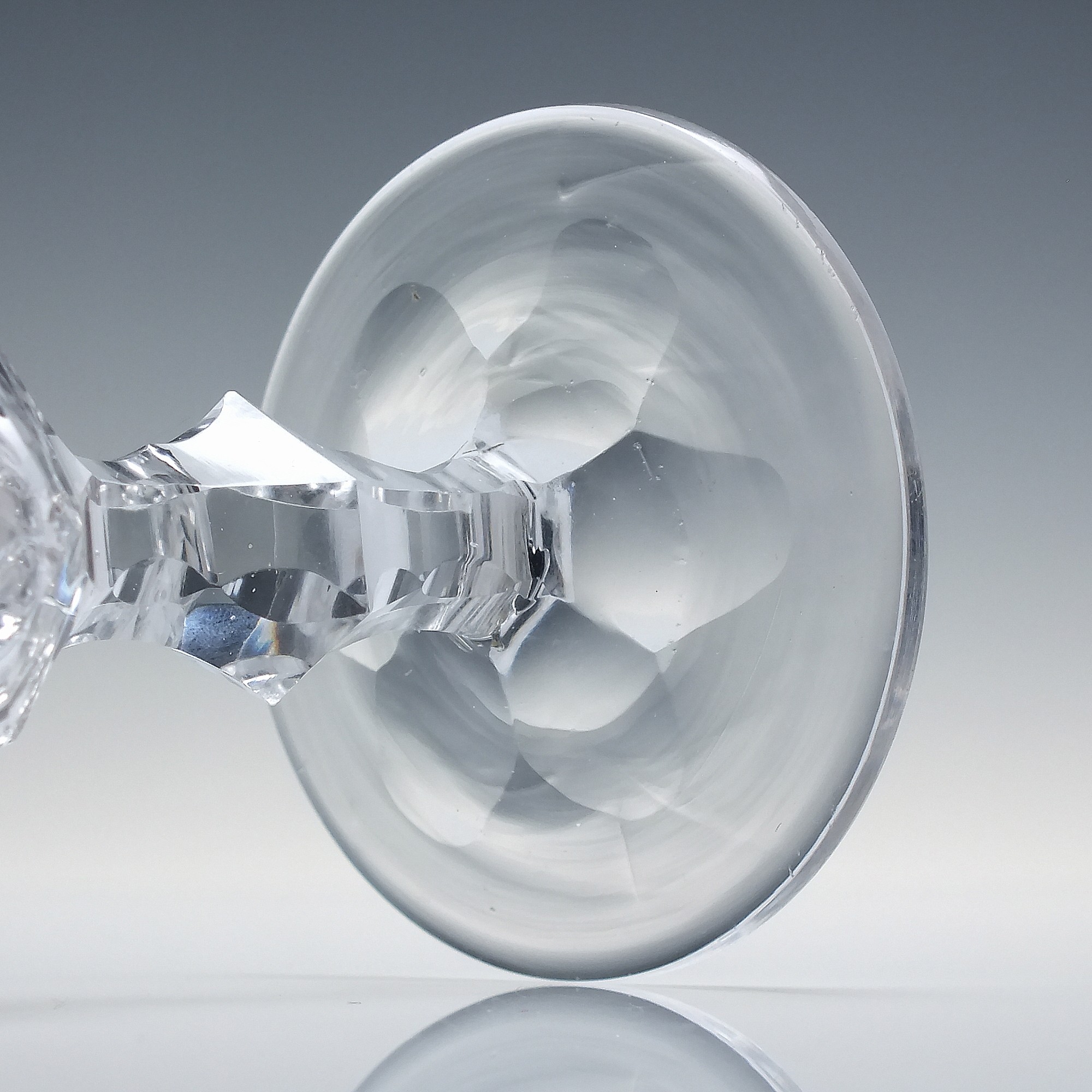
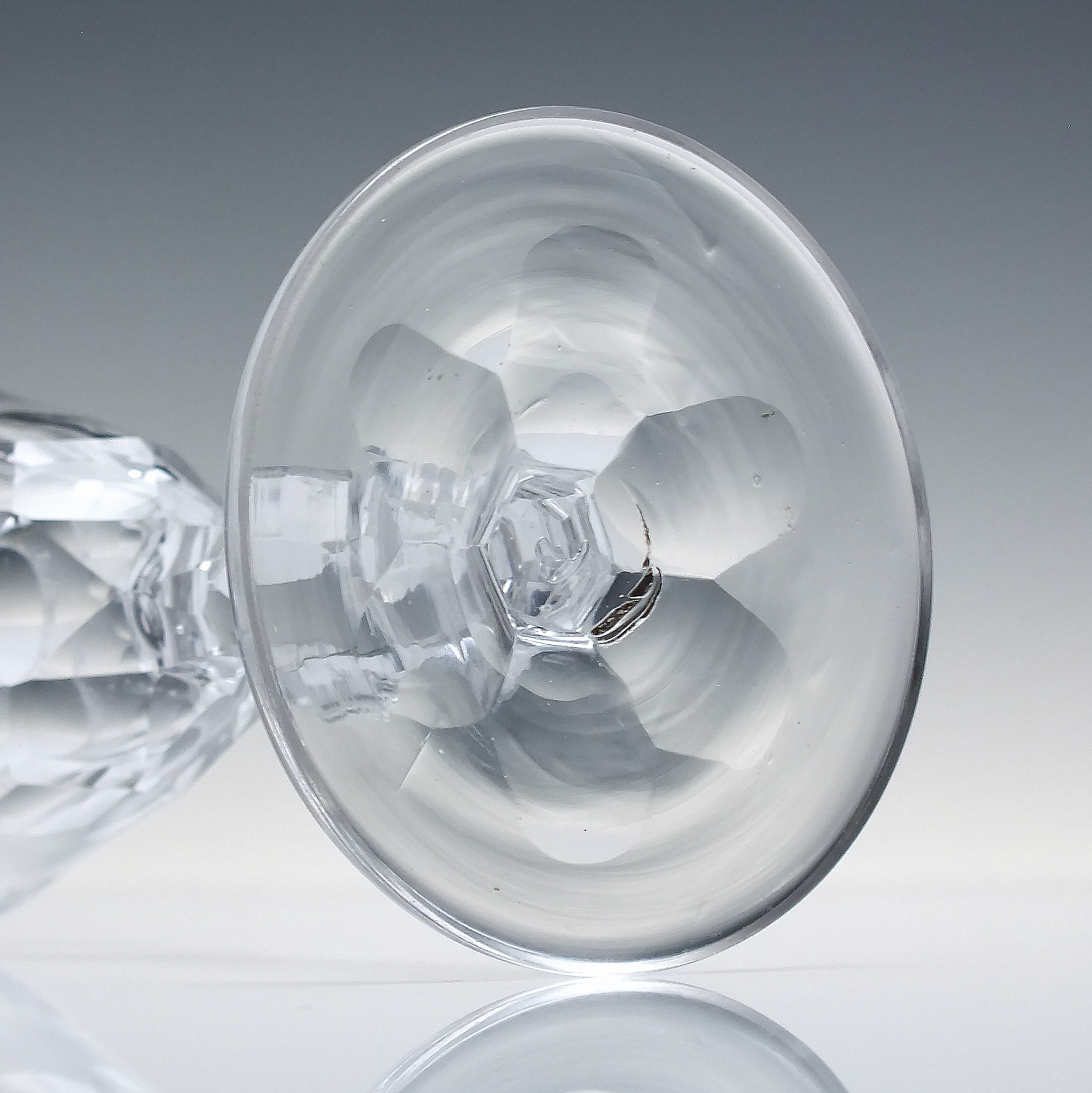
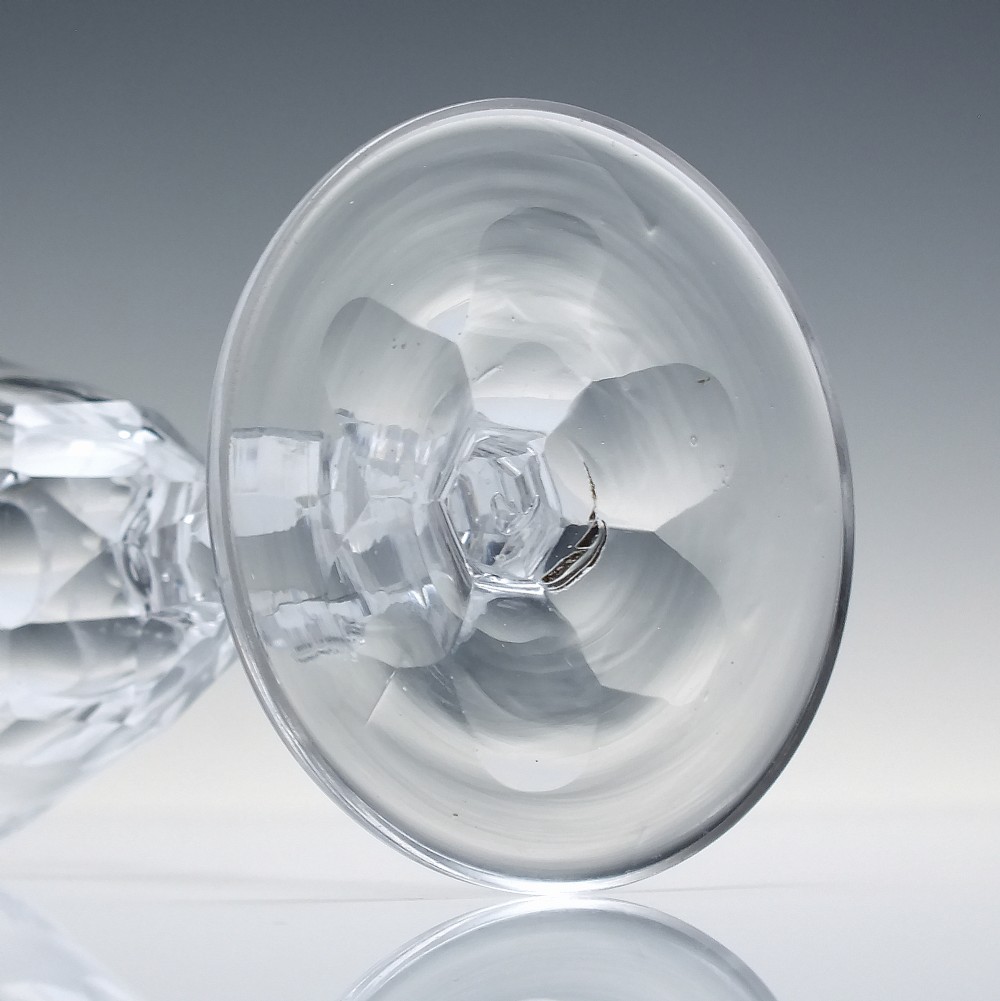
The stem is particularly rare, intricately scallop-cut and carefully notched along alternating edges, passing through the central knop, an unusual and highly decorative treatment above a conical foot.
Historical Context

Facet-cut wine glasses became popular in the late 18th century as taste shifted towards greater brilliance and visual display. The use of prism, diamond, and slice cutting allowed the glass to catch and refract candlelight, giving it a sparkling, jewel-like appearance that stood out on the dining table. This reflected a broader move towards more decorative and luxurious tableware in the Georgian period.
At the same time, improvements in glassmaking, particularly in the production of lead glass, made it possible to cut deeper, sharper, and more precise patterns. Skilled cutting workshops developed, turning glass cutting into a refined decorative art and producing increasingly intricate designs.
These glasses also suited changing social habits, where dining became more formal and visually coordinated. Facet-cut glasses paired well with cut decanters and other tableware, creating a unified and fashionable table setting, and marking a shift away from earlier engraved and twist-decorated styles towards a heavier, more modern aesthetic.

Date & Origin

England, c1780, Period of King George III

Condition

Excellent. No chips, cracks or restoration.

Dimensions

Height: 11.8 cm

Rim diameter: 5.8 cm

Foot diameter: 7.1 cm

Date of Manufacture

Exhibit Antiques has dated this Georgian Facet Cut Glass to the Georgian era.

Independent Date Check ID 09708350
Dealer's Item DateGeorgian era
Sellingantiques DateGeorgian era
Sellingantiques agingItem 235-260 years old
Test ResultsPassed dating check
Why Sellingantiques dated this piece to THE GEORGIAN ERA:
Wheel-engraved fruiting vine and flower rim: decoration done on a treadle lathe.
Conical foot broader than the bowl rim: proportions of late 18th-century stemware.
Fine, scattered wear scratches under the foot rim: centuries of careful domestic handling.

This is an independent date report produced by Sellingantiques using its own proprietary system. The process uses the photographs shown on this page. The system is never told the date the dealer has declared. This report shows that the two dates corroborate.

Reference Numbers
Sellingantiques Reference
SA1244050
Dealers Internal Reference
2026012978
Description
Description

A very fine Georgian 18th-century facet-cut wine glass, dating to circa 1780.

“
It features a round funnel bowl, delicately engraved with a band of fruiting vine and flowers around the rim.
Exhibit Antiques

The lower section is richly decorated with a finely executed band of elongated diamond and flute cuts, creating a crisp and highly refractive effect.

fig 1. A late 18th-century clear lead glass wine glass featuring a wheel-engraved grapevine rim pattern and a faceted hexagonal stem.
fig 1. 18th Century Georgian Engraved Facet Cut Wine Glass C1780

The stem is particularly rare, intricately scallop-cut and carefully notched along alternating edges, passing through the central knop, an unusual and highly decorative treatment above a conical foot.

fig 2. A late 18th-century clear lead glass wine glass featuring a wheel-engraved grapevine rim pattern and a faceted hexagonal stem.
fig 2. 18th Century Georgian Engraved Facet Cut Wine Glass C1780

Historical Context

Facet-cut wine glasses became popular in the late 18th century as taste shifted towards greater brilliance and visual display. The use of prism, diamond, and slice cutting allowed the glass to catch and refract candlelight, giving it a sparkling, jewel-like appearance that stood out on the dining table. This reflected a broader move towards more decorative and luxurious tableware in the Georgian period.

fig 3. A late 18th-century clear lead glass wine glass featuring a wheel-engraved grapevine rim pattern and a faceted hexagonal stem.
fig 3. 18th Century Georgian Engraved Facet Cut Wine Glass C1780

At the same time, improvements in glassmaking, particularly in the production of lead glass, made it possible to cut deeper, sharper, and more precise patterns. Skilled cutting workshops developed, turning glass cutting into a refined decorative art and producing increasingly intricate designs.

fig 4. A late 18th-century clear lead glass wine glass featuring a wheel-engraved grapevine rim pattern and a faceted hexagonal stem.
fig 4. 18th Century Georgian Engraved Facet Cut Wine Glass C1780

These glasses also suited changing social habits, where dining became more formal and visually coordinated. Facet-cut glasses paired well with cut decanters and other tableware, creating a unified and fashionable table setting, and marking a shift away from earlier engraved and twist-decorated styles towards a heavier, more modern aesthetic.

Date & Origin

England, c1780, Period of King George III

Condition

Excellent. No chips, cracks or restoration.

Dimensions

Height: 11.8 cm

Rim diameter: 5.8 cm

Foot diameter: 7.1 cm

Date of Manufacture

Exhibit Antiques has dated this Georgian Facet Cut Glass to the Georgian era.

Independent Date Report ID 09708350
Dealer's Item DateGeorgian era
Sellingantiques datingGeorgian era
Sellingantiques agingItem 235-260 years old
Test ResultsPassed dating check
Why Sellingantiques dated this piece to the Georgian era:
Wheel-engraved fruiting vine and flower rim: decoration done on a treadle lathe.
Conical foot broader than the bowl rim: proportions of late 18th-century stemware.
Fine, scattered wear scratches under the foot rim: centuries of careful domestic handling.

This is an independent date report produced by Sellingantiques using its own proprietary system. The process uses the photographs shown on this page. The system is never told the date the dealer has declared. This report shows that the two dates corroborate.

Reference Numbers
Sellingantiques Ref
SA1244050
Dealers Internal Ref
2026012978
Exhibit Antiques
Exhibit Antiques
Sellingantiques verified Since Mar 2019

Specialists in 18th & 19th century antique glass

Dealer Profile

You can view the stock and full dealer information on the Exhibit Antiques Profile Page
PDF SHARE
SAVE
A late 18th-century clear lead glass wine glass featuring a wheel-engraved grapevine rim pattern and a faceted hexagonal stem.
1 / 8
Archive I A late 18th-century clear lead glass wine glass featuring a wheel-engraved grapevine rim pattern and a faceted hexagonal stem.

18th Century Georgian Engraved Facet Cut Wine Glass C1780
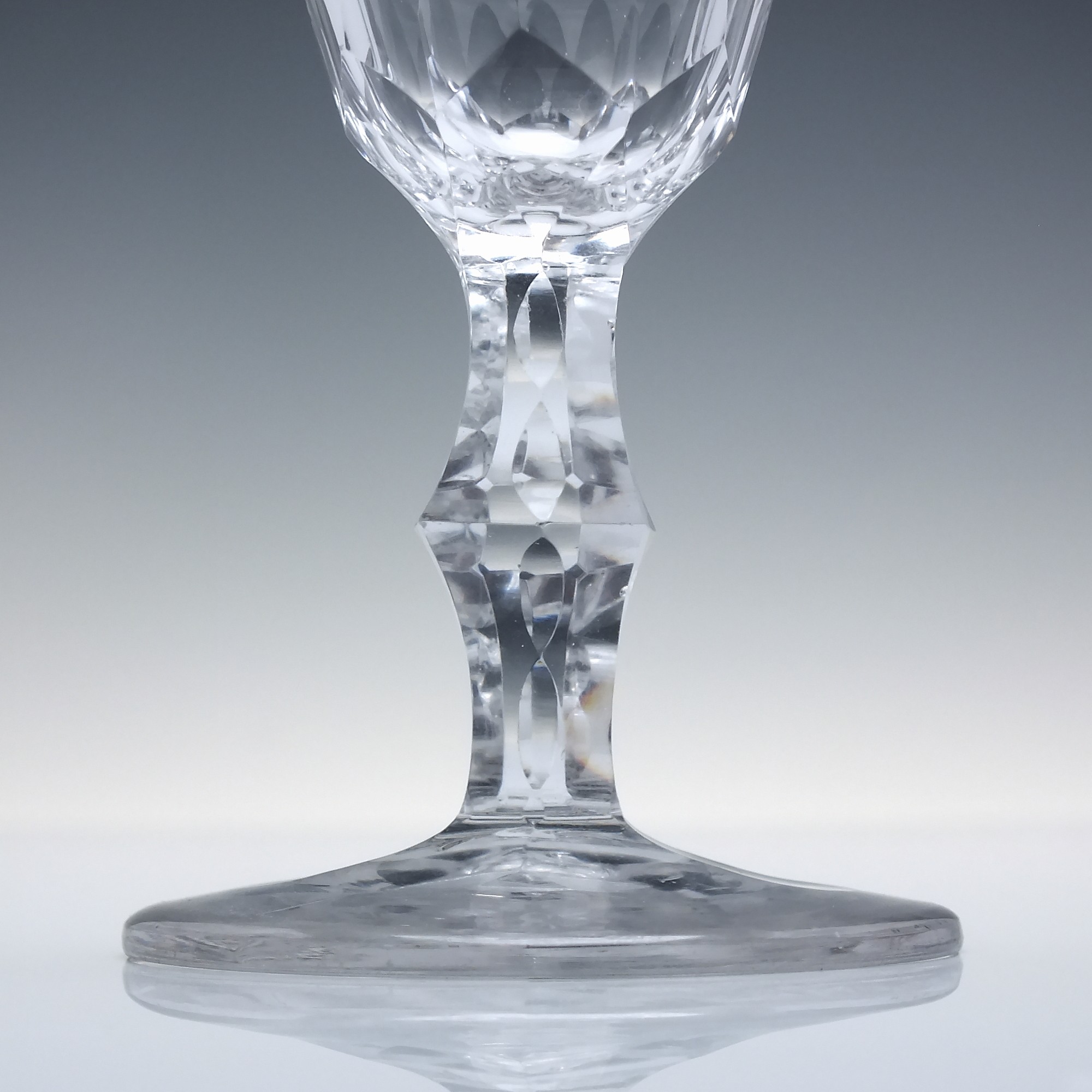
Archive II A late 18th-century clear lead glass wine glass featuring a wheel-engraved grapevine rim pattern and a faceted hexagonal stem. View II
Archive III A late 18th-century clear lead glass wine glass featuring a wheel-engraved grapevine rim pattern and a faceted hexagonal stem. View III
Archive IV A late 18th-century clear lead glass wine glass featuring a wheel-engraved grapevine rim pattern and a faceted hexagonal stem. View IV
Archive V A late 18th-century clear lead glass wine glass featuring a wheel-engraved grapevine rim pattern and a faceted hexagonal stem. View V
Archive VI A late 18th-century clear lead glass wine glass featuring a wheel-engraved grapevine rim pattern and a faceted hexagonal stem. View VI
Archive VII A late 18th-century clear lead glass wine glass featuring a wheel-engraved grapevine rim pattern and a faceted hexagonal stem. View VII
Archive VIII A late 18th-century clear lead glass wine glass featuring a wheel-engraved grapevine rim pattern and a faceted hexagonal stem. View VIII
FURTHER BROWSING

Visitors also looked at these ⇣

Enlarged Archival View
Telephone 01501 228 282
Location
Glasgow
Scotland
United Kingdom
Verified Since Mar 2019
Items For Sale 222
Items Sold 2,197
Exhibit Antiques
Exhibit Antiques
Verified Since Mar 2019
View Dealer Info
Location: Glasgow, Scotland, United Kingdom
Verified
Mar 2019
For Sale
222
Sold
2,197
A late 18th-century clear lead glass wine glass featuring a wheel-engraved grapevine rim pattern and a faceted hexagonal stem.
18th Century Georgian Engraved Facet Cut Wine Glass c1780
Ref: SA1244050
A late 18th-century clear lead glass wine glass featuring a wheel-engraved grapevine rim pattern and a faceted hexagonal stem.
Detail View 1
Detail View 2
Detail View 3
Detail View 4
Detail View 5
Detail View 6
Detail View 7
Archival Detail
Every single antique dealer on our platform is individually approved by our internal team. We verify their professional trade history, ethical standards, and photographic quality to ensure a secure, high-standard buying environment. Upon joining, every dealer agrees to a strict 9-point code of conduct. While issues can occasionally arise, our dealers typically resolve them swiftly and directly with the buyer. In fact, since our founding in 2002, Sellingantiques has only had to step in to help resolve an issue on roughly five occasions—a true testament to the quality of our dealers and their dedication to your happiness.
Our dealers are highly experienced in packing and shipping fragile, high-value antiques. Because you are in direct contact with the dealer, you will be able to easily go through all available shipping and insurance options together to ensure your item arrives safely.
Antiques are the ultimate green purchase. By choosing historical pieces over newly manufactured goods, you completely eliminate the carbon footprint of modern mass production while preserving exceptional, timeless craftsmanship.
Written by Sellingantiques from the dealer’s photographs and listing
  • ObjectWine Glass
  • Period18th century
  • StyleGeorgian
  • MaterialLead Glass, Cut Glass
  • ColourClear
  • MotifsFacet cut stem, Grapevine rim engraving, Basal facet cuts, Conical foot

This 18th-century Georgian wine glass dates to circa 1780 and belongs to the period of King George III. Made from clear lead glass, the piece takes the form of a round funnel bowl above an intricate hexagonal faceted stem and a plain conical foot. The rim carries a delicate wheel-engraved band of fruiting vines and flowers, while the lower section of the bowl displays elongated diamond and flute cuts. Below, the stem features scallop cutting and notched alternating edges passing through a central knop. The object stands 11.8 cm tall, with a rim diameter of 5.8 cm and a foot diameter of 7.1 cm. In a modern interior, this English lead glass wine glass suits placement on a sideboard top or within a display cabinet. The transparent material and refractive cut details allow it to catch natural daylight or artificial illumination. The stable conical foot and sturdy proportions support careful handling during special dining occasions or as part of a traditional table setting collection.

Georgian facet-cut stemware, predominant between 1770 and 1800, features geometrically cut stems designed to refract light, often paired with wheel-engraved decorative bands around the bowl rim.

These vessels were hand-blown using heavy lead glass (flint glass), after which lapidary wheels cut faceted patterns into the stem and copper wheels engraved detailed motifs onto the bowl.

Authentic pieces display hand-cut inconsistencies, a snapped or polished pontil mark on the underside of the conical foot, and characteristic greyish or blue-grey tints associated with historical lead glass formulas.

Period stemware is frequently displayed within glass-fronted cabinets, positioned on dining sideboards, or arranged as decorative accents atop tray tables to catch natural light.

Hand wash individual items in lukewarm water using a mild dish liquid, avoiding extreme temperature shifts and dishwasher use to prevent crizzling, clouding, or thermal shock fractures.
items
Add keywords to the filter
Price
£100
£250000
Era
Period
Style
Material
Origin
Stock Location
Recently Added
Online Payments
Categories