

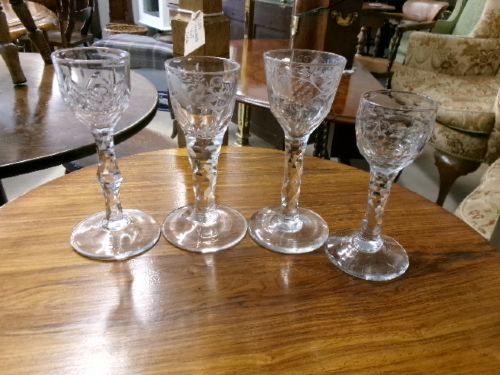
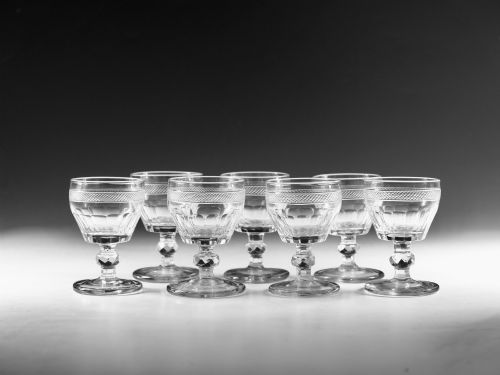


Facet Stem Wine Glass
A facet stem wine glass brings the crisp geometry of eighteenth-century cutting to the table, offering a satisfying weight and brilliant refraction.
Facet Stem Wine Glass
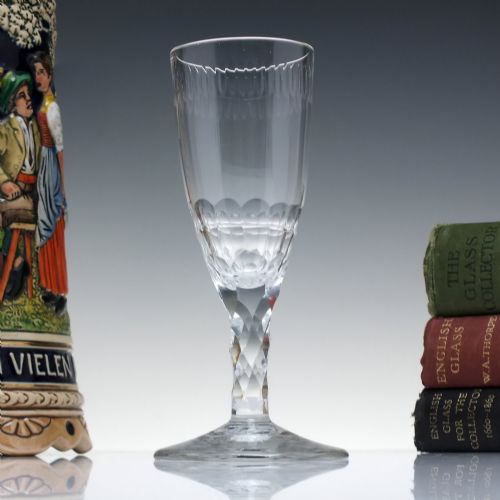
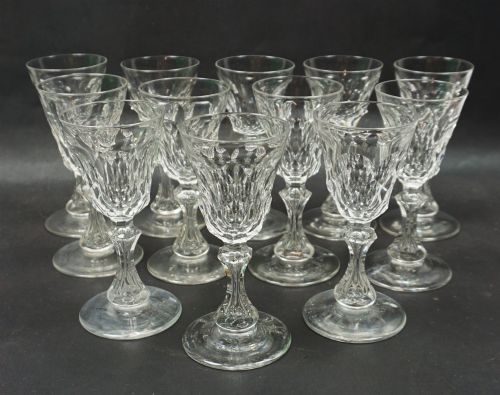
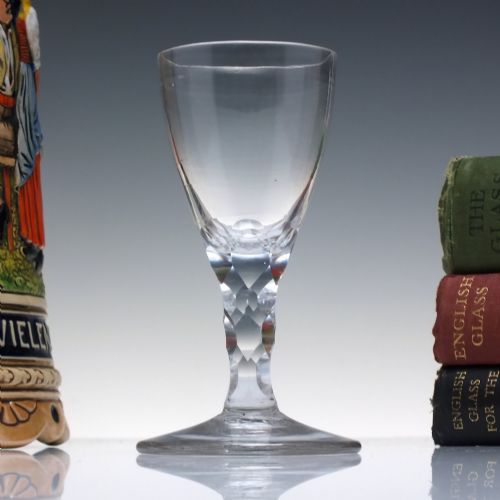
When you search for a facet stem wine glass, you enter the world of Georgian drinking vessels defined by linear cutting along the stem rather than traditional air twists or ball knobs. Most examples you will encounter date from the eighteenth century, particularly the seventeen-seventies and eighties, though later Victorian and twentieth-century interpretations also appear.
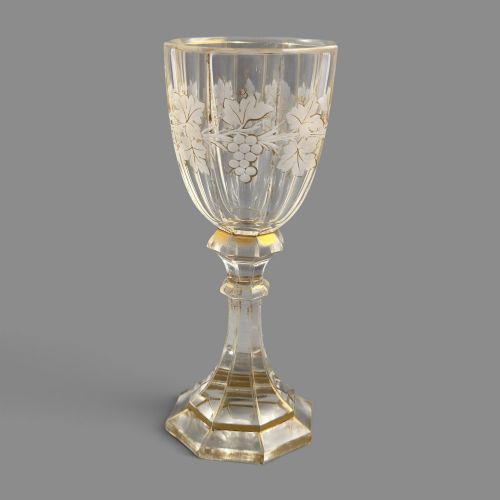
The form spans various drinking vessels beyond standard wine glasses, including cordial glasses, rummers, port glasses, and larger goblets. English and Bohemian workshops dominate the origins, producing clear lead glass and lead crystal forms with decorated bowls, wide foot bases, and occasionally specific political engravings.
How they were made
Makers fashioned these pieces from lead crystal, lead glass, and clear glass, utilising heavy metal content to achieve high optical clarity and bright resonance when struck. Artisans then formed the distinctive stems by grinding flat facets onto the surface using a small wheel, creating sharp geometric angles that catch the light.
Decoration extended to the bowls through fine wheel engraving, such as Jacobite symbols, or applied gilding by masters like James Giles. Bohemian pieces often incorporated coloured glass layers and detailed cutting, combining rich hues with bright transparent facets.
Facet Stem Wine Glass Retail Price Guide 2026
Typical asking prices for facet stem wine glass among the pieces listed under this phrase on Sellingantiques today, from the lower quarter to the upper quarter. They describe what is for sale here now, not the wider market.
Some eighteenth-century drinkers hid treasonous political sympathies inside tiny, precisely engraved floral stems.
What varies in quality
The distinction between average and exceptional pieces lies in the crispness of the facet cutting and the proportional balance of the bowl, stem, and foot. Sharp, clean edges along the stem facets demonstrate superior hand-polishing and skilled wheel work, whereas worn or muddy cuts indicate hasty production.
Clarity of the metal, absence of heavy internal bubble clouding, and the delicacy of any bowl engraving further separate standard drinking glasses from collector-grade examples. The integration of specialised decoration, such as specific historical motifs or fine gilding, elevates the piece.
Moser Bohemian·James Giles
The Facet Stem Wine Glass Glossary
- Facet cut
- A surface decorated by grinding flat planes into the glass, creating sharp geometric edges that refract light.
- Lead crystal
- A high-clarity glass containing lead oxide, which increases the weight, brilliance, and resonance of the vessel.
- Rummer
- A large, wide-bowled drinking glass used for wine, punch, or ale, typically featuring a sturdy foot and stem.
- Pontil mark
- A rough scar left on the base of the glass where the punty rod was snapped off after blowing.
- Jacobite engraving
- Decorative motifs etched onto eighteenth-century glassware in support of the exiled Stuart dynasty.
Facet Stem Wine Glass: Frequently Asked Questions
How do I date a facet stem glass?
Dating relies primarily on the form of the bowl, the thickness of the metal, and the style of the foot. Eighteenth-century examples often feature smaller bowls with folded or domed feet and meticulous stem faceting.
Later nineteenth-century and twentieth-century versions generally display heavier proportions, different glass compositions, and machine-finished elements that lack the hand-ground feel of Georgian work.
Can I use these antique glasses for dining?
Many collectors enjoy using eighteenth and nineteenth-century glassware for special occasions, provided they receive careful hand washing. Lead crystal and lead glass require gentle treatment to avoid thermal shock and scratching from modern dishwashers.
Examine the rim and base for stability before filling them, as centuries of use can leave minor wear.
Why are some stems cut differently?
Stem cutting evolved from simple diamond facets to complex hexagonal, diamond, and fluted patterns across different decades. The width and depth of the cuts change the way light passes through the glass, reflecting the changing tastes of Georgian and Victorian makers.