
Antique Glassware Stemware
These antique glassware stemware pieces bring centuries of table craft into daily use, offering everything from Georgian air twists to Edwardian champagne coupes.
Antique Glassware Stemware
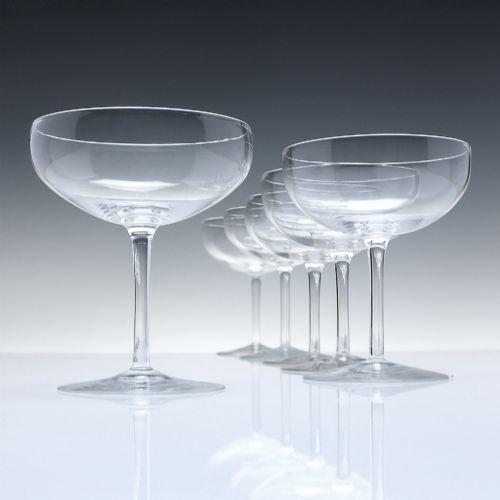
When you search for antique glassware stemware, you enter a field spanning the eighteenth, nineteenth and early twentieth centuries. The selection ranges from early dram and baluster glasses to large suites of Art Deco drinking glasses and Victorian champagne coupes.
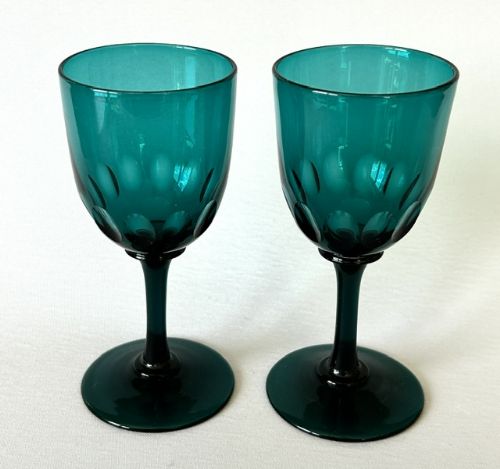
Georgian wine glasses and ale glasses dominate the earlier part of the range, featuring air twists, opaque twists and engraved bowls. Victorian and Edwardian examples bring colour and cut crystal into the mix, alongside French and Bohemian production.
How they were made
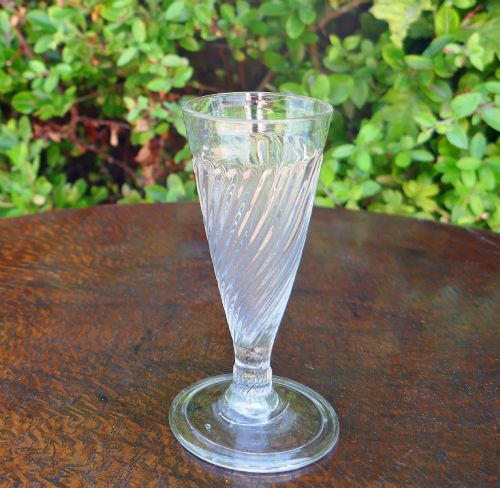
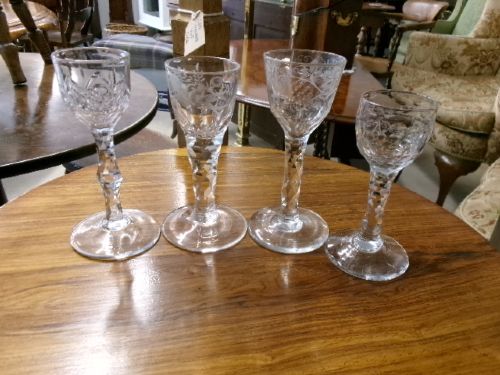
Maker workshops utilised lead glass, flint glass and clear glass, shaped by hand-blowing into moulds or free-blowing. Air twists and opaque twists were formed within the stem by trapping air or white enamel rods before stretching and twisting the metal.
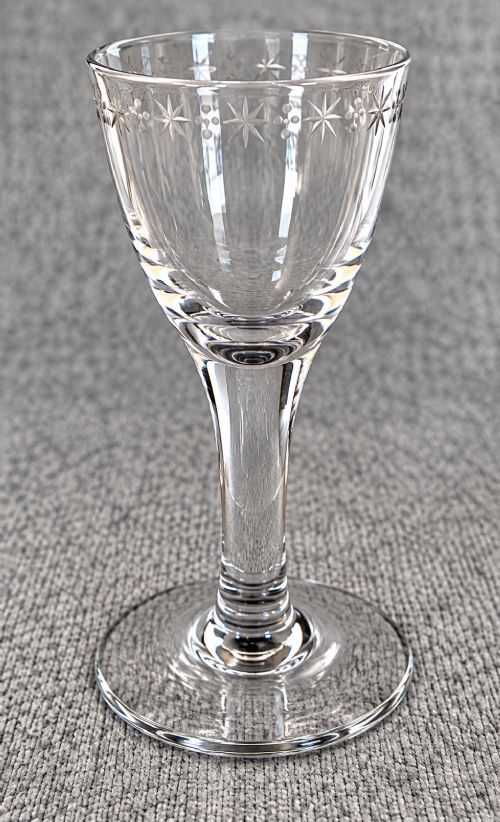
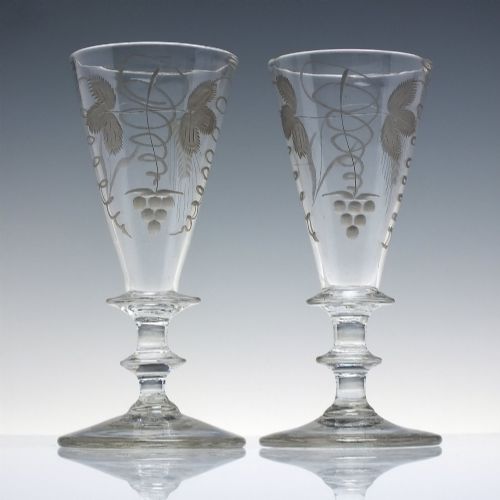
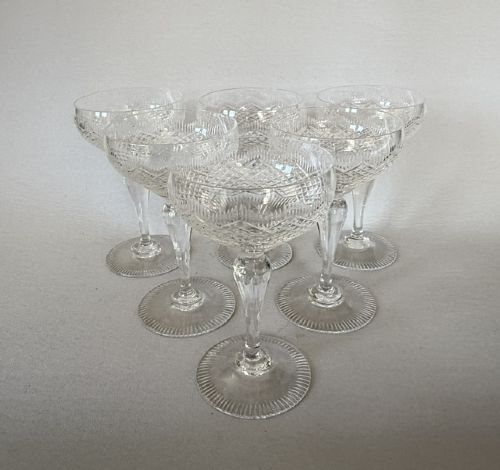
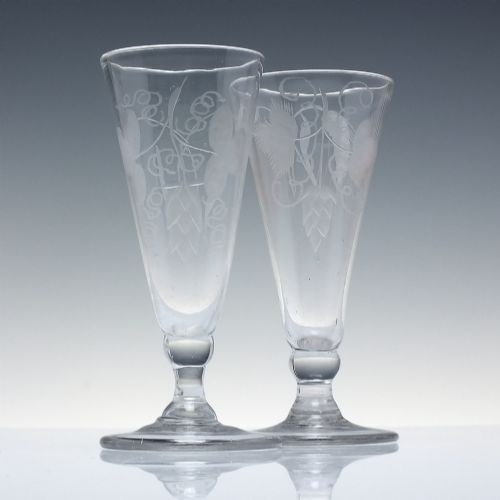
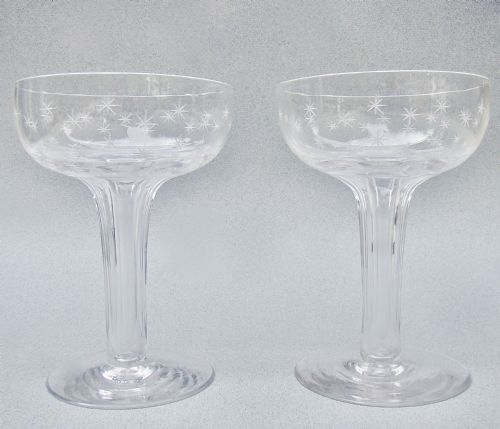
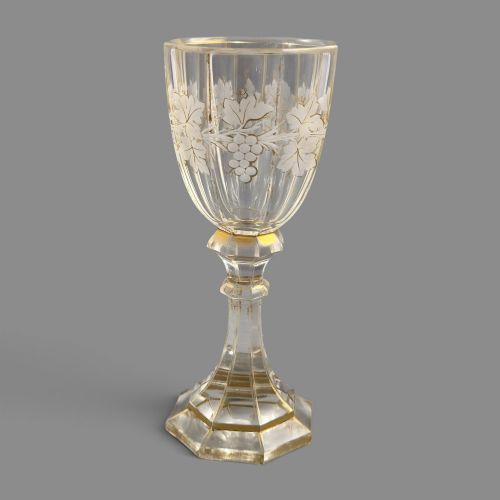
Decoration relied on wheel-engraving, star-etching, thumb-cutting and facet-cutting, occasionally finished with enamel or gold leaf gilding. Folded feet provided stability at the base of eighteenth-century drinking vessels.
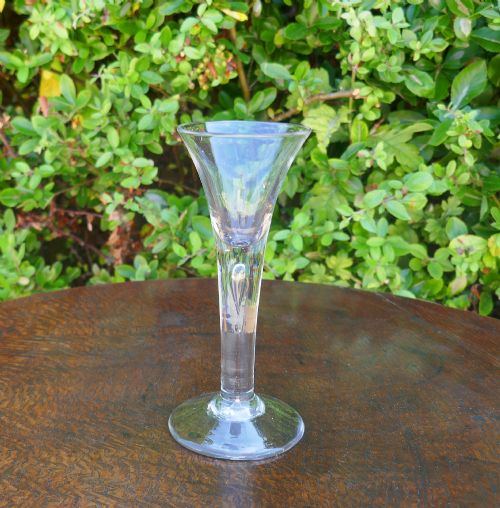
Some eighteenth-century dram glasses feature a tiny air bubble trapped purposely in the stem just below the bowl.
What varies in quality
Quality rests in the crispness of the cutting, the complexity of the stem formation and the clarity of the metal. Early air and opaque twists show precision in their interior threads, while cut crystal relies on deep, symmetrical faceting.
The weight and balance of the piece in the hand distinguish standard production from finer workshop output. Engraved detail ranges from simple floral motifs to intricate historical or armorial scenes executed by skilled hands.
Moser Bohemian·Theresienthal·James Powell
The Antique Glassware Stemware Glossary
- Air twist
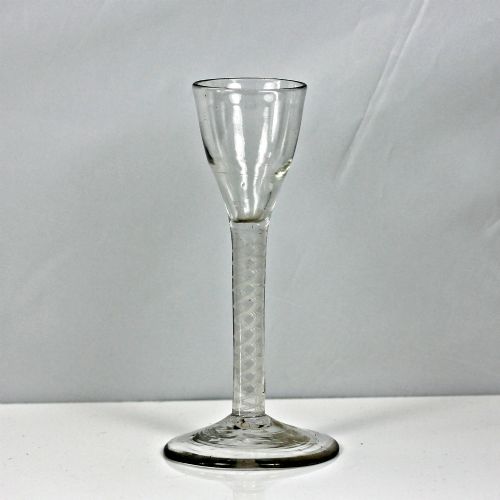
- A stem containing spiral threads of trapped air formed during the drawing process. This technique requires considerable skill to maintain an even distribution throughout the stem.
- Opaque twist
- A stem enclosing one or more white or coloured enamel glass rods twisted into a spiral. These gained popularity during the mid-eighteenth century.
- Rummer
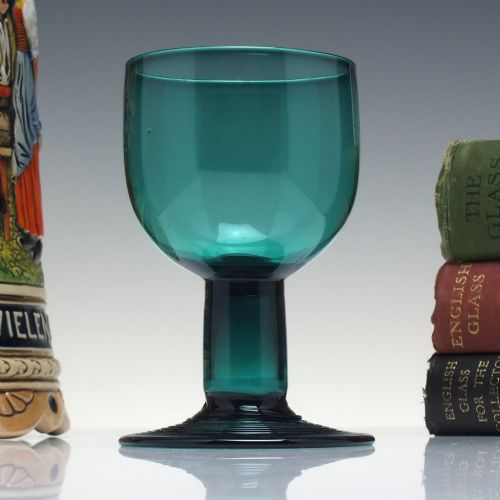
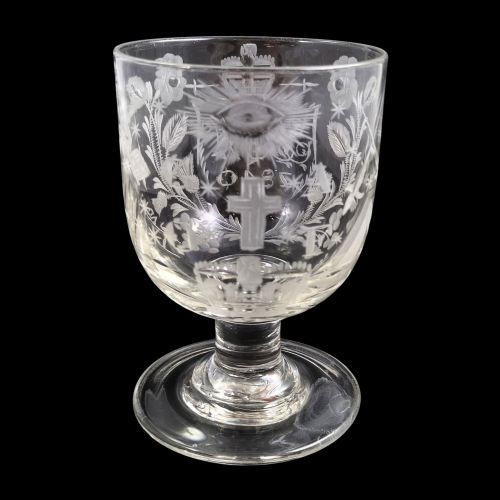
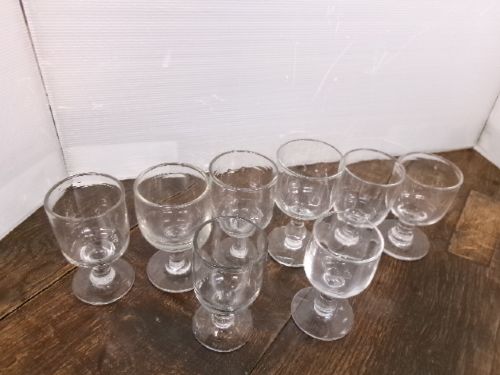
- A large, sturdy drinking glass used for ale, wine or punch during the Georgian and Victorian periods. They typically feature a short stem and a capacious bowl.
- Folded foot
- A base edge turned under and fused to the underside to create a smoother, heavier rim. This feature appears frequently on eighteenth-century glasses.
- Römer
- A traditional Germanic wine goblet with a large bowl resting on a cylindrical stem studded with raspberries or prunts. They often appear in green glass.
- Ogee
- A bell-shaped bowl curving outwards at the rim with an S-shaped profile. This form is common on eighteenth-century wine glasses.
Antique Glassware Stemware: Frequently Asked Questions
How do I date an eighteenth-century wine glass?
Dating relies on a combination of form, stem construction and foot style. Baluster stems and folded feet point to the earlier decades, while air and opaque twists generally settle into the middle and latter half of the century.
Bowl shapes also shift over time, moving from heavy balusters to ogee and bucket profiles as glasshouse techniques evolved.
Can I use antique stemware for everyday dining?
Most pieces handled here served practical dining purposes in their own time and continue to do so today. Hand washing in warm water keeps the glass safe from thermal shock and protects fragile rims.
Careful handling matters more with lead crystal and delicate eighteenth-century bowls, which prefer a gentle touch over modern dishwasher cycles.
What is a rummer used for?
Rummers were heavy-duty drinking glasses designed for ale, beer or punch in the late eighteenth and nineteenth centuries. Their generous capacity made them staple tavern and household vessels.
Their sturdy build allows them to sit comfortably on heavy timber tables without the fragility of delicate wine stems.
What causes air bubbles in old glass?
Small air bubbles, or tears, occur naturally in early hand-blown glass due to the melting process in wood or coal-fired furnaces. Eighteenth-century glassmakers sometimes left these visible in the bowl or stem.
Collectors often view these bubbles as evidence of authentic period manufacture rather than a structural fault.