


Georgian Engraved Wine Goblet
A georgian engraved wine goblet brings eighteenth-century drinking culture to the modern table through master glass cutting and historic decoration.
Georgian Engraved Wine Goblet
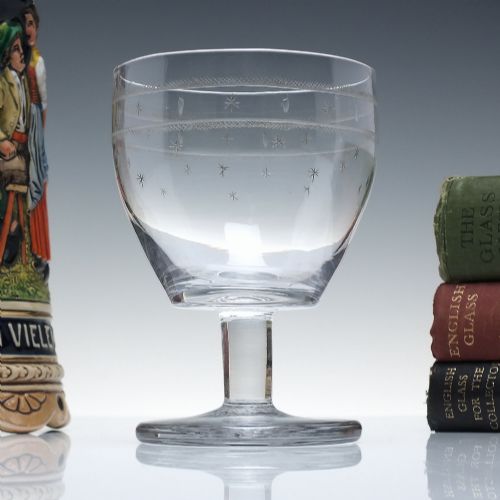
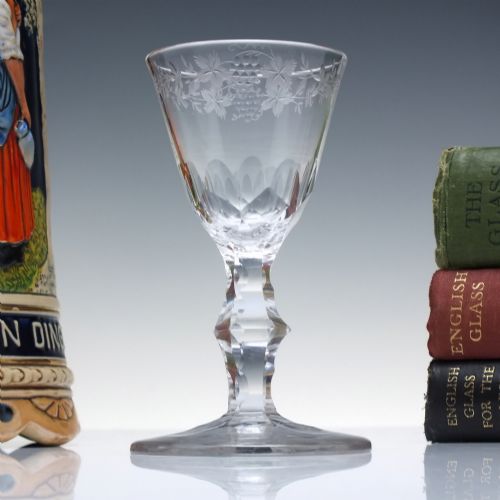
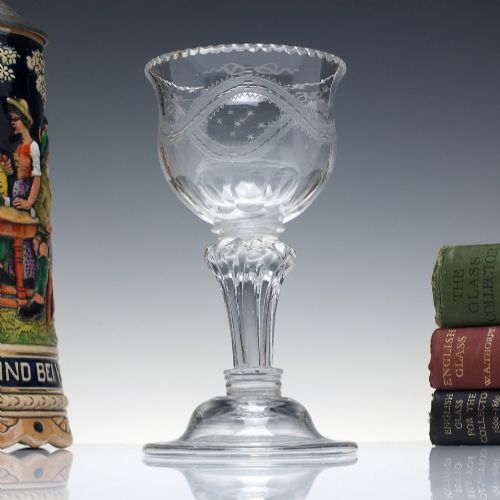
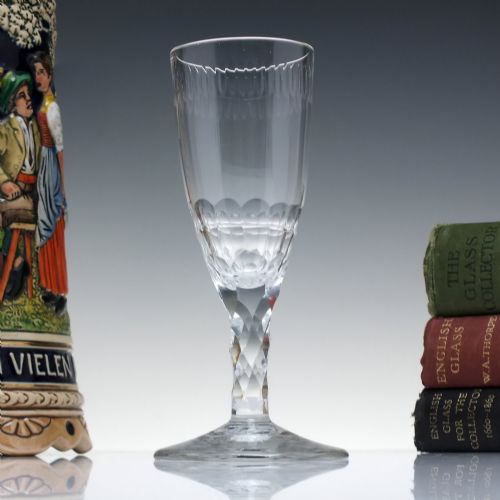
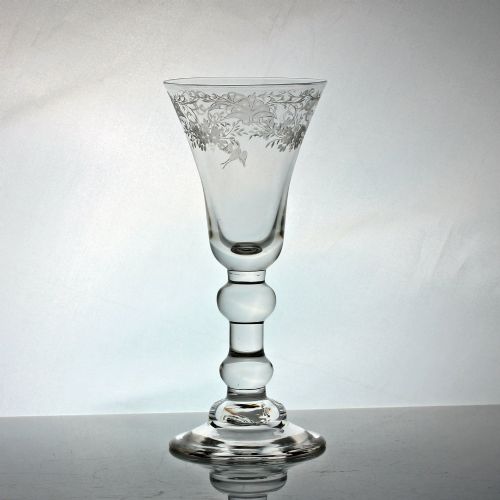
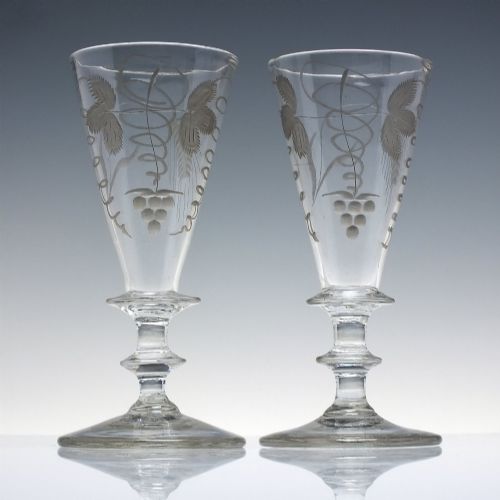
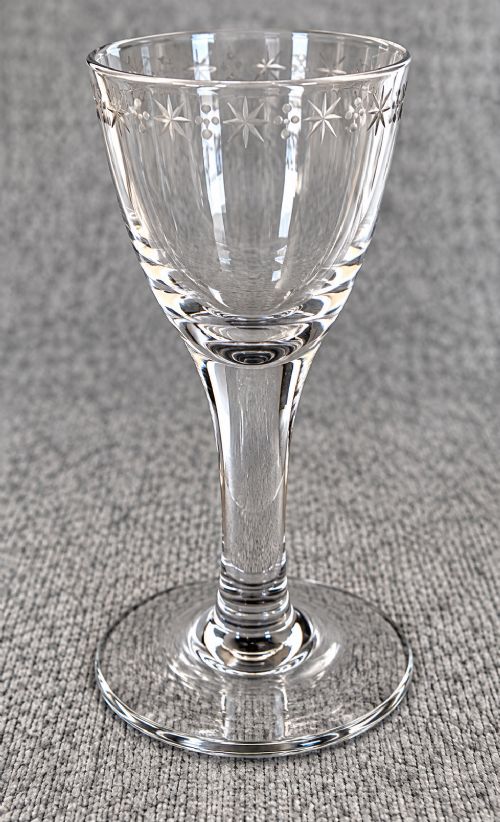
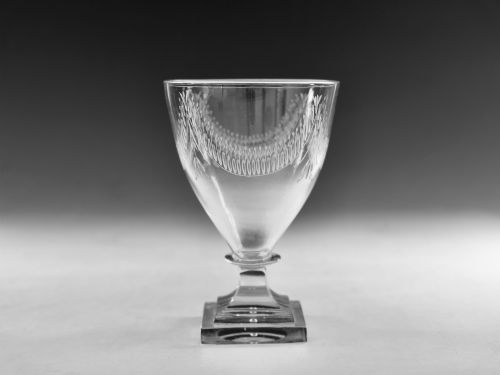
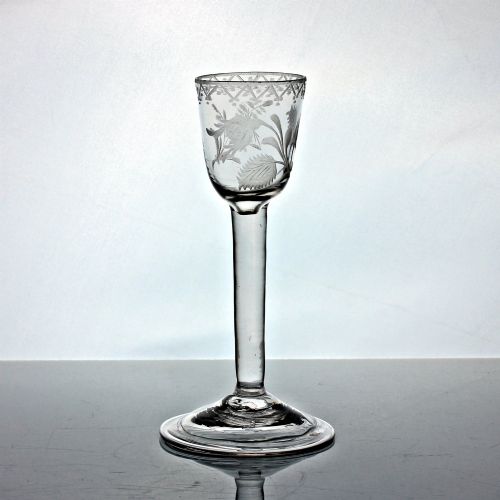
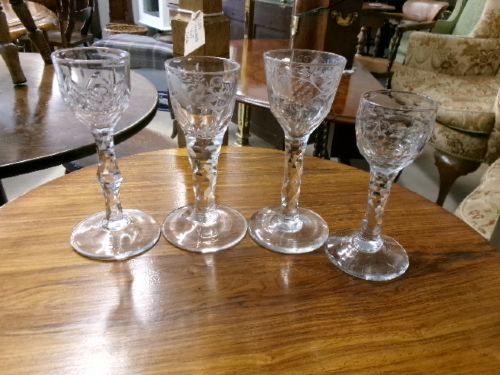
A georgian engraved wine goblet is a drinking vessel from the eighteenth or early nineteenth century, encompassing dram glasses, heavy rummers, and tall stemware. The selection includes balustroid, plain, facet-cut, and air-twist stems supporting bowls decorated with armorials, hunting scenes, or floral motifs.
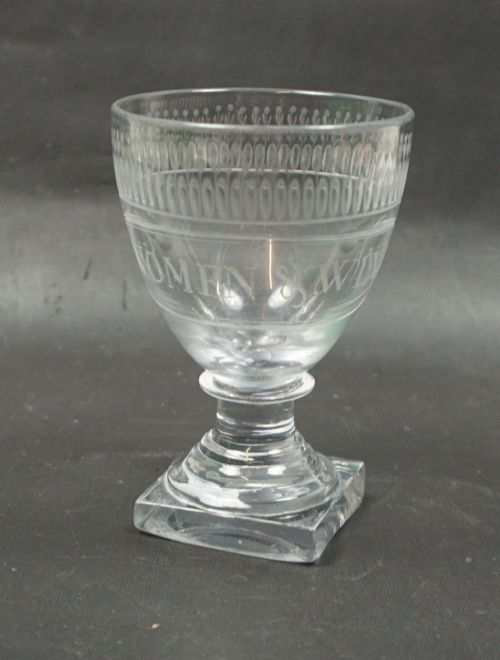
Most pieces date from the eighteenth century into the Regency period, shaped from lead glass or lead crystal alongside occasional examples in sterling silver. Buyers encounter wide-bowled rummers with square lemon squeezer feet as well as ceremonial armorial goblets and delicate Jacobite glasses.
Materials and Techniques
Maker operations utilised lead glass and lead crystal to achieve clarity and weight, often forming thick feet and substantial stems to balance large bowls. Metal components appear in sterling silver and Old Sheffield plating for specific presentation pieces.
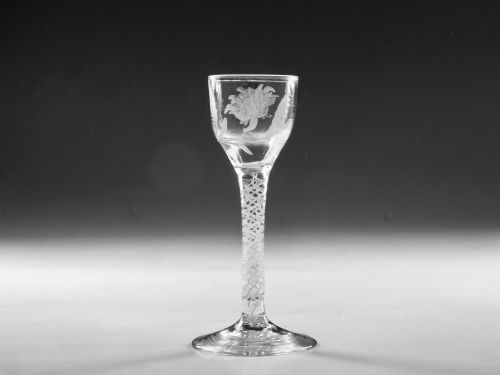
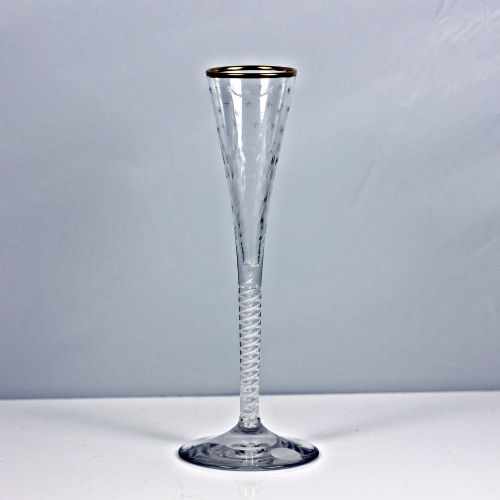
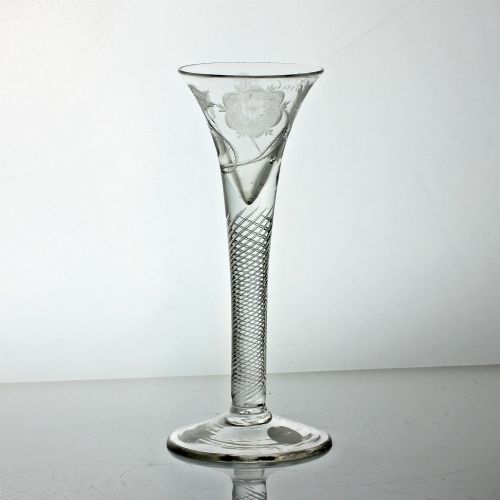
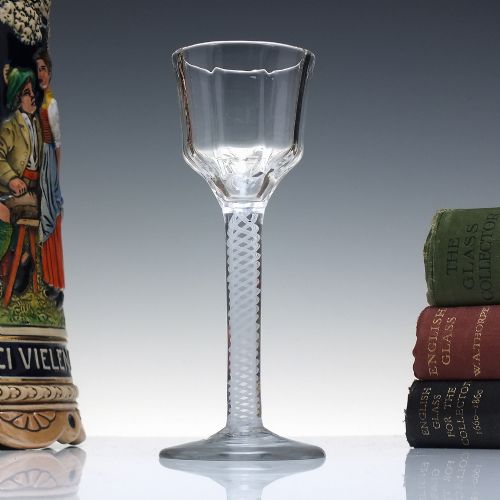
Decoration relied on wheel engraving, diamond point work, and optical moulding such as nut moulding or ribbing. Twists inside stems were formed by trapping air bubbles or drawing opaque white enamel rods through molten metal before pulling and shaping.
Georgian Engraved Wine Goblet Retail Price Guide 2026
Typical asking prices for georgian engraved wine goblet among the pieces listed under this phrase on Sellingantiques today, from the lower quarter to the upper quarter. They describe what is for sale here now, not the wider market.
Listings feature lead crystal, sterling silver, and enamel across periods spanning the mid-eighteenth century to the Regency era.
Distinctions in Execution
Quality rests upon the crispness of the wheel engraving and the proportional balance between foot, stem, and bowl. Finer examples display intricate detail in heraldic crests, florals, or political symbols without surface crowding.
The material itself contributes significantly, with heavier lead crystal exhibiting greater brilliance than standard glass. Stem formation, from complex multi-spiral air twists to precisely cut facets, separates standard vessels from exceptional collector pieces.
The Georgian Engraved Wine Goblet Glossary
- Air twist
- A stem containing elongated spiral air bubbles formed during the drawing of the molten glass. This technique requires considerable skill to maintain uniform thickness throughout the spiral.
- Opaque twist
- A stem incorporating white or coloured enamel threads drawn into spirals within the glass rod. These threads create striking linear patterns visible down the length of the stem.
- Rummer
- A large, capacious drinking glass developed for heavier wines and punch during the late eighteenth century. They frequently feature bucket or ovoid bowls seated on robust square bases.
- Baluster stem
- A heavy, swelling stem shape derived from architectural supports popular in the earlier eighteenth century. They often include enclosed teardrop bubbles in the knop.
- Lemon squeezer base
- A square, pressed glass foot with distinctive indented corners resembling nineteenth-century kitchen implements. Found on heavier rummers and table glasses to ensure stability.
Georgian Engraved Wine Goblet: Frequently Asked Questions
What is a rummer?
A rummer is a capacious drinking vessel with a heavy bowl designed for serving punch, ale, or hearty wines. They generally sit on sturdy feet or square lemon squeezer bases.
These pieces emerged toward the end of the eighteenth century and into the Regency era. Their robust build suits communal dining and everyday use.
How do air twist stems work?
Makers trapped tiny air bubbles inside hot glass blanks before twisting and pulling the metal into slender stems. This process creates internal helical channels that catch the light.
Air twists require immense precision from the glassblower to keep the spiral threads regular. They represent a signature achievement of eighteenth-century English glasshouses.
What are Jacobite glasses?
Jacobite glasses feature covert symbols and mottoes supporting the exiled Stuart dynasty, such as engraved roses, oak leaves, or the word fiat. Supporters used them for secret toasts.
These vessels date predominantly from the mid-eighteenth century following the uprisings. They remain highly sought after for their historical association.
Are these glasses safe to use?
Eighteenth-century lead glass is structurally stable and suitable for holding wine or water at modern tables. Hand washing protects the historical surface from thermal shock and abrasive detergents.
Collectors handle them carefully to preserve the polished rims and engraved details. Many owners choose to display them alongside active use on special occasions.